- The paper demonstrates that Lamarckian inheritance outperforms Darwinian methods in non-conflicting or predictable environments by enabling faster, more generalizable adaptation in virtual soft robots.
- The research utilizes Bayesian optimization and reinforcement learning to rigorously compare inherited versus de novo controller learning across varied dynamic environmental settings.
- Results indicate that augmenting robots with predictive sensors mitigates maladaptation in conflicting scenarios, guiding the design of robust, adaptive embodied AI systems.
Lamarckian Inheritance in Dynamic Environments: Critical Variables Governing Evolutionary Outcomes
Introduction
The study investigates the role of Lamarckian inheritance in the co-optimization of morphology and control in virtual soft robots (VSRs) within dynamic environments, dissecting how the interplay between environmental predictability and conflict in environmental changes influences the efficacy of different inheritance paradigms. The authors utilize a systematic experimental framework involving Bayesian optimization (BO) and reinforcement learning (RL)–based controller optimization to explicitly quantify conditions under which Lamarckian inheritance outperforms or underperforms traditional Darwinian inheritance.
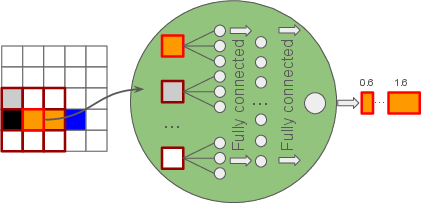
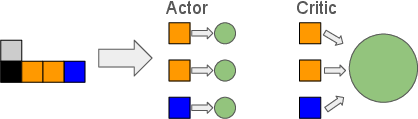
Figure 1: Classification of dynamic environments along the axes of environmental conflict and predictability, indicating favorable inheritance mechanisms for each regime and showing representative environments used in study.
Problem Context and Theoretical Background
Morphology–controller co-optimization in evolutionary robotics (ER) presents a coupled search problem due to the multifaceted relationship between body and brain: a morphology shapes the space of effective controllers, and vice versa. Prior work consistently demonstrates benefits of learning-based controller optimization—often employing separation between morphology evolution (outer loop) and controller learning (inner loop)—but the question of how best to transfer learned information across generations remains unresolved, particularly as studies in both evolutionary computation and biology yield contradictory results regarding the viability of Lamarckian inheritance under non-stationary conditions.
Traditional evolutionary theory and work in artificial life predict that Lamarckian inheritance loses utility or can even be detrimental in rapidly fluctuating and unpredictable environments due to the risk of maladaptation. However, evolution in ER has shown persistent benefits to Lamarckian approaches even in dynamic settings. The present work proposes that the discrepancy arises from insufficient attention to two environmental variables: (1) the degree to which environmental changes are in conflict with previous optimal control policies, and (2) the potential for agents to predict changes.
Experimental Design
VSRs in the EvoGym environment are evolved, with robot bodies encoded as 5×5 grids of discrete voxel types, and modular neural network controllers engineered to be architecture-invariant across morphologies. Body evolution is governed by a steady-state EA with mutation and tournament selection. Controller optimization employs either BO (surrogate-based, explorative) or DDPG-style RL (actor-critic, exploitative).
Crucially, the experiments contrast Lamarckian inheritance (inheritance of learned/optimized controller parameters) with Darwinian inheritance (inheritance only of initial, unlearned parameters with subsequent de novo learning), under three classes of environmental variation:
- Non-conflicting, unpredictable changes: Rugged terrain with varying degrees of random perturbations between generations, requiring locomotion but not conflicting control adaptations.
- Conflicting, unpredictable changes: Bidirectional flat environment with alternating goal directions each generation, but without a sensor indicating direction, making the control problem highly conflicting.
- Conflicting, predictable changes: Same bidirectional environment but with a sensor input indicating desired direction, thus rendering the environmental conflict predictable to the agent.

Figure 2: Visualization of a rugged environment, highlighting the structural variance imposed across generations.

Figure 3: Bidirectional environment schematic; at each generation, the goal direction switches, disallowing simple reuse of past controllers unless predictive sensors are present.
Results and Analysis
Non-conflicting Dynamic Environments
In rugged terrain settings—even with random and substantial environmental changes between generations—Lamarckian inheritance consistently yields improved mean fitness over Darwinian approaches using both BO and RL optimizers. The benefit decreases as the magnitude of environmental change increases, but at no point does Darwinian inheritance outperform Lamarckian. The hazard of inheritance degrading performance is mitigated by the non-conflicting nature of the task; learned skills for one rugged terrain are generalizable to other configurations, so inheriting learned controllers rarely becomes maladaptive.
Conflicting, Unpredictable Environments
Transitioning to the bidirectional setting with alternating goal direction and no direction sensor, the advantage shifts: Darwinian inheritance surpasses Lamarckian in average fitness. This inversion is robust across both BO and RL, but is especially pronounced with RL, which otherwise excels when inheritance is beneficial. Inherited controllers from previous generations are frequently overfitted for the opposite movement direction, resulting in systematic maladaptation—a direct manifestation of the environmental conflict variable.
Conflicting, Predictable Environments (Role of Sensing)
Introducing a direction sensor restores the predictability of environmental shifts. In this regime, Lamarckian inheritance again produces higher final fitness than Darwinian inheritance across both BO and RL. Notably, RL shows a marked improvement relative to the non-sensing setting, indicative of its ability to efficiently exploit the newly available predictive input. Additional analysis of pre-learning (inherited, unoptimized) controller performance reveals a rapid transition: with sensing, inherited parameters quickly become generalized, supporting high performance for both movement directions by exploiting the sensor input.
Implications for Evolutionary AI and Robotics
The findings explicitly refute blanket rules for or against Lamarckian inheritance in dynamic settings. Instead, they establish a conditional framework: Lamarckian inheritance is only suboptimal when environmental changes are both strongly conflicting and unpredictable for the agent. In environments that are either non-conflicting or predictable (via sensors or other cues), inherited learned controllers confer substantial adaptation speedups and higher ultimate performance, even across dynamic settings.
This has practical implication for embodied AI systems expected to operate and evolve in-the-wild: successful deployment of learning inheritance will critically depend on the inclusion of environmental cues enabling prediction. Architectures for future ER systems should thus prioritize modular brains, rich sensor inputs, and high-fidelity transfer of learned control, especially when anticipating non-stationary environments. The observation that simple sensor augmentation suffices to recover the benefits of Lamarckian inheritance in highly conflicting scenarios motivates further investigation into minimal sensor sets and efficient policy generalization.
Future theoretical development and experimental inquiry may focus on more complex forms of environmental dynamics, including those that demand morphological as well as behavioral adaptation, and the incorporation of heterogeneous or distributed social inheritance strategies. The present paradigm is also directly extensible to robotic transfer learning scenarios and on-line real-robot evolution.
Conclusion
The paper elucidates that the efficacy of Lamarckian inheritance mechanisms in evolutionary robotics is not dictated by environment dynamism per se, but by the interaction between environmental conflict and agent predictability. Lamarckian inheritance is robustly beneficial except in settings where inherited knowledge is systematically misaligned with current environmental demands and agents are deprived of cues to resolve this mismatch. Augmenting robots with appropriate sensors to predict environmental variation restores and even enhances the effectiveness of inherited learning. These insights offer actionable guidance for the design of adaptive, evolvable, and robust embodied AI in complex, changing environments.