- The paper presents a tight-binding and diagrammatic Green’s function approach to quantify LPGE on the Co₃Sn₂S₂ surface.
- It reveals that crystal and magnetic symmetry breaking enable switchable current reversal with a robust ω⁻².² frequency scaling.
- Findings show that Fermi arc surface states drive linear-in-temperature LPGE currents, suggesting practical routes for tunable optoelectronic devices.
Introduction
The study presents a comprehensive theoretical analysis of the linear photogalvanic effect (LPGE) localized at the surface of the centrosymmetric magnetic Weyl semimetal Co₃Sn₂S₂. Employing a tight-binding model and diagrammatic Green’s function formalism, the work elucidates the roles of crystal and magnetic symmetries in enabling and controlling LPGE responses driven by low-energy Fermi arc surface states. The results reveal key symmetry constraints, predict significant surface currents, and identify routes to magnetic switching of photogalvanic transport, establishing Co₃Sn₂S₂ as a versatile system for nonlinear optoelectronics and symmetry-resolved spectroscopy of topological states.
Theoretical Framework and Symmetry Constraints
The LPGE is addressed within the second-order nonlinear response framework, where the dc photocurrent jμ is generated under optical driving as the symmetric part of the third-rank response tensor χμαβ. The photogalvanic dc response is symmetry-forbidden in the centrosymmetric bulk due to inversion, but is generically allowed at the surface where inversion symmetry is explicitly broken by truncation.
The theoretical computation is performed via diagrammatic perturbation theory, incorporating both intrinsic (Berry curvature related) and extrinsic (scattering-induced) contributions to χμαβ, constructed from four distinct Feynman diagrams:
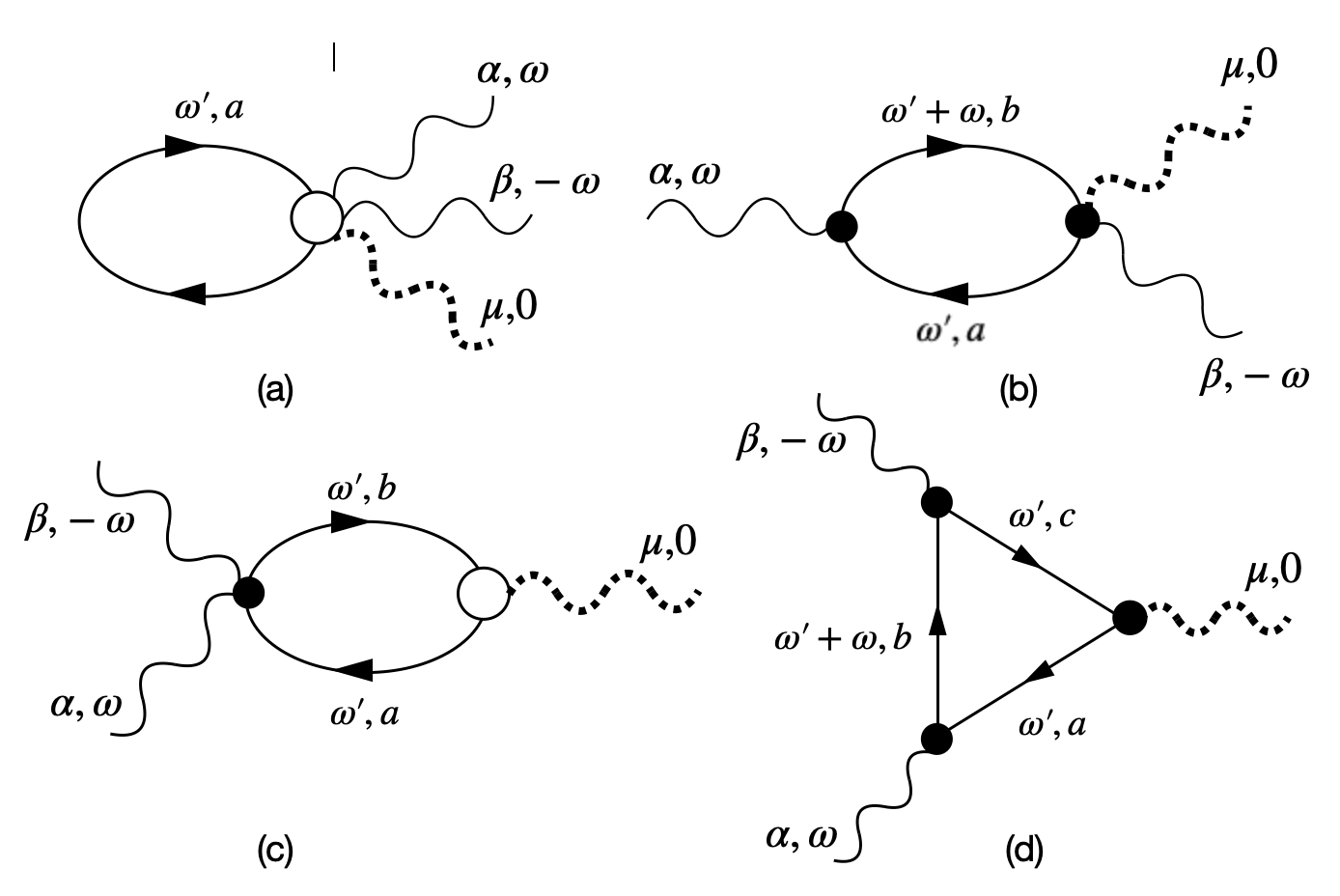
Figure 1: The four Feynman diagrams contributing to the nonlinear photogalvanic response tensor; dotted lines represent output current, wavy lines denote external fields.
The bulk crystal (space group R3m) exhibits inversion, C3z rotation, and multiple mirror symmetries. Magnetization along high-symmetry axes selectively breaks time-reversal T and certain mirror operations, leading to emergent antiunitary symmetries such as TMy. The impact of these symmetries is profound: with out-of-plane magnetization, an antiunitary mirror (TMy) enforces the vanishing of entire subclasses of response tensor elements (see Table II in the original text), while extrinsic (scattering-induced) effects remain less constrained.
Applied to the relevant (001) surface, the surface electronic structure is dominated by Fermi arc states that connect the projections of Weyl nodes with opposite chirality. The surface symmetry reduction and presence of ferromagnetic order give rise to a highly symmetry-selective nonlinear optical response.
Model Hamiltonian and Computational Approach
A multi-orbital tight-binding model is employed, including d3z2−r2 (Co) and pz (Sn) orbitals and parameterized to match ab initio electronic structures in the literature. A slab geometry with 40 atomic layers is implemented to capture surface-localized Fermi arc states. Focus is given to configurations with out-of-plane magnetization (χμαβ0), which are experimentally relevant due to strong magnetic anisotropy.
The model is Fourier-transformed in the in-plane direction, and the resulting Hamiltonian is partially diagonalized layerwise. The full nonlinear surface response χμαβ1 is evaluated using a dense χμαβ2-point mesh and implemented lifetimes consistent with ultrafast electron scattering.
The effective lattice structure and its relation to experiment are shown in:
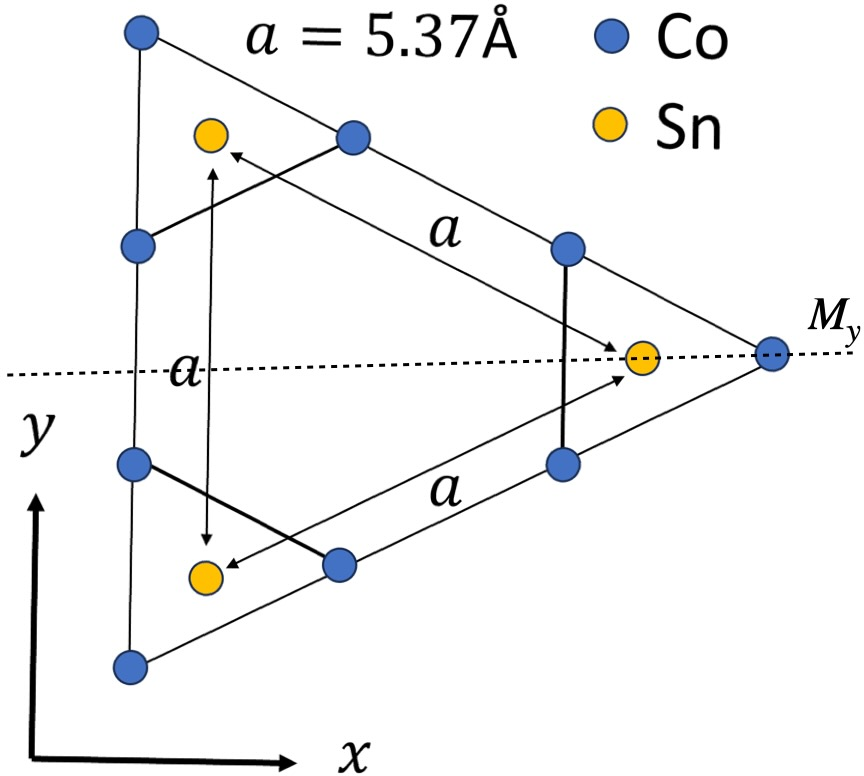
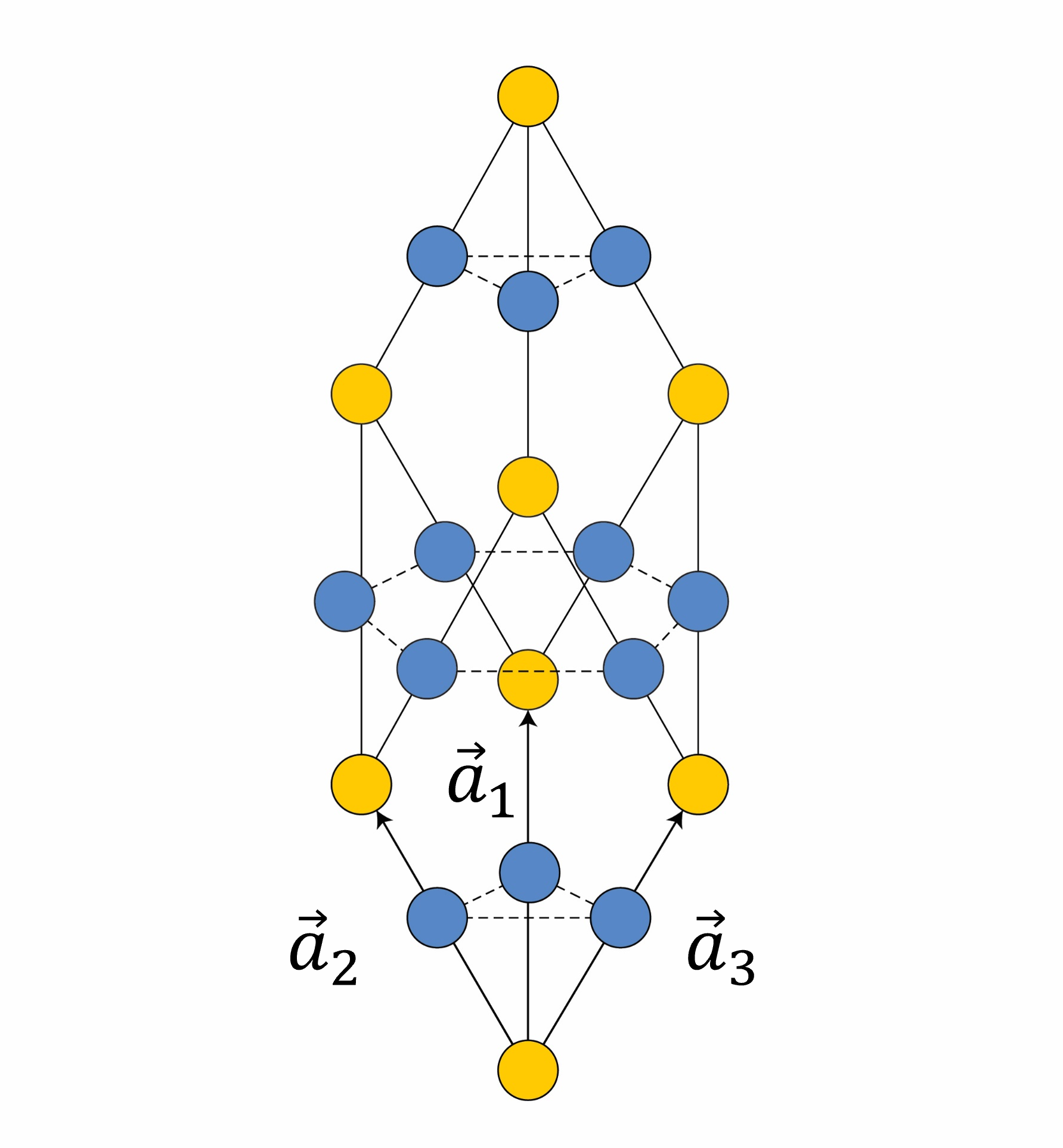
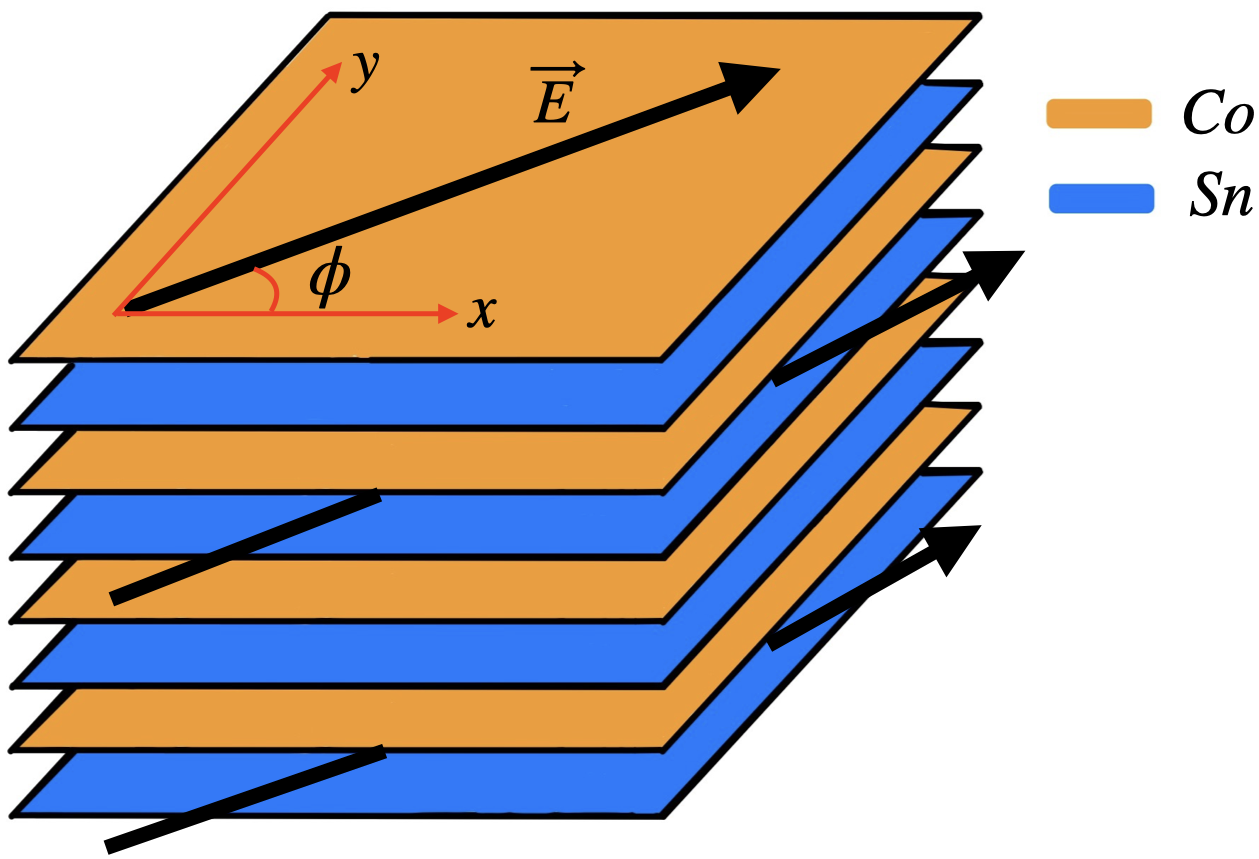
Figure 2: Effective structure of χμαβ3, highlighting the kagome Co layer and the experimental geometry involved in LPGE measurements.
Numerical Results: Temperature, Frequency, and Angular Dependence
The paper reports robust numerical LPGE currents that scale predictably with temperature, frequency, polarization angle, and magnetization direction.
Temperature Dependence
The LPGE current χμαβ4 displays an approximately linear dependence on temperature for fixed frequency and field amplitude, characteristic of transport dominated by low-energy surface states. The sign of χμαβ5 reverses upon magnetization flip, confirming symmetry-pinned oddness under χμαβ6.
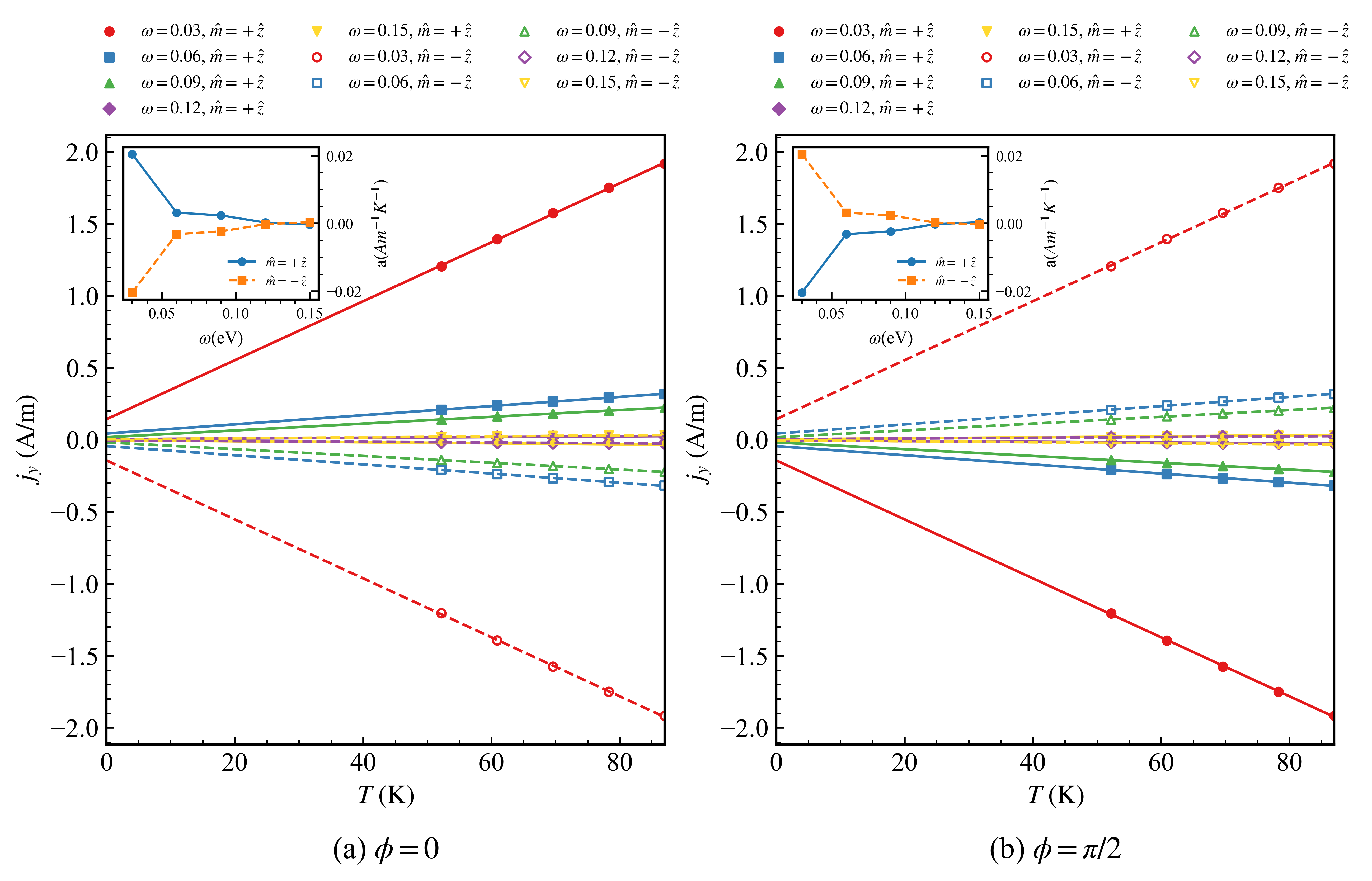
Figure 3: Linear temperature scaling of χμαβ7 for both magnetization orientations, demonstrating symmetry-driven current reversal and weak frequency dependence of the scaling slope.
Frequency Response
At low photon frequencies, the LPGE current magnitude decreases systematically, exhibiting a power-law dependence χμαβ8 with a weakly temperature-dependent exponent. This scaling corroborates the surface-state-dominated nature of the response, mirroring previous theoretical expectations for Fermi arc electronic structure.
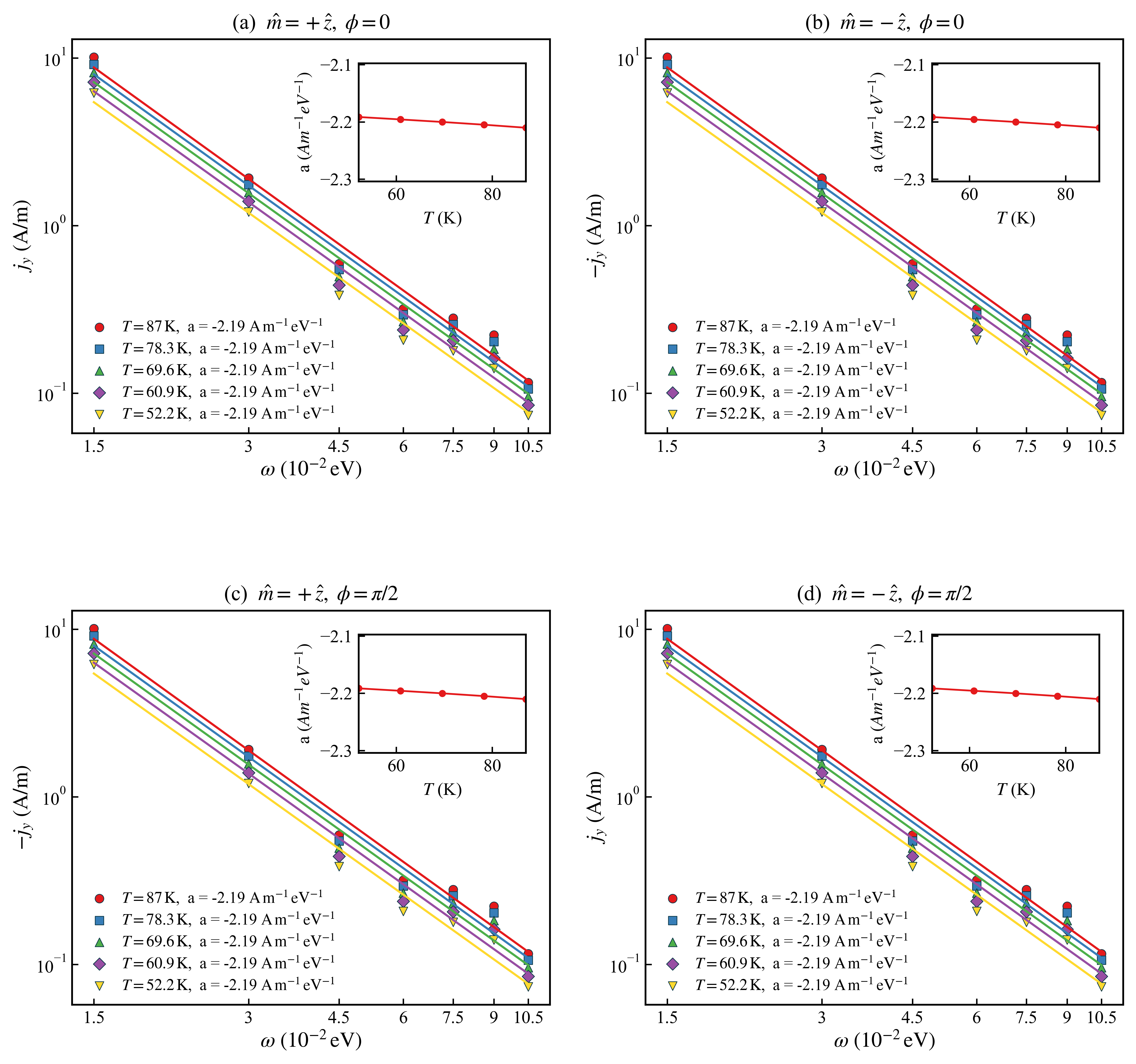
Figure 4: Power-law scaling of χμαβ9 with frequency, with log-log fits yielding a consistent exponent near χμαβ0.
Polarization Angle and Symmetry Selection
The LPGE tensor structure, protected by crystalline rotation and magnetic point group symmetries, yields a χμαβ1-periodic angular dependence of both χμαβ2 and χμαβ3 on the linear polarization angle χμαβ4. Only specific angular configurations, uniquely selected by crystal symmetry, strictly isolate odd-in-magnetization current components, enabling magnetization switching of current sign at those polarization settings. In general, the current is not purely odd under magnetization reversal except at these symmetry-selected angles, where even-in-magnetization tensor components vanish by construction.
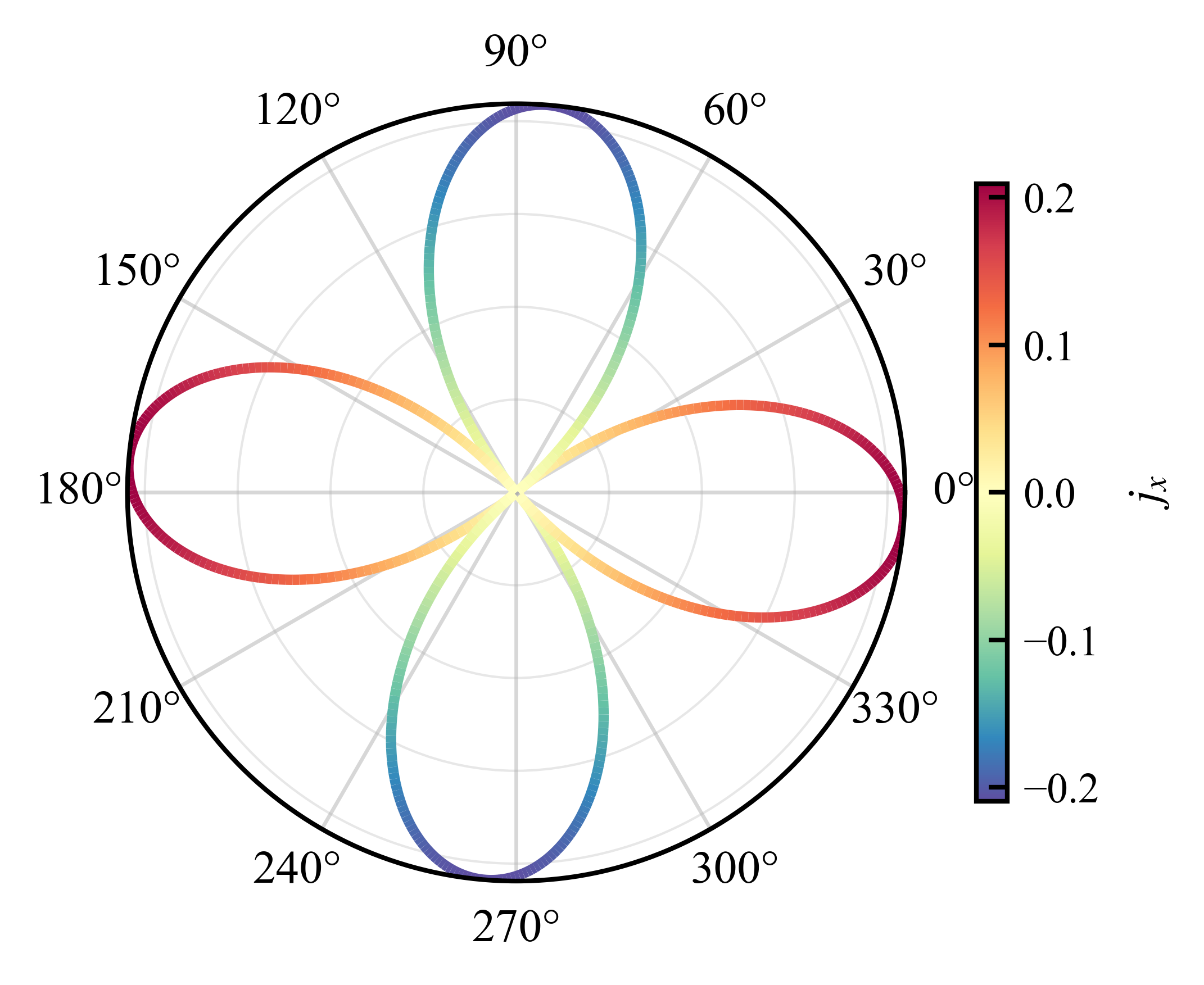
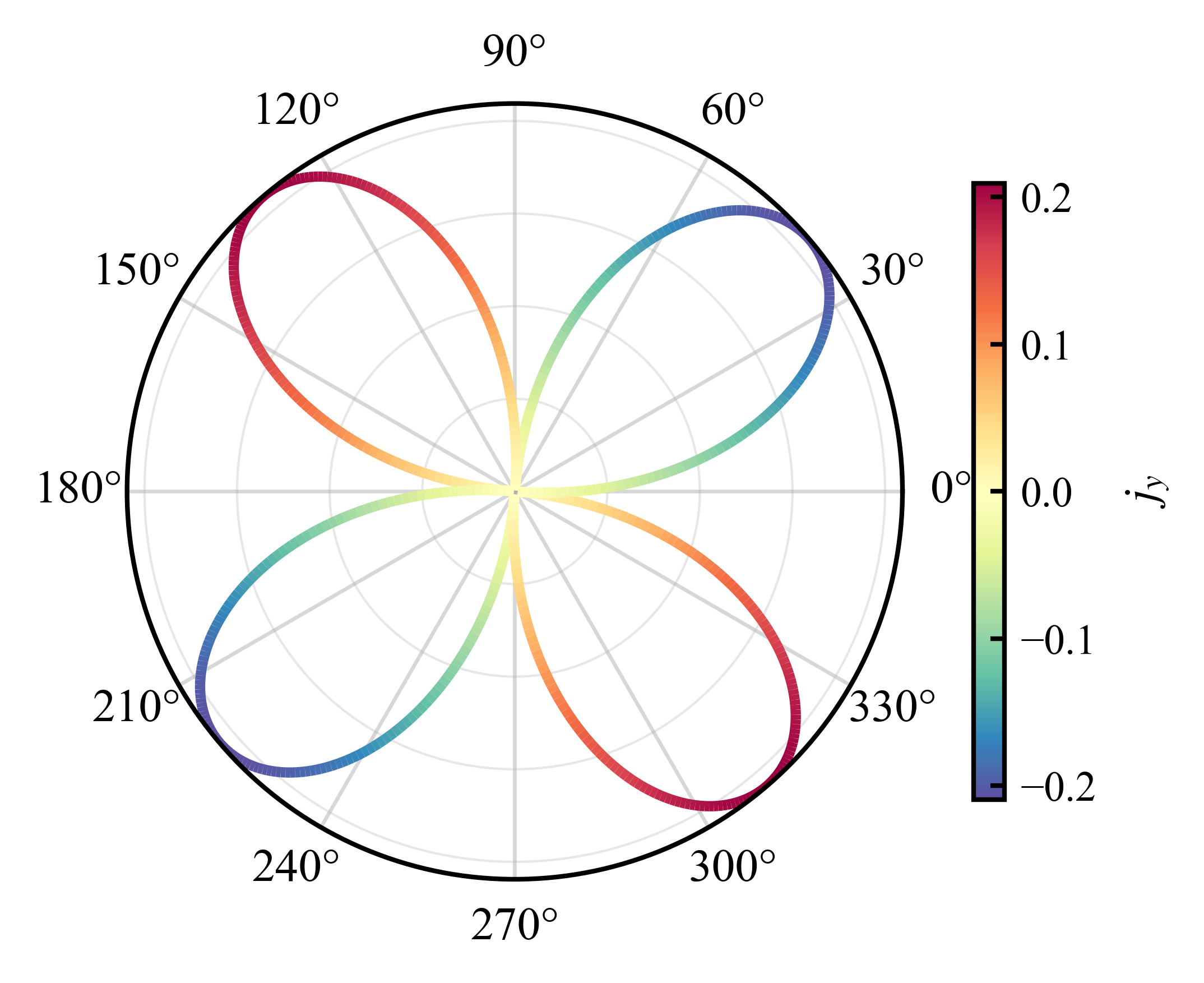
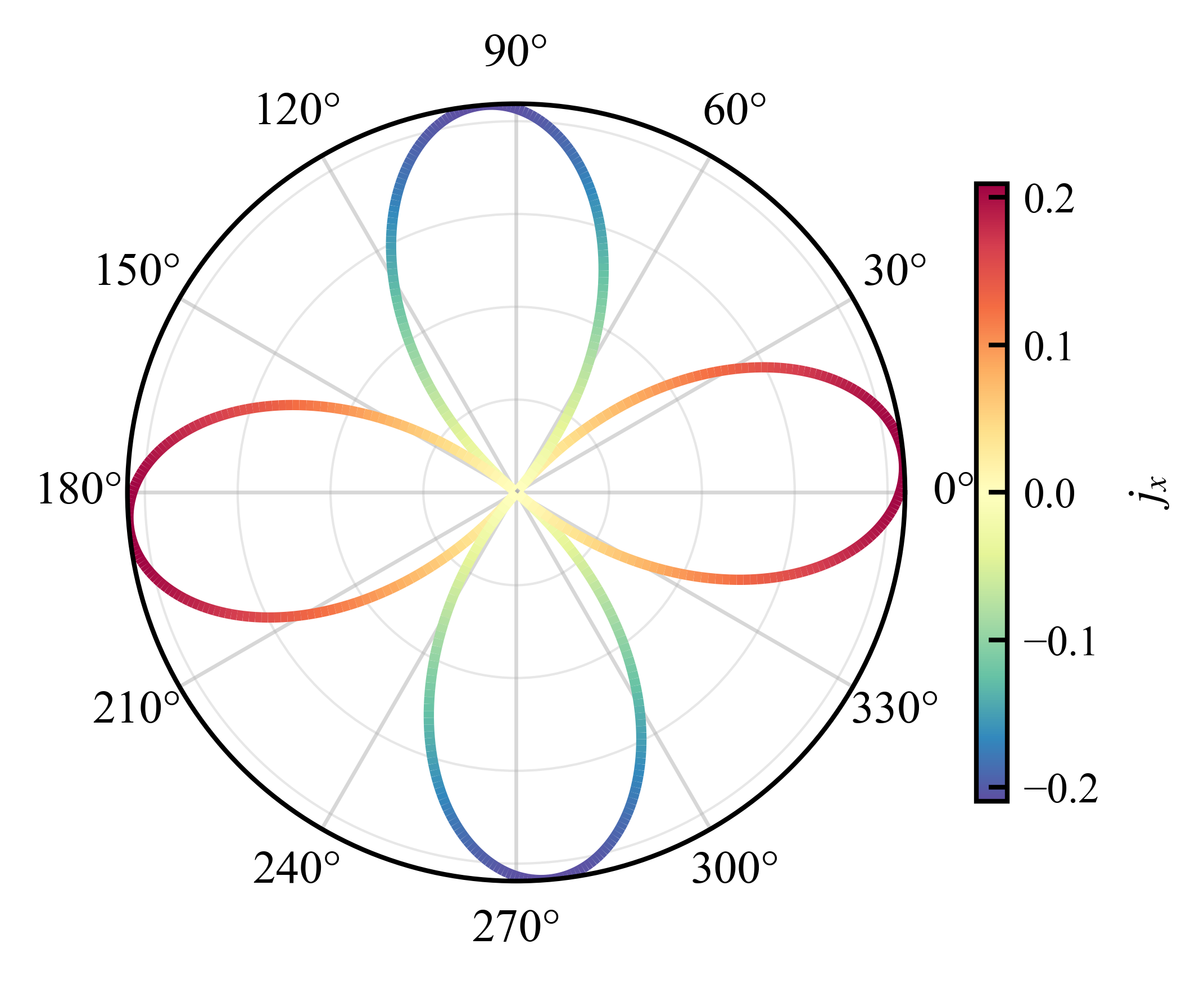
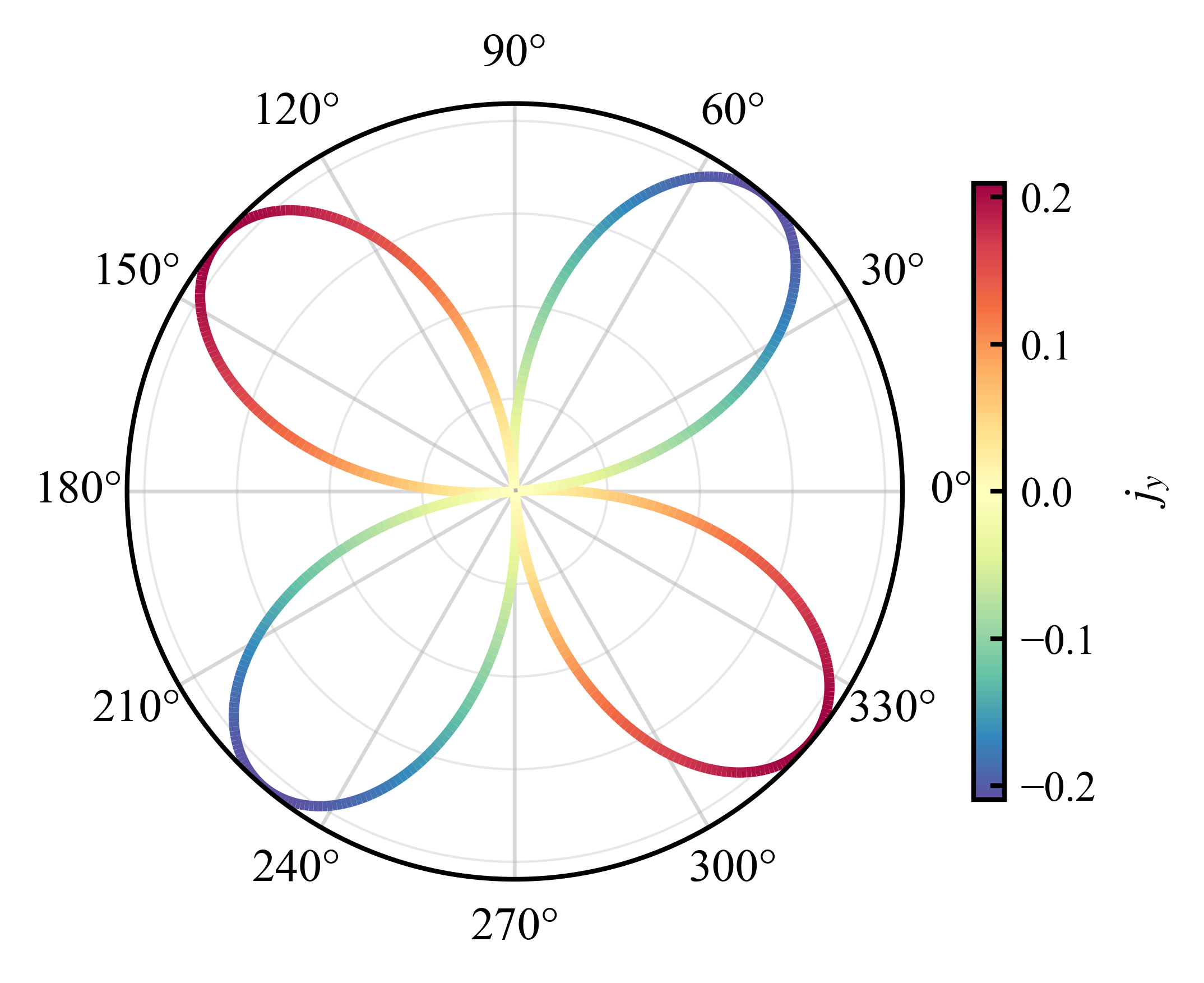
Figure 5: Polar plots of LPGE currents as a function of polarization angle χμαβ5, for both magnetization directions. At certain angles, sign reversal under χμαβ6 is exact, exemplifying symmetry-engineered switchable optoelectronic response.
Implications and Outlook
The findings represent a clear demonstration of symmetry-engineered nonlinear optoelectronic response at the surface of a magnetic Weyl semimetal. The combination of large LPGE currents (order 1 A/m), sensitive dependence on magnetization, linear-in-temperature scaling, and robust power-law frequency response is interpreted as a direct manifestation of Fermi arc surface states, as opposed to topological insulator Dirac cones where the response is orders of magnitude weaker.
Practically, the ability to control current sign via magnetization and polarization angle opens up possibilities for electrically switchable optoelectronic devices, nonreciprocal photodetectors, and magnetic state sensors. Theoretically, these results underline the importance of extrinsic scattering processes in amplifying the nonlinear response—a nontrivial departure from the often-assumed dominance of intrinsic Berry curvature effects.
Furthermore, this study emphasizes real systems where surface symmetry breaking enables access to topological nonlinear transport even when the bulk is forbidden by inversion. The approach can guide efforts toward experimental realization in magnetic WSMs and may inspire similar studies in other classes of topological quantum materials.
Potential future research directions include:
- Experimental verification of polarization-angle- and magnetization-dependent LPGE switching.
- Extension to ultrafast and ultralow-frequency regimes, where Fermi arc responses may be further enhanced or modified.
- Exploration of related nonlinearities (e.g., shift currents, circular photogalvanic effect) in the presence of symmetry reduction at surfaces or interfaces.
- Integration with device platforms for topological optoelectronics and quantum sensing.
Conclusion
This work lays out a rigorous theoretical framework for the surface LPGE in magnetic WSM Co₃Sn₂S₂, highlighting the pivotal roles of symmetry, Fermi arc surface states, and magnetism in enabling large, switchable photogalvanic currents. The predicted linear-in-temperature and χμαβ7 frequency scaling, along with explicit symmetry-based selection rules for current reversal, decisively identify Co₃Sn₂S₂ as a promising candidate for magnetically tunable nonlinear optoelectronics and for probing surface-state topological properties in transport experiments.