- The paper demonstrates that hybrid Liouvillian dynamics can amplify Leggett-Garg inequality violations, reaching algebraic limits in the q→0 regime.
- The study employs a time-local master equation that ties detector efficiency to nonlinear renormalization of Bloch vector trajectories.
- The findings impose stringent experimental constraints, as even minimal detector inefficiencies quickly restore standard quantum bounds.
Violations of the Leggett-Garg Inequality in Hybrid Liouvillian Dynamics: The Nonlinear Role of Detector Efficiency
Introduction and Context
The Leggett-Garg inequality (LGI) provides an operational test for macrorealism and non-invasive measurability (NIM) in quantum systems, with violations interpreted as clear evidence of temporal quantum coherence. In standard Hermitian quantum dynamics, the LGI parameter K3 is tightly bounded by the so-called Lüders or temporal Tsirelson bound (K3)QM≤1.5. To transcend this limit, extensions to non-Hermitian evolution, weak measurement, and post-selected protocols have been explored. This work rigorously investigates the physicality and robustness of algebraic-limit LGI violations in open quantum systems by introducing a continuous hybrid Liouvillian master equation parameterized by a detector efficiency q∈[0,1].
The proposed dynamics interpolate between trace-preserving Lindblad evolution (q=1), characterized by environment-induced decoherence, and purely non-Hermitian "no-jump" evolution (q=0), equivalent to perfect null-result trajectory post-selection. This approach directly translates laboratory realistic detector inefficiencies into a tunable quantum-to-classical dial, circumventing the need for non-divisible map-based superposition dynamics and highlighting the role of measurement backaction in amplifying temporal quantum correlations.
The central formalism is a time-local, hybrid Liouvillian generator for a two-level system subject to both coherent tunneling (∝J) and quantum jump-inducing dissipation (∝γ), with the evolution equation: dtdρ=−i[H,ρ]+2γ(qLρL†−21{L†L,ρ})
where q is the detector efficiency parameter and L=σ+ is the raising operator. The operational interpretation of (K3)QM≤1.50 is as a measure of the completeness of quantum jump detection—(K3)QM≤1.51 recovers trace-preserving Lindblad evolution, while (K3)QM≤1.52 yields non-Hermitian dynamics conditioned on the absence of detected jumps, i.e., ideal post-selection.
Notably, outside the (K3)QM≤1.53 limit, the dynamics are non-trace-preserving, making dynamical normalization indispensable in physically meaningful expectation values. This results in a nonlinear feedback on the Bloch sphere state vector due to the time-dependent renormalization, which dramatically alters the system's accessible temporal correlations and thus the achievable LGI violations.
Nonlinear Amplification of Temporal Quantum Correlations
The paper presents a comprehensive numerical optimization of the Leggett-Garg parameter (K3)QM≤1.54 over the measurement interval (K3)QM≤1.55, dissipation rate (K3)QM≤1.56, and detector efficiency (K3)QM≤1.57. The principal finding is that the regime of algebraic Limit ((K3)QM≤1.58) violation is exceptionally fragile: even minute detector efficiency ((K3)QM≤1.59) rapidly suppresses q∈[0,1]0 towards the quantum Lüders bound, evidencing a logarithmic sensitivity to experimental imperfections.
Optimized q∈[0,1]1 exhibits a universal scaling: q∈[0,1]2
with polynomial coefficients q∈[0,1]3, q∈[0,1]4, q∈[0,1]5, q∈[0,1]6 in q∈[0,1]7.
The global q∈[0,1]8 landscape reveals that only in the strict null-detection limit (q∈[0,1]9) and near Liouvillian exceptional points (EPs) does the system's post-selected evolution enable large, geometry-distorting excursions on the Bloch sphere, responsible for constructive interference of the sequential correlators. Outside of this vanishingly narrow regime, temporal quantum amplification is strongly penalized.
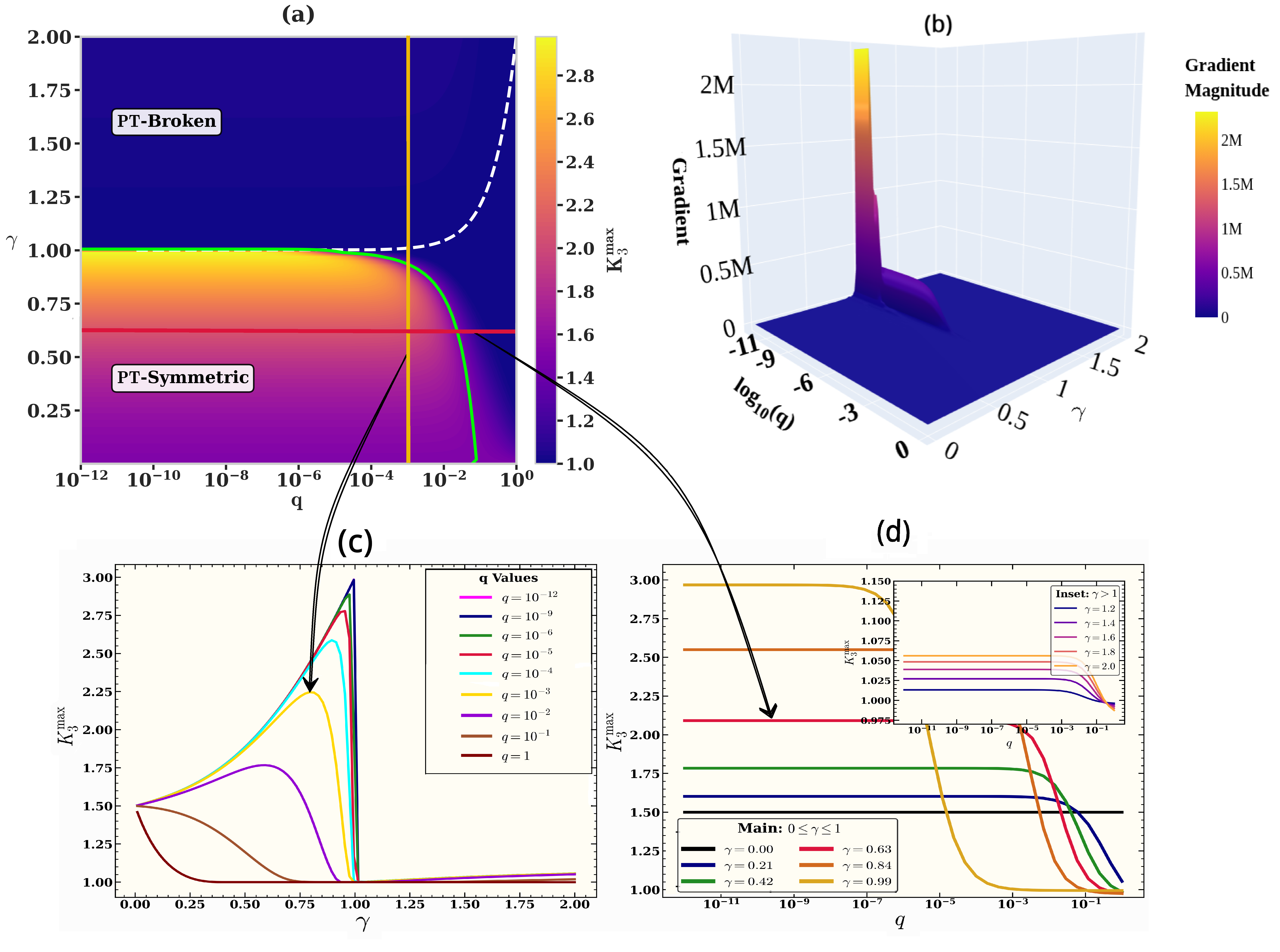
Figure 1: The maximal violation q=10 as a function of the detector efficiency q=11 and relative dissipation q=12, with a sharp phase boundary demarcating quantum-allowed and super-quantum domains.
The one-dimensional cross sections (Figure 1c,d) further quantify the logarithmic collapse of q=13 as q=14 moves away from zero, emphasizing that experimental efforts to see algebraic violations in realistic time-divisible settings must guarantee near-perfect quantum-jump discrimination.
Bloch Vector Dynamics and Liouvillian Exceptional Points
The Bloch vector evolution under the hybrid Liouvillian displays topological transitions governed by q=15. For q=16, relaxation is monotonic to the fully mixed state; but as q=17, the non-Hermitian conditioning induces accelerated coherent orbits, with the state exhibiting fast, geometry-altering angular sweeps near the Liouvillian exceptional boundary—where eigenvalues and eigenvectors coalesce—thus enabling the observed q=18 amplification.

Figure 2: Representative Bloch vector trajectories in the q=19-q=00 plane for increasing detector efficiency q=01: non-Hermitian limit exhibits accelerated, coherent excursions; finite q=02 transitions to rapid collapse.
This amplification mechanism requires the system to operate in a regime proximate to the EP curve
q=03
ensuring the necessary degeneracy for constructive quantum interference, an effect absent in linear, divisible Lindblad dynamics with finite environment readout.
Statistical Macrorealism: NSIT and AoT Analysis
To rigorously analyze macrorealism, the paper investigates Arrow-of-Time (AoT) and No-Signaling-In-Time (NSIT) statistical constraints. The hybrid Liouvillian satisfies all AoT criteria (marginalization consistency due to divisibility), but generically violates NSIT conditions for two- and three-time sequential probability marginals. This implies the absence of a global, classical joint probability distribution compatible with macrorealist interpretations over the full trajectory ensemble.
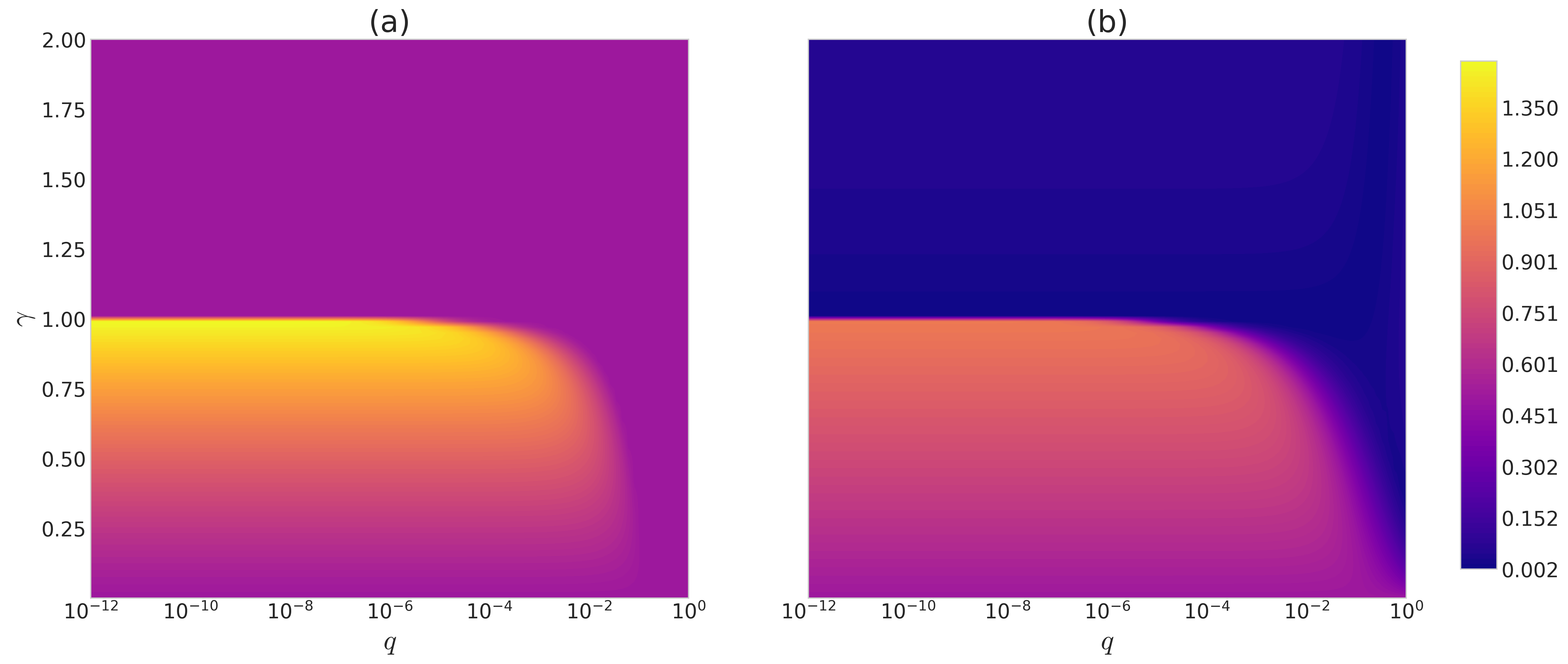
Figure 3: Magnitude of two- and three-time NSIT violations in parameter space, highlighting the incompatibility of the hybrid dynamics with classical macrorealism.
Hence, even trace-preserving or weakly post-selected quantum evolutions driven by the hybrid generator fundamentally defy macrorealist explanations, except in the strictly classical (fully dephased) limit.
Practical and Theoretical Implications
These findings carry significant implications:
- Experimental Feasibility: Achieving algebraic LGI violations in time-divisible, continuous quantum trajectory dynamics necessitates nearly perfect measurement, as realistic inefficiencies immediately restore the quantum (or classical) bound.
- Theoretical Consequences: Extreme LGI violations are not robust to physical noise—they are fine-tuned, singular features; this distinguishes continuous-time, divisible quantum processes from non-divisible or discrete map-based approaches, where such violations can persist more robustly.
- Framework Extension: The hybrid Liouvillian approach provides a tunable, physically grounded paradigm to connect abstract, idealized non-Hermitian results with experimentally accessible dissipative quantum systems.
The analytic fit to q=04 serves as a practical tool for predicting when and how much non-classicality can be observed, given limited detector efficiencies and environmental couplings in platforms such as superconducting qubits or photonic quantum simulators.
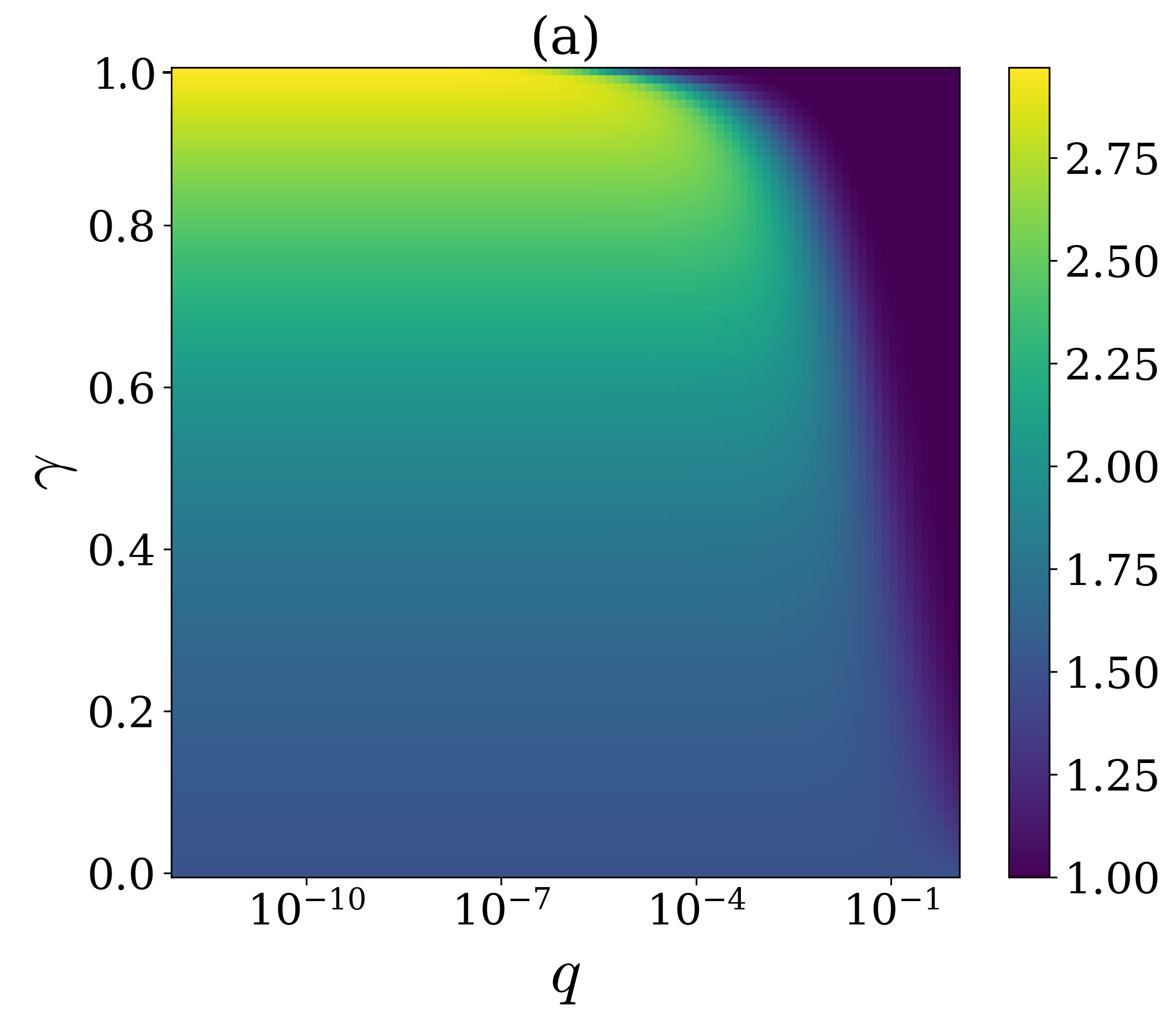
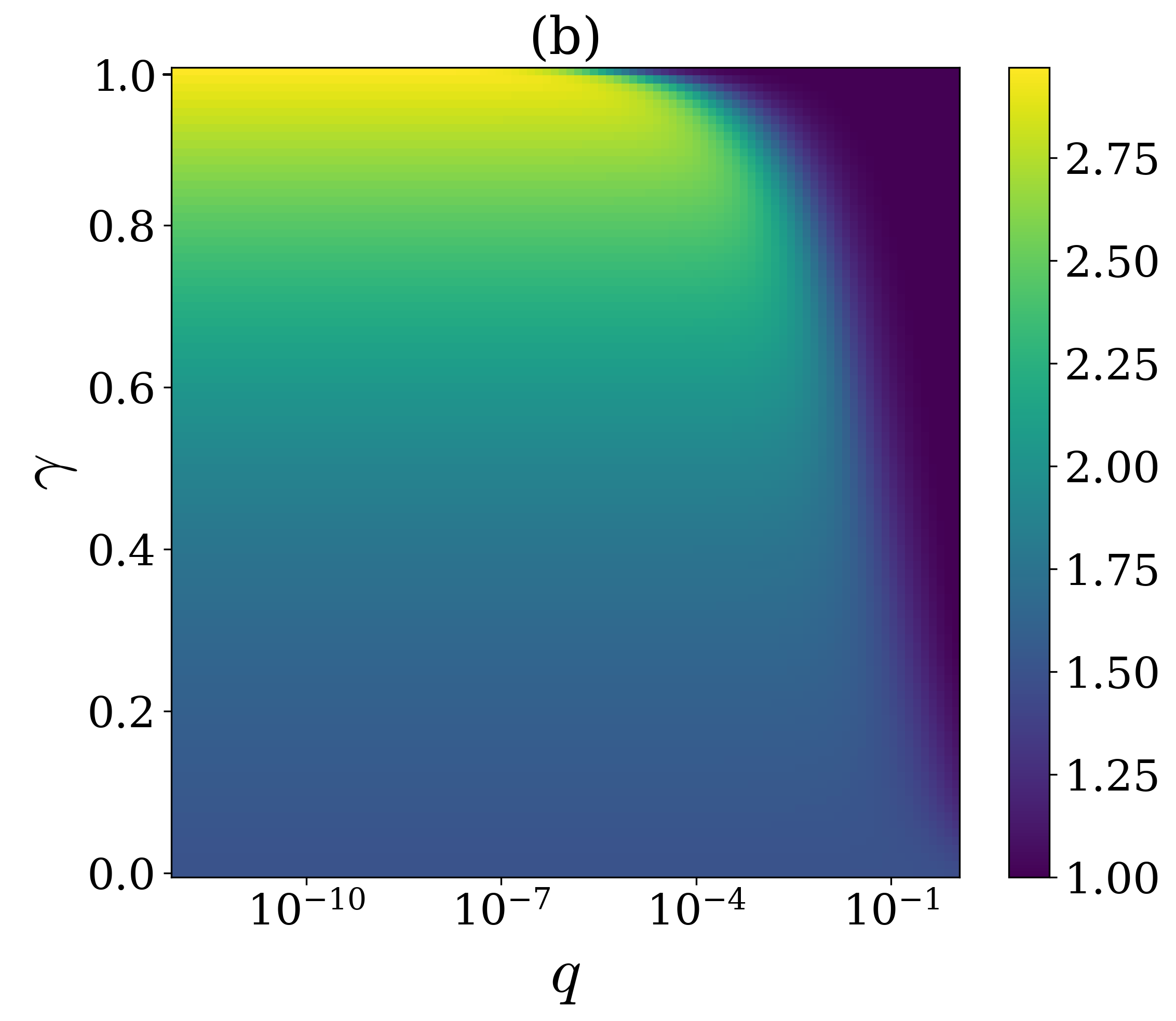
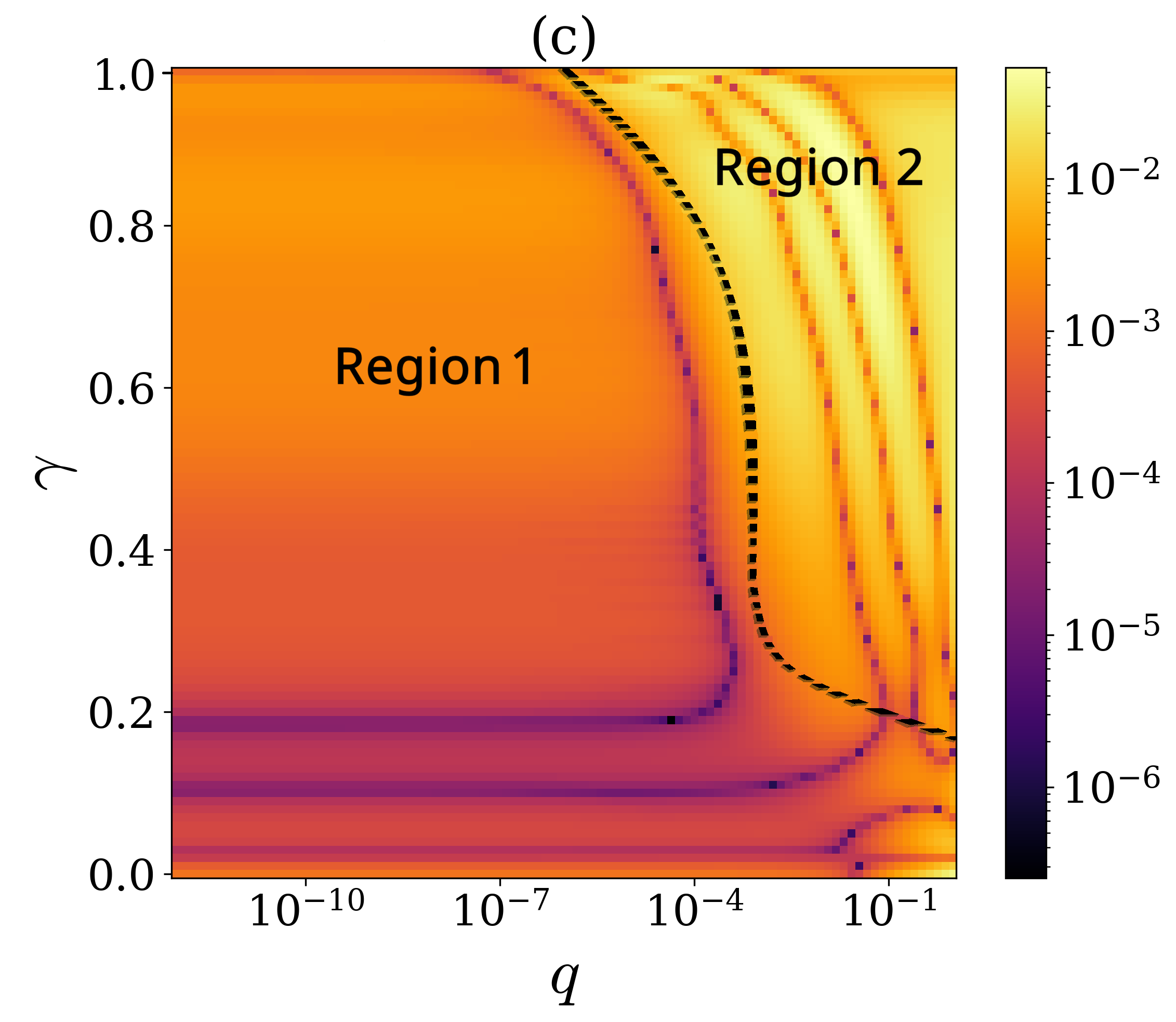
Figure 4: Universal fit to q=05 spanning multiple decades in q=06 and q=07, with high-precision optimization and quantification of fitting errors.
Comparison with Discrete Map-Based Protocols
Unlike recent proposals leveraging superpositions of unitary maps (e.g., Chatterjee et al.), which rely on non-divisible, discrete timesteps and have no time-local master equation representation, the present continuous, hybrid Liouvillian construction achieves similar or greater violations within a strictly time-divisible (Markovian) context. However, the physicality of these algebraic violations is sharply limited—the extreme amplification is not robust, and exists only as a singularity in the limiting q=08 case.
Conclusion
This work establishes that algebraic and super-Lüders violations of the Leggett-Garg inequality in open, time-divisible quantum systems are highly fragile: they exist only in the unphysical, idealized limit of perfect detector efficiency, and are exponentially sensitive to post-selection imperfections. The hybrid Liouvillian framework translates theoretical interest in non-Hermitian, post-selected dynamics into precise, experimentally meaningful constraints. These results set stringent bounds for future experimental tests of temporal macrorealism, distinguish continuous and discrete map-based routes to non-classicality, and clarify the nonlinear connection between measurement, environment, and quantum-to-classical transition in open quantum systems (2605.13494).

