- The paper demonstrates efficient end-to-end pumping by adiabatically transferring a localized state across a Fibonacci-type photonic lattice using minimal waveguide modifications.
- The study employs tight-binding models, cosine interpolations, and experimental CCD imaging to validate the robustness and energy isolation of the pumping state.
- Results show that controlled structural defects can enhance the excitation gap, potentially improving adiabatic transport efficiency in photonic devices.
End-to-End Pumping via Localized States in Quasiperiodic Fibonacci-Type Photonic Chains
Introduction
This work explores the realization of robust state transfer—specifically, end-to-end pumping—in a one-dimensional (1D) quasiperiodic photonic lattice constructed following a Fibonacci-type sequence. The authors present both theoretical (tight-binding) and experimental studies, demonstrating that a localized pumping state can be efficiently transferred from one edge of the system to the other with minimal structural modification. Notably, the protocol requires modifying only a small subset of the waveguides, considerably simplifying experimental implementation relative to previous schemes based on SSH or quasicrystal models.
Model and Pumping Protocol
The system consists of an array of optical waveguides fabricated in glass using femtosecond laser writing, with waveguide separations following a Fibonacci (Sturmian) sequence parameterized by the phason angle ϕ. The resulting quasiperiodic tight-binding Hamiltonian includes exponentially decaying hopping amplitudes Jij∼Jexp(−dij/ξ) dependent on the inter-waveguide spacing.
Importantly, end-to-end pumping is effected by bending only two waveguides, which corresponds to spatially varying four bond strengths (two per end) in the tight-binding model. The interpolation protocol between configurations (parameterized by different ϕ values) is realized experimentally through an S-shaped bend profile, and, theoretically, via a cosine interpolation function of the relevant distances. This system is notably less demanding than typical SSH or quasicrystalline pumps, which require global and continuous tuning of all bond variables.
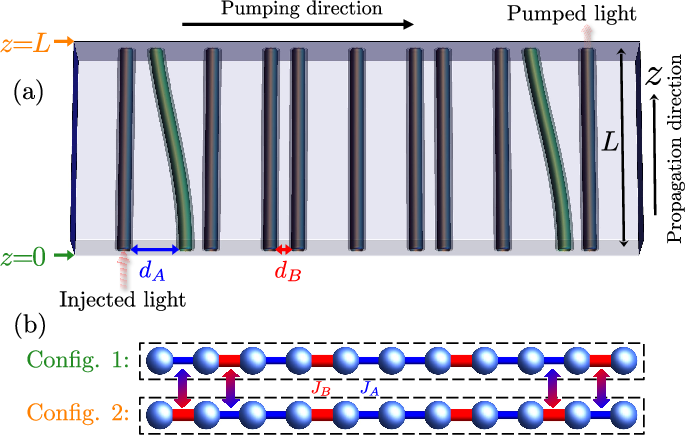
Figure 1: Schematic of the Fibonacci-type waveguide array for end-to-end pumping; only two waveguides (green) are bent, with light injected at the red arrow and emerging at the opposite end.
The use of the phason angle ϕ enables control over the spatial localization of the system's edge state. By selecting two distinct ϕ values (“configuration 1” and “configuration 2”), one can ensure that the relevant eigenstate is alternately localized on the left or right edge, forming the basis for the pumping process.
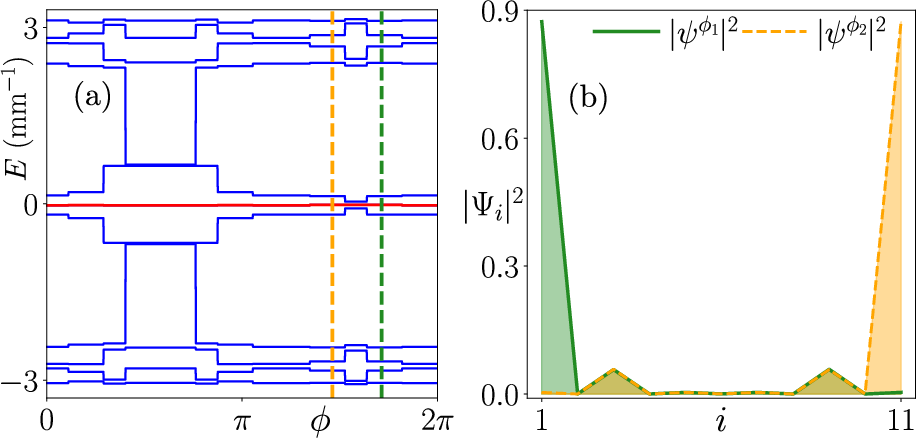
Figure 2: Eigenvalue spectra as a function of the phason angle ϕ. The red curve highlights the defect (pumping) state, which remains nearly energy-invariant across the interpolation.
Adiabatic Pumping Dynamics
The protocol involves initializing light in the leftmost waveguide—effectively the localized eigenstate (pumping state) for the first configuration. As the system is adiabatically transformed by varying the relevant bond strengths along the propagation direction z, this state traverses the bulk and becomes localized at the opposing end at z=L.
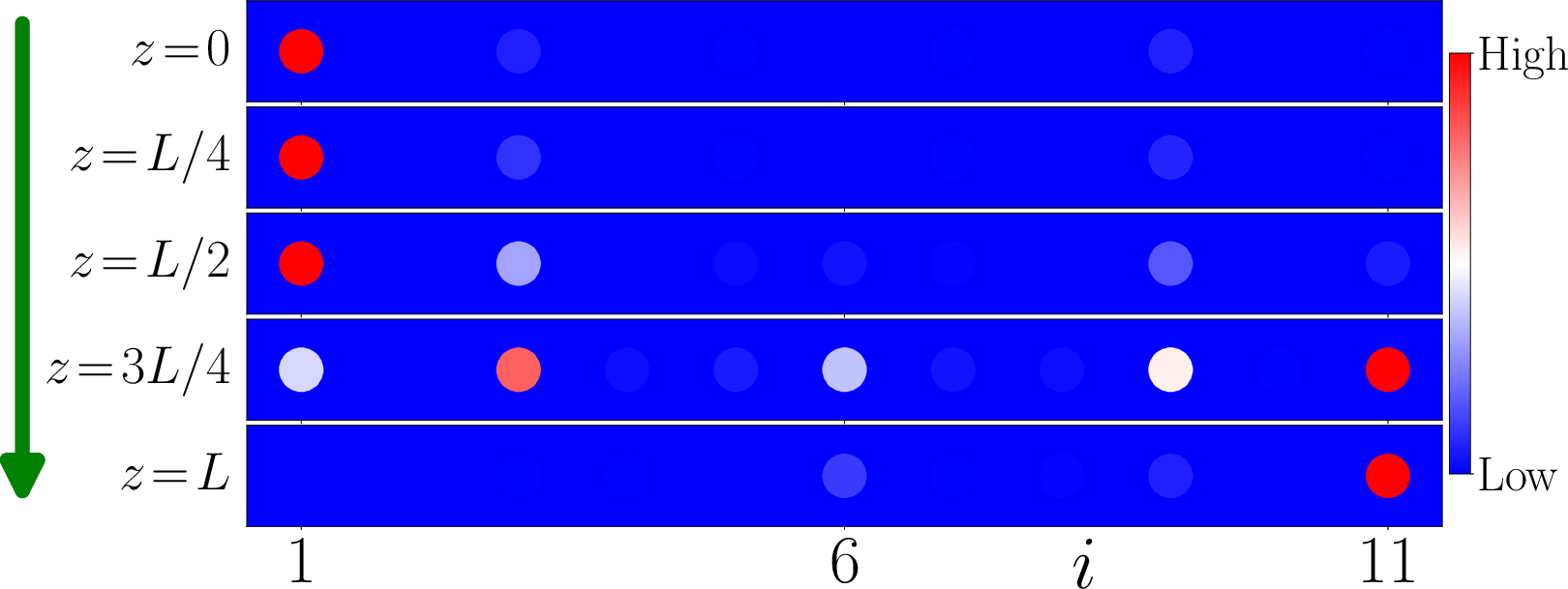
Figure 3: Theoretical evolution of the pumping state across the array for increasing z, showing its transfer from one boundary to the other.
Numerical simulations indicate effective adiabatic transport, with the defect state maintaining an excitation gap from the bulk throughout the protocol. Experimental validation is achieved by optical injection and CCD imaging of the output intensity profile. The observed output exhibits strong localization at the end waveguide, closely matching theoretical predictions.
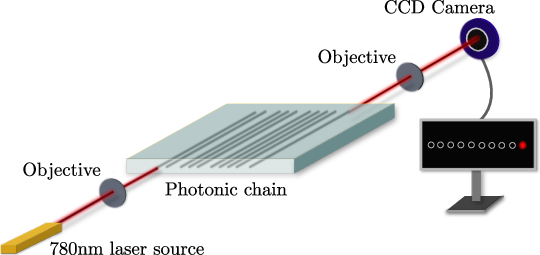
Figure 4: Schematic of experimental setup including laser injection, collection, and imaging.
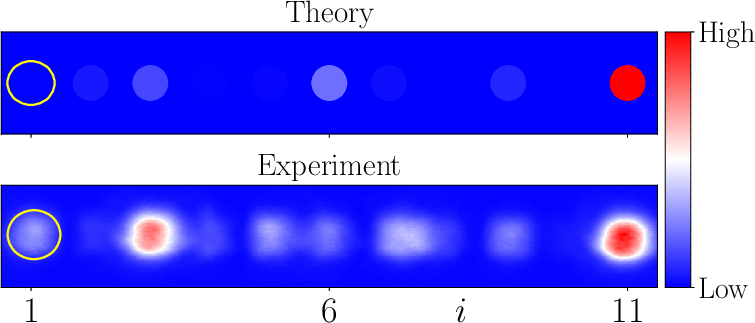
Figure 5: Direct comparison of theoretical and experimental output showing end-to-end pumping, with light emerging predominantly at the waveguide opposite to the injection site.
Robustness to Structural Defects
A crucial result of the study is confirmation of pumping robustness in the presence of structural defects. The authors experimentally introduce controlled perturbations by altering select inter-waveguide separations (dA or Jij∼Jexp(−dij/ξ)0 modified to Jij∼Jexp(−dij/ξ)1) and find that pumping persists even under such disorder.
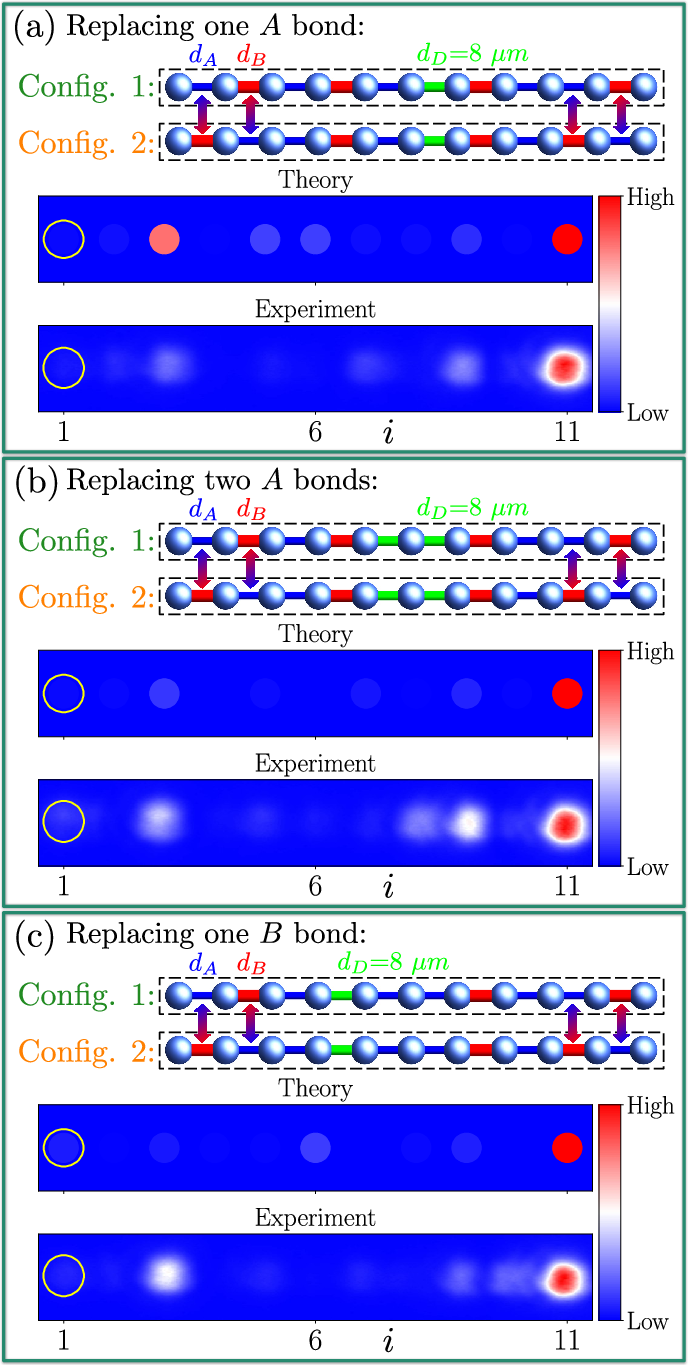
Figure 6: Theoretical and experimental demonstration of pumping in the presence of (a) one, (b) two Jij∼Jexp(−dij/ξ)2 bonds replaced by Jij∼Jexp(−dij/ξ)3, and (c) one Jij∼Jexp(−dij/ξ)4 bond replaced by Jij∼Jexp(−dij/ξ)5.
Further analysis of the excitation gap as a function of Jij∼Jexp(−dij/ξ)6 reveals that such defects can even enhance the gap between the defect state and nearest bulk states, sometimes improving adiabaticity and transfer efficiency.
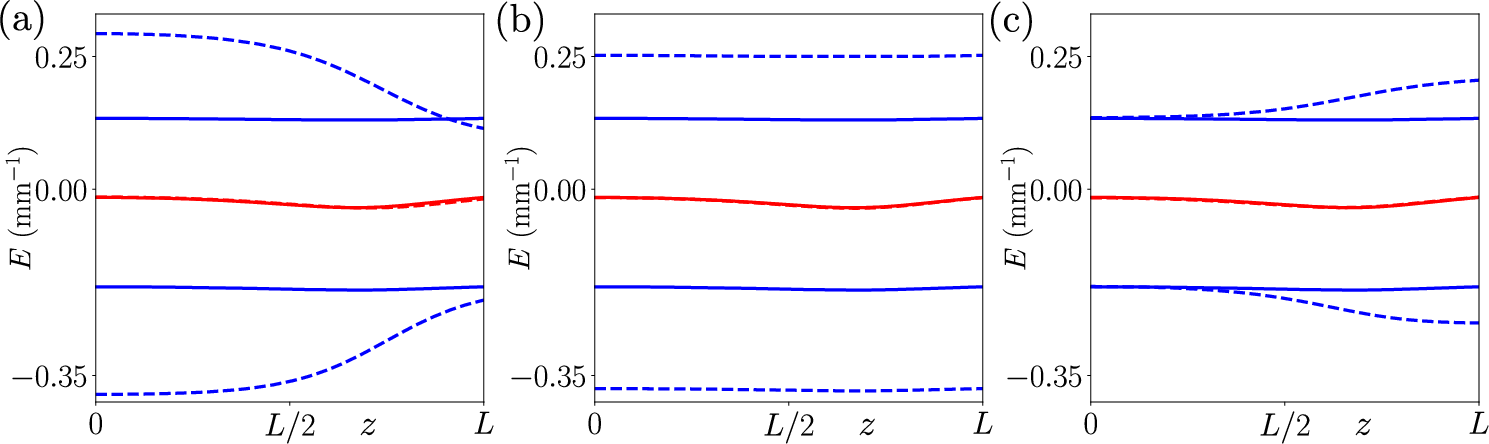
Figure 7: Excitation gaps for the pumping state and its nearest eigenvalues as a function of Jij∼Jexp(−dij/ξ)7; dashed curves show gap evolution in the presence of defects.
Alternative Implementation Details
The study addresses practical considerations in fabrication and protocol realization. The waveguide arrays are created using high-fidelity femtosecond direct-writing, allowing precise spatial control. Quantitative characterization of coupling constants as a function of spacing is reported:
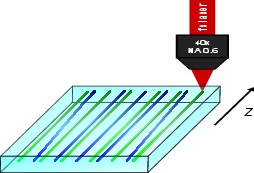
Figure 8: Schematic of femtosecond direct-writing process for waveguide fabrication.
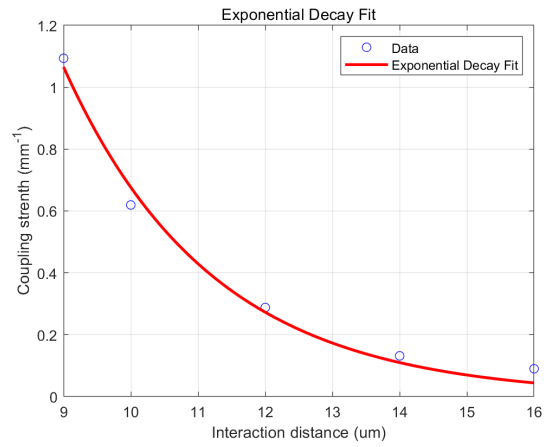
Figure 9: Experimental measurement and exponential fit of the coupling strength as a function of waveguide separation.
The authors further demonstrate that the pumping protocol remains effective for different interpolation schemes, including linear modifications of the waveguide spacing along Jij∼Jexp(−dij/ξ)8.
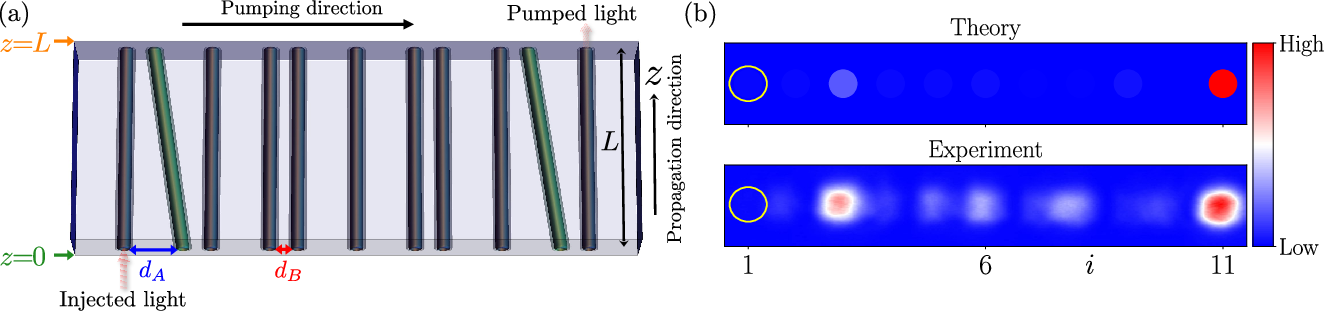
Figure 10: Schematic and demonstration (theory and experiment) of end-to-end pumping with linear variation of inter-waveguide distances, confirming robustness to protocol details.
Implications and Future Directions
This work provides compelling evidence that quasiperiodic Fibonacci-type chains are excellent platforms for robust, disorder-resilient state transfer with minimal tuning, a significant simplification versus alternatives that require deep structural engineering. The defect state employed for pumping remains well-localized and energetically isolated, allowing efficient adiabatic transfer even in the presence of structural imperfections.
Theoretically, this suggests that defect-mediated pumping in quasiperiodic chains can offer topological-like transport strength without requiring strict topological protection. Practically, such systems provide routes towards photonic interconnects, quantum networks, or classical signal routing where reliability is paramount.
Prospective advances include extending these principles to 2D lattices—potentially enabling higher-order topological pumping between corners—as well as incorporating non-Hermitian (lossy) or machine-learning optimized designs for further performance enhancement. Improved pumping protocols based on shortcuts to adiabaticity could enable scaling to larger arrays and faster operations.
Conclusion
This study realizes and characterizes adiabatic end-to-end pumping in a quasiperiodic Fibonacci-type photonic chain, with strong experimental-theoretical concordance. The protocol achieves robust and efficient state transfer while requiring minimal system modifications, maintaining performance in the face of controlled disorder. These results establish quasiperiodic photonic lattices as a robust and accessible platform for disorder-resilient state transfer and open new directions for both fundamental and applied photonic transport research.