- The paper demonstrates that the ring-gap architecture in V1094 Sco arises from both planet-disk interactions and secular gravitational instability through integrated multi-tracer observations.
- The analysis employs high-resolution ALMA imaging and VLT/SPHERE near-infrared data to resolve substructures down to 40×30 mas and measure gap widths relative to local gas pressure scale heights.
- The findings imply a low turbulence level (α ≲ 10⁻³) and support a hierarchical formation model where hybrid mechanisms shape planet formation in different disk regions.
A Hybrid Origin of Multiple Ring-Gap Structures in V1094 Sco: Integrating Planetary and Secular Instability Paradigms
Introduction
High-resolution observations are revealing increasingly intricate ring-gap substructures in protoplanetary disks, demanding robust, multi-domain physical interpretations. The disk surrounding V1094 Sco, situated in Lupus 3, presents an archetypical laboratory: it is among the most radially extended T Tauri disks known and displays a striking series of narrow dust rings and deep gaps extending out to ∼380 au, with CO gas traced beyond 760 au. This paper (2605.11486) employs ALMA Band 6 continuum, CO isotopologue line emission, and VLT/SPHERE near-infrared scattered light to produce an exhaustive morphological and physical analysis. The authors posit, based on quantitative metrics and multi-tracer observations, that the ring-gap architecture arises through a hybrid scenario: an embedded low-mass planet is responsible for intermediate-radius substructure, while the outer disk morphology finds a natural origin in secular gravitational instability sustained by weak turbulence.
Observation and Imaging Methodology
A major technical facet of this work is the integrated data analysis pipeline, leveraging multi-epoch ALMA datasets and improved imaging algorithms (PRIISM) for optimal spatial fidelity. Astrometric, flux, and gain self-calibrations are rigorously applied before super-resolution imaging, attaining an effective resolution of 40 × 30 mas—substantially finer than conventional CLEAN imaging.
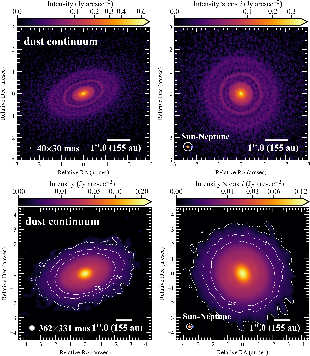
Figure 1: ALMA Band 6 dust continuum images of V1094 Sco, reconstructed via PRIISM, resolving multiple narrow rings and gaps out to ∼380 au.
The continuum emission demonstrates a radially organized hierarchy. Four ring-gap pairs are tightly resolved, with widths at or below the local pressure scale height, and clear transitions to a diffuse extended skirt beyond 300 au.
Simultaneous imaging of 12CO and 13CO yields channel maps, moment maps, and PV diagrams indicating a well-ordered, Keplerian gas disk, with outer radii—defined at 90% enclosed flux—of 762 au (12CO) and 707 au (13CO). Notably, the CO gas substantially exceeds the dust disk in radial extent.
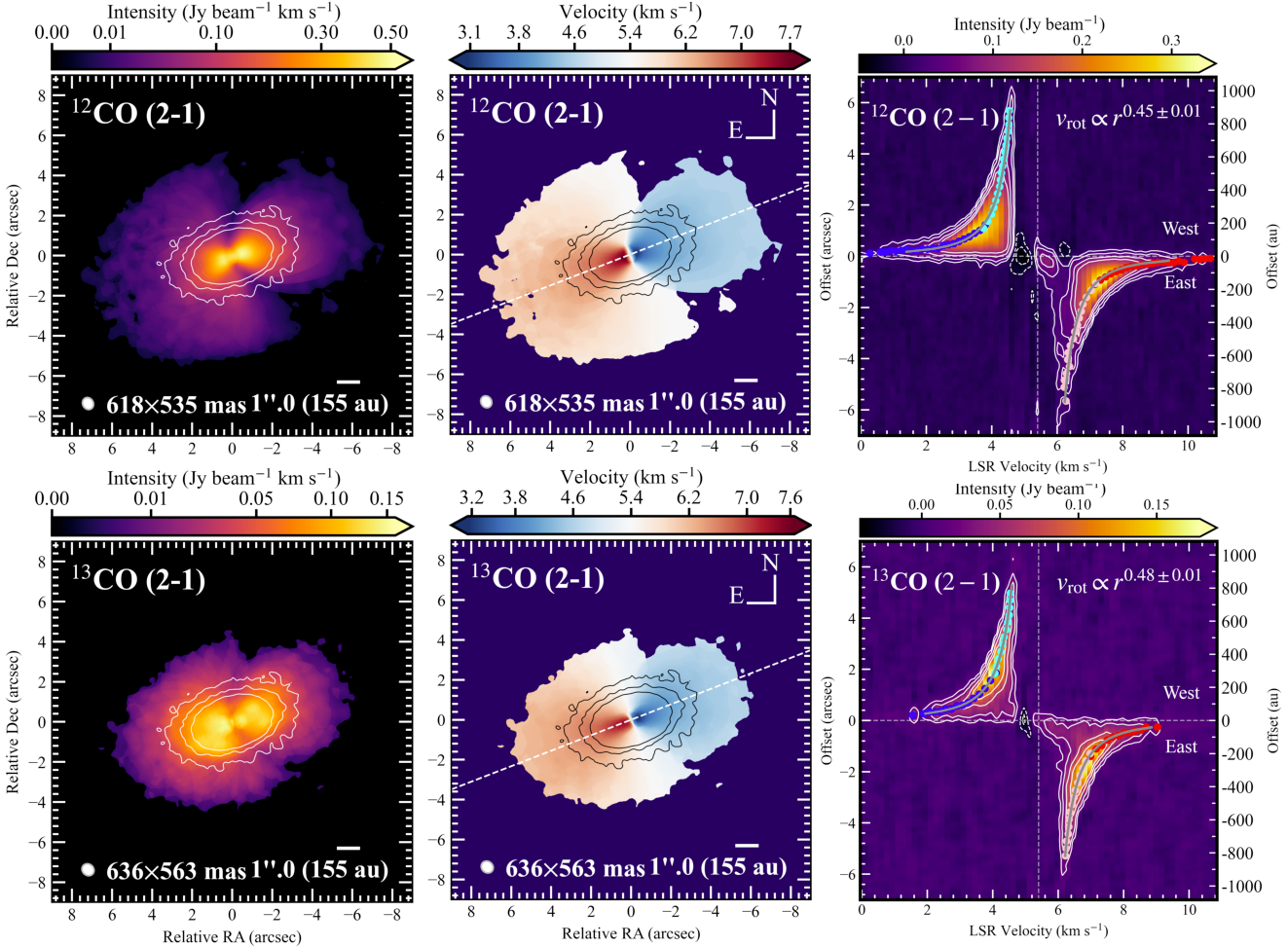
Figure 3: 12CO and 13CO datacube maps and PV diagrams, substantiating a large, rotation-dominated gaseous disk.
Disk Substructures: Profile, Origin, and Hierarchy
The authors apply a derivative-based morphological analysis to the azimuthally averaged radial intensity profile, isolating four types of substructures: gentle shoulders at small radii, a sharply defined "W-shaped" double-gap architecture (D95/B109, D119/B137) at intermediate radii, and two outer ring-gap pairs (D171/B187, D205/B231) (see Table 2 in the manuscript). Deconvolution confirms all resolved gaps possess widths exceeding the geometric mean resolution.
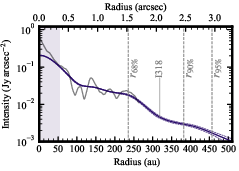
Figure 2: Azimuthally averaged continuum intensity profiles, with substructure extraction highlighting ring-gap pairs and inflection points.
Widths, Turbulence, and Dust Trapping
A central quantitative result is the measurement of ring widths relative to the local gas pressure scale height, wd/Hp∼0.6−1.4. Through analytical modeling, this restricts the turbulent viscosity parameter to α≲10−3 (potentially ≲10−4 with a shorter formation timescale), indicating gas is exceedingly quiescent.
Multi-Layer Diagnostic: Scattered Light Correlation
Near-infrared VLT/SPHERE images, after deprojection and r2 scaling, provide a vertical cross-section of the dust geometry, revealing that only the "W-shaped" gap complex at ∼100 au has a direct counterpart in scattered light—implicating a perturbation propagating from the midplane up to the disk surface.
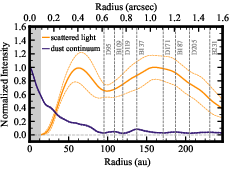
Figure 6: Near-infrared scattered-light images compared to ring-gap locations from ALMA continuum data, revealing vertical stratification in substructure responses.
Physical State and Thermal Structure
Dynamical analysis of CO rotation curves yields a stellar mass of 130. The surface geometry, constrained from scattered light, presents a flaring aspect ratio 131 with a shallow exponent (132), consistent with a cold, weakly flared, and vertically settled outer disk.
The area-weighted mean temperature profile in the range 133–134 au is 135, with the outer disk approaching temperatures (136) that enhance midplane dust-to-gas ratio and promote collective dust instabilities.
Planet-Disk Interaction Scenario
Quantitative comparison with planet-induced gap-opening models (e.g., [S. Zhang et al. 2018]) reveals that the ensemble of gap widths and depths cannot be reconciled with a one-planet-per-gap framework. However, the W-shaped double gap, along with its scattered light dip, is consistent with a low-mass (137) planet in a low-turbulence disk, exciting multiple substructures through secondary gaps and higher-order spiral wave damping. The estimated companion mass aligns with the local solid reservoir inferred from the observed dust density and radial pressure scale, given secular GI's instability threshold.
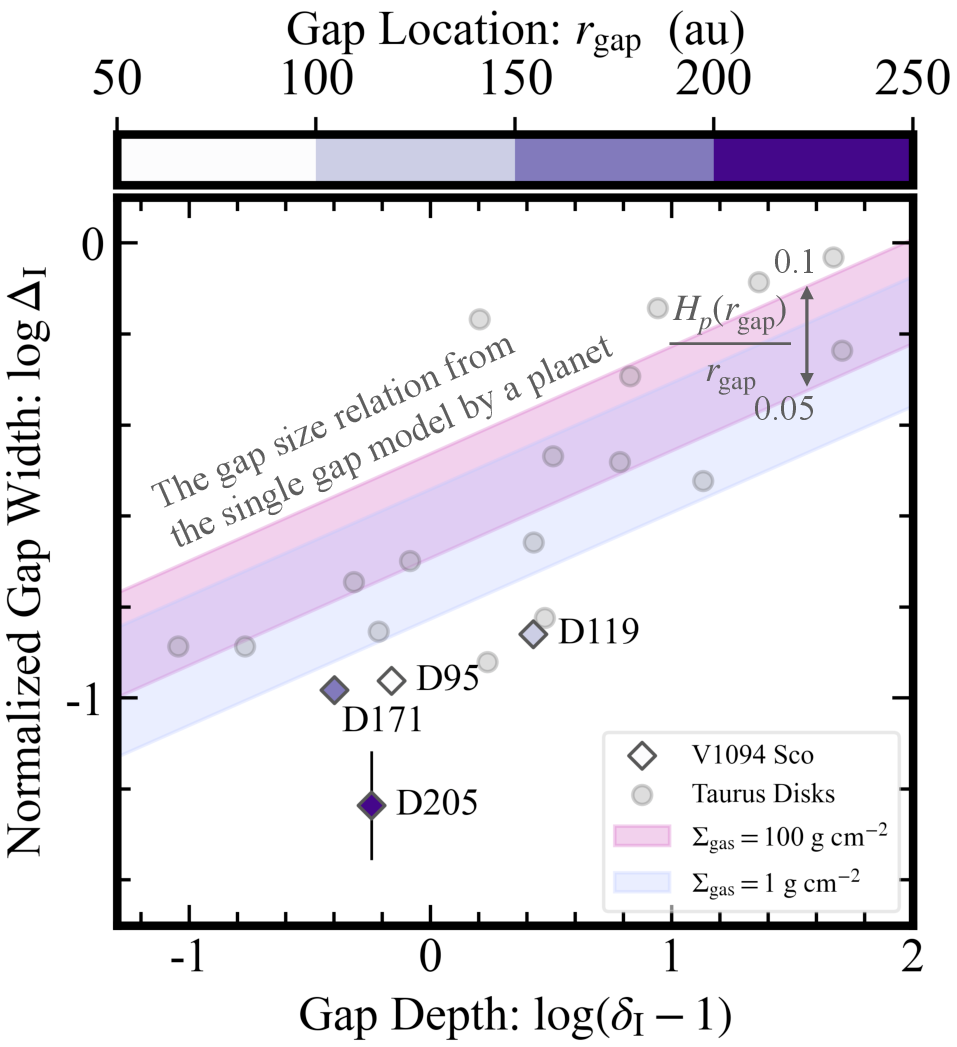
Figure 8: Schematic cross section correlating disk layers, ring-gap locations, and interpreted formation mechanisms, highlighting distinct regimes for planet-induced perturbations and secular instability-driven substructure.
Secular Gravitational Instability (GI)
The two outermost ring-gap pairs display regular spacing and lack NIR scattered light signatures—properties inconsistent with a planet or snowline origin, but in accord with midplane-concentrated mechanisms. Applying the linear secular GI criterion [R. T. Tominaga et al. 2023], with deduced disk parameters (138), these features are shown to reside within the unstable domain and match the theoretically predicted spacing and mass thresholds for GI-generated rings.
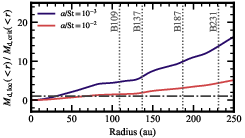
Figure 4: Quantitative comparison of gap properties with secular GI predictions, demonstrating the outer ring-gap pairs satisfy the instability criterion under measured disk conditions.
Implications and Future Directions
This study's central assertion is that V1094 Sco's ring-gap architecture arises from a hybrid regime: planet-disk interactions dominate at intermediate radii, while secular GI is necessary to explain large-scale, outer disk morphology under weak turbulence. The direct link between observed solid concentration and minimum mass for both disk GI and planet formation is robustly quantified.
Theoretically, this supports a hierarchical formation paradigm: secular GI acts as a precursor or facilitator to planetesimal formation by concentrating solids long before classical core accretion timescales become tractable at large radii. The empirical constraints on 139 have significant ramifications for global disk evolution models and the efficiency of planet formation far from the host star.
On a practical level, the methodology sets a benchmark for combined multi-wavelength, super-resolved imaging studies, facilitating discrimination between competitive substructure formation mechanisms.
Conclusion
The V1094 Sco disk provides compelling observational support for a hybrid origin of multiple ring-gap disk substructures. The confluence of high dust mass, weak turbulence, cold temperatures, and multi-layer substructure responses not only invalidates a suite of single-process explanations but also illustrates the complex dynamical landscape in which planet formation proceeds. This analysis suggests that both planetary companions and secular gravitational instability can co-exist, operating preferentially in different disk regions and vertical layers. As high sensitivity and spatial resolution become standard, similar hybrid architectures may be found to be common, informing both theoretical models and direct observational searches for nascent planetary systems.