- The paper introduces a novel 3D Hamiltonian that passively protects a single logical qubit with exponentially extended memory lifetimes below a finite critical temperature.
- It employs a recursive CSS stabilizer code with alternating error barrier amplification in both X and Z sectors, ensuring geometric locality and bounded density.
- The construction circumvents traditional limitations by breaking translation invariance and leveraging a renormalization-group decoder to rigorously suppress thermal errors.
A Passive Self-Correcting Quantum Memory in Three Dimensions
Introduction and Background
The construction of self-correcting quantum memories in physically realistic dimensions is a central open problem in quantum information and condensed matter theory. Three-dimensional (3D) systems are especially critical, as all known unconditional constructions allowing passive, exponentially long-lived quantum memories at finite temperature require four or more spatial dimensions. The present work ("A passive self-correcting quantum memory in three dimensions" (2605.10943)) proposes and rigorously analyzes a 3D local Hamiltonian family that achieves exponentially long quantum memory lifetimes below a nonzero critical temperature, settling this fundamental question.
In a thermal environment, a quantum memory's performance is characterized by its memory lifetime tmem. For a Hamiltonian family {Hk} of system size nk, the ideal scenario is tmem≳exp(nkη) for some η>0 at sufficiently low temperature, signifying stability under local, uncontrolled thermal errors for timescales vastly surpassing the system's microscopic times.
Prior codes—3D toric, cubic, and welded toric codes, and other recent LDPC constructions—were proven or numerically observed to fail this stringent criterion, primarily due to the existence of low-weight logical operators arising from string-like or fractal structures. Notably, no translation-invariant 3D Pauli stabilizer code is expected to be self-correcting [(2605.10943), Haah 2013]. The main innovation here is to abandon translation invariance and systematically alternate error barrier amplification in both X and Z sectors.
High-Level Construction & Embedding in R3
The authors construct a recursively-defined family of CSS stabilizer codes (C(k)) and associated local Hamiltonians (Hk). At each recursive step, a seed code is transformed by alternately applying two procedures: {Hk}0, which increases the syndrome cost (energy barrier) for {Hk}1-type errors, and {Hk}2, which increases the syndrome cost for {Hk}3-type errors. Each procedure effectively 'thickens' the code structure, augmenting energy cost and ensuring geometric locality.
A geometric embedding {Hk}4 accompanies the combinatorial procedure. Key features:
- Locality: Each Hamiltonian term acts on qubits localized within a ball of finite radius in {Hk}5.
- Bounded Density: The number of qubits (or faces in the associated square complex) in any unit ball remains constant, independent of the system's scale.
The recursive thickening, subdivision, and degree-reduction steps (see the construction's Figure 1) maintain bounded vertex and edge degrees in the underlying Tanner square complex {Hk}6, crucial for removing spurious low-weight logical operators and ensuring robust scaling.
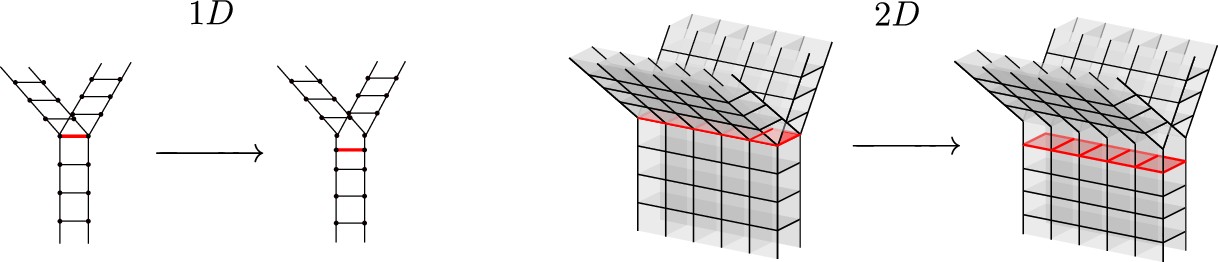
Figure 1: Local effect of the degree reduction step; thickening at junctions increases degree locally, countered by systematic degree-reduction targeting the red-highlighted cells.
Syndrome Growth and Energy Barriers
A central principle underlying self-correction is that error syndrome size (the set of violated stabilizers due to an error string) should grow rapidly with the size of the error. For {Hk}7-type errors, this is formalized as a coboundary-expansion property: for any 1-cochain {Hk}8 not equivalent to a stabilizer, {Hk}9, i.e., syndrome weight increases superlinearly with the minimum number of qubit flips. Analogous statements hold in the nk0-sector via duality.
The recursive application of nk1 and nk2 ensures that both nk3 and nk4 error sectors experience exponential growth in their minimal energy barriers with system size. This alternation is crucial, as any single sector’s neglect would allow logical errors to proliferate.
Code Properties and Memory Lifetime
The main theorem (informal statement):
- For each nk5, nk6 encodes a single logical qubit (ground state degeneracy two).
- There exists a finite nk7 and nk8 such that, for temperatures nk9, the logical memory lifetime
tmem≳exp(nkη)0
where tmem≳exp(nkη)1 is the number of qubits at level tmem≳exp(nkη)2 (growing exponentially in tmem≳exp(nkη)3).
This is established via a Peierls-type argument and the explicit construction of a renormalization-group decoder that locally corrects errors at all spatial scales—see main decoder schematic (Figure 2).
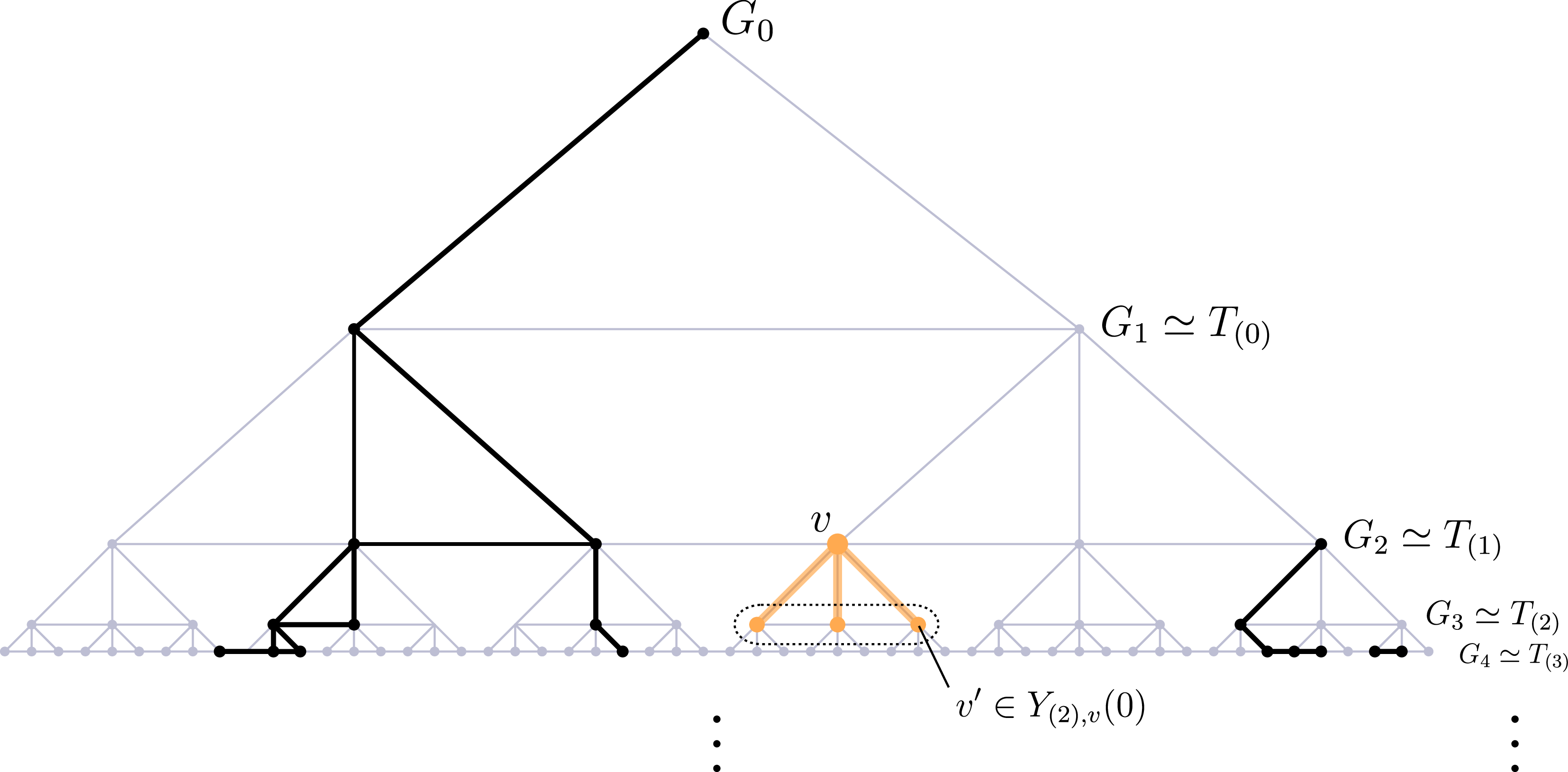
Figure 2: Schematic of nodes and edges in the multiscale decoding graph, with RG decoding acting at each scale and error propagation mapped through the hierarchical subgraphs.
The probability of an 'unstable' syndrome—one that could result in a logical error via the decoder upon a single local perturbation—is doubly exponentially small in tmem≳exp(nkη)4, hence negligible in the thermodynamic limit.
Explicit and Random Embeddings
The code admits two formulations:
- Random embedding: Each iteration includes a random perturbation step in the geometric embedding, ensuring locality and density via probabilistic arguments (e.g., Lovász local lemma techniques) on the complex’s faces. The existence of a valid embedding is proved constructively.
- Explicit deterministic embedding: An alternative, explicitly described construction uses deterministic geometric rules and perturbation gadgets (see Figures 16 and 17), enabling precise control of all local structures and guaranteeing much smaller scale factors for cell size, hence better memory lifetime exponents.
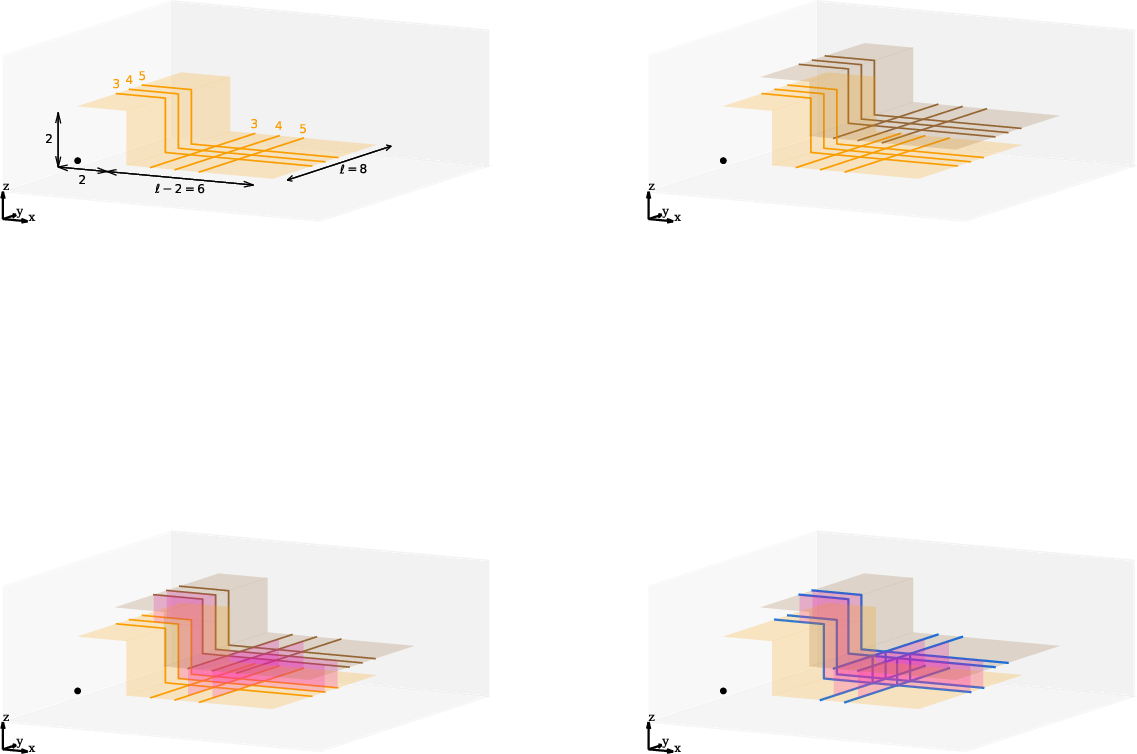
Figure 3: Gadget depicting the doubling process with a perturbed, scaled square—key to explicit deterministic embedding.
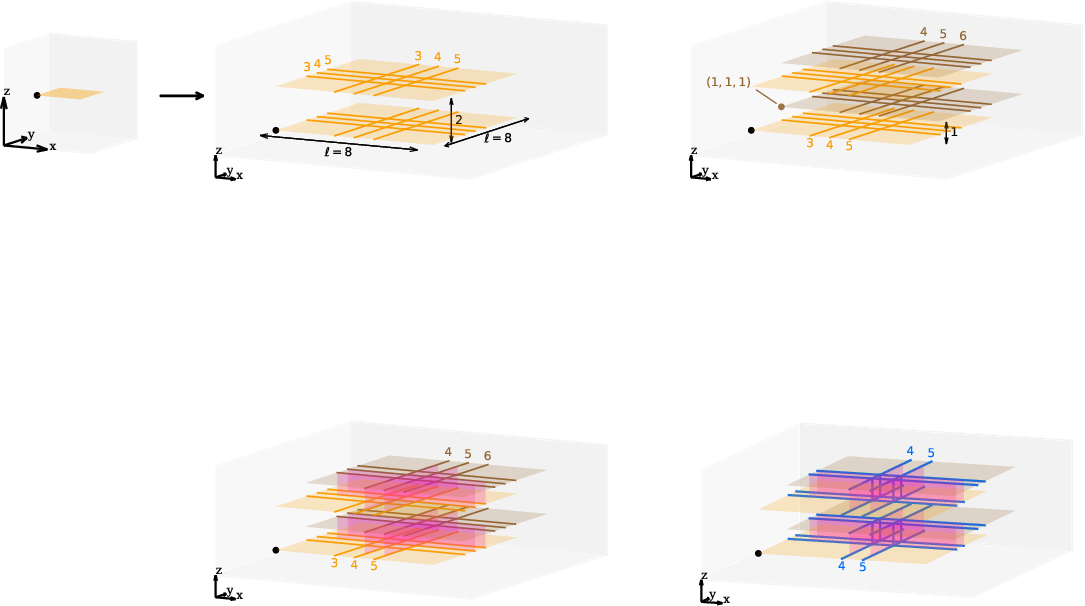
Figure 4: Doubling step for two overlapping squares, with tmem≳exp(nkη)5-direction separation eliminating geometric overlaps.
Quantum Code and CSS Structure
The code is formulated as a three-term cochain complex for a quantum CSS code. Recursive steps alternately amplify tmem≳exp(nkη)6 or tmem≳exp(nkη)7 sectors. Explicit chain and cochain maps are maintained via the code embedding formalism, ensuring that logical qubit number and homological invariants are preserved throughout.
Numerical Bounds
With non-optimized constants, the construction guarantees an explicit tmem≳exp(nkη)8-embedding, with tmem≳exp(nkη)9 possibly η>00; future improvements and deterministic embeddings can reduce this dramatically. The critical inverse temperature η>01 is also (conservatively) finite.
Implications & Outlook
Practical and Theoretical Impact
This construction removes the final obstruction to 3D passive quantum memory, providing a concrete design path for 'quantum hard drives' operable for astronomically long times without active intervention. Theoretical implications include the demonstration that quantum topological order protected at nonzero temperature is possible in 3D, but necessarily breaks translation invariance and requires careful local code engineering.
Limitations and Open Questions
- Initialization: Efficient, robust methods for passively initializing the logical subspace are not yet fully understood, though the authors discuss likely strategies.
- Fault-Tolerant Computing: Constructing a passive, 3D, universal quantum computer would require implementing non-Clifford gates or code switches at finite temperature, a formidable challenge not addressed here.
- Spectral Gap Stability: The paper posits—but defers proving in full—that the code’s spectral gap is stable under local perturbations, i.e., that TQO-1/2 conditions [Bravyi et al., 2010] are met.
- Code Parameters: Determining the optimal exponent η>02 as a function of embedding and combinatorial parameters remains an open problem.
- Relation to Phases of Matter: The construction is an example of a non-translationally invariant phase with topologically nontrivial excitations—exemplary for exploration in quantum statistical mechanics.
Conclusion
This work establishes, for the first time, the existence of a fully local, three-dimensional quantum Hamiltonian system capable of passively protecting quantum information for exponential times below a critical temperature, without active error correction. The construction leverages alternating scale-amplification of both η>03- and η>04-error sectors, recursive geometric embedding, and hierarchical decoding. The approach provides both a blueprint for experimental advances in long-lived quantum storage and a new pillar in the classification of phases of quantum matter in realistic spatial dimension.
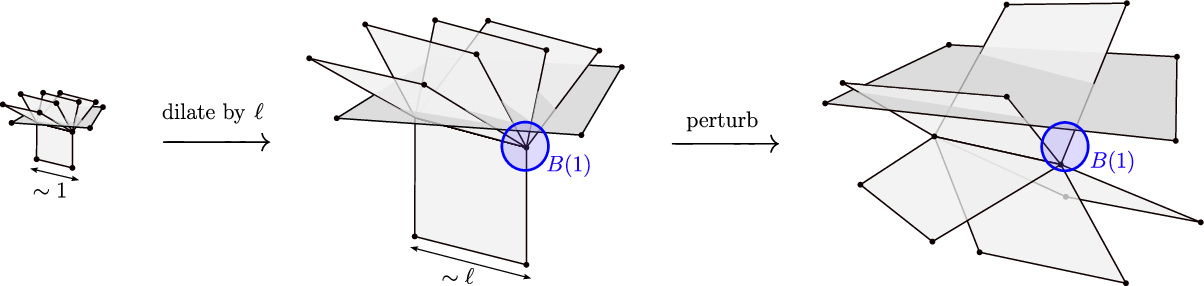
Figure 5: Illustration of the perturbation step's effect on embedding density—critical for ensuring locality and bounded qubit density at every iteration.

