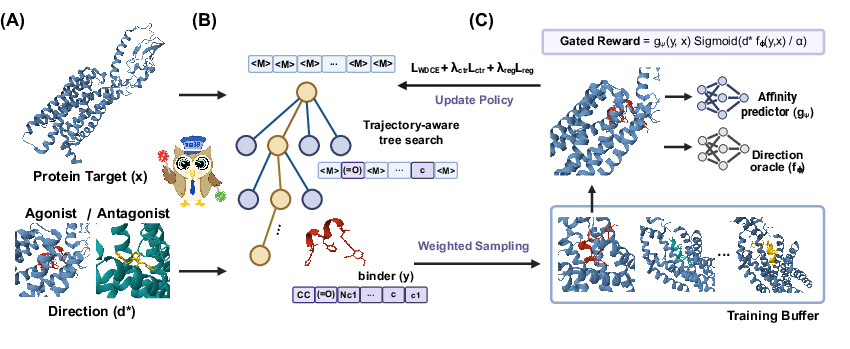
- The paper introduces TD3B, a novel framework that models sequence-conditioned transition operators to generate allosteric binders with controlled directionality.
- It integrates a masked discrete diffusion model with a Direction Oracle and gated reward mechanism, achieving superior binding affinity and direction accuracy (Accuracy: 0.93, F1: 0.90).
- The approach decouples binding affinity from directional modulation, enabling precise design of agonists and antagonists for targeted therapeutic interventions.
TD3B: Transition-Directed Discrete Diffusion for Allosteric Binder Generation
Traditional computational design methods for protein binders focus on stabilization of static conformational states, often optimizing equilibrium binding without explicit consideration for dynamic, directional effects such as agonism or antagonism. This paradigm neglects a fundamental property of many biomolecular targets, particularly GPCRs, that govern function via directional state transitions (e.g., activation vs. inhibition). TD3B reframes the binder design problem from equilibrium structure-centric approaches to modeling and controlling sequence-conditioned transition operators. Specifically, TD3B formalizes allosteric modulation as a sequence-dependent perturbation to Markov generators, enabling explicit modeling of non-reversible transition asymmetry—a property crucial for designing binders that can act as agonists or antagonists rather than merely stabilizing a conformation.
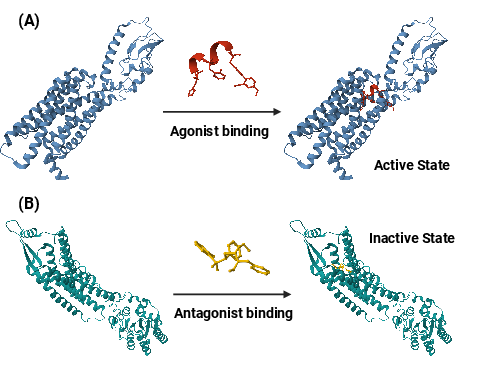
Figure 1: Structural mechanisms of agonist and antagonist peptide binding. Agonist binding triggers conformational transitions to the Active State; antagonist binding stabilizes the Inactive State without inducing structural changes.
TD3B Architecture and Methodology
TD3B integrates multiple components for sequence-based generation of allosteric binders with controlled directionality:
Experimental Validation and Numerical Results
TD3B was empirically evaluated against state-of-the-art static and predictive baselines (including RFDiffusion, PepTune, TR2-D2, and others) utilizing a curated dataset from IUPHAR/BPS. The Direction Oracle demonstrated high discriminative performance (Accuracy: 0.93, F1: 0.90). Fine-tuned TD3B generated samples that exhibited higher predicted binding affinity and stronger directional control versus both structure-based and pre-trained generative baselines. Directional accuracy and gated reward metrics confirmed superior agonist/antagonist selectivity, with TD3B achieving direction accuracy of 1.00 in antagonist mode and gated reward of 5.33, outperforming guidance-only and equilibrium-based competitors.
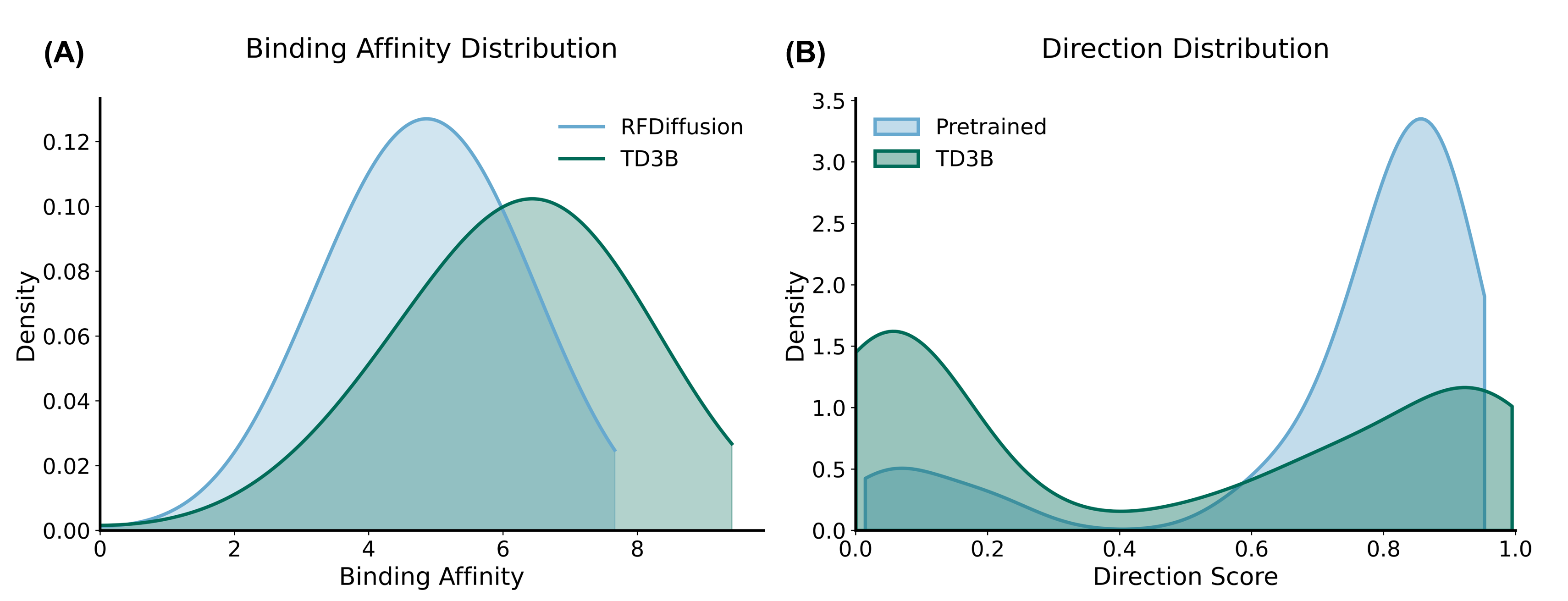
Figure 3: Direction and affinity distribution of TD3B. TD3B exceeds RFDiffusion in affinity and produces sharply controlled directionally selective distributions.
Ablation studies established necessity and complementarity of contrastive and KL objectives in the fine-tuning framework. Weighted resampling available in TD3B further improved both affinity and directional balance over previous trajectory-guided models.
Targeted Binder Design and Case Studies
TD3B enables targeted control over protein state transitions. When conditioned on desired directionality, generated sequences demonstrated functionally distinct binding modes and outperformed wild-type controls in predicted affinity. For GLP-1R and TAAR1, TD3B-designed agonists and antagonists selectively engaged or avoided experimentally validated activation residues. In GLP-1R, Arg299 and Asn300—essential for agonist activity—were specifically contacted by TD3B-designed agonists but not antagonists. Similarly, for OX1R, antagonists engaged molecular switches for inactive-state stabilization, while agonists permitted activation-relevant flexibility.
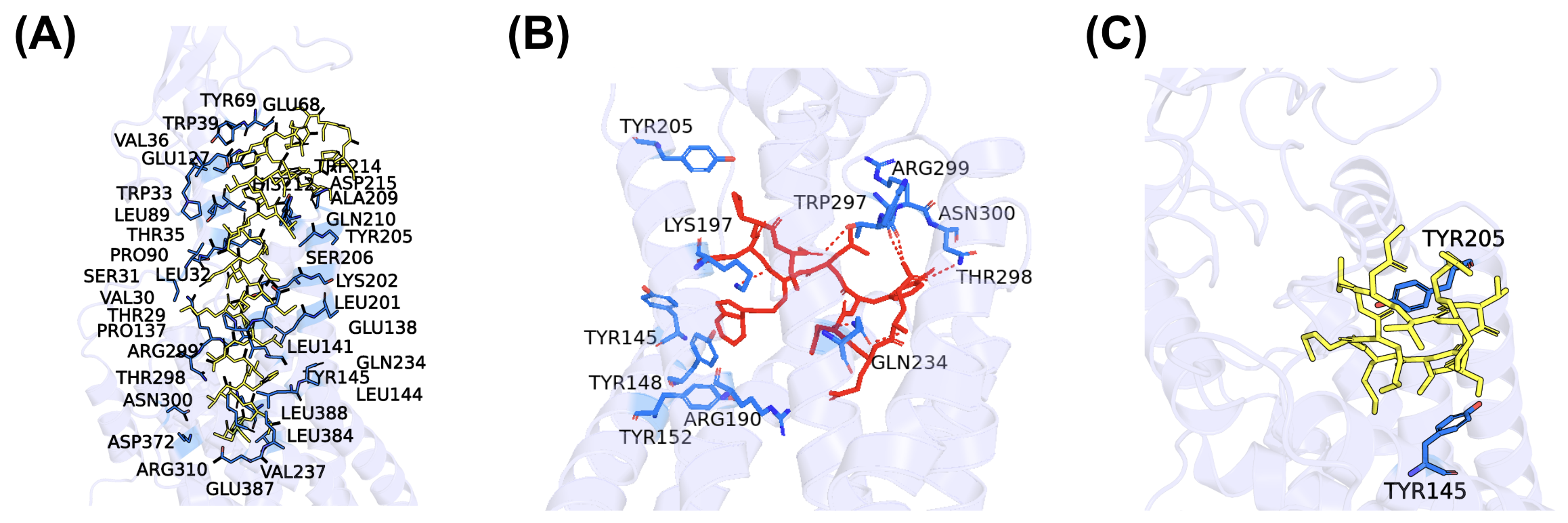
Figure 4: Evaluation of TD3B on GLP-1R. TD3B-generated agonists and antagonists engage distinct residue patterns in predicted binding complexes.
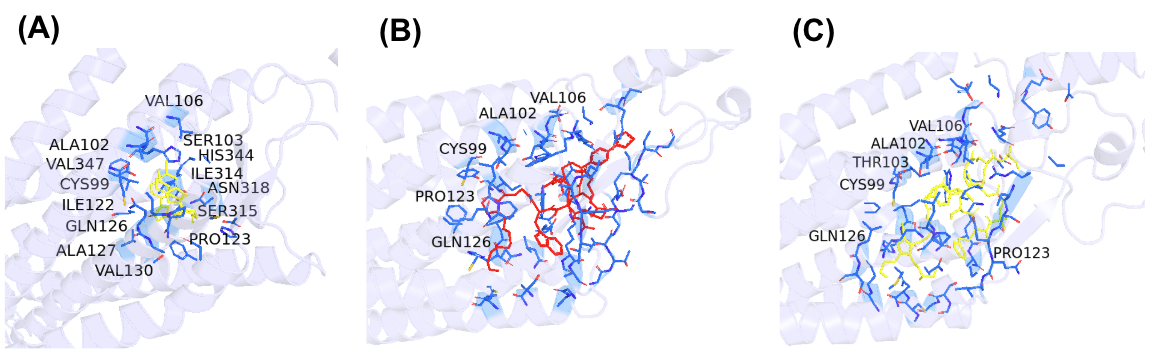
Figure 5: Evaluation of TD3B on OX1R. Designed agonist and antagonist binders demonstrate orthosteric targeting and direction-dependent residue engagement.
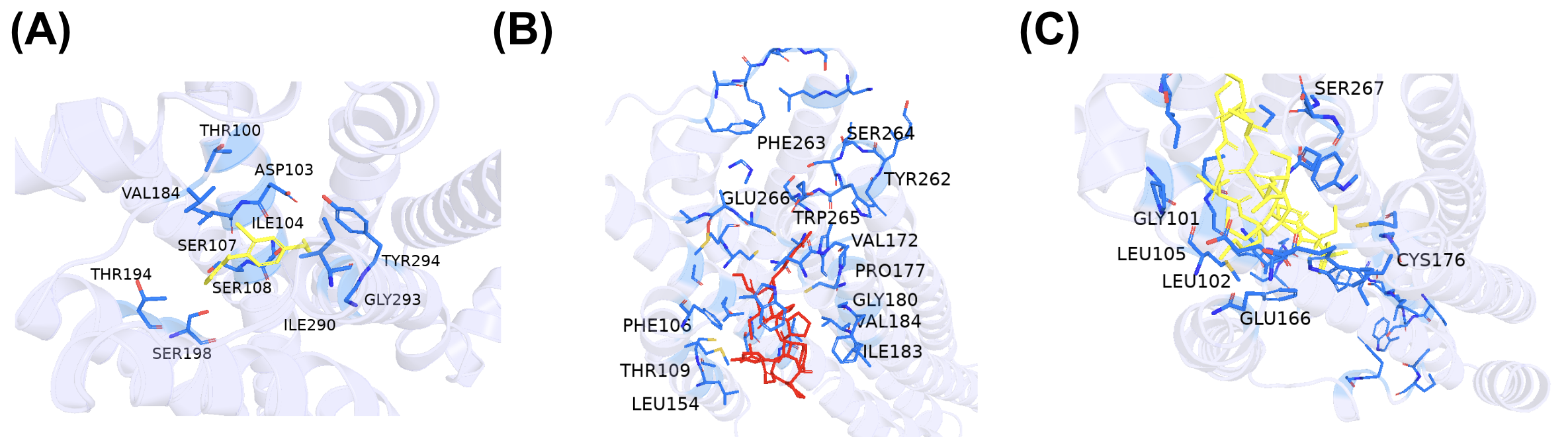
Figure 6: Evaluation of TD3B on TAAR1. TD3B-generated binders exhibit clear functional differentiation in binding-site interactions for forward (activation) vs. reverse (inhibition) transition objectives.
Theoretical and Practical Implications
TD3B's operator-theoretic formulation establishes that allosteric function derives from asymmetric, non-equilibrium perturbations, not merely endpoint stability. By internalizing directionality as the modeling target, TD3B opens avenues for systematic design of agonist/antagonist behavior, sidestepping the representational limitations of static structure-based approaches. This methodology provides a principled mechanism for integrating biological constraints—such as kinetic pathway reshaping—into generative models. Practically, TD3B can accelerate therapeutic design for targets where directionality controls signaling outcomes, reducing late-stage failures caused by unintended ligand function.
The explicit decoupling of affinity from directionality further allows for the design of binders with desired signaling profiles, supporting intervention strategies in metabolic, neuromodulatory, or immunotherapeutic settings. The flexibility of trajectory-aware fine-tuning and tree search makes TD3B extensible to multi-objective or multi-modal generative tasks (e.g., biased agonism, multi-state transitions).
Future Directions
Future developments include (1) richer continuous-rate or Markov state supervision, (2) expanding beyond binary agonism/antagonism to model nuanced biased signaling; (3) integration with wet-lab functional assays for experimental validation; and (4) scaling TD3B to larger protein families or non-peptide modalities. The theoretical foundation established by TD3B invites exploration of more sophisticated generative mechanisms—such as reinforcement learning, flow matching, or energy-based modeling—that capture the full spectrum of non-equilibrium biomolecular dynamics.
Conclusion
TD3B introduces a generative paradigm that models allosteric binder design as controlled modulation of protein state transition directionality, moving beyond equilibrium and structure-based representations. Empirical validations demonstrate its capacity for high affinity, direction-selective binder generation, and provide strong evidence that transition-operator guidance outperforms both static and predictive baselines. The implications for theoretical biology and therapeutic innovation are substantial, and TD3B offers a robust, extensible foundation for future sequence-based discovery efforts (2605.09810).