- The paper presents a computational model using POMDPs and MHNG to simulate how social allostasis drives the emergence of emotion through active inference.
- The study shows that dynamic symbolic negotiation leads to convergence of interoceptive priors, with metrics like decreasing JS divergence evidencing alignment.
- The model offers actionable insights for multi-agent socio-emotional systems and computational psychiatry by linking bodily regulation with collective emotion construction.
Emergence of Social Reality of Emotion via Social Allostasis with Dynamic Interpretants
Constructed Emotion and Social Reality: Computational Foundations
The theory of constructed emotion posits that emotion is not an innate biological property but an emergent phenomenon arising from the interplay of predictive allostatic regulation and social interaction. The present paper advances this framework by proposing a computational model integrating active inference of interoceptive sensations with symbol emergence, accounting for both bodily and social dynamics in emotion concept formation.
Central to the model is the adoption of partially observable Markov decision processes (POMDPs) for discrete interoceptive states and actions, with each agent maintaining internal generative models characterized by likelihood A, state transition Ba, prior preference C, and symbol interpretation parameter E. Agents interact via the Metropolis–Hastings Naming Game (MHNG), enabling decentralized Bayesian inference for sharing symbols grounded in both agents' interoceptive priors. This operationalizes the social reality of emotion as convergence in prior preferences and symbol interpretations through communicative alignment.
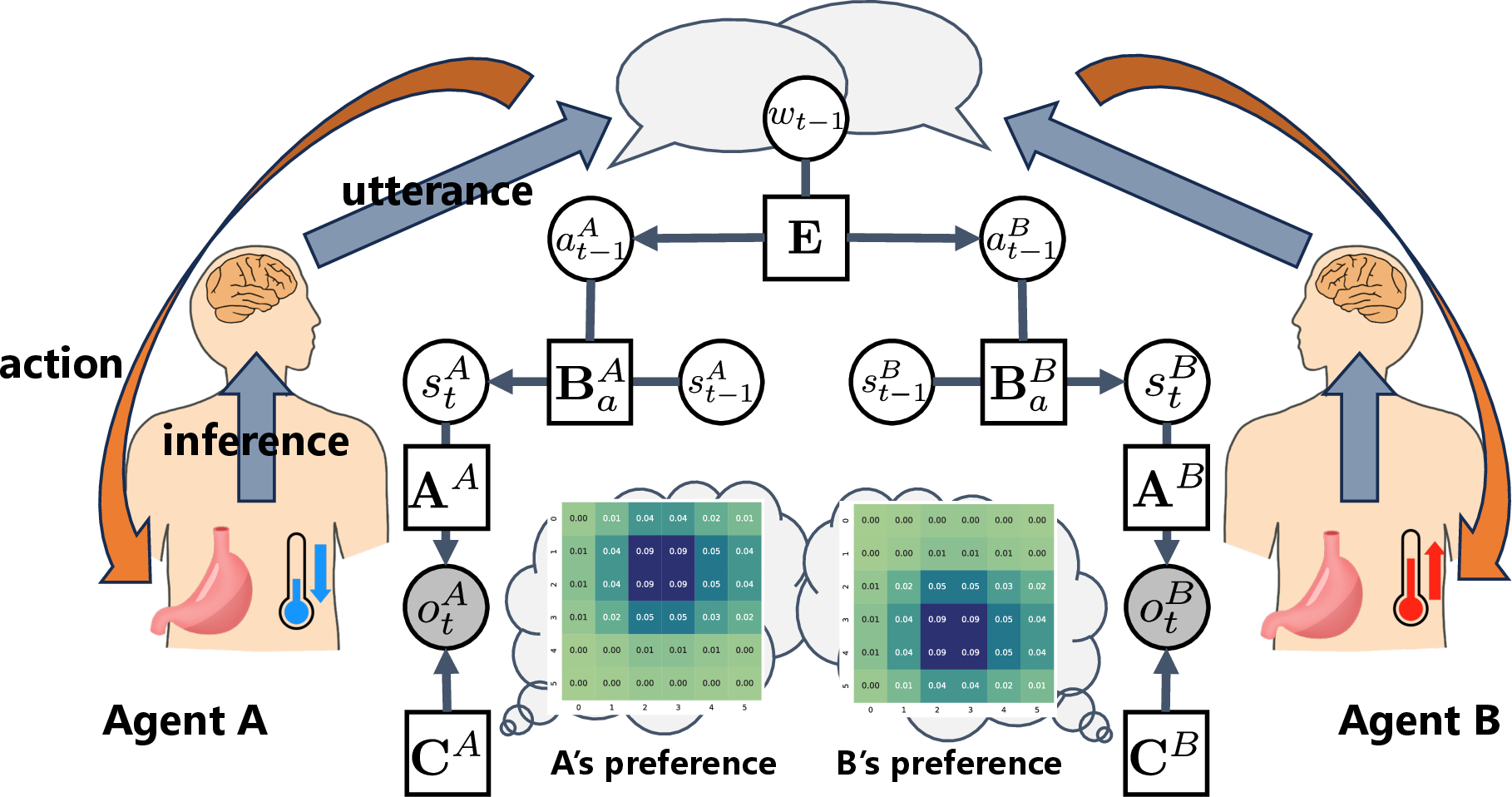
Figure 1: Overall architecture showing agents' internal POMDPs and symbolic interaction via MHNG, enabling active inference and mutual adaptation.
Symbol Emergence and Communication Dynamics
The model leverages collective predictive coding to facilitate bottom-up symbol emergence, with agents inferring and exchanging emotion-related symbols. Each agent uses active inference to minimize expected free energy over actions, with the inferred symbol interpreted as a community-level emotional concept. Symbol selection is mediated by MHNG, and parameter updates ensure mutual adaptation: rejected symbols trigger top-down shifts in prior preferences to maximize symbol acceptance in subsequent interactions.
Symbol interpretation (E) evolves as a function of agents' converging preferences. Early phases display divergence in emotion-related actions, whereas late phases show the emergence of symbols encoding aligned bodily control actions.
Experimental Validation: Emergence and Alignment Processes
Experiments were conducted with two agents possessing distinct initial preferences for body temperature, sharing a moderate preference for energy accumulation. Actions included Cool, Warm, Eat, Play, and Sleep, affecting interoceptive states discretely. Both agents started with uniform symbol-action mappings.
Prior Preference Convergence
The trajectory of the Jensen–Shannon (JS) divergence between agents' prior preferences over iterations was analyzed, confirming gradual convergence as symbolic communication progressed.
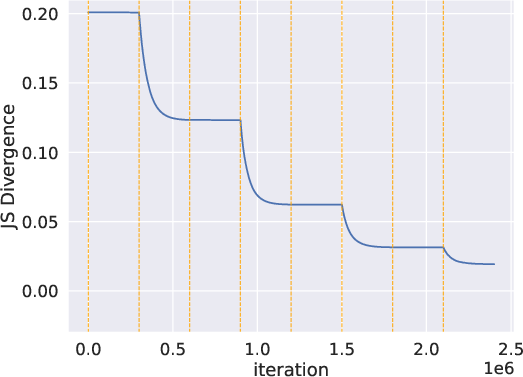
Figure 2: JS divergence between prior preference distributions shows monotonic decrease, evidencing convergence via symbolic negotiation.
Heatmaps of C over the interoceptive state space further demonstrate that agents, initially holding opposing temperature preferences, achieve a compromise—a peak in preferences at intermediate temperature levels—through mutual adaptation.
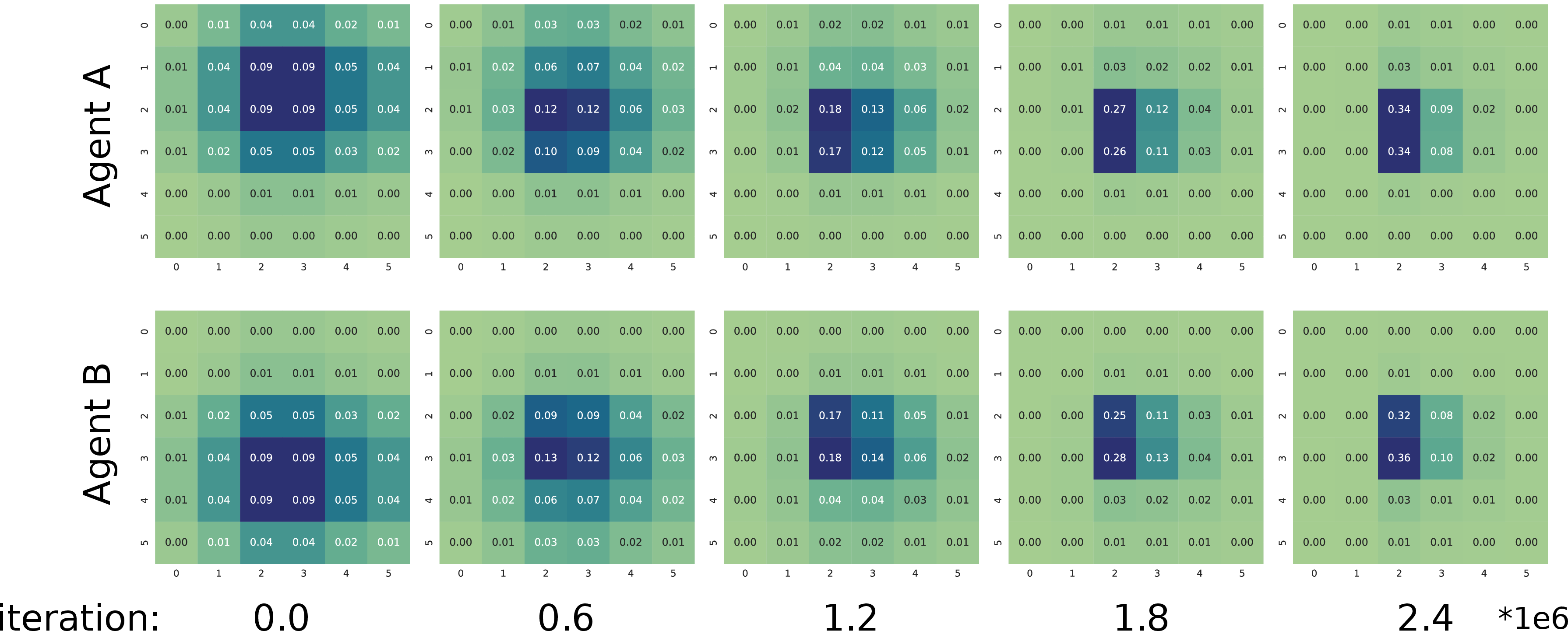
Figure 3: Evolution of C for each agent reveals convergence toward a shared intermediate preference profile across energy and temperature dimensions.
Symbol Interpretation Adaptation
Dynamic evolution of the symbol interpretation parameter E reveals how, in the early phase, agents frequently select temperature regulation and energy replenishing actions due to disparity in temperature preferences. As convergence is reached, symbols increasingly encode actions favoring maintenance and recovery (Sleep), reflecting reduced metabolic demand.
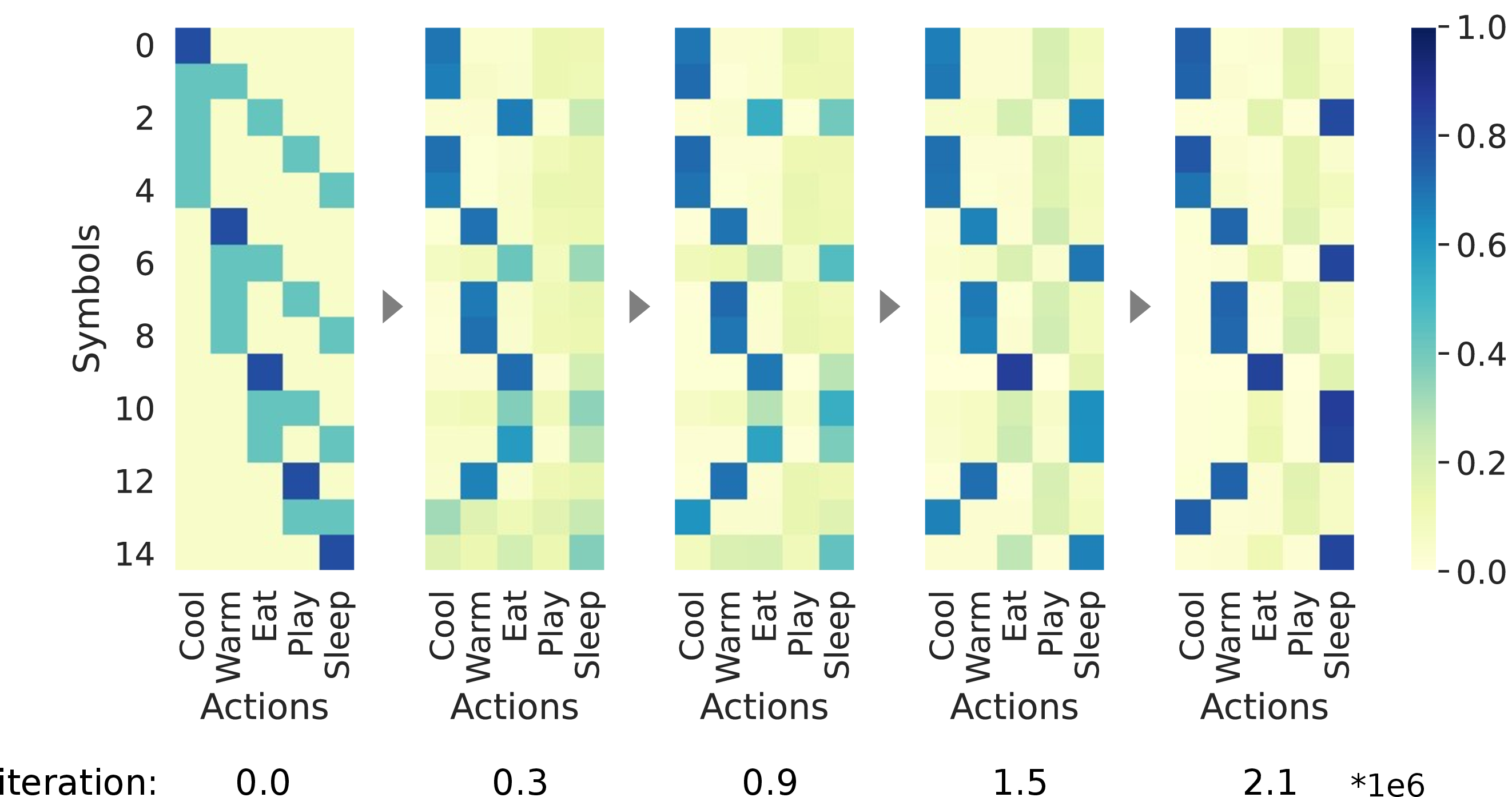
Figure 4: Changes in E capture shifts from temperature regulation and energy actions to balanced maintenance, indicating semantic reassignment of shared symbols.
Implications and Theoretical Scope
This model formalizes the interdependence between individual allostatic goals and collective conceptual anchoring in emotion construction, linking bodily regulation to social negotiation via symbolic means. The findings support the hypothesis that aligned bodily control goals and dynamically co-constructed emotion concepts can emerge without direct access to internal states, relying solely on communicative rejection and adaptation cycles.
Practically, this architecture could inform multi-agent systems, robotic socio-emotional negotiation, and computational psychiatry applications by mapping the processes of emotion co-construction and consensus formation. Theoretically, it substantiates the claim that emotion categories are not statically encoded but dynamically recomposed via interaction, as per the theory of constructed emotion and collective predictive coding.
Strong numerical results include monotonic decrease in JS divergence and dynamic adaptation of symbol interpretation mappings, confirming both hypotheses: (1) mutual preference alignment and (2) emergence of action-representative emotion concepts.
Future Directions
Limitations of the current study pertain to the use of discrete state spaces and simple generative models. Extension to continuous, high-dimensional environments, richer affective modalities, and larger agent collectives would enable exploration of robustness, generalization, and scalability of the social reality emergence mechanism. Further, integrating hierarchical or recursive symbol emergence could provide insights into multi-level social consensus processes in emotion concept formation.
Conclusion
The proposed model formalizes the emergence of social reality of emotion through tightly coupled dynamics of bodily allostasis and communication, implemented as interactive active inference and decentralized Bayesian symbol negotiation. The alignment of bodily control goals and transformation of symbol meanings are achieved through interactive adaptation, evidencing the co-constructive nature of emotion concepts in social agents. The framework advances computational approaches to socio-emotional grounding and sets a foundation for future work on scalable, realistic models of social concept formation.

