- The paper demonstrates that hadronic spectra in N=2 SQCD are encoded by a supersymmetric 2D black hole at Kač-Moody level k=1.
- It employs a non-Abelian vortex string framework and a supersymmetric weighted CP(N,N)-model to quantitatively match field theory and string theory predictions.
- The work reveals that the multiplicity of hadronic states scales as N², indicating asymptotic Hagedorn growth and distinct symmetry breaking patterns.
Hadrons in N=2 Supersymmetric QCD from Non-Abelian String on 2D Black Hole
Introduction and Framework
This work presents an extension of the non-Abelian vortex string interpretation in 4D N=2 SQCD to U(N) gauge theory with even N and Nf=2N flavors. The focal point is a specific mass deformation enabling an interpolation between different gauge group ranks while preserving conformal invariance at the world-sheet level. In particular, the authors demonstrate that, despite such deformations, the hadron spectrum remains encoded by the spectrum of the N=2 supersymmetric black hole (mirror to deformed Liouville theory) at Kač-Moody level k=1.
A notable implication is the identification of two dynamically distinct phases in this theory (Higgs and string/hadronic phases), separated by a phase transition which is mapped, via the stringy description, to a conifold transition in the geometry of the internal Calabi-Yau. The correspondence between the hadron spectrum (quantum numbers, masses, and multiplicities) from the field-theoretic and string-theoretic pictures is thoroughly examined and quantitatively matched, lending credence to the critical superstring description for non-Abelian vortices in these supersymmetric gauge theories.
Non-Abelian String Description and World-Sheet Dynamics
The low-energy effective world-sheet theory on the non-Abelian vortex string is given by a supersymmetric weighted CP(N,N)-model, which, in the conformal limit (Nf=2N), possesses a Ricci-flat Kähler (Calabi-Yau) target space. The criticality arises specifically for N=2, but the broader construction with arbitrary even N=20 leverages the structure of the interpolating mass deformation.
At strong coupling, the Coulomb branch of the world-sheet model opens up, and its dynamics is described by an N=21 supersymmetric Liouville theory with background charge N=22. The Liouville theory is further dual (via mirror symmetry) to a supersymmetric 2D black hole, i.e., the N=23 Kazama-Suzuki coset (cigar geometry), where the vertex operator spectrum directly encodes the hadron towers in 4D SQCD.
String Spectrum, Multiplicity, and Black Hole Thermodynamics
A key result is that the string spectrum producing the hadronic states in N=24 SQCD depends only on the Kač-Moody level N=25—fixed at N=26, regardless of N=27—such that mass level positions are N=28-independent. The quantum numbers align with those expected from the field theory, and the N=29-baryon (the complex structure deformation modulus of the conifold) emerges as a massless state whose VEV parameterizes the non-perturbative Higgs branch at strong coupling.
However, the multiplicity of hadronic states at each level does scale nontrivially with U(N)0 and approaches asymptotic (near Hagedorn) growth, as dictated by the black hole entropy in the string dual.
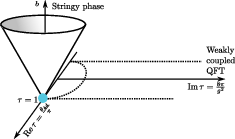
Figure 1: The phase diagram for 4D SQCD. The fundamental domain of 4D coupling U(N)1 is shown in the horizontal plane. SQCD is in the Higgs phase on this plane. The stringy phase where U(N)2 is schematically shown by the cone.
The black hole mass/entropy depends both on the complex structure modulus U(N)3 and mass parameter U(N)4 (related to the deformation), leading to a spectral density of the form
U(N)5
with the Hagedorn temperature U(N)6 fixed by U(N)7 and the logarithmic multiplicity scaling as U(N)8. The authors confirm this U(N)9-dependence by a large-N0 group-theoretic analysis in the field theory.
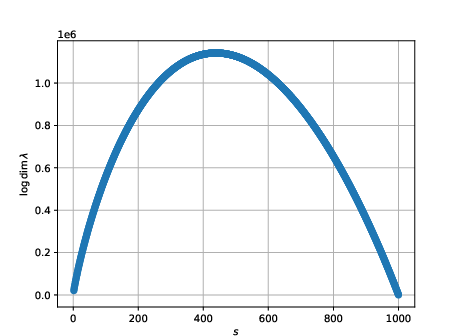
Figure 2: Numerical plot of the dependence of N1 on N2 with N3, N4.
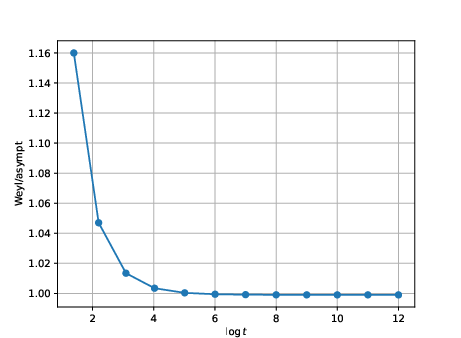
Figure 3: N5 to N6 ratio for N7, N8, N9.
Phase Structure, Symmetry Breaking, and Goldstone Modes
A significant theoretical result is the argument—contradicting earlier lore—that the Higgs and stringy phases in this theory are not analytically connected. Even though both phases have massless excitations, their global symmetry representations are distinct: screened quarks are in bifundamental representations in the Higgs phase, while the stringy Goldstone Nf=2N0-baryons in the hadronic phase belong to the antisymmetric rank-2 tensor of the restored Nf=2N1 global symmetry. The phase transition is signaled by the conifold transition in the stringy geometric description.
The Nf=2N2-baryon condensate spontaneously breaks the global Nf=2N3 flavor symmetry to Nf=2N4, and the resulting Goldstone manifold dimension matches the multiplicity of massless baryon modes, as expected from representation theory.
Field Theory–String Theory Matching and Asymptotics
The field theory analysis of allowed baryonic irreducible representations, based on central charge/BPS mass formulas and representation theory (Weyl dimension formula for the relevant "double-step ladder" Young tableaux), reproduces the Nf=2N5 scaling of state multiplicity seen from the string/black hole entropy side. The leading Hagedorn exponential in the density of states is universal, while the subleading power is fixed by Nf=2N6 and the details of the deformation.
Importantly, combining these two perspectives provides nontrivial cross-verification of the critical string vortex description of strongly coupled Nf=2N7 SQCD.
Conclusion
This work solidifies the mapping between hadronic spectra of strongly coupled Nf=2N8 SQCD with Nf=2N9 and string theory spectra on a 2D supersymmetric black hole background. While the spectrum of energy levels is insensitive to the gauge group rank N=20, the multiplicity of hadronic (stringy) states grows parametrically with N=21, reflecting entropy enhancement near the Hagedorn temperature. The structural agreement between the field-theoretic and string-theoretic sides, particularly in multiplicities and symmetry breaking patterns, endorses the role of non-Abelian vortex strings as effective critical superstrings in these theories.
Future directions include calculation of finite-N=22 corrections to multiplicity, the extension to dynamical observables (e.g., correlators, decay amplitudes), and further sharpening the correspondence between geometric transitions and 4D field-theoretic phase structure.