- The paper demonstrates that multitime memory effects manifest as explicit violations of the quantum regression theorem in sequential quantum measurements.
- It introduces an exact decomposition of two-time propagators, distinguishing between QRT contributions and memory terms using projection operator techniques and perturbative corrections.
- Benchmarking with the spin-boson model, the study illustrates protocol-dependent non-Markovian dynamics with significant implications for quantum control and information processing.
Multitime Memory Beyond the Quantum Regression Theorem in Sequential Measurement Statistics
Overview and Motivation
The paper "Multitime memory beyond the quantum regression theorem in sequential measurement statistics" (2605.06427) undertakes a rigorous examination of multitime memory effects in open quantum systems, specifically characterizing the breakdown of the quantum regression theorem (QRT) in sequential measurement statistics. The QRT is conventionally used to predict multitime joint probabilities from the reduced dynamical map of the system, but its validity is contingent upon restrictive assumptions regarding system-bath correlations and operational regimes. The authors elucidate the limitations of QRT, introduce explicit quantifiers for its violations, and benchmark their framework with the spin-boson model using nonperturbative simulations.
Exact Decomposition of Multitime Propagators
The paper establishes an exact decomposition of the two-time propagator relevant for sequential measurements into two components: (i) a QRT-like contribution determined solely by the reduced dynamical map, and (ii) a memory term encoding system-environment correlations across the intervention. This structural split is accomplished via projection-operator techniques, leveraging the P and Q superoperators to isolate the QRT contribution and the QRT-violating memory component. In the weak-coupling regime, the memory term admits an explicit perturbative expansion; the leading correction is derived at second order in the coupling, specifying its dependence on the reduced dynamical map and bath correlation functions.
Operational Quantification of QRT Violations
An operational quantifier for QRT violations is introduced based on the Kolmogorov distance between exact joint probabilities and QRT-predicted probabilities for sequential measurements. This quantifier εQRT(t2,t1) provides a protocol-dependent metric for multitime non-Markovianity and, via averaging over the intervention time, yields an aggregate indicator εˉQRT(tf) for practical benchmarking and comparison.
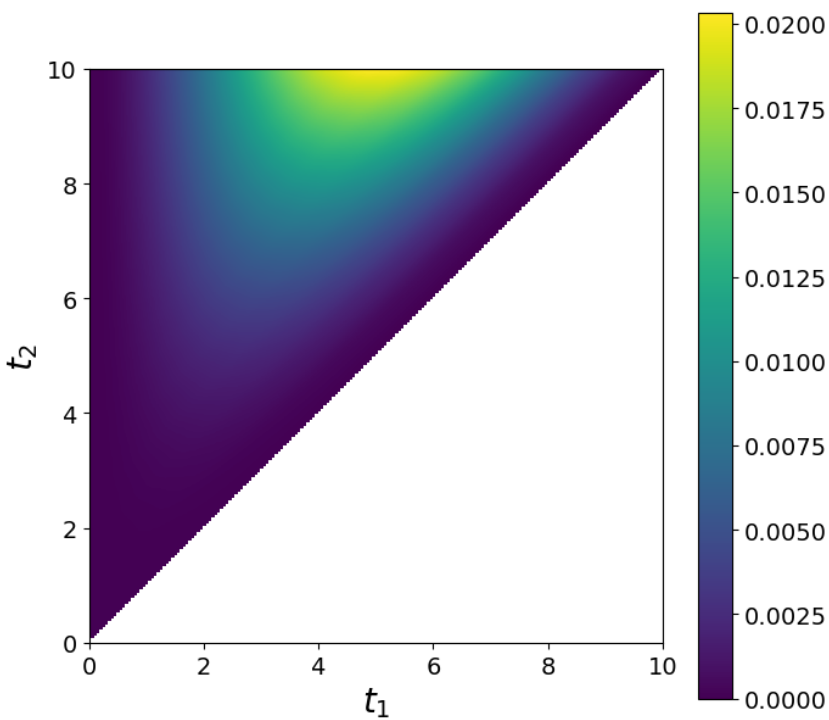
Figure 1: Two-time landscape of QRT violation quantified by εQRT(t2,t1) in the spin-boson model, highlighting temporal regions with strong deviations from QRT.
Numerical Analysis: Spin-Boson Model and Pseudomode Embedding
The spin-boson model is analyzed as a testbed, with the system coupled to a bosonic environment via a Lorentzian spectral density. The authors employ a pseudomode embedding as a nonperturbative reference to access exact multitime statistics. Comprehensive parameter scans are performed to elucidate the dependence of QRT violations on spectral density (characterized by width γ and central frequency η), environmental temperature, measurement protocols, and initial states.
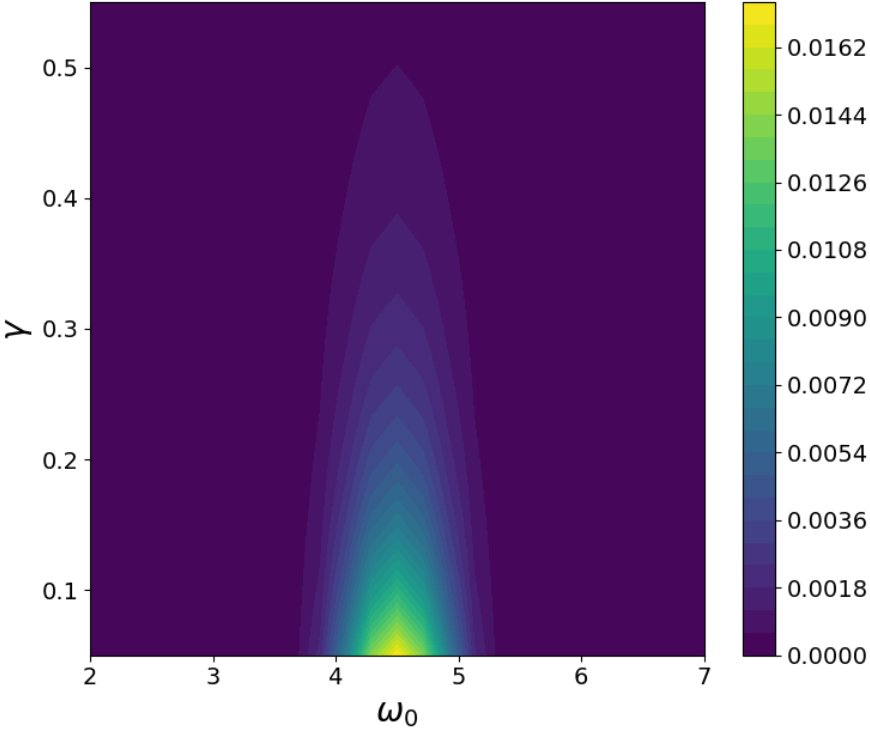
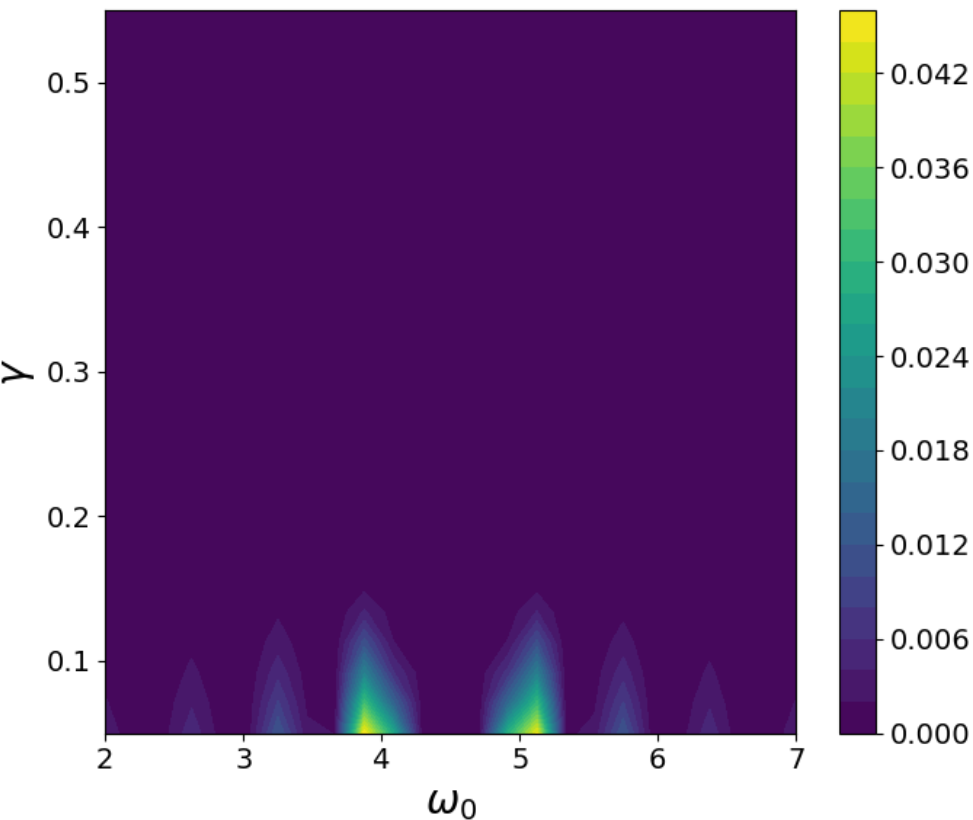

Figure 2: Average two-time non-Markovianity versus average one-time non-Markovianity, contrasting εˉQRT(tf) with Nˉ(Λ;tf) across system and bath parameters.
The results highlight that pronounced QRT violations are localized in regimes of long bath memory (small γ) and resonance (Q0), with temperature increasing sensitivity. Importantly, the protocol dependence is demonstrated: the initial state and choice of measurement basis significantly affect the degree of multitime memory, in some cases amplifying or suppressing Q1.
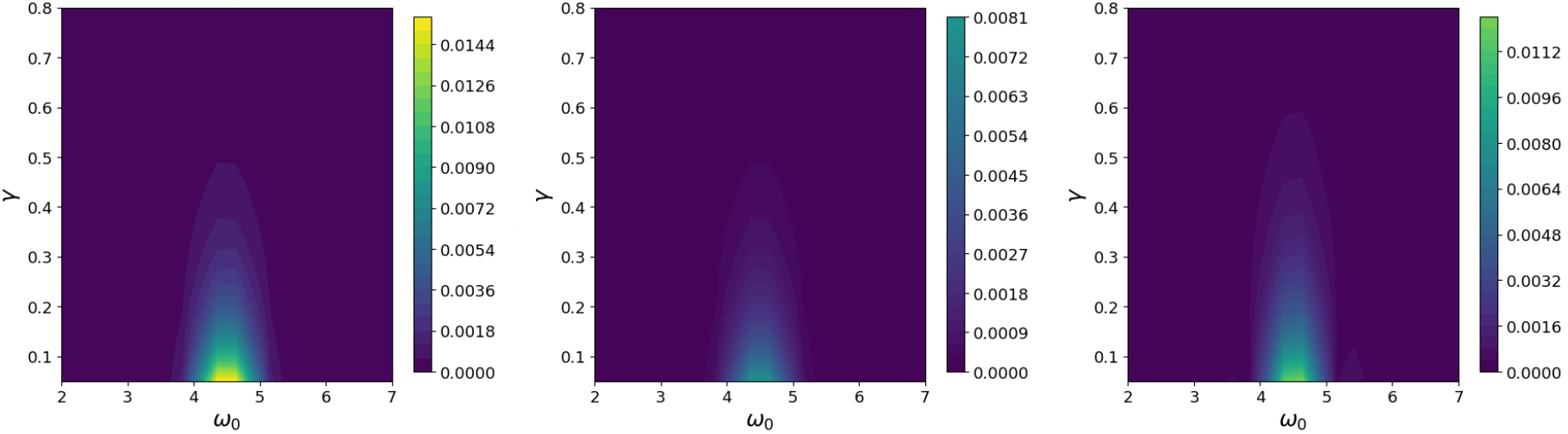
Figure 3: Protocol dependence of the average QRT violation across different initial states and measurement bases, illustrating the operational sensitivity of multitime memory.
Comparison with One-Time Non-Markovianity
A salient point of distinction is established between one-time non-Markovianity (quantified via divisibility of the dynamical map and positivity of propagators) and multitime memory assessed by QRT violations. While both are enhanced in strong-coupling or long-memory regimes, their operational manifestations and detailed parameter dependencies are inequivalent. One-time non-Markovianity can remain negligible in regions where multitime memory is substantial, evidencing the necessity of multitime, protocol-dependent probes.
Perturbative Corrections and Higher-Order Temporal Protocols
A second-order perturbative correction to the QRT prediction is shown to provide strong improvement in weak-coupling regimes, reducing the residual discrepancy to below Q2 over the relevant parameter range.
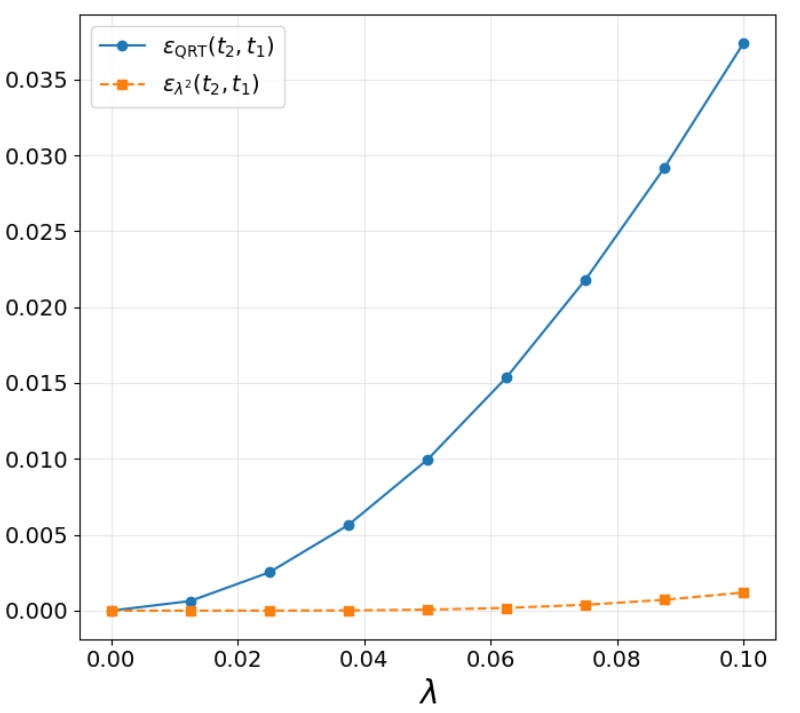
Figure 4: Second-order correction beyond-QRT, contrasting the QRT violation Q3 with the residual error after incorporating the perturbative correction.
Moreover, the analysis is extended to higher-order multitime statistics (three-time measurements). The three-time QRT error, Q4, is consistently larger than its two-time counterpart and is shown to be sensitive to the measurement protocol, especially when non-commuting interventions are involved.
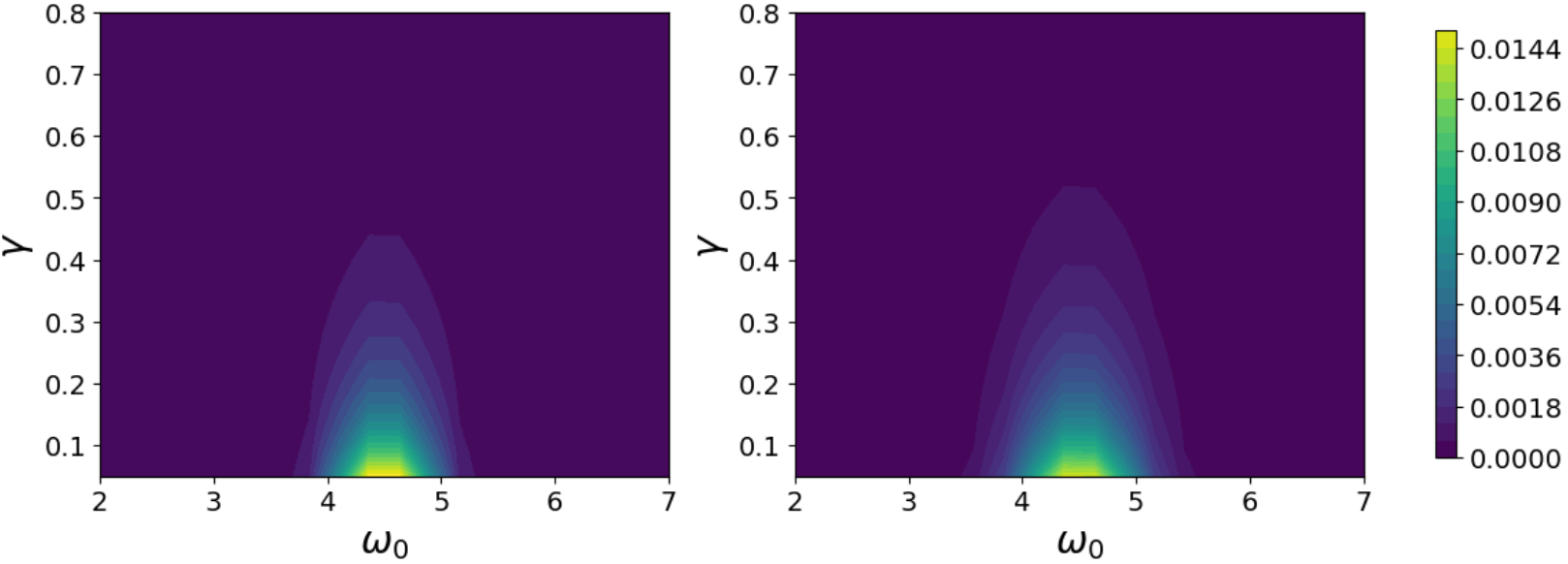
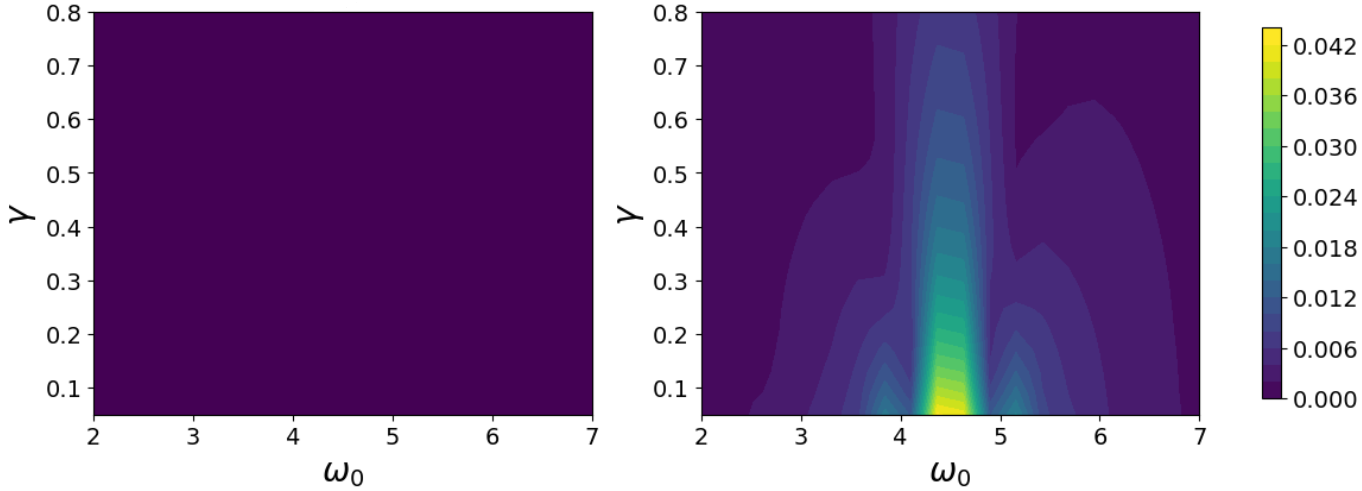
Figure 5: Two- vs three-time QRT error, demonstrating protocol-specific amplification of multitime correlations at higher temporal order.
Practical and Theoretical Implications
By revealing the operational inequivalence between one-time and multitime non-Markovianity, the paper underscores the inadequacy of reduced-state dynamics for characterizing memory effects in quantum stochastic processes. The introduced framework enables the quantification of multitime correlations arising from system-environment entanglement, with implications for system identification, quantum control, and the development of quantum information protocols sensitive to temporal correlations.
On a theoretical level, the results motivate the exploration of broader notions of temporal nonclassicality, including violations of Kolmogorov consistency and Markov order, as well as extensions to stronger coupling regimes and initial system-environment correlations.
Conclusion
The paper rigorously delineates multitime memory phenomena in open quantum systems by connecting QRT violations in sequential measurement statistics to system-environment correlations and protocol-specific operational procedures. The explicit decomposition of two-time propagators, quantitative framework for QRT error, and comprehensive benchmarking with the spin-boson model constitute a technical advance in the study of temporal correlations. The findings indicate that multitime memory is not reducible to one-time properties and is contingent upon both environmental dynamics and measurement protocol. Future work will likely extend these methods to higher-order temporal correlations, stronger coupling, and more general process tensor formulations.