- The paper introduces a wedge compactification framework that decomposes torsion classes and fluxes into symmetric and asymmetric sectors for 4D theories.
- It rigorously maps G2 and SU(3) torsion classes to reveal precise representation-theoretic relations governing geometric deformations and flux splitting.
- The analysis demonstrates how localized pinch deformations and field doubling generate non-supersymmetric spectra distinct from smooth compactifications.
Four-Dimensional Non-Supersymmetric Wedge Compactifications and Torsion Classes
This essay presents a comprehensive expert analysis of "Towards Wedge Construction of Four-Dimensional Non-Supersymmetric Theories and Torsion Classes" (2605.05333), focusing on the construction, mathematical structure, and comparative landscape of four-dimensional non-supersymmetric effective theories arising from pinched or wedge compactifications in M-theory. The discussion is organized to clarify the interplay between geometric singularities, torsional data, and string dualities, with an emphasis on the precise representation-theoretic decomposition of fluxes and torsion classes within G2 and SU(3) structures. Key numerical relationships, structural claims, and theoretical implications for non-supersymmetric string theory backgrounds are rigorously articulated.
Motivation and Wedge Geometry
A central challenge in string phenomenology is the controlled construction of non-supersymmetric vacua admitting a clear geometric and physical interpretation. The wedge (or "pinched circle") compactification—where an internal circle degenerates into two branches connected at a singular node—offers a candidate for generating Type 0A/heterotic string vacua directly from M-theory. In these scenarios, the internal seven-manifold is constructed as a G2-structure space, locally presented as a K3 fibration, where the fibration base undergoes a singular degeneration into a wedge S+1∨S−1.
The geometric singularity induces a natural decomposition of the compactification data into branch-even (symmetric) and branch-odd (asymmetric) sectors. Intriguingly, such a structure provides a direct realization of non-supersymmetric features such as the branch-odd modulus T corresponding to the Type 0 tachyon, and a characteristic doubling of Ramond-Ramond (RR) form sectors, in contrast to the NSNS sector, which remains undoubled. The relationship between wedge geometry, flux decomposition, and field doubling is formulated via a precise bookkeeping in terms of G2 and SU(3) torsion classes.
G2 and SU(3) Torsion: Organizational Framework
Wedge compactifications introduce intrinsic torsion in the G2-structure manifold, even in the absence of fluxes or if the fibration is trivial. The torsion is usefully decomposed into irreducible SU(3)0 representations:
- SU(3)1: scalar (singlet) torsion,
- SU(3)2: Lee-form (vector) torsion,
- SU(3)3: adjoint (two-form) torsion,
- SU(3)4: primitive, traceless symmetric (three-form) torsion (SU(3)5).
Reduction along the singular (pinched) direction yields a six-dimensional space with SU(3)6 structure, where the torsion is classified via five canonical classes: SU(3)7 (singlet), SU(3)8 (primitive SU(3)9), G20 (primitive G21), G22 and G23 (Lee forms). Representation-theoretic projection relates G24 torsion to G25 classes (see also Table \ref{g2su3maap} in the paper):
- The G26 of G27 branches into G28 G29 (affecting S+1∨S−10) and S+1∨S−11 (affecting S+1∨S−12).
The authors provide a careful analysis showing that the wedge (pinch) deformation is encoded in the S+1∨S−13 irreducible representation, and at the level of the reduced six-manifold, it populates both S+1∨S−14 and S+1∨S−15 through explicit and induced smooth/junction-supported terms.
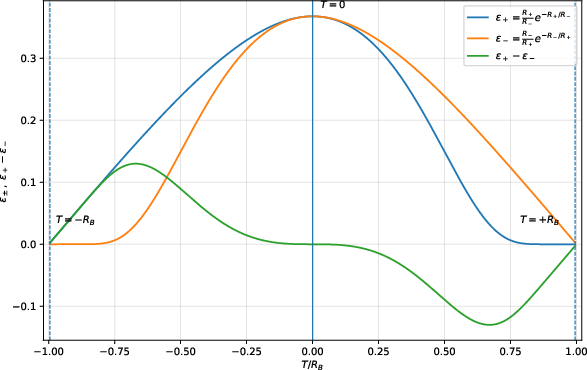
Figure 1: The behavior of S+1∨S−16 and S+1∨S−17, regular branch-odd parameters tracking proximity to the two supersymmetric endpoints (Type IIA limits) and the symmetric wedge regime (S+1∨S−18).
Branchwise Effective Field Content and Flux Decomposition
The geometric singularity at the wedge allows fields to localize differently across the branches (as per the Baykara-Dudas-Vafa construction). The authors' approach systematizes this by:
- Assigning undoubled status to NSNS fields (graviton, S+1∨S−19-field, dilaton, tachyon T0).
- Allowing doubling (branchwise/junction-localized organization) for RR fields (e.g., RR one-forms T1 and three-forms T2).
- Encoding non-propagating, auxiliary, and localized junction data as constrained combinations (including T3, T4, T5, T6).
Fluxes and torsion decompose as:
T7
with explicit even/odd (physical/non-propagating) combinations tracking the spectrum's intricate structure, particularly in the presence of the singularity.
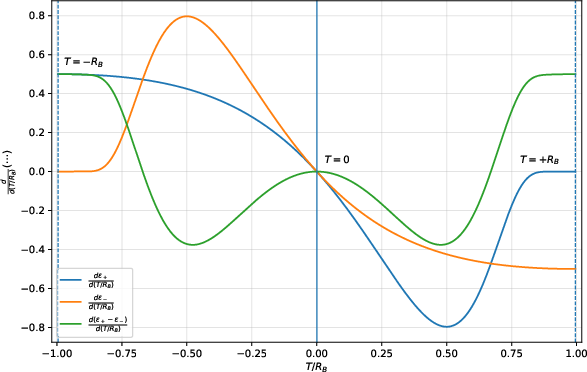
Figure 2: Endpoint-adapted variables T8 and T9 and their derivatives, illustrating the regularity and suitability of these coordinates for tracking the pinch's effect on torsion near Type IIA limits.
Flux, Fibration, and Pinch Contributions to Torsion
A central result is the additive structure of the G20 torsion classes, which collect contributions from:
- Fibration: Non-closure of the coframe (twisted geometry),
- Flux: Branchwise and irreducible G21 decomposed components of G22,
- Pinch: Singular, junction-supported localized terms arising from the wedge.
Explicitly, the structure is:
G23
where the G24 and G25 dependence encodes the lower-order effect of geometrical asymmetry, and additional branch-odd regular parameters (e.g., G26) capture endpoint behavior and smooth corrections.
The leading-order effect of the pinch singularity sources the primitive G27 sector (G28), via localized terms proportional to the tachyon modulus G29. Induced smooth deformations (from SU(3)0) propagate pinch effects into SU(3)1, SU(3)2, SU(3)3, and SU(3)4, but only as higher-order or derivative terms.
Importantly, torsion class expressions regularize as one approaches the symmetric wedge regime or either Type IIA endpoint—ensuring that the extra branch-odd contributions decouple as required by the physics and representation theory.
Non-Supersymmetric Duality Structure and Gauge Sector
The analysis demonstrates that the two approaches—reducing first along the wedge direction (yielding Type 0A) or along the interval (yielding Type 0HW/heterotic)—lead to distinct but structurally comparable nine-dimensional effective theories. While duality (U-duality) is anticipated at supersymmetric endpoints (where one branch collapses and the pinch singularity disappears), the non-supersymmetric interiors of moduli space cannot be rigorously matched term by term, due to differing treatment of localized modes and sharp junction-supported data.
The gauge sector is governed by a careful commutant construction at each reduction stage, organizing the D8/O8 system, monodromy, flux-induced St\"uckelberg effects, and branch-odd data at the wedge into the four-dimensional surviving gauge algebra. Notably, the reduction prescription ensures that auxiliary or non-physical fields do not propagate in the low-energy effective action.
Strong/Numerical Claims and Theoretical Implications
- The sharp increase in bosonic degrees of freedom—193 for Type 0A compared to 128 for supersymmetric M-theory—cannot be realized on a smooth compactification manifold. The analysis demonstrates that singularity and localization at the wedge are necessary for non-supersymmetric spectra.
- The localized pinch deformation is shown to reside in the SU(3)5 of SU(3)6, leading to a precise, constrained transfer of singularity data under various reductions.
- Supersymmetry is not restored at the symmetric wedge point (SU(3)7) unless all additional geometric and flux-induced torsion is tuned to vanish; only at the Type IIA endpoints, where a branch collapses, are supersymmetry-restoring limits realized.
- The effective formalism systematically organizes non-supersymmetric torsion and localized defects—offering a robust representation-theoretic framework generalizable to further constructions.
Future Directions and Outlook
The wedge compactification paradigm advanced in this work provides a valuable model for non-supersymmetric string vacua, with precise control over the appearance and localization of geometric and physical degrees of freedom. The effective torsion-class framework developed here sets the stage for:
- Systematic classification of non-supersymmetric flux compactifications with controlled singularities,
- Explicit calculations of the tachyon effective potential and stability analysis,
- Further investigation of moduli stabilization and gauge sector enhancements in pinched geometries,
- Detailed mapping and potential extension of partial dualities away from supersymmetric endpoints, including anomaly considerations and full matching of localized junction dynamics.
A full microscopic derivation of the effective variables and field doubling, especially at the wedge node, remains an open direction for future research.
Conclusion
The authors' work on wedge compactifications rigorously classifies the intricate interplay of geometry, flux, and singularity in constructing controlled non-supersymmetric four-dimensional effective theories from M-theory. Their approach provides a systematic, representation-theoretic organizational framework via SU(3)8 and SU(3)9 torsion classes, distinctly clarifying the roles of branchwise and localized data. While structural parallels with known duality chains are maintained at supersymmetric endpoints, the analysis reveals essential subtleties and irreducible differences in the presence of nontrivial singular loci. The resulting mathematical and physical machinery sets a solid foundation for further exploration of non-supersymmetric phenomenological and mathematical models in string/M-theory.