- The paper introduces a hash-based adaptive in-solve algebraic coarsening mechanism to efficiently reduce degrees of freedom in GPU IPC elastodynamics.
- It employs CUDA warp-level grouping and affine embedding to robustly assemble coarse Hessian blocks and preserve simulation fidelity.
- Performance metrics show speedups over 3× and up to 88% DoF reductions, underscoring AGIPC’s scalability in handling contact-rich, heterogeneous simulations.
AGIPC: Adaptive In-Solve Algebraic Coarsening for GPU IPC — Technical Essay
Motivation and Context
The AGIPC framework (2605.04773) advances GPU-based contact-aware elastodynamics by introducing adaptive in-solve algebraic coarsening mechanisms. Prior approaches, including StiffGIPC and conventional multilevel/fixed-block preconditioning, exhibit substantial trade-offs between efficiency, memory overhead, and accuracy when handling heterogeneous, stiff, or contact-rich simulations. AGIPC addresses these limitations by leveraging stateless, on-the-fly hash-based aggregation schemes, affine embedding of coarse nodes, and robust adaptive criteria, enabling efficient, scalable Newton-Krylov solves without explicit coarse mesh representations.
Hash-Based Fine-to-Coarse Mapping and Adaptive Coarsening
AGIPC employs a parallel hashing scheme rooted in CUDA warp-level grouping for mesh node aggregation, synthesized via bitwise operations. Each mesh node computes a compact connectivity bit-hash, encoding collapsible neighbor relationships. Groups are processed iteratively, merging hash values to identify connected super-nodes and mapping fine nodes to coarse representative nodes. The process is illustrated in (Figure 1).
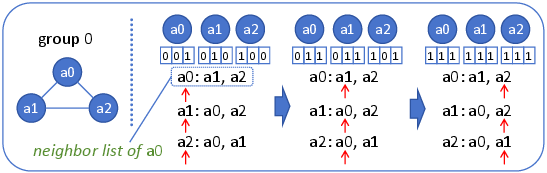
Figure 1: A direct neighbor hash encoding example, visualizing parallel hash construction and merging within a CUDA warp group.
The adaptivity mechanism is governed by binary edge tags (τe∈{0,1}). By toggling τe=0, specific edges are protected, preserving local detail and preventing node aggregation. This tag-based design circumvents the memory overhead and irregular access patterns associated with explicit submeshes and remeshing, facilitating stateless, high-throughput aggregation per Newton iteration.
The mapping procedure generalizes to hierarchical aggregation, recursively applying the bit-hash encoding and merging on coarsened nodes, reducing degrees of freedom (DoF) until a minimal set is obtained. Detailed behaviors, including non-mutual connectivity and indirect component merging, are demonstrated in (Figure 2).

Figure 2: A hash encoding example under non-mutual connectivity, illustrating iterative merging for indirect aggregation.
This scheme constrains group sizes to 32 (warp size) and uses METIS sorting to maximize connectivity within groups, ensuring efficient aggregation.
Affine Embedding and Coarse Hessian Assembly
AGIPC extends two-level hash-based reduction to support heterogeneous block sizes introduced by affine embedding. Coarse nodes aggregating more than a predefined threshold of fine nodes (>32) are assigned 12 DoF via affine embeddings, while smaller groups retain 3 DoF. Affine blocks are transformed as Hij12×12=AiBijAjT, with mixed blocks decomposed into standard 3×3 for compatibility with parallel reduction. This block-structured Hessian assembly and node reordering yields a coarse system:
Hc=[H3dofHmixed HmixedH12dof]
ensuring efficient memory layout and solver access.
Duplicate triplets arising from aggregation are eliminated via a second hash-based reduction using the mapped indices. This mechanism preserves the energy geometry of the original fine system, mitigating numerical instability from mass disparities and block heterogeneity.
Adaptive Criteria and Robustness
AGIPC adopts Green strain increment as the primary criterion for controlling adaptive aggregation, effectively distinguishing rigid and non-rigid domains. Comparative analysis versus deformation gradient rate criteria (as proposed in "Affinification" [mercier2026affinification]) reveals that aggressive coarsening with deformation-rate metrics negatively impacts Newton convergence and introduces artifacts, despite reducing node count (see performance and convergence statistics in Table 1 and Table 2; visual impact illustrated in Figure 3).
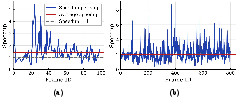
Figure 3: Comparison between strain increment and deformation-rate adaptive criteria, demonstrating superior visual fidelity for Green strain increment.
The strain increment criterion thus produces a stable, responsive aggregation network, dynamically adapting DoF per timestep in accordance with local deformation complexity.
Post-Coarsening Correction and Convergence Analysis
AGIPC incorporates limited post-coarsening PCG iterations using diagonal preconditioning as a correction step. Rather than fully recomputing the fine-space solution, this post-processing refines aggregated displacements, enabling subsequent releases of DoF and averting subspace locking. Experiments varying post-coarsening iteration caps show diminishing returns beyond 10 iterations; excessive correction is costly and does not materially enhance predictions (Figure 4).
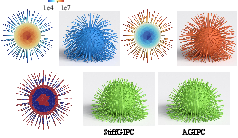
Figure 4: Impact of post-coarsening PCG iterations on simulation time and Newton convergence.
Convergence metrics (∥d∥∞ and RMS gradient) demonstrate that AGIPC’s subspace solutions reach termination thresholds comparable to full-space solves in StiffGIPC, ensuring consistent high-fidelity dynamics (Figure 5).
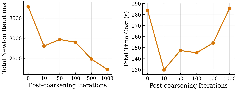
Figure 5: Analysis of Newton convergence metrics showing equivalence between AGIPC and full-space reference.
AGIPC achieves substantial speedups (typically >3×) across a range of configurations, including heterogeneous material distributions and contact-rich scenarios. The method dynamically adjusts aggregation in response to instantaneous local complexity, with transient speedups as high as 5× in certain intervals (per-timestep analysis shown in Figure 6).
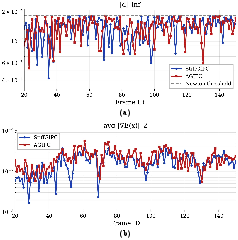
Figure 6: Per-timestep speedup analysis, highlighting transient adaptation in challenging scenes.
Experimental results report DoF reductions of up to 88% (active ratios as low as τe=00), with robust acceleration across continuous and discrete heterogeneity cases, maintaining stable dynamics and visual fidelity.
Preconditioning Analysis and Mass Distribution
AGIPC’s adaptive framework interfaces with multiple preconditioners (diagonal, MAS, AmgX). While MAS and AmgX typically yield improved convergence, exceptional cases (e.g. severe ill-conditioning from extreme stiffness or global deformation) may attenuate their benefits. AGIPC’s post-coarsening step mitigates numerical instability intrinsic to MAS, producing superior speedup and stability in such corner cases (see Figure 7 for AmgX/PCG iteration balance).

Figure 7: AmgX iterations when used as PCG preconditioner, demonstrating trade-off between convergence rate and computational overhead.
Theoretical analysis of mass distribution reveals AGIPC’s aggregation generates mass fields spanning five orders of magnitude without conditioning artifacts, attributed to energy-conserving Galerkin projections and smooth spatial gradients (Figure 8).
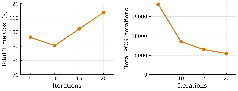
Figure 8: Localized mass-ratio analysis showing smooth spatial gradients despite extreme mass disparities.
Implications and Future Directions
Practically, AGIPC sets a new baseline for efficient, scalable contact dynamics on GPU, eliminating the rigid requirement for explicit coarse meshes and facilitating real-time simulation for high-resolution, heterogeneous, and contact-dominated scenes. Theoretically, its stateless, hash-based adaptive algebraic coarsening exposes new directions for subspace integration, hierarchical model reduction, and dynamic aggregation in large deformable systems.
Future extensions may encompass:
- Generalization to non-manifold and codimensional geometries (e.g., shell, cloth, multibody systems).
- Integration with online learning-based adaptivity criteria to further enhance responsiveness and coarsening effectiveness.
- Exploration of hierarchical, multi-layer aggregation across physics engines and model reduction frameworks.
- Robustification of affine embedding to handle extreme mesh topological changes or degenerate mass distributions.
Conclusion
AGIPC introduces adaptive in-solve algebraic coarsening leveraging stateless hash-based aggregation, affine embedding, and robust adaptive criteria, enabling substantial performance gains and stable simulation across heterogeneous GPU IPC elastodynamics. The framework’s innovations in memory layout, aggregation, and block transformation facilitate scalable, high-throughput Newton-Krylov solves, suggesting impactful future developments in contact-aware physical simulation, real-time animation, and subspace integration (2605.04773).