- The paper presents YOTOnet, a novel architecture that achieves robust zero-shot fault diagnosis by extracting domain-invariant features from sensor data.
- It employs a Domain-Conditioned Sparse Experts module with a differentiable gating mechanism to dynamically route features without relying on target domain metadata.
- Experimental results on five bearing datasets show significant scaling benefits and high F1 scores, confirming its efficacy in cross-domain diagnosis.
YOTOnet: A Paradigm for Zero-Shot Cross-Domain Fault Diagnosis via Domain-Conditioned Mixture of Experts
Introduction
The persistent challenge of domain shift in mechanical fault diagnosis impedes robust model generalization across different equipment, operating conditions, and sensor distributions. The proliferation of deep learning-based approaches for industrial fault diagnosis, while effective on in-domain data, highlights this limitation as models often fail on truly unseen target domains. Motivated by foundational model advances exhibiting strong zero-shot generalization, the authors introduce YOTOnet (“You Only Train Once”), delineating an architecture tailored to cross-domain fault diagnosis without access to target domain samples or metadata (2605.04528). The core goal is to construct a train-once, generalist model that achieves competitive or superior performance relative to established domain generalization and adaptation methods.
YOTOnet Architecture
YOTOnet comprises three interlocking modules: a physics-aware Invariant Feature Distiller, a Domain-Conditioned Sparse Experts (DC-MoE) block, and a dual-head classifier.
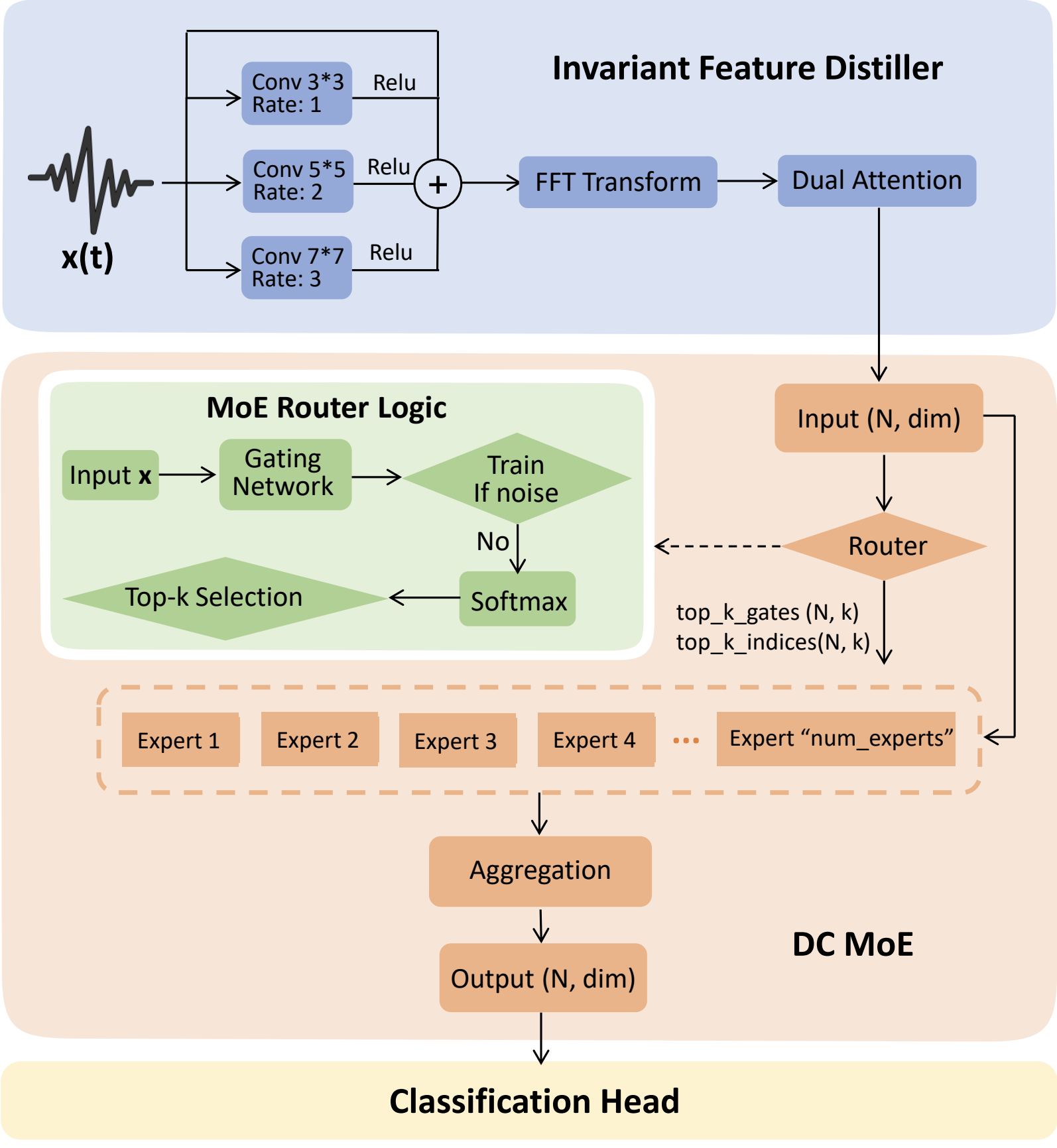
Figure 1: The YOTOnet model pipeline integrates invariant feature extraction, adaptive sparse expert routing, and classification.
Invariant Feature Distiller
This front-end encoder targets the extraction of robust, domain-invariant “physical tokens” from raw vibration signals. Its architecture integrates multi-scale CNN branches with varying dilation rates, residual connections, FFT-based frequency fusion, and a dual channel-spatial attention module.
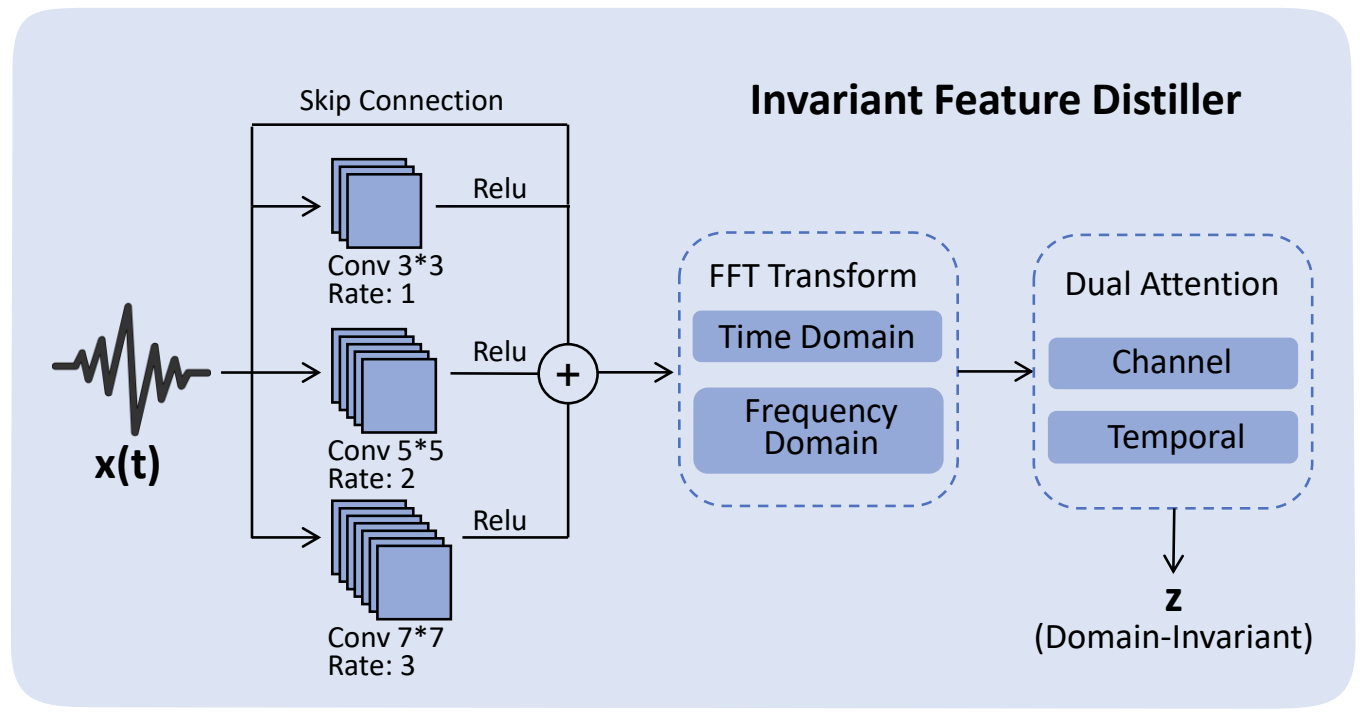
Figure 2: Architecture of the Invariant Feature Distiller, combining multi-scale convolution, FFT fusion, and dual attention.
The multi-branch scheme differently processes transient and periodic spectral features, directly addressing the key modes of domain shift (spectral and operational variances) endemic in industrial monitoring. FFT fusion unifies time-domain and frequency-domain representations, further stabilizing domain-agnostic feature extraction. Auxiliary dual attention (as squeeze-and-excitation) dynamically reweights channels and spatial responses to accentuate informative tokens.
Domain-Conditioned Sparse Experts (DC-MoE)
Central to YOTOnet’s cross-domain adaptation is its MoE module. Unlike traditional MoEs, DC-MoE eschews external domain metadata and routes inputs solely based on intrinsic feature content. The module applies a sparse gating mechanism over a set of feed-forward expert networks, dynamically activating a top-k selection for each input.
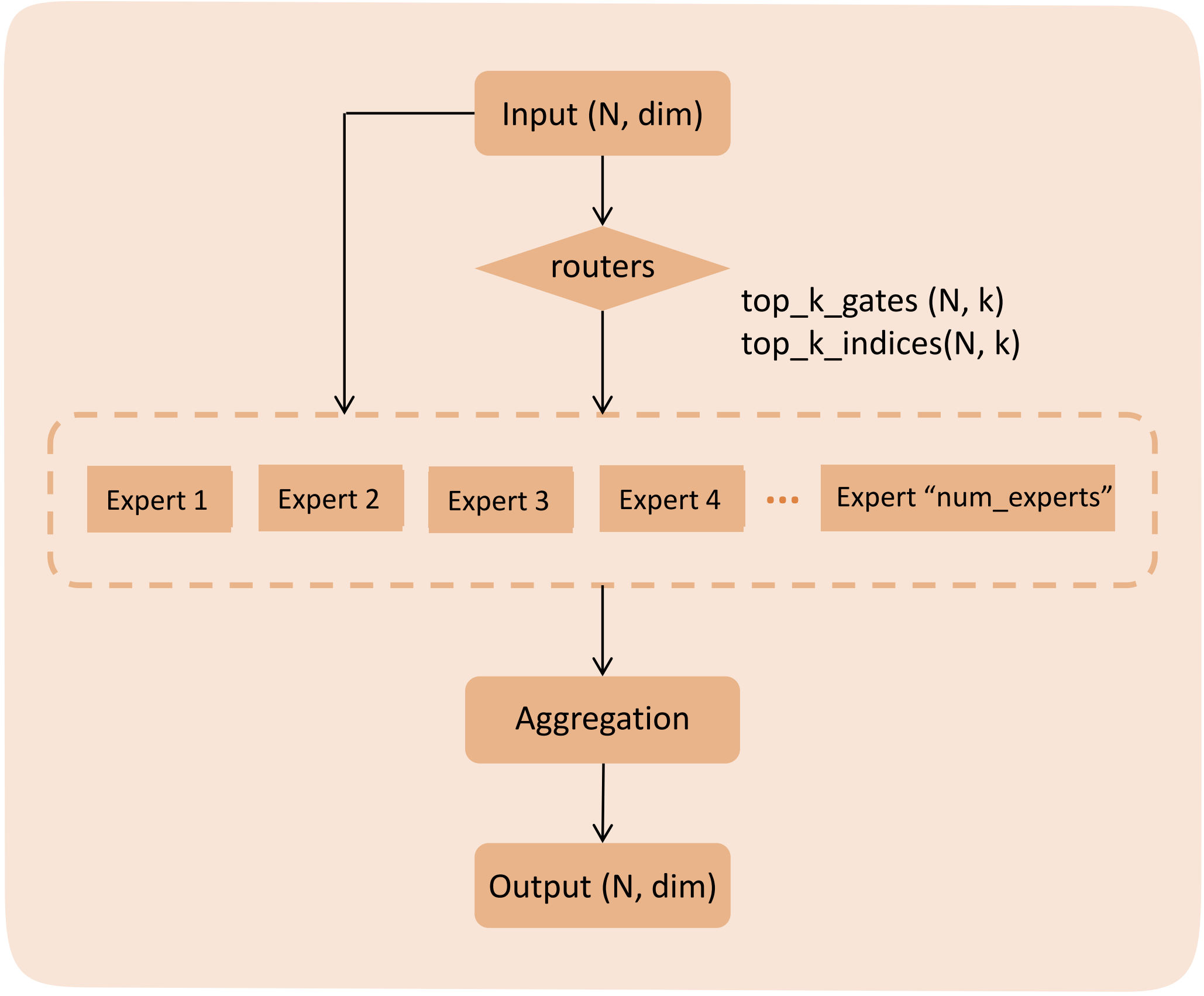
Figure 3: DC-MoE architecture depicting gating-based expert selection and output aggregation.
The gating network computes a probability distribution over experts via softmax, selecting a sparse subset through a top-k mask. The selection is differentiable via straight-through estimation, maintaining end-to-end trainability.
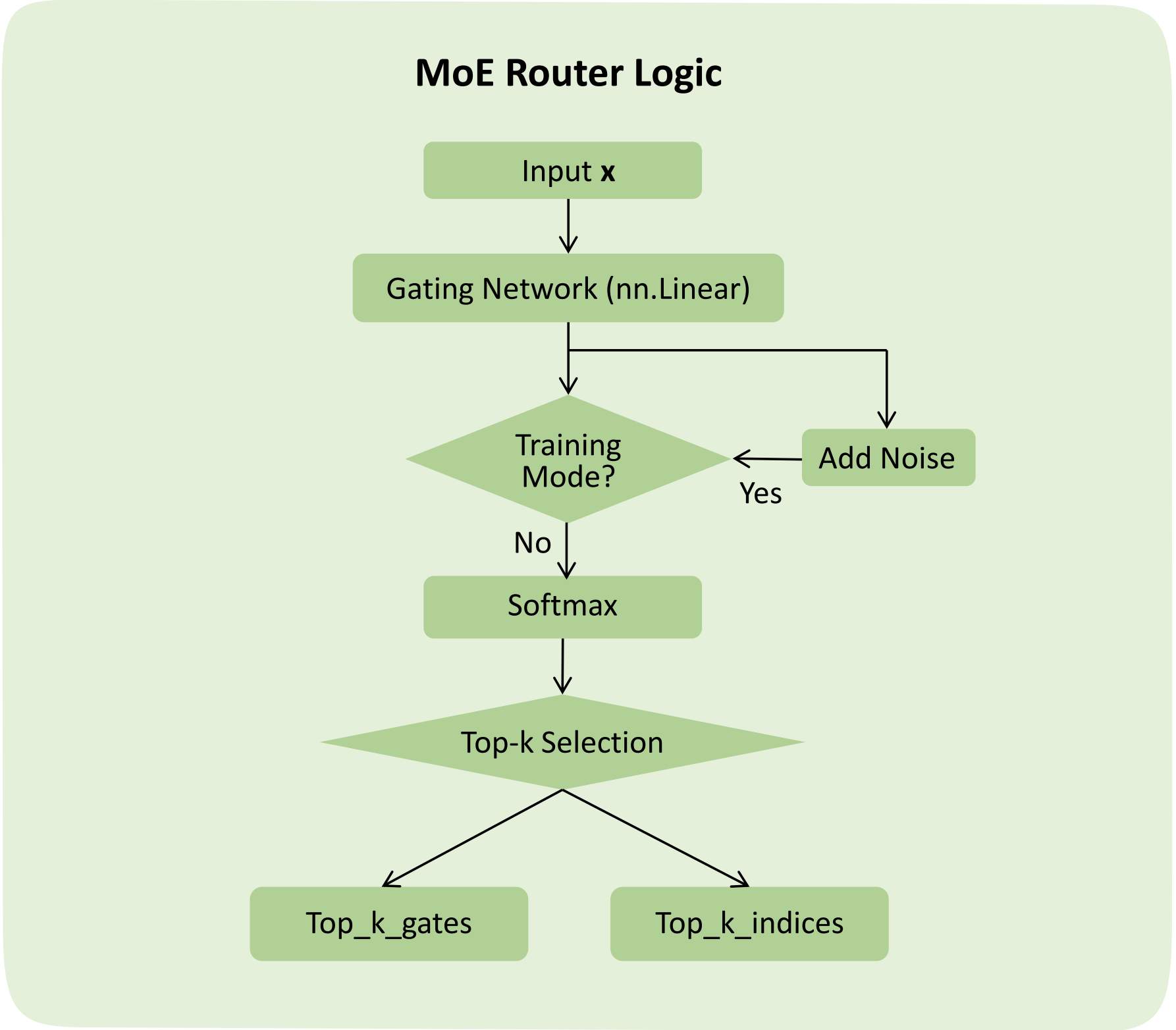
Figure 4: Gating logic transforms distilled features into sparse selection probabilities for expert activation.
Load balancing is enforced through a mean-squared error penalty on the expert assignment distribution, preventing expert collapse and encouraging the full ensemble’s utility.
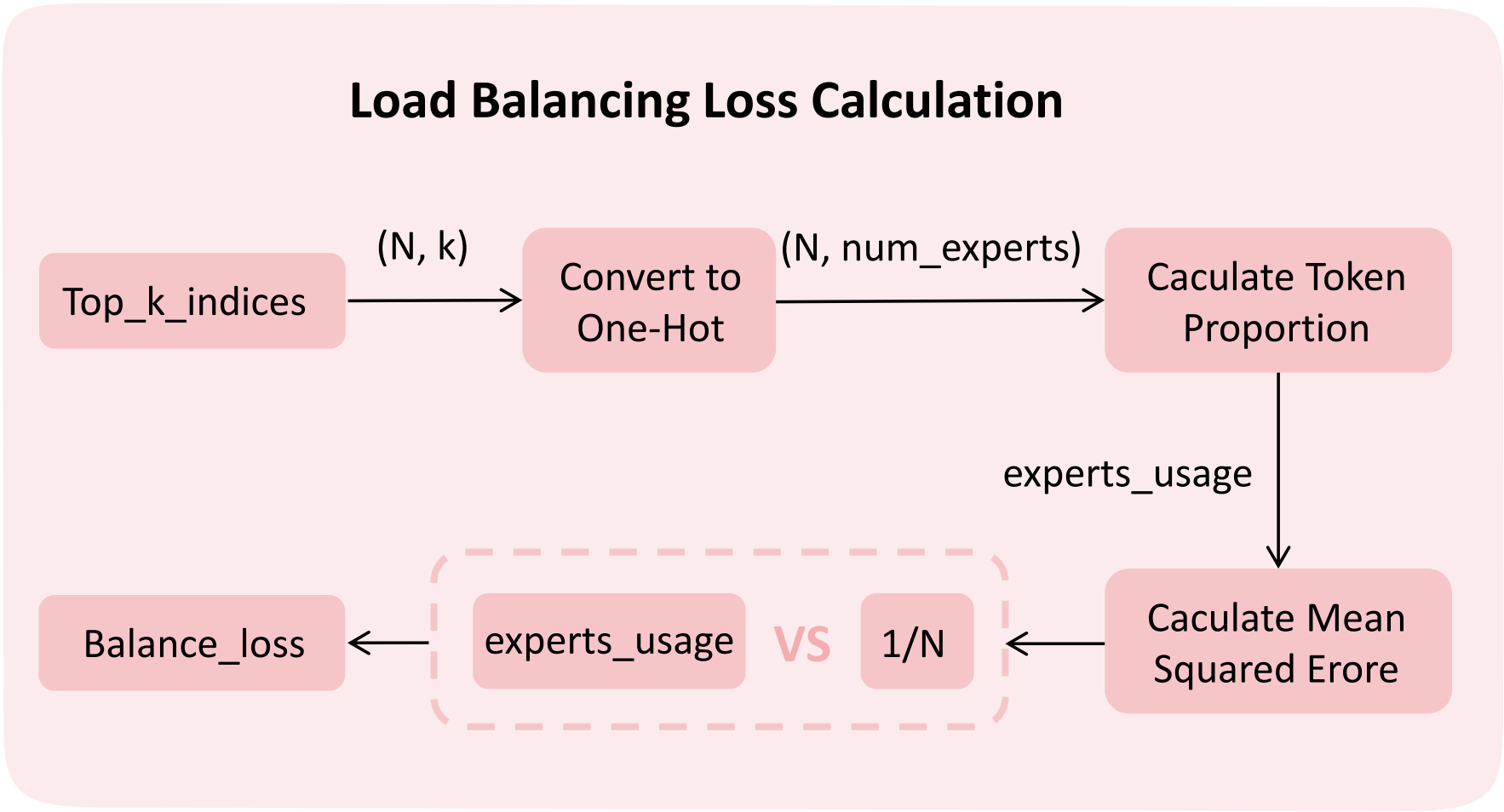
Figure 5: Regularization penalizes deviation from uniform expert usage, promoting balanced expert engagement.
This configuration ensures both robust specialization (experts attuned to specific signal substructures) and generalist behavior (coverage of diverse domains).
Dual-Head Classification
A main classifier aggregates expert-processed features, employing attention pooling followed by an MLP for fault class prediction. An auxiliary branch, attached at an earlier network stage, provides additional supervision, improving both representation robustness and optimization stability.
Experimental Validation
Experiments leverage five public bearing datasets (CWRU, MFPT, XJTU, OTTAWA, HUST), covering diverse operational contexts. The evaluation protocol—30 cross-domain splits—comprehensively measures out-of-domain generalization by training on 1–4 datasets and validating on the unseen remainder.
YOTOnet is compared against DANN, CORAL, and MixStyle, representing state-of-the-art domain adaptation and domain generalization baselines.
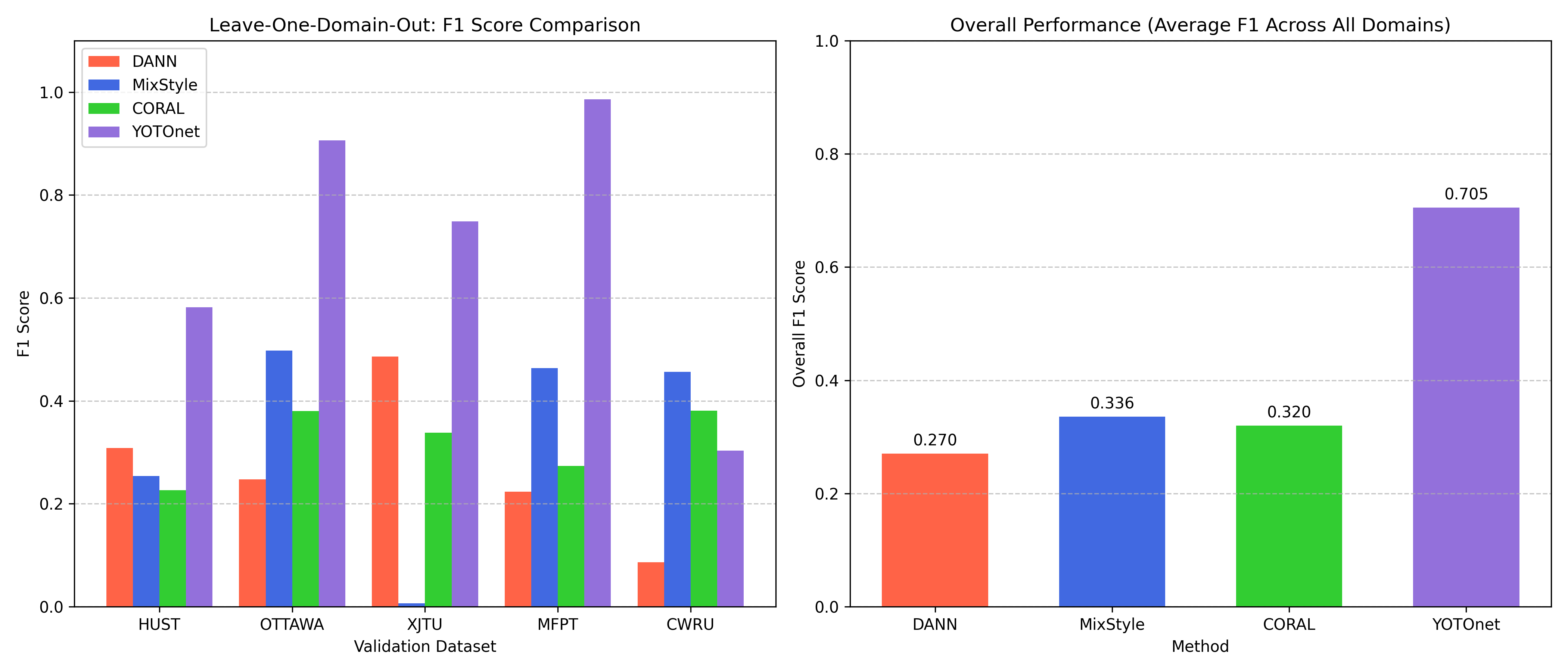
Figure 6: Comparative bar-chart showing YOTOnet's superior average F1 scores across test domains.
YOTOnet outperforms competitors on most target domains and achieves an F1 score of 0.9862 on MFPT—a strong zero-shot transfer indication. The model's performance on CWRU remains limited, indicating persistent, hard domain gaps under drastic shifts.
Scaling Effects
A key empirical finding is a pronounced scaling law: as the number of source training domains increases from 1 to 4, average test F1 rises from 0.5339 to 0.705. Notably, there is a marked gain when moving from three to four source domains, in line with the scaling trends noted for foundation models in vision and language.
Ablation Studies
Ablations systematically remove or alter critical modules—gating logic, expert fusion, FFT fusion, dual attention, and load balancing—to isolate their contributions. Full YOTOnet outperforms all ablated variants on large and imbalanced test domains (e.g., XJTU), confirming the additive necessity of each architectural element. Domains with balanced and smaller datasets occasionally see minimal gains from ablations, attributable to reduced sample diversity and domain complexity.
Zero-Shot Confusion Matrices
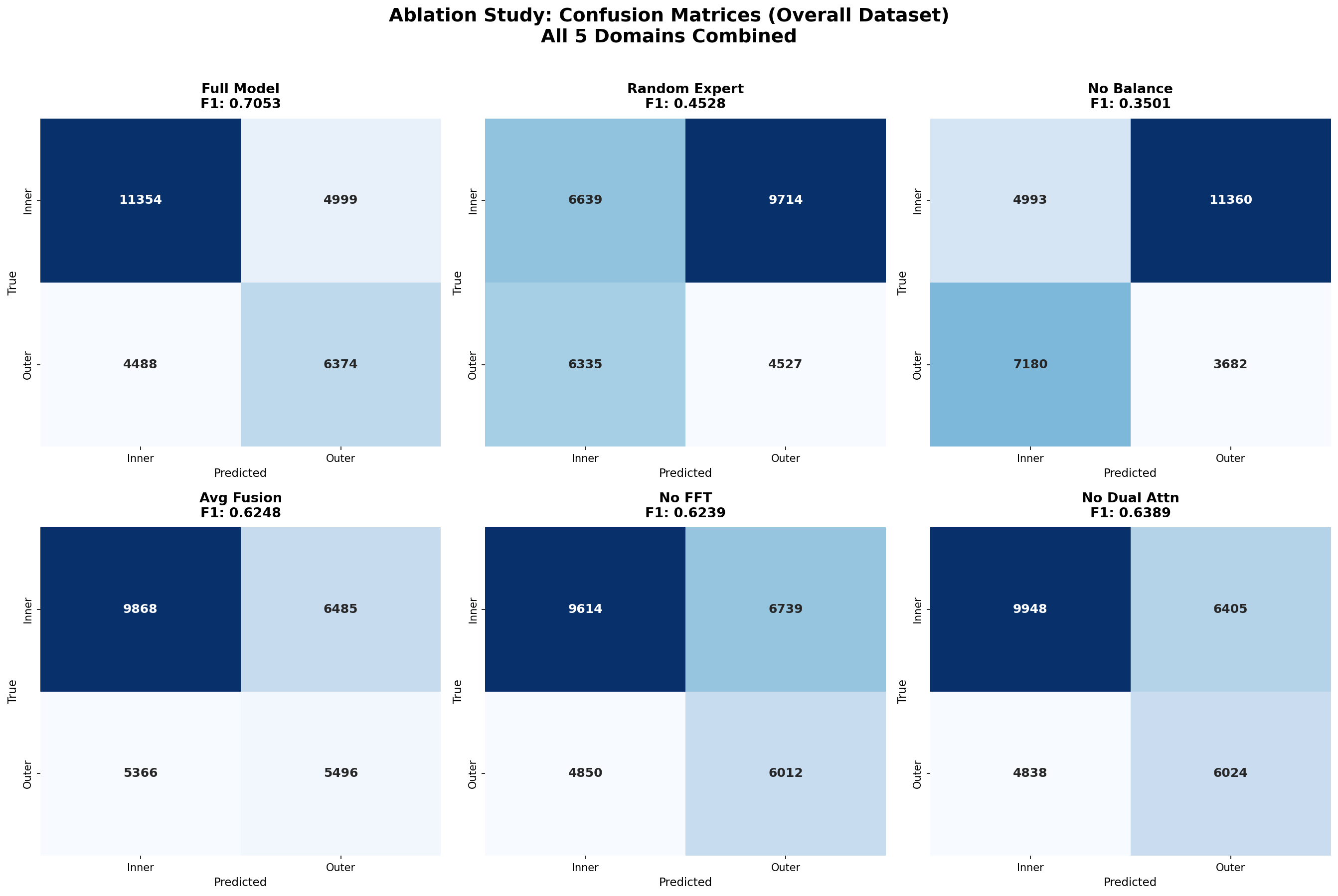
Figure 7: Confusion matrices for zero-shot evaluations highlight variable false-negative and false-positive rates across domains.
Analysis reveals YOTOnet maintains high sensitivity across most test domains, though inter-domain similarity and imbalance remain non-trivial obstacles.
Theoretical Implications and Practical Prospects
YOTOnet operationalizes the “train once, deploy everywhere” paradigm for industrial fault diagnosis. Its DC-MoE fosters latent domain discrimination and specialization, and its strict reliance on intrinsic feature routing positions it robustly for real-world deployment where domain tags and adaptation data are often infeasible. The model's empirical scaling suggests foundational principles akin to those observed in large language and vision models (e.g., improved generalization with data/model scale), but now ported to the sensor data context. The demonstrated capacity for high F1 even in zero-shot settings, and rapid few-shot adaptation via Q-LoRA (0.99 F1 with 256 labeled samples), points to practical applications in smart manufacturing where operational downtime for model retraining incurs significant costs.
Future Research Directions
Three limitations merit attention:
- Enhanced data efficiency: Future work may incorporate meta-learning or more advanced few-shot techniques to further reduce labeled sample requirements.
- Multi-modal sensor fusion: Integrating additional condition monitoring data, such as thermal, acoustic, or electrical measurements, is promising for further improving domain-robust diagnosis.
- Interpretability and reliability: Developing mechanisms for transparent, trustworthy fault predictions, particularly in regulated safety-critical settings, remains an open challenge.
Conclusion
YOTOnet establishes a formal foundation for scalable, robust, zero-shot cross-domain fault diagnosis in industrial settings. The combination of physics-aware invariant features, domain-conditioned sparse MoE routing, and systematic empirical validation make it a reference solution for future research in industrial foundation models. Its clear scaling benefits and competitive zero-shot and few-shot performance positions it as an effective architecture for universal, train-once machine monitoring frameworks.