- The paper demonstrates that under RL-optimized link control, sequential entanglement swapping fails below a critical external coherence threshold, while simultaneous swapping maintains constant performance.
- It employs a two-layer simulation framework that isolates network-level protocol effects from link-layer operations, ensuring the observed performance differences are solely due to external memory coherence.
- The findings inform practical quantum network design by emphasizing the need for improved external buffer coherence to achieve decentralized, packet-switched network viability.
Sequential vs. Simultaneous Entanglement Swapping under Optimal Link-Layer Control
This work presents a rigorous, simulation-based comparison of sequential (swap-and-wait) versus simultaneous (SWAP-ASAP) entanglement swapping protocols for entanglement distribution in quantum repeater chains. The focus is on isolating the effect of network-layer protocol selection, holding all link-layer control fixed, to quantify operational regimes where decentralized, connection-less (sequential) protocols retain viability in the face of realistic quantum memory decoherence. The underlying motivation is the deployment of scalable, distributed quantum networks, where the promise of connection-less, packet-switched architectures must be balanced against the coherence-time limitations of present-day hardware.
Layered Architecture and Simulation Framework
The study implements a two-layer abstraction Figure 1: a per-link, model-free reinforcement learning (RL) agent (WN2M2) optimizes per-link secret-key rate (SKR) using the six-state QKD protocol; the agent manages local operation, distillation, and memory management, and outputs Werner pairs to an external link buffer with coherence time Tcext. Network-layer protocol choice—sequential or simultaneous—then becomes the sole independent variable, guaranteeing architectural factorization and isolating network-level effects. Each network-layer controller draws from these external buffers to assemble end-to-end chains, with all decoherence during waiting and storage strictly accounted for.
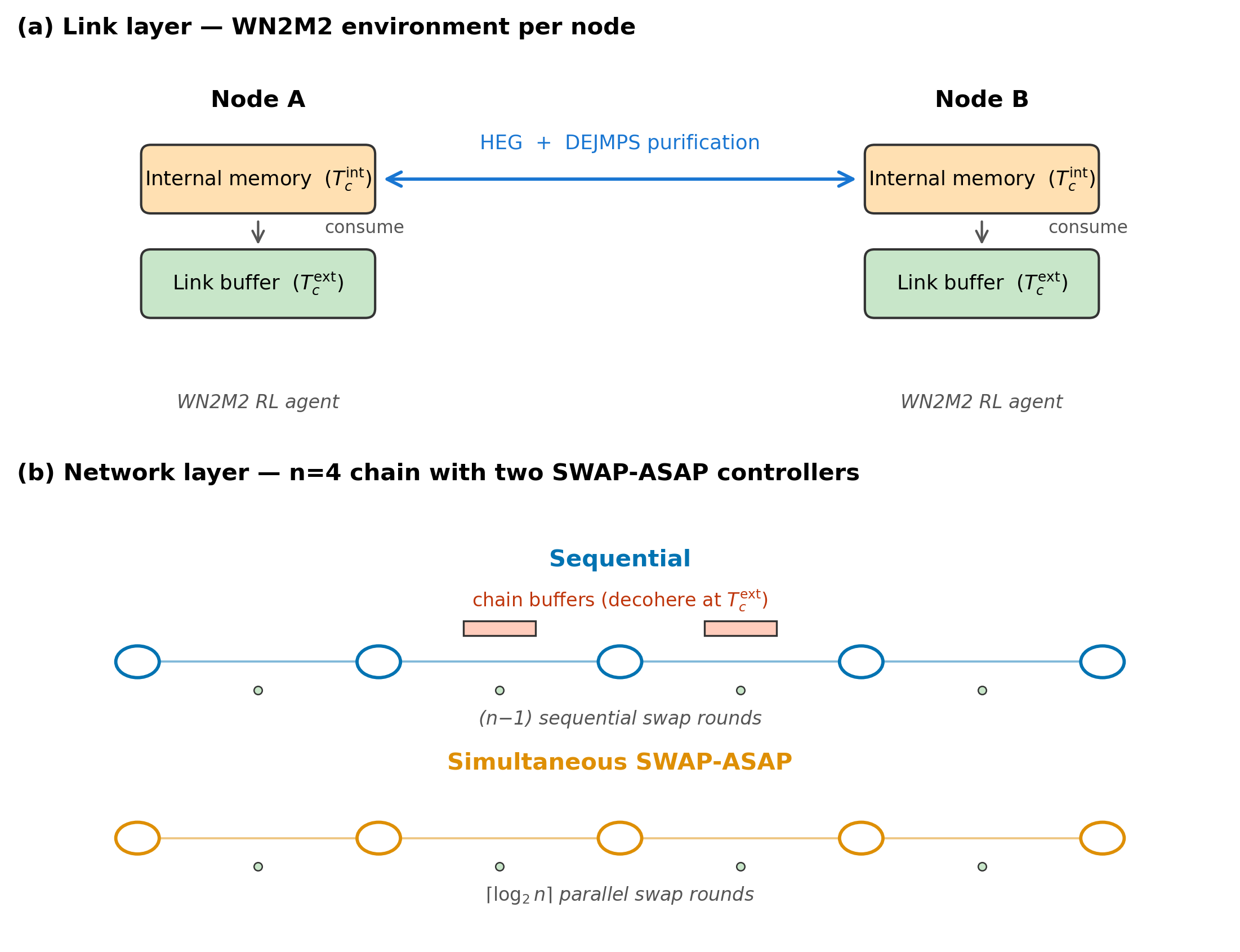
Figure 1: Two-layer model; RL-optimized link control interacts with a global network-layer protocol, with sequential requiring chain-buffered partial states and simultaneous functioning without intermediate chain storage.
Link-Layer Policy Invariance
Ten WN2M2 policies were trained independently across a joint space of link lengths L∈{5,10} km and internal coherence-to-latency ratios Tcint/τ∈{5,10,25,50,100}. Empirical evaluation shows all agents converge to a single dimensionless performance point: $0.1357$–$0.1358$ bits per heralding tick, with a mean delivery fidelity of $0.9575$ and mean inter-delivery interval of 7.36τ. This invariance demonstrates that network-level outcomes are controlled entirely by the external coherence parameter and protocol choice, not link-level differences.
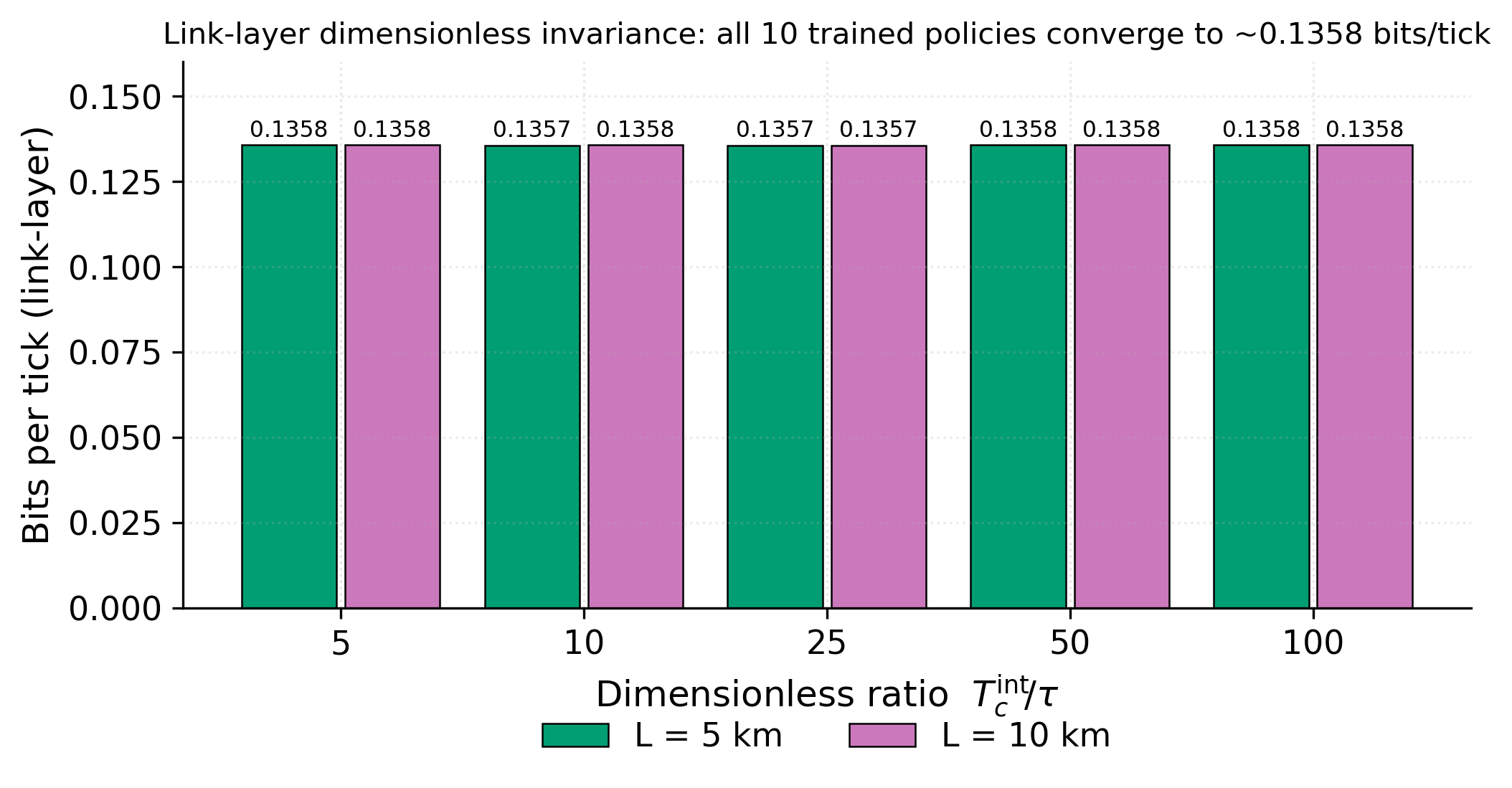
Figure 2: RL-trained WN2M2 link policy results, showing dimensional invariance across link lengths and internal coherence regimes.
Protocols: Sequential and Simultaneous Swapping
- Sequential swapping (swap-and-wait): as soon as two adjacent links deliver pairs, an immediate Bell-state measurement (BSM) is triggered, pipelining assembly hop by hop. Partial chains accumulate in chain buffers, accumulating decoherence proportional to system waiting time.
- Simultaneous SWAP-ASAP (wait-and-swap): global synchronization ensures all links deliver pairs (no intermediate chain storage); then all BSMs are performed in a balanced, log-depth tree, resulting in minimal decoherence.
Both paradigms implement freshness-based buffer management, per-pair cutoffs (derived from fidelity requirements), and strict, statistical equivalence of experiments through central coordination.
Regime Structure: Collapse and Equivalence
A sweep of Tcext over four orders of magnitude reveals a sharp regime structure. In both symmetric ([5,5,5,5] km, [10,10,10,10] km) and asymmetric topologies (bottleneck link at positions 1–4), simultaneous SWAP-ASAP delivers a constant rate across all coherence times.
- Collapse threshold: For sequential protocols, end-to-end delivery is zero for L∈{5,10}0, recovers for L∈{5,10}1, and eventually saturates to the simultaneous rate from L∈{5,10}2 upwards, with relative differences L∈{5,10}3.
- Off-diagonal sweeps (varying L∈{5,10}4 independently): confirm that network-level performance is completely insensitive to internal memory, depending exclusively on L∈{5,10}5 and protocol.
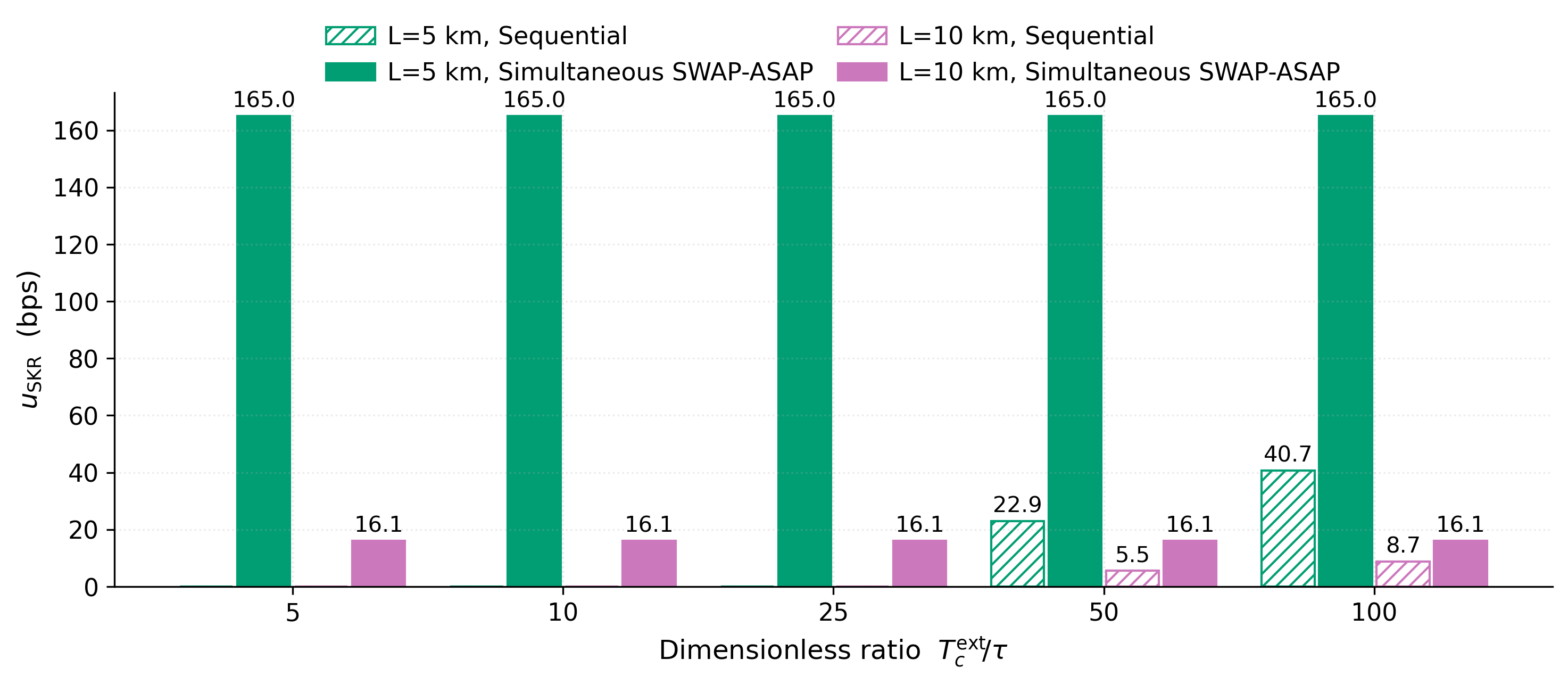
Figure 3: Per-pair efficiency versus external memory coherence time for symmetric topologies; sequential swapping is non-viable in stressed-coherence regime, recovers as coherence increases.
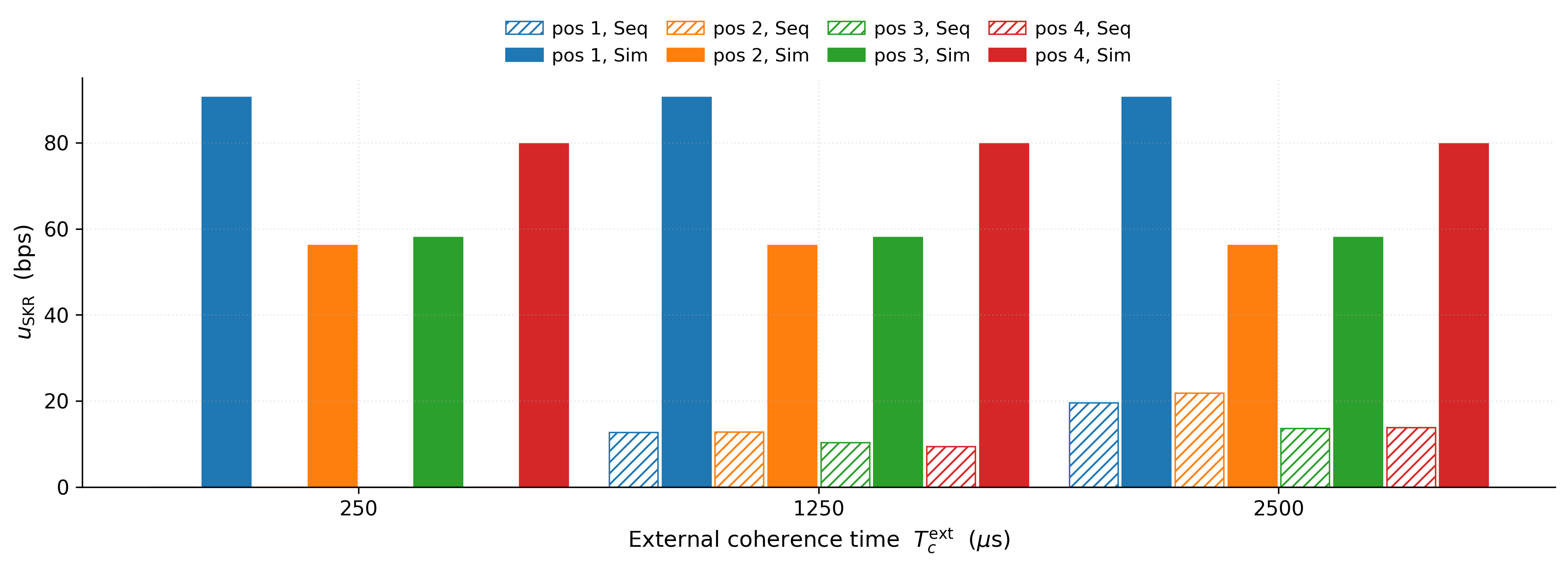
Figure 4: Bottleneck topology results showing consistent protocol gap under coherence stress, with sequential catching up in relaxed-coherence conditions.
Mechanistic Insights: Chain Buffer Dwell/Collapse
Instrumentation of the chain-assembly process quantifies the mean dwell time in chain buffers for sequential protocols. As L∈{5,10}6 approaches parity with the per-link generation time, partial chains fail to survive; the per-pair cutoff for fidelity following (\ref{eq:decoherence}) drops below the inter-delivery tick, causing pipeline breakdown. Simultaneous SWAP-ASAP, by contrast, does not experience this failure mode by construction—pairs are used instantly.
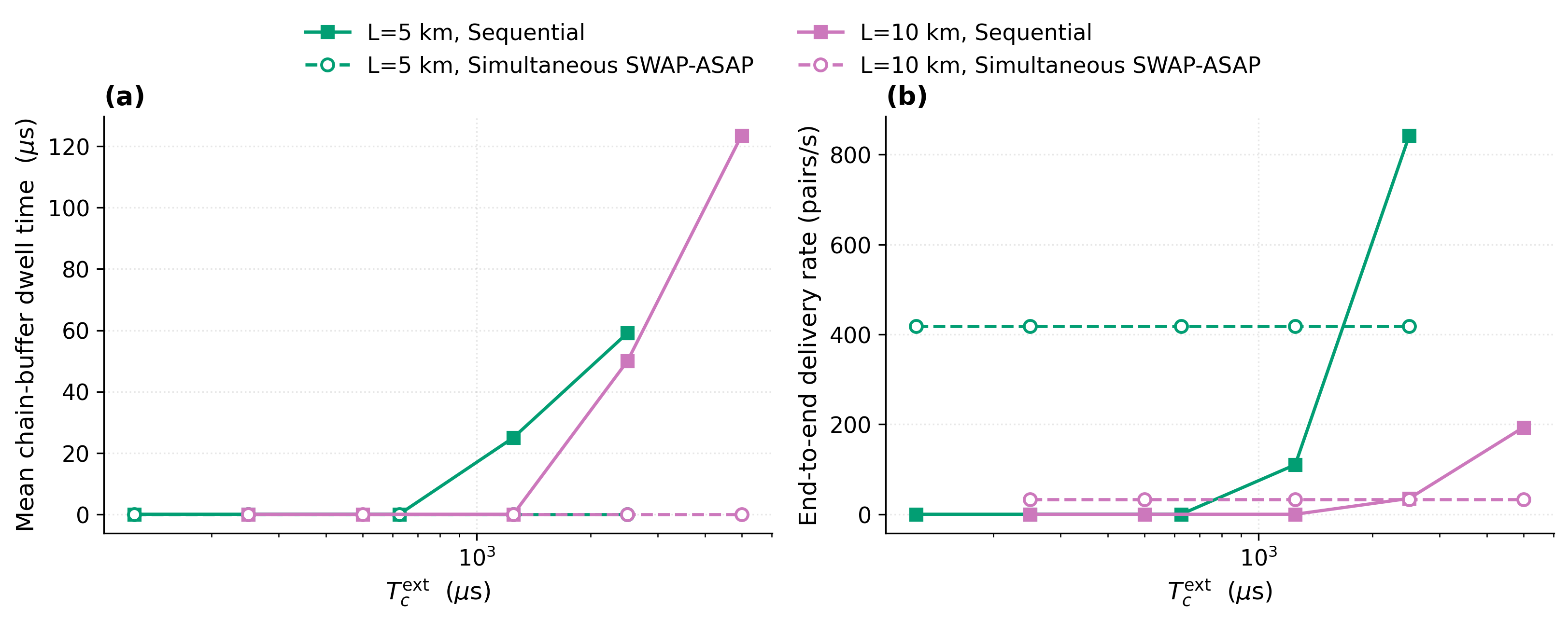
Figure 5: Left—chain buffer dwell time increases with L∈{5,10}7; right—comparison of delivery rates, highlighting sequential collapse and invariant simultaneous performance.
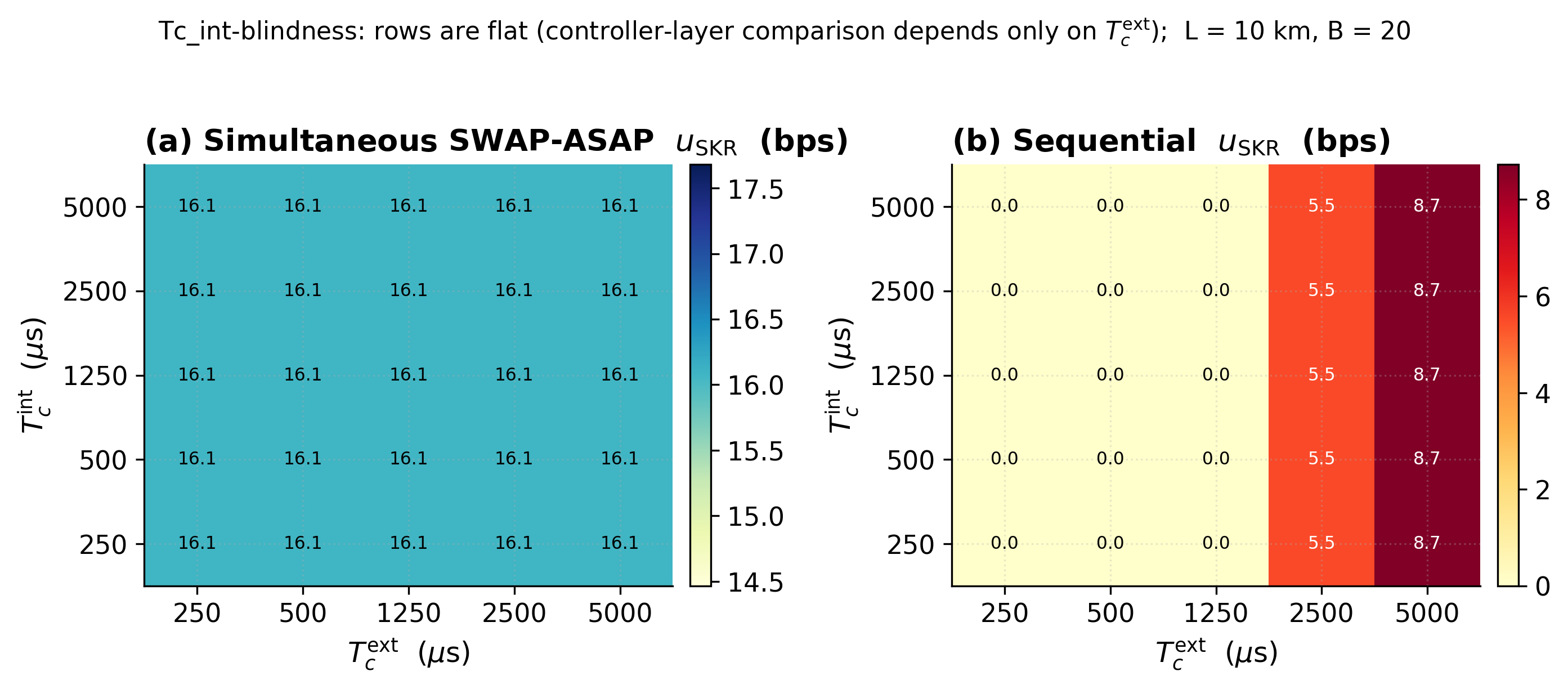
Figure 6: Off-diagonal heatmaps; network-layer performance is a pure function of L∈{5,10}8.
Theoretical and Practical Implications
The findings support a regime-based interpretation: the "connection-less penalty" for sequential, decentralized operation is not fundamental, but an artifact of currently constraining quantum memory lifetimes. In practical terms, unless L∈{5,10}9 is well above the collapse threshold, sequential architectures cannot deliver viable rates for even modest chain lengths. As quantum hardware matures and buffer coherence continues to improve, the system-level benefits of connection-less, packet-switched networks can be realized without throughput compromise. The results clarify the precise hardware metric by which advances must be judged: external buffer coherence relative to entanglement generation latency.
Limitations and Future Work
- The regime boundary and crossover from collapse to equivalence have not been exhaustively localized for Tcint/τ∈{5,10,25,50,100}0.
- All results are for Tcint/τ∈{5,10,25,50,100}1-link chains; as chain length Tcint/τ∈{5,10,25,50,100}2 increases, the required coherence time for sequential viability is expected to scale linearly, warranting verification at larger Tcint/τ∈{5,10,25,50,100}3.
- Only single-flow scenarios are considered; multi-flow contention, the natural operating point of packet-switched quantum networks, merits further investigation.
- Only a single delivery-fidelity target is used per link; broader exploration across fidelity budgets would refine the regime structure.
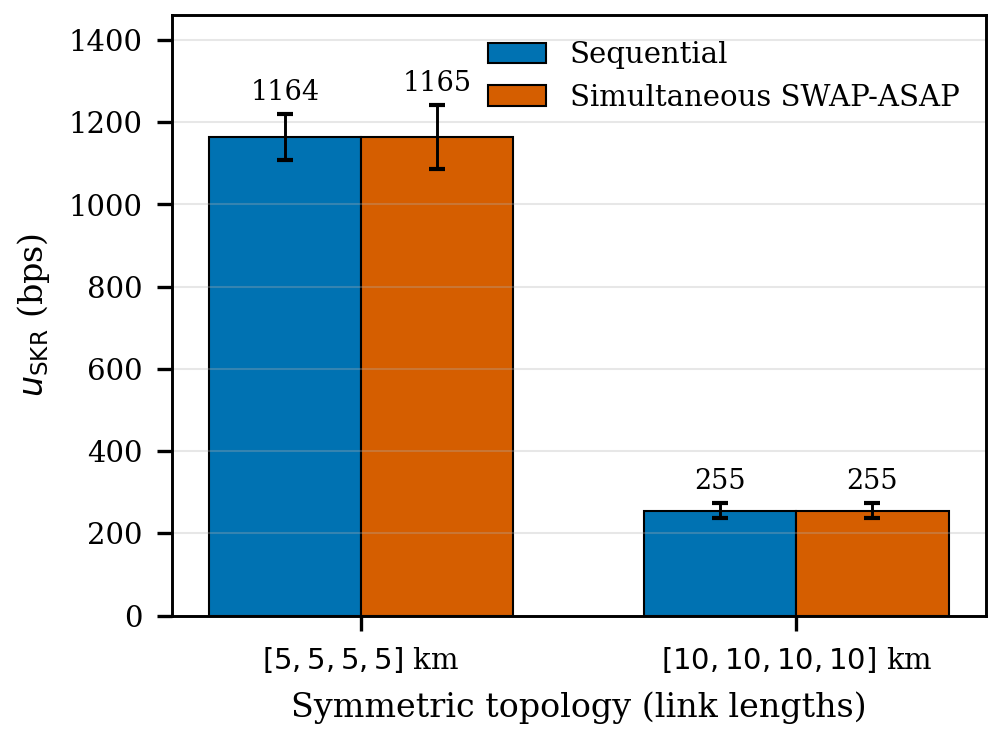
Figure 7: At large Tcint/τ∈{5,10,25,50,100}4, both protocols converge to identical performance, indicating the regime of practical indifference.
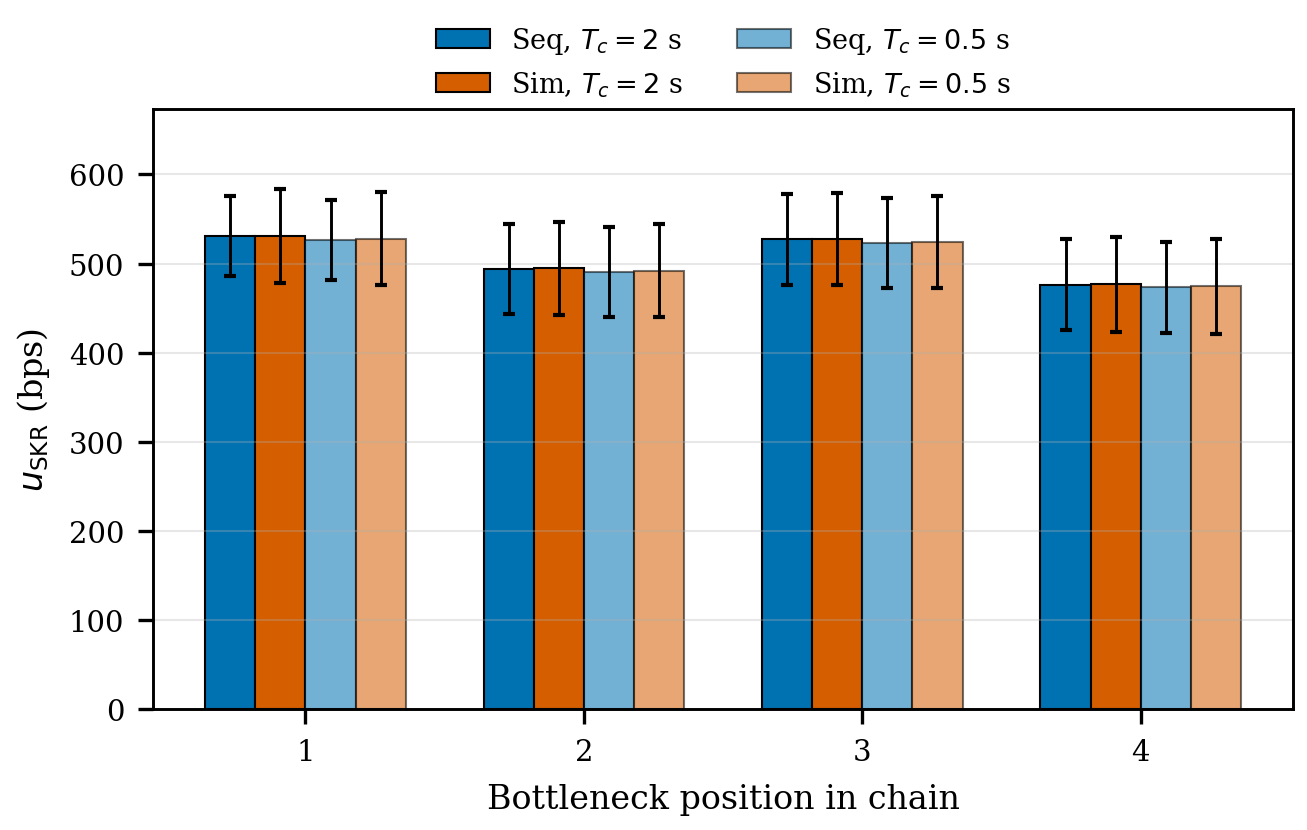
Figure 8: Bottleneck position analysis in relaxed-coherence regime, showing negligible performance differences between protocols.
Conclusion
This work establishes, with high empirical rigor, the operational boundaries separating sequential and simultaneous entanglement swapping protocols in quantum repeater chains under RL-optimized link control. The principal result is a regime threshold, governed strictly by the ratio of external buffer coherence to link generation latency, below which sequential, connection-less operation is non-viable, and above which it is operationally equivalent to the centralized, simultaneous protocol. The conclusion follows: network-layer protocol selection should be guided by hardware coherence, and system-level design should focus on external buffer improvement as the dominant lever for closing the decentralized performance gap.
Reference: "Sequential vs. Simultaneous Entanglement Swapping under Optimal Link-Layer Control" (2605.04047)