- The paper introduces Cool-chic 5.0, which speeds up overfitted image compression by integrating IFCE modules and second-order optimization.
- It employs a hierarchical latent decoder and refined entropy modeling to reduce encoding time by an order of magnitude while achieving strong BD-rate savings.
- Results demonstrate competitive performance against codecs like H.266/VVC, with -11% average BD-rate and ultra-low decoding complexity.
Cool-chic 5.0: Accelerating Overfitted Image Compression with Inter-Feature Entropy Modeling
Overview and Motivation
Cool-chic 5.0 represents a significant evolution in overfitted image compression, prioritizing strong rate-distortion performance, rapid encoder convergence, and low-decoding complexity. This approach diverges from traditional autoencoder-based codecs by forgoing generalization: the encoder overfits both the latent representation and the decoder to each image, directly minimizing the rate-distortion cost. Previous instantiations of overfitted codecs achieved favorable rate-distortion trade-offs against hand-engineered codecs (e.g., H.266/VVC) but incurred prohibitive encoding costs due to slow convergence. Cool-chic 5.0 presents improvements across the decoder architecture, entropy modeling, and encoder optimization framework, resulting in an order-of-magnitude reduction in encoding time and further compression gains.
Decoder Architecture and Entropy Modeling
Cool-chic 5.0’s decoder leverages a hierarchy of latent grids along with neural upsampling and synthesis networks for image reconstruction. The core advances are the introduction of the Inter Feature Context Extractor (IFCE) modules, hyperlatents for improved entropy modeling, and a stabilizer linear branch to aid optimization.
The decoding workflow begins with sequential entropy decoding of latent grids. Each latent grid at level k is upscaled and utilizes already-decoded coarser grids for conditional probability modeling via the IFCE. The ARM (Auto-regressive Module) is conditioned not only on spatial context within the current latent grid, but also on inter-feature context aggregated and condensed by IFCE networks.
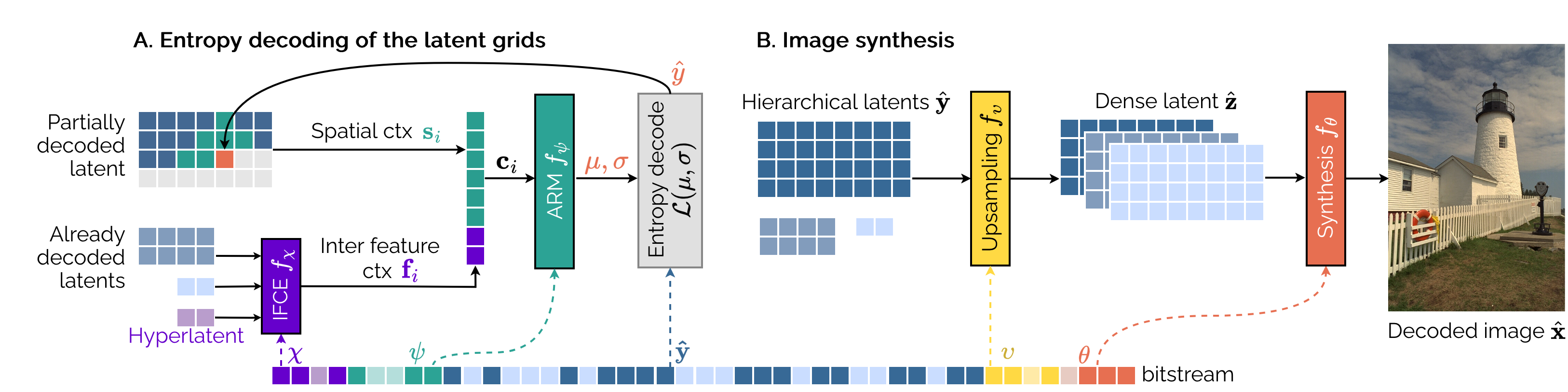
Figure 1: Overview of the Cool-chic 5.0 decoder: hierarchical latent grids (blue) and a single hyperlatent grid (purple) drive entropy coding and image synthesis; IFCE modules extract and embed cross-grid dependencies.
Latents are entropy coded using a parameterized Laplace distribution; expectation and scale parameters are computed as a function of spatial and inter-feature contexts via the ARM.
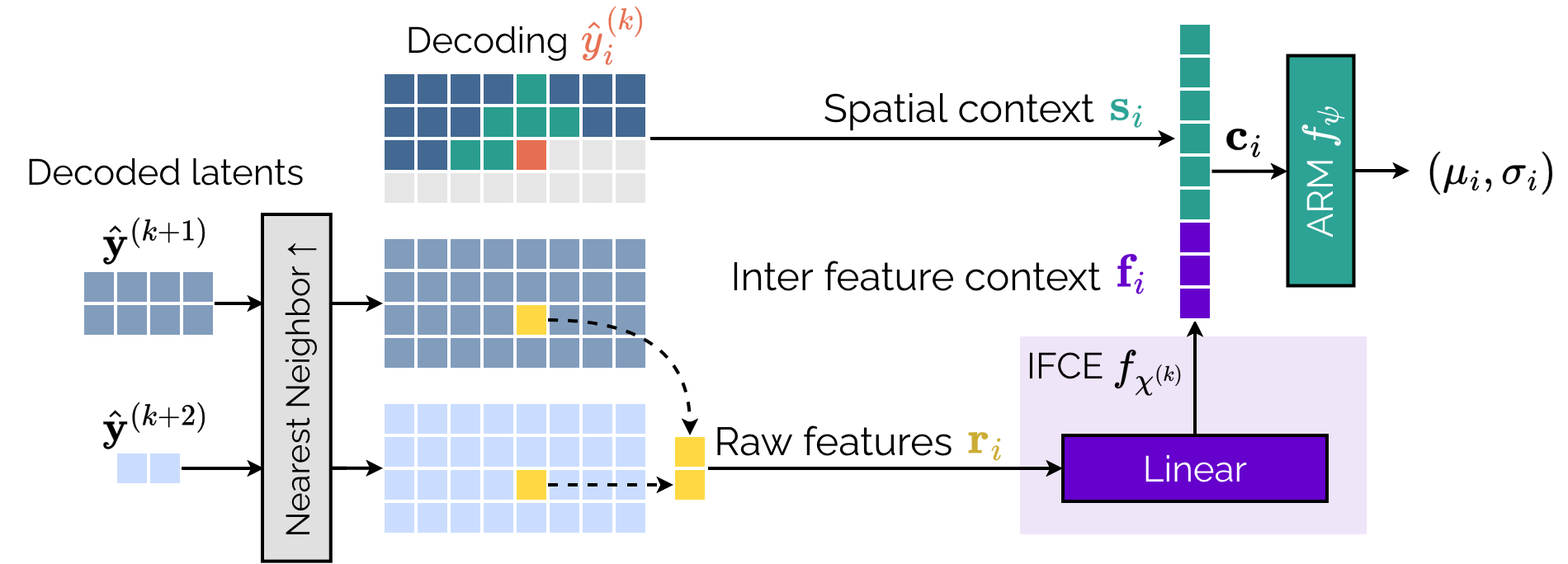
Figure 2: ARM and IFCE pipeline for entropy model parameterization, showing how (μi,σi) for each latent scalar are derived from contextual information.
Hyperlatent grids—analogous to hyperpriors in autoencoders—are utilized solely to inform entropy modeling for more accurate residual distribution estimation. Unique to this work, these hyperlatents are not used in reconstruction and are discarded post-entropy decoding.
Image Synthesis and Network Design
Decoded latents are mapped to pixel space through separate upsampling and synthesis networks. The upsampler reconstructs a dense feature stack from sparse latent grids; the synthesis network then projects these features to the image. Both networks employ a residual stabilizer, a parallel linear path added to the typical non-linear trunk, which empirically improves convergence stability and final performance.
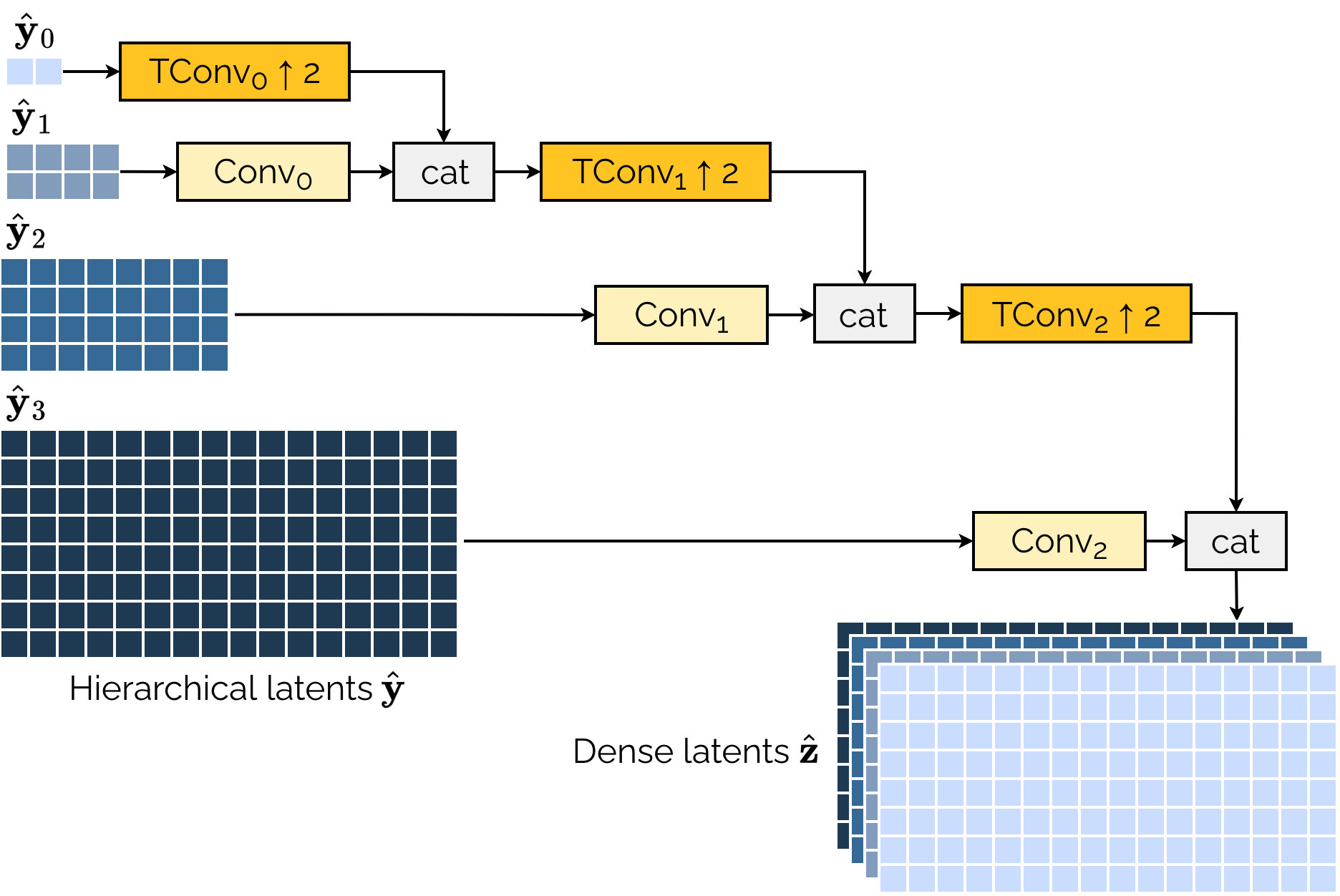
Figure 3: Schematic of upsampling network architecture, relying on convolutions and transposed convolutions for efficiency.
Encoding Process and Optimization Strategies
Encoding for overfitted codecs entails network weight/laten optimization per image—a computationally demanding process. Cool-chic 5.0 deploys several novel strategies:
- Second-order optimization for network parameters: Utilizes the SOAP optimizer for decoder parameters (approx. 2,000 variables), yielding faster and better convergence than first-order methods at negligible overhead.
- Differentiable proxy for quantization: Adopts a soft-then-hard quantization relaxation, integrating a temperature-annealed softround function and additive Gaussian noise, with decreasing noise variance and temperature through training for accurate emulation of true quantization.
- Multi-stage training: Warm-start selection among randomly initialized candidates, cosine scheduling of learning rate, and a terminal phase using strict quantization prepare the system for integer-only decoding.
- Efficient neural network parameter coding: Separate quantization and arithmetic coding for each network submodule utilizing Laplace priors and Exp-Golomb encoding.
Ablation and empirical analysis demonstrate that each of these, particularly second-order optimization and quantization proxy improvements, contributes significantly to final BD-rate savings.
Numerical Results
Benchmarking on the CLIC20 professional validation and Kodak datasets reveals several key findings:
- Encoding Speed: For equivalent rate-distortion performance, Cool-chic 5.0 requires 10x fewer encoder iterations compared to prior overfitted codecs (e.g., LotteryCodec, MORIC), reducing encoding runtime from ~2 hours to ~12 minutes on modern GPUs.



Figure 4: Sequence-wise BD-rate comparison versus VVC across all CLIC20 validation sequences: Cool-chic 5.0 achieves up to -35% BD-rate in favorable scenarios, consistently outperforming VVC except for small-resolution images.
- Rate-Distortion Superiority: Against H.266/VVC, Cool-chic 5.0 achieves -11% average BD-rate; it maintains a lead over all overfitted baselines at identical decoding complexity and is competitive with state-of-the-art autoencoders (e.g., MLIC++), despite requiring 250x fewer multiplications per pixel at decode time.
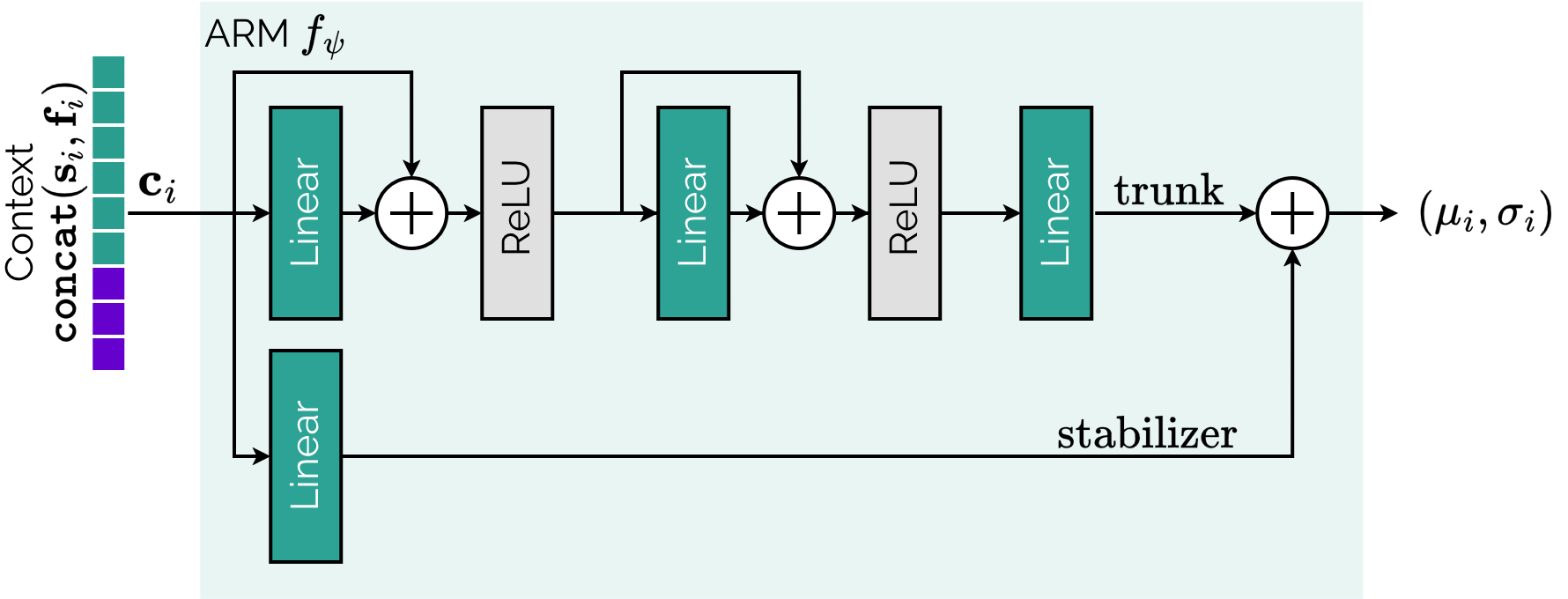
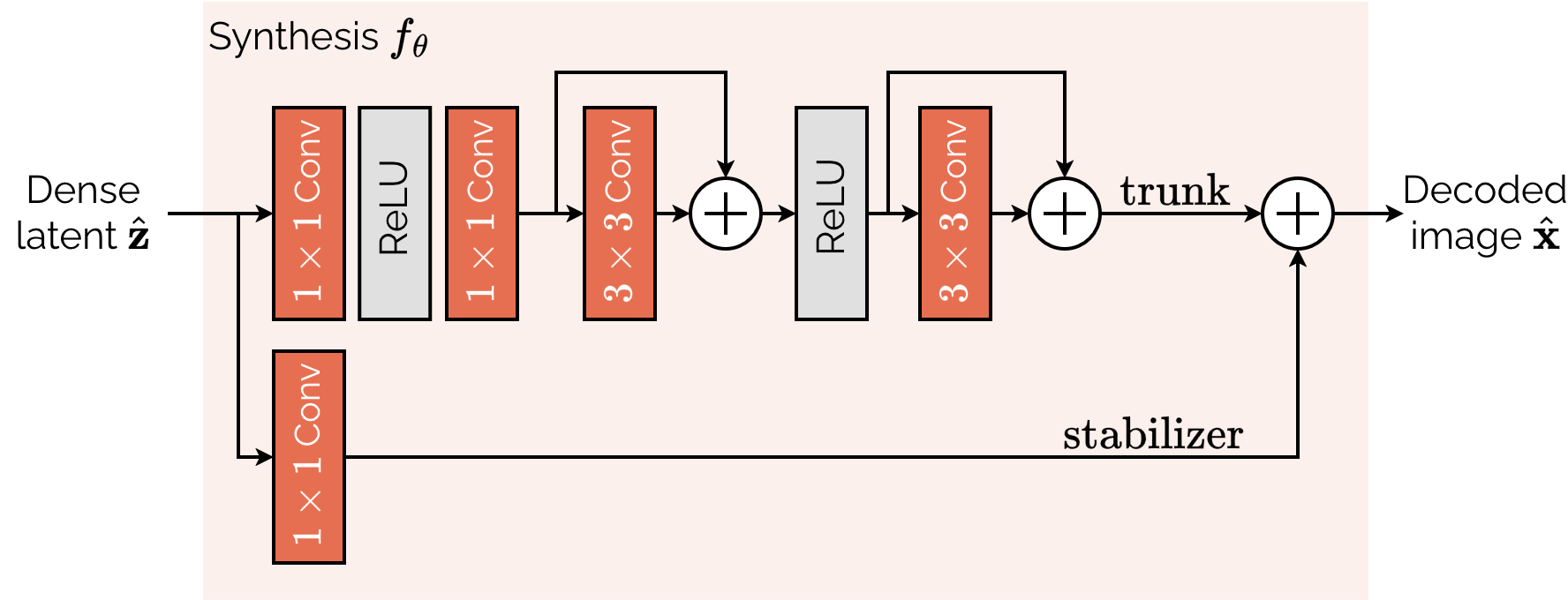
Figure 5: Structural overview of the ARM module, demonstrating context flow and integration for entropy parameter computation.
- Decoder Complexity: The architecture provides a strong rate-distortion trade-off at decoding costs from 500 to 3,000 MACs/pixel. It dominates the overfitted and conventional codec spaces except in very low-rate/small image scenarios, where network parameter overhead is non-negligible.
- Image Dependence Analysis: Performance advantage is largest for high-texture, large images where latent code and entropy model expressivity matter most. Performance drops for small, low-frequency or high-edge-content images, where neural parameter size dominates overall rate.
Ablation and Diagnostics
Ablation experiments confirm that each architectural and optimization advance makes a measurable contribution, with IFCE providing the largest single architectural gain (~3.8% BD-rate reduction individually). Removal of second-order optimization or reverting to a less refined quantization proxy each degrade BD-rate by nearly 3%. Both hyperlatents and the stabilizer yield incremental benefits.
Practical and Theoretical Implications
The Cool-chic 5.0 framework affirms the critical value of architecture-optimization co-design in the overfitted codec regime, where per-image adaptation can leverage smaller, more efficient decoders. The end result is a codec that is tractable for deployment in scenarios with strong uplink compute and constrained device or bandwidth environments.
The open-source release of Cool-chic 5.0 promotes further research and adoption. Its success demonstrates that overfitted approaches can match or exceed universal autoencoders’ performance with dramatic reductions in decoding cost, provided encoder-side computation is affordable.
Several open problems remain for the field:
- Content-adaptive hyperparameter tuning and architecture selection, to accommodate image resolutions and texture statistics.
- Joint network parameter rate regularization during training (e.g., via sparsity/entropy priors), particularly to minimize rate overhead at low-bitrate settings.
- Integration of quantization-aware training for further parameter rate reduction, potentially using sub-four-bit parameter quantization.
- Extension to hierarchical or progressive transmission and video codec contexts.
Conclusion
Cool-chic 5.0 establishes a new state-of-the-art for overfitted image codecs, achieving strong rate-distortion gains, an order-of-magnitude improvement in encoding speed, and ultra-low decoding complexity that is competitive with the best autoencoders. The advances in entropy modeling (IFCE and hyperlatents), decoder network design, and optimization strategy define clear directions for future research in adaptive, content-specialized neural compression.