- The paper demonstrates a near-optimal allocation method that reduces relative performance loss to 1.51% compared to iterative optimization methods.
- It employs LLM-guided symbolic regression to derive compact, closed-form scoring functions with O(N) computational complexity for real-time tracking.
- Empirical results validate robust generalization up to 200 targets while maintaining interpretability and efficiency in diverse radar scenarios.
LLM-Guided Symbolic Evolution for Radar Power Allocation: An Expert Analysis
The paper "Discover Fast Power Allocation Solution for Multi-Target Tracking via AlphaEvolve Evolution" (2605.01794) addresses the fundamental challenge of real-time radar resource allocation in multi-target tracking. This problem is characterized by strong combinatorial complexity, physical constraints, and the need for robustness and low-latency decision making. The canonical objective is to allocate the total radar transmit power among N dynamically varying targets to minimize the weighted sum of their Bayesian Cramér-Rao lower bound (BCRLB) tracking errors, subject to both sum and per-target power constraints.
While the underlying optimization P is convex, closed-form solutions are impractical due to the intractability of matrix inversion dependencies in the objective. Traditional iterative approaches (IPM, sequential quadratic programming, particle swarm, etc.) exhibit O(N3) runtime per iteration and are unsuitable for high-throughput, real-time adaptive radar operation.
Approach: Physics-Guided Symbolic Evolution
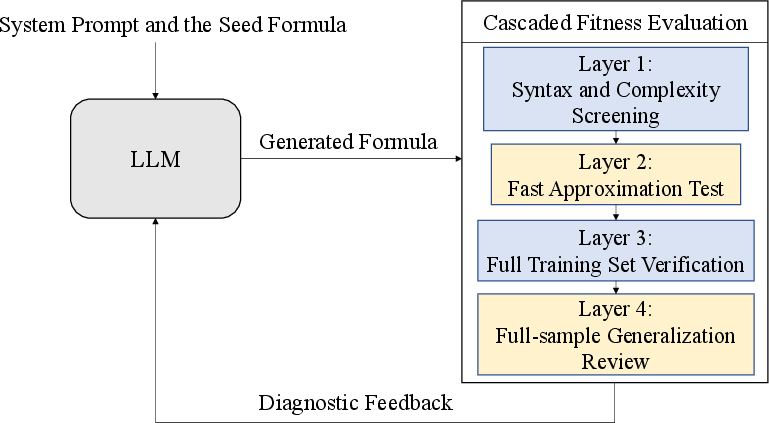
The paper proposes a paradigm shift from iterative optimization and black-box deep learning approximations to a white-box, closed-form solution discovery leveraging recent advances in LLM-augmented symbolic regression—concretely the AlphaEvolve framework. The process involves:
The closed-form scoring functions discovered are then deterministically mapped to feasible power allocations via a clamped, normalized reweighting to impose physical constraints without iteration.
Feature Engineering and Symbolic Search
A notable methodological contribution is the systematic construction of interpretable, tractable feature vectors informed by KKT condition analysis. Features reduce high-dimensional radar state matrices to domain-relevant statistics, such as demand factors, marginal benefits at different allocation operating points, and global statistics (means, variances, maxima over the scenario), while intentionally omitting information not impacting first-order allocation sensitivity.
AlphaEvolve is tasked, via cascaded evaluation, to evolve scoring functions Si=f(ui) that map the compact features to power priorities. Strong multi-objective filtering penalizes lack of robustness, overfitting, and formulaic complexity. The resulting function selected is:
Si=max((ηiζi)0.495,10−6)
where ηi and ζi are normalized versions of the absolute demand factor and baseline marginal benefit, respectively.
Static Approximation and Robustness
Numerical evaluation on 104 randomly generated scenarios with P0 compared the AlphaEvolve formula, high-SNR approximation, and uniform allocation. The average relative performance loss (versus IPM optimality) was:
- Uniform: P1
- High-SNR approximation: P2
- Discovered formula: P3
with the latter exhibiting minimal variance and absence of pathological outliers.
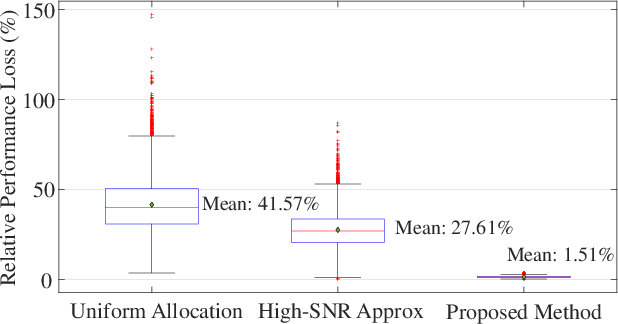
Figure 2: Absolute accuracy and long-tail robustness.
Generalization to Large Scale
Stress-testing for P4 up to P5 targets shows the error band for the discovered formula firmly bounded (P6), with narrow percentile bands across all scales, in sharp contrast to significant degradation in the baselines.
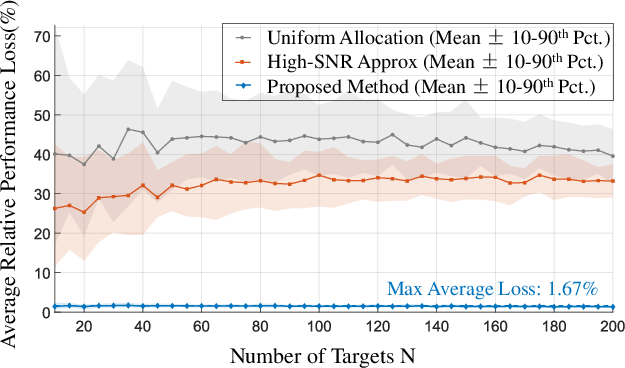
Figure 3: Generalization under scale expansion.
Computational Efficiency
The closed-form solution achieves P7 vectorized complexity, consistently operating below P8s—even for P9—compared to O(N3)0 s for IPM and O(N3)1 ms for numerical bisection. The formula demonstrates speedup factors exceeding O(N3)2 over standard solvers.
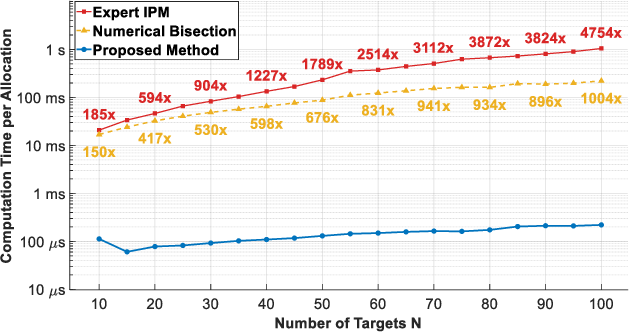
Figure 4: Computation time and speedup ratio.
Dynamic Tracking: Closed-Loop Consistency
End-to-end Monte Carlo experiments with dynamic EKF-based tracking (80 timesteps, O(N3)3, O(N3)4 cycles) confirm that the offline performance translates to sustained filtering accuracy and information-theoretic lower bounds on long time horizons, with no filter divergence or error accumulation relative to the IPM optimum.
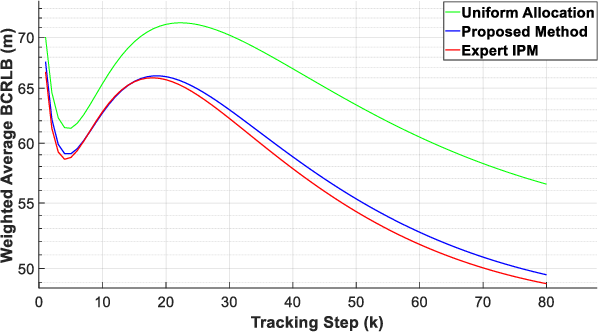
Figure 5: Dynamic BCRLB.
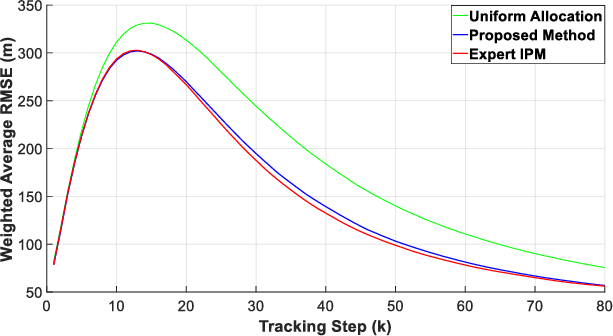
Figure 6: Dynamic RMSE.
Theoretical and Practical Implications
The research validates that data-free, LLM-driven symbolic regression can autonomously discover compact, physically consistent policies that generalize across scenario scales, operate under tight real-time constraints, and achieve near-optimality for challenging engineering resource allocation problems. This represents a departure from conventional DNN-based approaches, which require extensive training data and are susceptible to distribution shifts.
Strong claims established in this work:
- Near-optimality: O(N3)5 average relative performance loss, with no catastrophic outliers.
- Generalization: no error inflation under dramatic increases in scenario scale.
- Computational efficiency: over three orders of magnitude real-time speedup (O(N3)6 vs. O(N3)7 per IPM iteration).
- Interpretability: the final formula is analytically tractable, facilitating auditing and hardware deployment.
Future Directions
LLM-guided symbolic search for white-box control and resource optimization is an emerging area with substantial unexplored potential. Prospective developments include:
- Extending the technique to multi-radar or networked sensor settings with more sophisticated physical inter-target coupling.
- Dynamic adaptation of the symbolic models based on online feedback without human intervention.
- Real-time code-generation and deployment of evolved formulas in hardware-constrained, distributed radar networks, pushing the limits of edge intelligence.
- Application to other convex and nonconvex engineering optimization domains beyond radar, such as wireless communications, resource management in satellite constellations, and energy grid optimization.
Conclusion
LLM-augmented symbolic evolution, as exemplified by the AlphaEvolve paradigm, provides a principled path to iteration-free, closed-form resource allocation strategies in demanding engineering systems. The approach achieves near-optimal tracking performance, physics-consistent interpretability, real-time computational suitability, and robust generalization—all without requiring large-scale training data. The framework is poised to drive advances not only in radar resource management but also in a broad spectrum of algorithmic optimization challenges in AI-augmented engineering.