- The paper introduces a framework analyzing how angular momentum and quadrupole deformation uniquely affect orbital frequencies and timing delays in the HT metric.
- It uses geodesic deviation to reveal the mimicking effect, where low spin and quadrupole can produce nearly identical observable shifts in orbital dynamics.
- Numerical comparisons demonstrate that both rotational and deformation effects must be jointly modeled for precise neutron star timing and structure inference.
Shirokov and Shapiro Effects in the Hartle-Thorne Spacetime
Introduction and Theoretical Framework
The paper "Shirokov and Shapiro Effects in the Hartle-Thorne Spacetime" (2605.01639) delivers an in-depth analysis of the influence of rotation (characterized by angular momentum J) and quadrupole deformation (Q) on relativistic observables in the Hartle-Thorne metric. The Hartle-Thorne (HT) spacetime is a second-order expansion in angular velocity, uniquely suited for describing slowly rotating, slightly deformed compact objects such as neutron stars where the independent control of J and Q is essential. This generic framework stands in contrast to the Kerr metric, where Q is strictly determined by J.
Astrophysical motivation lies in the ability of these relativistic effects—the Shirokov and Shapiro phenomena—to probe the dense-matter equation of state, internal structure, and multipolar features of neutron stars and similar compact bodies. The geodesic deviation formalism is harnessed to study test-particle motion near such objects, allowing for the extraction of strong-field corrections to orbit precession, epicyclic frequencies, and light travel times.
Shirokov Effect: Geodesic Deviation and Oscillations
The Shirokov effect manifests as the difference between radial and vertical oscillation frequencies (or periods) for test particles on nearly circular orbits. Within the HT spacetime, the equations of geodesic deviation expand to include both j=J/M2 and q=Q/M3. Analysis reveals that both the frame-dragging (linear in j) and quadrupole terms (q) contribute to detectable shifts in the oscillation frequencies, enabling the isolation of their separate and combined influence.
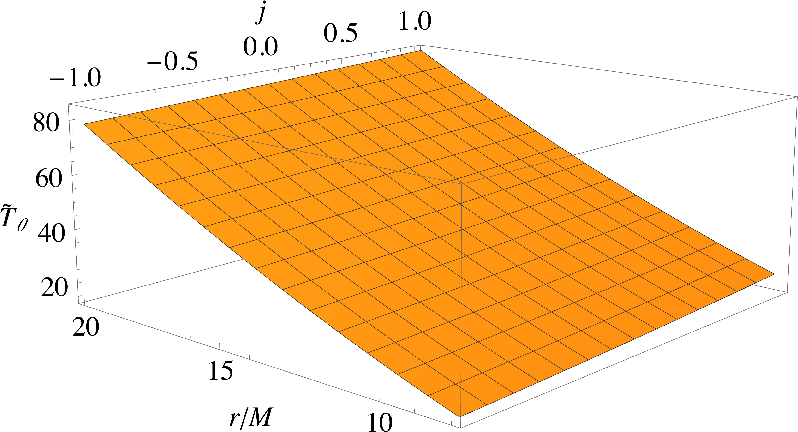
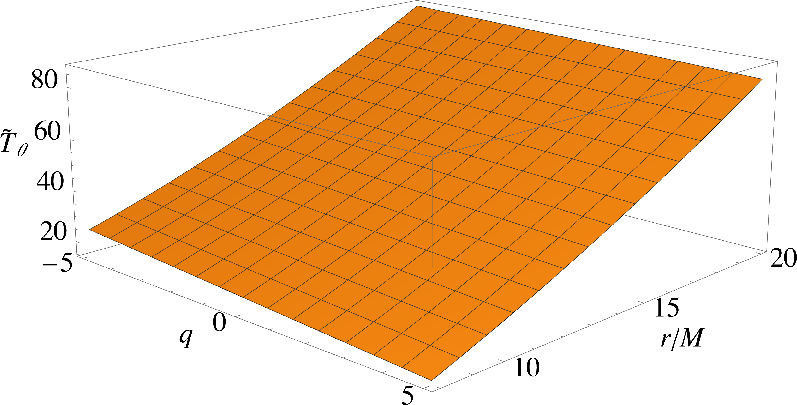
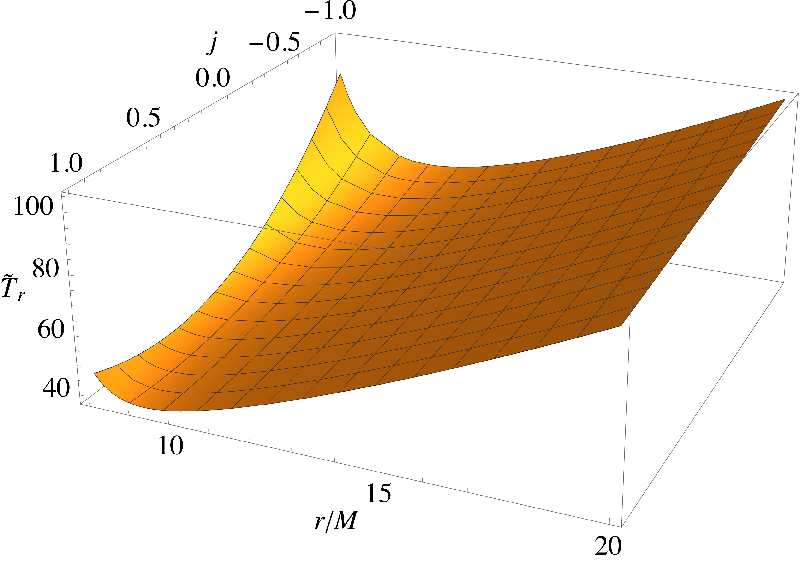
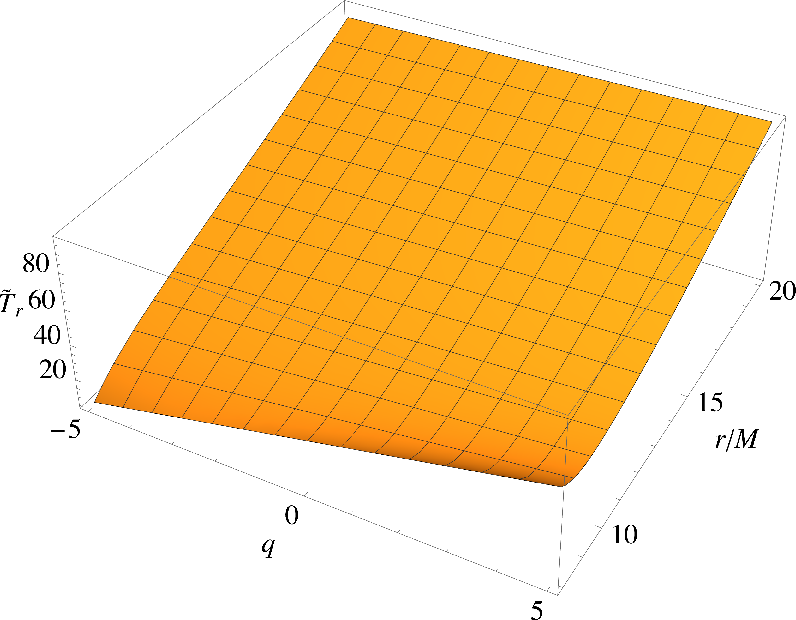
Figure 1: Dependence of the dimensionless periods Q0 and Q1 on Q2 and Q3 in Hartle-Thorne spacetime, showing strong-field deviations with increasing spin and deformation.
The figure demonstrates how radial and vertical periods increase with the orbital radius, but are distinctly affected by both Q4 and Q5 in the relativistic regime near the star. At large radii, differences diminish, underscoring the necessity of strong-field observation for sensitivity to spacetime multipoles.
A key result is the "mimicking" phenomenon: for low values of Q6, a combination of angular momentum and quadrupole can reproduce identical vertical displacements, thus leading to a degeneracy in inferring these parameters from the Shirokov effect alone.
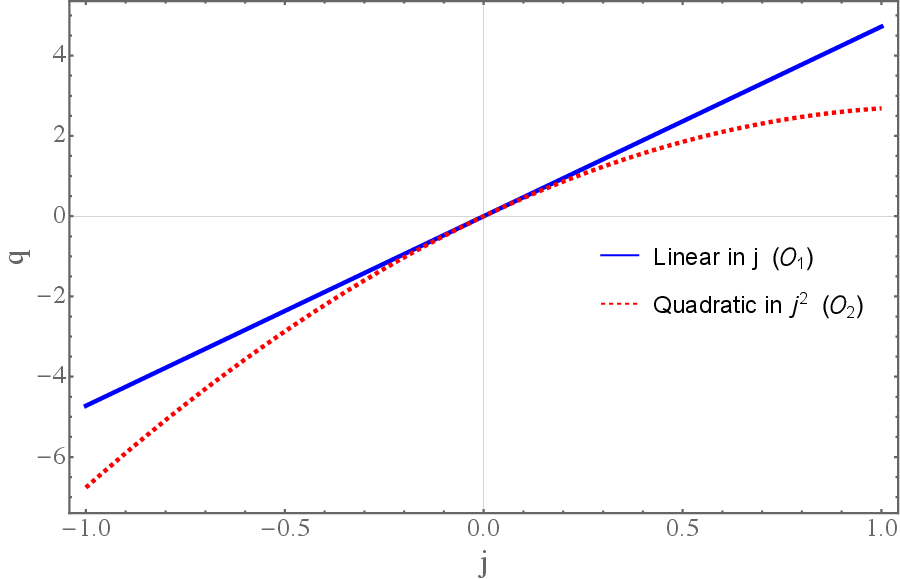
Figure 2: Mimicking of the Shirokov effect in HT metric: Q7 vs. Q8 for a 1.4 Q9 neutron star at J0 km, illustrating the compensation between quadrupole and spin.
Further, vertical displacements scale linearly with J1 and decrease smoothly with increasing J2 (Figure 3, left and right panels), solidifying that both multipolar and rotational structure are critical in the timing analysis of orbiting bodies near neutron stars.
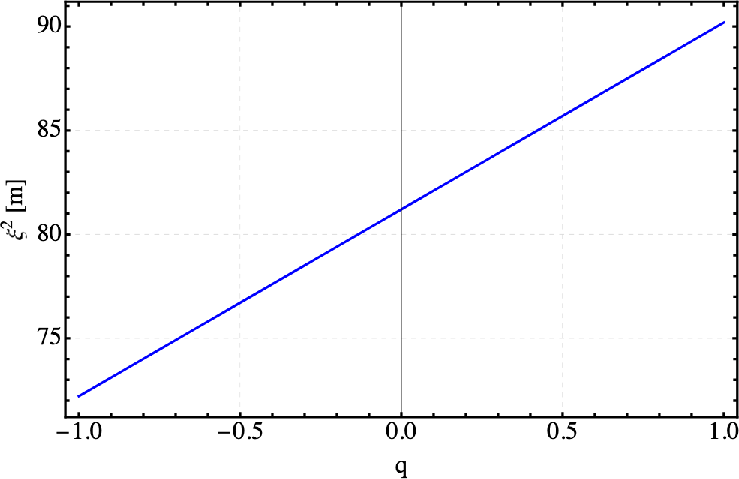
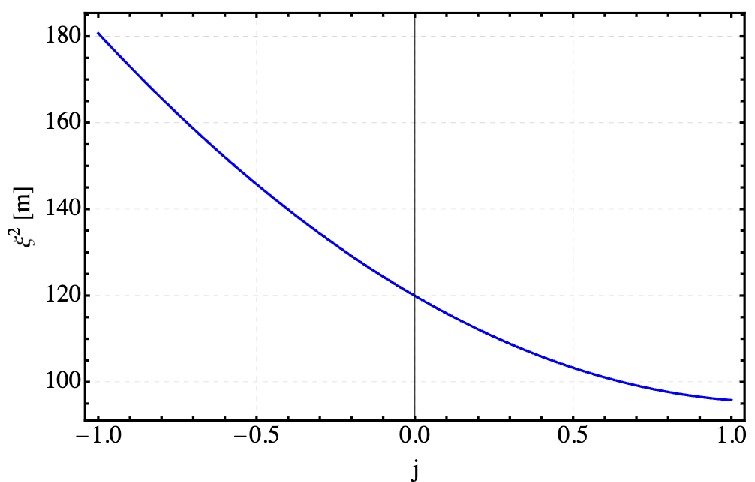
Figure 3: Dependence of vertical displacement J3 on J4 (left) and J5 (right), confirming the systematic effect of deformation and spin.
Comparisons to static limits and to alternative axisymmetric metrics (such as the Zipoy-Voorhees J6-metric) demonstrate analytic agreement in post-Newtonian expansions, establishing a correspondence in how quadrupolar deviations manifest irrespective of the explicit metric employed.
Shapiro Time Delay: Light Propagation and Multipole Signatures
The Shapiro delay, an integrated effect on photon travel time due to gravitational curvature, is generalized here to the HT metric, incorporating J7 and J8 beyond the Schwarzschild limit. This analysis is particularly relevant for strong-field regions typical of neutron star environments—regions inaccessible to solar-system experiments.
A schematic of the setup considered is shown below.
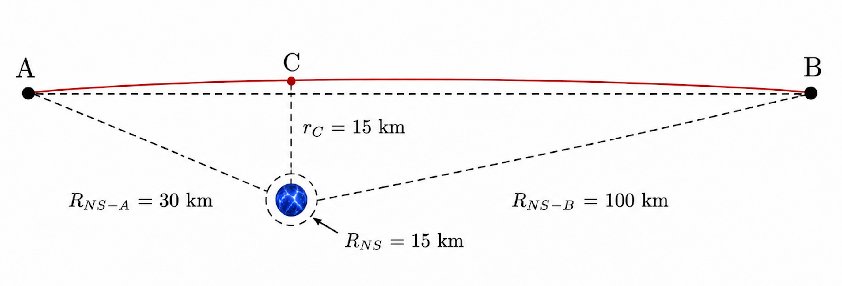
Figure 4: Schematic of Shapiro time delay with two objects on circular orbits about a neutron star, indicating the additional propagation time for a ray near the mass.
The delay is numerically investigated for variations in J9 and Q0, showing that rotational effects (frame dragging) generally induce a larger timing change compared to quadrupole deformations for the same relative parameter range.
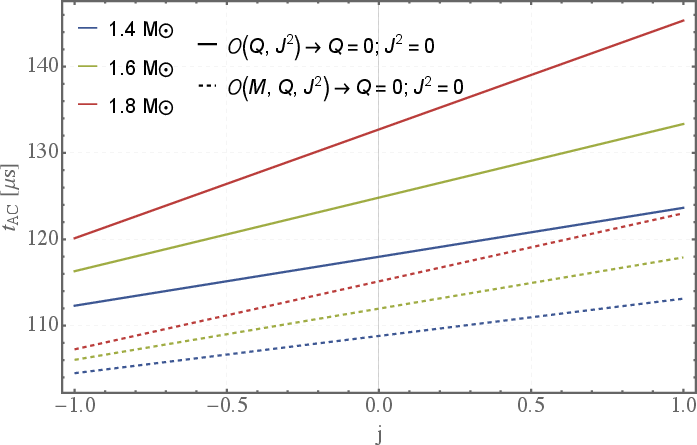
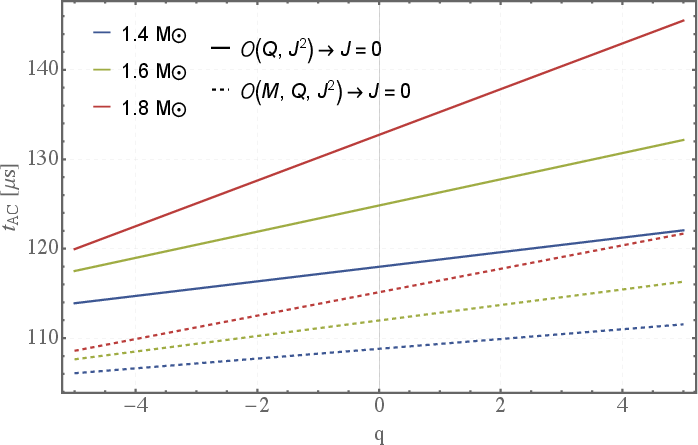
Figure 5: Time delay as a function of Q1 (left) and Q2 (right); note the stronger Q3-dependence in the one-way time delay near neutron stars.
The paper provides round-trip delay expressions capturing both frame-dragging and quadrupole modifications to the null geodesic, with integrals done fully numerically beyond the weak-field limit. The figures below further illustrate the dependence of Q4 (maximum round-trip time delay) on Q5, Q6, and the closest approach parameter Q7. The degeneracy between spin and quadrupole in timing is again evident, further supported by illustrations of the so-called mimicking effect in the Shapiro delay.
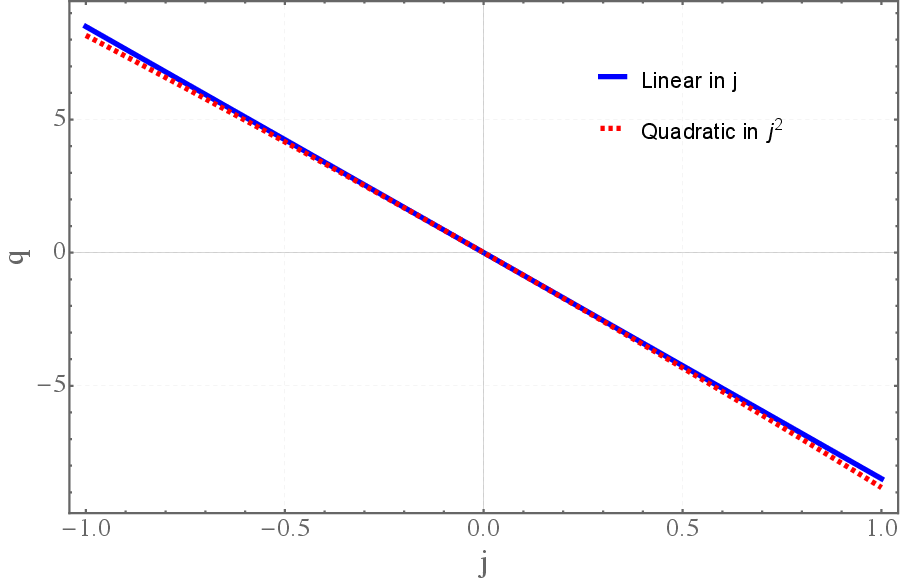
Figure 6: Mimicking effect in Shapiro delay: quadrupole and spin combinations can yield indistinguishable time delays for low Q8, but Q9 terms break perfect degeneracy at higher spin.
A cross-comparison with the Schwarzschild, Lense-Thirring, Q0-metric, and HT models Figure 7 demonstrates the cumulative effect of including multipole and spin corrections—HT consistently produces the largest time delay, confirming the need for its usage in precision pulsar timing near massive and deformed neutron stars.
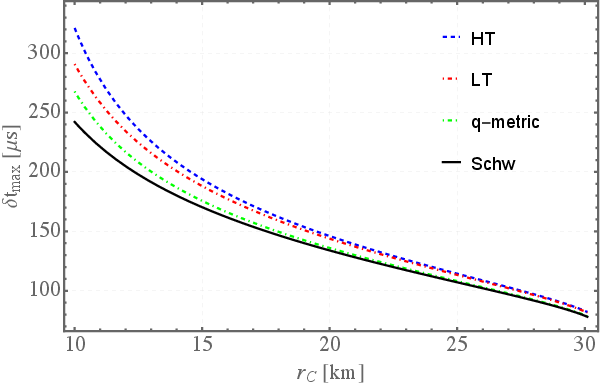
Figure 7: Maximum time delay Q1 as a function of orbital radius for different spacetimes, highlighting the hierarchy and convergence at large distances.
Implications and Future Directions
The findings underscore that neutron star astrophysics cannot disentangle Q2 and Q3 from timing or dynamical observables alone; both must be inferred jointly from multiple, independent effects or via electromagnetic and gravitational-wave observations. The degeneracy discovered between spin and quadrupole parameters—especially for the mimicking effect in relativistic orbits and light propagation—imposes fundamental constraints on attempts to infer the interior structure or precise spacetime parameters of realistic neutron stars.
Furthermore, the results argue for the necessity of second-order (in spin) models for objects rotating even moderately, and for including deformation effects in both theoretical templates and data analysis pipelines for pulsar timing, X-ray waveform modeling, and gravitational lensing studies. The accuracy achieved by using the HT spacetime is essential for next-generation, high-precision multi-messenger astrophysics.
Suggested future work includes incorporating even higher-order multipole moments, extending to alternative theories of gravity, and considering realistic (e.g., magnetized, tidally deformed) neutron star models, as well as applications to binary systems and the analysis of gravitational wave signals sensitive to strong-field multipole structure.
Conclusion
This study comprehensively explores how the Hartle-Thorne spacetime modifies the Shirokov and Shapiro effects relative to the well-studied spherically symmetric and purely rotating cases. Both radial/vertical orbital period differences and gravitational time delays encode intertwined information about the angular momentum and quadrupole moment of the central object. The strong degeneracy and mimicking effect highlight the theoretical and observational challenges in extracting the equation of state-dependent multipolar structure of neutron stars from timing observables alone. The precise numerical and analytic framework advanced in this work provides an essential toolset for interpreting observations of relativistic phenomena in the vicinity of compact, non-Kerr objects.
Reference: "Shirokov and Shapiro Effects in the Hartle-Thorne Spacetime" (2605.01639)

