- The paper presents a physics-driven digital twin that ensures mutual consistency across satellite ephemerides, user dynamics, and propagation effects.
- Methodology integrates trajectory-driven signal synthesis, HIL testing, and interference/multipath modeling to rigorously stress test GNSS receivers.
- Experimental validation demonstrates sub-2m positioning accuracy and stable tracking loop performance across static and high-dynamics scenarios.
Physics-Driven Digital Twin Modeling for GNSS Receiver Evaluation: An Expert Synthesis
Overview and Motivation
The paper "Physics Driven Digital Twin Model for Evaluation of GNSS User Receiver Equipment" (2605.01553) proposes a rigorously physics-consistent digital twin (DT) framework for end-to-end evaluation of GNSS receiver equipment, with a particular focus on the GPS L1 C/A signal chain. The work addresses critical limitations in conventional GNSS test methodologies—especially their lack of dynamic consistency between satellite/user kinematics, propagation effects, and receiver observables—by developing a DT that enforces coherence across all physical layers from satellite ephemerides to receiver observables. This framework facilitates synthetic signal generation, hardware-in-the-loop (HIL) receiver testing, and robust navigation algorithm development under controlled and repeatable scenarios, encompassing static to highly dynamic user trajectories.
Digital Twin Framework: Architecture and Physics-Driven Modeling
The digital twin consists of tightly coupled models for GNSS signal synthesis, trajectory-driven Doppler and code-phase dynamics, and physically-informed power/propagation effects. The design enforces mutual consistency between satellite ephemerides, user trajectories, propagation (ionospheric and tropospheric delays), and the modulated baseband signal, diverging fundamentally from traditional simulators that employ otherwise unconstrained signal templates.
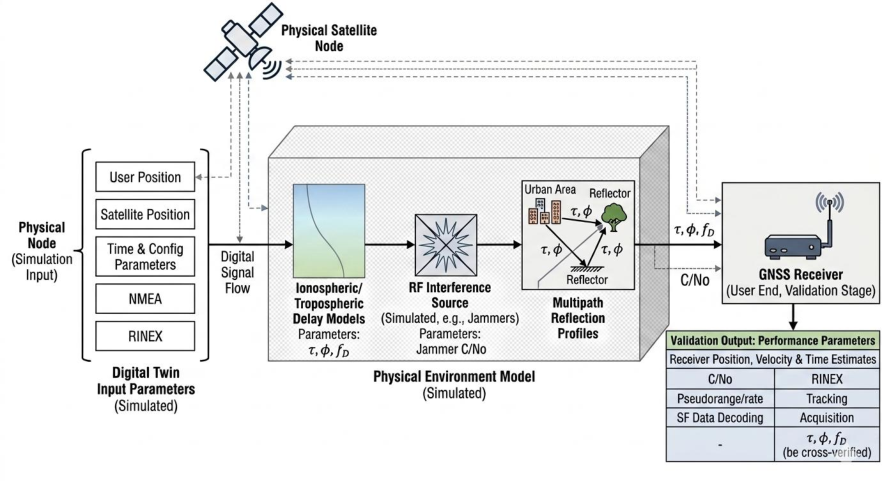
Figure 1: The digital twin integrates trajectory-driven signal synthesis, propagation modeling, and receiver validation in a closed-loop, physics-consistent architecture.
Satellite dynamics and user motion are formulated in the ECEF coordinate frame; relative velocities project onto the line-of-sight (LOS) vector, explicitly embedding motion-induced Doppler and Doppler-rate effects into the received intermediate-frequency (IF) signal. The power model rigorously incorporates free-space loss, satellite and receiver antenna patterns, and atmospheric attenuation to derive carrier-to-noise density ratios (C/N0) that are geometry-dependent and physically realistic.
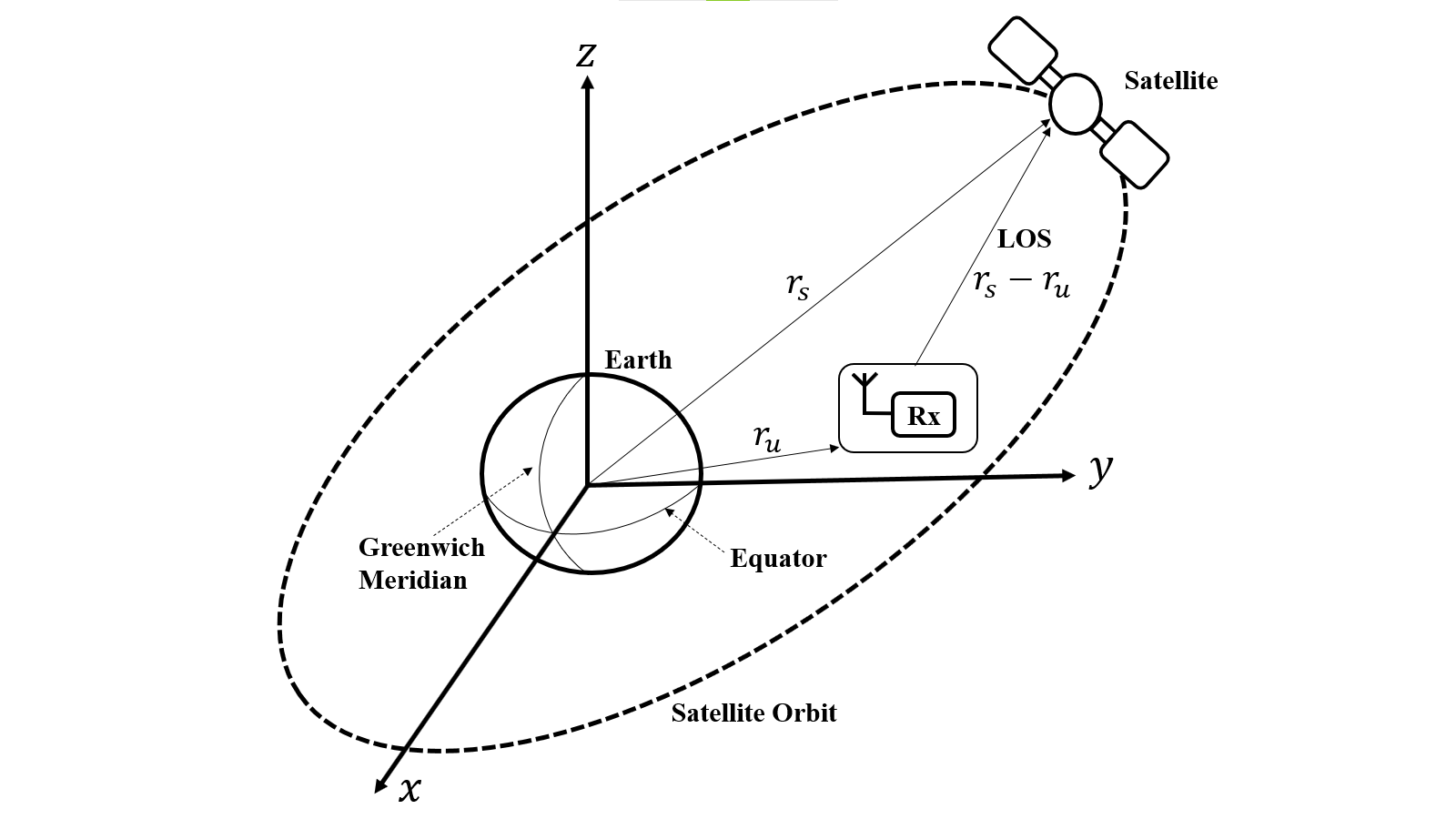
Figure 2: Depiction of satellite–receiver geometry in the ECEF frame, foundational for Doppler and propagation modeling.
The system also encompasses sophisticated interference (chirp, CWI, FMCW, impulsive) and multipath channel modeling, enabling robust receiver stress testing in electromagnetically complex environments.
Measurement Modeling and Scenario Realization
Ionospheric and tropospheric delays are modeled by, respectively, the Klobuchar and Saastamoinen models, parameterized with real navigation data. Signal synthesis proceeds by injecting these propagation delays, as well as trajectory-consistent code-phase and Doppler profiles, directly into the GNSS signal structure; the result is a set of complex baseband samples that are upconverted to RF using an SDR platform.
A three-tiered user scenario taxonomy is analyzed: (1) static, (2) moderate-motion (e.g., automotive, UAV), and (3) high-dynamics (e.g., projectiles, guided munitions). The HIL setup leverages HackRF One SDR hardware and commercial receivers for benchmarking.
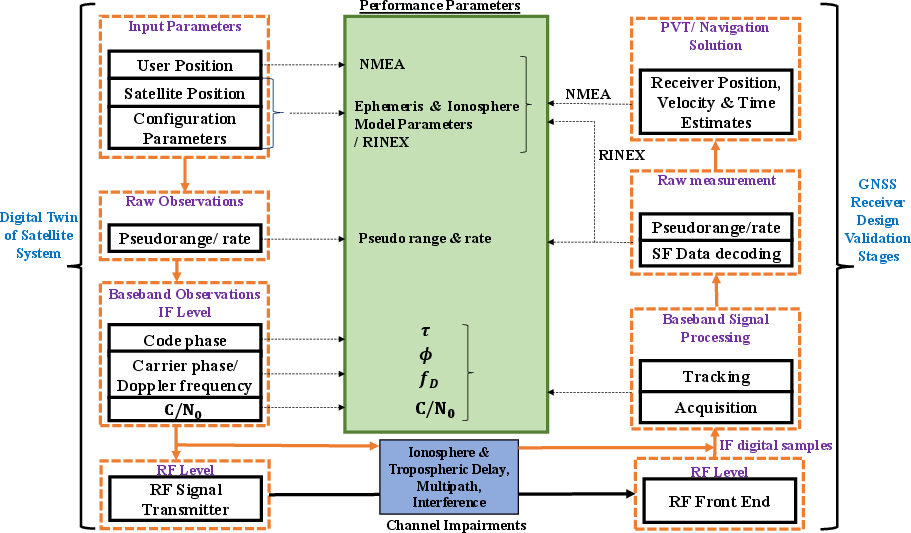
Figure 4: The validation pipeline incorporates PSD estimation, acquisition, tracking, observable and PVT comparison, and HIL evaluation.
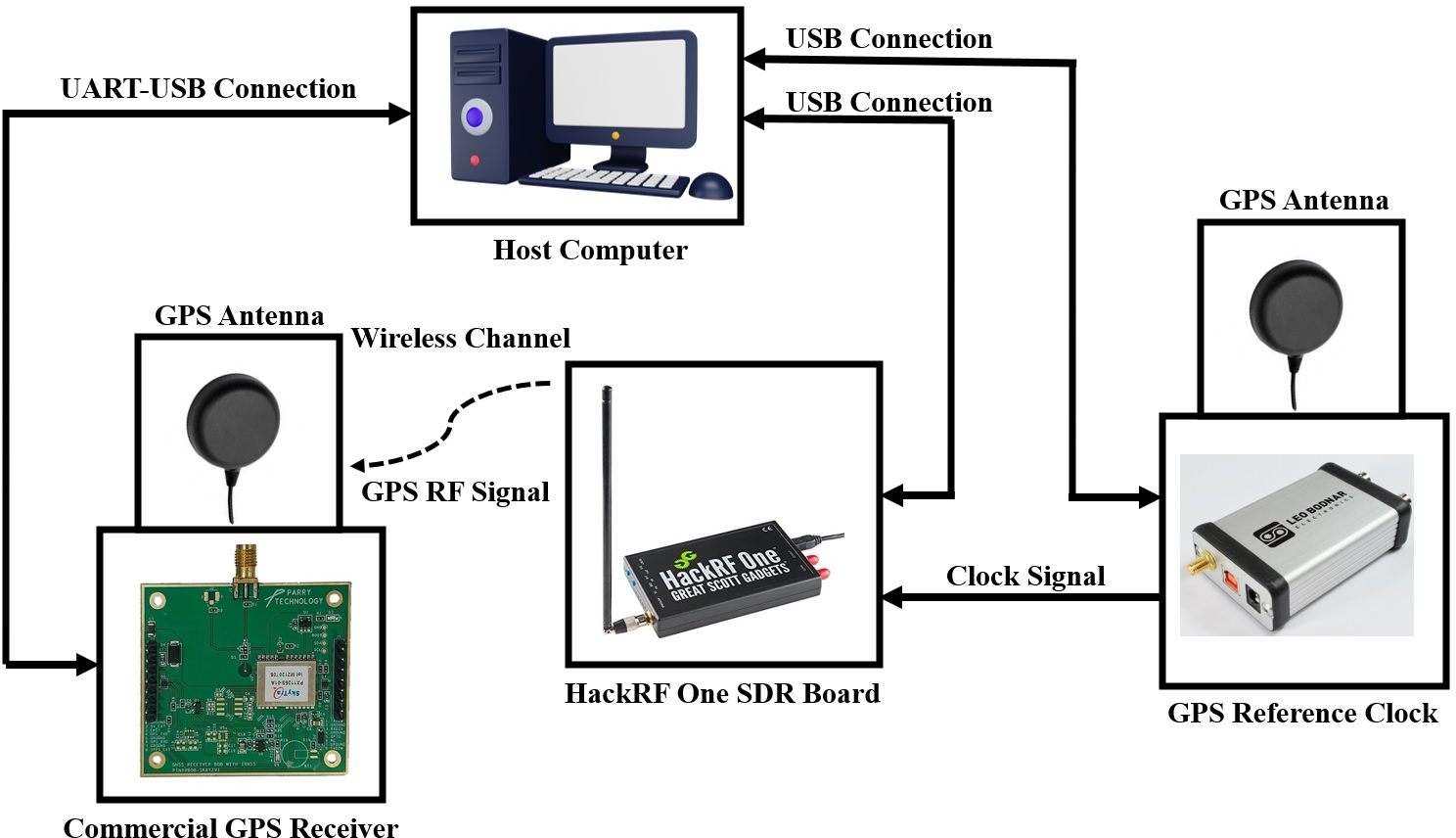
Figure 3: HIL test configuration with SDR-based RF generation and real receiver feedback.
Experimental Validation and Results
The digital twin is validated on signal, tracking, and position/navigation domains. The tests rigorously compare synthesized observables (code phase, Doppler, carrier phase, pseudorange) to those estimated by both software and commercial receivers.
Signal Consistency: The synthesized GNSS signals’ spectral features precisely match theoretical BPSK(1) characteristics. PSD and code/Doppler observables exhibit strong alignment between truth-model and receiver outputs, in both static and dynamic scenarios.
Tracking Fidelity: Discriminator outputs for DLL, PLL, and FLL remain within stability thresholds dictated by classical loop theory, even under high-dynamics. Jitter analysis reveals that only the DLL approaches its stability margin during rapid user accelerations, whereas PLL and FLL remain well within bounds. This demonstrates that the digital twin can credibly stress receiver tracking loops with precise control.
Position-Domain Validation: The digital twin achieves meter-level horizontal positioning accuracy in static scenarios, and highly consistent trajectory reconstruction in dynamic and projectile contexts. This fidelity is not just seen in software receivers but is also confirmed in HIL with commercial hardware.
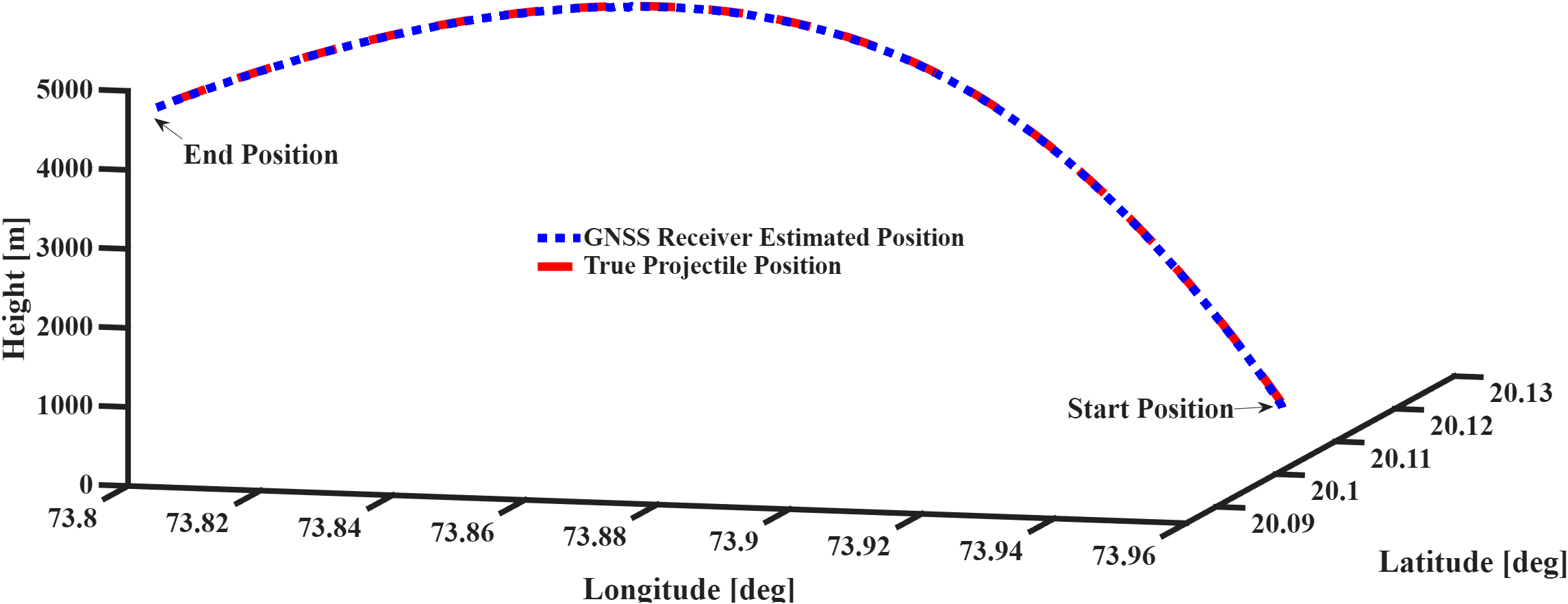
Figure 5: Horizontal position error in the static case confirms sub-2 m error bands and position stability.
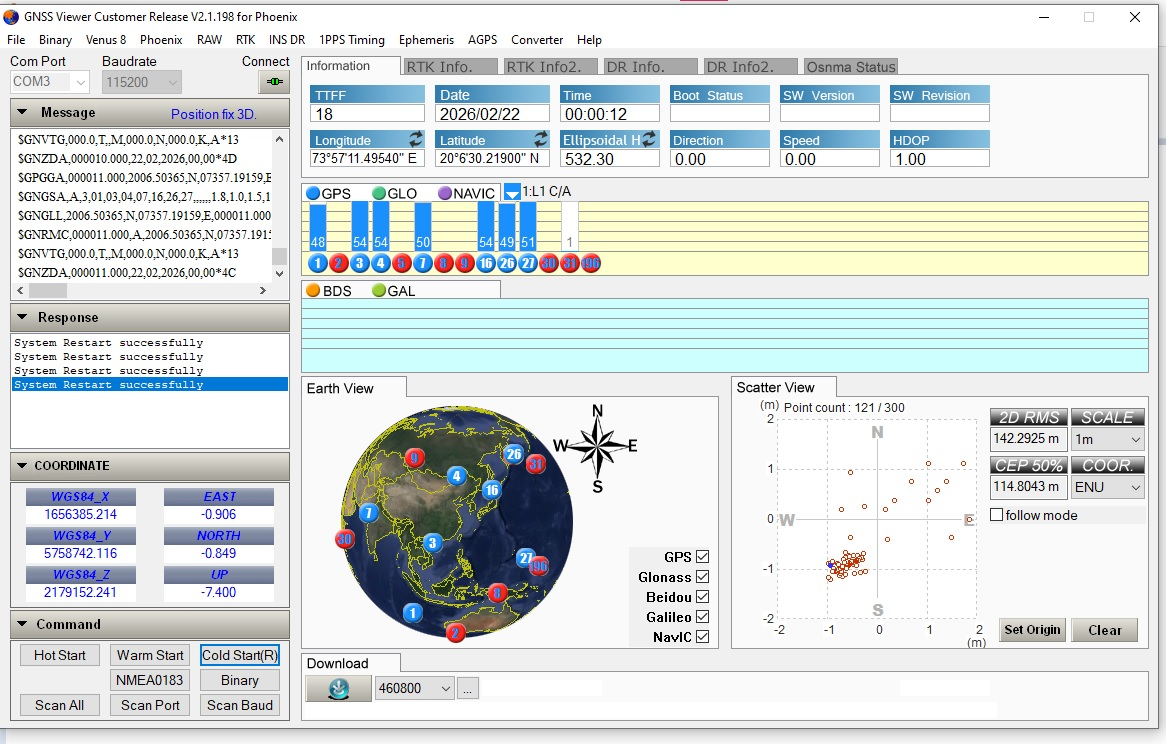
Figure 8: HIL results from commercial receiver, showing robust satellite tracking and horizontal scatter within 2 m.
Clock Stability: The DT-generated signals induce clock bias and drift estimates in the receiver that are smooth, bounded, and physically realistic, confirmed by time-series and Allan deviation analysis.
Implications, Contrasts, and Prospects
The work makes explicitly bold claims regarding the ability of the physics-driven DT to reproduce end-to-end dynamics in a way that is quantitatively indistinguishable from reality across all tested observables. This contrast with conventional GNSS simulators emphasizes genuine physical coupling, especially critical for HIL verification of modern robust GNSS receivers.
By supporting controlled injection of interference and multipath, and by allowing seamless integration with both software and commercial receivers, the framework sets a new benchmark for reproducible receiver testing—extending applicability beyond static field scenarios to mission-critical, high-dynamics, and adversarial environments. The reproducibility and physical realism open avenues for systematic exploration of GNSS vulnerabilities (e.g., spoofing/anti-jamming), development and benchmarking of advanced tracking loop and navigation algorithms, and validation of receiver integrity monitoring under stress.
Further, this methodology provides a foundation for extending to multi-frequency, multi-GNSS, or regional (e.g., NavIC, BeiDou) signal environments, as well as closed-loop integration with guidance and control systems. The capacity to model advanced ionospheric, tropospheric, and urban-channel effects using digital twin paradigms is essential for future-proofing GNSS receiver certification and robust autonomy.
Conclusion
This paper establishes a rigorously physics-driven digital twin platform for GNSS receiver evaluation, providing validated, repeatable, and physically accurate scenario generation and HIL integration. Quantitative results demonstrate strong agreement in code/Doppler/position observables, robust tracking loop stability—even in high-dynamics regimes—and meter-level positioning with both software and commercial receivers. The architecture redefines best practices for GNSS receiver validation, suggesting a clear trajectory toward multi-constellation, multi-environment, and adversarially robust navigation testbeds, with clear implications for both industrial and scientific development in resilient PNT.