- The paper presents ESPRESSO’s high-resolution transit observations of GJ 436b, uncovering a predominantly featureless optical spectrum.
- The analysis uses both direct narrow-band searches and cross-correlation techniques, yielding strict upper limits on atomic and molecular species.
- The study highlights the challenges of stellar activity and temporal variability in reliably detecting weak atmospheric signals in warm Neptunes.
High-Resolution Optical Transmission Spectroscopy of GJ 436b with ESPRESSO
Introduction and Context
The warm Neptune GJ 436b, transiting an M3V star, has been an intensive subject of atmospheric characterization due to its position near the lower-mass edge of the hot Neptune desert. Previous studies established a featureless or muted transmission spectrum in both HST/NICMOS and HST/WFC3 data, commonly attributed to high-altitude aerosols or metallicity-driven opacity, while far-UV investigations revealed a massive, neutral hydrogen-dominated exosphere and robust atmospheric escape. High-dispersion, optical-resolution spectra able to probe resolved atomic and molecular lines in GJ 436b’s atmosphere were not available before this study.
The paper addresses this gap by presenting ESPRESSO/VLT observations of two primary transits of GJ 436b, aiming to establish robust constraints—via both direct feature search and cross-correlation techniques—on the presence of metal atoms, ions, and metal-oxide molecules in GJ 436b's upper atmosphere (2605.01390).
Observational Campaign and Data Quality
ESPRESSO/HR-mode spectra, spanning 3800–7880 Å at R∼138,000, were obtained for two full transits (designated T1, T2, approximately two months apart). Each epoch included 49 exposures with a S/N on the order of 44 to 52 at 5500 Å, complemented by simultaneous EulerCAM photometry for transit timing verification and activity monitoring.
Quality assessment indicated consistent S/N across both transits except for increased high airmass in initial T2 exposures.
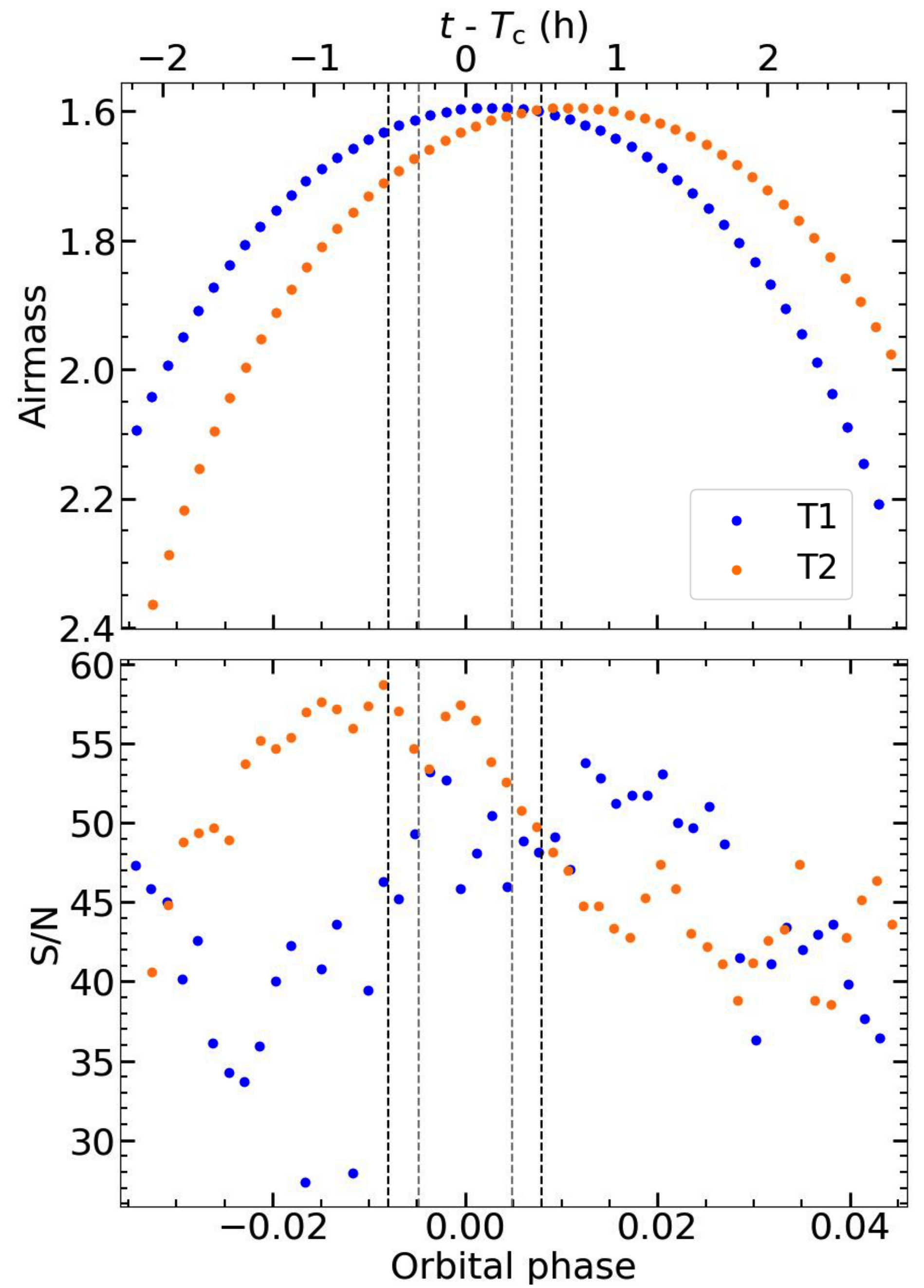
Figure 1: Variations in airmass and S/N around 5500 A˚ during ESPRESSO transit nights, indicating consistent coverage and data quality.
Systematic effects from telluric absorption and instrument-induced spectral “wiggles” were mitigated through molecfit and cubic spline smoothing, ensuring minimized residual artifacts in the extracted transmission spectra.
Stellar Activity and Its Impact
GJ 436 is characterized by rotation-modulated and cycle-dependent chromospheric variability with a significant short-timescale flare rate. Both nights presented low-energy stellar flares as evidenced by enhancements in the Hα, Na I, and Ca II activity indices, observed post-transit.
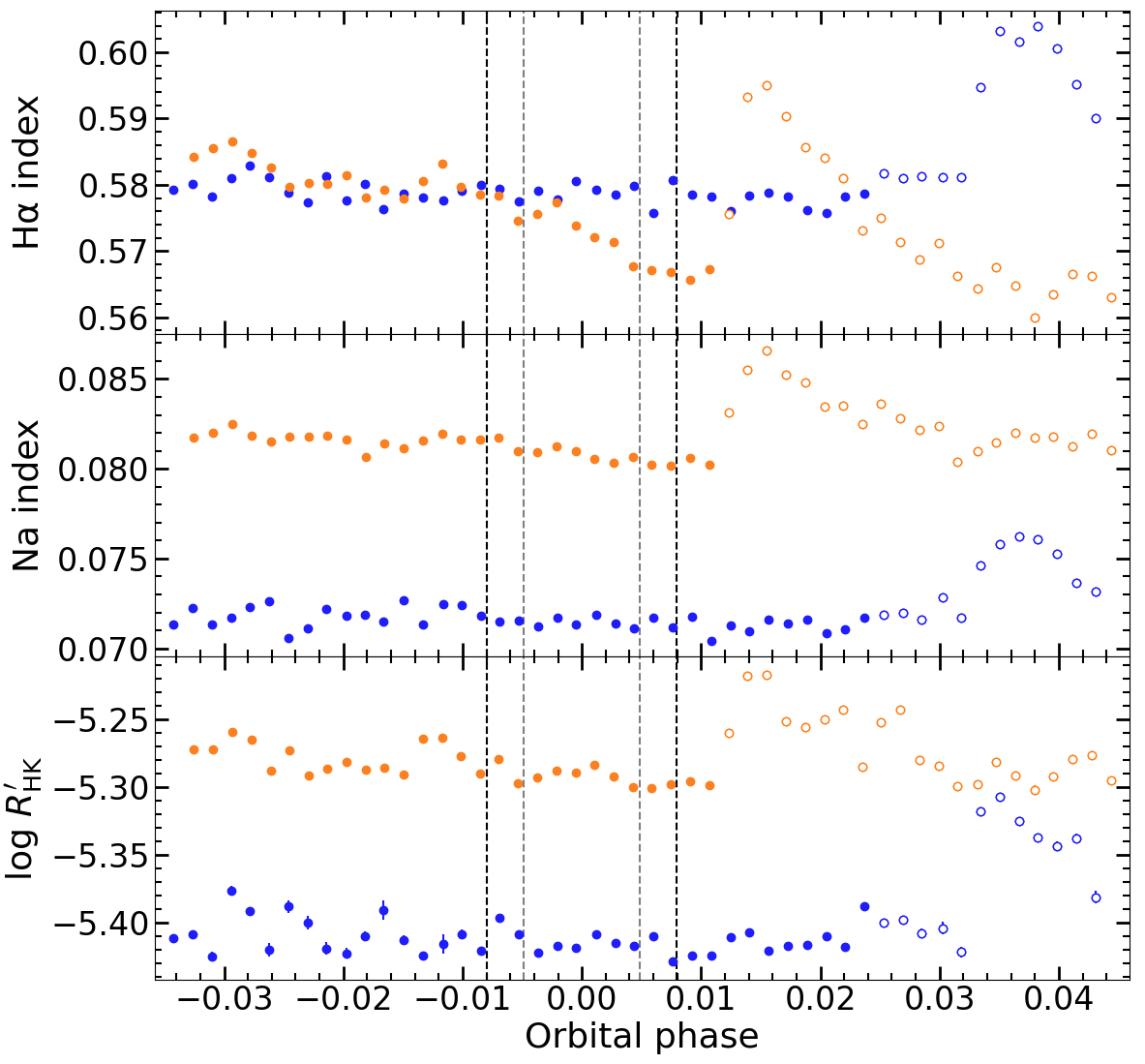
Figure 2: Time series of Hα, Na I, and Ca II activity indices; flares manifest as spikes, and intervals affected by flares were excluded from master spectrum construction.
Given the strong variability, exposures during flare-active intervals were excluded from the master out-of-transit spectrum, a procedure crucial to suppress false-positive planetary signals in the transmission spectra.
Transmission Spectra Analysis and Non-Detections
Transmission spectra were searched for atomic and molecular features using two complementary approaches:
- Direct search for narrow-band features in the planetary rest frame (e.g., Hα, Na I D, Mg I b, Li I).
- Cross-correlation (CCF) techniques for species with dense, weak, or broad line forests, employing synthetic templates generated at equilibrium and elevated atmospheric temperatures.
No statistically significant detection of any atomic or molecular species was obtained in either approach for both transits. This includes upper limits on Hα, Na I, Mg I, Li I, and molecules such as TiO and VO. Consequently, the analysis establishes stringent upper limits on the abundance and detectability of atomic and molecular species in the upper atmosphere.
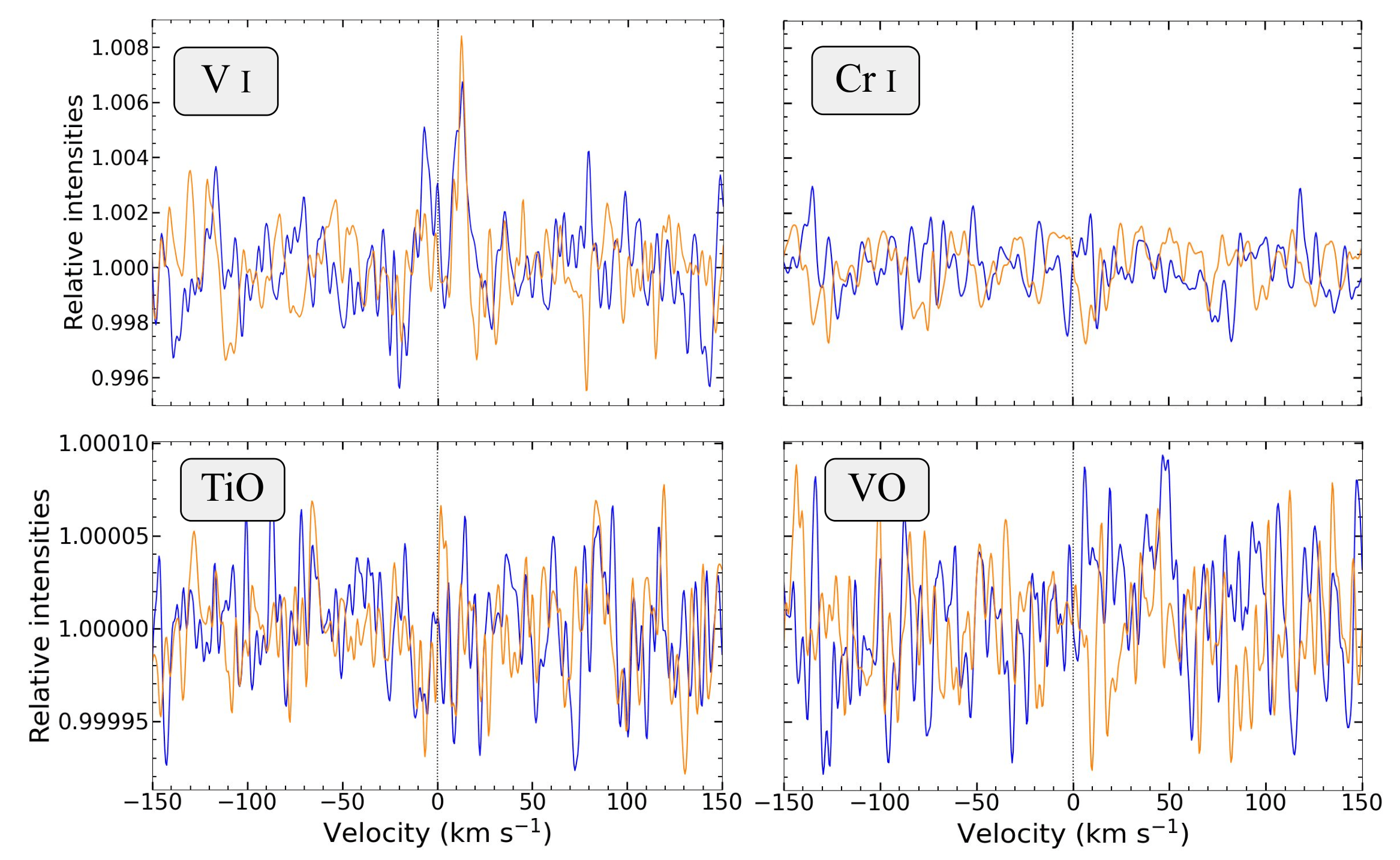
Figure 3: CCFs for both T1 and T2 in the planetary rest frame show no significant detection for atomic or molecular species, with absent correlated features at the expected rest velocity.
Visual inspection of the transmission maps and S/N analysis around key transitions corroborate a featureless spectrum within the achieved sensitivity.
Tentative Fe I Signal and Detailed Statistical Assessment
A marginally significant (S/N=3.4±0.2) putative Fe I cross-correlation signal at −18.6 km s−1, observed only in T1 and not in T2, was subjected to rigorous statistical scrutiny including empirical Monte Carlo bootstrapping and injection-recovery tests.
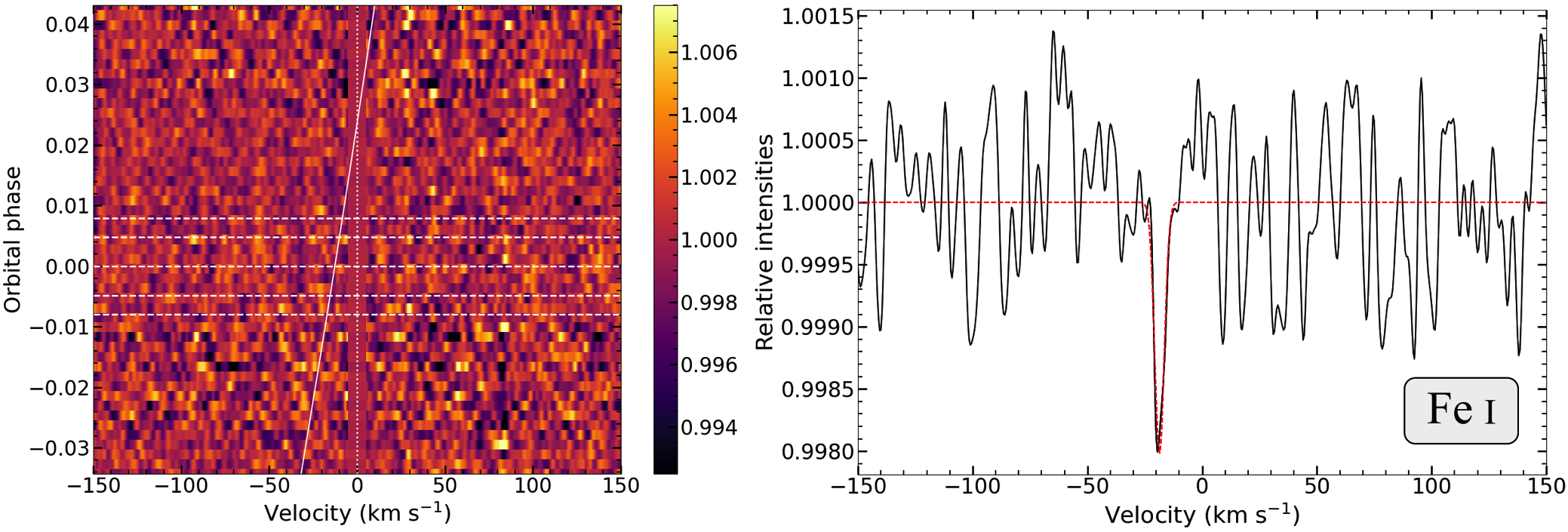
Figure 4: Tomography map and CCF for Fe I at 1300 K in T1, revealing a marginal blueshifted absorption feature that does not repeat in T2.
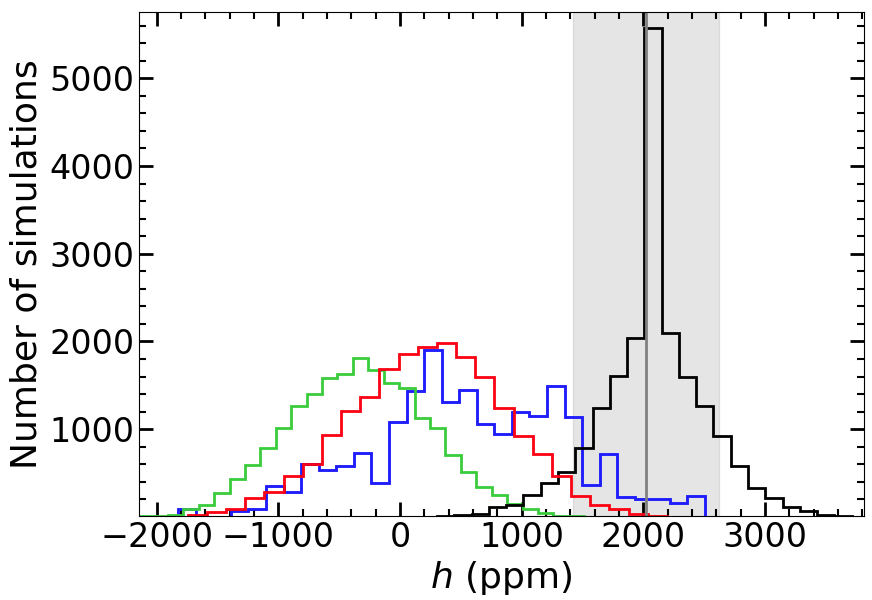
Figure 5: Bootstrap analysis of absorption depth for Fe I, showing a significant offset from zero in the in–out scenario, but distributions in other scenarios compatible with the noise floor.
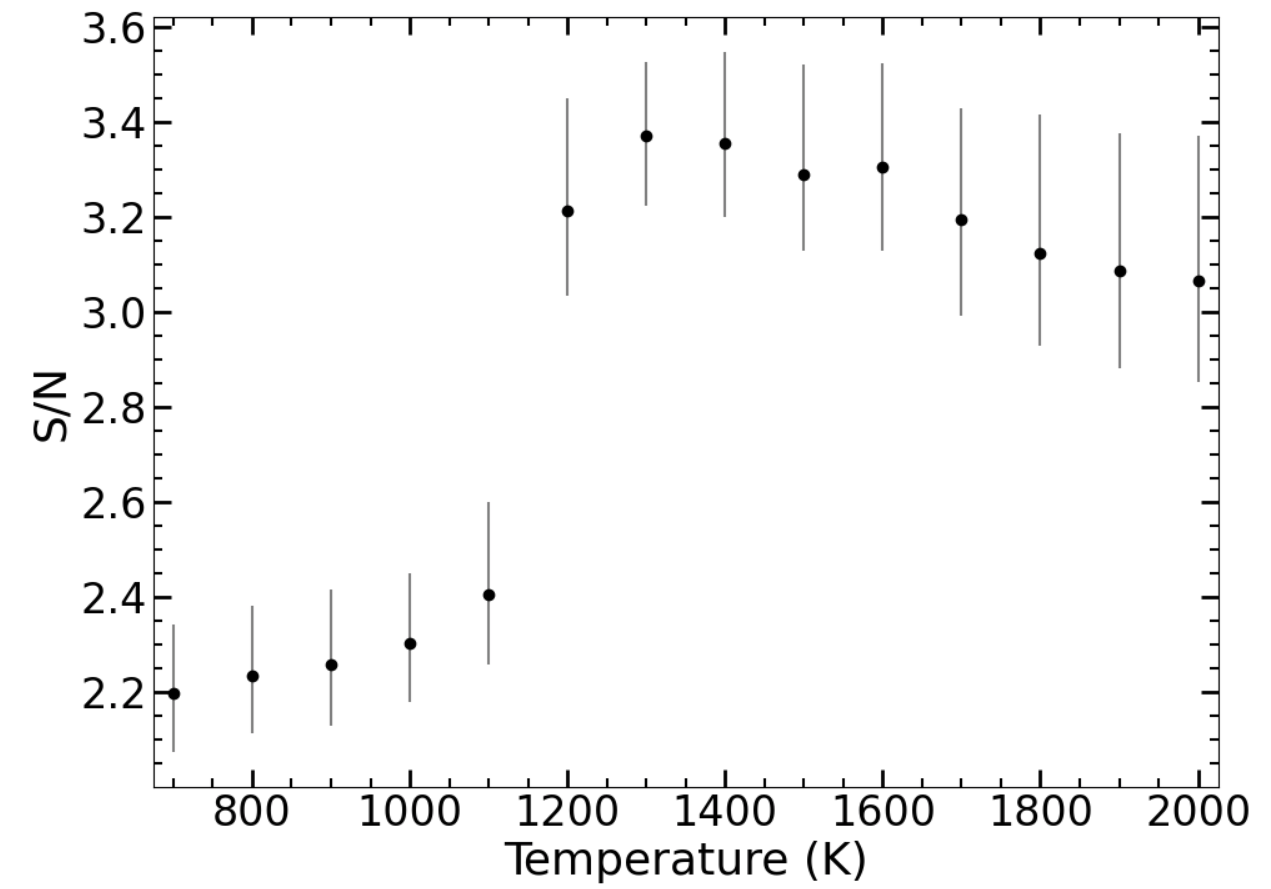
Figure 6: The temperature dependence of Fe I CCF S/N in T1, maximizing at ∼1300 K, suggestive of a hotter-than-equilibrium upper atmosphere if real.
The lack of reproducibility in T2, the high blueshift (A˚0 km sA˚1, much larger than expected winds), and the statistical fragility favor interpreting this as noise or a spurious fluctuation, further supported by synthetic CCF injection-recovery studies.
Comparative Exoplanet Context and Constraints
If interpreted at face value and assuming a planetary origin, the implied required Fe/H was several times stellar, consistent with or exceeding the 10× solar metallicity suggested from CO/COA˚2 infrared dayside retrievals, and consistent with the trend of super-stellar metallicity in lower-mass giant planets.
However, ESPRESSO non-detections confirm the persistence of featureless or muted optical spectra in the warm Neptune regime, in contrast to hot Jupiters—demonstrated in Figure 7, where GJ 436b aligns with the absence of significant Fe I detections at its A˚3 and radius.
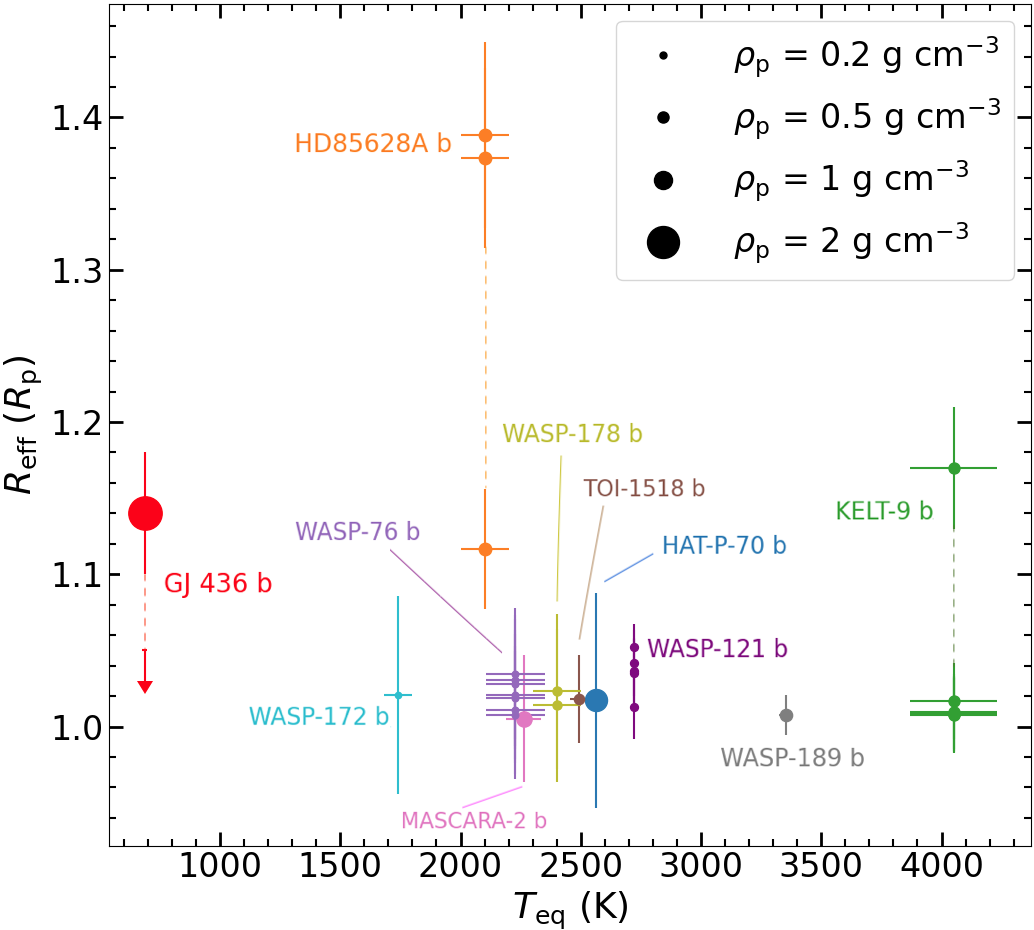
Figure 7: Effective radius vs equilibrium temperature for all exoplanets with reported Fe I atmospheric detections; GJ 436b (red dot) is consistent with a non-detection regime for Neptune-mass exoplanets.
Influence of Stellar Activity and Possible Explanations for Night-to-Night Variability
The paper examines several mechanisms to explain the lack of repeatability of the T1 Fe detection:
- Stellar activity impact: Enhanced chromospheric emission in T2 could increase photoionization, dopant veiling, or alter atmospheric structure, reducing neutral Fe signature detectability.
- Spectral veiling simulations show that a A˚4\% excess continuum flux (consistent with increased activity indices) can mute planetary absorption below ESPRESSO's sensitivity.
- Atmospheric variability: Cloud/haze patchiness and photochemistry may introduce time-dependent features, though the magnitude of required variability to account for the T1–T2 discrepancy is likely excessive.
- Supra-thermal wind interpretations: The observed blueshift exceeds supersonic flow expectations and does not align with global circulation or escaping neutral Fe.
Implications and Theoretical Considerations
The results confirm or strengthen several conclusions regarding the atmospheric physics of moderately irradiated, Neptune-size exoplanets:
- High-altitude aerosols or high metallicity/condensation remain the dominant explanations for the absence of atomic/molecular features, supported by stringent upper limits.
- Stellar activity-driven temporal variability may become a limiting factor for high-dispersion transmission studies of small or temperate exoplanets—systematic multi-epoch monitoring is essential for unambiguous species detections.
- Featureless optical spectra and the absence of common atomic tracers mark a key observational regime transition between hot giant planet and warm sub-Neptune atmospheres.
Further, any future confirmation of neutral iron or other metals would critically constrain planetary atmospheric thermal structure, eddy mixing, metallicity, and cloud condensation processes for the intermediate temperature regime.
Conclusion
No robust detection of atomic or molecular features is recovered in the transmission spectrum of GJ 436b from high-resolution ESPRESSO data. Significant upper limits are placed on metal atoms, ions, and oxides. The tentative Fe I signal seen in a single epoch is not reproduced, and statistical analysis supports a noise-dominated interpretation. The data reinforce the interpretation that warm Neptune atmospheres probed optically are dominated by high-altitude aerosols, high metallicity, or both, resulting in a featureless spectrum to the current detection limits. Future progress demands larger samples of multi-epoch, high-S/N observations, comprehensive modeling of stellar activity, and integration with IR and UV datasets to disentangle planetary from stellar chromospheric effects and to thoroughly map the compositional and thermal structure of sub-Jovian exoplanet atmospheres.
(2605.01390)

