- The paper demonstrates that the KNO-scaling violating function exhibits a reciprocal symmetry (z ↔ 1/z) near the mean multiplicity.
- It employs a Gaussian parameterization and local constraints to extract entanglement entropy from high-energy proton-proton collision data.
- The study indicates that higher-order QCD effects and collective phenomena underlie the deviations from standard KNO scaling.
Reciprocal Symmetry and KNO Scaling Violation in Proton-Proton Collisions
Overview
The paper "Reciprocal symmetry and KNO scaling violation in proton-proton collisions" (2605.00128) investigates charged particle multiplicity distributions in high-energy p–p collisions, analyzing deviations from Koba–Nielsen–Olesen (KNO) scaling in recent ATLAS and CMS data. The authors demonstrate that the KNO scaling-violating term admits a reciprocal symmetry under the transformation z↔1/z, where z=n/⟨n⟩. This symmetry is empirically validated and further employed to derive model-independent, local constraints on the multiplicity distributions, enabling robust extraction of entanglement entropy near the mean multiplicity.
KNO Scaling and Deviations in High-Energy p–p Collisions
KNO scaling postulates that, at asymptotically high energy, the multiplicity distribution Pn of produced charged particles follows a universal shape when plotted as a function of the scaled multiplicity variable z=n/⟨n⟩. Empirical results from ATLAS and CMS exhibit significant deviations from this scaling, mandating a deeper analysis of the underlying structure of these violations. The data reveal that, although the leading exponential e−z behavior dominates, sub-leading terms and energy-dependent corrections are present and non-negligible.
The function fs(z) is introduced as a direct probe of KNO-scaling violations: p0
Analysis of ATLAS data shows that p1 is nonzero and encodes all KNO-scaling breaking effects.
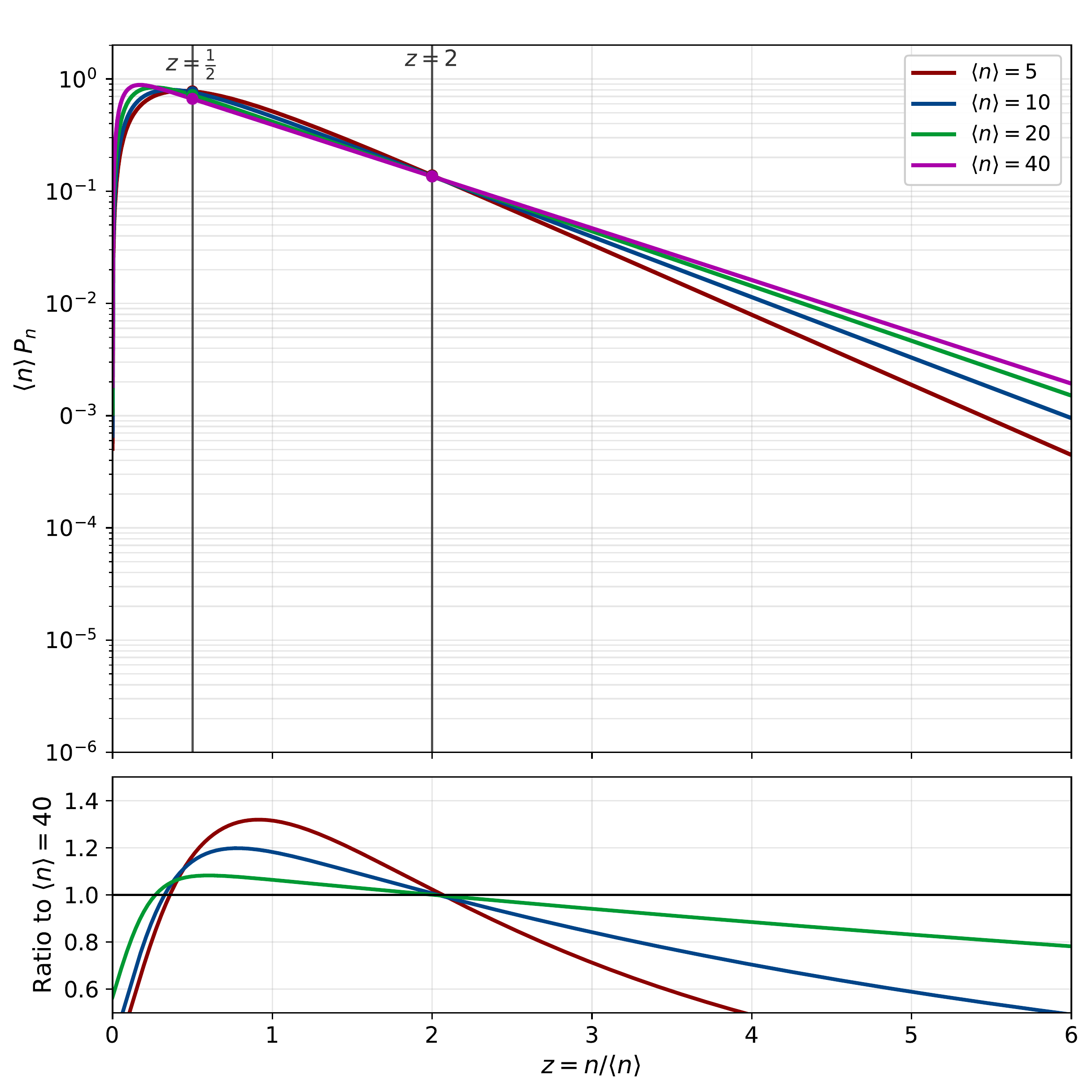
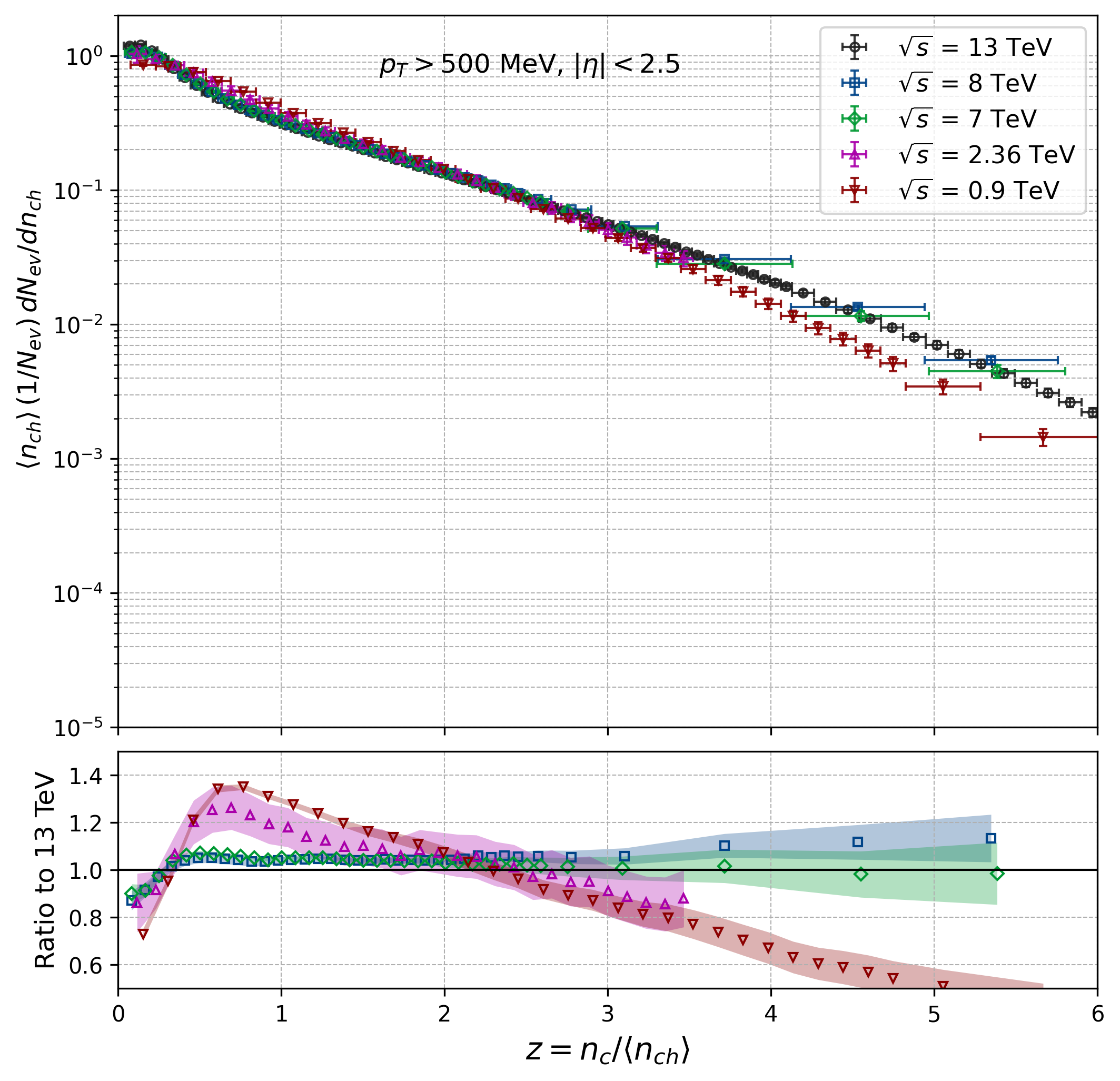
Figure 1: AGK model schematic encapsulating the core features of charged particle multiplicity distributions subjected to KNO scaling analysis.
Empirical Discovery of Reciprocal Symmetry in KNO Violating Term
A central finding is that the KNO-violating function p2 demonstrates an approximate reciprocal symmetry,
p3
valid in the window p4 for p5 TeV ATLAS and CMS multiplicity data. This observation is robust across both detector systems, indicating an underlying regularity in the violation structure. At lower energies (e.g., p6 TeV), the symmetry becomes less pronounced, providing evidence of its dynamical emergence at higher center-of-mass energies.
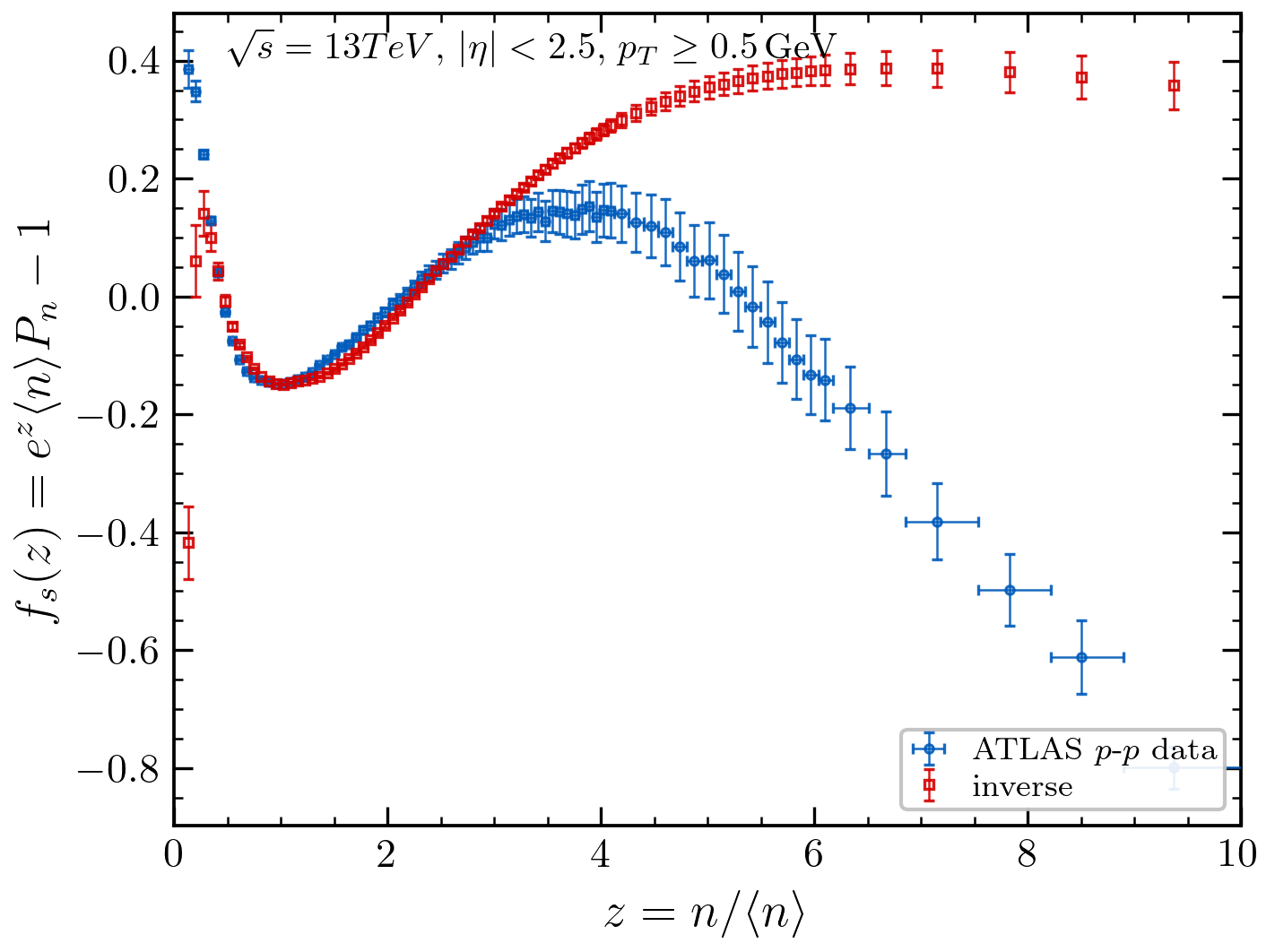
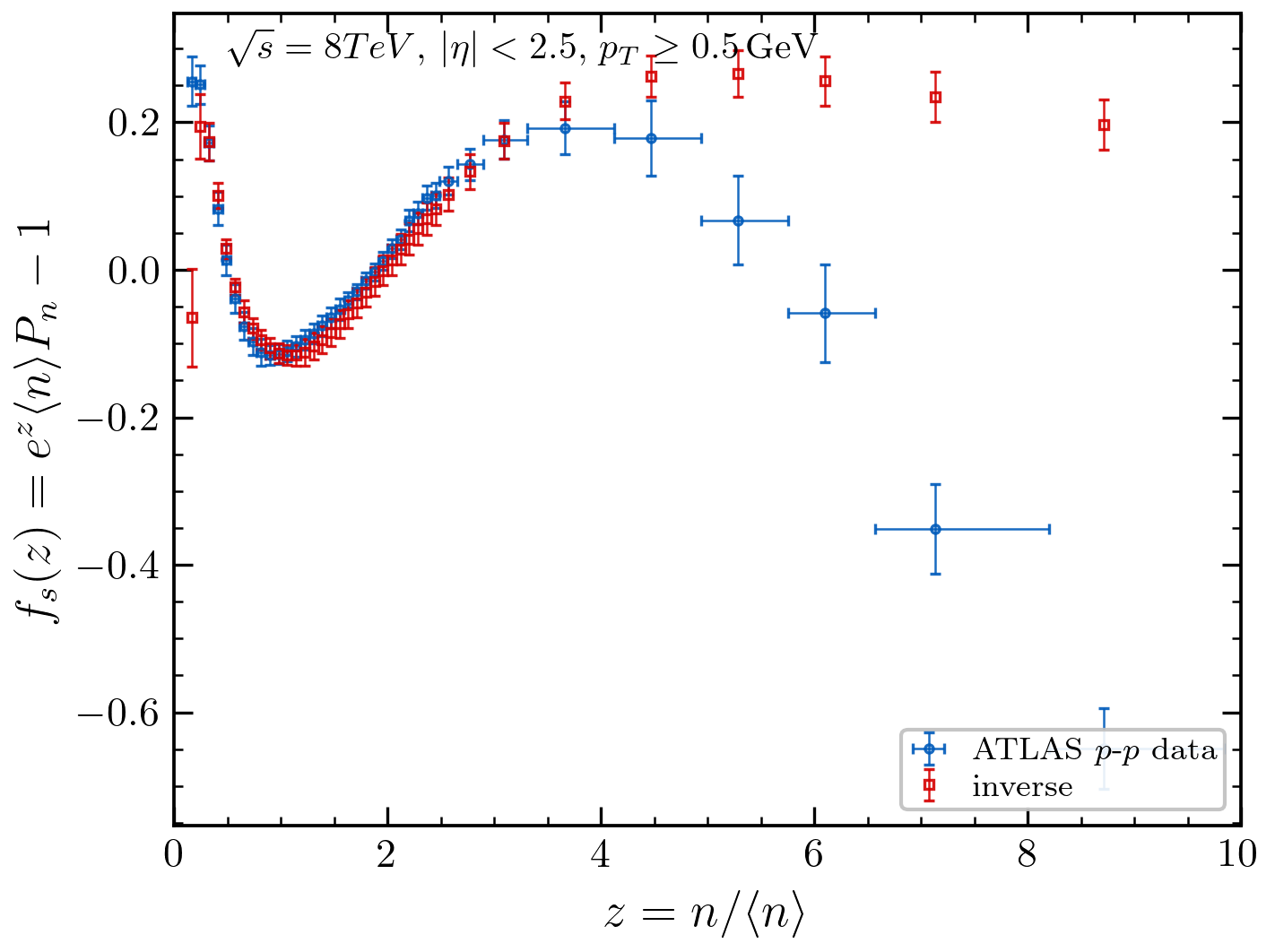
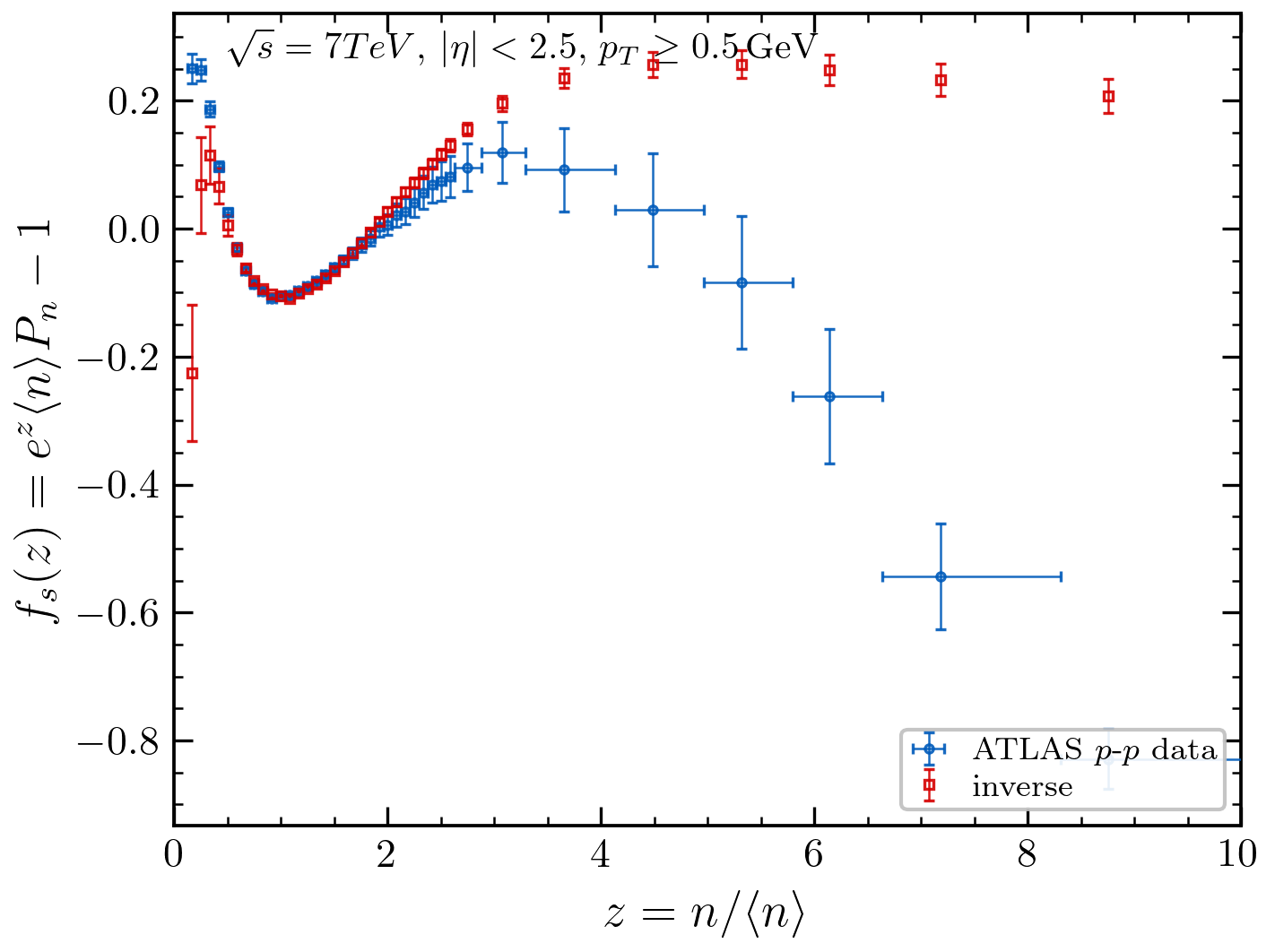
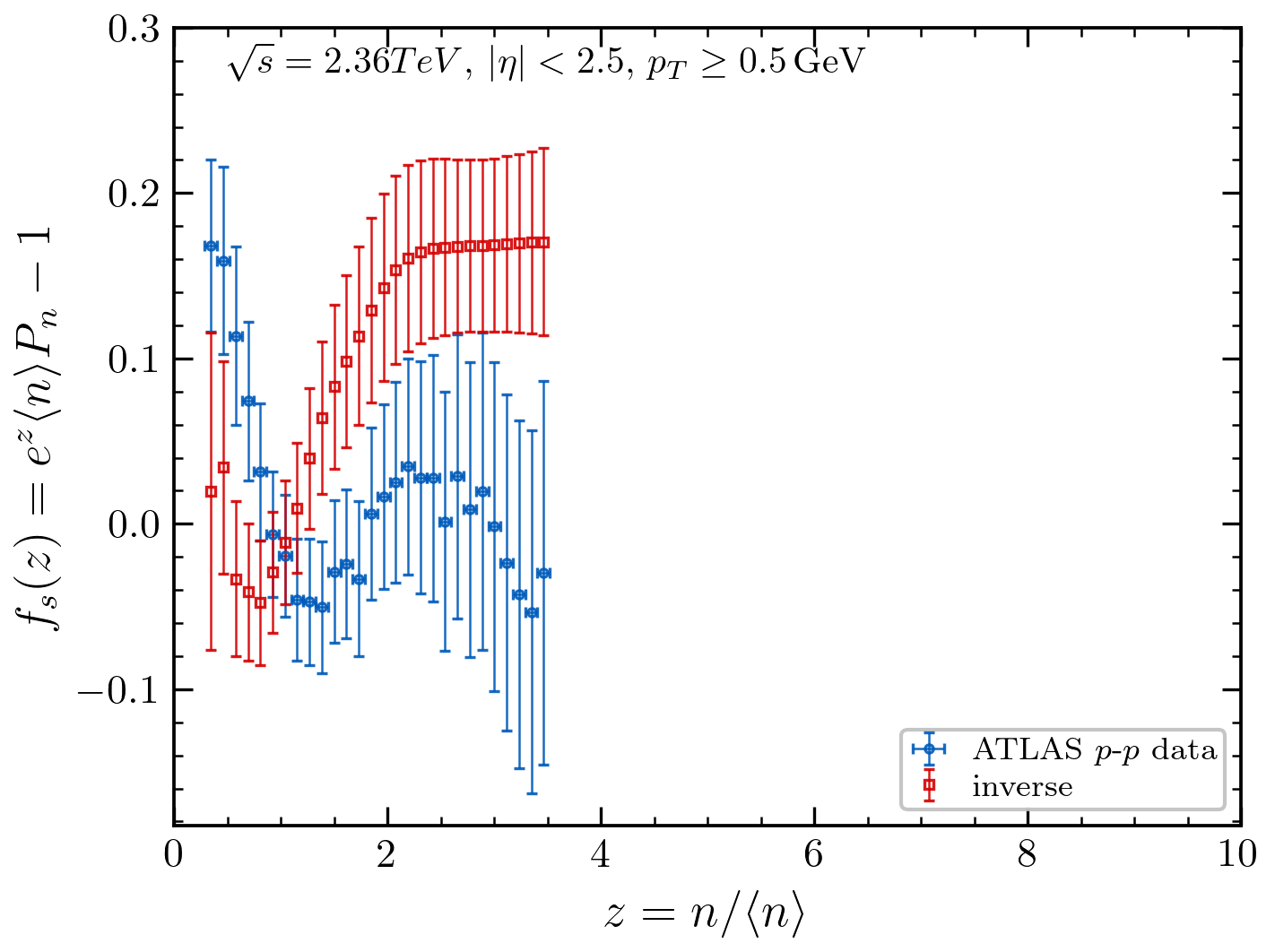
Figure 2: p7–dependent plots demonstrating the reciprocal symmetry p8 in ATLAS data for various collision energies.
A Gaussian parameterization in p9 is found to capture the shape of z↔1/z0 effectively: z↔1/z1
where z↔1/z2 quantifies any asymmetry; fits confirm z↔1/z3 for high energies, verifying the symmetry's validity.
Theoretical Implications: Local Constraints from Reciprocal Symmetry
Differentiating the symmetry relation imposes a constraint at z↔1/z4, leading to:
z↔1/z5
This is experimentally tested, with the data yielding the dimensionless ratio
z↔1/z6
very close to unity (typically within 2.3%) for z↔1/z7 TeV, empirically validating this local consequence.
The significance lies in its independence from global fits or tail modeling, as the central region near z↔1/z8 is statistically dominant and experimentally robust.
Entanglement Entropy Extraction and KNO Violation
Charged particle multiplicity distributions have been interpreted in the context of quantum entanglement entropy of final state hadrons. The standard approach links the entropy z↔1/z9 to the von Neumann entropy of the corresponding partonic density matrix. The authors exploit the established relation:
z=n/⟨n⟩0
and, using the local constraint at z=n/⟨n⟩1, provide a direct, model-minimal method to extract z=n/⟨n⟩2:
z=n/⟨n⟩3
This approach mitigates uncertainties from the heavy tails of the distribution, which notoriously hinder global-fit-based entropy extraction.
Implications for Modeling and Future Directions
The reciprocal symmetry as revealed is not predicted by standard color-dipole models without modifications (e.g., AGK-based variants), indicating that higher-order dynamical processes, potentially including Pomeron loops or collective effects, may be responsible. The breakdown of KNO scaling in the tails is consistent with the hypothesis that distinct dynamical mechanisms operate in that regime—possibly those described by a diffusion-scaling framework or related to multi-parton interactions.
Considerations for future research include:
- Probing the microscopic QCD or effective field-theoretic origins of the reciprocal symmetry.
- Exploring its relation to conformal symmetry in high-energy QCD.
- Systematic connection to parton-level entropy calculated in small-z=n/⟨n⟩4 physics and comparing with hadronic observables in various kinematic windows.
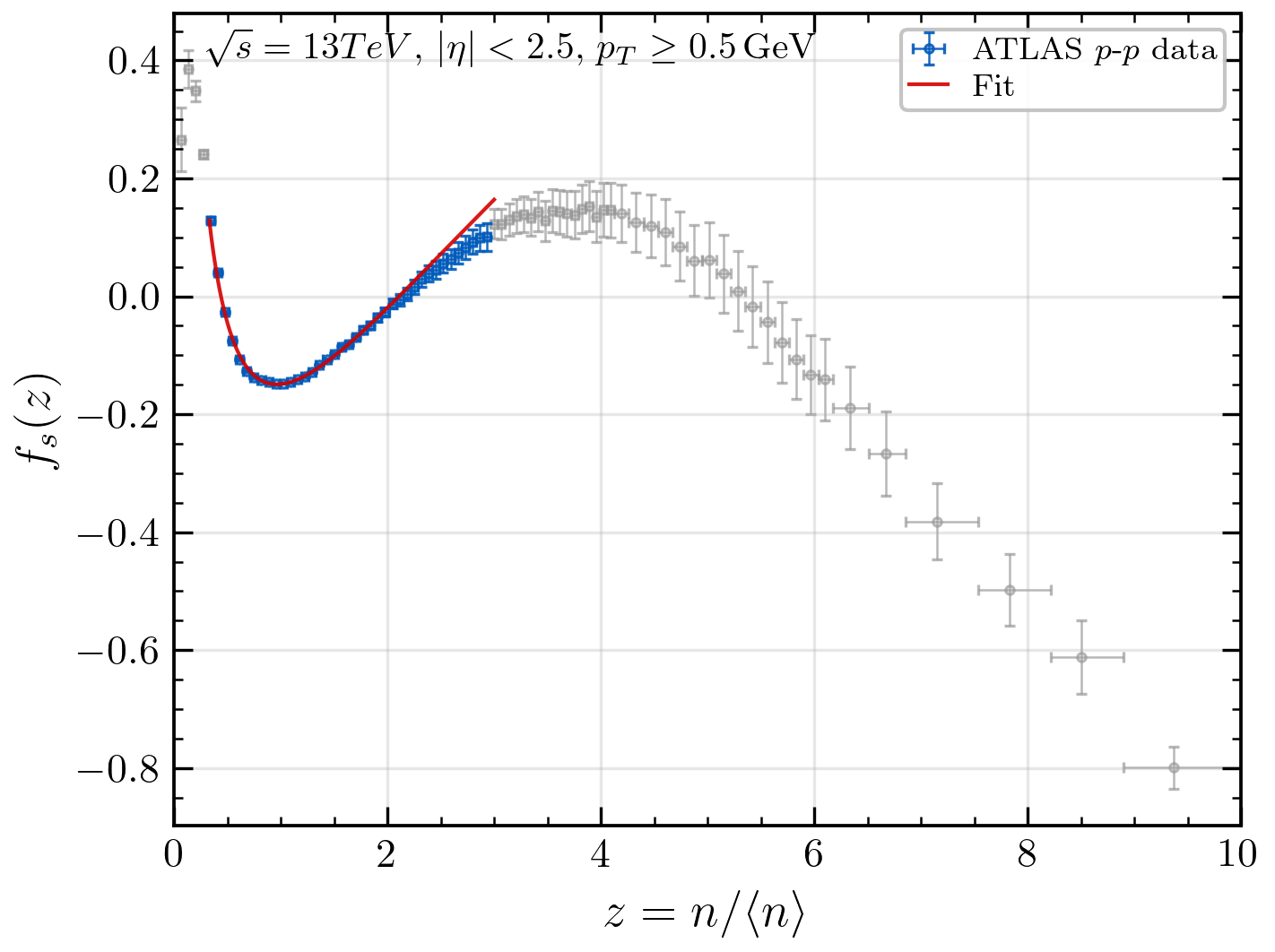
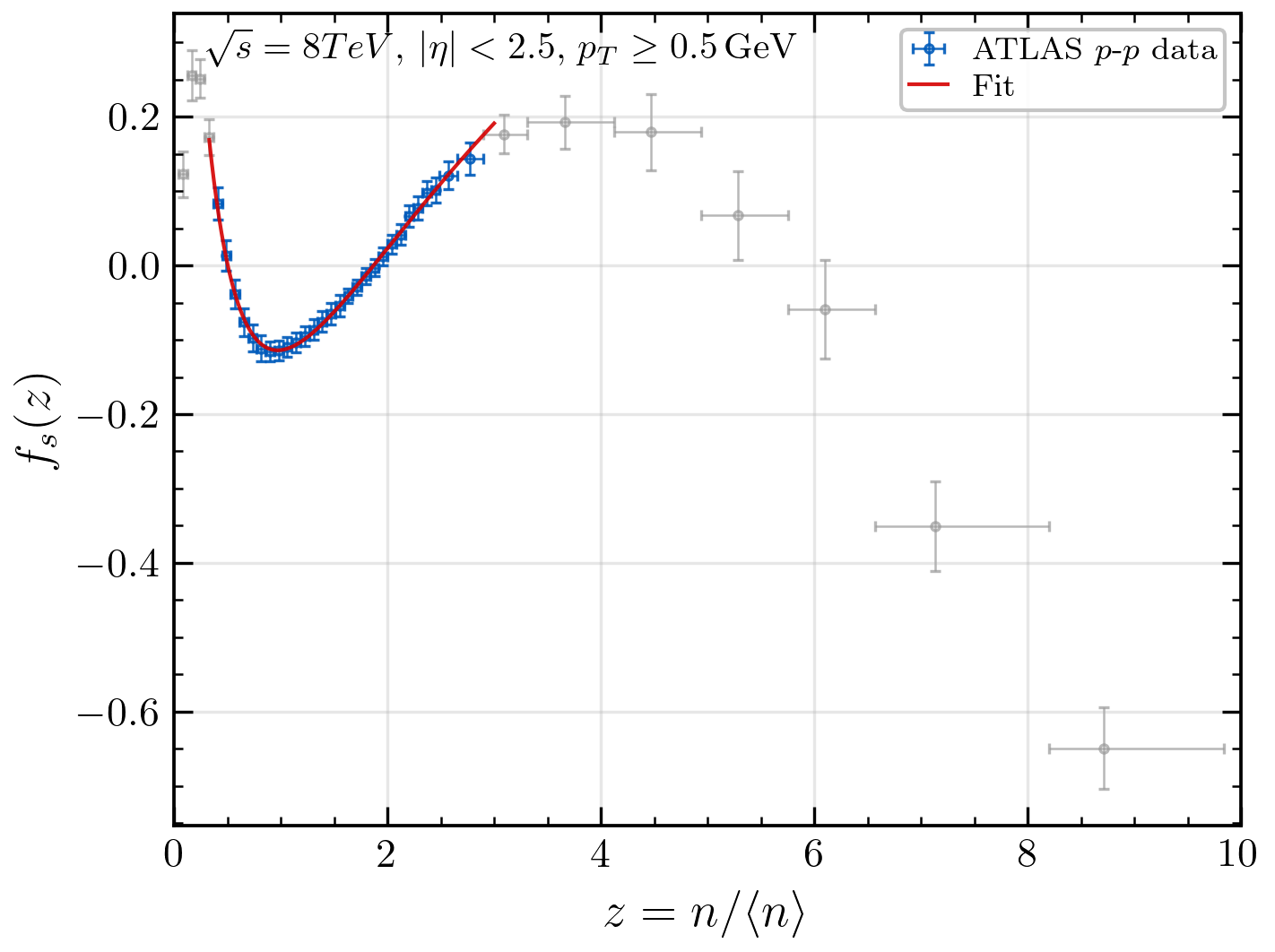
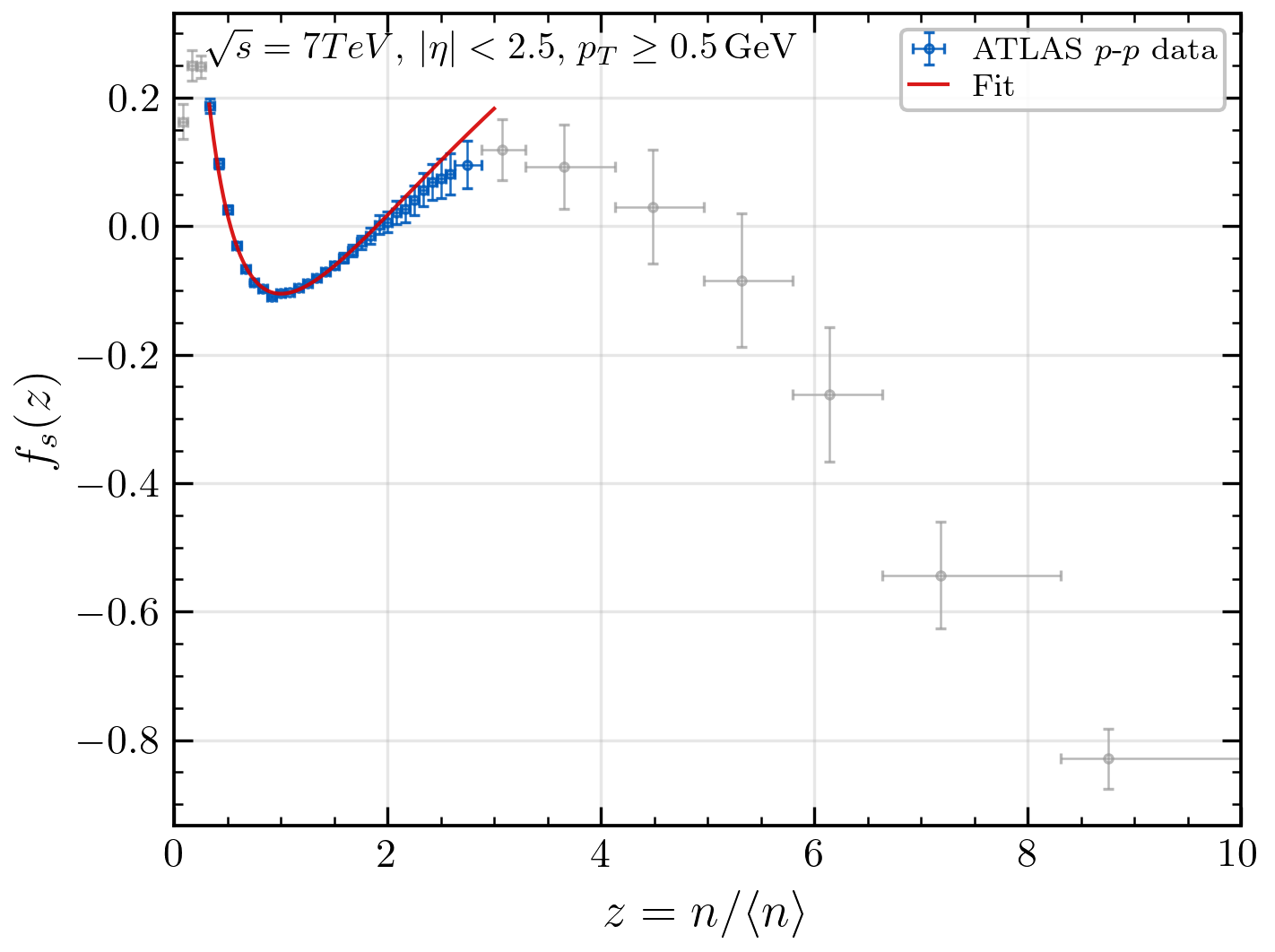
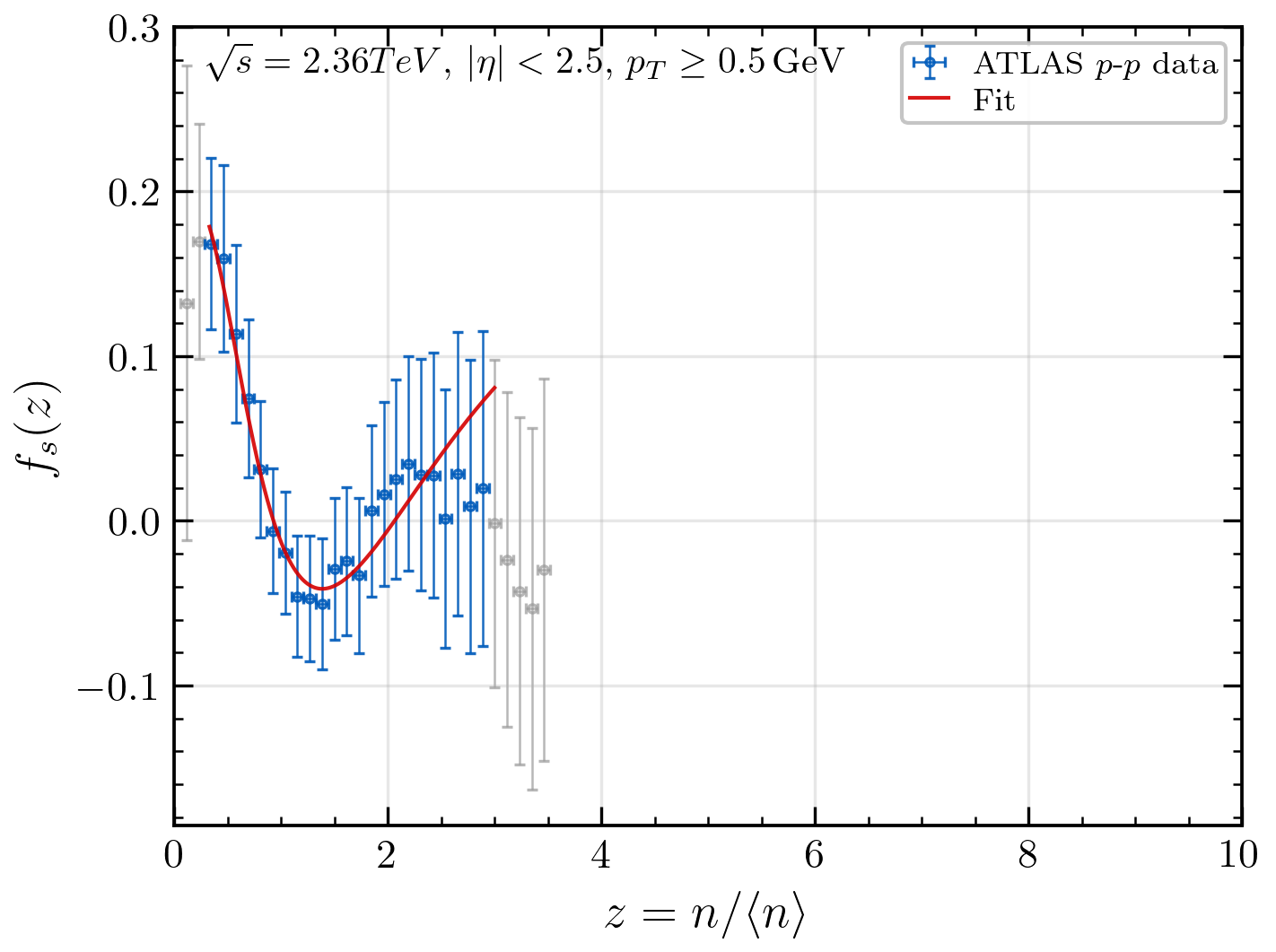
Figure 3: z=n/⟨n⟩5–dependent comparative analysis of the multiplicity function and its reciprocal transform, supporting the discovered symmetry.
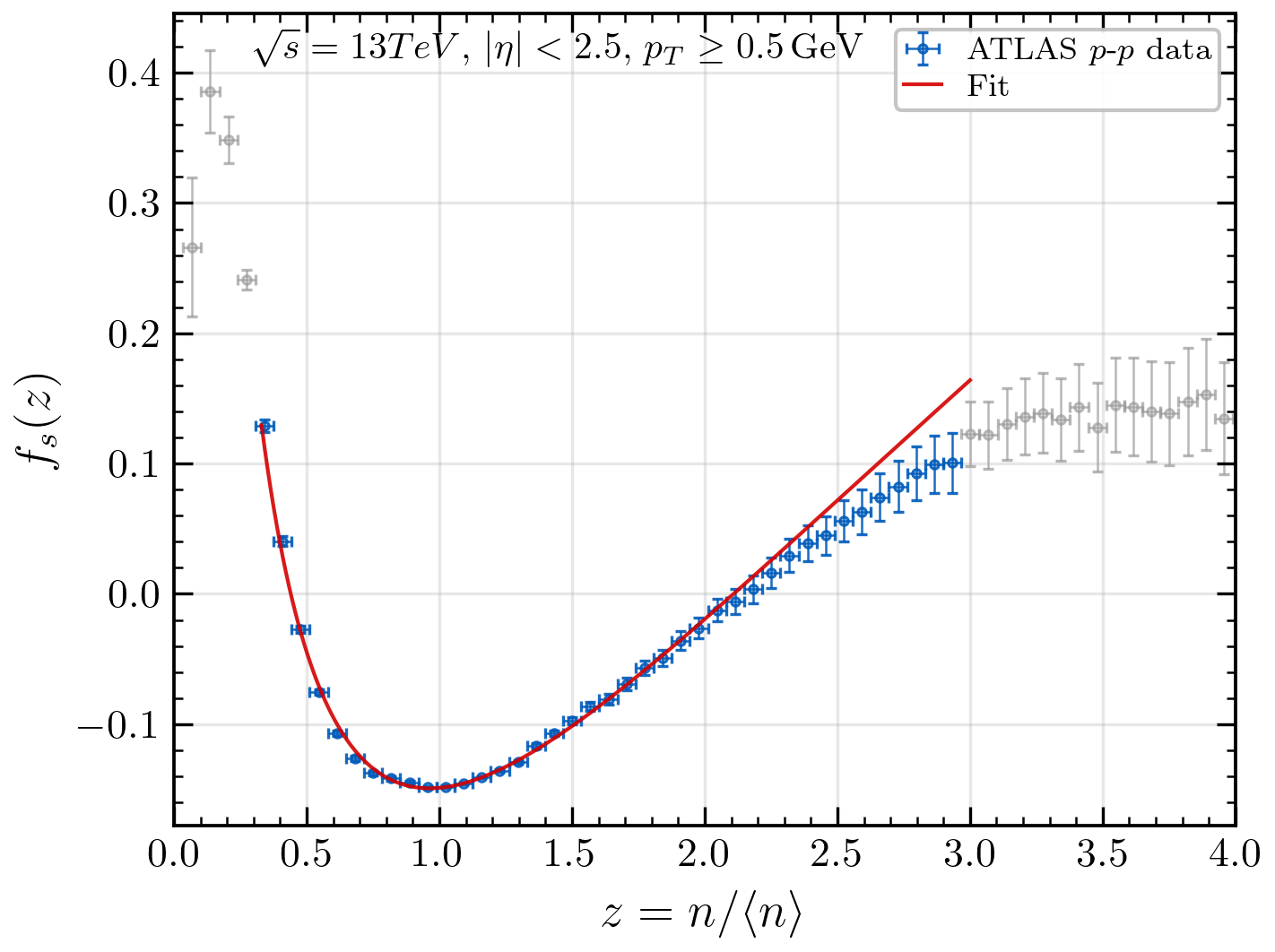
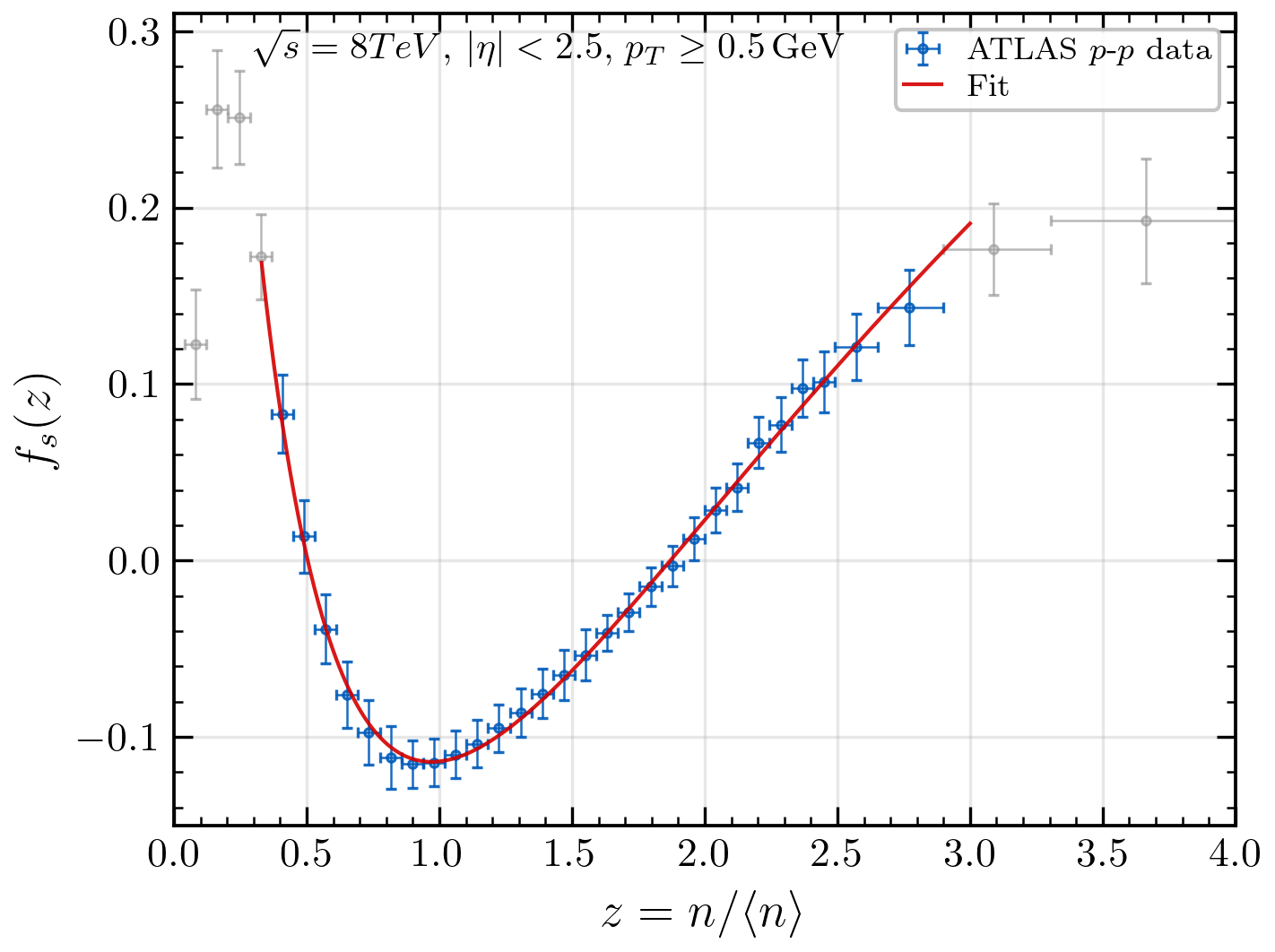
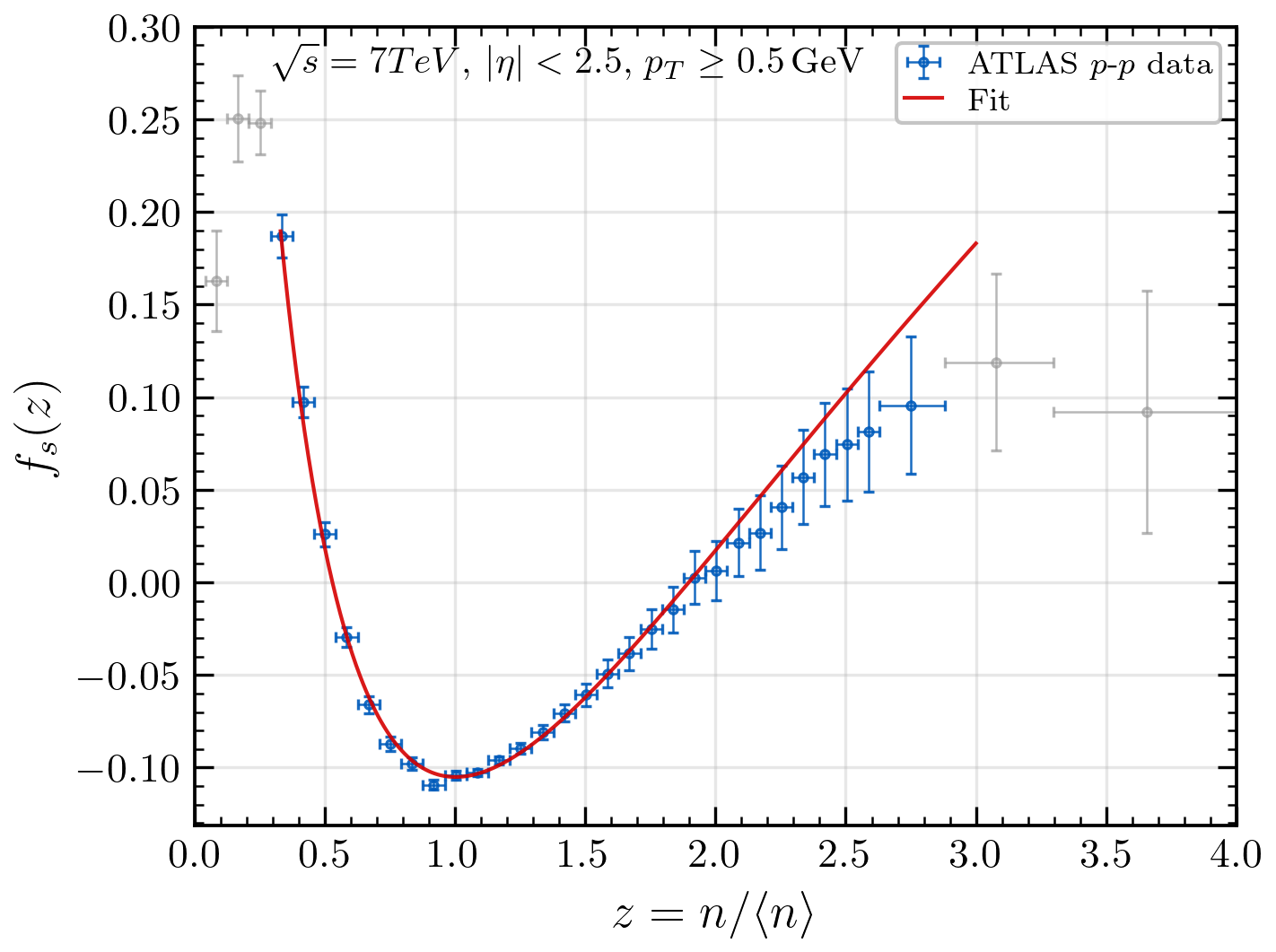
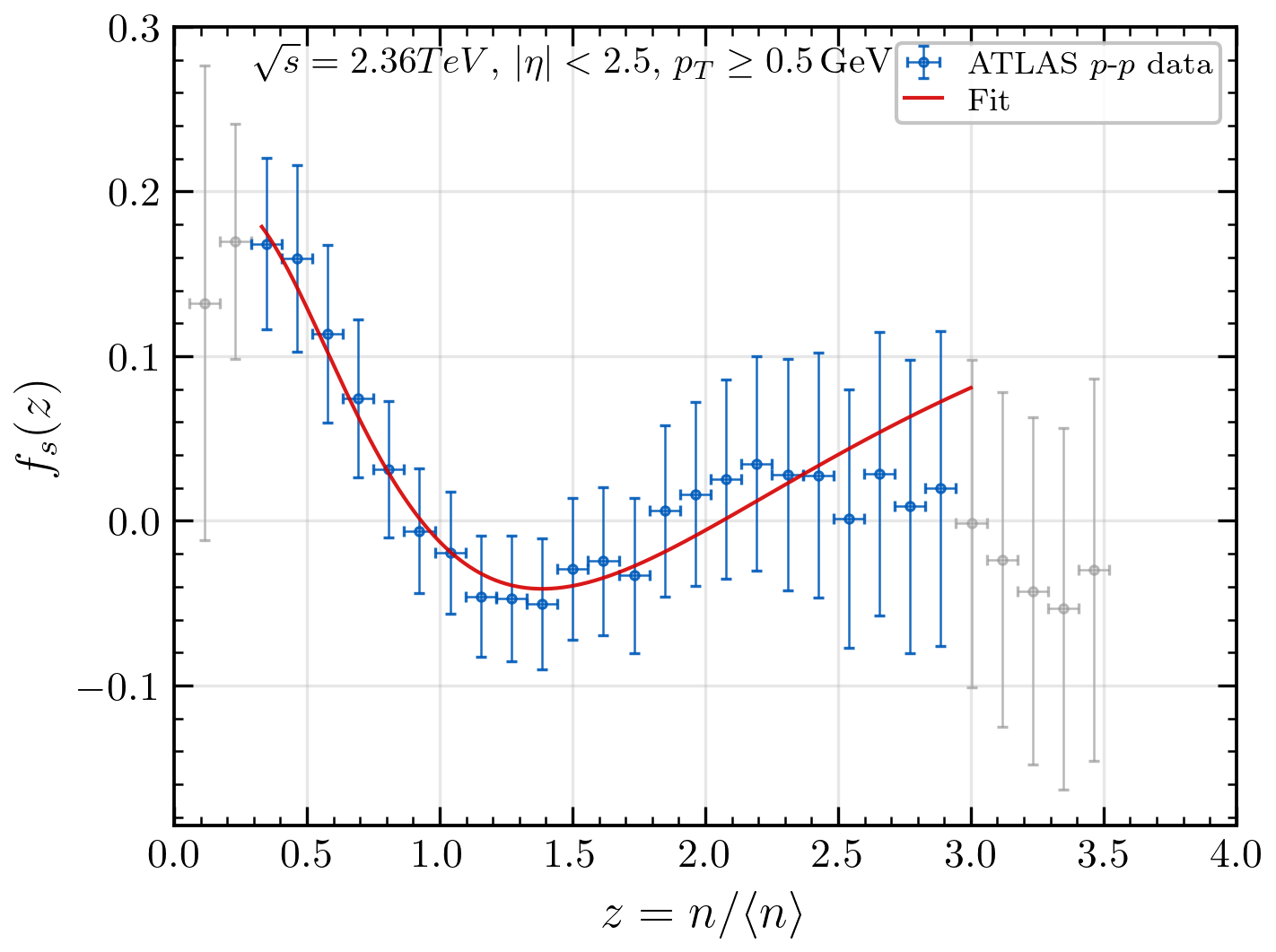
Figure 4: z=n/⟨n⟩6 curves with Gaussian fits over the central region, highlighting excellent empirical agreement and the emergence of symmetry at elevated collision energies.
Conclusion
The demonstration of a z=n/⟨n⟩7 reciprocal symmetry in the KNO-scaling-violating term z=n/⟨n⟩8 in z=n/⟨n⟩9–p0 collisions at the LHC is a nontrivial empirical observation. This symmetry leads to a local, model-independent constraint at the mean multiplicity, which holds with high accuracy in the data. Leveraging this property, one can extract entanglement entropy from experimental multiplicity distributions with reduced theoretical/systematic uncertainties. The symmetry’s dynamical origin, potential manifestation of deeper QCD structures, and its persistence at even higher energies or in other collision systems warrant focused theoretical and phenomenological investigation.