- The paper classifies tight, Stein fillable contact structures on negative-definite Seifert spaces by computing a unique maximal twisting number via lattice cohomology.
- It employs the full path algorithm in Heegaard Floer homology to distinguish Legendrian surgery-induced structures using a contact invariant.
- It establishes sharp obstructions to symplectic embeddings, linking Stein fillability of Brieskorn spheres to restrictions in L-space fillings.
Fillable Structures on Negative-Definite Seifert Fibred Spaces
Introduction and Scope
This paper provides a comprehensive classification of symplectically fillable contact structures on all negative-definite star-shaped Seifert fibre spaces, with a particular focus on those with base orbifold homeomorphic to S2. The manifolds under consideration are denoted M=M(e0;r1,...,rn), and their topological types are encoded by negative-definite star-shaped plumbing graphs. These manifolds naturally incorporate links of normal complex surface singularities and thus serve as a bridge between contact and symplectic topology, 3-manifold theory, and singularity theory. Notably, the results also apply to canonically oriented Brieskorn spheres, which are special cases of Seifert fibred integral homology spheres.
The primary achievements are:
- A complete classification of tight, Stein fillable contact structures with negative maximal twisting number on negative-definite Seifert fibre spaces.
- An explicit computation of the uniquely defined negative twisting number using the Alexander filtration in lattice cohomology.
- A demonstration that negative-twisting tight structures correspond exactly to those induced by Stein structures on the minimal resolution of the underlying singularity.
- The derivation of sharp obstructions to certain types of symplectic/convex embeddings of these spaces into L-spaces and lens spaces.
Classification of Tight Fillable Structures
A central invariant in classifying tight contact structures on Seifert fibred spaces is the maximal twisting number tw(M,ξ,K), defined as the maximal difference between the contact and fibration framings of a regular fibre K. The authors establish:
Theorem: For M=M(e0;r1,...,rn) with negative-definite standard graph, the tight contact structures with negative maximal twisting number are realized exactly by Legendrian surgeries corresponding to all possible Legendrian realizations of the complete blow-down of the standard graph. These structures are Stein fillable and are completely distinguished (up to isotopy) by their contact invariant c+ in HF+(−M).
If c+(ξ)=0 for a contact structure ξ, then it is tight and negative-twisting; any symplectically fillable structure falls into this class.
This result extends and unifies previously known classifications for specific cases (M=M(e0;r1,...,rn)0 and M=M(e0;r1,...,rn)1) and generalizes to all negative-definite scenarios, including cases previously unresolved for M=M(e0;r1,...,rn)2.
Explicit Evaluation of the Maximal Twisting Number
Let M=M(e0;r1,...,rn)3, the total orbifold Euler number. The authors show that for these negative-definite Seifert fibred spaces, the negative twisting number is unique and can be expressed explicitly in terms of the Alexander filtration derived from the plumbing graph.
Key result:
- For M=M(e0;r1,...,rn)4, the unique maximal twisting number is M=M(e0;r1,...,rn)5.
- For M=M(e0;r1,...,rn)6, the maximal twisting number is M=M(e0;r1,...,rn)7, where M=M(e0;r1,...,rn)8 depends on the details of the plumbing graph via a path-height invariant (height of the full path in lattice cohomology).
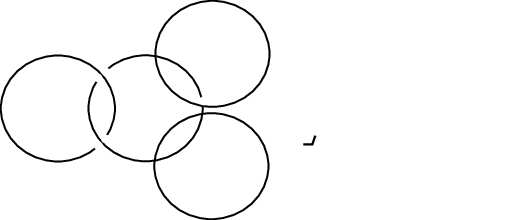
Figure 2: A negative-definite tree realizing the positive trefoil in M=M(e0;r1,...,rn)9.
This uniqueness and computability contrast with more general situations, where only bounds could previously be established.
Heegaard Floer and Lattice Theoretic Methods
The technical foundation for the above results is the Ozsváth–Szabó full path algorithm in the context of Heegaard Floer homology for plumbed 3-manifolds. By relating tightness and fillability to the properties of full paths (chains of characteristic vectors) in the lattice determined by the plumbing, the authors can algorithmically enumerate and distinguish tight structures.
The Alexander filtration on the lattice allows for the computation of the so-called path height, which directly yields the maximal twisting number for the negative-twisting class.
The use of conjugation invariance and the duality between Heegaard Floer complexes provides further structure, notably leading to criteria for when a fillable contact structure may be self-conjugate, and, if so, what restrictions are imposed on the associated correction terms.
Symplectic Embedding Obstructions
A principal application is a strong obstruction to the existence of separating contact-type embeddings of Brieskorn spheres (and more generally, negative-definite Seifert spaces) into strong symplectic fillings of generalized L0-spaces (e.g., lens spaces). The argument leverages the unique structure of Stein fillable contact structures and their invariants in Heegaard Floer homology.
Corollary: No canonically oriented Brieskorn sphere L1 admits a separating contact-type embedding into any symplectic filling of a lens space; in particular, they do not appear as boundaries of rationally convex domains in L2.
Generalization: If L3 admits such an embedding into a filling of a generalized L4-space, then the reduced Heegaard Floer homology of L5 must be as small as possible (dimension one in the correction term grading).
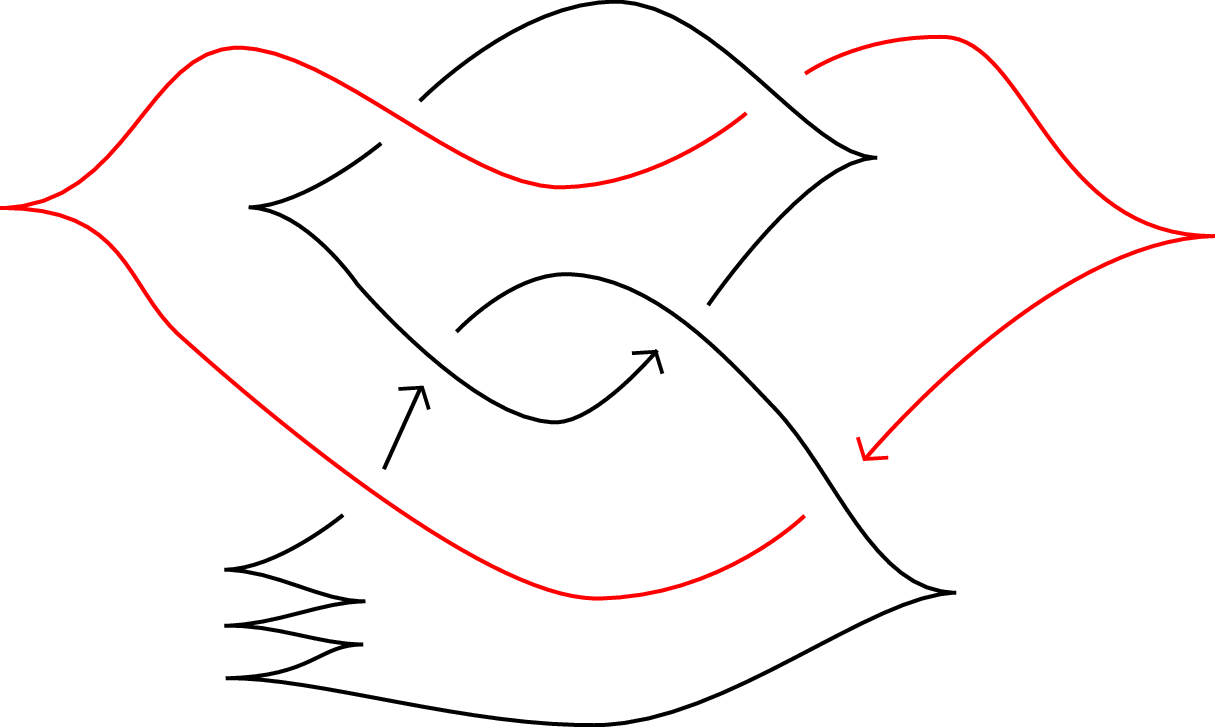
Figure 1: The regular fibre L6 of L7.
These results provide a precise answer to several questions posed in the literature regarding convex and contact-type embeddings and fillability phenomena.
Implications and Future Directions
The combination of topological, symplectic, and Floer-theoretic techniques in this work yields a full algebraic-topological description of fillable contact structures on a broad class of 3-manifolds. The approach underscores the power of lattice cohomology and Heegaard Floer theory in contact/symplectic classification problems.
Potential directions for further research include:
- Extending the classification to more general families of (possibly indefinite or positive-definite) plumbings.
- Structural implications for the geography of symplectic fillings and Stein domains bounded by 3-manifolds outside the negative-definite class.
- Further exploration of the interplay between lattice-theoretic invariants, Heegaard Floer homology, and complex surface singularity theory.
- Application of these techniques to questions in high-dimensional symplectic topology, particularly regarding convexity and embedding problems.
Conclusion
This paper achieves a complete classification of symplectically fillable contact structures on negative-definite Seifert fibred spaces via an explicit, combinatorial description rooted in lattice and Heegaard Floer invariants. It establishes the uniqueness and computability of the negative maximal twisting number, clarifies the correspondence with Stein structures deriving from singularity resolution, and rigorously obstructs certain symplectic embeddings—thus contributing significant theoretical clarity to the structure of contact 3-manifolds at the intersection of low-dimensional topology and symplectic geometry.