The hat and plus version of the Heegaard Floer contact invariant are not equivalent
Published 30 Apr 2026 in math.GT and math.SG | (2604.28170v1)
Abstract: We advance Matkovič ideas, originally applied to complete the classification of tight structures on small Seifert fibred $L$-spaces, to show the existence of contact structures on Brieskorn spheres which are tight and zero-twisting. This uncovers a phenomenon that has never appeared in literature before: namely, that a contact structure $ξ$ on a 3-manifold can be such that $\widehat c(ξ)$ is non-vanishing, but $c+(ξ)$ is zero.
The paper establishes that the hat invariant is non-vanishing while the plus invariant can vanish in certain contact 3-manifolds.
It uses explicit constructions on Seifert fibered spaces and Brieskorn spheres with surgery diagrams and full path algorithms for tightness detection.
The findings reveal a key divergence between tightness and fillability, emphasizing the need to assess Heegaard Floer invariants separately.
The Non-Equivalence of the Hat and Plus Heegaard Floer Contact Invariants
Introduction and Context
This paper establishes a non-equivalence between the hat version (c) and the plus version (c+) of the Heegaard Floer contact invariant in the context of contact 3-manifolds, specifically focusing on Seifert fibered spaces and explicit families of Brieskorn spheres. The authors exhibit, for the first time, contact structures ξ with non-vanishing hat contact invariant c(ξ) while the plus contact invariant c+(ξ) vanishes. This distinction impacts the classification of tight and symplectically fillable structures and the understanding of various flavors of contact invariants in Heegaard Floer theory.
Heegaard Floer Contact Invariants: Hat vs Plus
Heegaard Floer homology introduces several versions of the contact invariant associated to a contact structure ξ on a 3-manifold M, most notably the hat-version c(ξ)∈HF(−M) and the plus-version c+(ξ)∈HF+(−M). Existing equivalence results, particularly for negative-definite plumbed manifolds, had led to the conjecture that non-vanishing c entailed non-vanishing c+0. The paper demonstrates that this is not the case: the failure of the natural projectionc+1 to be injective allows for c+2 but c+3.
Construction of Tight, Zero-Twisting Non-Fillable Structures
The authors build on prior classification schemes of tight contact structures on Seifert fibered spaces with both negative-definite and indefinite plumbing graphs. Specifically, they present families c+4 and associated contact structures c+5, with precise surgery diagrams and rotation number vectors to describe their construction.
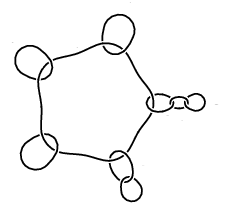
Figure 1: A contact surgery presentation of c+6; for c+7, the invariant c+8 is non-vanishing while c+9.
They show that for ξ0, these structures are tight, zero-twisting, and not (weakly) symplectically fillable. This is a sharp divergence from prior classification results where tightness, non-vanishing ξ1, and fillability were typically coincident.
Additionally, the authors track the corresponding surgery sequences on smooth plumbed 4-manifolds and their standard plumbing graphs.
Figure 2: Smooth surgery presentation (left) of ξ2 and its associated negative-definite graph ξ3 (right).
Magic C Algorithm and Tightness Detection
A salient methodological contribution is the use of so-called “magic ξ4” vectors and the full path algorithm to detect tightness and to determine the isotopy class of a contact structure. In ξ5-spaces, the full path ending correctly corresponds precisely to ξ6 and isotopy class distinction. The current paper extends this approach to non-ξ7-spaces and negative-definite plumbed manifolds, identifying vectors for which the hat version is non-trivial while the plus version is not.
The key algebraic observation is that in negative-definite scenarios, the hat contact invariant lies in the kernel of the map to ξ8, enabling the existence of contact structures with ξ9 but c(ξ)0. With explicit calculation (rotation numbers and characteristic class analysis), Lemma 3.2 and subsequent detailed path-following confirm tightness using full path criteria, but fillability fails due to the obstruction in the plumbing graph combinatorics.
Brieskorn Spheres and Non-Equivalence Realized
Among the main results, explicit Brieskorn spheres such as c(ξ)1 and c(ξ)2 are shown to admit zero-twisting tight structures that are not fillable and are not captured by previously known classifications. This provides the first natural examples of 3-manifolds supporting contact structures with the desired non-vanishing c(ξ)3 and vanishing c(ξ)4.
Numerical Invariants and Correction Terms
A further notable aspect is the mismatch between the c(ξ)5-invariant of the contact structure and the c(ξ)6-invariant (correction term) from Heegaard Floer theory for these constructed contact structures, further emphasizing the separation between different flavors of invariants in this setting.
Implications and Future Directions
The results invalidate any general expectation that the hat and plus versions of the Heegaard Floer contact invariants are equivalent—an assumption frequently implicit in the use of these invariants for contact topology classification, especially among practitioners relying on computational approaches. This discovery mandates a more nuanced interpretation of Heegaard Floer contact invariants when analyzing tightness, fillability, and isotopy, particularly in non-c(ξ)7-spaces and negative-definite Seifert fibered spaces.
Practically, for researchers constructing or distinguishing contact structures via Heegaard Floer tools, the necessity of checking both c(ξ)8 and c(ξ)9 status separately is emphasized. Theoretically, the result suggests further investigation of the naturality and relationships among Heegaard Floer flavors (hat, plus, minus, reduced) and their induced maps under various topological manipulations (cobordisms, surgeries, etc.), possibly illuminating deeper structures in the bordered Floer setting or other Floer-type invariants.
The use of explicit graph, surgery, and cohomological data, combined with algorithmic full-path analysis, also highlights directions for advancing computational methods in the field. Extensions to broader classes of plumbed 3-manifolds and further characterization of when the kernel of c+(ξ)0 contains tight, non-fillable structures may yield stronger classification results and potential new invariants.
Conclusion
This work formally establishes the inequivalence of the hat and plus versions of the Heegaard Floer contact invariants for contact 3-manifolds, by explicit topological construction and rigorous algebraic analysis. The manifestation of tight, zero-twisting, non-fillable contact structures with non-vanishing c+(ξ)1 but vanishing c+(ξ)2 on families of Seifert fibered spaces and Brieskorn spheres constitutes a substantial revision of previous classification paradigms in contact topology and Heegaard Floer theory, introducing new considerations for both practical and theoretical research in low-dimensional topology.