- The paper introduces a new FCM learning approach using physics-constrained Jacobian-gradient descent combined with fixed-point attractor dynamics.
- The model employs residual memory recursion and causal masking to ensure robust convergence, effective denoising, and enhanced interpretability.
- Empirical evaluations in socio-economic, ecological, and political simulations demonstrate superior performance compared to traditional FCM methods.
Attractor FCM: Physics-Constrained Jacobian Gradient Descent for Fuzzy Cognitive Maps
Overview and Motivation
The "Attractor FCM" (2604.27947) introduces a new class of fuzzy cognitive map (FCM) learning that leverages a gradient descent framework constrained by system physics and fixed-point attractor dynamics. Departing from traditional Hebbian, agentic, and hybrid approaches, the methodology integrates Newton's fixed-point search with Jacobian-gradient descent (J-GD), residual memory recursion, backpropagation through time, and a causal mask reflecting expert conceptual linkages. The aim is to achieve robust convergence, denoising, and interpretability in complex simulation scenarios, emphasizing both mathematical rigor and empirical plausibility.
System Dynamics and Residual Anchor
The attractor FCM is formalized as a shallow recurrent network representing concepts and fuzzy relationships. Its update function combines standard FCM propagation with residual memory and a fixed-point anchor, yielding smooth transitions and stable dynamics:
Ht+1=(1−α)Ht+ασ(HtW+Ht)
Residual recursion preserves system memory, aiding convergence and preventing information loss across iterations.
Newton Attractor and Jacobian Gradient Descent
The model finds a true attractor H∗ via Newton's method, solving:
H∗=σ(H∗(W+I))
where the residual error function F(H) and its Jacobian JF guarantee rapid convergence to the fixed point. The weight update step is uniquely governed by spectral scaling λ, calculated adaptively from gradient norm ratios to avoid saturation and premature convergence:
ΔW=η⋅λ⋅(λH∗)⊤⊗(Htarget−H∗)⋅M
Only updates improving monotonic reward are accepted, ensuring effective error minimization with respect to expert-designed system structure.
Structural Mask and Physics-Constrained Learning
Causal masking maintains fidelity to the original expert-opinion-based adjacency, guaranteeing that the learned FCM honors real-world constraints and preserves interpretability.
Convergence and Denoising Properties
Leveraging Lipschitz contraction and Banach fixed-point theorems, the model exhibits monotonic convergence and denoising capacity. Under noise corruption, the attractor dynamics provably shrink the distance to the clean input exponentially:
∥Ht−Hclean∥≤αt∥H0−Hclean∥
for 0<α<1. This denoising behavior is further modulated by the sigmoid steepness parameter λ, as illustrated below.
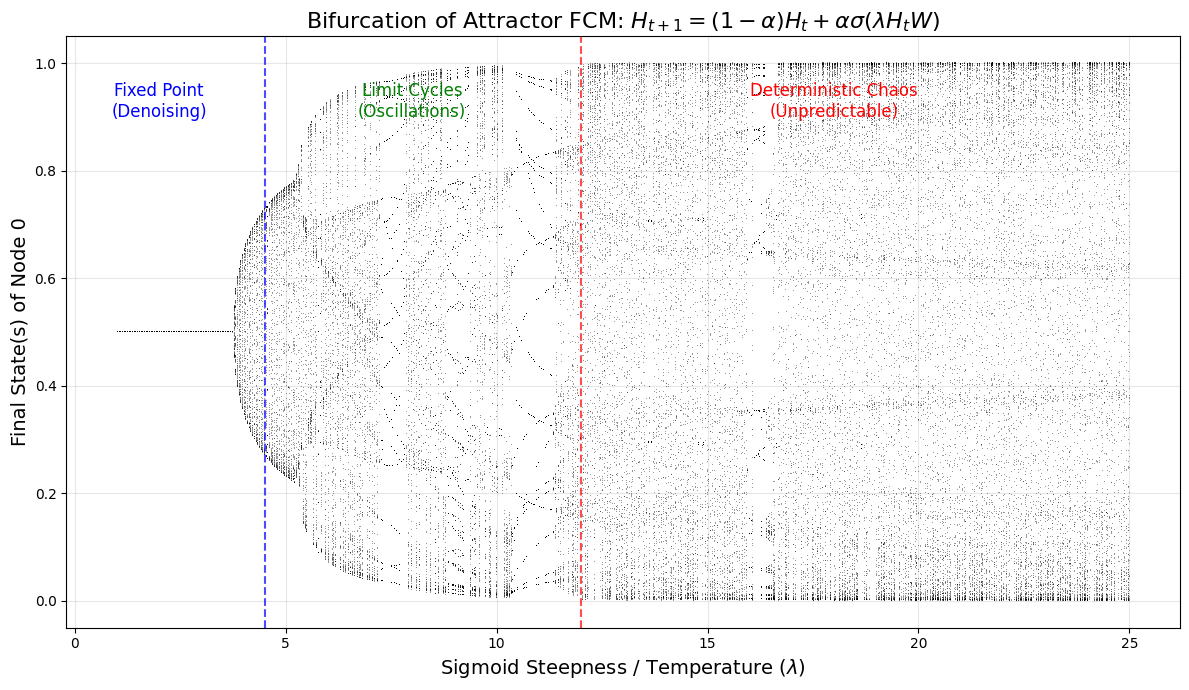
Figure 1: Sigmoid Steepness Parameter H∗0 controls the denoisification rate for system convergence.
Empirical Evaluation
The attractor FCM is empirically validated across stress tests and qualitative scenarios, including socio-economic, ecological, and political simulations. These scenarios interrogate the model's ability to respect underlying physical constraints and expert narratives.
Socio-Economic Stress Test
The oligarchy bailout scenario, simulating wealth redistribution, demonstrates the model's capacity to enforce resource conservation, eliminate nonviable strategies, and converge to realistic societal equilibria.
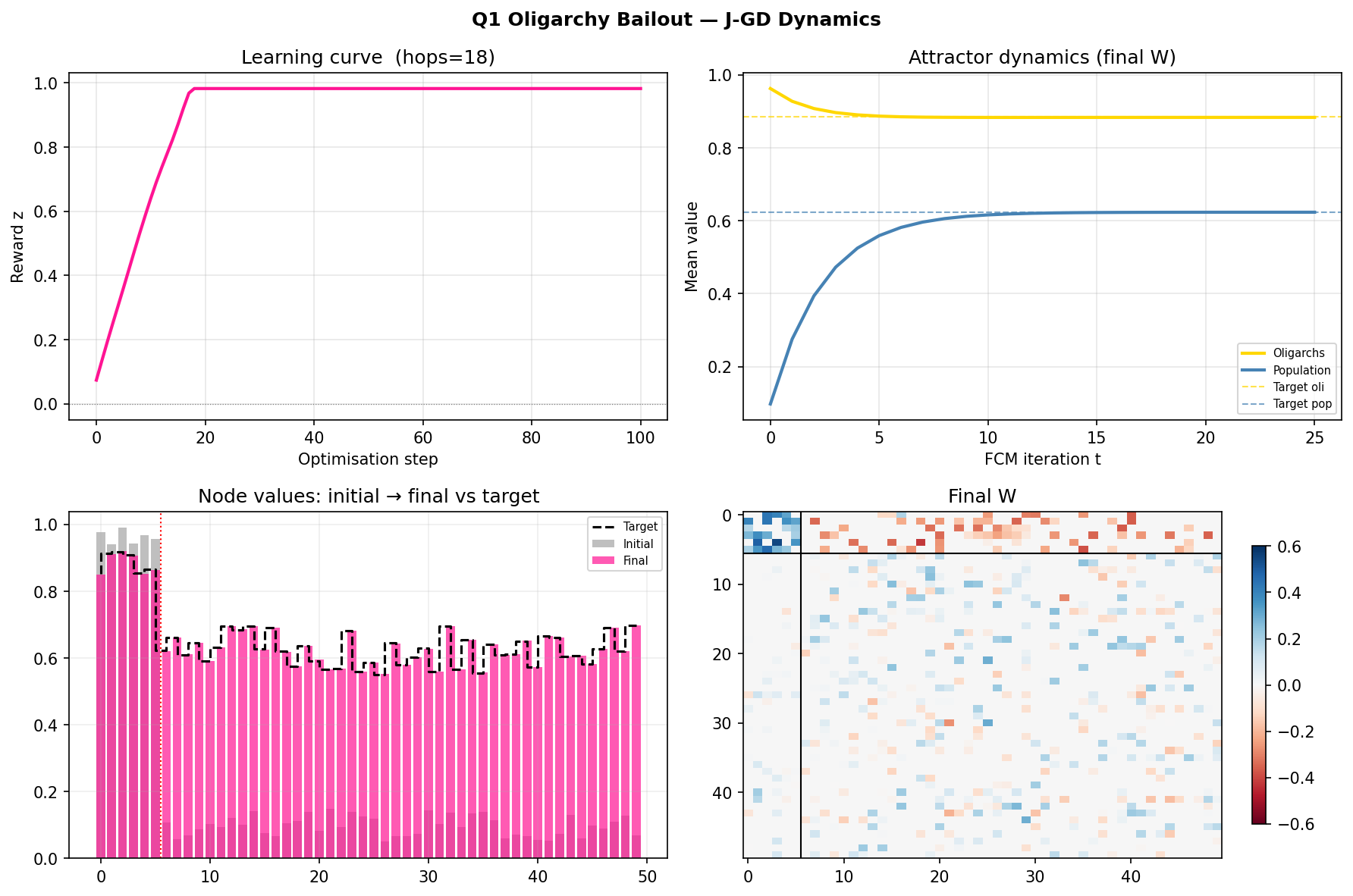
Figure 2: Socio-Economic Stress Test reveals systemic crisis outcome and non-survival of population under resource depletion.
Ecological Trophic Cascade
Simulation of herbivore-induced trophic cascades shows adaptive predator and flora responses, denoting the model's interpretability in capturing biological survival strategies via system dynamics.
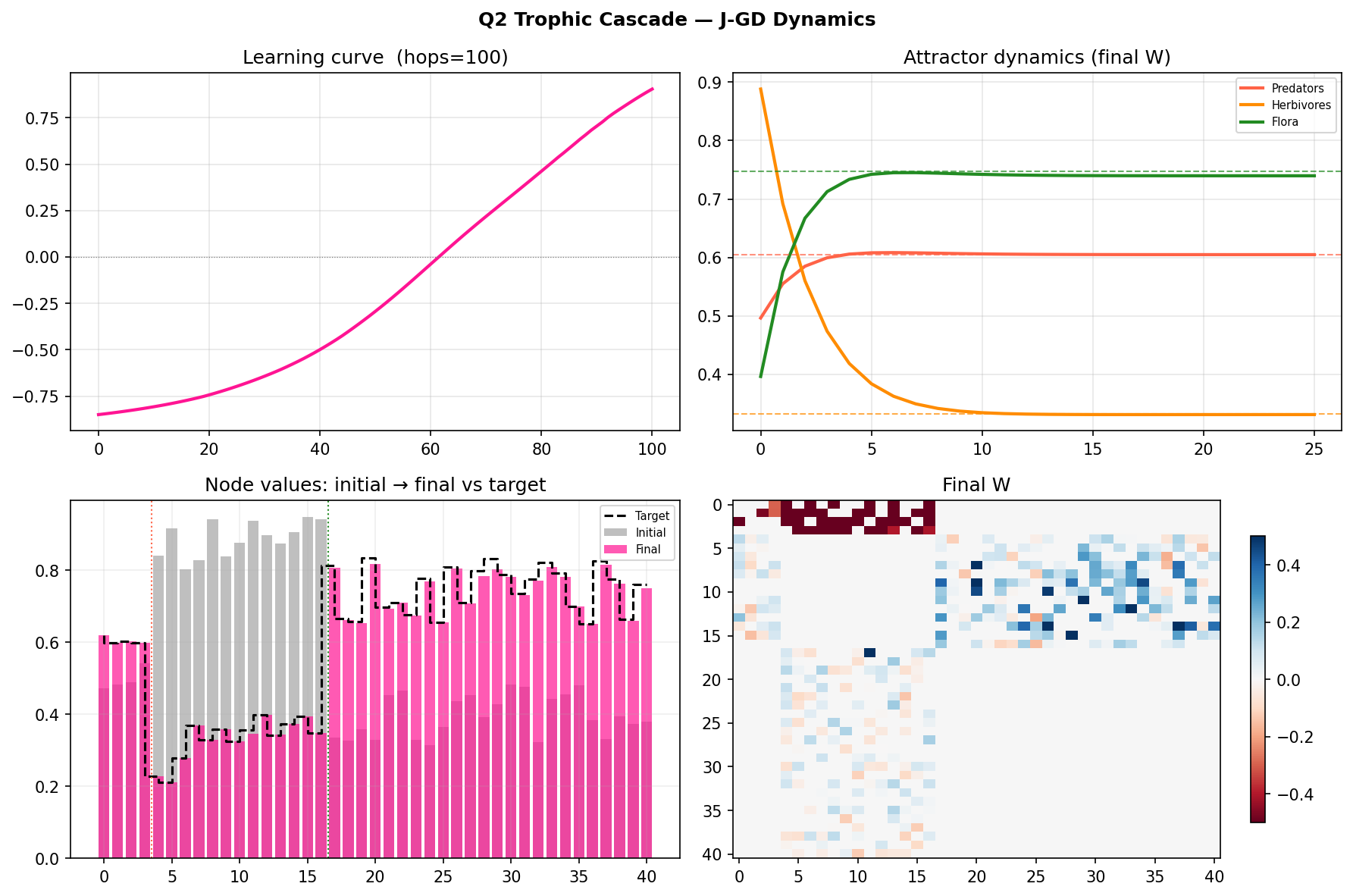
Figure 3: Trophic Cascade Simulation displays equilibrium adjustment across ecosystem layers under stress.
Political Survival Strategies
The dictator's dilemma scenario illustrates emergent strategies such as suppression of dissent and creation of authoritarian structures, confirming the model's plausibility in political simulations.
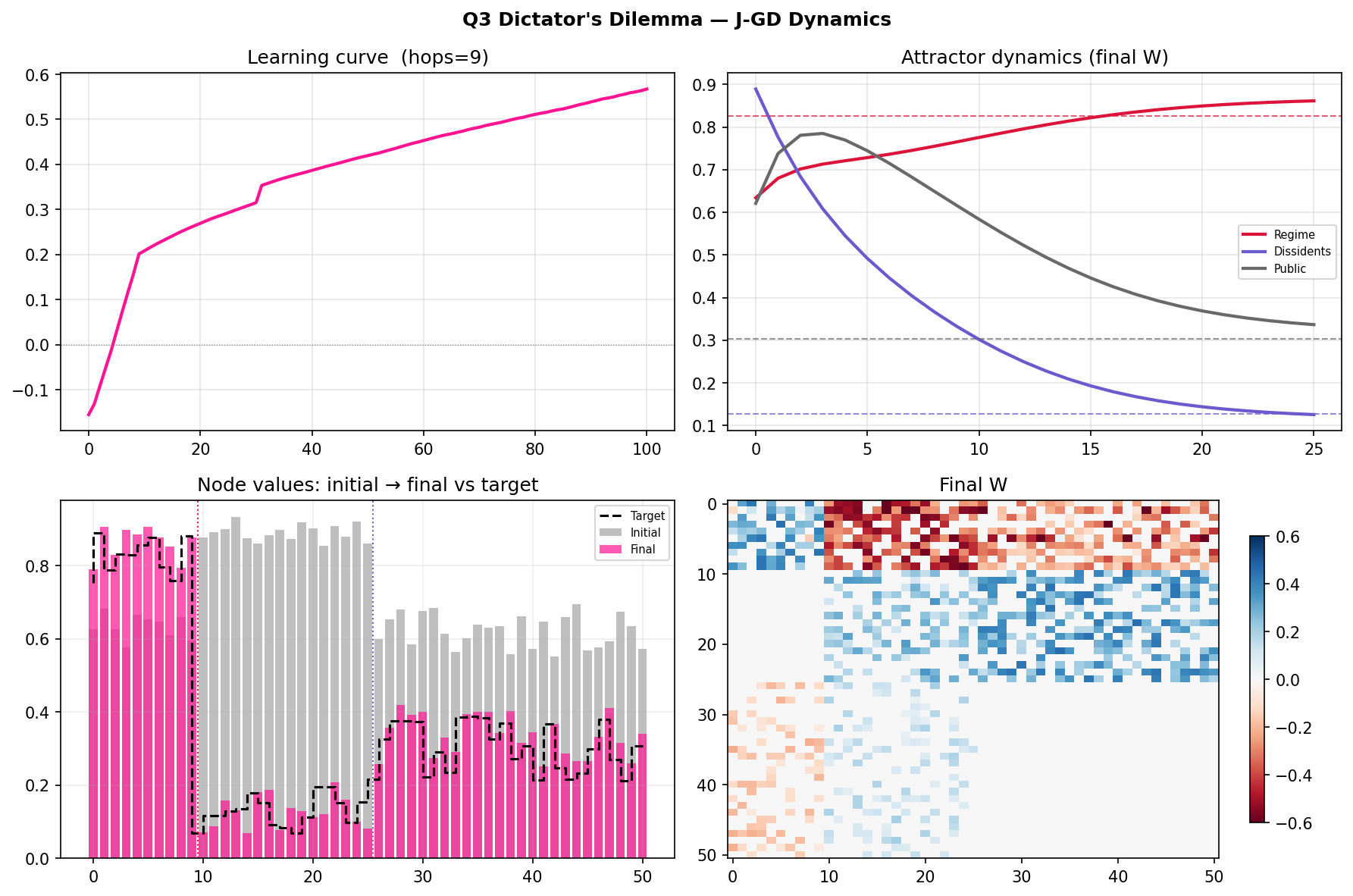
Figure 4: Political Stress Test compares state strategies in managing population unrest and maintaining regime control.
Quantitative Results and Ablation Analysis
Across seven evaluation protocols (stress, convergence, denoising, trap avoidance, and three qualitative scenarios), J-GD consistently achieves minimal error and superior convergence compared to Hebbian, agentic, hybrid, and baseline FCMs. Empirically, J-GD respects system physics and expert mapping, producing interpretable and stable equilibria. Ablation studies reveal that residuals and masks, while providing incremental benefits, do not supersede the critical importance of the anchor and J-GD for optimal performance. The system maintains effectiveness even under reduced configuration, with predictability and monotonic convergence.
Implications, Applications, and Future Directions
The Attractor FCM methodology substantiates the utility of fixed-point Jacobian optimization in physics-informed interpretable modeling. Practically, robust convergence, denoising, and expert-system fidelity extend its applicability to simulation scenarios in socio-economics, ecology, and political science. Theoretically, its construction aligns with Lyapunov stability and equilibrium propagation frameworks, potentially inspiring deeper integration with modern equilibrium networks and energy-based models. Computational overhead and slower convergence due to anchor terms suggest further investigation into optimization for scalability.
Future developments may focus on extending attractor FCMs with deeper architectures, hybridizing with DEQ or Hopfield networks, and integrating multi-modal learning. Application prospects include noisy-data correction, real-time simulation forecasting, and deployment in domains requiring both quantitative rigor and interpretability.
Conclusion
The Attractor FCM paradigm delivers an interpretable, robust, and physics-constrained approach to fuzzy cognitive map learning, integrating Newton attractor dynamics and Jacobian-gradient descent. Empirical and theoretical results substantiate its capacity for denoising, stable convergence, and meaningful simulation outcomes, aligning closely with expert conceptual mappings and system physics. The model's implications for simulation, prediction, and classification challenge classical FCM paradigms, suggesting avenues for advanced equilibrium-based cognitive modeling.

