- The paper presents a configurable grid-aware agent-based model that simulates EV charging ecosystems and robustly quantifies performance metrics like TTR9.36.
- It compares fast versus slow charging columns and FCFS versus SHRD scheduling, analyzing their effects on grid stress and charging delays.
- Results indicate that slow charging in workplace settings reduces grid volatility, advocating for context-aware infrastructure planning.
Summary of "A Grid-Aware Agent-Based Model for Analyzing Electric Vehicle Charging Systems"
Introduction and Motivation
The paper introduces a configurable, grid-aware agent-based model (ABM) designed for the systematic study of electric vehicle (EV) charging ecosystems under diverse infrastructural, operational, and grid conditions. The motivation arises from the stochastic and heterogeneous nature of EV charging demands, which, if unmanaged, can cause demand synchronization, facility congestion, and grid operational limit violations. Current solutions are insufficiently adaptive, especially with increasing EV penetration and the vital need to coordinate charging with grid constraints and renewable integration.
System Model and Architecture
The proposed ABM formalism captures the coupled dynamics of three primary agent classes:
- Electric Vehicles (EVs): Each agent is characterized by stochastic arrival time, parking duration, charging demand, and behavior regarding charging eligibility and willingness to wait.
- Charging Columns (CCs): These serve as infrastructural constraints, parameterized by the number of ports (set at four per column in this study) and maximum power rating (with two types: Slow Charging Columns at 11kW and Fast Charging Columns at 48kW).
- Energy Sandbox (ES): This facility-level agent imposes aggregate power delivery caps and provides price signals and (optionally) renewable generation profiles.
The ABM is implemented in Python utilizing the SimPy discrete-event framework, naturally supporting high-fidelity, scalable simulations and faithfully modeling asynchronous agent interactions and event-driven charging requests.
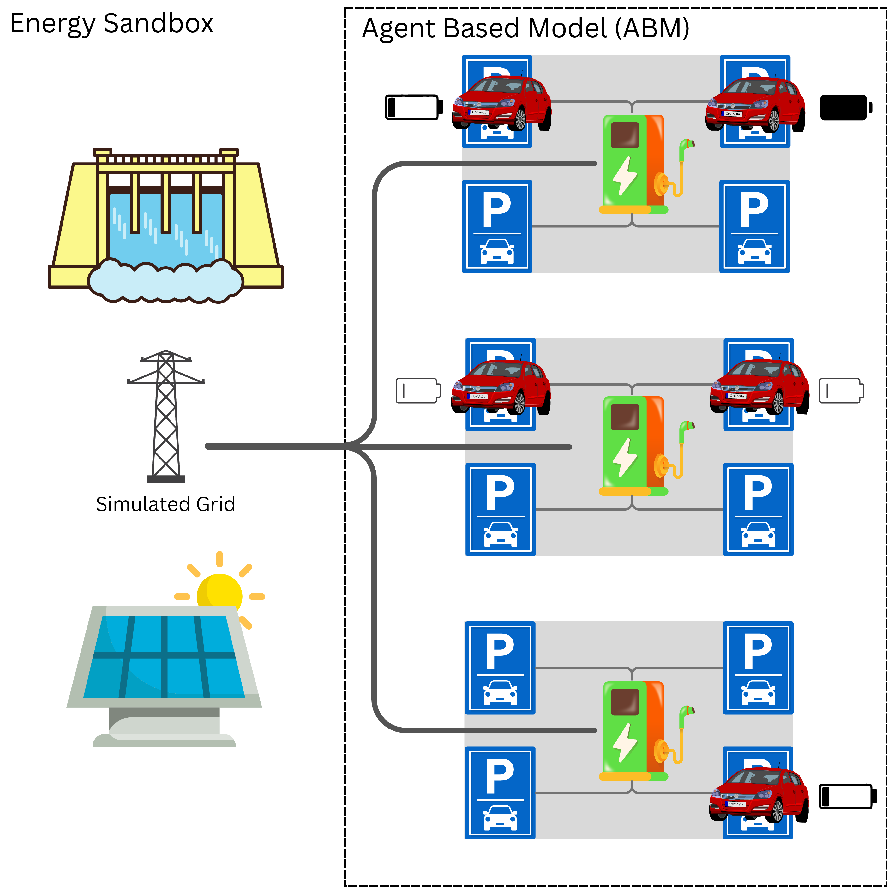
Figure 1: ABM of the proposed EV charging framework, illustrating the interactions between EVs and CCs. The ABM is embedded within an ES, enabling the evaluation of different load scenarios under various operational constraints.
A key design choice is embedding the ABM within the ES, which acts as the arbiter of power allocation to CCs subject to capacity constraints. This allows for distinguishing between user-centric, infrastructure-centric, and grid-centric performance metrics and enables future studies involving explicit grid limitations and advanced, signal-aware agent policies.
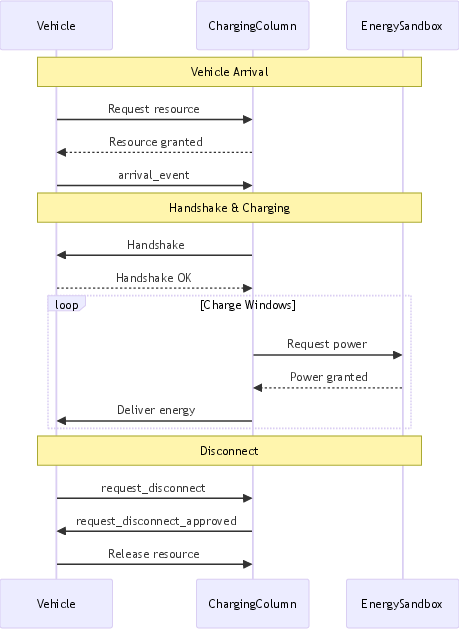
Figure 2: Sequence diagram illustrating the interaction flow among an Electric Vehicle (EV), Charging Column (CC), and Energy Sandbox (ES) agents.
Experimental Design
The framework is validated with a comprehensive simulation study of a workplace charging scenario reflective of typical employee commuting patterns (morning arrivals, parking horizons of $8-9$ hours, $9-10$ kWh energy deficits). The study systematically varies:
- The number of EVs ($30, 60, 120$), representing increasing load levels.
- The charging infrastructure type (SCC vs. FCC).
- The scheduling strategy (First-Come-First-Served (FCFS) vs. Time-Sharing (SHRD)).
All combinations are simulated under a non-binding ES power limit (1MW) to isolate behavioral and infrastructural effects.
A scenario-dependent Key Performance Indicator (KPI), TTR9.36 (time for an EV to receive 9.36kWh), is used to robustly compare energy delivery performance across system configurations.
FCC Configurations: Load and Strategy Dependence
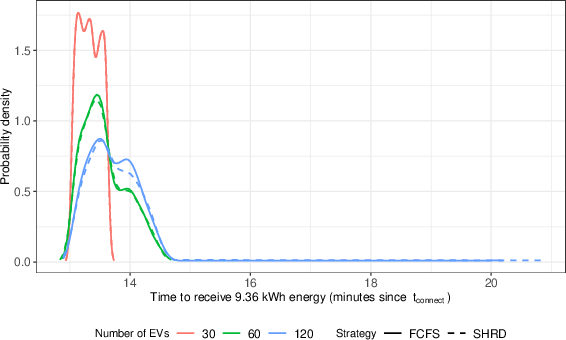
Figure 3: Probability density of TTR9.36 for FCC configurations, with increasing load yielding right-shifted, more variable distributions.
With 30 EVs, FCFS and SHRD perform comparably, reflecting low contention. As EV count increases, both the mean and variance of TTR9.36 increase slightly, primarily due to intensified CC contention and increased handshake delays.
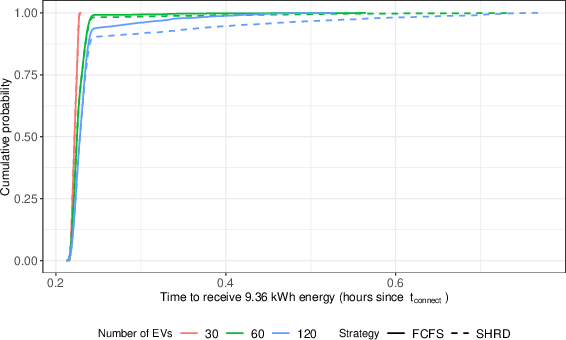
Figure 4: Cumulative distribution of 48kW0 for FCC configurations, highlighting that even at high loads, most deliveries occur well within the parking window.
SCC Configurations: Sensitivity to Load and Strategy
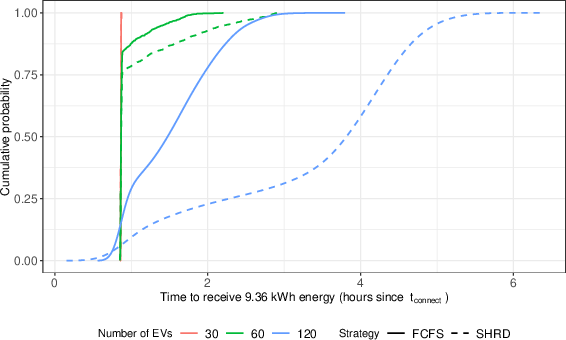
Figure 5: Cumulative probability (CDF) of 48kW1 for SCC configurations, demonstrating greater delay and variability relative to FCC, and higher sensitivity to load and frequent resource reallocation (SHRD).
With SCCs, delivery times are substantially longer and more variable, especially for high loads and the SHRD strategy, due to lower instantaneous power and increased switching overhead.
Infrastructure Utilization and System Scalability
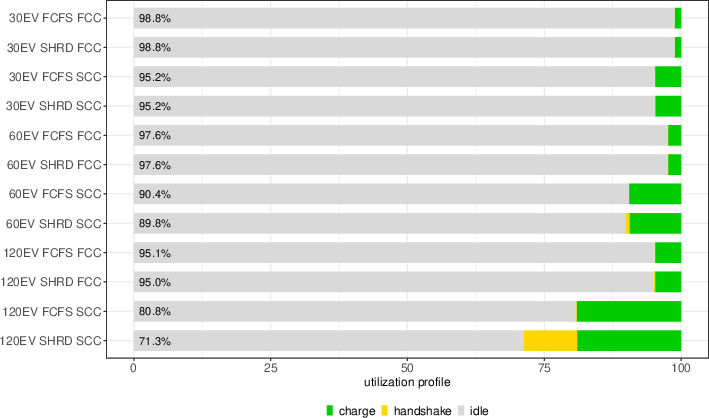
Figure 6: Charging Column (CC) utilization profiles aggregated per configuration.
Across all configurations, CCs spend the majority of time idle—often exceeding 90%—due to the ratio of typical charging duration to total parking time in the workplace context. Notably, SHRD in overloaded SCC configurations increases the fraction of time consumed by handshake/switching overhead.
Facility-Level and Grid-Facing Behavior
The ES power allocation is further analyzed through temporal boxplots under varying load levels:
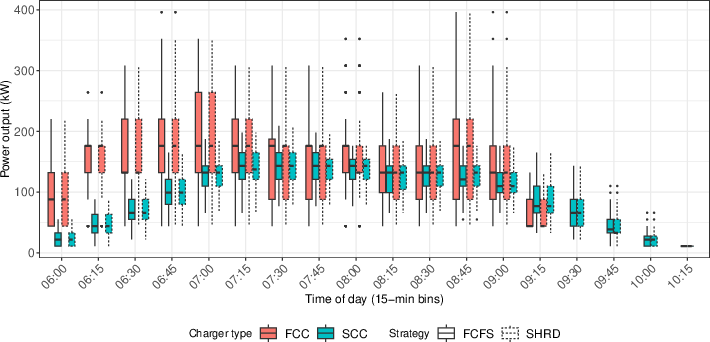
Figure 7: Energy Sandbox power output distribution (15-min bins) for 30 EVs.
At low load, power demand is nearly identical across all strategies and infrastructure types.
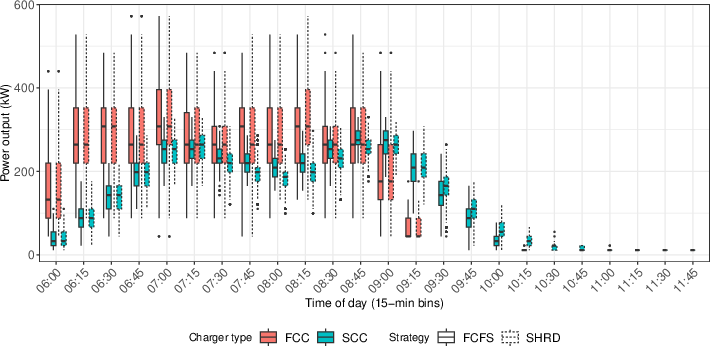
Figure 8: Energy Sandbox power output distribution (15-min bins) for 60 EVs.
With 60 EVs, FCC infrastructure generates higher peaks and sharper transients, while SCC infrastructure demonstrates smoother and lower average power, aligning with grid-friendly load-shaping.
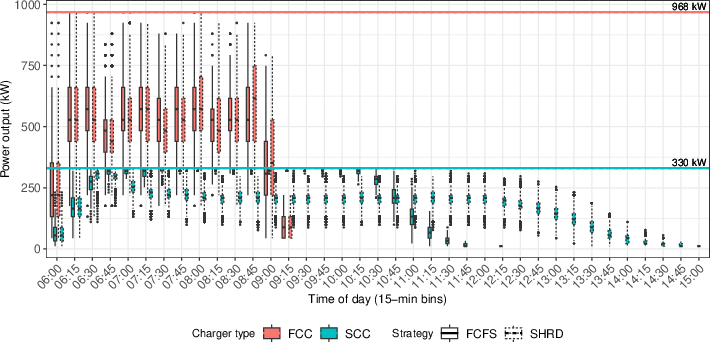
Figure 9: Energy Sandbox power output distribution (15-min bins) for 120 EVs.
At maximum load (120 EVs), FCCs exhibit peaks (48kW2) nearly three times higher than SCCs (around 48kW3), yet without a corresponding advantage in effective delivery due to the sufficiency of parking durations.
Charging Behavior Versus Energy Signals
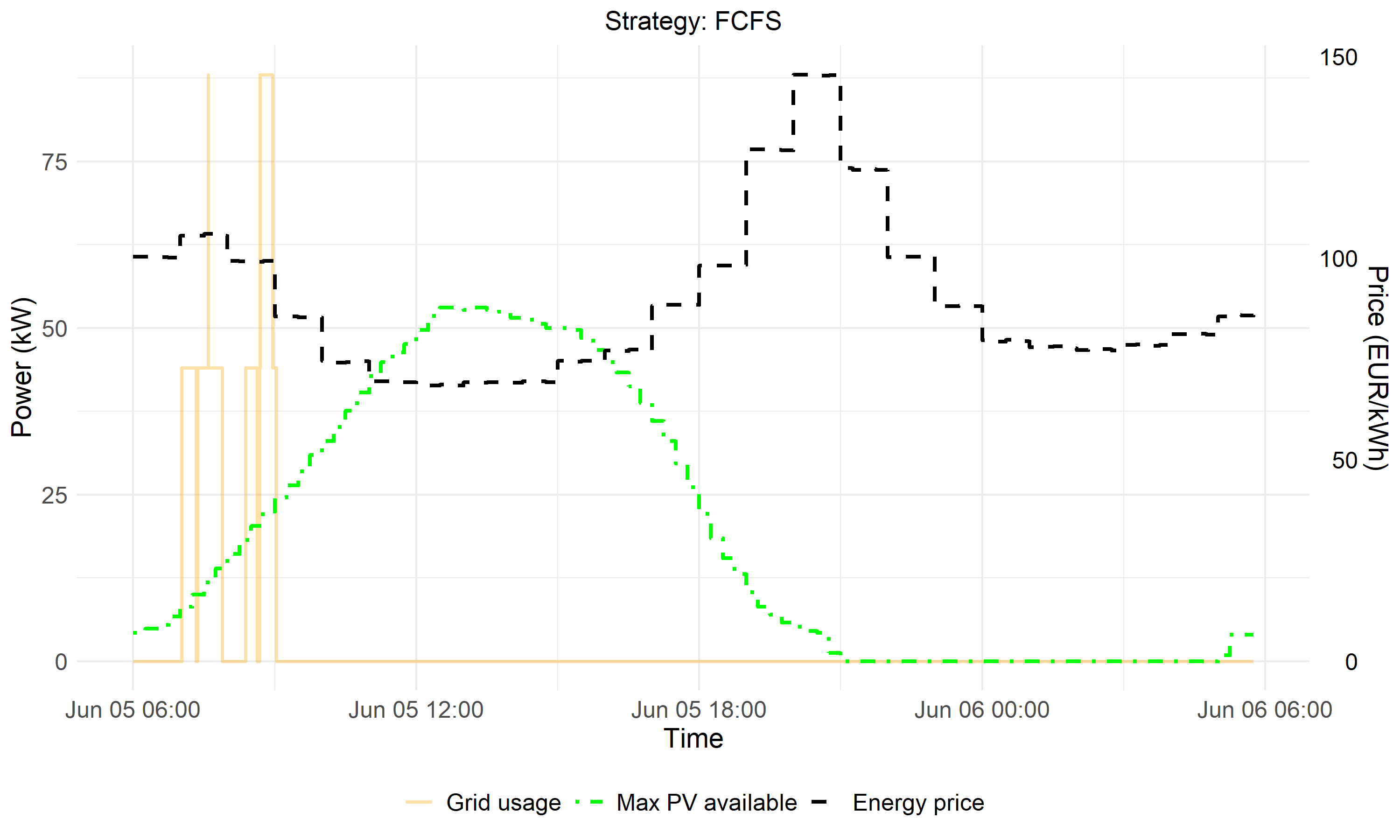
Figure 10: Grid usage for the FCFS strategy, shown together with PV availability and energy price over time in the average employee scenario.
Current rule-based strategies (FCFS/SHRD) are temporally mismatched from price and PV availability signals, underscoring the importance of future work integrating adaptive, grid-synchronized policies.
Theoretical and Practical Implications
Major demonstrated findings:
- Slow charging columns (SCCs) suffice in workplace scenarios, yielding satisfactory delivery rates with much lower grid stress and investment cost compared to fast infrastructure.
- At typical workplace loads, fast charging infrastructure mainly amplifies peak demand and grid fluctuations—a grid-unfriendly outcome—without delivering commensurate operational gains.
- Scheduling strategies must be context- and infrastructure-aware: Under SCCs with high load, frequent reallocation (SHRD) can degrade overall performance, while under high column utilization, SHRD may improve fairness in energy allocation.
- Idle infrastructure dominates in cases where charging needs are well below theoretical capacity, challenging common assumptions about infrastructure dimensioning.
From a practical standpoint, the results argue for context-aware infrastructure planning that balances investment cost, operational efficiency, and grid impacts, rather than defaulting to overprovisioned, high-power solutions.
Prospects for Further Research
The ABM is architected for extensibility, enabling:
- Plug-in of advanced, decentralized or learning-based agent policies for dynamic, price- or PV-aware scheduling.
- Simulation under explicit grid constraints or under different temporal/spatial demand scenarios (residential, public rapid-charging, urban congestion).
- Investigation of economic fairness, demand response integration, and market-driven coordination protocols.
The public code base further facilitates reproducibility and future comparative studies.
Conclusion
This paper provides a comprehensive, open-source agent-based simulation framework, rigorously analyzing the interplay of user behavior, charging infrastructure, and grid constraints in EV charging ecosystems. The analysis establishes that, under workplace-style scenarios with adequate parking windows, slow charging infrastructure is preferable, as fast charging predominantly increases system volatility and grid stress. The work lays a methodological foundation for evaluating more advanced coordination strategies and for guiding evidence-based infrastructure planning in evolving e-mobility and smart grid landscapes (2604.27849).