- The paper demonstrates that minor local changes in degree and distance penalizations can shift epidemic dynamics between explosive, quasi-exponential, and polynomial regimes.
- It employs a stochastic SI agent-based model with tunable exponents to interrogate infection timings and transitions using both empirical and synthetic networks.
- Key implications include explaining epidemic wave heterogeneity and informing targeted intervention strategies based on the prevailing growth regime.
Introduction and Motivation
The paper "Degree-dependent and distance-dependent contact rates interpolate between explosive, exponential and polynomial epidemic growth" (2604.26939) provides a unified mathematical framework for epidemic and information diffusion dynamics, capable of interpolating between super-exponential (explosive), exponential/quasi-exponential, and polynomial growth regimes within a single network structure. Existing frameworks fail to coherently explain the spectrum of empirically observed early-stage outbreak kinetics, including abrupt transitions between growth classes observed across waves of a given pandemic, even when using identical network substrates. This work introduces a spatially-embedded, agent-based SI model with explicit penalization of transmission rates as functions of source/target degree and spatial distance, demonstrating—both theoretically and via simulations on empirical/synthetic networks—how minor local changes in behavioral/structural parameters can induce universality class transitions in global epidemic dynamics.
The process is built on a stochastic SI epidemic model on networks with geometric embedding. Transmission rates are explicitly:
r(u,v)=βdeg(u)−μdeg(v)−ν∥xu−xv∥−ζ
where deg(u) is node degree, xu node spatial coordinate, and the exponents μ, ν (degree penalty) and ζ (geometric/spatial penalty) are tunable parameters. The process generalizes traditional approaches by jointly including degree- and distance-dependent terms—empirically validated by existing studies on real-world contact, mobility, and social networks. For simulations and theoretical development, the model restricts to μ=ν, without significant qualitative loss.
The main focus is on the early-phase epidemic growth: the mean-field SI dynamics with these inhomogeneous rates yield infection timings governed by the minimization of sums of random edge weights (a variant of first-passage percolation with degree and distance dependence), thus connecting to the mathematical literature on random graphs and percolation theory.
Key Universality Classes and Phase Transitions
The analysis identifies four distinct growth regimes for I(t), the number of nodes infected by time t, parameterized by (i) the exponent τ of the degree power law, (ii) the geometry-penalization parameter deg(u)0, and (iii) the degree-penalization parameter deg(u)1:
- Explosive (Super-exponential): deg(u)2 — essentially the entire (giant) network becomes infected in constant time, independent of network size.
- Quasi-exponential (Stretched Exponential): deg(u)3, deg(u)4.
- Polynomial: deg(u)5, deg(u)6 (with deg(u)7 reflecting the spatial dimension).
- Pure Geometric: deg(u)8 — driven purely by local spatial spread.
These transitions between regimes are controlled by the sum deg(u)9 and the interplay with the network’s degree distribution (xu0) and its geometric link formation parameter (xu1):
Strong claim: Even sublinear degree or distance penalization (xu2 but xu3) is sufficient to drive dramatic slow-downs (even from explosive to polynomial) in epidemic growth (2604.26939).
Notably, the presence of weak geometrically long-range ties or superspreaders is required to enable the explosive regime, which otherwise becomes unstable to even moderate degree or spatial restrictions.
Empirical and Synthetic Network Simulations
The framework is instantiated on the empirical Gowalla social/location network (highly heterogeneous, spatially embedded, with xu4). Simulations systematically vary xu5 and xu6 to confirm theoretical predictions regarding transitions between universality classes. Key results include:
- For xu7 (no penalization): Far-reaching, instant global mixing occurs, matching the predicted explosive regime.
- As penalization increases (e.g., xu8 and above), growth transitions through quasi-exponential, then polynomial, and ultimately to pure geometric behavior.
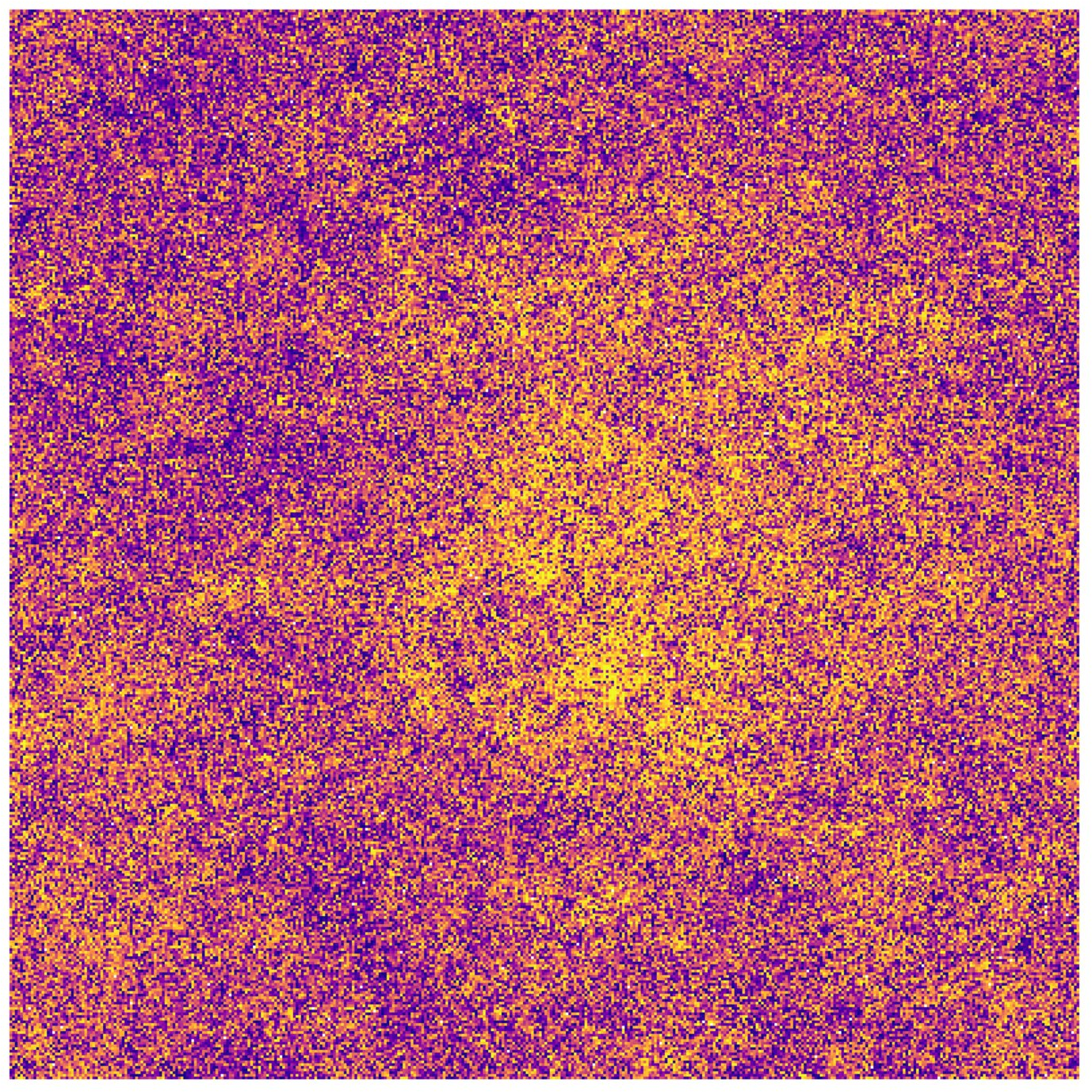
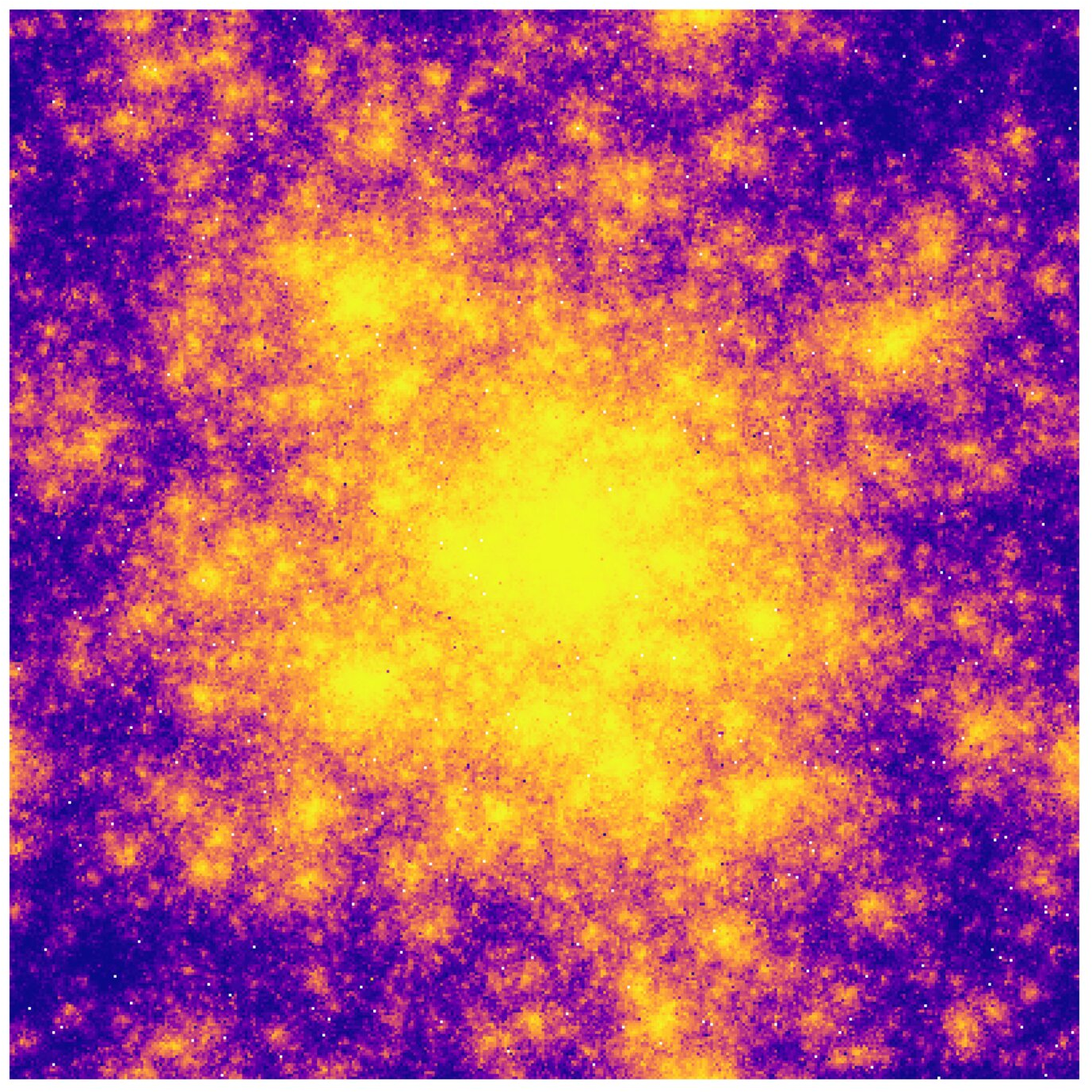
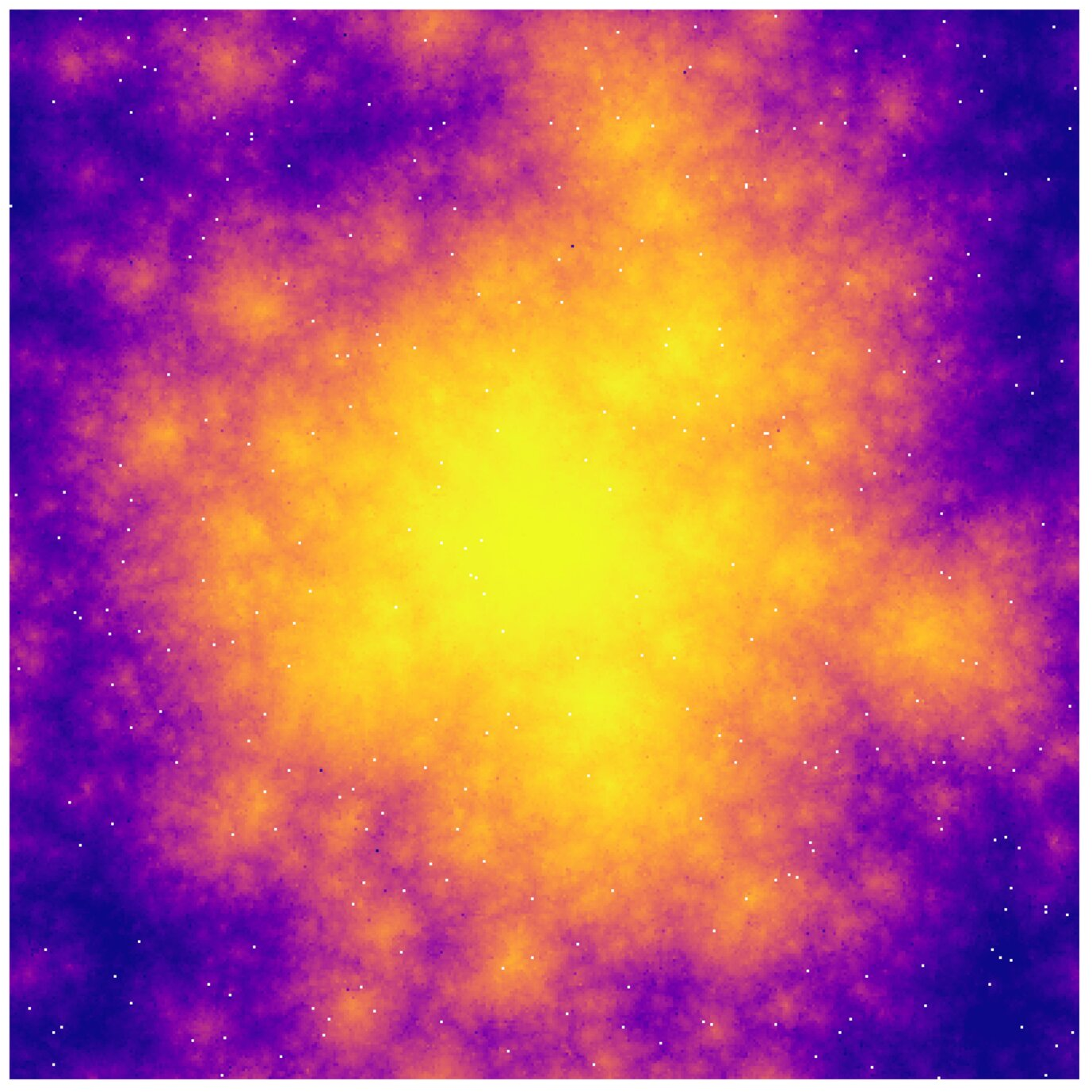
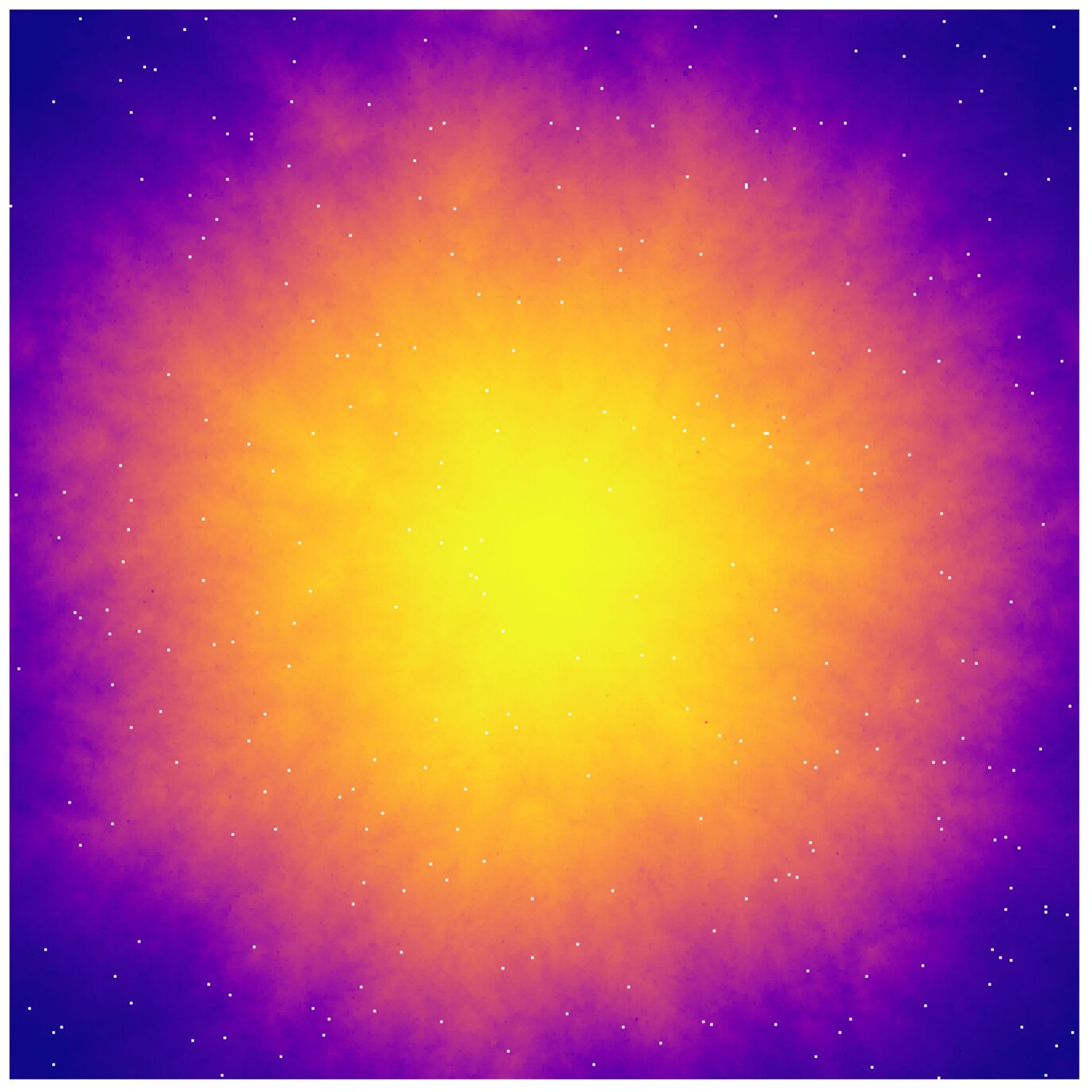
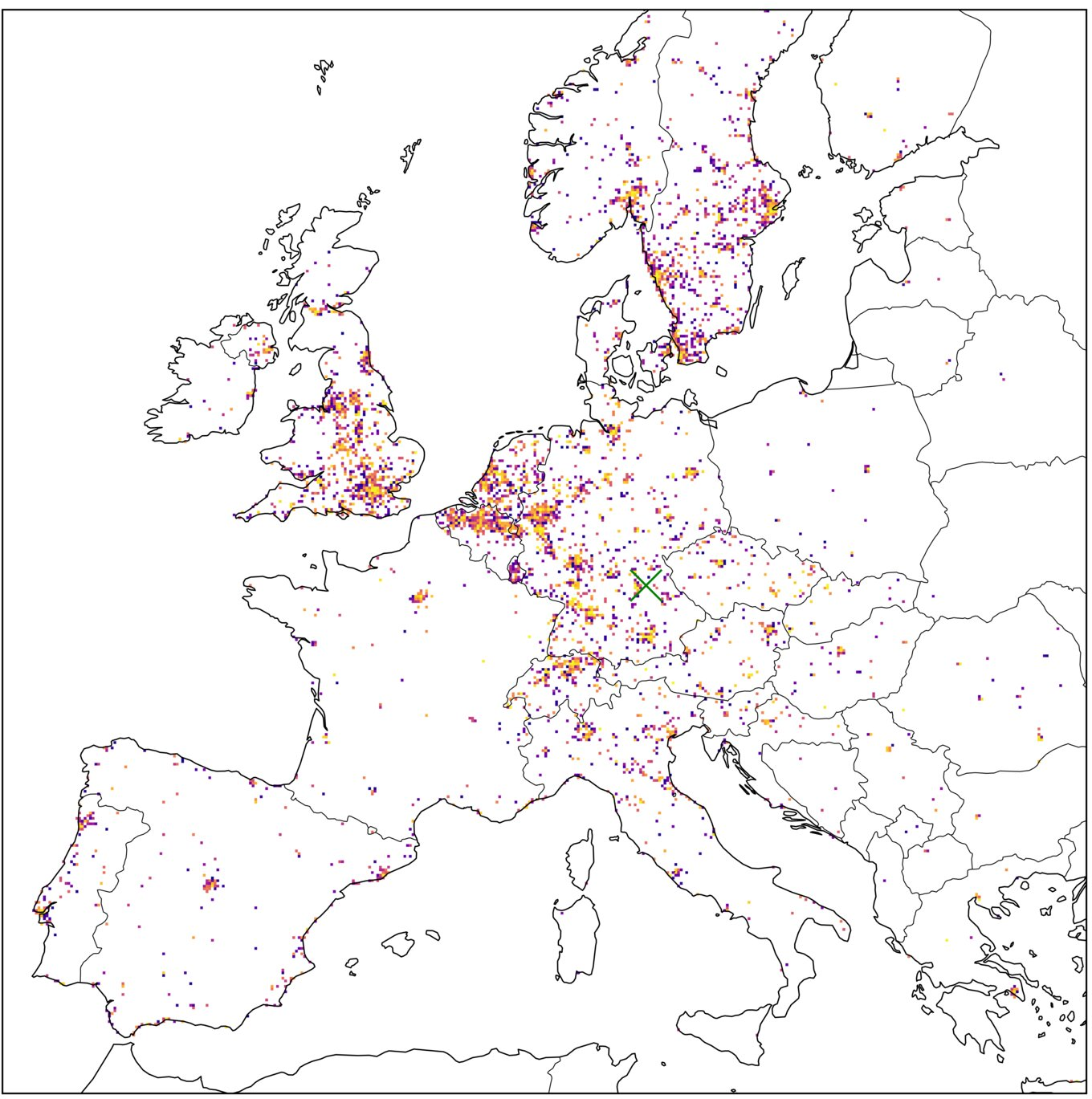
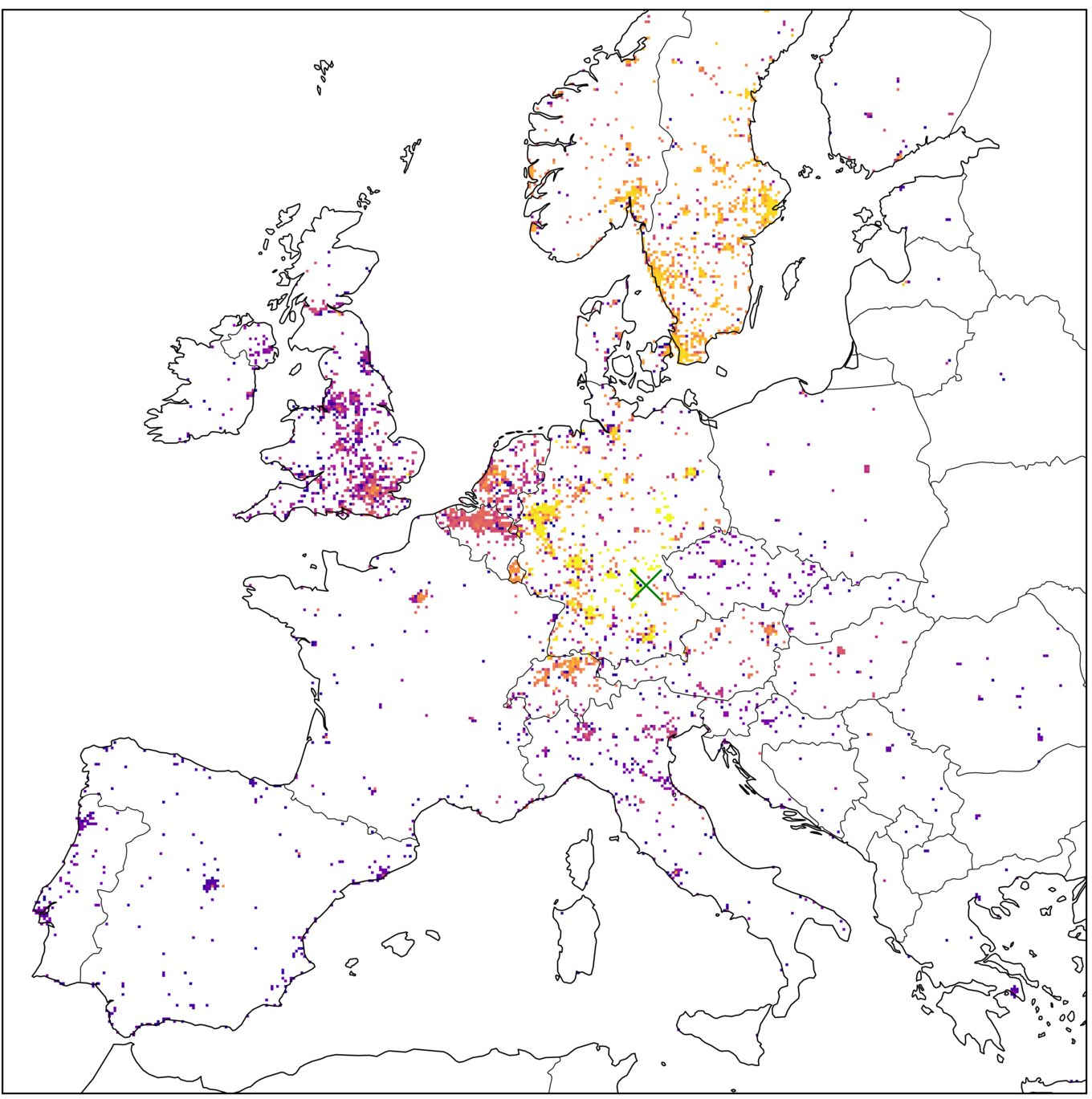
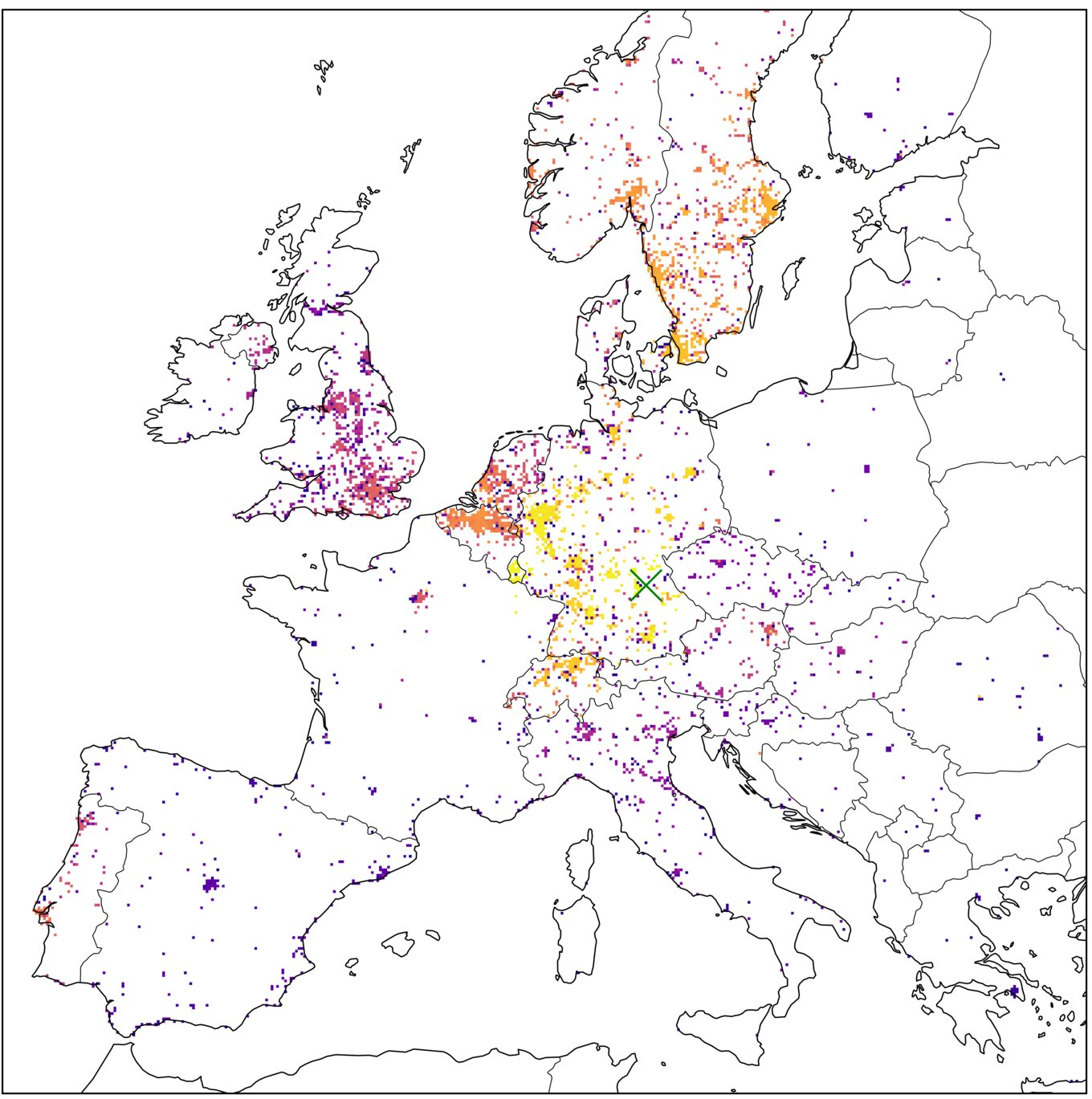
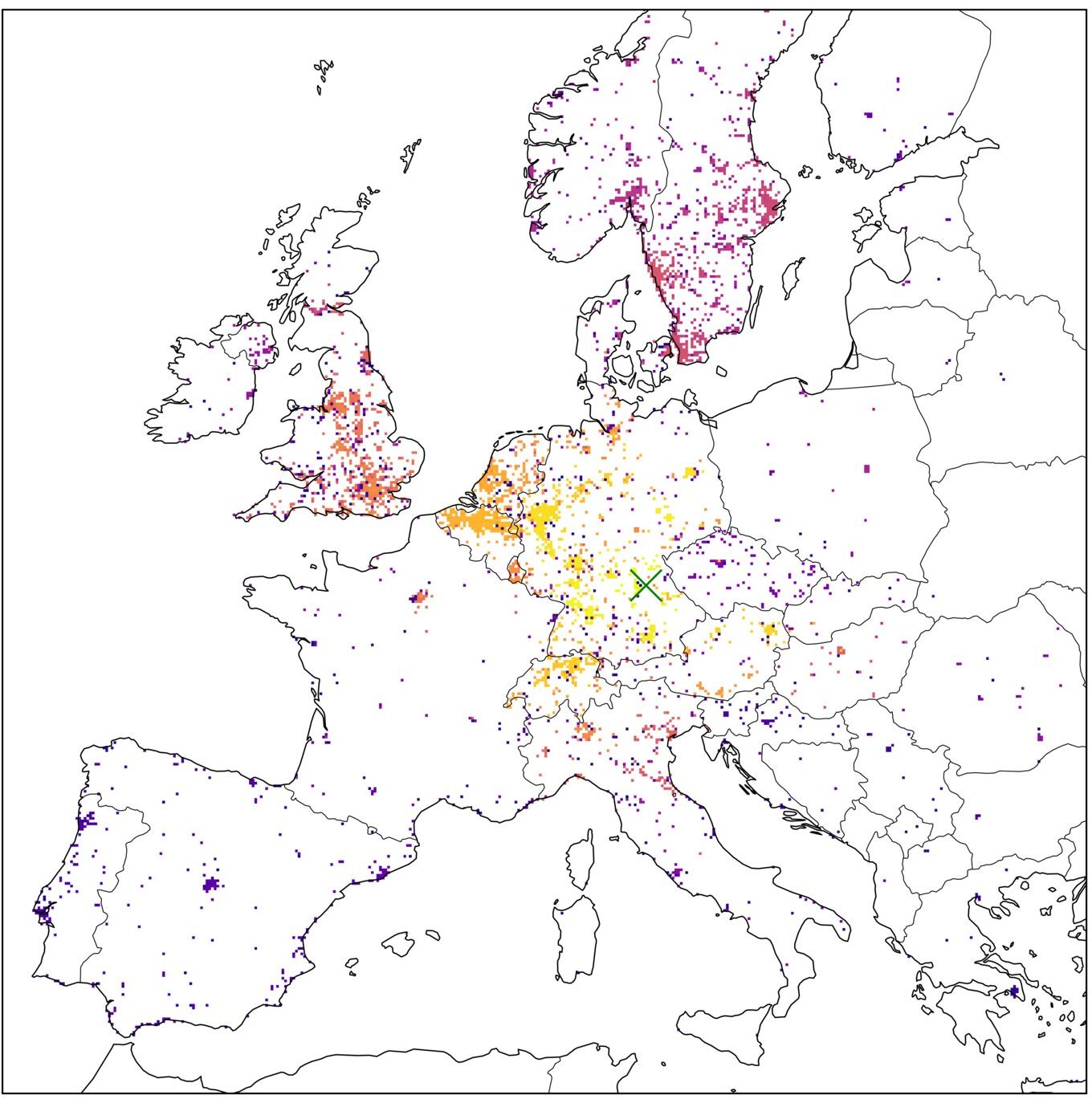
Figure 1: Heatmaps of the epidemic spread in empirical and synthetic networks visualize the sharp increase in spatial correlation between the infected node set as degree (xu9) and distance (μ0) penalization increases, confirming the transitions between universality classes.
The distinction is further validated on synthetic Geometric Inhomogeneous Random Graphs (GIRGs) fitted to the empirical network—crucial for theoretical analysis due to analytical tractability and control over the tail exponents and geometric parameters.
Theoretical Analysis and Phase Diagrams
A rigorous analysis is provided for the minimum infection time between spatially distant pairs using multiscale and first-passage percolation techniques. The main theorem (see Theorem "summary" in the paper) gives explicit phase boundaries in the μ1 space, featuring:
- Non-trivial phase transitions: Explosive μ2 quasi-exponential μ3 polynomial μ4 geometric.
- Robustness of the theoretical prediction for phase boundaries, with sharp analytical expressions for the exponents μ5 and μ6 controlling the different subphases (weak-tie vs. hub-driven regimes).
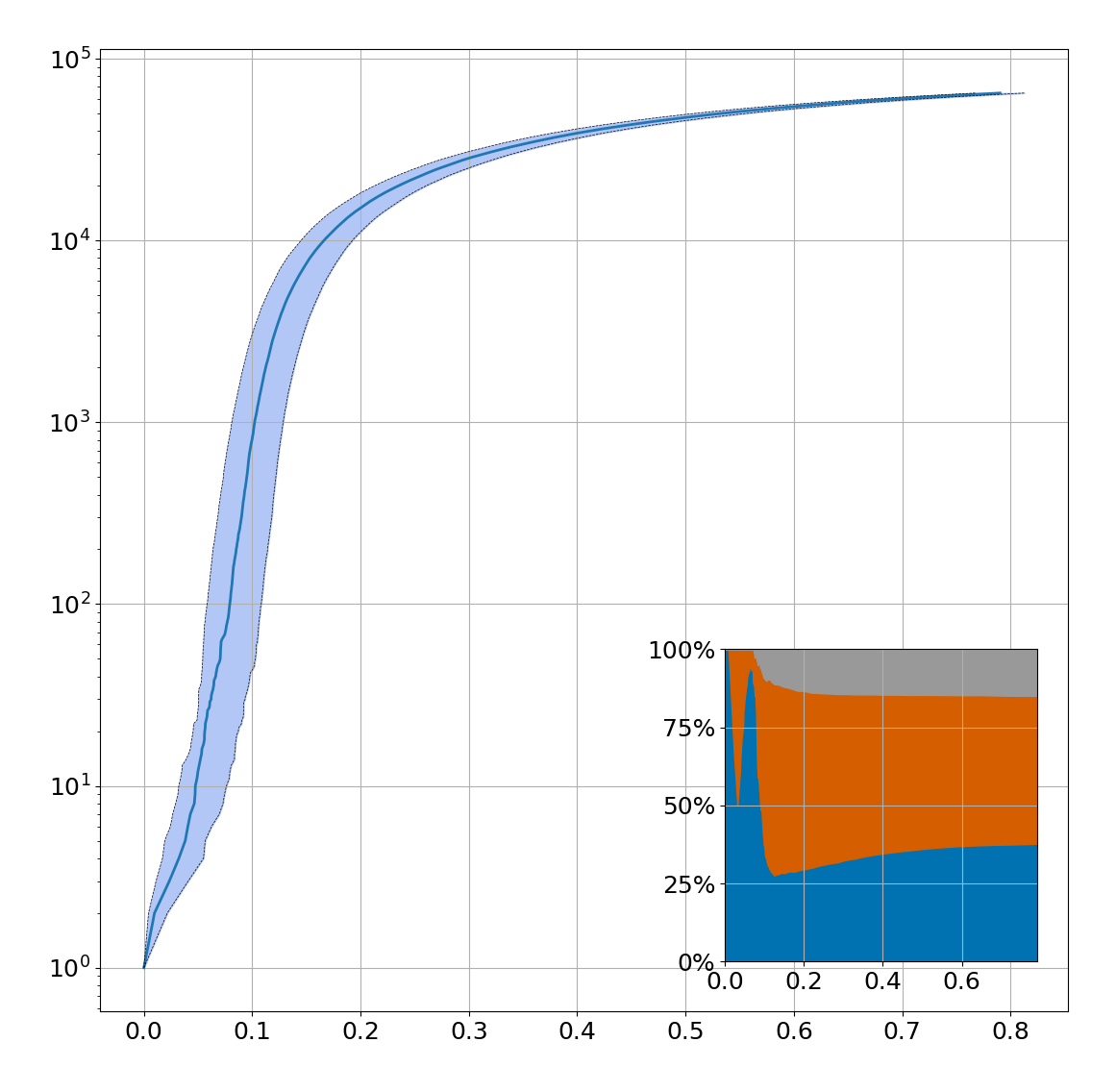
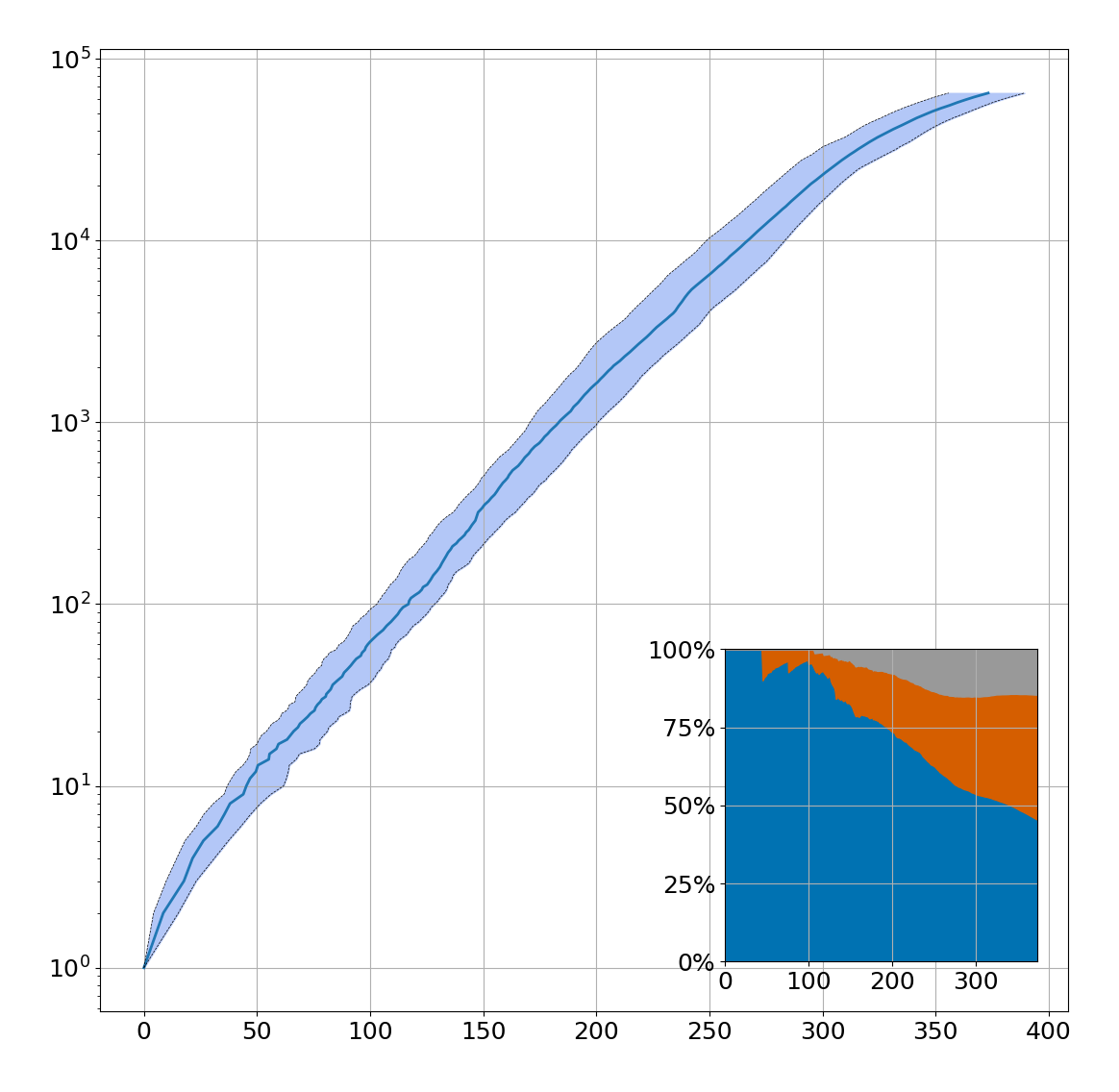
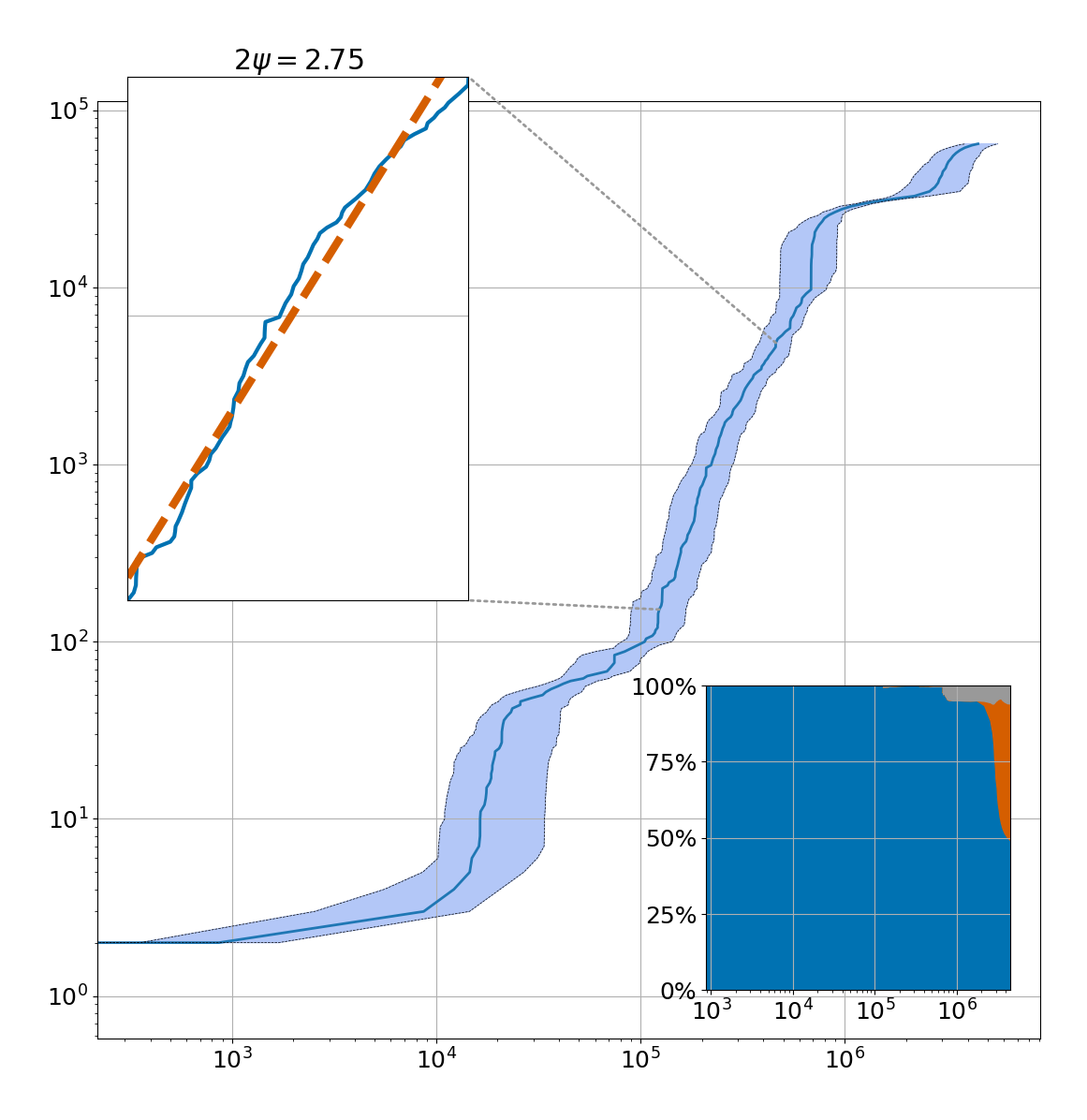
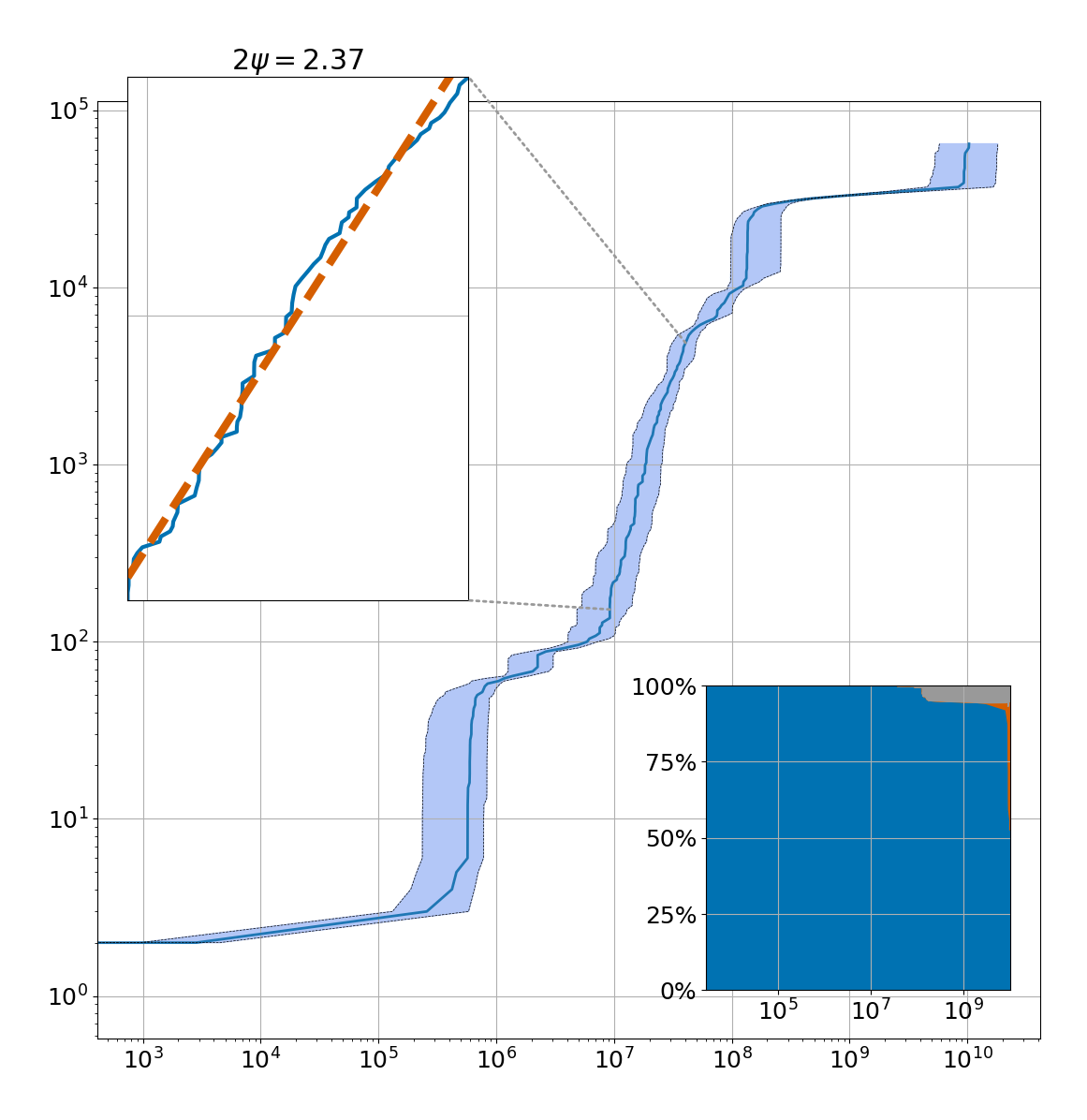
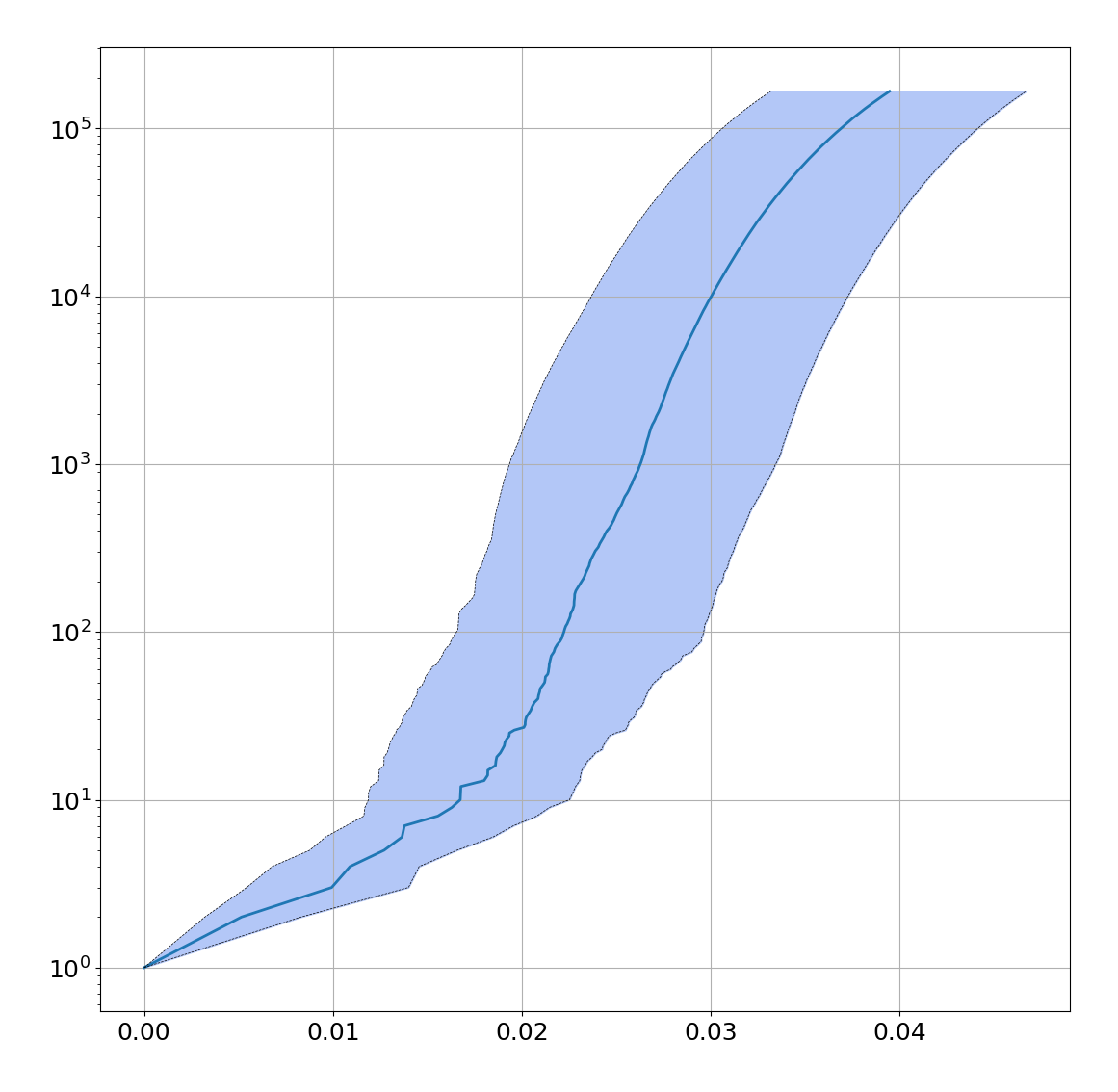
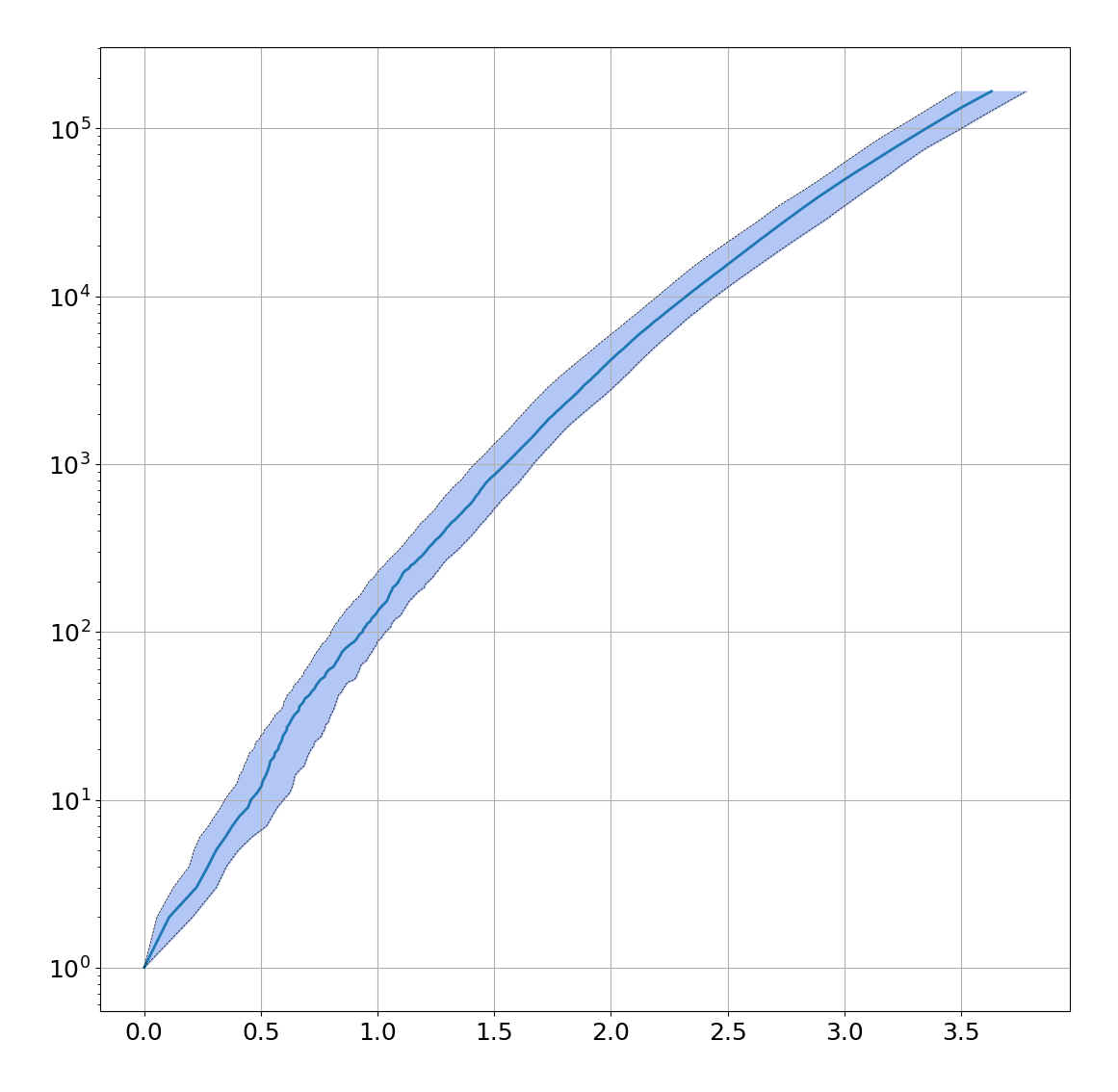
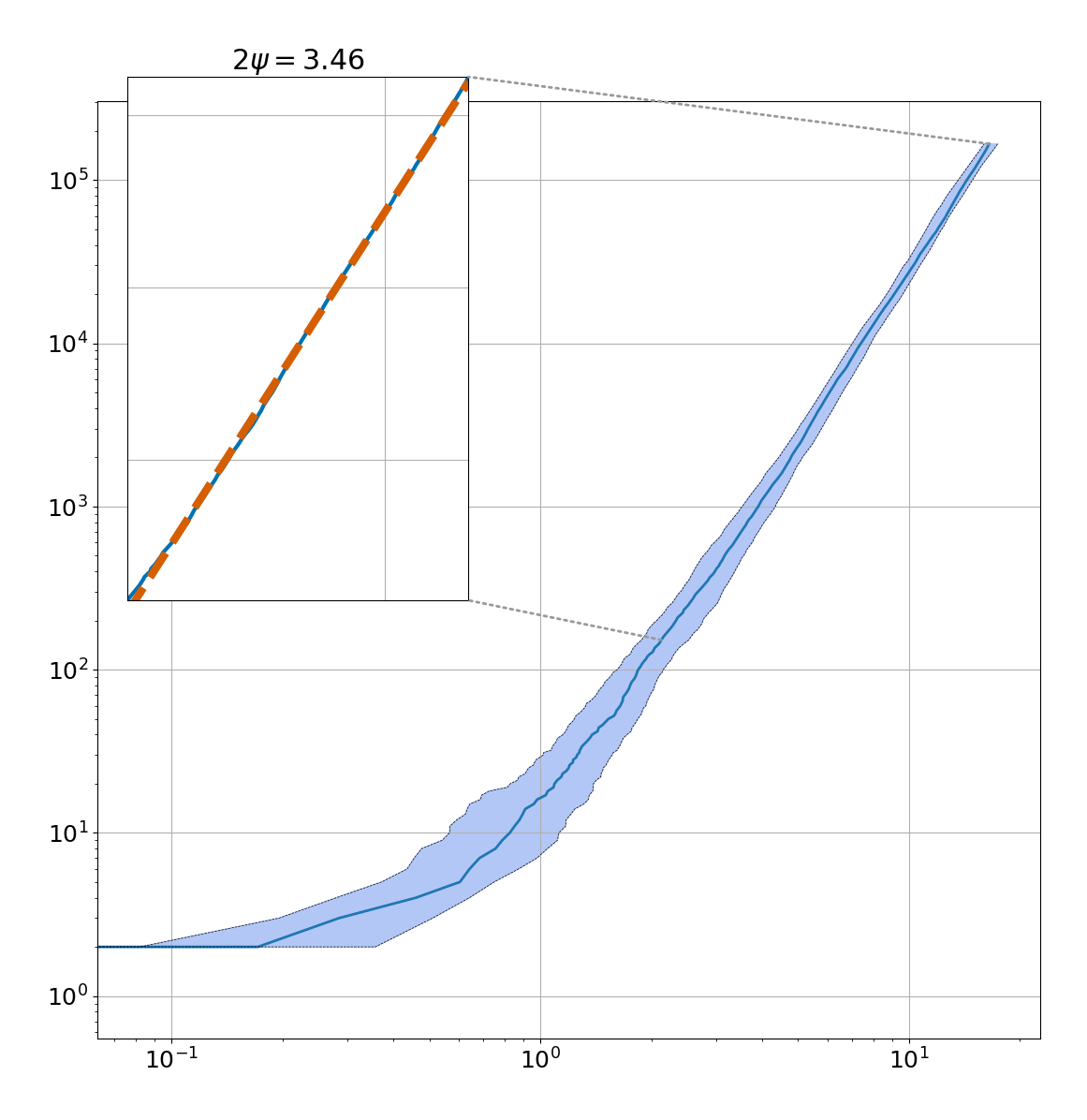
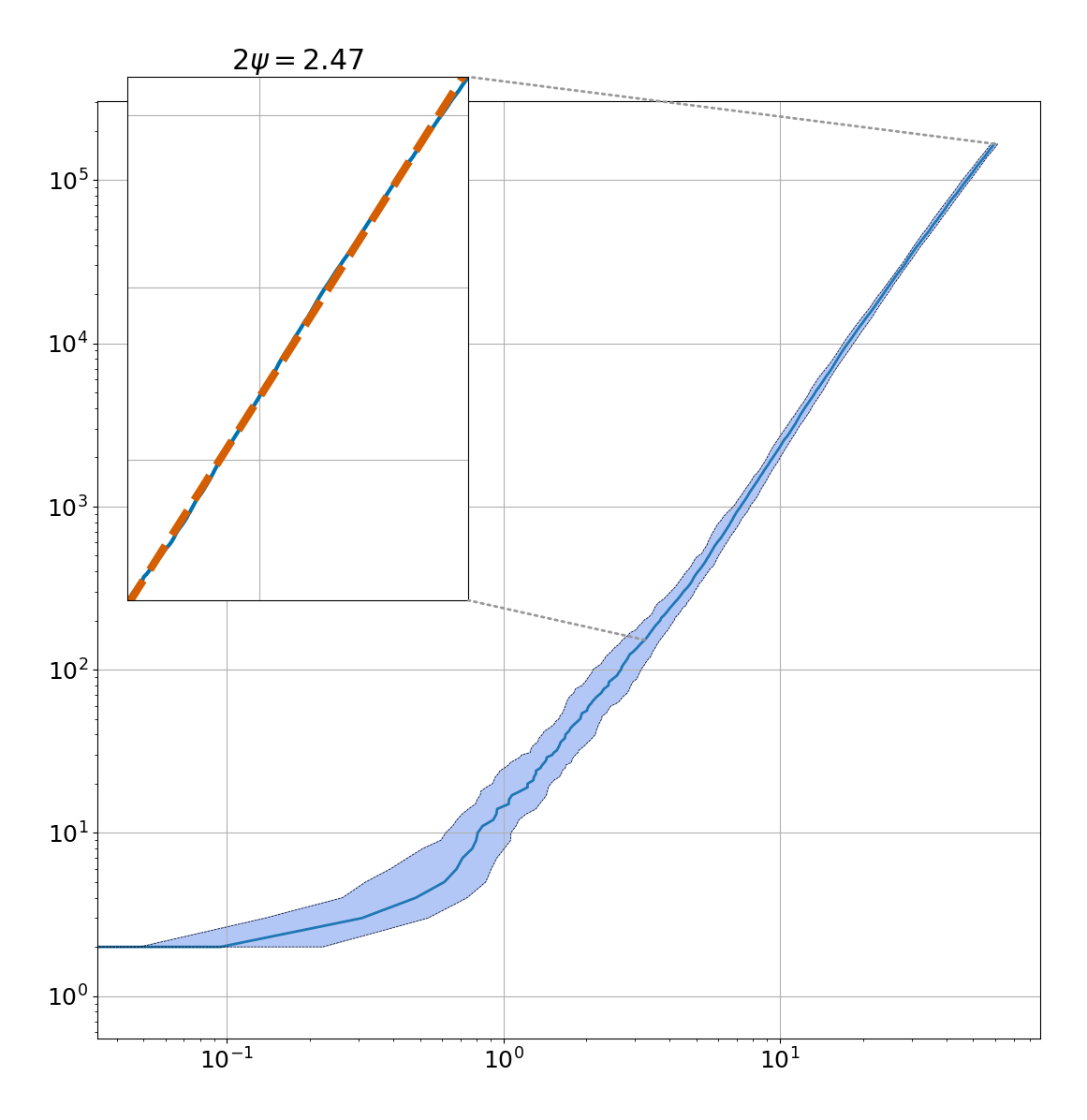
Figure 2: Characteristic epidemic curves (median and quantile envelopes across runs) illustrate the qualitative difference in saturation times and the dependence of growth law (explosive, quasi-exponential, polynomial, geometric) on penalization parameters in both real and synthetic networks.
Mechanistic Insights and Infection Path Structures
In addition to mean growth laws, the paper provides insight into the "optimal" transmission pathways under different regimes, demonstrating that the infection typically percolates through super-spreader "hubs" or via "long weak ties" depending on parameter settings. In the polynomial and geometric cases, fractal-like, spatially localized growth is observed, consistent with multi-fractal empirical pandemic observations.
Edge-length Distributions and Weak Tie Statistics
A precise method for estimating the critical geometric parameter μ7 from edge-length distributions is provided, notably incorporating finite size effects which are crucial for empirical networks.
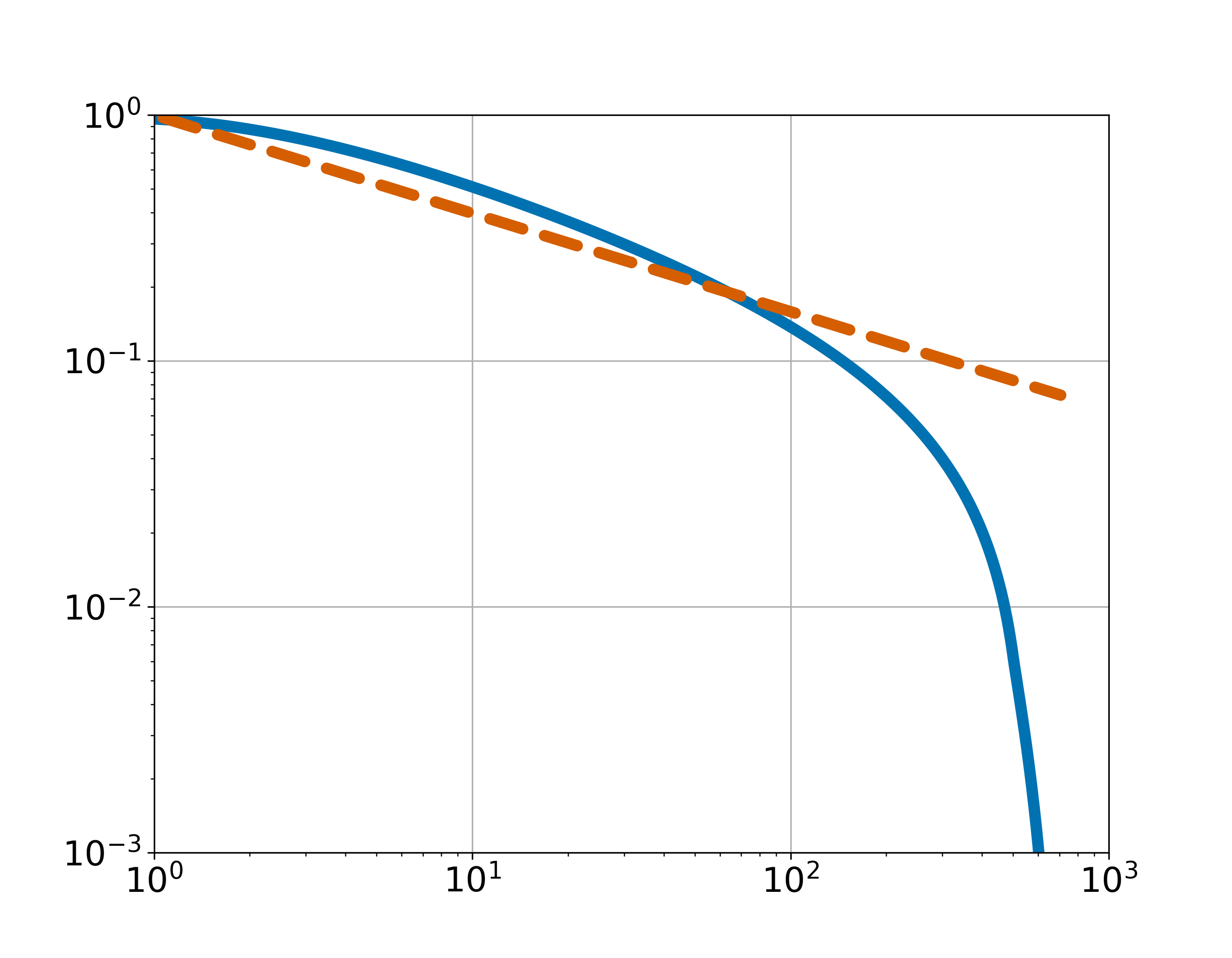
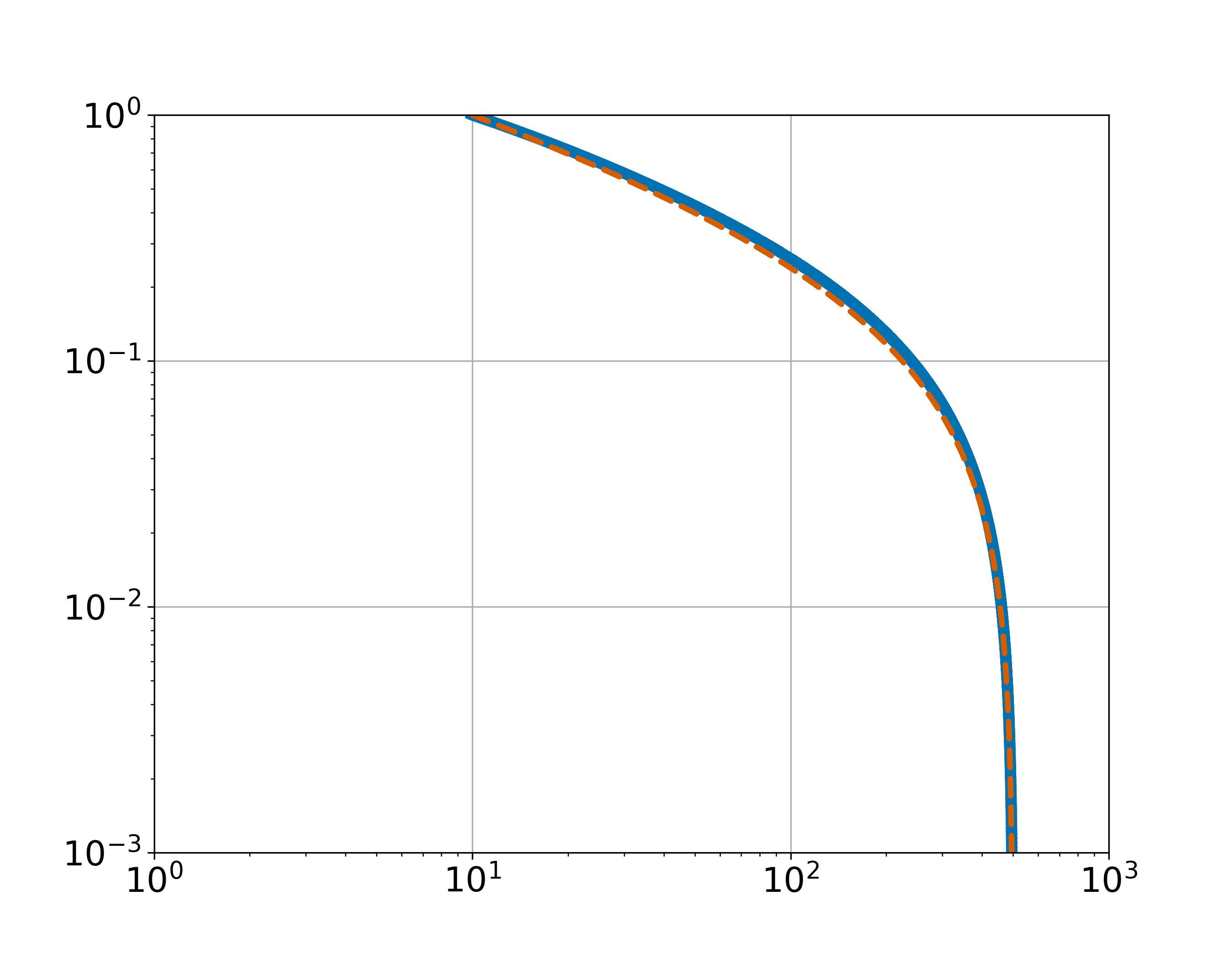
Figure 3: Empirical and theoretical edge-length distributions in synthetic Gowalla networks demonstrate the accuracy of the estimation method for the geometric exponent μ8.
Infection Paths and Universality
Representative infection paths in all regimes are visualized, showing rapid global propagation ("explosive" via hub-to-hub shortcuts), spatially anisotropic spread (quasi-exponential), fractal/branching patterns (polynomial), and local diffusive "wavefront" propagation (geometric).
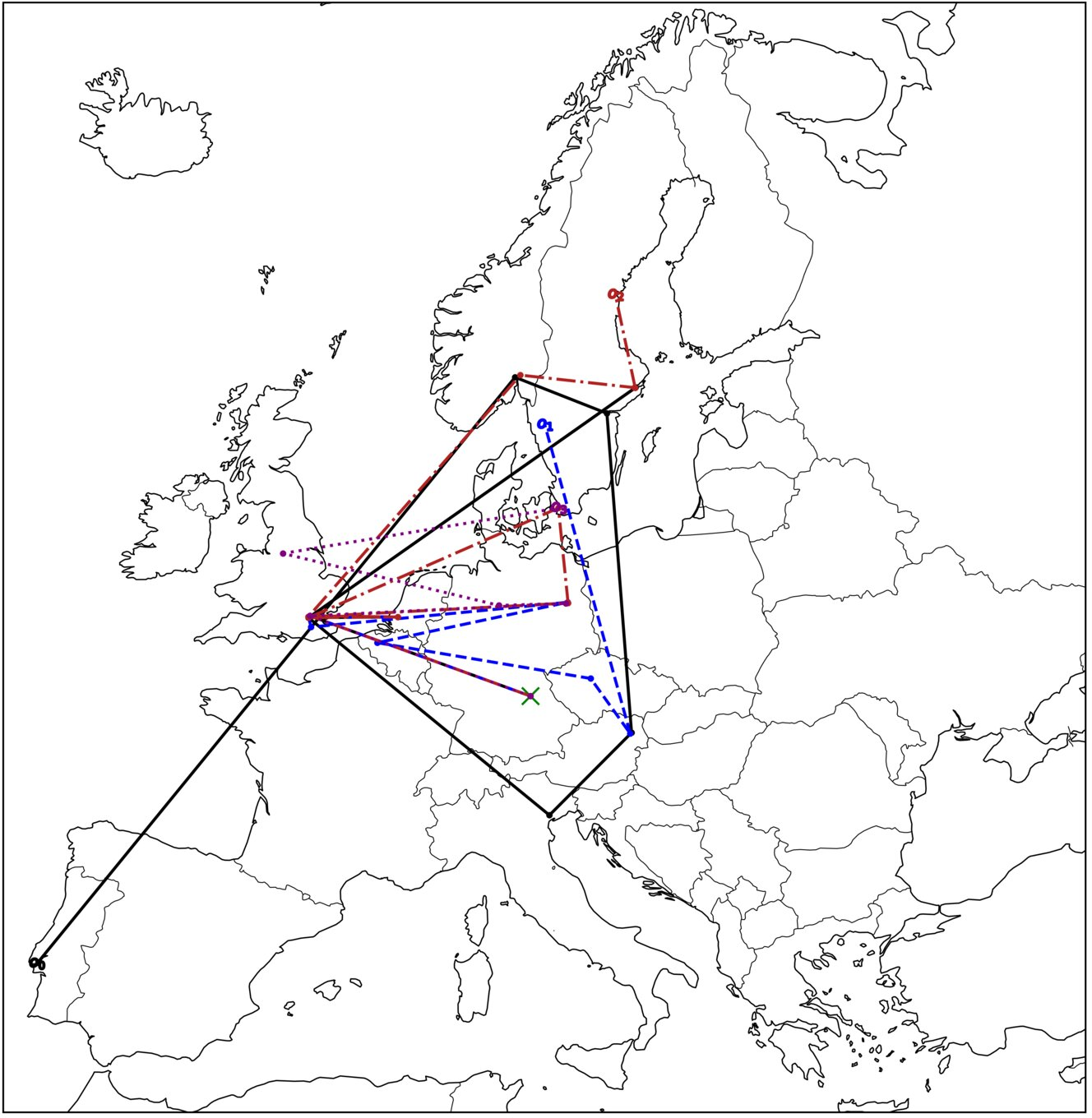
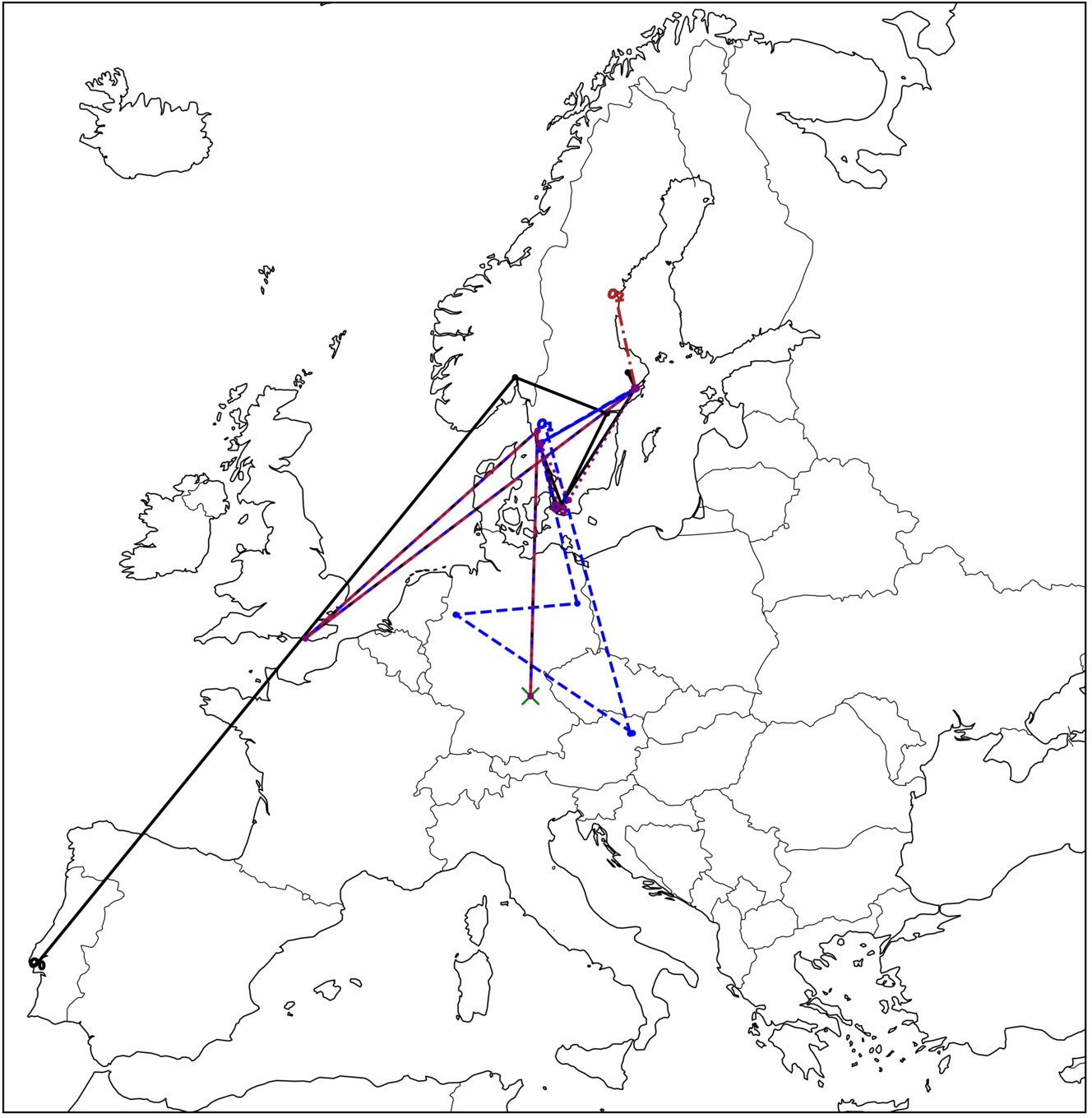
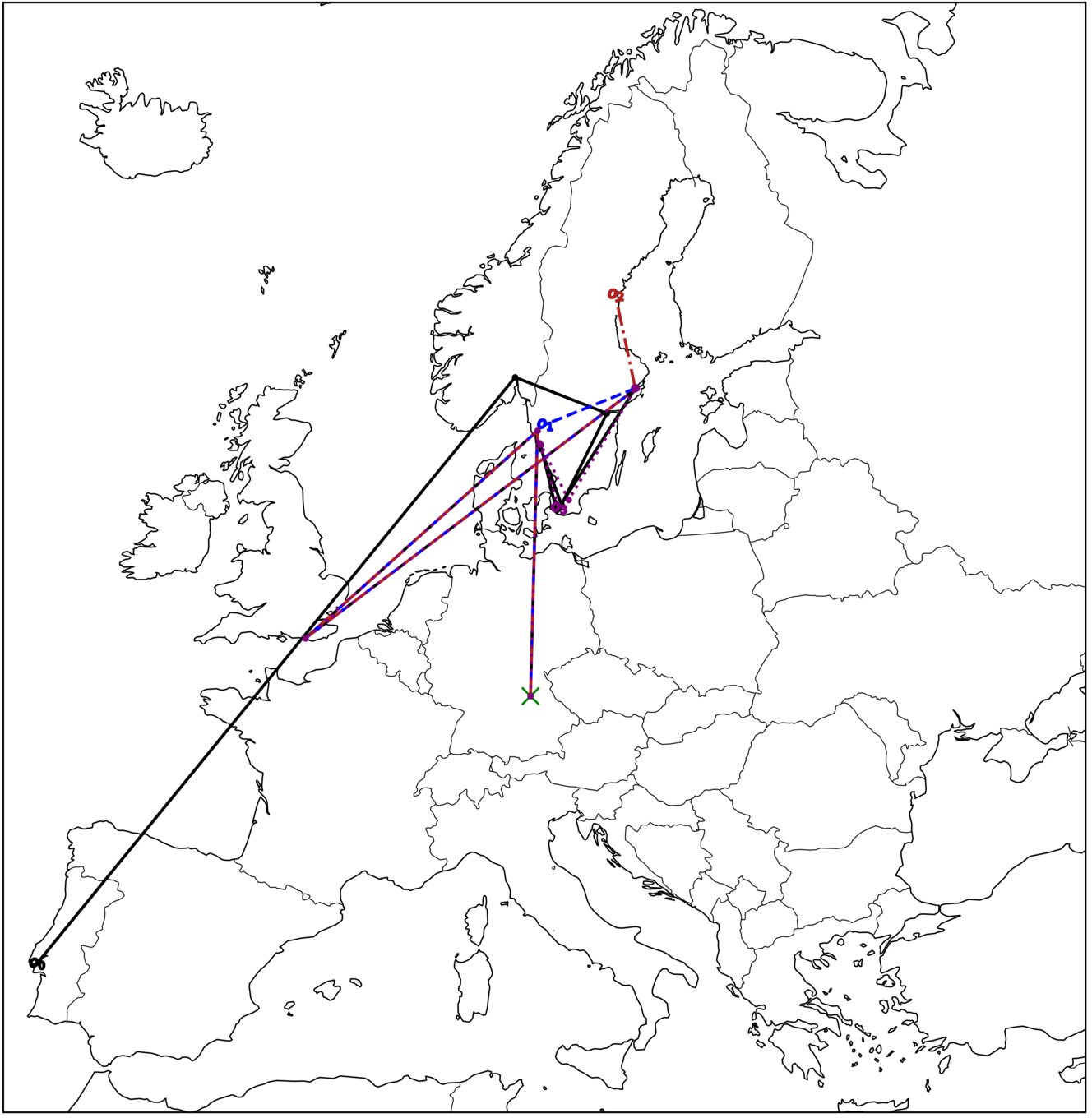
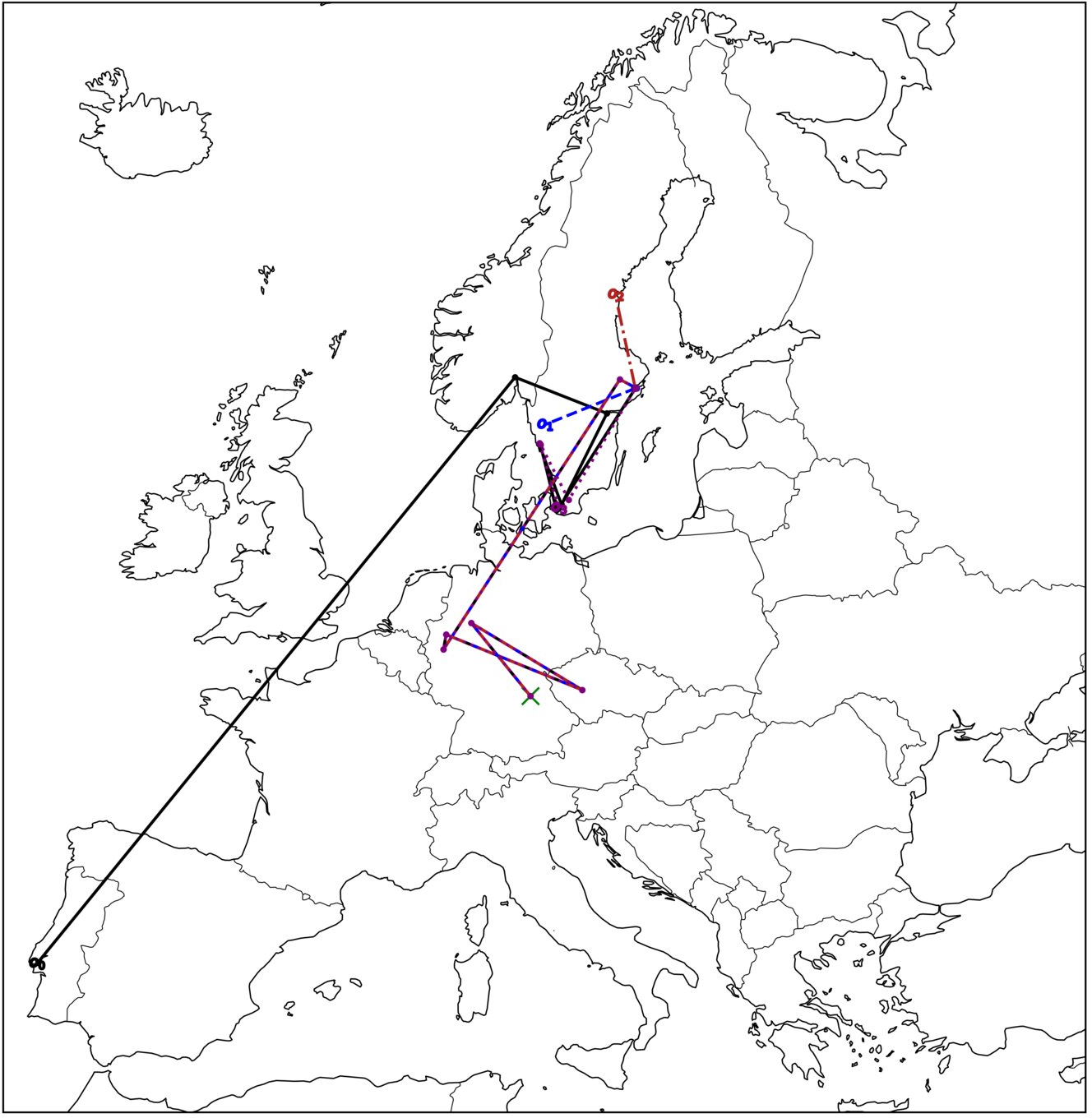
Figure 4: Typical infection paths in empirical and synthetic networks for each regime highlight structural differences, e.g., rapid cross-continental jumps in explosive growth, vs. local, spatial spider-web paths in polynomial/geometric regimes.
Implications, Limitations, and Future Directions
From both theoretical and practical perspectives, the paper's major implications are:
- Epidemic wave heterogeneity: Oscillation between growth classes across different pandemic waves for a fixed network and disease can be explained via modest shifts in behavioral/contact patterns (μ9) or mobility (long-range ties, ν0 penalty). This challenges the adequacy of classical mean-field or branching models lacking explicit degree/spatial penalization.
- Forecasting and intervention strategy design: The efficacy of interventions (e.g., limiting large gatherings vs. travel bans) fundamentally depends on the present universality class. For instance, restricting long-range mobility is critical for controlling polynomial/geometric regimes, while targeting hubs is essential in the explosive regime.
- Theoretical generality: The universality class structure is shown to be robust: non-spatial scale-free graphs support only explosive/exponential classes, while geometry is required for quasi-exponential and polynomial regimes. Generalizations to other agent-based or compartmental models (SIR/SIS) are indicated but not analyzed here.
- Limitations: The SI setting captures only early growth; additional modeling is needed to describe multiscale saturation, recurrent infections, or recovery/removal processes.
Conclusion
This work synthesizes empirical, simulation-based, and rigorous probabilistic analysis to reveal how local degree- and distance-dependent contact heterogeneity determines the macroscopic universality class of epidemic growth on spatial complex networks. The parameter-driven transitions between explosive, (quasi-)exponential, polynomial, and geometric regimes unify a range of observed pandemic dynamical phenomena within a single tractable model, offering a foundation for both mechanistic epidemiological theory and context-sensitive intervention design.

