- The paper introduces the Alter-Art paradigm where artists embody a teleoperated, semi-humanoid robot to create art, redefining creative agency.
- The methodology integrates compliant actuation, adaptive grasping, and immersive VR-haptic feedback to enable expressive performance in dance, theater, and painting.
- Findings reveal that robotic embodiment fosters innovative creative processes and democratizes art creation by expanding human-robot synergy.
Alter-Art: Embodied Artistic Creation Through the Robot Avatar Paradigm
Introduction
"Alter-Art: Exploring Embodied Artistic Creation through a Robot Avatar" (2604.26473) introduces the Alter-Art paradigm, wherein artists transcend conventional roles of observer or controller to inhabit a robotic avatar, creating art physically via embodiment rather than abstracted control. The research leverages the Alter-Ego semi-humanoid robot—a compliant, teleoperated platform—to facilitate immersive, embodied artistic experiences across distinct domains: dance, theater, and painting. Unlike classical approaches where robots are tools, co-creators, or autonomous agents, Alter-Art centralizes the artist’s subjective experience of embodiment and agency within the robotic body, establishing a novel, first-person mode of creative expression situated in the physical world. The explorations systematically address the technical, phenomenological, and creative consequences of this artistic embodiment.
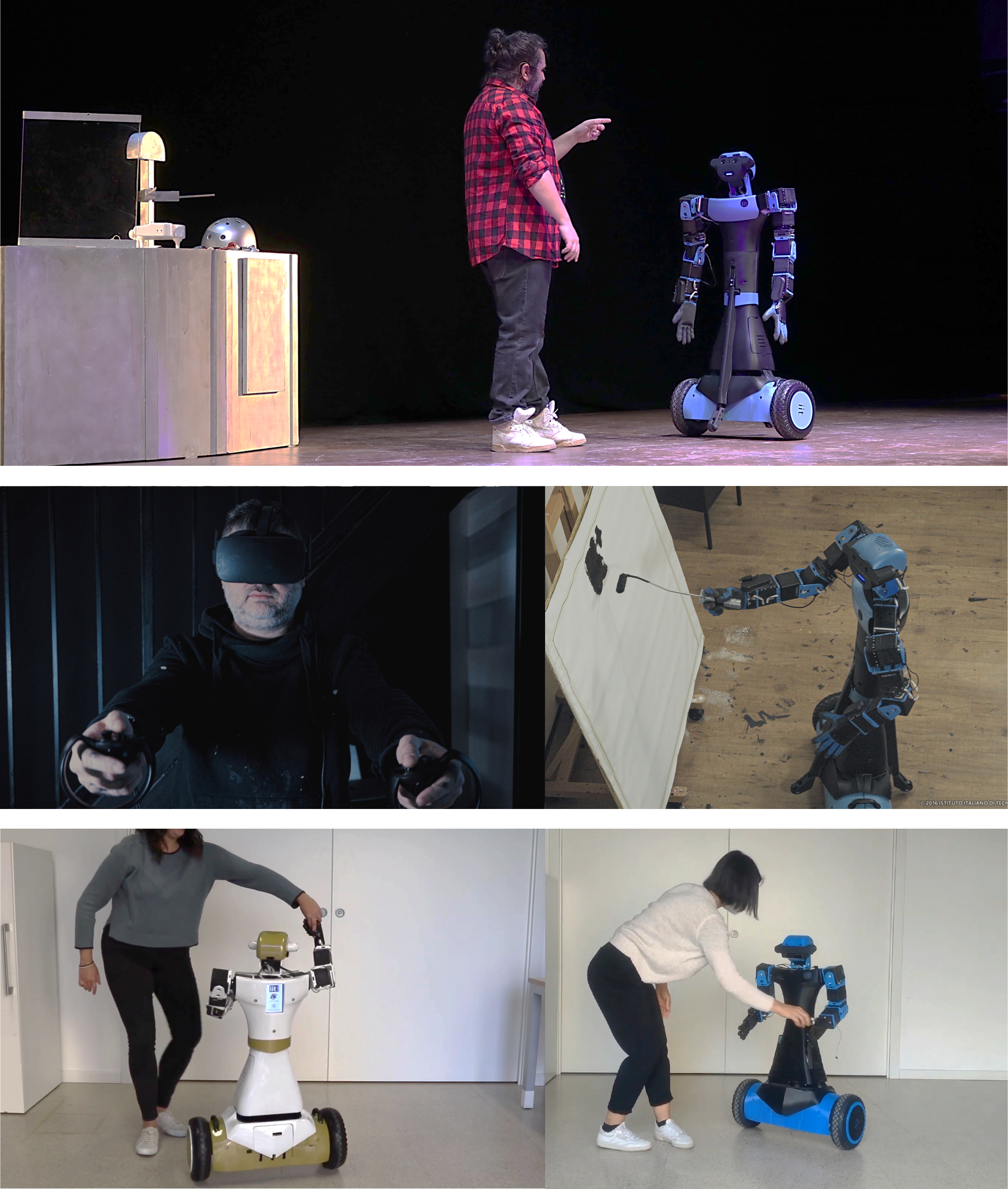
Figure 1: Representative scenarios of robot-embodied artistic creation in dance, theater, and painting.
The Alter-Ego platform is a two-wheeled, semi-humanoid robotic avatar engineered for safe and robust physical interaction. Key technical features include:
- Compliant arms with Variable Stiffness Actuators (VSA) capable of both soft and stiff dynamics
- Anthropomorphic soft hands supporting adaptive grasping and haptic interaction
- An expressive RGB-LED facial subsystem enabling emotional signaling
- An immersive teleoperation interface with onboard stereo-vision, haptic gloves, and VR rendering for first-person perspective
- Modular control architecture supporting shared autonomy and full-body teleoperation
The platform’s design emphasizes enabling the artist’s sense of embodiment, integrating low-latency control feedback, first-person viewpoint, and adaptable manipulation. The combination of compliant actuation and anthropomorphic morphology aligns with the requirements for artistic creation, supporting nuanced motor control, direct physical interaction, and expressive gestures essential in the arts.
Artistic Embodiment: Dance, Theater, and Painting
Dance: Co-Embodied Improvisation
The platform enables real-time physical co-performance between human and robot. The teleoperation interface directly maps the dancer’s intent and upper-body kinematics to the robot’s motions, supporting role fluidity between leader and follower, and enabling continuous embodied improvisation. Professional dancers report rapid acquisition of interactive synergy and absence of technological friction, emphasizing the emergence of genuine co-presence and physical dialog in improvisational scenarios.
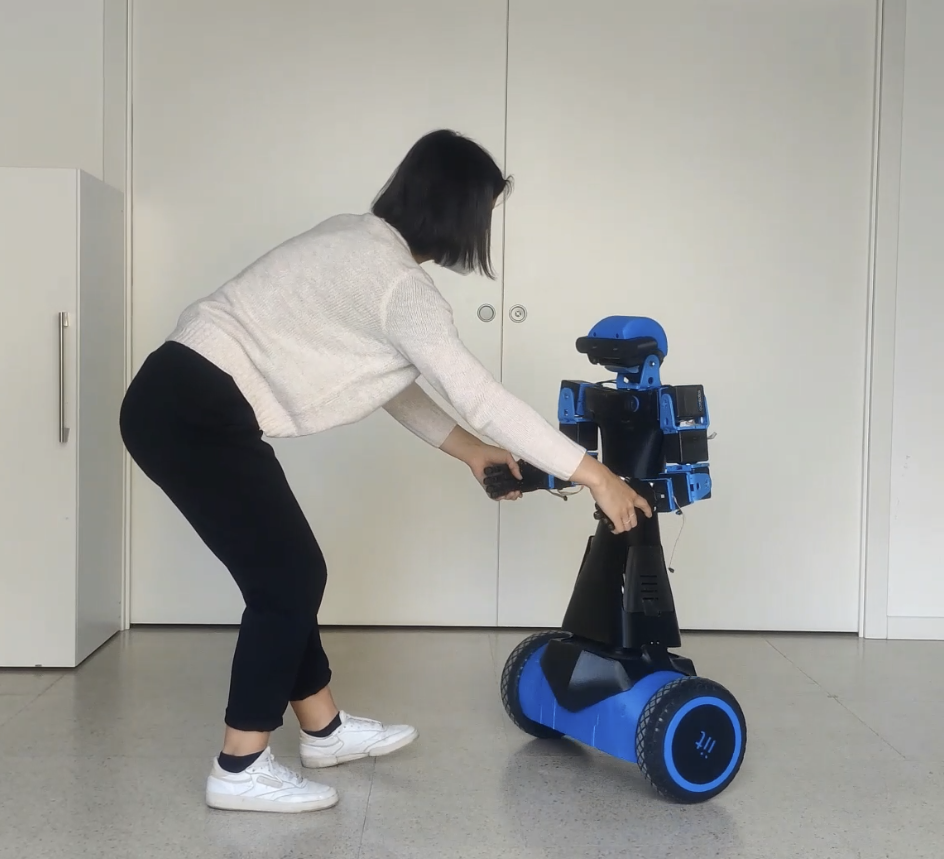
Figure 2: The Alter-Ego robot co-dancing with a human partner—demonstrating physical synergy and improvisational engagement.
Theater: The Robotic Mask as Expressive Medium
In theater, teleoperation of Alter-Ego allows actors to animate the robot as a performative mask—a rich, embodied medium for narrative, affect, and character presentation. The actor leverages the expressive face, anthropomorphic hands, and full-body control to integrate robotic constraints into the aesthetic lexicon, exploring alternative performative identities inaccessible to the biological body. Qualitative interviews highlight the seamless adaptation of emotional and gestural language, and the emergence of new creative affordances rooted in the robotic form.
Painting: Instinct, Constraint, and Artistic Agency
The collaborative Human + Robot Painting project leverages the system’s compliant workspace, adaptive grasping, and VR-haptic feedback to support direct teleoperation of painting tasks. Professional artists discover the robot as a medium that paradoxically amplifies instinctive, childlike creativity—its mechanical constraints challenge ingrained technique and stimulate spontaneous mark-making. Embodiment enables adaptive intent: the artist negotiates technical limitations by incorporating them into the creative process, resulting in stylistic innovation and expanded expressive range.
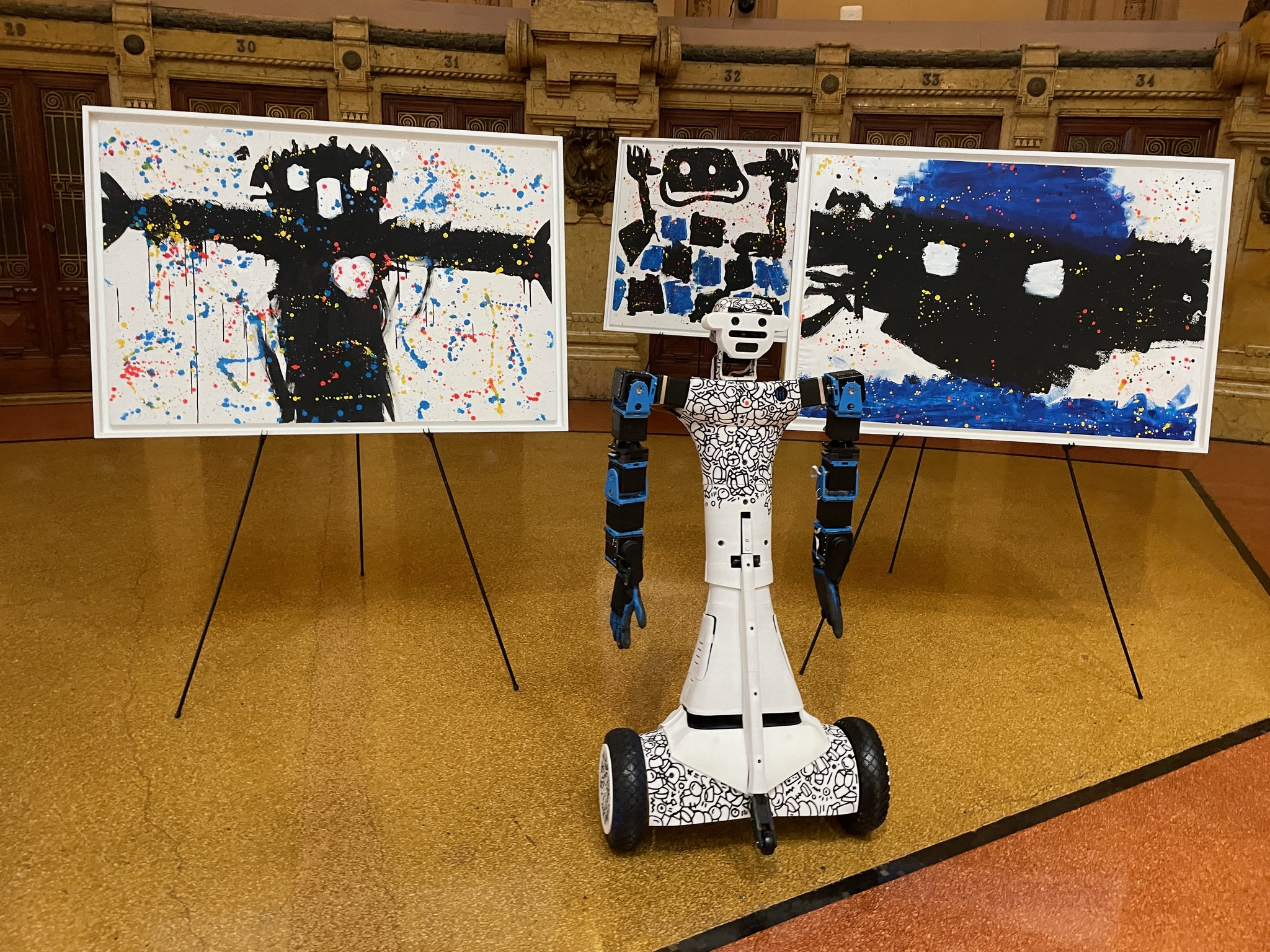
Figure 3: Presentation of the Human + Robot Painting project, demonstrating physical co-creation and teleoperated embodied agency.
Embodiment, Agency, and Artistic Identity
Across all domains, artists consistently report rapid and natural development of a sense of agency and self-location within the robotic body, consistent with the sense of embodiment (SoE) framework. Subjective accounts indicate the emergence of identification with the robot—embodiment is sufficiently strong to support fluid, spontaneous, and expressive action despite significant morphological and mechanical differences from the biological source. Importantly, high-fidelity replication of human morphology is not strictly necessary for meaningful creative embodiment; instead, the salient factors are immediacy of control, immersive first-person feedback, and physical interaction capabilities supporting agency and creative identity.
Implications for Human–Robot Interaction and AI-Driven Art
The introduction of the Alter-Art paradigm represents a substantial expansion of the design space in social robotics and creative HRI. Key implications include:
- Redefinition of Telepresence: The study shifts focus from technical task execution toward the experiential and expressive aspects of robotic embodiment, establishing novel forms of telepresence that directly mediate artistic agency and identity.
- Creative Human–Robot Synergy: Embodied avatars open new creative affordances via the integration of physical constraints into artistic process, offering unique stylistic possibilities beyond both traditional human and machine-created art.
- Accessibility and Inclusion: The paradigm holds potential for democratizing artistic creation by enabling individuals (potentially those with physical disabilities) to access new creative modalities through alternative embodied forms.
- Design Principles: Findings support design principles prioritizing compliance, multimodal feedback, and expressive morphology over strict anthropomorphism or fidelity, optimizing for the subjective sense of presence and agency in creative contexts.
- Theoretical Implications: The work disrupts classic boundaries of creator/tool paradigms, prompting new definitions of distributed authorship and corporeal identity in technologically mediated art.
Limitations and Prospective Research Directions
The current study is exploratory, with qualitative focus and domain-specific case studies. Systematic quantitative assessment of embodiment, larger participant cohorts, and comparative evaluation across morphological variants remain needed. The expansion of the paradigm to users with different physical abilities, integration with generative AI for cooperative creativity, and exploration of long-term creative adaptation constitute compelling directions for future research.
Conclusion
Alter-Art articulates and empirically demonstrates that robot embodiment, via platforms like Alter-Ego, supports immersive, first-person creative agency across dance, theater, and painting. The robot is not merely an instrument but a mediating body, reshaping creative identity and process. Embodiment is domain-adaptive, shaped by robotic constraints and expressive affordances, and is sufficient to enable new forms of artistic experience and language. These findings contribute a theoretical and practical foundation for embodied creativity in HRI, with implications for accessible, distributed, and technologically mediated art.