- The paper presents a novel sixth-order, triple-coupled transformer tank that enables robust third-harmonic expansion for mmWave VCOs.
- It employs a noise circulating active core to minimize power consumption and phase noise, while maintaining high Q and area efficiency.
- Simulations demonstrate a 21–24 GHz tuning range with phase noise as low as –116.25 dBc/Hz, confirming robust performance across PVT variations.
Introduction
The paper "A 21–24 GHz Low-Phase-Noise mmWave VCO with Third-Harmonic Expansion using a Triple-Coupled Transformer based Tank" (2604.26405) advances the state-of-the-art in mmWave VCO design by systematically extending the multi-resonant tank paradigm. It presents a comprehensive closed-form analysis and practical realization of a sixth-order, triple-coupled transformer (XFMR) tank, which enables robust third-harmonic expansion and low phase noise (PN) operation in the 21–24 GHz range. The work exploits three inherent differential-mode (DM) resonance modes, aligns higher-order modes near the third harmonic, and obviates the need for parasitic-laden low-Q switched-capacitor arrays (SCAs) typically required in conventional architectures. This is compounded with the application of a noise circulating (NC) active core, avoiding complex head resonators, thereby minimizing both power and area.
Harmonic-Rich Shaping Evolution and Design Tradeoffs
High-performance mmWave VCOs are increasingly reliant on harmonic-rich (HR) shaping especially in CMOS, where resonator impedance maximization and noise up-conversion suppression critically impact spectral purity and phase noise. Traditional fourth-order tanks achieve multi-mode resonance but necessitate additional tuning elements—SCAs or separate inductors—for harmonic alignment, which degrades tank Q at mmWave frequencies due to elevated parasitics and area overhead. Transformer-based tanks alleviate some of these constraints but previously required manual harmonic tuning and often integrated head or tail resonators to maintain harmonic relationships.
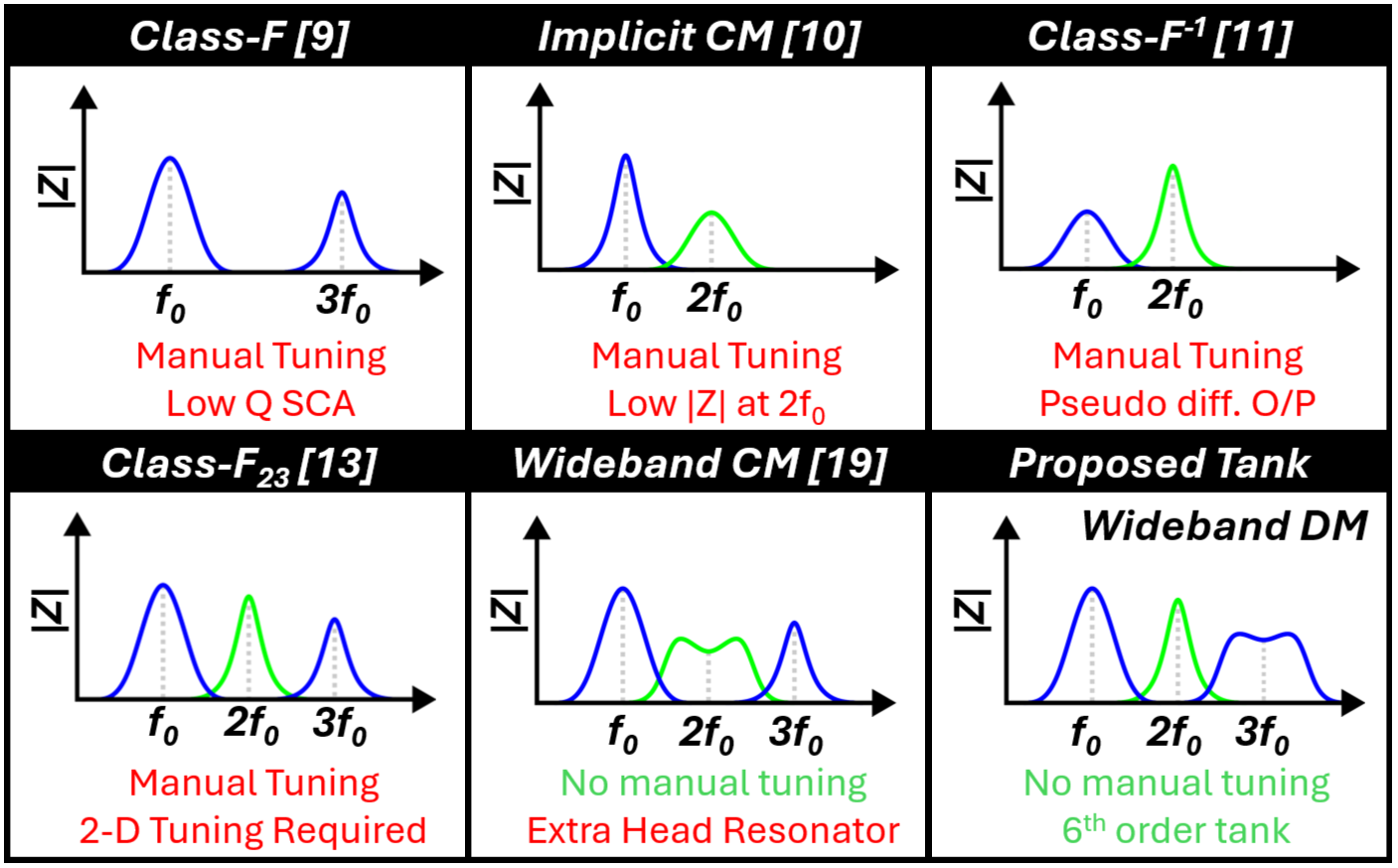
Figure 1: Comparison of recent harmonic-rich-shaping VCO Techniques.
Conventional approaches such as class-F/class-F−1 oscillators and their F23 variants utilize explicit DM/CM tuning but remain bottlenecked by explicit harmonic tuners. In contrast, the proposed sixth-order tank, realized with a triple-coupled transformer, intrinsically yields three well-controlled DM resonance modes. The more compact coupling model suppresses the necessity for extraneous low-Q tuning circuits, maximizing Q and area efficiency. The design further leverages the NC core strategy, which distinctly reduces device noise injection into the resonance modes (compared to flicker noise suppression via dual or head resonators).
The proposed topology employs a triple-coupled LC network, offering three physically distinct differential resonance frequencies. The design replaces manually tuned resonators with intrinsic modal alignment made possible via mutual inductor coupling, whose frequency response is analyzed using cubic characteristic equations derived from network input impedance.
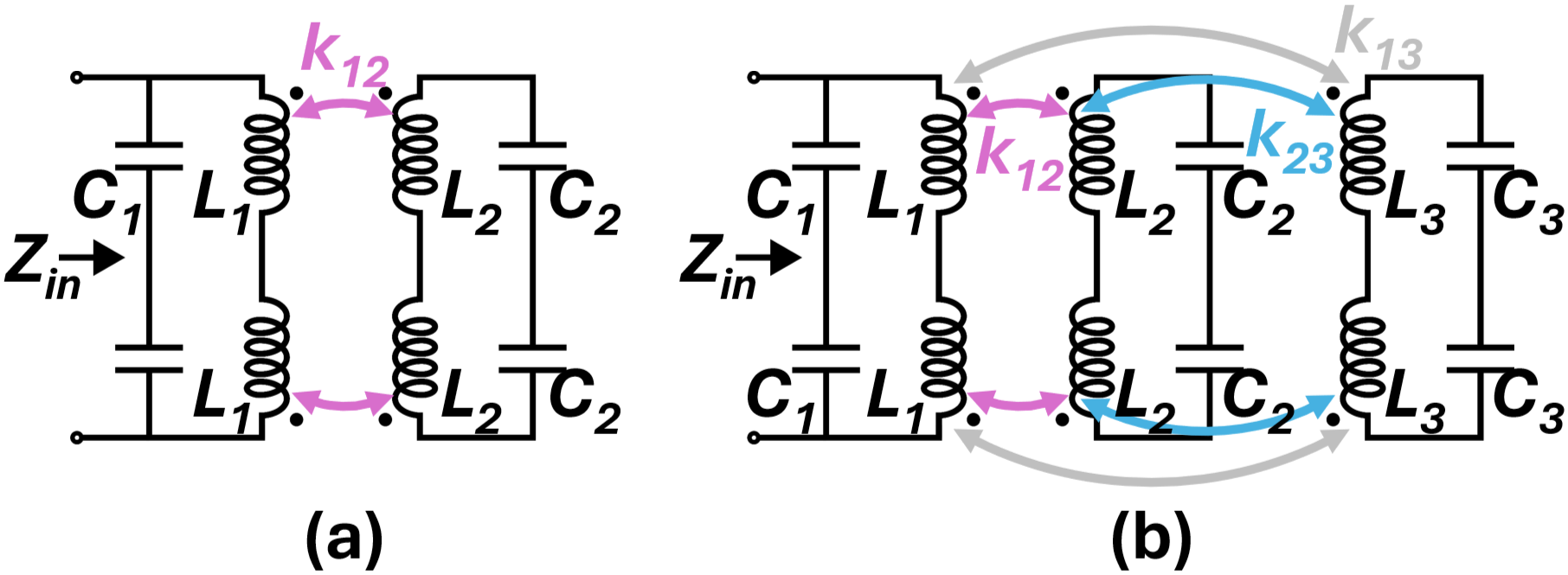
Figure 2: (a) Conventional fourth-order XFMR tank and (b) proposed sixth-order triple-coupled XFMR tank.
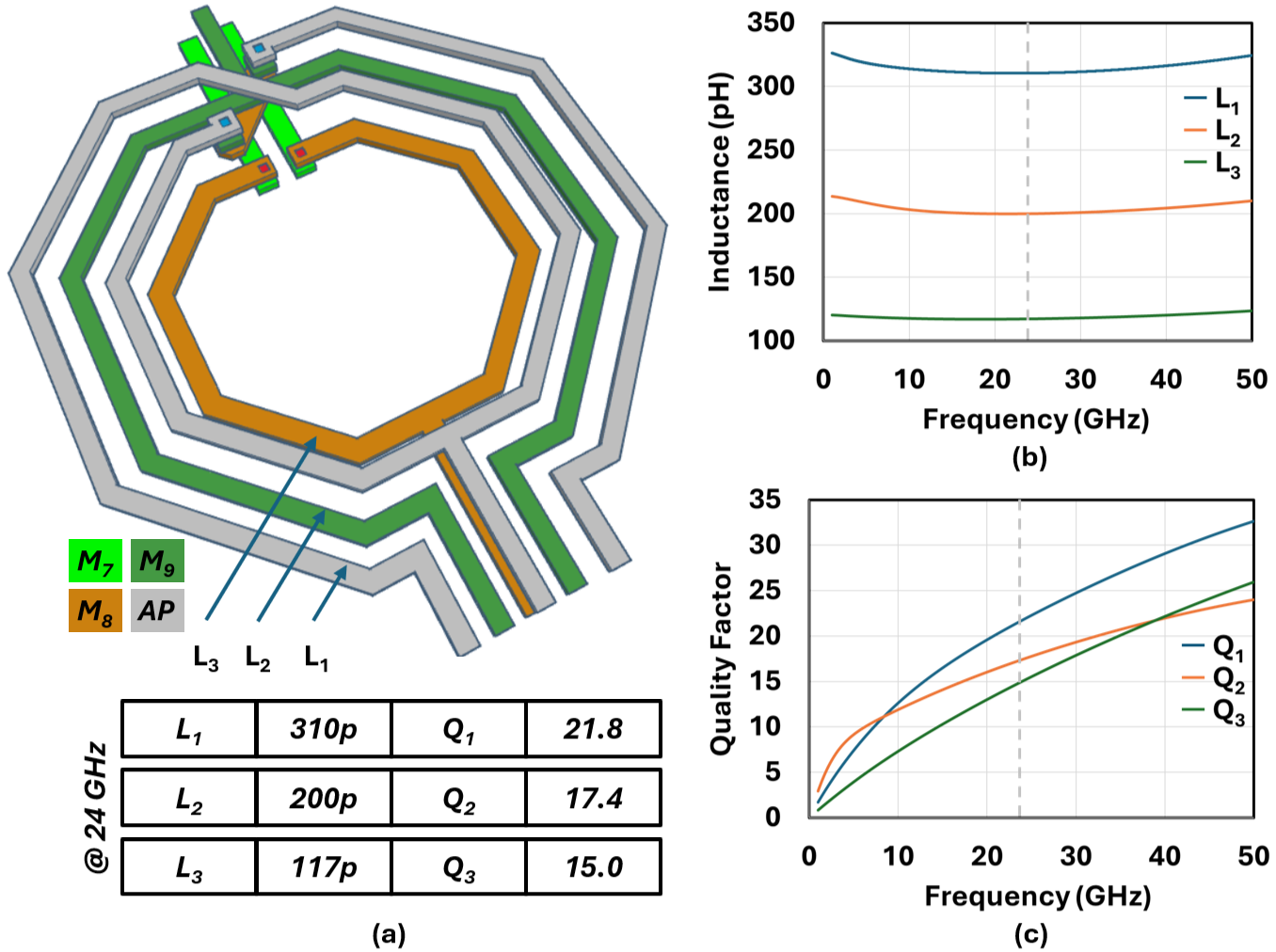
Figure 3: (a) Transformer layout and Cadence EMX simulation results—(b) Inductance and (c) Quality Factor.
The resulting eigenmodes are modulated by coupling factors k12, k13, and k23, coupling coefficients of the transformer network. The tank design is engineered such that the higher-order resonance frequencies cluster symmetrically around 3f0 (third harmonic of f0), as demonstrated through explicit frequency ratio variation analysis.
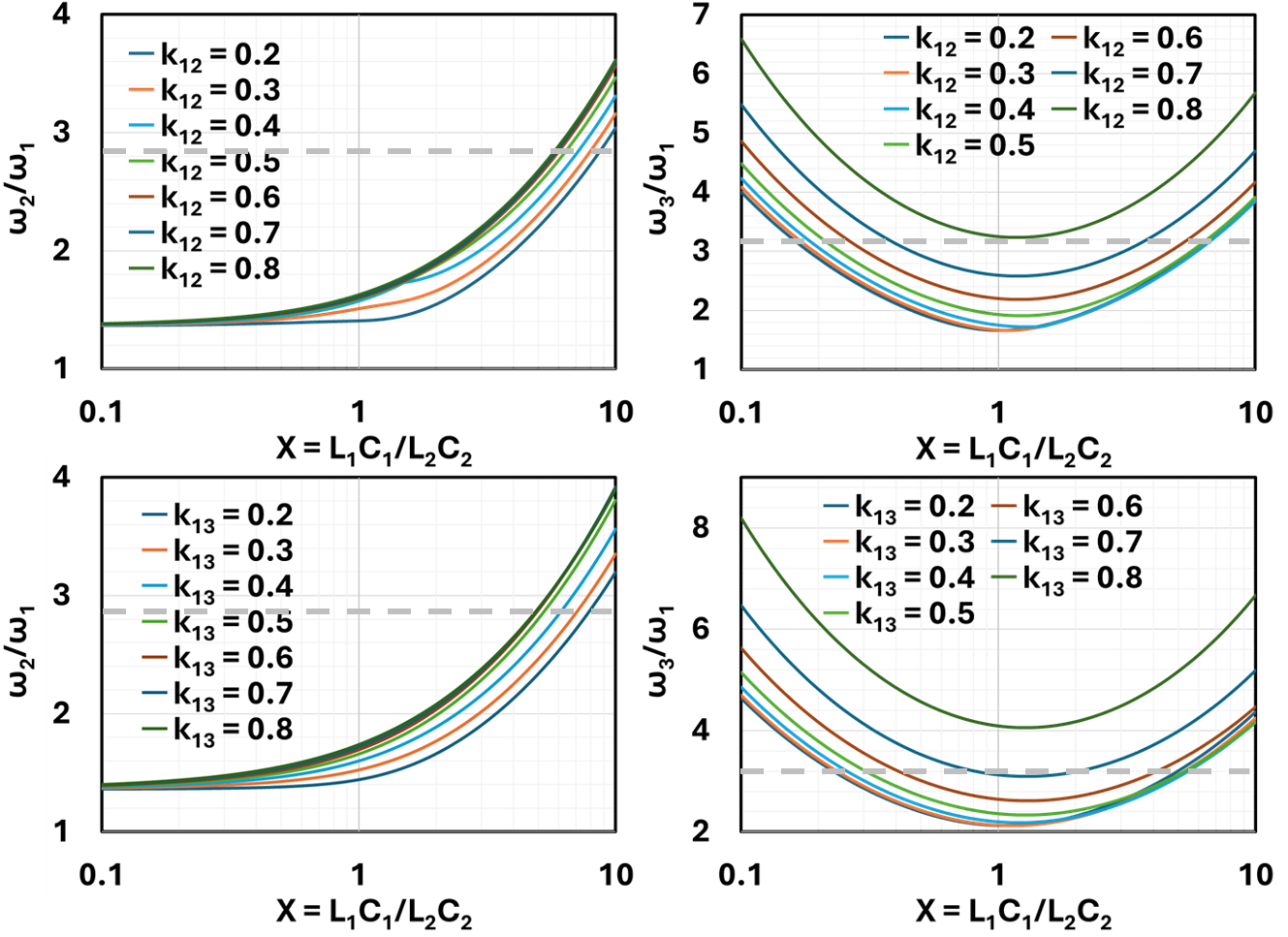
Figure 4: Variation of frequency ratios with (a)-(b) k12 demonstrates tunability of modal separation by transformer design.
Empirically, the third-harmonic expansion is most robust for moderate k23, ensuring practical coupling yet separation between the modes. This modal control maintains high Q across the tuning range (TR) with undesirable non-physical (NaN) solutions—produced in prior closed-forms—eliminated via careful sign convention in the cubic root solution.
VCO Topology, Physical Realization, and Circuit Techniques
The VCO integrates the sixth-order tank with a noise circulating (NC) core, implemented in TSMC 65 nm CMOS. NC topology is deployed for wideband, area- and power-efficient phase noise reduction, as it channels noise away from the tank via carefully synchronized switching in the cross-coupled transistors, effectively filtering both flicker and thermal noise without extra inductor-based head or tail resonators.
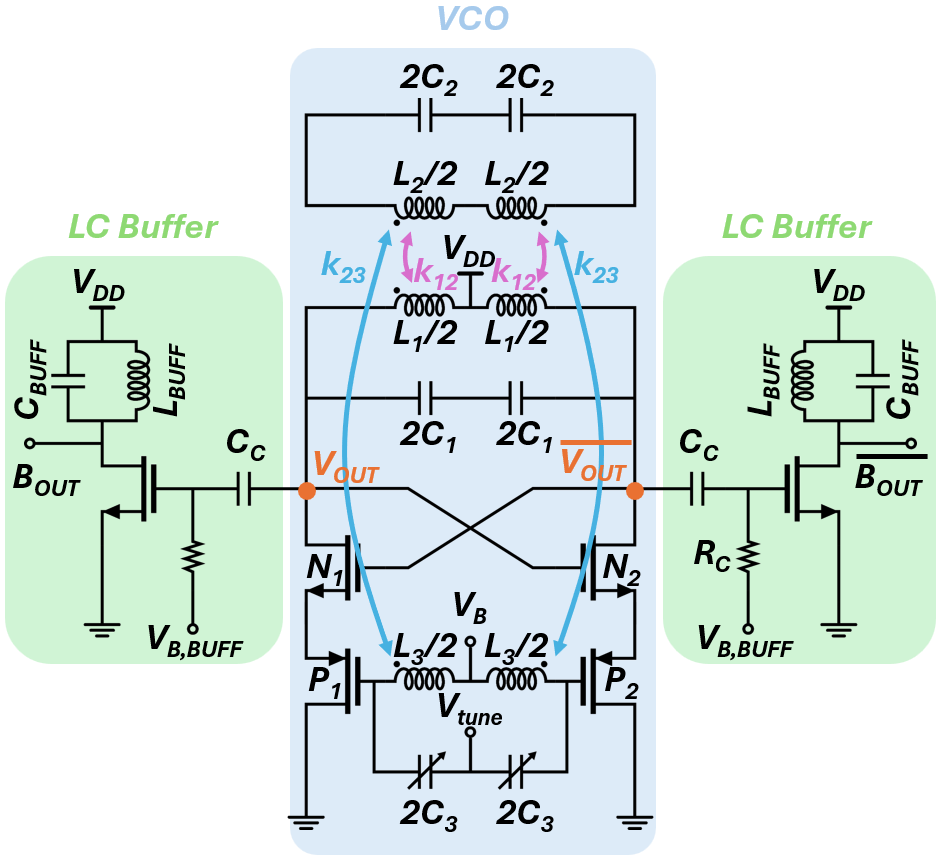
Figure 5: Proposed topology with noise circulation and sixth-order triple-coupled XFMR tank.
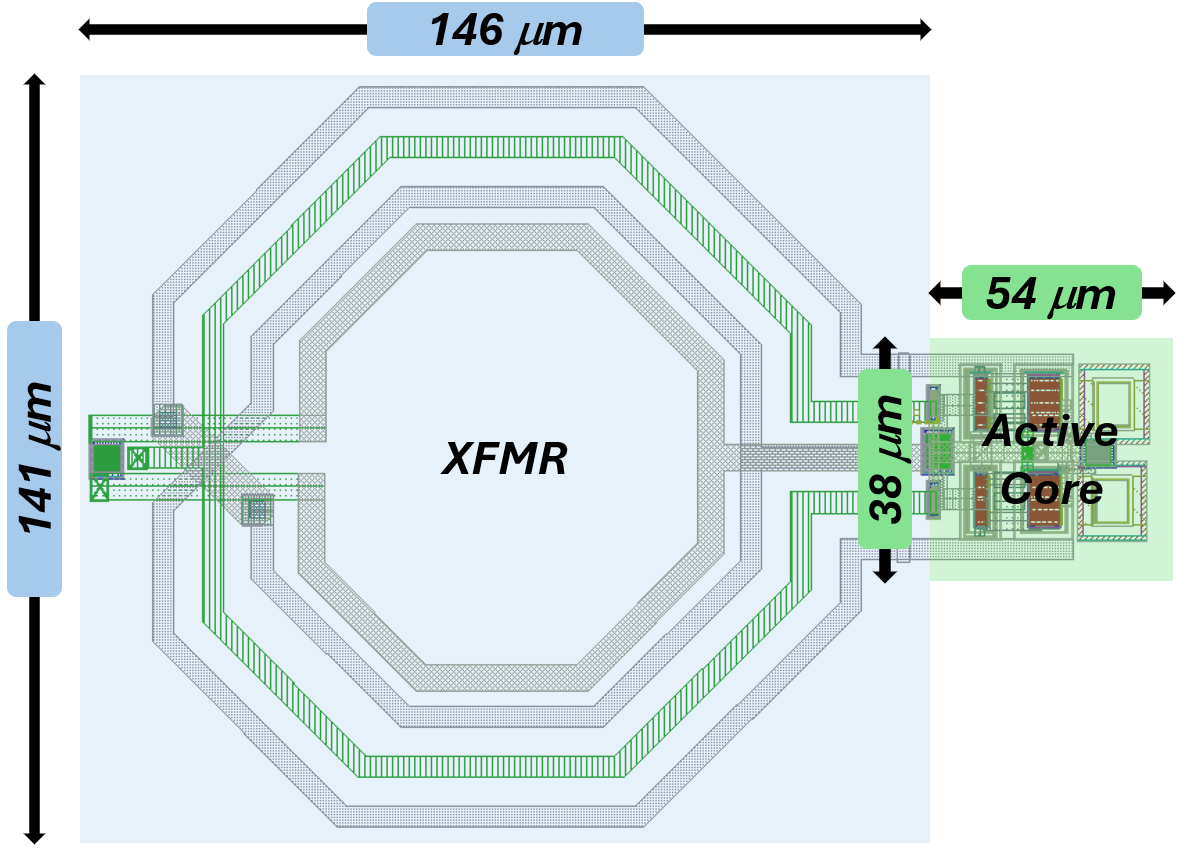
Figure 6: Layout of the proposed triple-coupled XFMR tank based VCO.
The core VCO, including the varactors, occupies only 0.02268 mm². The tank configuration is EM-modeled (Cadence EMX), while the active core runs from a 0.9 V supply at 5.4 mW. The topology achieves robustness to process-voltage-temperature (PVT) variation, with frequency and PN shifts below 0.88 GHz and 5 dB, respectively, across typical-corner sweeps.
Post-layout SpectreRF simulations show that the VCO achieves a 21.03–23.99 GHz tuning range (13.5%), with a minimum phase noise of –116.25 dBc/Hz at 1 MHz offset, and maintains phase noise below –114.14 dBc/Hz across the entire TR. Spectral analysis confirms strong higher-order harmonics in the steady-state waveform, attesting to the efficacy of the third-harmonic expansion realized via modal alignment.
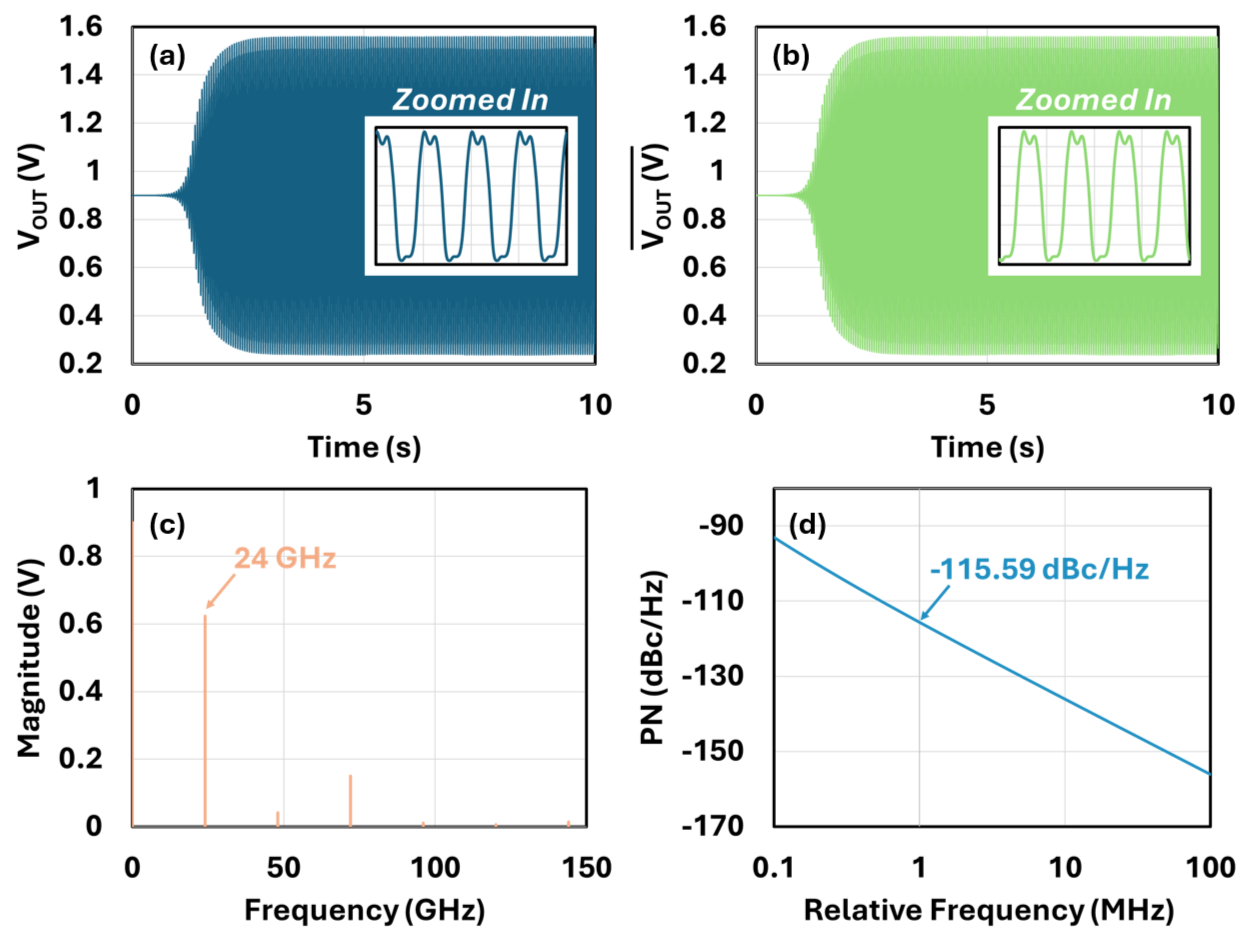
Figure 7: Transient waveforms (Vout, 230), output spectrum, and PN profile show harmonic content and noise profile.
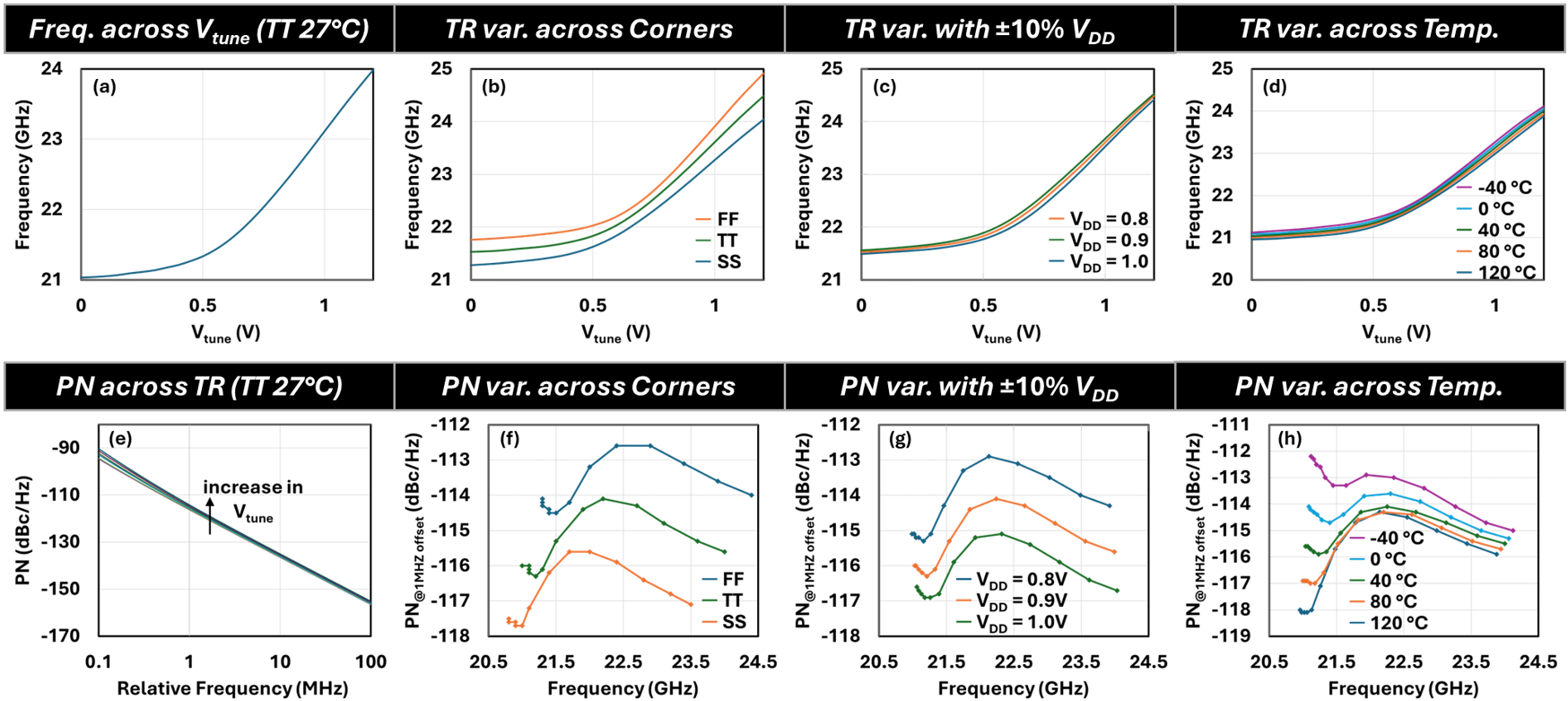
Figure 8: Post-layout simulation summarizes TR and PN versus 231, corner, supply, and temperature.
Benchmarking against recent mmWave VCOs, the proposed design demonstrates superior or comparable PN with notably lower area and power, achieving a peak FoM/FoMA of 195.86/212.31 dBc/Hz. These metrics persist across PVT, confirming the reliability of the modal engineering and noise reduction techniques.
Implications and Future Directions
This work establishes that sixth-order tanks, when coupled with a noise-circulating core, can match and surpass the PN performance of wider, more complex harmonic-shaping VCOs without burdensome area or power cost. From a theoretical perspective, the closed-form DM modal analysis resolves ambiguities in earlier literature, providing a sound mathematical foundation for further modal manipulation and optimization in mmWave CMOS oscillators.
Practically, this enables more compact, robust, and low-noise frequency sources for integrated mmWave radar, wireless, and communication front-ends, potentially extending to 5G/6G and automotive domains. Future development could see automated synthesis of arbitrary multi-mode resonance tanks, monolithic integration for multi-band operation, or systematic co-optimization with digital phase-locked loop architectures.
Conclusion
A sixth-order triple-coupled XFMR tank, precisely analyzed and implemented with an NC core, achieves wideband third-harmonic expansion and robust low phase-noise operation at mmWave, with minimal area and power consumption. This methodology provides a significant advancement over conventional dual-resonator or explicit harmonic tuning schemes, as evidenced by leading FoM/FoMA metrics and consistent PVT-tolerant operation (2604.26405).

