- The paper integrates semantic object-structure relations into graph-based SLAM to effectively disambiguate symmetric indoor environments.
- The proposed multi-stage pipeline employs semantic filtering to prune inconsistent candidate matches, significantly improving computational efficiency.
- Experimental results demonstrate high precision (>0.95) in object detection and robust early localization even in complex, symmetric layouts.
Semantic-Enriched Graph Matching for Robust SLAM in Structured Indoor Environments
Introduction and Motivation
The paper "Robust Graph Matching through Semantic Relationship Generation for SLAM" (2604.25404) addresses the longstanding ambiguity in graph-based SLAM for structured indoor environments, especially in the presence of structural symmetries and repeated geometric arrangements. While traditional scene graph representations provide a unified abstraction of local observations and prior architectural maps, these approaches are often rendered ineffective by structurally indistinguishable segments in the environment. The central contribution of this work is the explicit integration of semantic object-structure relations into graph representations, which fundamentally enhances the discriminativity and computational tractability of the graph matching process.
Semantic-Enriched Graph Construction
The framework operates on two principal abstractions: the online-constructed S-Graph, generated from robotic RGB-D sensory data via SLAM, and the architectural A-Graph, extracted from Building Information Modeling (BIM). Both representations are augmented with object nodes and their semantic relationships to structural graph elements.
Detected objects—such as doors and windows—are localized using a robust ellipsoidal abstraction derived from semantically segmented point clouds. Two key relational templates are instantiated:
- Objects in Rooms: Assigns object nodes to room nodes when a visibility-centric test confirms spatial containment.
- Objects on Wall Planes: Associates objects with adjacent wall-plane nodes when proximity falls below a calibrated threshold.
These added semantic object-structure relations are designed to persist across both the observed and prior map graphs, thereby embedding unique signature patterns that distinguish otherwise symmetric structures.
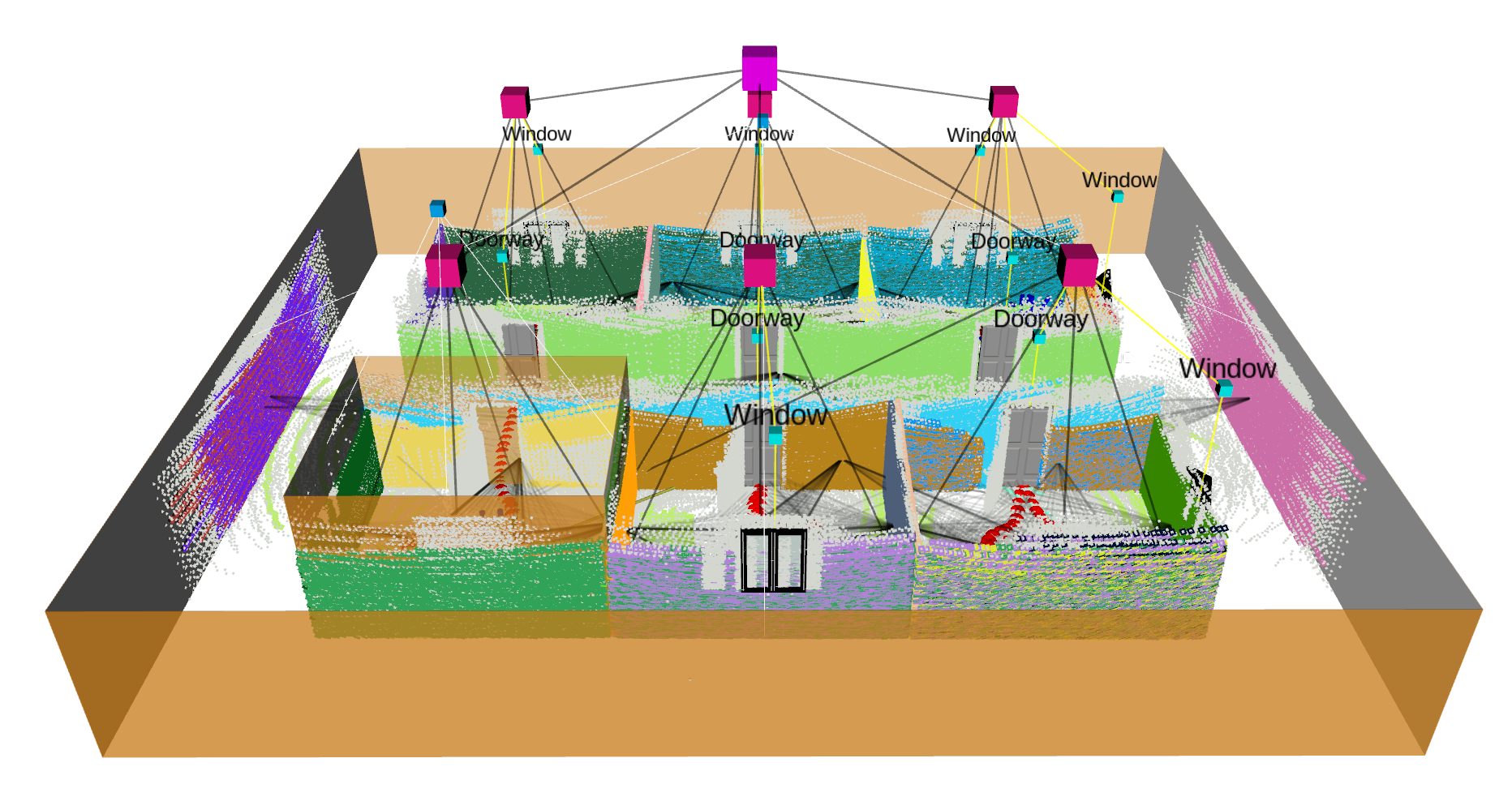
Figure 1: Semantic-enriched scene graph showing detected objects (e.g., windows, doorways) and their relations to structural elements within the environment.
Semantic-Enhanced Graph Matching Pipeline
The system introduces a multi-stage graph matching pipeline. Candidate correspondences between A-Graph and S-Graph nodes are enumerated based on categorical compatibility. Before entering geometric verification, a semantic filtering stage is deployed, leveraging the newly minted object-structure relationships. Candidates inconsistent with the semantic content—such as mismatched object categories or counts—are preemptively pruned from further consideration, drastically curtailing the correspondence search space.
The geometric matching then proceeds hierarchically. First, topological matches are considered at the room level, with geometric and topological constraints propagating through room and wall-plane pairings. In symmetric environments, where structural cues alone produce ambiguous correspondences, semantic filtering is the critical step allowing early disambiguation and unique match selection.
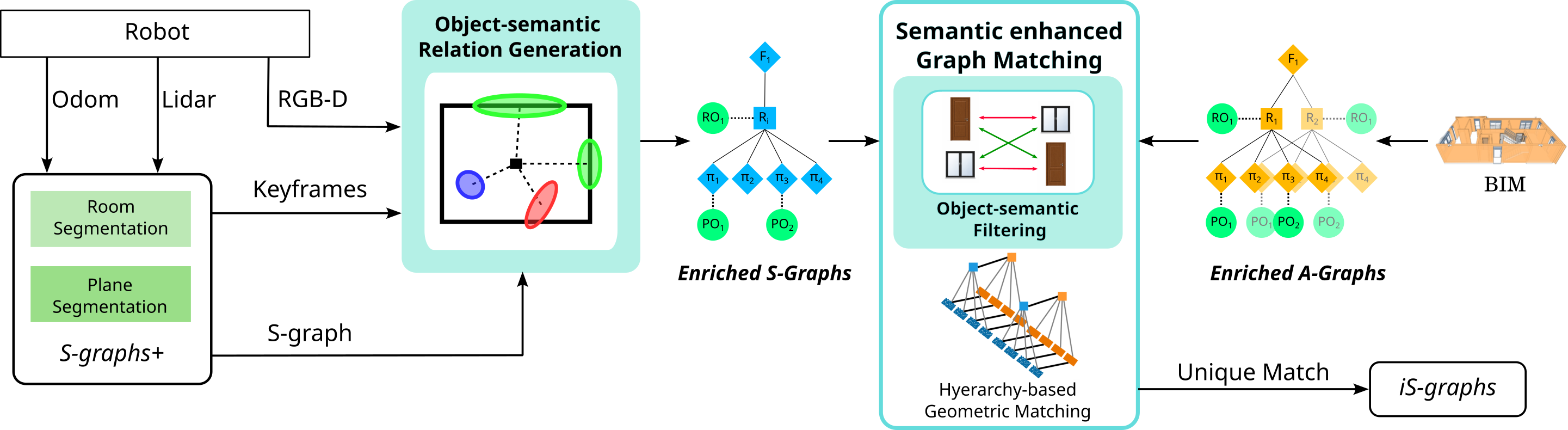
Figure 2: Overview of the proposed semantic-enhanced graph matching framework.
Experimental Analysis
Synthetic Layouts and Symmetry Disambiguation
To rigorously benchmark the system's disambiguation performance, extensive experiments were conducted on synthetic environments featuring varying degrees and types of symmetry—ranging from unambiguous layouts to highly symmetric, repeated local and global structures.
Without object nodes, geometric-based approaches produce multiple candidate matches or complete matching failure in symmetric topologies. The introduction of semantic object relations reliably yields unique matching results with substantially fewer rooms observed—even in globally symmetric layouts—demonstrating a sharp drop in candidate ambiguity. Additionally, an object density threshold of roughly 20% is identified as sufficient to ensure disambiguation across most scenarios.
Computation time similarly benefits from semantic filtering; candidate set pruning results in monotonic improvements in both time and memory footprint as object node ratios increase.
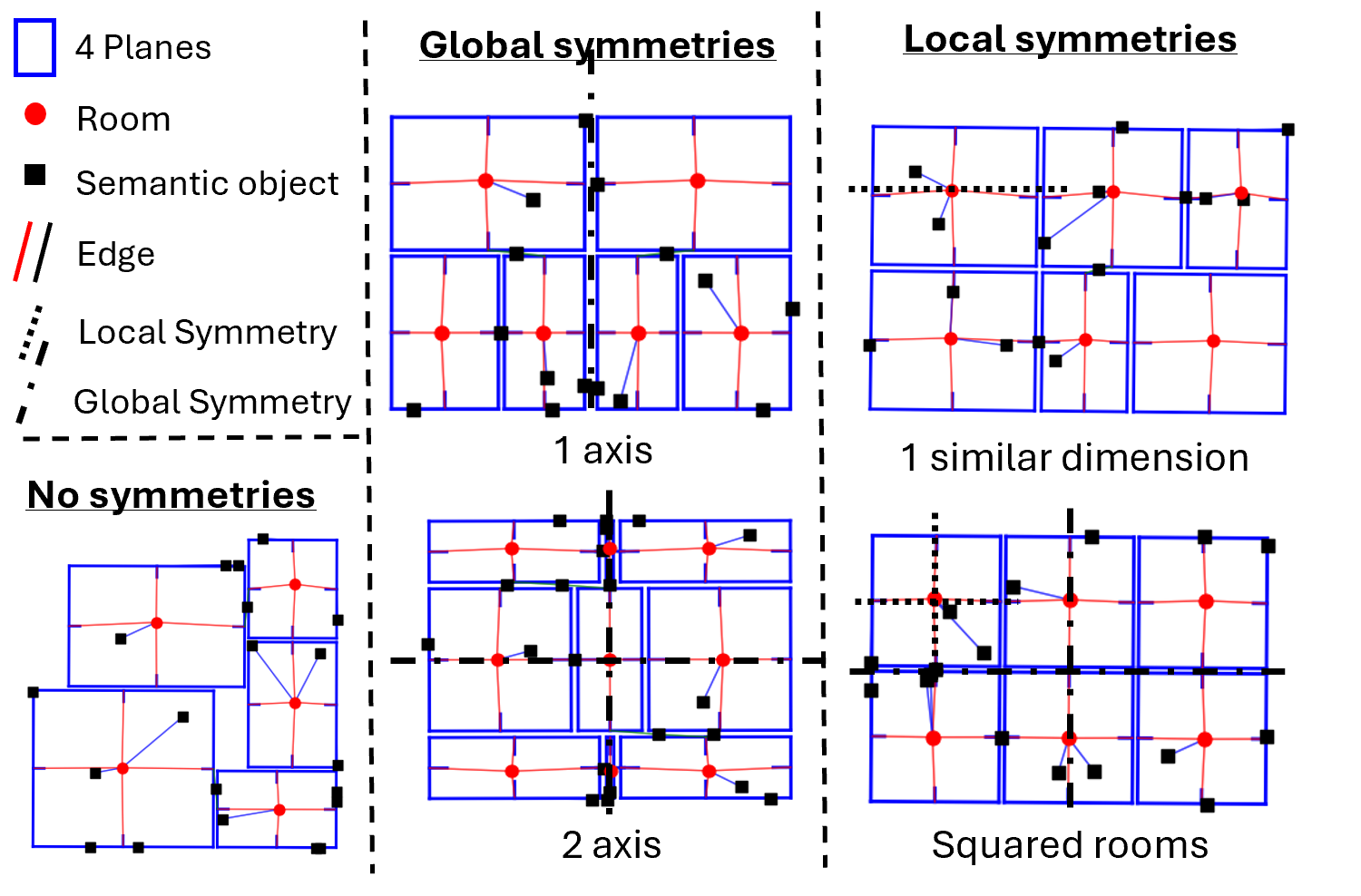
Figure 3: Samples of simulated layouts with rectangular rooms, in increasing matching complexity from unambiguous to global and local symmetries.
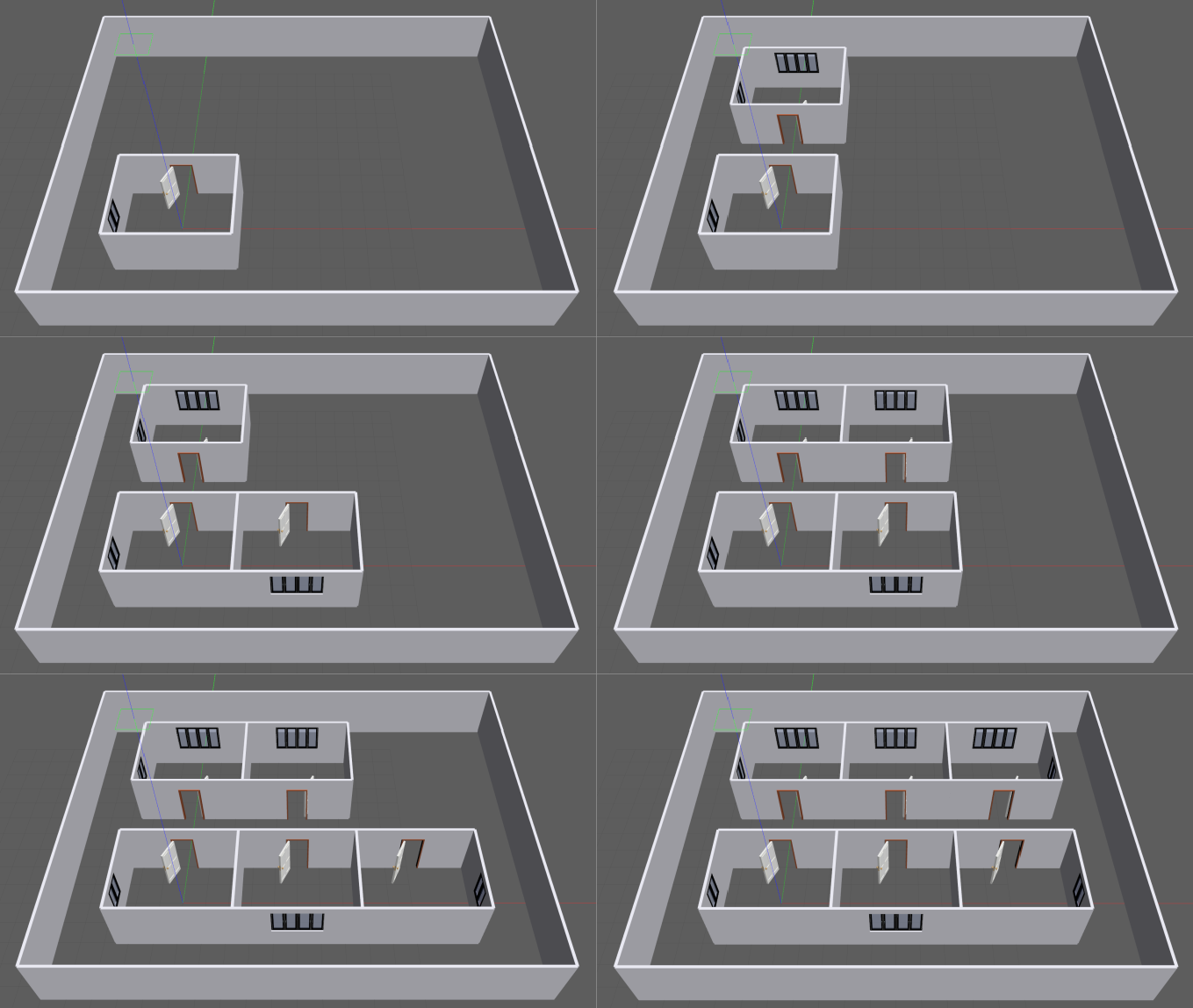
Figure 4: Simulated indoor environments showing progression from simple to complex symmetric scenarios during sequential inspection.
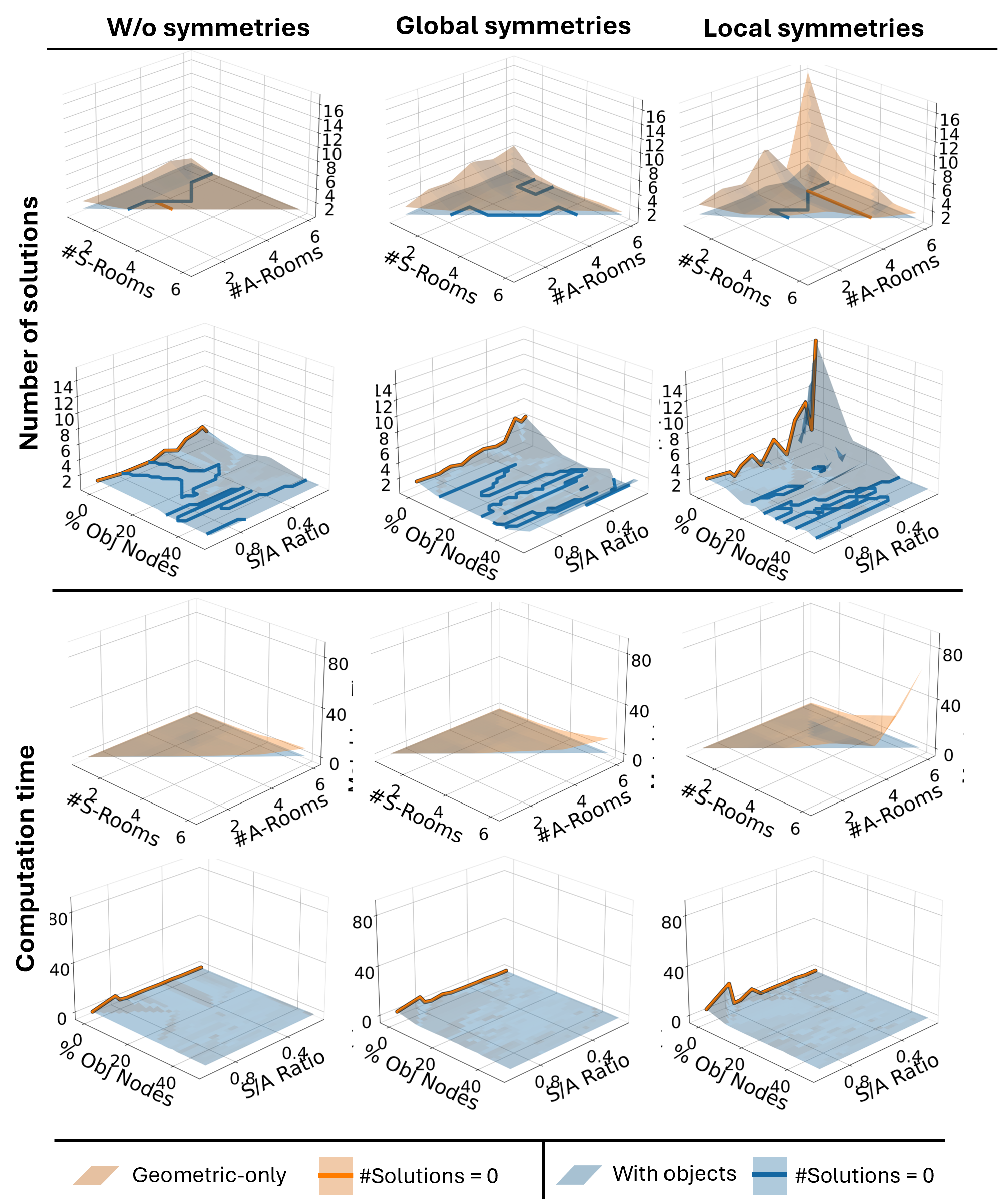
Figure 5: Comparison of the number of solutions found by each approach and computation time across different symmetry types and object node densities.
Robotic Exploration in Simulation
In simulated robot exploration using a Boston Dynamics Spot in a highly symmetric six-room indoor environment, semantic graph matching outperforms geometric methods in terms of convergence speed and robustness. Unique environment localization can be achieved before the observation of the full layout, often after only partial inspection—whereas purely geometric approaches typically fail to resolve ambiguity until symmetry is coincidentally broken at later stages.
Detection modules (using YOSO) deliver high-precision and F1 performance (>0.95) on structural objects, validating the reliability of semantic inputs critical for disambiguation. The introduced approach remains robust even when the object set is intentionally constrained, suggesting further scalability as additional object categories are integrated.
Implications and Future Directions
Theoretical Implications:
This semantic-structural relational framework establishes that explicit object-structure relations substantially improve graph-based SLAM in environments where prior methods are provably ambiguous or intractable by geometric means alone. The approach harmonizes the strengths of categorical semantics with structural abstraction, producing scene graphs that are both expressive and computationally efficient for correspondence problems.
Practical Implications:
Deployment in construction inspection, facility monitoring, and robotics domains will benefit from improved localization reliability and reduced mission time. Early, partial topological awareness will accelerate downstream SLAM loop closure and scene understanding, even in regular, repetitive architectural environments.
Future Research:
Extensions will likely focus on validation in real-world, cluttered environments with dynamic or occluded objects and on the expansion of the semantic relation repertoire to generalize beyond structural elements. Integration with learning-based scene graph correspondence approaches may further reduce dependence on engineered relationships and enhance robustness to detector failures and missing data.
Conclusion
Semantic enrichment of scene graphs through object-structure relationship generation constitutes a robust, efficient, and discriminative foundation for SLAM in symmetric structured environments. The empirical evidence demonstrates drastic reductions in both candidate ambiguity and computation time, with effective early localization and enhanced resilience against geometric symmetry. This approach provides a critical advancement toward fully semantic-aware SLAM pipelines capable of operating in the most structurally challenging indoor environments.

