- The paper computes KR-homology of C₂-projective spaces via an augmented slice spectral sequence to determine optimal immersion bounds.
- It employs equivariant geometric filtrations and detailed torsion analysis to reveal the algebraic structure underlying immersion phenomena.
- The results establish an equivariant analogue of James periodicity, linking immersion properties with KR-theory computations.
Equivariant Immersions of C2-Projective Spaces via KR-Theory
Introduction and Problem Context
This work establishes a sharp analysis of immersions for C2-equivariant real projective spaces, P(nρ), building on the paradigm introduced by Atiyah for classical projective spaces and importing those methods into the field of equivariant stable homotopy. Central to the approach is the use of Atiyah Real K-theory, KR, and related equivariant homology and spectral sequence techniques. By harnessing recent advances in equivariant geometric filtrations and spectral sequences, notably those of Bhattacharya–Waugh–Zeng–Zou and Meier–Shi–Zeng, the authors provide a computation of KR∗ and use it to derive the minimal-dimensional equivariant Euclidean targets into which P(nρ) can be immersed, paralleling classical James periodicity.
Computation of Equivariant Cohomology and Homology
The computation begins with a detailed description of the filtration of equivariant projective spaces P(nρ) by representations, whose colimit recovers the classifying space BC2Σ2. The associated graded pieces are identified via equivariant analogues of Atiyah's work on Thom spaces. These geometric data give rise to an equivariant Atiyah–Hirzebruch type spectral sequence (more precisely, an "augmented slice spectral sequence") converging to the HZ-homology (and later to the KR0-homology) of KR1.
The detailed algebraic structure of KR2 is crucial and is computed as a complicated sum of positive (integral) and negative (KR3 and KR4-divisible) cones, as depicted in Figure 1:
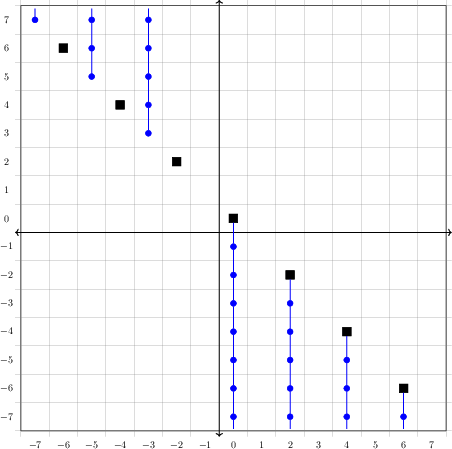
Figure 1: The coefficients KR5, showing the interplay of integral and KR6-torsion structure via KR7 and KR8 operations.
The geometry of the filtration and its impact on the KR9- and C20-pages of the spectral sequence are emphasized, e.g., Figure 2 for the C21-page and Figure 3 for the C22-page:
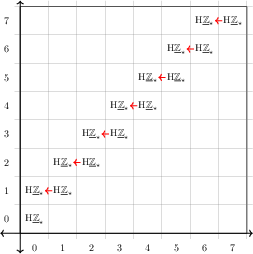
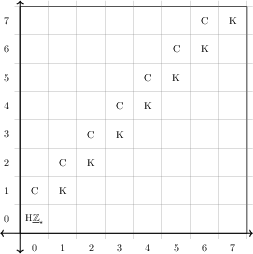
Figure 2: The C23-page of the equivariant Atiyah-Hirzebruch spectral sequence, showing differentials in red.
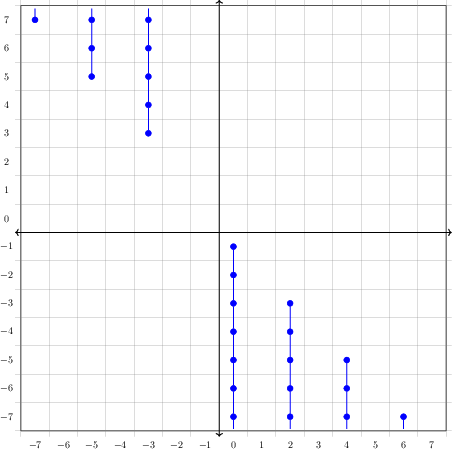
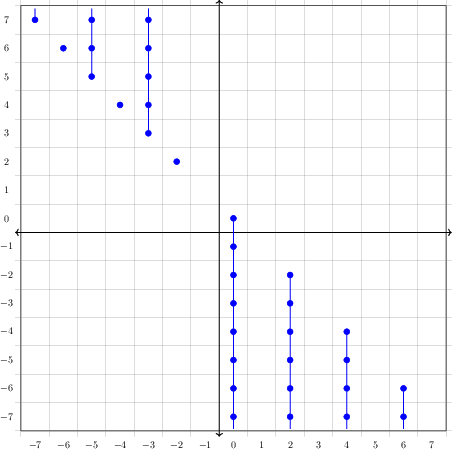
Figure 3: The C24-page after all differentials have been resolved, clarifying the surviving C25 summands.
These calculations are refined by exploring the C26-kernel and cokernel modules arising from the spectral sequence's C27 differential, whose algebraic structures are visualized in (Figures 4, 5):
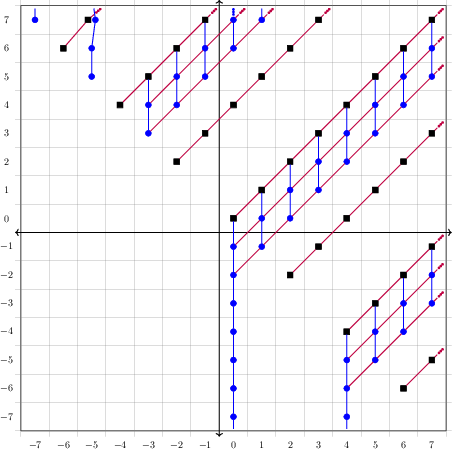
Figure 4: The module C28 gives the C29-torsion kernel system.
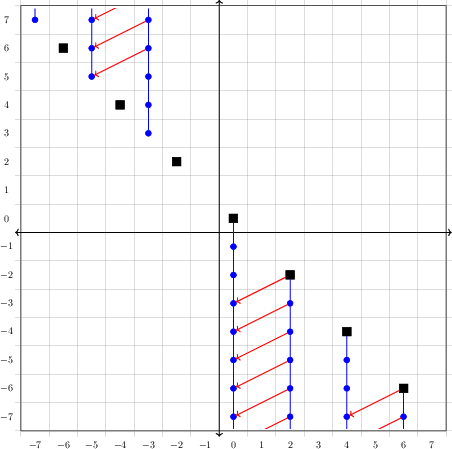
Figure 5: The module P(nρ)0 defines the structure of surviving classes after P(nρ)1-multiplication.
Slice Spectral Sequences and P(nρ)2-Theory
The slice filtration for P(nρ)3 provides the computational context for the equivariant homology of the projective tower. The key differentials in the slice spectral sequence, particularly a P(nρ)4 driven by the relation P(nρ)5, control the passage from the associated graded to the true (co)homology and thus to immersion-theoretic consequences. The action of these differentials on the various kernel and cokernel modules is rigorously presented and depicted in (Figures 6–10):
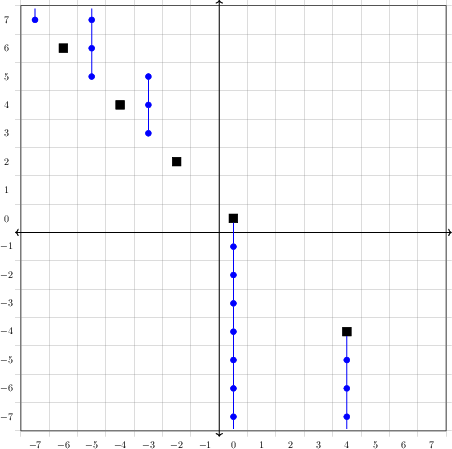
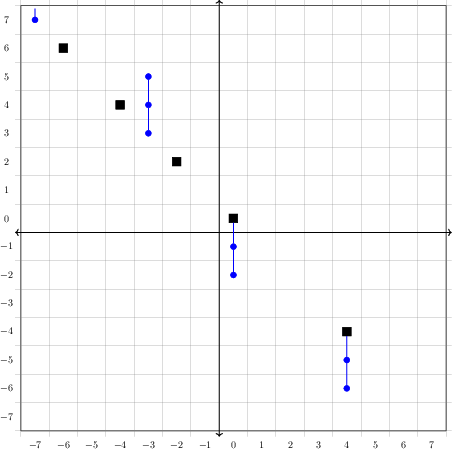
Figure 6: The coefficients P(nρ)6 showing the interplay of generators P(nρ)7, P(nρ)8, and P(nρ)9 with detailed torsion patterns.
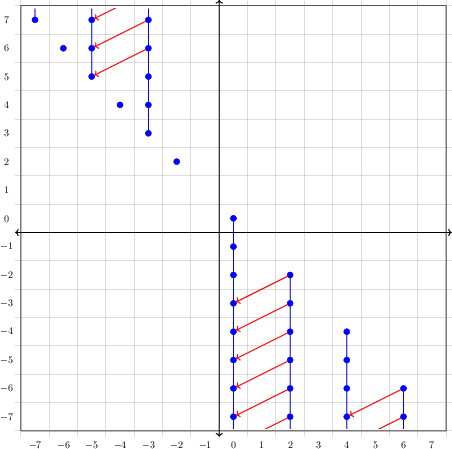
Figure 7: The KR0 differential acting on the KR1-summand, eliminating higher torsion and controlling periodicity classes.
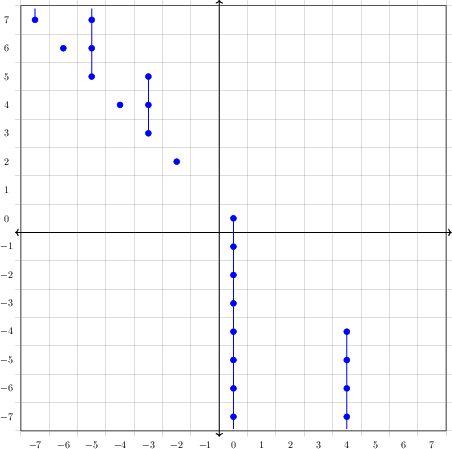
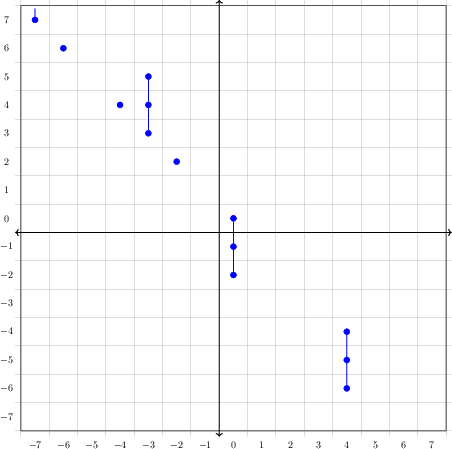
Figure 8: Explicit depiction of the kernel after the KR2 differential on the KR3-module.
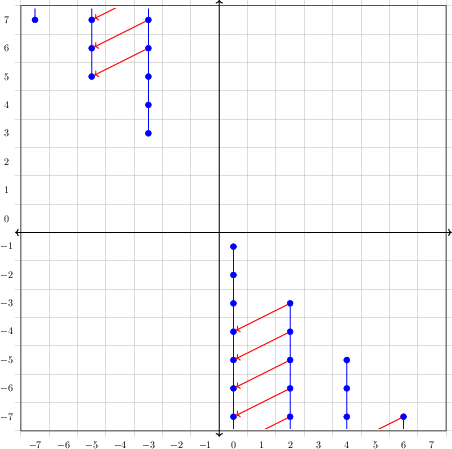
Figure 9: Explicit depiction of the KR4-page after KR5 on the KR6-module, revealing the survivors in the spectral sequence.
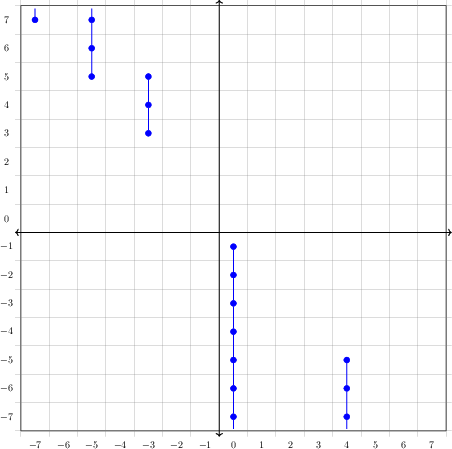
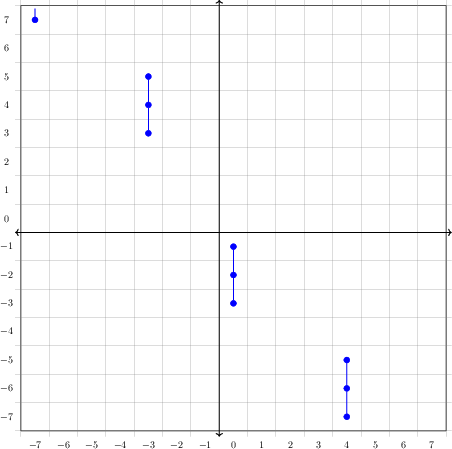
Figure 10: The module KR7 for the KR8-summand, highlighting unresolved extensions.
The broad effect is that the KR9-homology of KR∗0 is dominated by easily classified kernel and cokernel terms, with the product structures determined by their KR∗1-origins and KR∗2-adic towers.
Equivariant Immersion Results
The immersion problem for KR∗3 into KR∗4 is recast as a question about the vanishing of the appropriate powers of the tautological KR∗5-bundle in KR∗6 or, more precisely, in the image of the Realification map from KR∗7. The core result is the calculation that the class KR∗8 is KR∗9-torsion, where P(nρ)0 is the classical James function counting P(nρ)1 residues up to P(nρ)2.
This yields:
For each P(nρ)3, there exists a P(nρ)4-equivariant immersion P(nρ)5.
The proof uses the explicit construction of bundle complements, the cancellation theorem in the P(nρ)6-equivariant context, and the identification of the required cohomological torsion. The argument aligns the equivariant stable geometric category with the algebraic output of the spectral sequence.
Equivariant James Periodicity
A sharp equivariant analogue of James periodicity is established: the spectra P(nρ)7 (stunted equivariant projective spaces) satisfy a periodicity of period P(nρ)8 in the regular representation direction. That is,
P(nρ)9
maintaining full equivariance. This equivalence is realized in the homotopy category via the description of sphere bundles through the Real J-homomorphism and Realification.
Further Directions and Implications
The computational framework presented here opens prospects for studying non-immersion results and deeper relationships with generalized Real Johnson–Wilson homology, as suggested by Kitchloo–Wilson and others. The analysis of spectral sequence differentials and multiplicativity in larger families of P(nρ)0-equivariant classifying spaces suggests substantial tractability for computations in generalized P(nρ)1-equivariant (co)homology theories and structures such as equivariant Hopf rings.
Practically, it demonstrates that P(nρ)2-theory is fully as efficient as P(nρ)3 in detecting immersion bounds for equivariant projective spaces. Theoretically, it frames a program to import further stable homotopy-theoretic machinery (e.g., equivariant BP, Real Johnson–Wilson, and more refined slice towers) into equivariant geometric applications.
Conclusion
The paper provides a complete P(nρ)4-theoretic analysis of the immersion problem for P(nρ)5-equivariant projective spaces. The use of the augmented slice spectral sequence, explicit geometric filtrations, and equivariant analogues of classical K-theoretic theorems yields not only optimal immersion results but also clarifies the algebraic structure underlying equivariant vector bundle theory. The connection to periodicity phenomena and advanced stable homotopy-theoretic tools is made explicit, positioning the framework as a base for subsequent work in equivariant topology and homotopy theory.
References:
"Immersions of P(nρ)6-projective spaces via P(nρ)7-theory" (2604.25260). Other related foundational works include Atiyah [Atiyah66], Fujii [FujiiKO], Kitchloo–Wilson, Bhattacharya–Waugh–Zeng–Zou, and Meier–Shi–Zeng.