- The paper introduces a novel deformation-aware neural intersection function that extends LSNIF for dynamic geometry using canonical rest-space mapping and hybrid positional-grid encoding.
- The method integrates uncertainty-weighted multi-task learning, balancing regression and classification tasks via log-variance parameters for robust attribute prediction.
- The approach achieves robust performance on articulated and animated scenes with negligible computational overhead, making it practical for real-time neural rendering applications.
Introduction
The paper "Voxel Deformation-Aware Neural Intersection Function" (2604.24666) advances the neural intersection function paradigm to handle parameterized deformable and animated geometry, building upon the Locally-Subdivided Neural Intersection Function (LSNIF). Traditional neural intersection functions, including LSNIF, are limited to static geometry, rendering them ineffective for scenes containing articulated or morphing objects that undergo significant shape or pose variation. The proposed method mitigates these shortcomings by adopting a canonical rest-space and deformed-space mapping inspired by meshless rendering, allowing robust and efficient intersection prediction across diverse poses without per-pose retraining.
A core insight is the separation of geometry representation into a canonical rest space and an application-specific deformed space. Geometry is voxelized and the neural network is trained in rest space, while ray tracing for dataset generation and evaluation occurs in deformed space. Rays are mapped from deformed space to rest space via an inverse deformation, enabling consistent encoding and prediction throughout varying poses. To address computational inefficiency from inverse mapping (curved rays in rest-space), the method employs a voxel-wise local linear approximation, justified since voxel extents are small and deformation fields are locally linear.
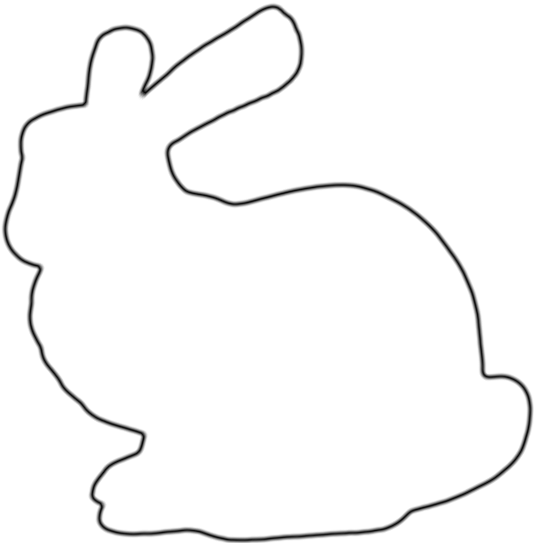
Figure 1: Deformation-aware training pipeline, including voxel grid in rest space, warped deformed-space grid, piecewise linear ray approximation, and neural network input encoding for geometric predictions.
Hybrid Positional-Grid Encoding
The paper identifies limitations in using multi-resolution hash grid encoding alone, as it struggles with modeling pose-invariant spatial signals under deformation. The proposed approach augments the architecture with sinusoidal positional encoding combined with hash grid features. Each query point undergoes positional encoding with progressively higher frequency bands before feature extraction in a multi-level hash grid, resulting in a joint encoding. This composite mapping, ψ(x), increases expressiveness, stability, and accuracy when predicting intersection-related attributes across deformations.
Uncertainty-Weighted Multi-Task Learning
Intersection queries require predicting multiple attributes: intersection distance, surface normal, albedo, material, and occlusion. The method adopts an uncertainty-weighted multi-task loss, dynamically balancing regression and classification targets via learnable log-variance parameters for each task. Distance expressions are log-scaled and regressed via MSE in log space, normals utilize cosine similarity, albedo leverages sigmoid RGB with ℓ1 loss, while material and occlusion follow weighted classification objectives.
Voxel Traversal and Ray-Space Consistency
Deformation induces spatially varying voxel extents, invalidating traditional uniform grid traversal algorithms (e.g., DDA). The approach uses face-based traversal and BVH initialization for rays, ensuring robust identification of initial ray-voxel intersections without prohibitive search costs. Through segmented ray distance accumulation, hit locations and intersection distances are consistently reconstructed across piecewise linear segments, mirroring real-world spatial queries under complex articulated deformations.
Experimental Evaluation
Single-Pose Evaluation
In static (undeformed) scenes, the original LSNIF, trained on a single pose, yields minimal error in normal and distance prediction. However, the deformation-aware model with proposed modifications narrows the gap considerably and, in some metrics, exceeds baseline performance, demonstrating that regularization from pose distribution training can improve generalization.
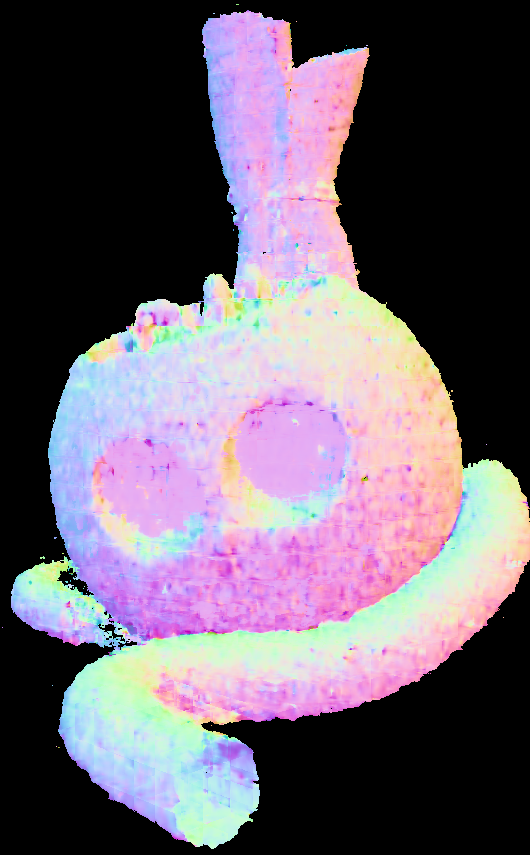
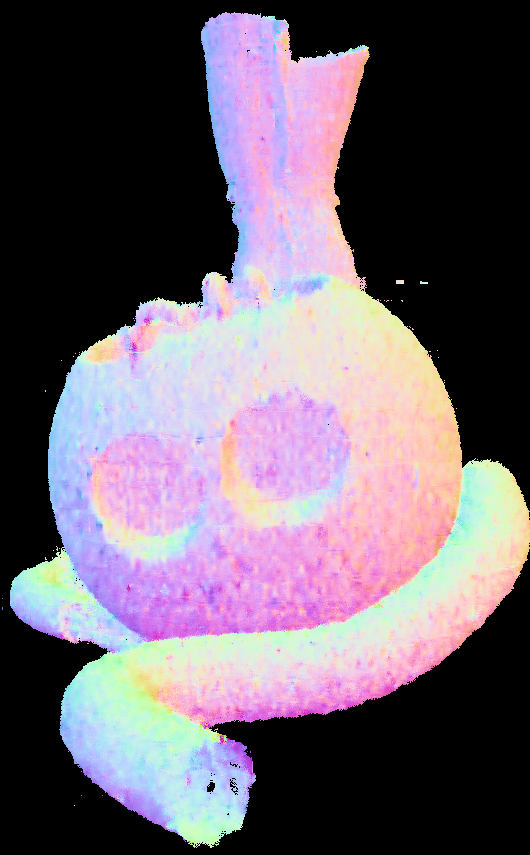
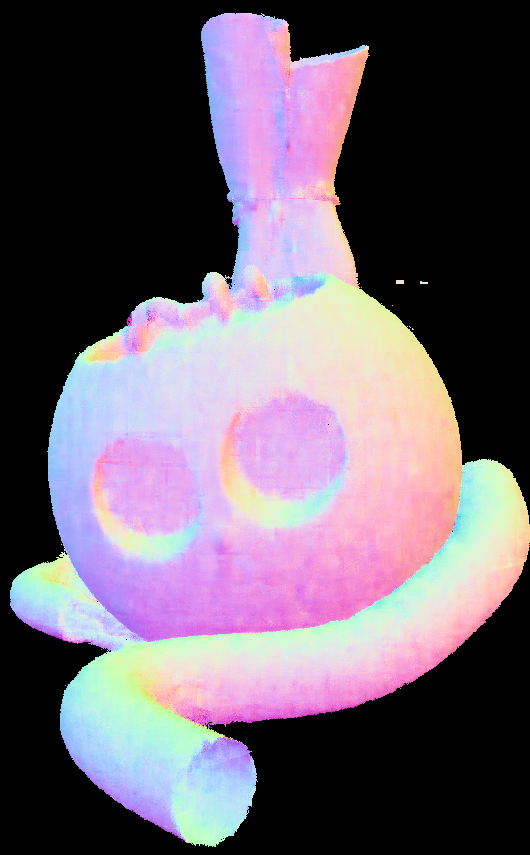
Figure 2: Comparison across static pose: (a) original LSNIF, (b) deformation-aware baseline, (c) full deformation-aware model with combined encoding and multi-task loss.
When exposed to diverse pose distributions and articulated geometry, the baseline deformation-aware model (without proposed modifications) manifests blurred surfaces and unstable attribute predictions. In contrast, the full model incorporating uncertainty-weighted multi-task learning and hybrid encoding maintains sharp geometric predictions and consistent appearance attributes, confirming robustness and accuracy across dynamic scenes. Computational overhead is negligible, with only 2-3% additional cost for ray tracing in deformed space.
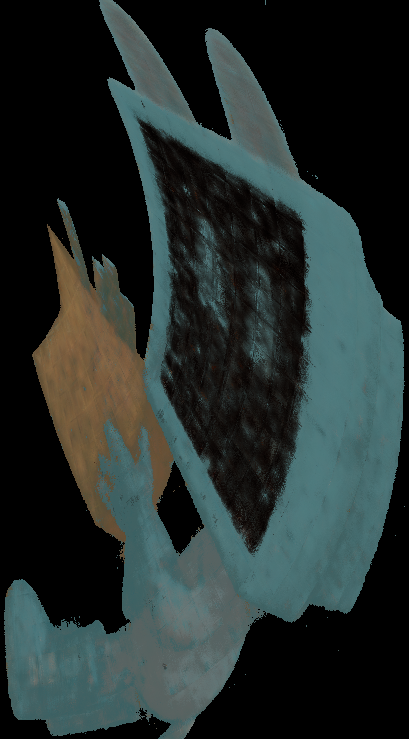
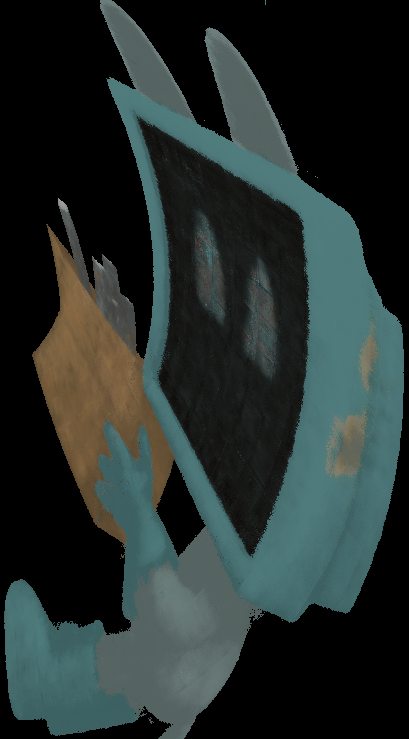
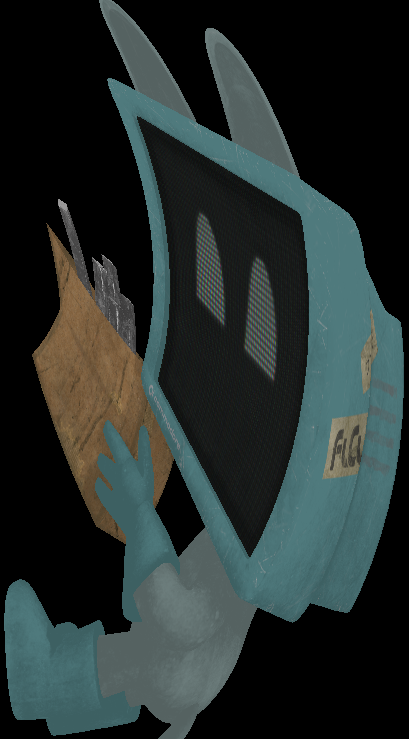





Figure 3: Deformation-aware predictions on dynamic objects: top row shows albedo for the cat model and bottom row depicts material classifications for the dragon model, highlighting the superior consistency of the proposed method.
Implications, Limitations, and Future Directions
The deformation-aware neural intersection function extends the practical applicability of neural geometric representations to animated and deformable objects, essential for real-time ray tracing, interactive graphics, and neural rendering pipelines. The approach is memory-compact, avoids per-pose retraining, and generalizes across pose variation. Theoretical implications include bridging meshless deformation models and neural implicit representations, opening new avenues for learned acceleration structures.
The present method is robust to articulated and simple morphing deformations but faces challenges with highly non-linear, topologically variant, or physics-driven deformation. Limitations include the reliance on locally linear deformation approximation and fixed voxelization. Future enhancements may involve joint learning of deformation fields with intersection prediction, adaptive spatial discretization, and integration with full neural rendering architectures.
Conclusion
The paper delivers a formal extension to LSNIF for dynamic geometry, leveraging canonical rest-space mapping, hybrid positional-grid encoding, and uncertainty-weighted multi-task learning. It demonstrates high accuracy and robustness across articulated and morphing objects, with negligible computational overhead and maintained compactness. This advancement is foundational for efficient neural intersection queries in dynamic scenes, with further potential in supporting complex deformation models and integration into end-to-end neural rendering systems.

