- The paper presents a novel AGCAS that employs a deep reinforcement learning algorithm (CNN-enhanced SAC) to process pseudo-lidar terrain data for collision avoidance.
- It details a custom system architecture that fuses digital elevation maps with RADALT measurements to extend traditional safety frameworks in jet trainer operations.
- Empirical results indicate improved terrain avoidance, stable training convergence, and enhanced operational reliability compared to baseline and traditional AGCAS methods.
Deep Reinforcement Learning-Based AGCAS for Jet Trainer Safety
Overview
The paper "An Automatic Ground Collision Avoidance System with Reinforcement Learning" (2604.24403) presents an advanced AI-powered Automatic Ground Collision Avoidance System (AGCAS) tailored for jet trainers. Leveraging a custom CNN-enhanced Soft Actor-Critic (SAC) reinforcement learning model, the system achieves robust ground collision avoidance using spatially rich pseudo-lidar data and digital terrain elevation maps (DEMs). The approach markedly extends traditional AGCAS frameworks by employing deep integration of terrain awareness and adaptive control optimization. The following sections dissect the technical contributions, empirical findings, and broader implications.
The AGCAS architecture is grounded in the reinforcement learning paradigm, with a focus on bounded observation spaces reflective of real-world avionics hardware constraints. A custom terrain server, built on DEMs, provides LiDAR-like spatial data for the AI agent. Specifically, two metrics—height-on-terrain (HoT) and height-above-terrain (HaT)—are fused into an N×N array representing the pseudo-lidar field, affording the agent spatial context for imminent collision prediction.
Aircraft base states (e.g., p, q, r—roll, pitch, yaw rates), RADALT sensor points, and control surface commands (aileron/elevator) comprise the observation and action spaces.
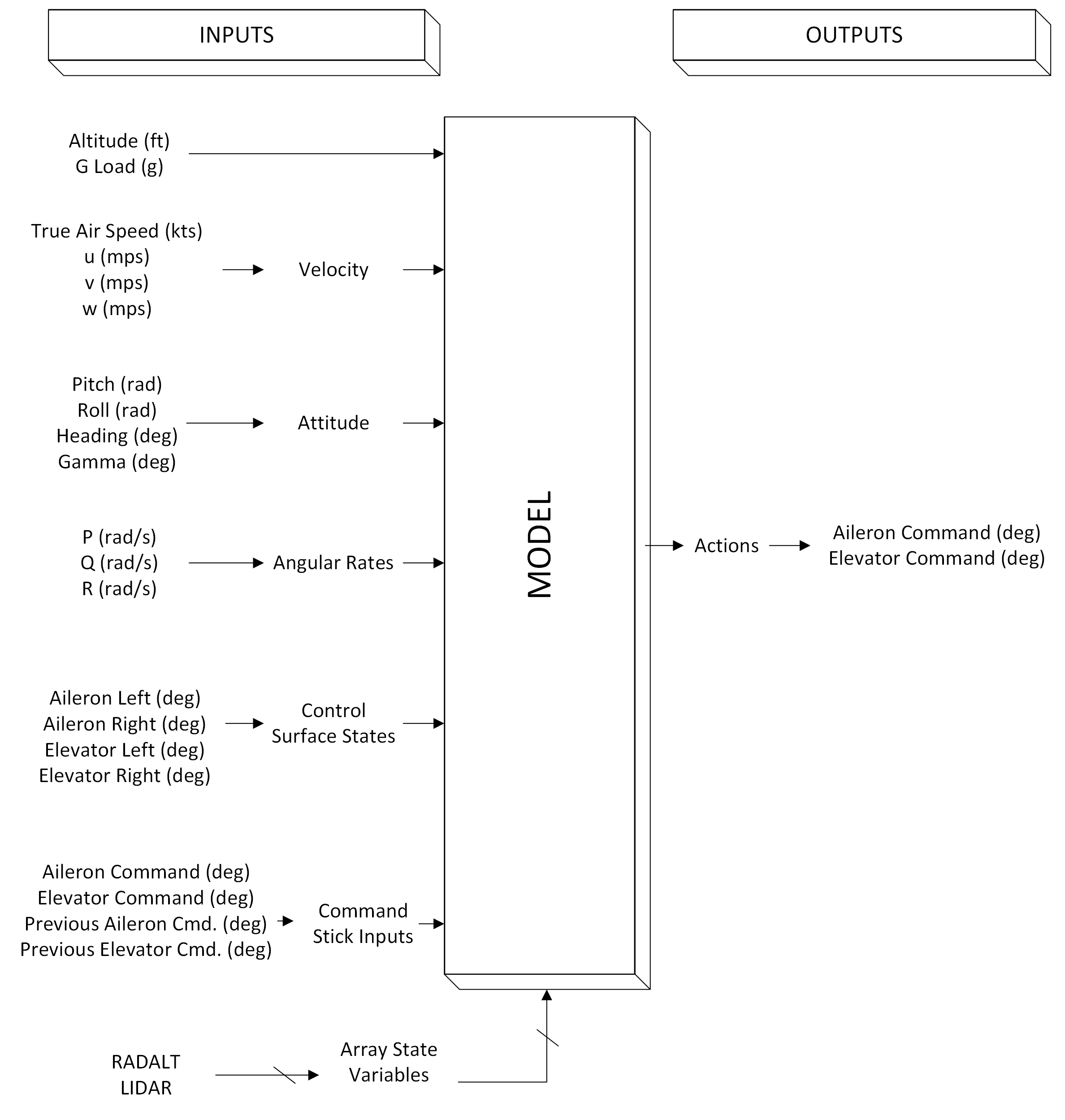
Figure 1: General AGCAS model scheme showing input integration between base aircraft states, LiDAR and RADALT spatial encodings, and control output pathways.
The reward structure is sequential and domain-specific: major penalties for collision (−250), excessive negative g-load, and oscillating control actions; positive rewards for maintaining level flight absent immediate obstacles; strict prioritization of collision avoidance over other objectives.
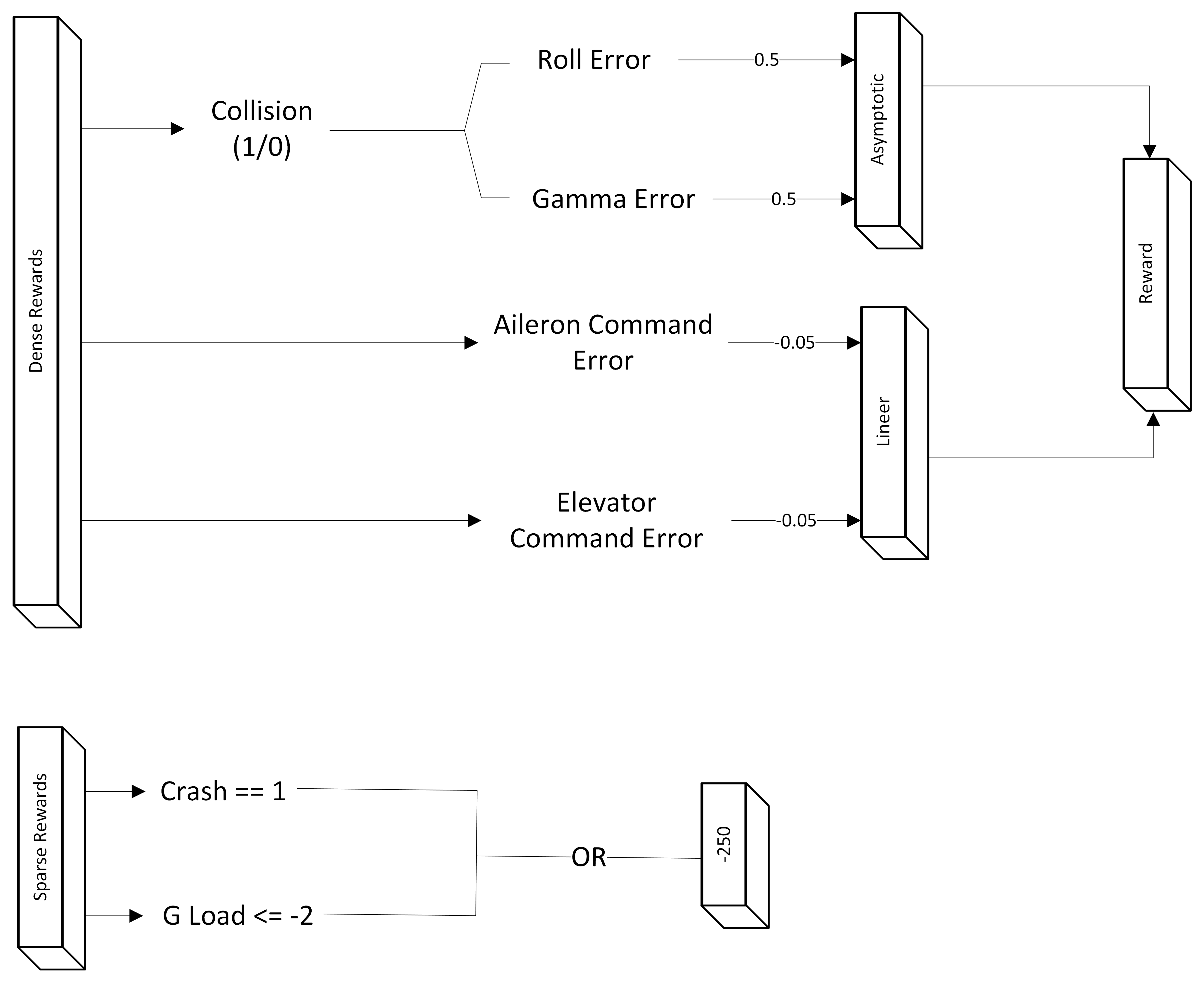
Figure 2: Sequential reward structure diagram, emphasizing collision avoidance over wing-level operations during imminent threats.
Reinforcement Learning Workflow and Network Design
The SAC algorithm, supported by a custom CNN feature extractor, processes the 2D pseudo-lidar input, encoding spatial features relevant to terrain avoidance. The transition from simple identity mapping to CNN backbone is critical: it circumvents state space explosion inherent in high-resolution lidar (e.g., 16×16 yields 256 raw states) and enables learned extraction of salient escape routes.
Early experiments with single-point lidar and standard SAC revealed narrow perception and insufficient maneuver diversity. Expansion to multi-point (3×5, 5×5) configurations improved performance, but optimal results required further enhancements to spatial generalization via deep CNN architectures.
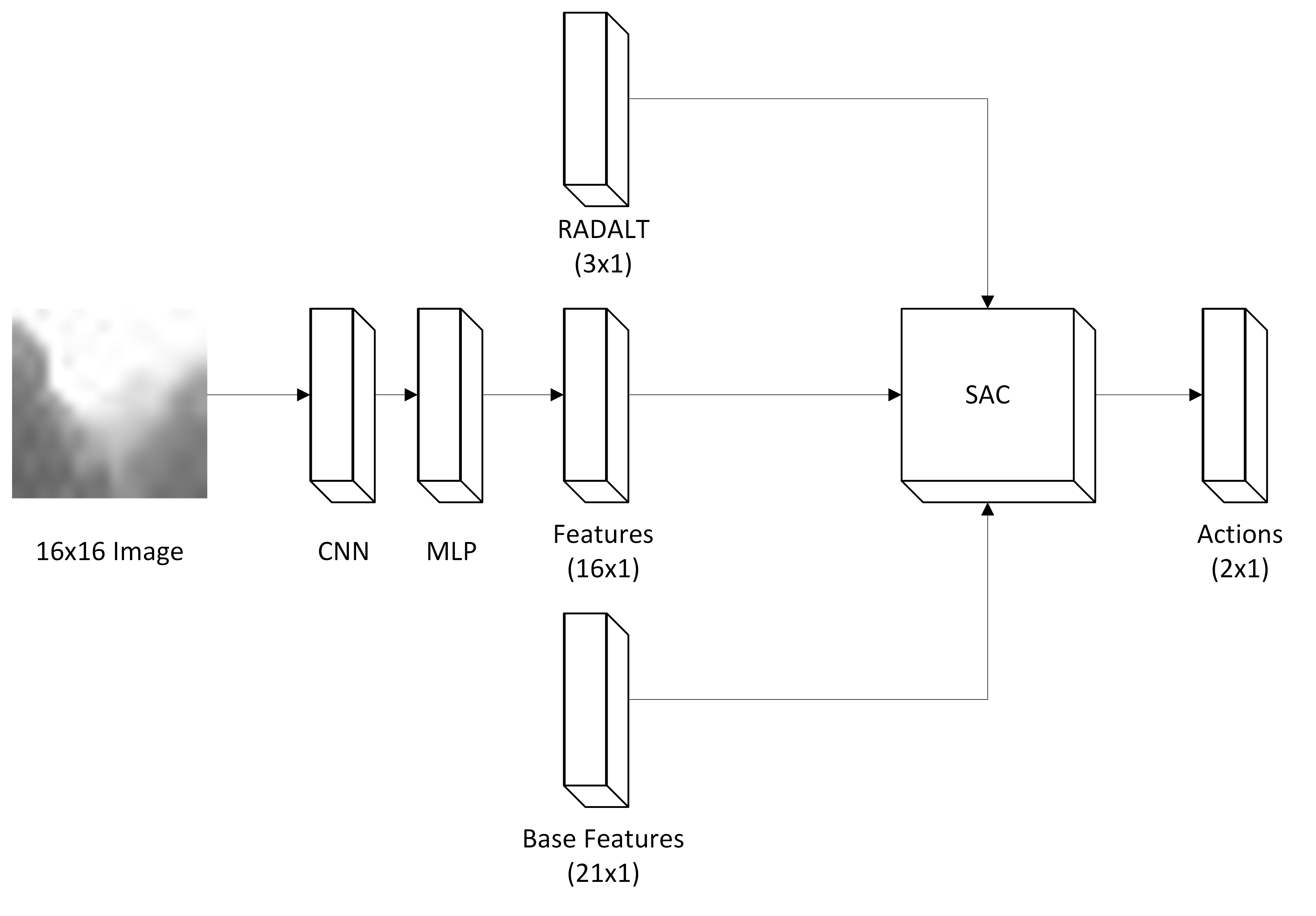
Figure 3: Custom CNN-SAC structure displaying convolutional layers processing the image-like lidar grid before policy and value function outputs.
LiDAR inputs, color-coded by range, deliver high-fidelity spatial encoding where distant terrain is white and proximity is black—reducing 3D terrain complexity to 2D feature maps.
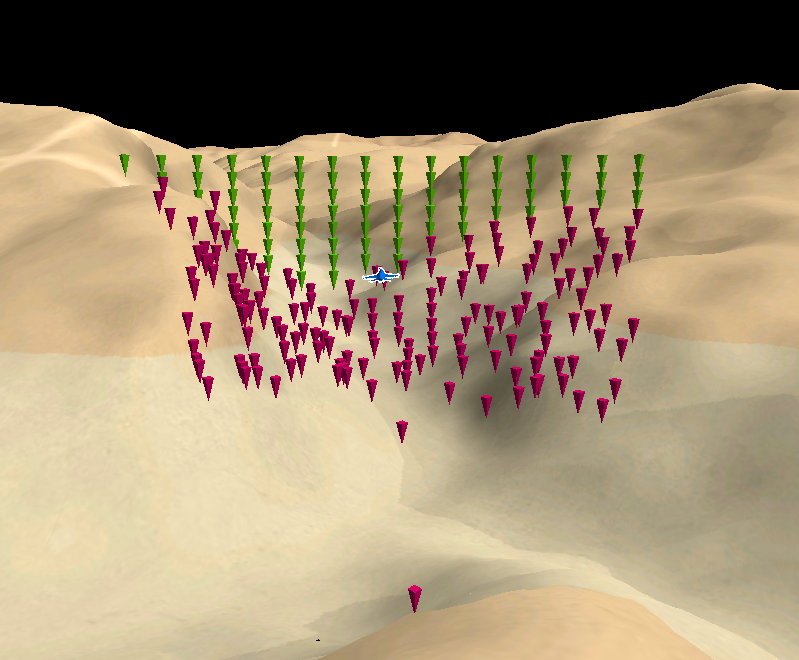
Figure 4: Example of 16×16 lidar mapped to terrain obstacles; agent uses spatial distribution to plan avoidance strategies.

Figure 5: Pure 16×16 lidar grid as processed for CNN input, facilitating scalable visual state representation.
In addition, the incorporation of RADALT measurements further extends the agent’s spatial awareness to include direct ground proximity.
Training Protocol and Hyperparameter Optimization
Initial conditions are systematically generated based on potential collision-prone regions, randomizing roll, pitch, and heading to simulate diverse aircraft attitudes. Extensive hyperparameter optimization is conducted using Optuna, an efficient framework for automated, adaptive search space pruning. This ensures maximally responsive policy learning throughout the high-dimensional control problem.
Attempts to fuse temporal awareness (CNN-LSTM-SAC) do not yield significant empirical improvements, suggesting limits to purely sequential processing in this AGCAS context or possibly data scarcity for temporal abstraction.
Empirical Results
Simulation studies and expert validation demonstrate that the CNN-SAC architecture, with a p0 lidar input, provides significant gains in terrain avoidance, agent reliability, and generalization under diverse operational settings. The model reliably detects and navigates escape paths, minimizing control oscillation and guaranteeing avoidance of imminent ground collision.
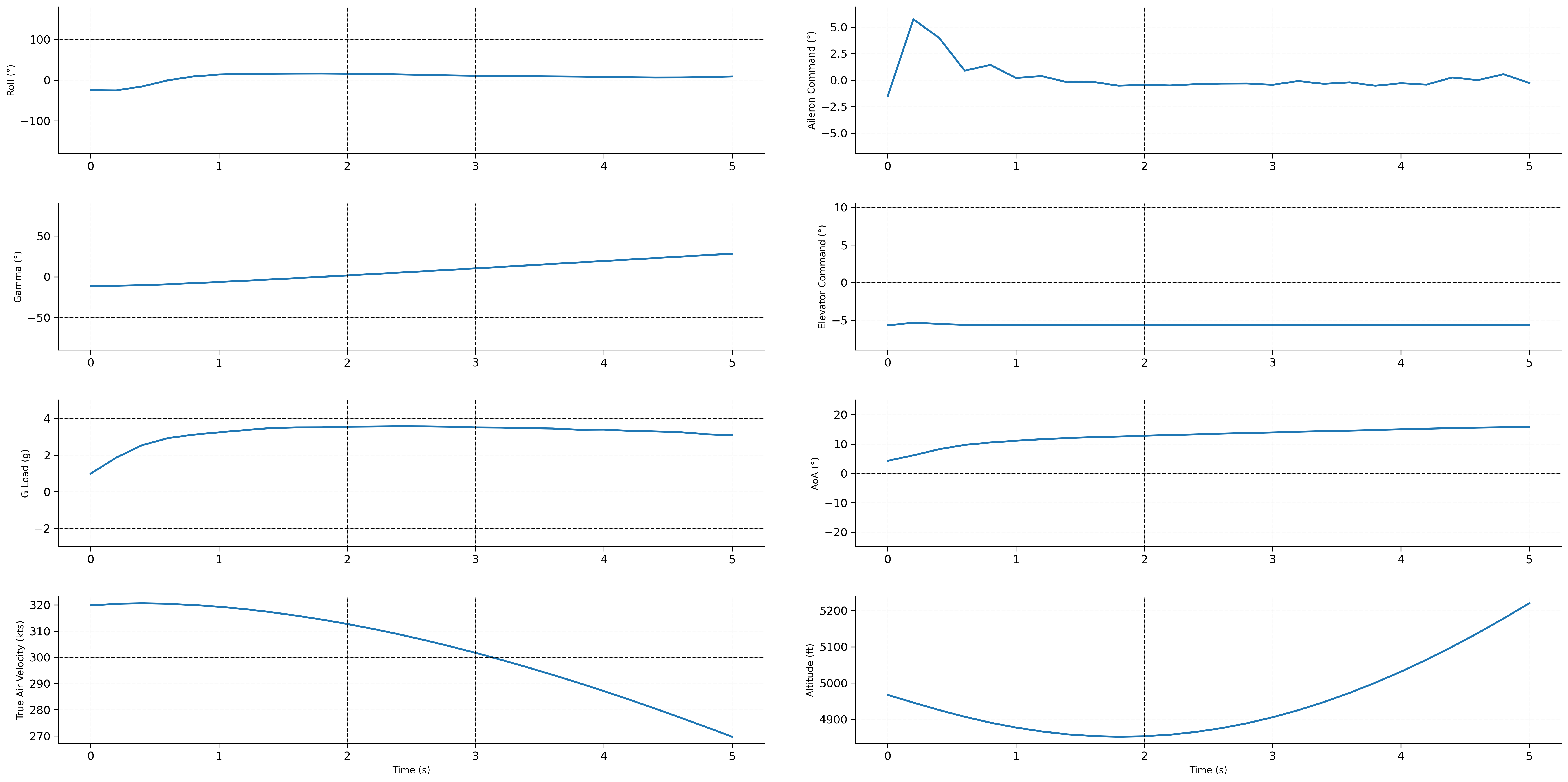
Figure 6: Rescue graphs illustrating key state-action trajectories during collision avoidance, confirming system robustness and maneuver validity.
Numerical outcomes reveal that the sequential reward design, dense spatial encoding, and deep feature extraction contribute to stable training convergence and operational performance superior to baseline SAC and traditional control-based AGCAS schemes. Domain expert review corroborates the practical applicability of the proposed model in real-world jet trainer settings.
Theoretical and Practical Implications
The research substantiates the integration of deep RL and spatial sensing in safety-critical avionics, demonstrating the value of rich spatial representations and adaptive reward engineering. Technically, it underscores the necessity of scalable feature extractors (CNN) for encoding high-dimensional sensory input, optimal hyperparameter selection, and reward prioritization for task-specific RL.
Practically, the AGCAS CNN-SAC model facilitates enhanced operational safety, with potential deployment pathways in both legacy and next-generation trainers. The methodology is extensible to UAVs and possibly other aircraft classes, given sufficient spatial sensing capabilities.
Future Directions
Opportunities for further research include:
- Incorporating visual attention mechanisms to dynamically focus on the most salient escape routes.
- Augmenting data-driven temporal modeling (e.g., transformer-based policy networks) for increased predictive foresight.
- Expanding reward hierarchy to adaptively modulate priorities as mission context shifts.
- Scaling hardware integration for real-time on-board processing and edge deployment.
Conclusion
The paper delineates a methodologically rigorous, practically validated AI-based AGCAS built on deep RL principles and custom spatial encoding. By merging CNN-enhanced SAC with bespoke lidar/RADALT inputs, the system delivers robust ground collision avoidance and generalizable control for jet trainers. Empirical findings and expert reviews confirm the efficacy of the proposed approach, advancing both theoretical understanding and applied safety frameworks in aerospace AI systems.

