- The paper proposes a unified closed-loop framework integrating sensing, communication, computation, and control for robust low-altitude UAV operations.
- It employs JSARC, AFDM-based communication, hierarchical computation, and RL-driven control to enhance imaging fidelity and reduce latency.
- A case study demonstrates UAVs achieving 1 m range SAR imaging and mission completion in 18.5 s, outperforming traditional heuristic methods.
Low-Altitude Embodied Intelligence: A Sensing-Communication-Computation-Control Closed-Loop Approach
Architectural Framework for LAEI Networks
The paper proposes a unified framework for low-altitude embodied intelligence (LAEI) that integrates sensing, communication, computation, and control (SC³) in a closed-loop architecture tailored for UAV operations in complex low-altitude environments. The architectural paradigm is inherently hierarchical, with UAVs as autonomous agents interfacing directly with physical environments, supported by edge servers and cloud platforms for tiered computational assistance and system-level orchestration. During flight, UAVs utilize integrated sensing and communication (ISAC) signals for both environmental perception and connectivity. Local onboard processing enables urgent tasks, while heavier computational workloads are offloaded to edge and cloud tiers, preserving UAV mobility and latency responsiveness.
The multi-tier architecture ensures bidirectional flow of sensory data and control commands, adopting edge servers as latency-sensitive intermediaries and cloud platforms as macro-coordination centers. Such architectural synergy addresses the heterogeneous demands of diverse low-altitude scenarios, including urban hotspots with high throughput requirements, disaster areas emphasizing reliability and rapid coordination, remote regions with coverage and energy efficiency constraints, and conflict zones prioritizing ultra-low latency and resilience.
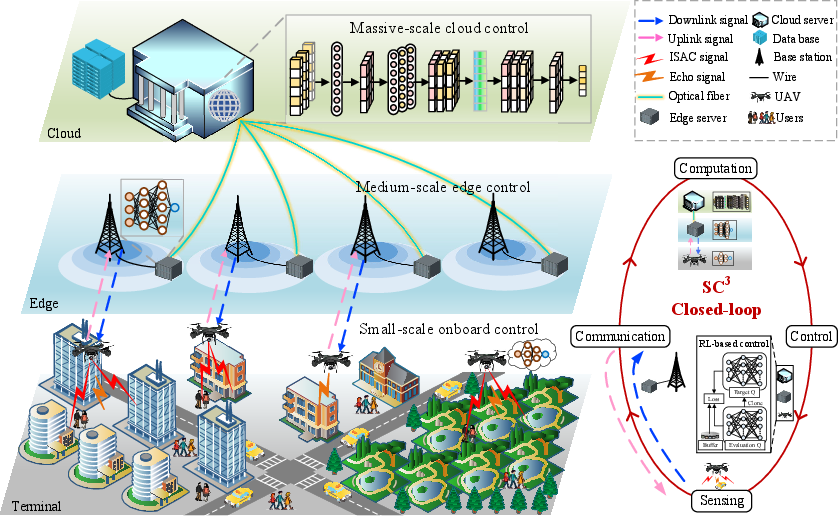
Figure 1: System architecture and operating mechanism for SC3 based LAEI networks.
Critical Techniques: Integration Across Domains
Joint Synthetic Aperture Radar and Communications (JSARC)
To balance the need for high-resolution environmental sensing with stringent payload and energy constraints, the framework utilizes JSARC, exploiting UAV mobility to synthesize virtual apertures from communication echoes. Two primary modes are delineated: onboard mono-static JSARC, which is self-contained and enables rapid autonomous situational awareness, and network-assisted bi-static JSARC, which delegates echo reception and processing to ground-based stations, relieving computational strain on UAVs and enabling sophisticated imaging.
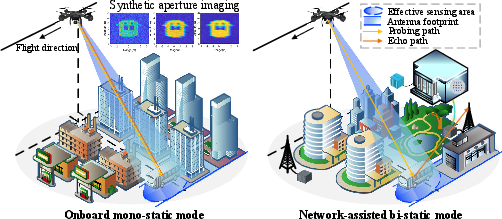
Figure 2: Illustrations of two JSARC modes in the LAEI networks.
Reliable Air-Ground Communication
The LAEI closed loop mandates robust, high-capacity uplinks for sensing data and ultra-reliable low-latency downlinks for control commands, all under severe Doppler effects. Affine Frequency Division Multiplexing (AFDM) is adopted for Doppler-resilient uplink transmission, outperforming conventional OFDM in throughput and reliability. AF-domain pilots enhance channel state acquisition, supporting learning-based predictors like LSTMs for channel evolution tracking under high mobility. Downlink control relies on symbol-level precoding, transferring computational demands from UAVs to edge nodes and leveraging sparse Bayesian learning for robust channel estimation.
Hierarchical Computation Orchestration
Computation tasks are adaptively partitioned across the UAV-edge-cloud continuum through holistic task offloading and cross-layer split computing paradigms. Holistic offloading allocates entire tasks based on resource availability, optimizing for latency and energy consumption. Split computing leverages neural network modularity, relaying intermediate features instead of raw data, thus minimizing fronthaul loads and end-to-end latency—well-suited for perception-centric applications with stringent real-time requirements.
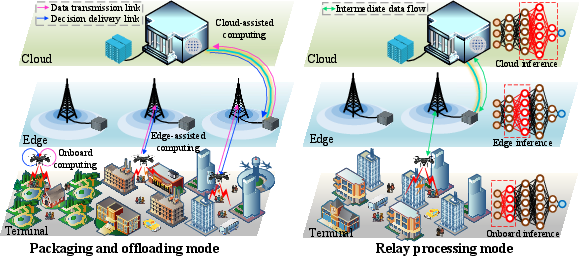
Figure 3: Illustrations of hierarchical computation orchestration in LAEI networks.
Reinforcement Learning-Driven Adaptive Control
Model-free RL approaches are harnessed for adaptive control, robustly navigating high-dimensional state-action spaces. RL agents iteratively refine control policies to balance multiple objectives, such as safety, sensing fidelity, and link reliability, directly leveraging SC³ feedback. RL demonstrates superior cross-scenario generalization and responsiveness, vital for real-time trajectory planning and resource allocation in dynamic environments.
Closed-Loop Case Study: Urban UAV Operations
A comprehensive case study in a 1000m×1000m urban setting validates the embodied intelligence framework. A UAV, tasked with servicing 10 ground users and traversing dense obstacles, exhibits efficient operation by integrating SAR-based high-fidelity imaging, Doppler-resilient OFDM communications, and real-time hierarchical computation orchestration. The empirical analysis reveals:
- AF-domain pilot-assisted OFDM achieves BER comparable to AFDM with MMSE at SNRs below 15 dB, offering low complexity and flexible scheduling.
- Coordination between UAV and edge servers reduces average closed-loop latency to below 0.2 s, with relay processing providing minimal latency at constrained bandwidths.
- SAR imaging achieves 1 m range and 0.5 m azimuth resolution, reconstructing fine-grained environmental features for optimal navigation.
- RL-based control agents outperform heuristic (RRT/ACO) strategies, completing missions in 18.5 s versus 67 s and 94 s, respectively, by utilizing high-fidelity sensing and reliable connectivity for goal-oriented navigation.
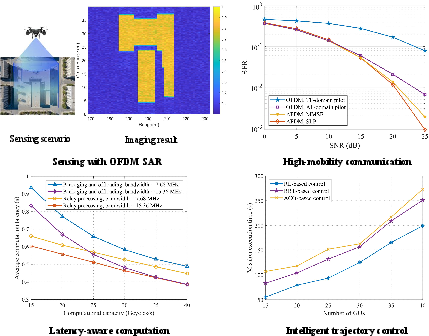
Figure 4: SC3 closed-loop case study results, illustrating communication, computation, environmental reconstruction, and trajectory planning.
Challenges and Future Directions
The paper identifies four principal challenges:
- High-Fidelity Multi-Modal Sensing: Future research must integrate heterogeneous modalities—optical, radar, acoustic—via advanced fusion frameworks optimizing perceptual fidelity versus resource overhead.
- Semantic-Aware High-Speed Communication: Semantic communication (SemCom) can minimize redundancy, transmitting task-relevant features. Adaptive semantic encoding aligned with multi-modal fusion and dynamic network conditions is essential.
- Wide-Area Elastic Computation: Large-scale collaborative scheduling across UAV-edge-cloud continuum is required for scalable, millisecond-level responsiveness, accommodating mission heterogeneity and avoiding node congestion.
- Precision Control and Adaptive Reasoning: Transfer learning and large foundation models promise superior cross-domain generalization and context-aware reasoning, supporting multi-scenario adaptability and zero-shot inference.
Conclusion
The presented SC³-based LAEI framework enables robust, scalable, and responsive UAV operations in complex low-altitude environments by tightly integrating sensing, communication, computation, and control. Empirical validation demonstrates significant enhancements in communication reliability, computation latency, imaging fidelity, and mission efficiency. The research delineates a clear trajectory for future advancements—spanning multi-modal fusion, semantic communications, elastic computation, and model-driven adaptive reasoning—toward scalable autonomous aerial systems.