- The paper establishes that regular grammars provide an effective and concise syntactic representation for recognizable sets of series-parallel graphs.
- It demonstrates a singly-exponential upper bound (2^(O(n^9))) for finite recognizer algebras and proves the necessity of exponential lower bounds.
- The study shows that decision problems like intersection and inclusion are EXPTIME-complete, aligning grammar-based methods with automata theory.
Regular Grammars and Recognizability for Series-Parallel Graphs
Introduction and Motivation
The study of recognizable sets of graphs, particularly series-parallel (SP) graphs, has deep connections to both logic (especially Monadic Second-Order Logic, CMSO) and the algebraic theory of computation. Recognizability in the sense of finite-algebra homomorphisms is a fundamental notion, generalizing the automata-based definition known from words and trees to more general structures, such as graphs of bounded treewidth [CourcelleI, CourcelleV, Lics25]. SP-graphs, as a prominent subclass of graphs with treewidth at most two, are especially relevant due to their occurrence in domains such as circuit design and streaming computation.
A central impediment to the practical application of these theoretical correspondences has been the lack of effective, concise, and computationally tractable syntactic representations (such as regular grammars) for these recognizable graph properties, and the complexity of translating between expressive logic/semantics and these representations. This paper initiates a syntactic and complexity-theoretic refinement of these correspondences, with a focus on establishing optimal or nearly optimal bounds for representing recognizable sets via regular grammars for SP-graphs, and analyzing the complexity of decision procedures on these representations (2604.24151).
Regular Grammars for Series-Parallel Graphs
The first conceptual contribution of the work is the formalization and use of regular grammars to specify recognizable sets of SP-graphs. The grammars generalize the structure of context-free grammars to the algebra of SP-graphs, accounting for serial and parallel composition (with edge-labeling over a finite alphabet), yielding an elegant grammar-based mechanism to describe SP-graph properties previously defined either by automata or logical means.
Regular grammars for SP-graphs exhibit a partitioned set of nonterminals (to correspond closely to the operations and inherent structure of SP-graphs: serial versus parallel), and rules designed to model the algebraic combinations of SP-graph building blocks. The constructs in the grammars are tailored to exploit the unique compositionality of SP-graphs (bridges as atomic elements, serial and parallel compositions), yielding a tight correspondence with the class of graphs definable in CMSO over treewidth two.
Complexity of Effective Syntactic Representations
Exponential Upper vs. Lower Bounds
A core technical achievement is the establishment of a singly-exponential upper bound on the size of finite recognizer algebras generated from a regular grammar of size n, showing that the recognizer algebra can be constructed with cardinality 2O(n9) (Corollary: 2O(size(G)9)). This significantly improves upon prior double-exponential upper bounds in [Lics25], and brings the algebraic complexity for SP-graph grammar recognizers in line with the established bounds for words and trees.
Moreover, the paper demonstrates the necessity of exponential lower bounds, providing explicit grammar constructions for which the minimal recognizer algebra has at least 2n2 elements, confirming that the exponential dependency is inherent and cannot be avoided.
Structural and Combinatorial Analysis
The complexity tightness is achieved via a detailed combinatorial and algebraic analysis of the grammar-induced recognizers. The argument uses normal forms for terms, reductions based on the interaction of bounded and periodic variables in the algebra, and a series of polynomial "cutoff" arguments guaranteeing that longer products in the term algebra do not increase expressiveness (see the sequence of lemmas leading to the global bound).
The figures included in the work, such as the exchange diagram and the threshold/bounded products (Figures 3, 4, 5, 7), visualize key steps in these combinatorial arguments by illustrating the variable dependencies and term manipulations in the normal form reduction, which underpins the exponential bound.
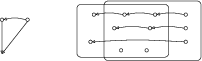
Figure 2: The definition and behavior of the π mapping underlying the exchange property in products of threshold variables.
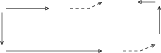
Figure 4: Commutativity of key normal form and threshold substitution operations in products over threshold variables.
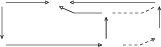
Figure 1: Illustration of the normal form computation in products of 1-sums, clarifying the relationship between bounded/periodic variables and threshold abstractions.
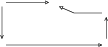
Figure 3: Commutative diagram for normal form reductions with variable-specific least common multiples, supporting the general exponential bound.
Decision Problems and EXPTIME-Completeness
The improved effective representations have direct implications for classical decision problems. The work establishes that intersection and inclusion problems for recognizable sets given as regular SP-grammars are EXPTIME-complete. Specifically, given n regular grammars, the emptiness of their intersection is EXPTIME-complete, as is the inclusion problem between an arbitrary context-free SP-grammar and a regular one (Theorem~\ref{thm:reg-grammars-problems}). These results refine prior upper bounds and align the complexity with corresponding problems for tree automata.
These completeness results crucially depend on the singly-exponential bounds, which guarantee that the filtering and product constructions central to automata-like decision procedures (such as the Filtering Theorem [courcelle_engelfriet_2012]) remain within exponential resources.
Implications, Generalizations, and Future Directions
The results assert that regular grammars are an effective and computationally tractable means of representing recognizable sets of SP-graphs, and thus provide a solid foundation for further automata-theoretic and logic-based tools operating over graph structures of bounded treewidth.
From a practical standpoint, the tight complexity bounds accord well with possible implementations in automata libraries for verification and synthesis (e.g., Mona, Vata), supporting the application of regular-grammar-based representations in software analysis, circuit design verification, and database querying over graph-structured data.
Theoretically, this work narrows the algorithmic gap between the expressive power of logical (CMSO) and algebraic (recognizer-based) descriptions in the SP-graph context, and highlights natural extensions. For graphs of higher treewidth, extending the regular grammar approach would require careful combinatorial and algebraic refinements, especially in light of recent advances in canonical decompositions for 3- and 4-connected graphs [DBLP:conf/soda/KurkofkaP26] and extensions of recognizability and CMSO-definability [10.1145/2933575.2934508].
The methodology outlined for SP-graphs can be potentially adapted to related graph classes such as synchronized series-parallel graphs (SSPGs) and other bounded-treewidth classes, possibly impacting the complexity of translation between automata-based, logic-based, and grammar-based representations.
Conclusion
This paper constructs a comprehensive algebraic/combinatorial theory for the effective syntactic representation of recognizable sets of series-parallel graphs via regular grammars. The key technical result is the reduction of the recognizer size from doubly-exponential to singly-exponential in the grammar size. This directly leads to EXPTIME-completeness for fundamental decision problems. Overall, the work consolidates regular grammars as both concise and effective representations for recognizable sets in the domain of SP-graphs, and establishes a model for analyzing similar grammar/recognizability correspondences in more general classes of graphs (2604.24151).

