- The paper details the rapid dynamical evolution of the TOI-201 system, featuring a super-Earth, a warm Jupiter, and a brown dwarf with observable orbital changes.
- Advanced observational methods, including TESS photometry and Gaia astrometry, yield a 3D orbital blueprint, capturing mutual inclinations and eccentricities.
- Secular interactions hint at real-time variations within the system, offering unprecedented insight into planetary dynamics and formation.
- The paper details the rapid dynamical evolution of the TOI-201 system, featuring a super-Earth, a warm Jupiter, and a brown dwarf with observable orbital changes.
- Advanced observational methods, including TESS photometry and Gaia astrometry, yield a 3D orbital blueprint, capturing mutual inclinations and eccentricities.
- Secular interactions hint at real-time variations within the system, offering unprecedented insight into planetary dynamics and formation.
- The paper details the rapid dynamical evolution of the TOI-201 system, featuring a super-Earth, a warm Jupiter, and a brown dwarf with observable orbital changes.
- Advanced observational methods, including TESS photometry and Gaia astrometry, yield a 3D orbital blueprint, capturing mutual inclinations and eccentricities.
- Secular interactions hint at real-time variations within the system, offering unprecedented insight into planetary dynamics and formation.
Dynamical Architecture and Rapid Orbital Evolution in the TOI-201 System
Introduction
The TOI-201 system, discovered via combined TESS photometry, ground-based follow-up, high-precision radial velocities, and astrometry, presents an archetype for the study of rapid dynamical evolution in compact multiplanet systems with massive outer companions. This system comprises a super-Earth (TOI-201~d), a warm Jupiter (TOI-201~b), and a low-mass brown dwarf (TOI-201~c) with orbital periods of 5.8, 53, and 2900 days, respectively. The dynamical timescales on which the architecture of this system evolves are short by astrophysical standards—on the order of decades to centuries—making it exceptional for direct observation of ongoing orbital evolution. This essay aims to detail the ensemble of observational diagnostics, the constraints on system architecture, and the theoretical implications for planetary system formation and dynamical evolution.
Observational Evidence and System Architecture
A combination of TESS and ground-based transit timing variations (TTVs), high-cadence spectroscopic radial velocities (RVs), and Hipparcos-Gaia astrometry enables robust, simultaneous constraints on planetary masses, orbits, and three-dimensional architecture.
The super-Earth TOI-201~d and warm Jupiter TOI-201~b were first detected as transit candidates in TESS data; the warm Jupiter was subsequently confirmed by RVs. A third, massive outer companion (TOI-201~c) was identified through a single, partially observed transit event and a co-incident, abrupt change in the TTV sequence of TOI-201~b. The joint analysis of TTVs, RVs, and proper motion acceleration from Hipparcos-Gaia astrometry led to a fully constrained, 3D orbital solution for the system, with the longitude of ascending node of TOI-201~c robustly measured as Ωc=211±11∘.
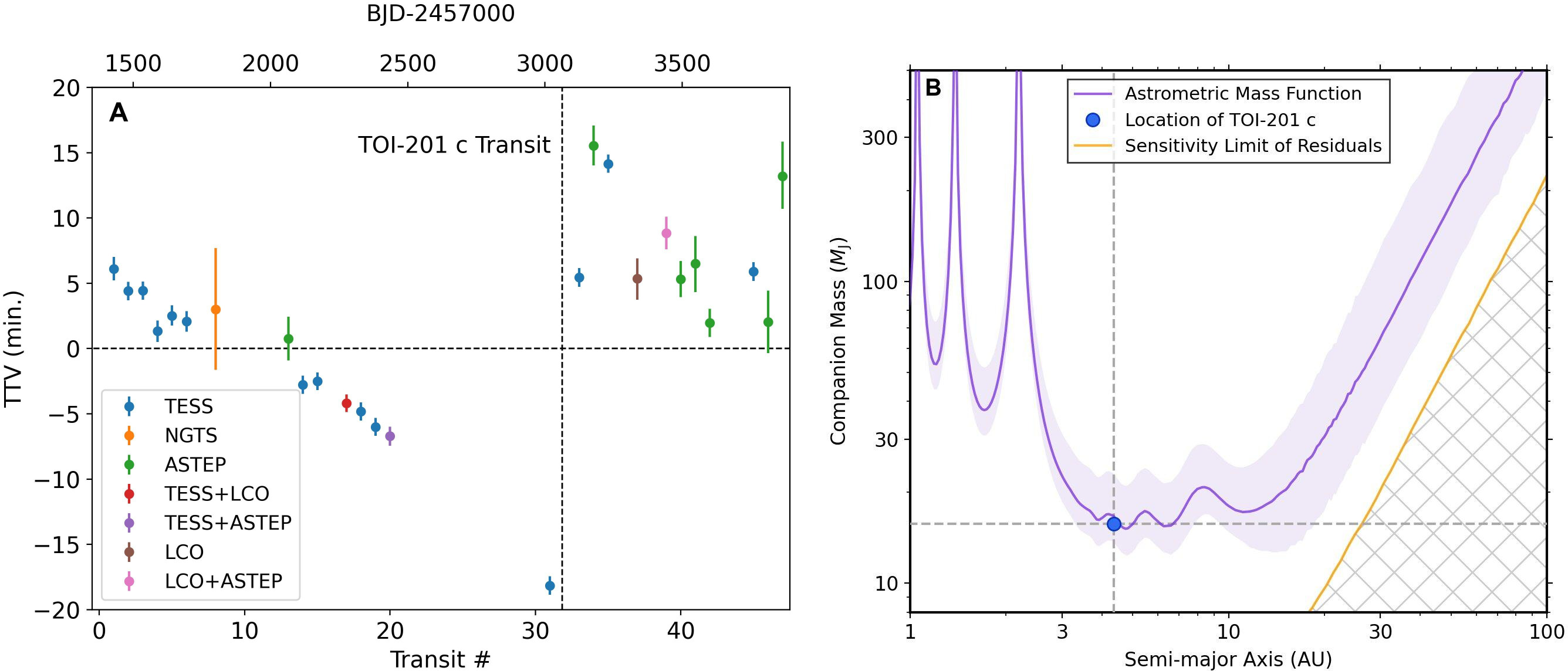
Figure 1: TTVs for TOI-201~b showing both a gradual secular trend and a sharp discontinuity synchronous with the outer companion's transit; Hipparcos-Gaia astrometry reveals acceleration consistent with a ∼15~MJ outer companion, setting upper limits on other massive perturbers.
The warm Jupiter has Mb=0.52±0.02MJ, eb=0.275±0.009; the brown dwarf companion orbits with Mc=15.7±0.3MJ, Pc=2890±20 d, a highly eccentric ec=0.651±0.006 orbit, and mutual inclinations of 13−2+2, 28−14+11, ∼0 degrees between b–c, b–d, and c–d, respectively. Notably, the outermost companion is the longest-period transiting body found by TESS to date.
Photodynamical and Joint Modeling
The system's dynamical architecture is constrained via comprehensive photodynamical modeling using pyTTV, simultaneously fitting TESS/ground-based photometry and multi-instrument RVs for all three bodies. The models correctly reproduce the sequence of TTVs—including the sharp post-periastron discontinuity—validating the presence and properties of the massive exterior body.
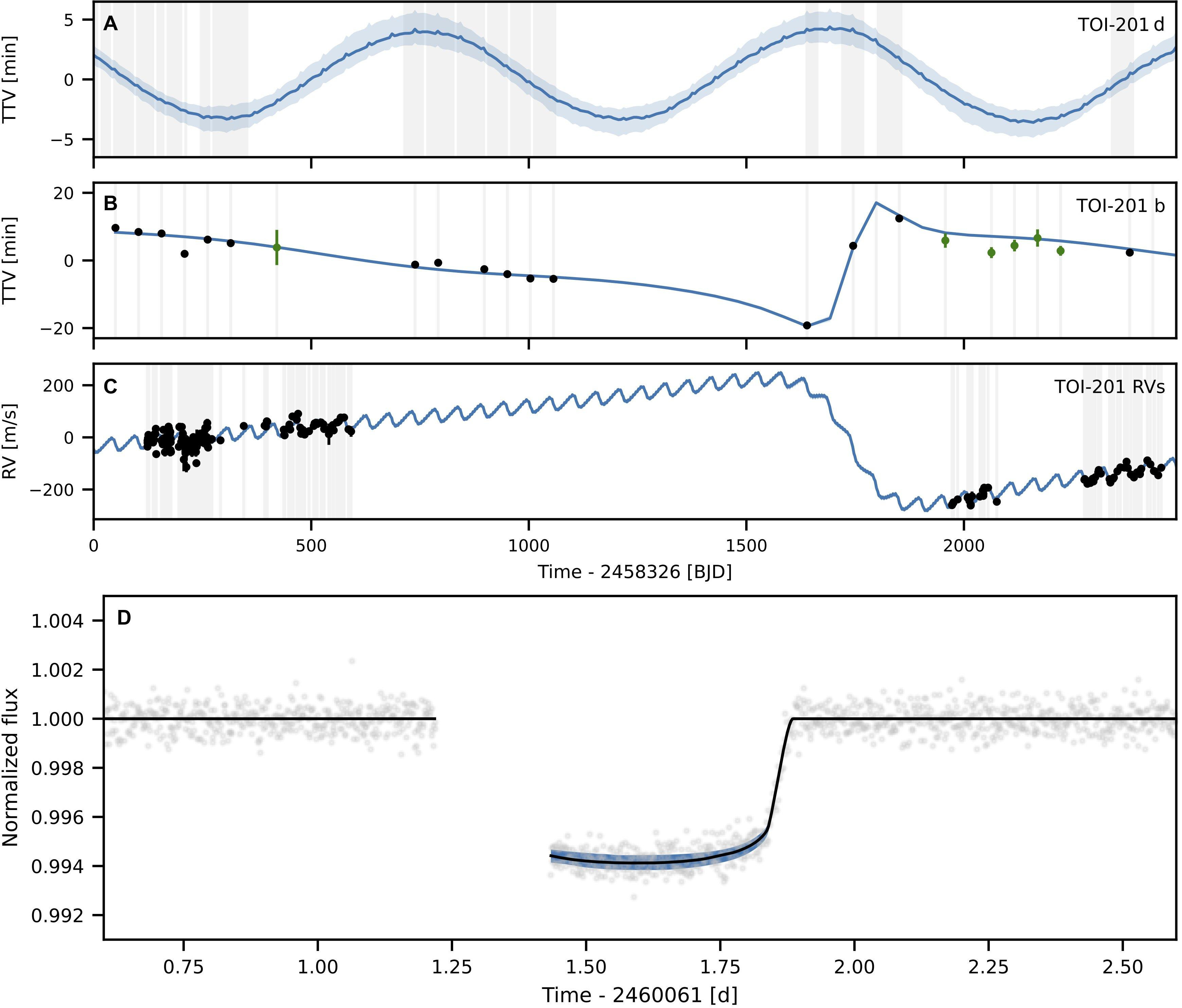
Figure 2: Photodynamical and RV/astrometry model posteriors for TOI-201, illustrating the quality of the fit for TTVs, RVs, and the partial transit of the outer brown dwarf.
The mutual inclinations between the three orbits are statistically inconsistent with coplanarity (∼1 for b–c). The bulk density of the super-Earth, ∼2 g cm∼3, is twice Earth's, and its ∼4 is non-negligible. The outer brown dwarf is strongly constrained in both period and eccentricity via joint RV–transit–astrometry solutions.
Dynamical Evolution and Stability
Numerical integrations and chaos indicators (MEGNO) confirm that the present-day architecture is long-lived, with only a small probability for dynamical instability (e.g., ejection or tidal ingestion of TOI-201~d) on Myr timescales. Nonetheless, secular interactions incite significant temporal evolution in the transit parameters and mutual inclinations of the planets on observable timescales.
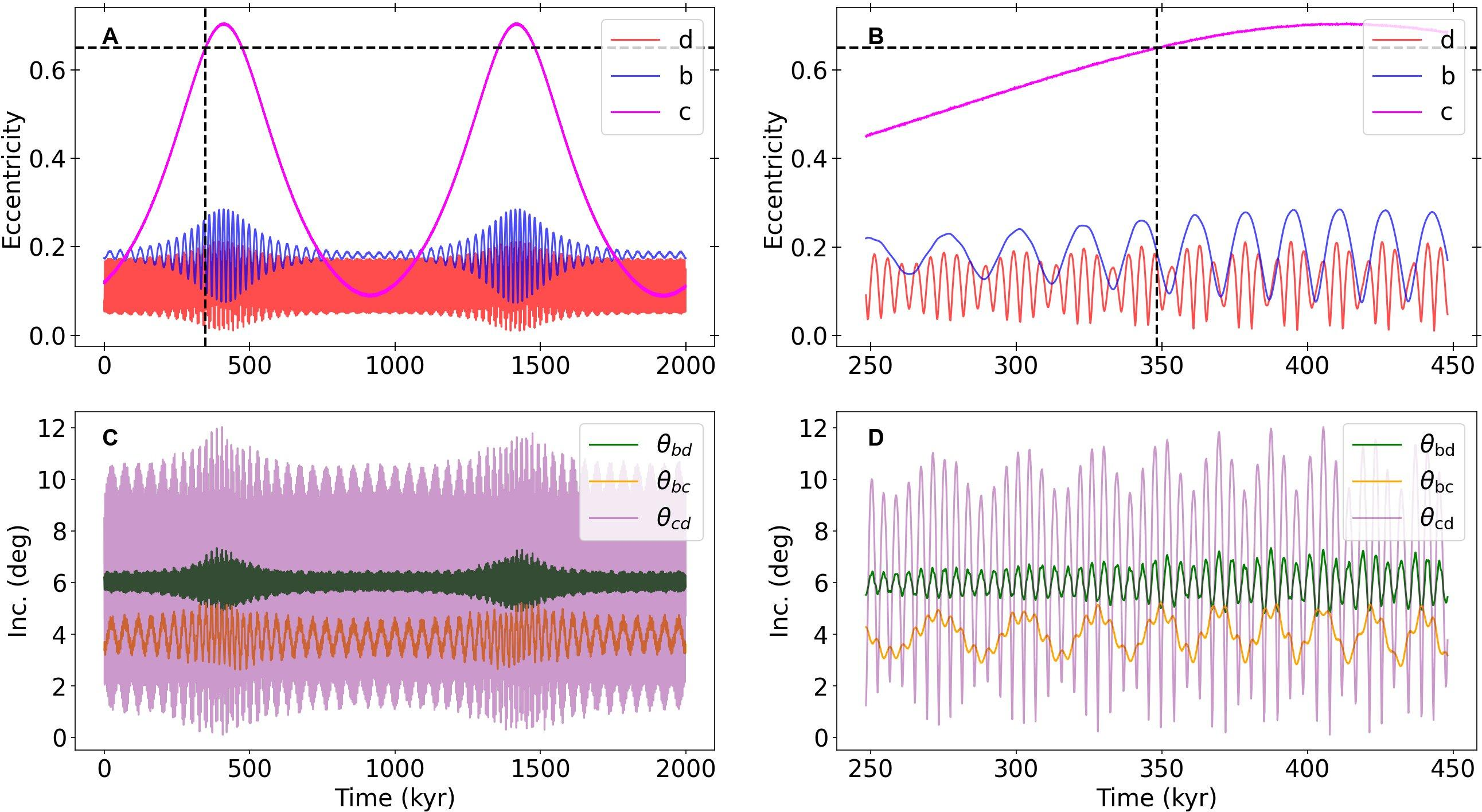
Figure 3: vZLK (von-Zeipel-Lidov-Kozai) simulation for a hypothetical stellar companion, yielding large eccentricity/inclination oscillations in the outer brown dwarf and inner planets consistent with the present configuration.
Secular torques induce measurable variations in the transit impact parameters for b and d, with the timescale to loss of "cotransiting" geometry being just ∼5200 years. The dynamics are dominated by nonzero mutual inclinations, prompting rapidly evolving transit geometries observable over decadal intervals.
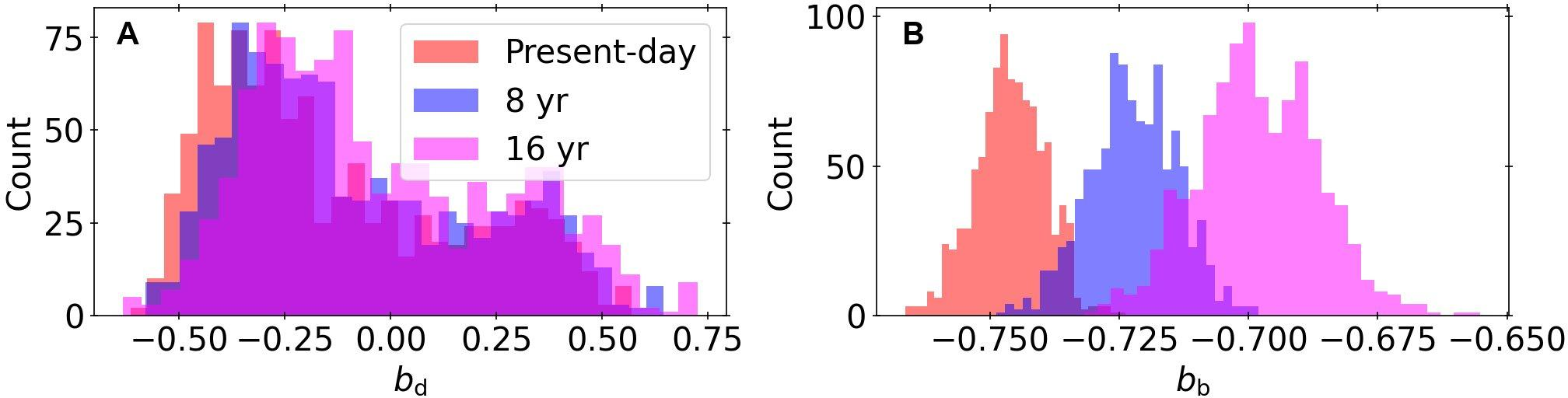
Figure 4: Distribution of the impact parameters for TOI-201~d and b over decade timescales, charting their evolution due to secular interactions.
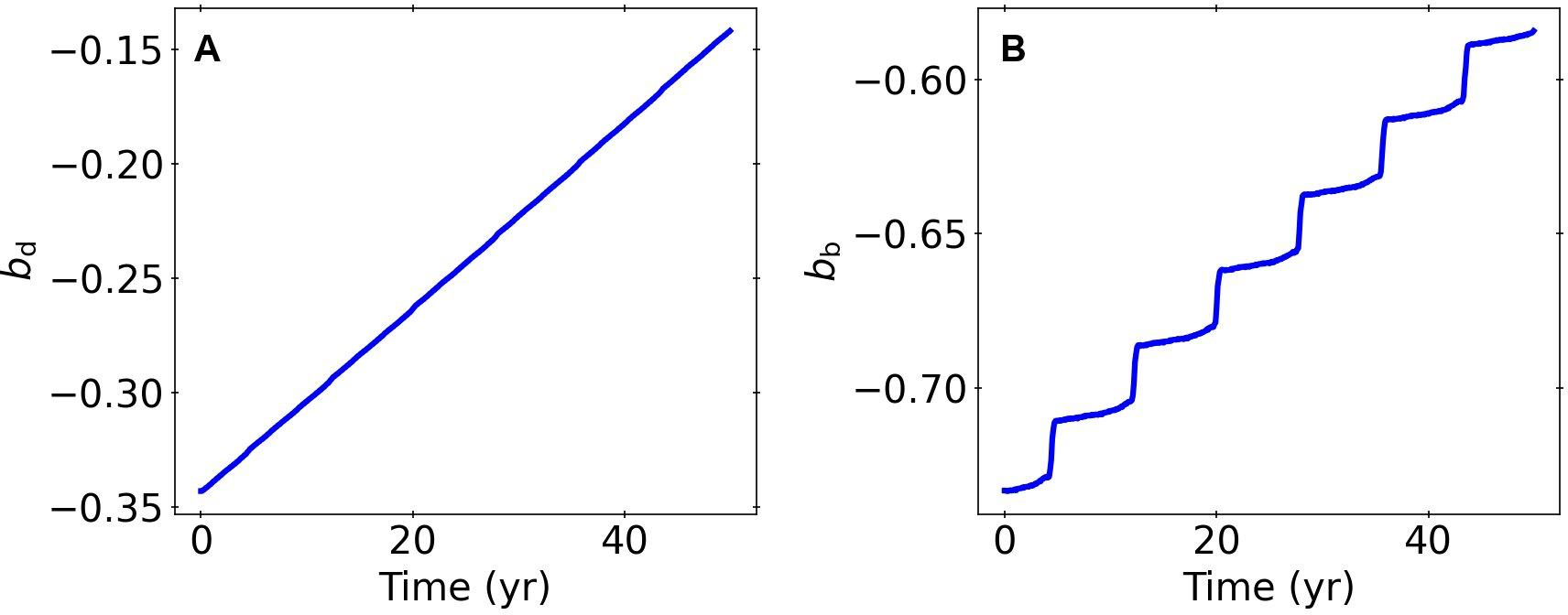
Figure 5: Short-term time series for the impact parameters, showing stepwise changes for b at each periastron passage of c, and a secular drift for d.
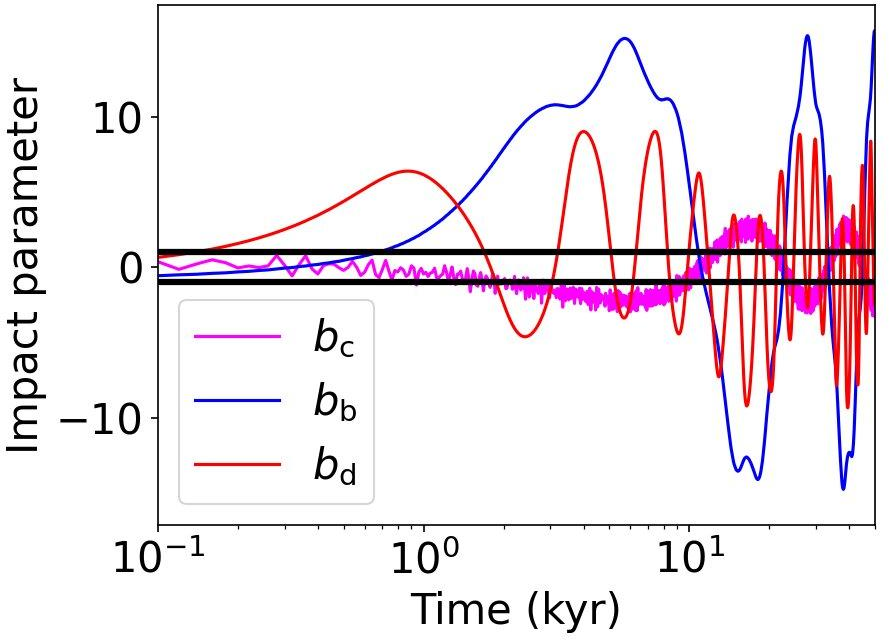
Figure 6: Long-term prediction for impact parameters over 50 kyr, highlighting intervals of observable transits for each planet.
The high eccentricity of TOI-201~c is inconsistent with excitation via disk-planet interactions or high-eccentricity migration, as such migration would lead to loss of TOI-201~d. Stellar flybys are ruled out due to extremely low cross-section under plausible open cluster conditions. Two plausible scenarios remain: planet–planet scattering, and vZLK cycles induced by an unseen stellar companion.
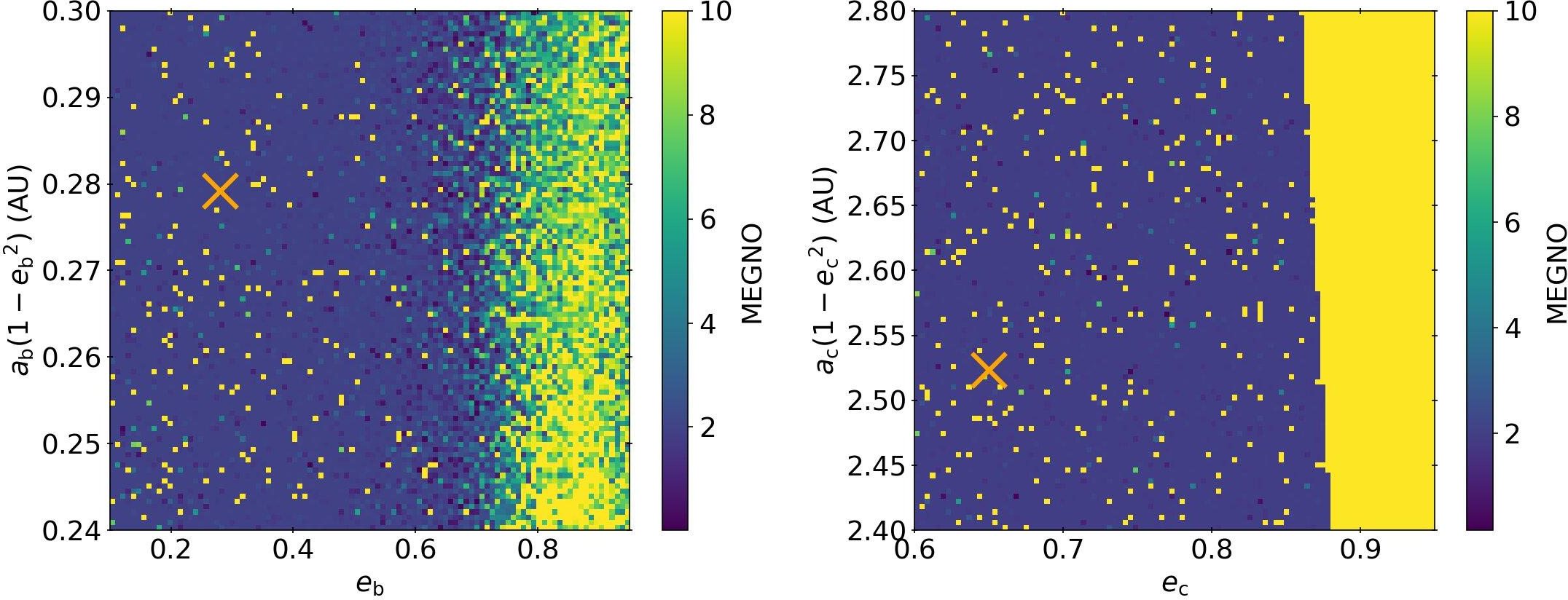
Figure 7: MEGNO maps demonstrate that the current system does not exhibit signatures of high-eccentricity tidal migration, with ∼6 leading to chaos or ejection.
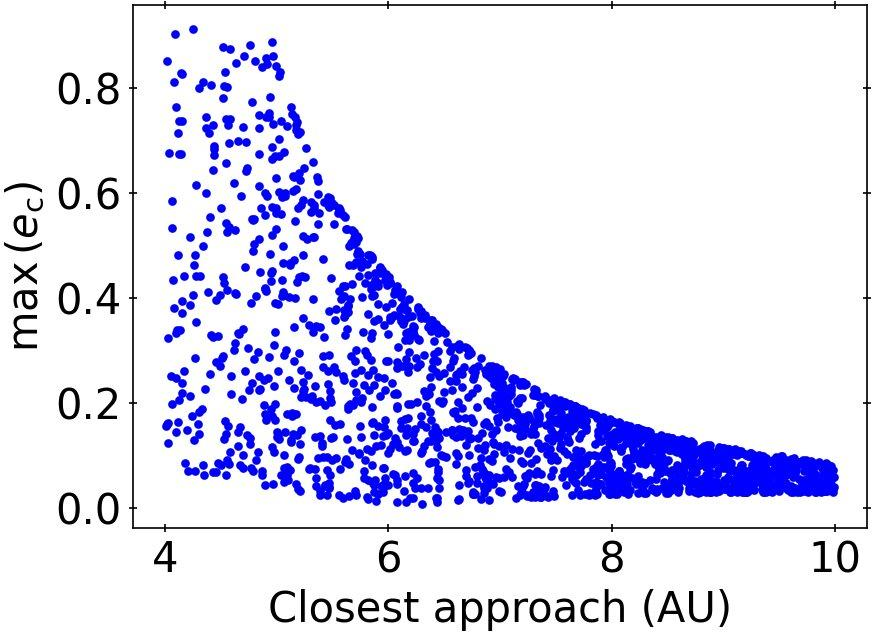
Figure 8: Stellar flyby simulations indicate only hyperbolically close passages (∼76 au) could generate the observed ∼8, but these are extremely rare.
N-body integrations of planet–planet scattering reproduce the current architecture in only ∼9 of runs, and only under finely tuned initial conditions with rapid instability. In contrast, simulations including a sub-solar mass external perturber (putative stellar companion) robustly excite the observed eccentricities and mutual inclinations in all three detected bodies via vZLK oscillations on MJ0 300 kyr cycles.
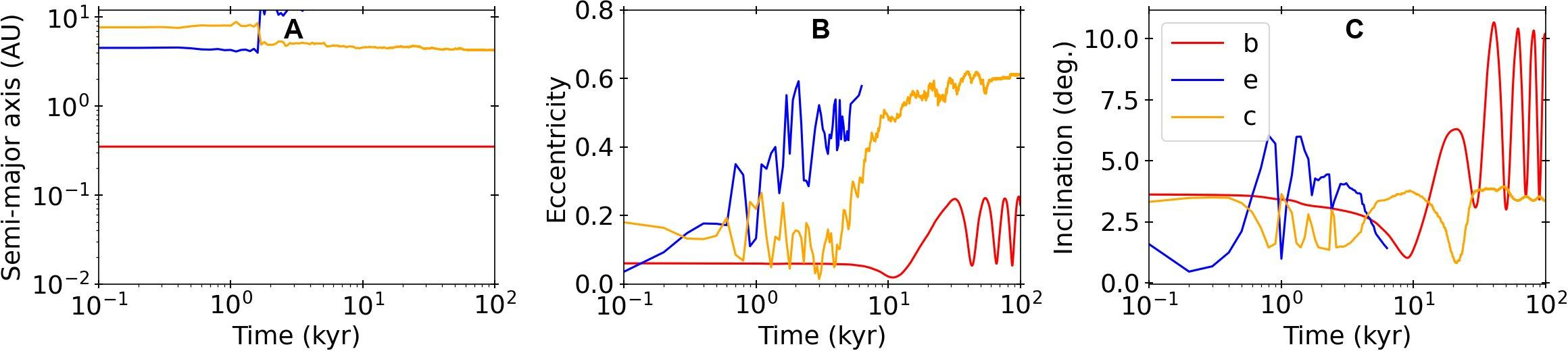
Figure 9: Example planet–planet scattering simulation: ejection of a now-absent fourth planet drives up MJ1 and the mutual inclination.
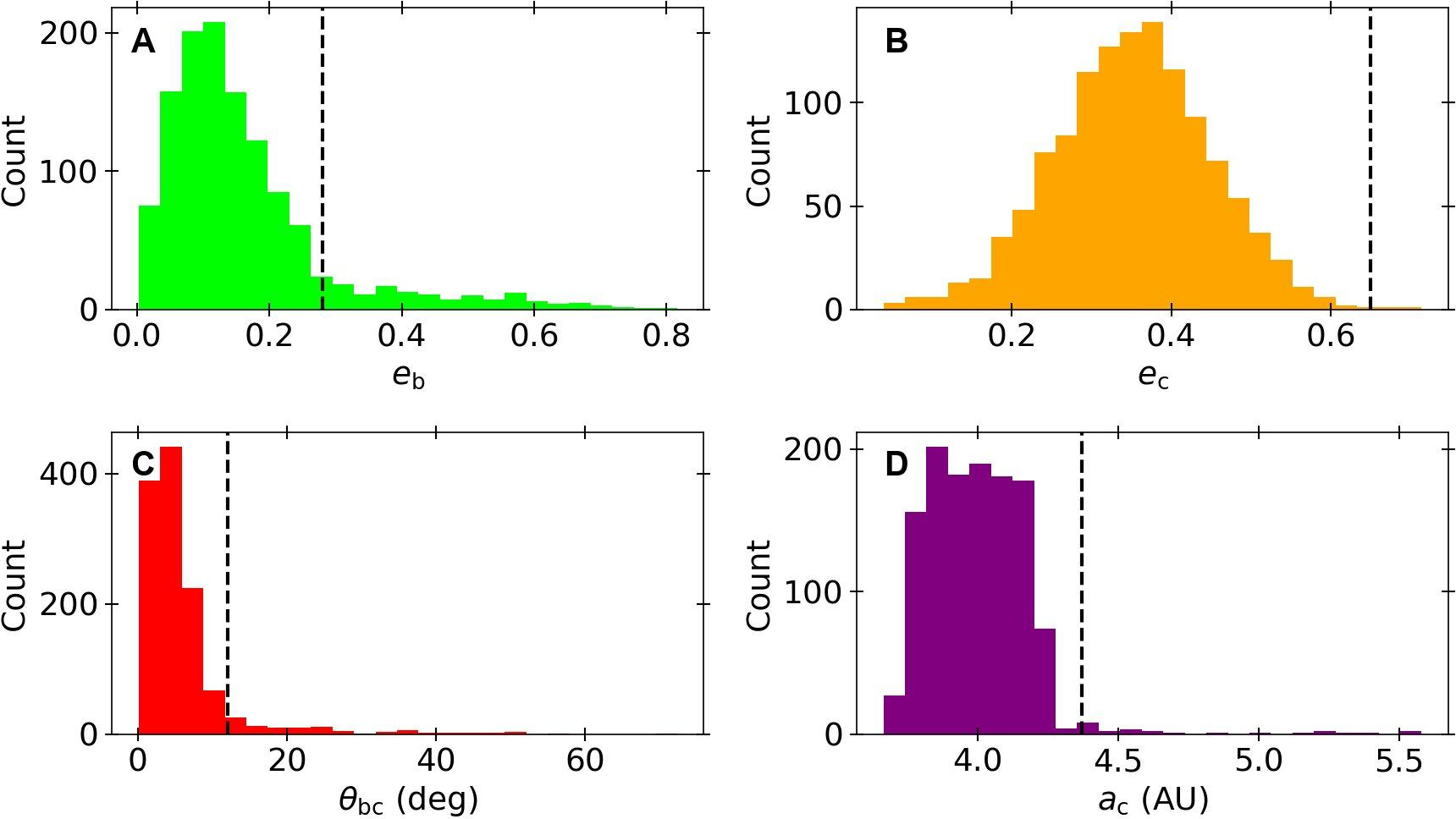
Figure 10: Parameter distributions for planet–planet scattering outcomes; the observed system lies at the extreme tail, underscoring the requirement of fine-tuned initial conditions.
Stellar companion searches (MOLUSC) indicate parameter space remains for a low-mass, wide binary companion at MJ2 AU.
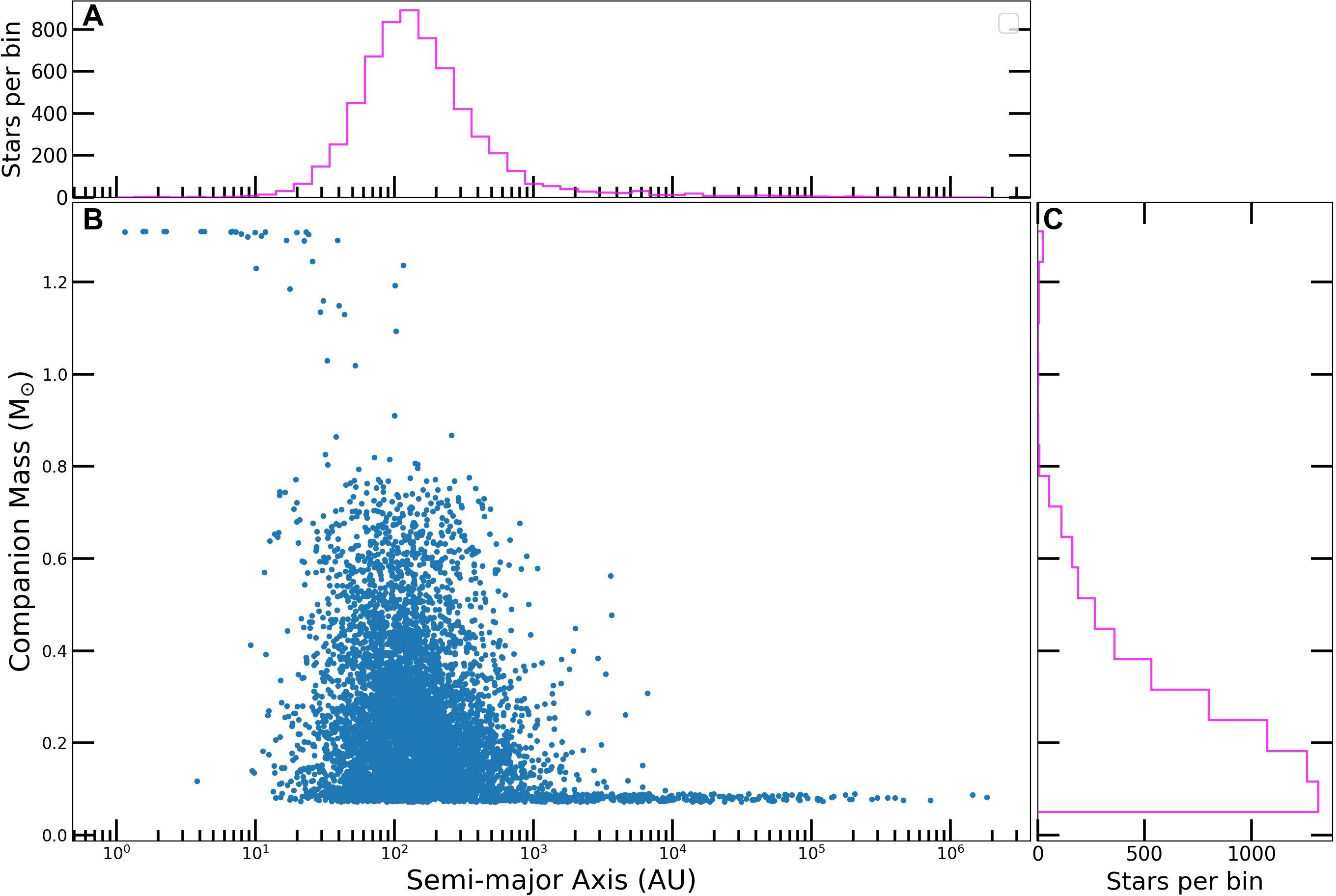
Figure 11: Stellar companions compatible with extant data, showing a prevalence for low masses and semi-major axes MJ3 AU.
Brown Dwarf Radius and Age: Substellar Structure in Context
TOI-201~c, at MJ4, is a benchmark object straddling the planet/brown dwarf divide, with its radius (MJ5) lying MJ6 below theoretical predictions for its age (MJ7 Myr) from brown dwarf cooling models, assuming solar metallicity and cloud-free atmospheres.
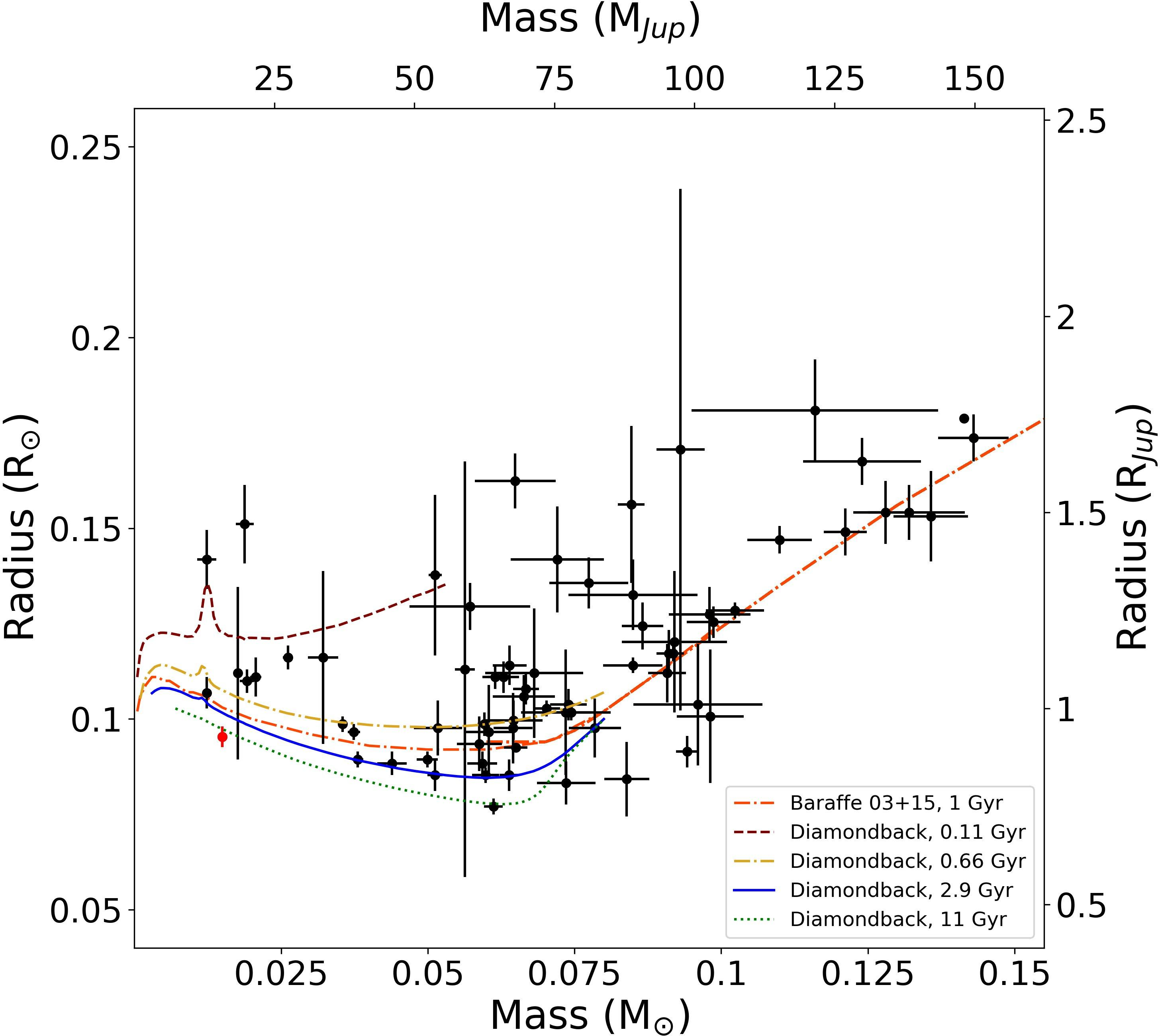
Figure 12: Mass–radius diagram for transiting brown dwarfs and low-mass stars, illustrating that TOI-201~c has a radius anomalously small for its inferred age and mass, compared to model tracks.
Given its large semi-major axis and low irradiation, the brown dwarf is effectively isolated, so radius inflation via insolation is excluded. The observed compactness could indicate subsolar metallicity, lack of atmospheric cloud opacities, or a yet-uncharacterized physics in brown dwarf cooling. Atmospheric characterization of TOI-201~c with JWST will be crucial for resolving this discrepancy.
Prospects for Observational and Theoretical Advancement
Continued high-precision photometric and spectroscopic surveillance of TOI-201 will enable the direct observation of secular changes in transit geometry, validating theoretical predictions of rapid dynamical evolution in high-inclination multi-planet systems with massive outer companions. A Rossiter-McLaughlin measurement of TOI-201~b's spin–orbit angle is achievable given the large MJ830~m/s RM signal and will further constrain the system's angular momentum architecture.
TOI-201 is unique among systems with both a warm Jupiter and a massive, transiting brown dwarf, and is one of the best targets for atmospheric characterization by virtue of stellar brightness and orbital geometry. The acknowledgement of non-coplanarity and the possibility of real-time dynamical evolution open a new window on planetary system evolution.
Conclusion
The TOI-201 system exemplifies a rapidly evolving multiplanet architecture governed by secular and quasi-secular interactions in the presence of a massive (brown dwarf) outer companion. Its precise characterization, enabled by the synergy of transit photometry, radial velocities, and astrometric acceleration, sets a new standard for 3D orbital solutions in exoplanetary science. The system challenges standard formation and migration scenarios, with evidence favoring vZLK cycles driven by an undetected stellar companion. As the ongoing evolution is observable on decadal timescales, TOI-201 will serve as a laboratory for real-time tests of planetary dynamical theory, formation models, and substellar atmospheric evolution (2604.23929).