- The paper presents a QED framework using the Bethe-Salpeter equation to model photon-mediated entanglement in double-layer Dirac materials.
- It demonstrates the role of cavity geometry, self-energy, and coherence time in modulating momentum-resolved entanglement profiles.
- Numerical results reveal a sharp crossover to strong entanglement, identifying regimes for potential Bell-state generation in solid-state systems.
Momentum-Space Entanglement in Double-Layer Dirac Materials: A QED Approach
Introduction and Theoretical Framework
The study provides a quantum field theoretic (QFT) analysis of momentum-space entanglement in a coupled double-layer system constructed from massive Dirac materials. Within a planar electromagnetic cavity, interlayer photon-mediated interactions between two Dirac quasiparticles are modeled using a (1+2) dimensional framework. The low-energy excitations in each honeycomb lattice layer are described by massive Dirac fermions, with the mass given by spin-orbit coupling rather than the electron rest mass, as is typical for materials like silicene, germanene, and related compounds.
The theoretical formalism starts from the effective tight-binding Hamiltonian for honeycomb lattices, leading to Dirac-like spectrum with a tunable gap. The coupling of two spatially separated layers is exclusively mediated via the quantized electromagnetic field modes of a planar microcavity, with the photon propagator incorporating cavity geometry and confinement (Figure 1).
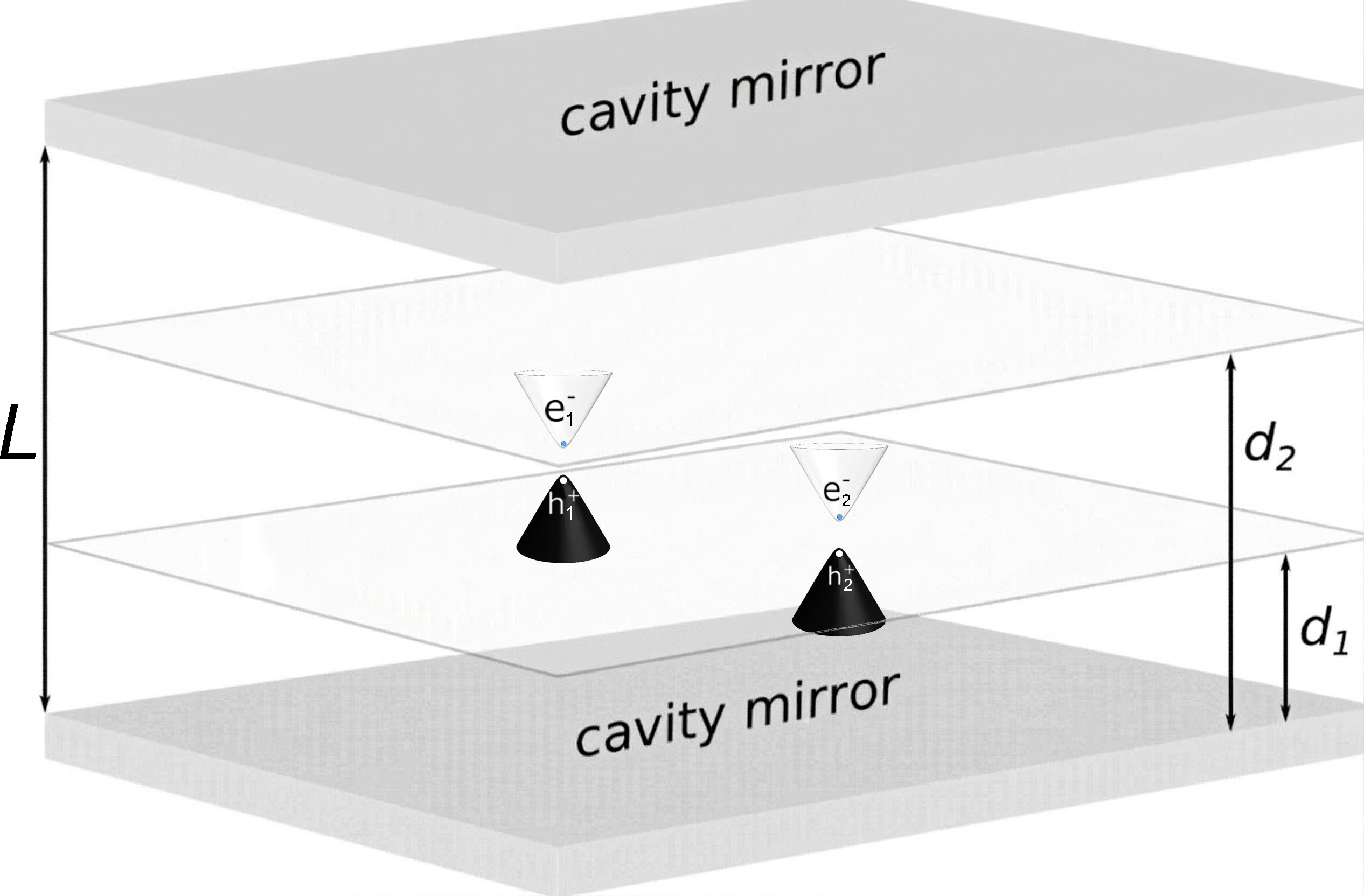
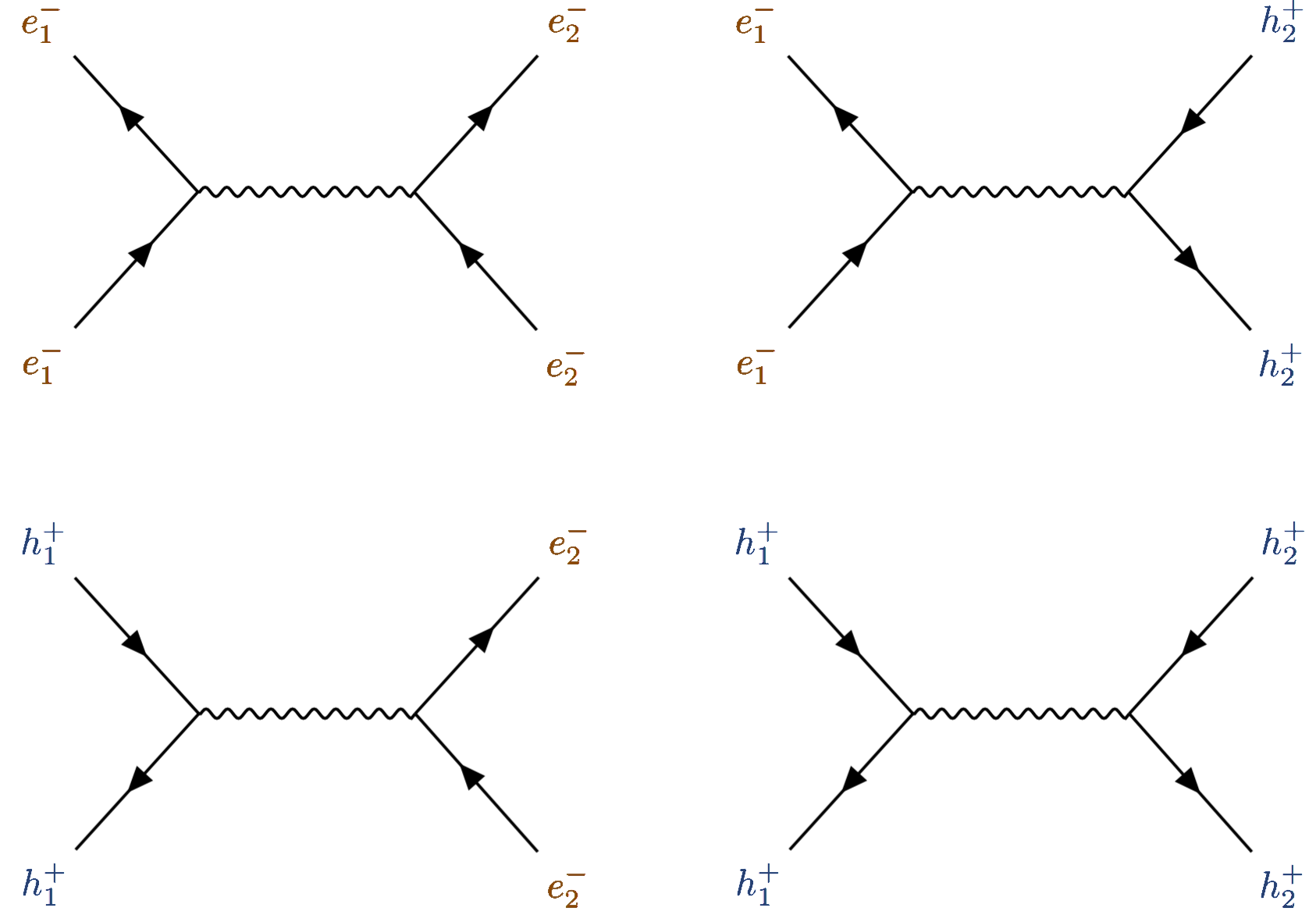
Figure 1: Schematic of the gapped Dirac-cone structure (top) and the four virtual-photon-mediated interlayer scattering channels (bottom), which enter into the Bethe-Salpeter construction for the two-body state.
The microscopic interaction is handled by deriving the Bethe-Salpeter equation within the ladder (single-photon-exchange) approximation. Self-energy corrections are included phenomenologically in the electron propagators, parametrized by complex quantities whose real and imaginary parts correspond to mass renormalization and coherence time (decay rate), respectively. This allows the model to interpolate between perturbative and strongly dressed quasiparticle scenarios, and to probe the dependence of entanglement on realistic dissipation effects.
Bethe-Salpeter Equation and Entanglement Quantification
The Bethe-Salpeter equation is formulated for the two-body wavefunction in momentum space, including both bare and dressed electron propagators. The kernel incorporates the full photon propagator and Dirac spinor structure. For practical computations, a Born-level (first iterative) correction to the free two-body state is employed; while not yielding non-perturbative eigenstates, this approach captures the leading effect of cavity-mediated entanglement and the onset of strong correlation as system parameters are varied.
The bipartite entanglement (specifically, between sublattice pseudospins of each layer at fixed momenta) is quantified via the von Neumann entropy of the reduced density matrix, S1(p)=−Tr(ρ1logρ1), where ρ1 is constructed by tracing the total wavefunction over one layer’s pseudospin. This measurement is conditional on precise values of the quasiparticle momenta, enabling a momentum-resolved mapping of the entanglement landscape.
Numerical Results and Entanglement Phenomenology
Cavity Geometry, Interlayer Separation, and Mode Structure
Systematic calculations examine entanglement as a function of the interlayer positions and cavity mode cutoff. Increasing the number of photon modes leads to improved convergence and moderate quantitative enhancement of the entanglement profile, but the general qualitative features are robust to cutoff for the computed parameter range (Figure 2).
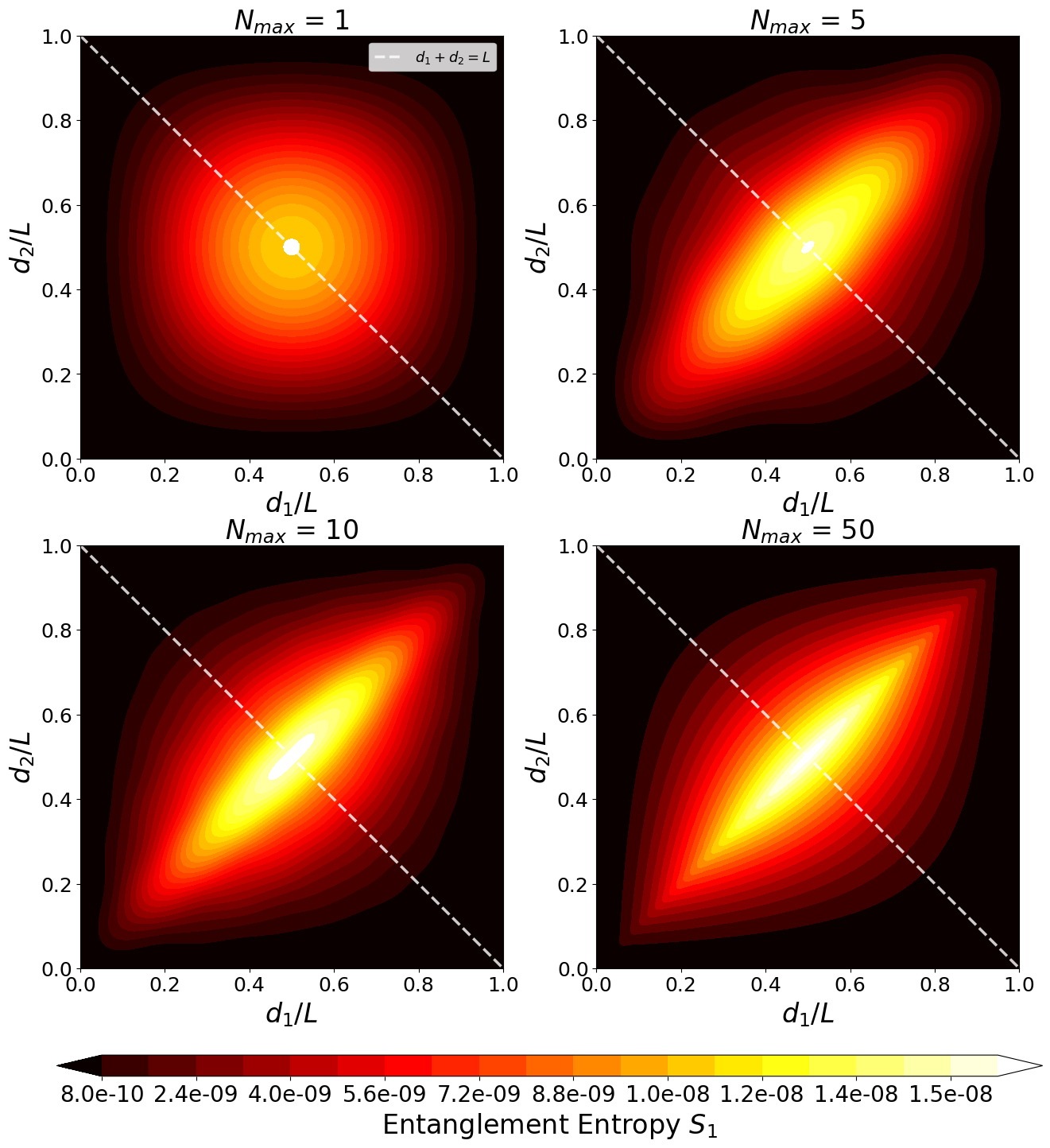
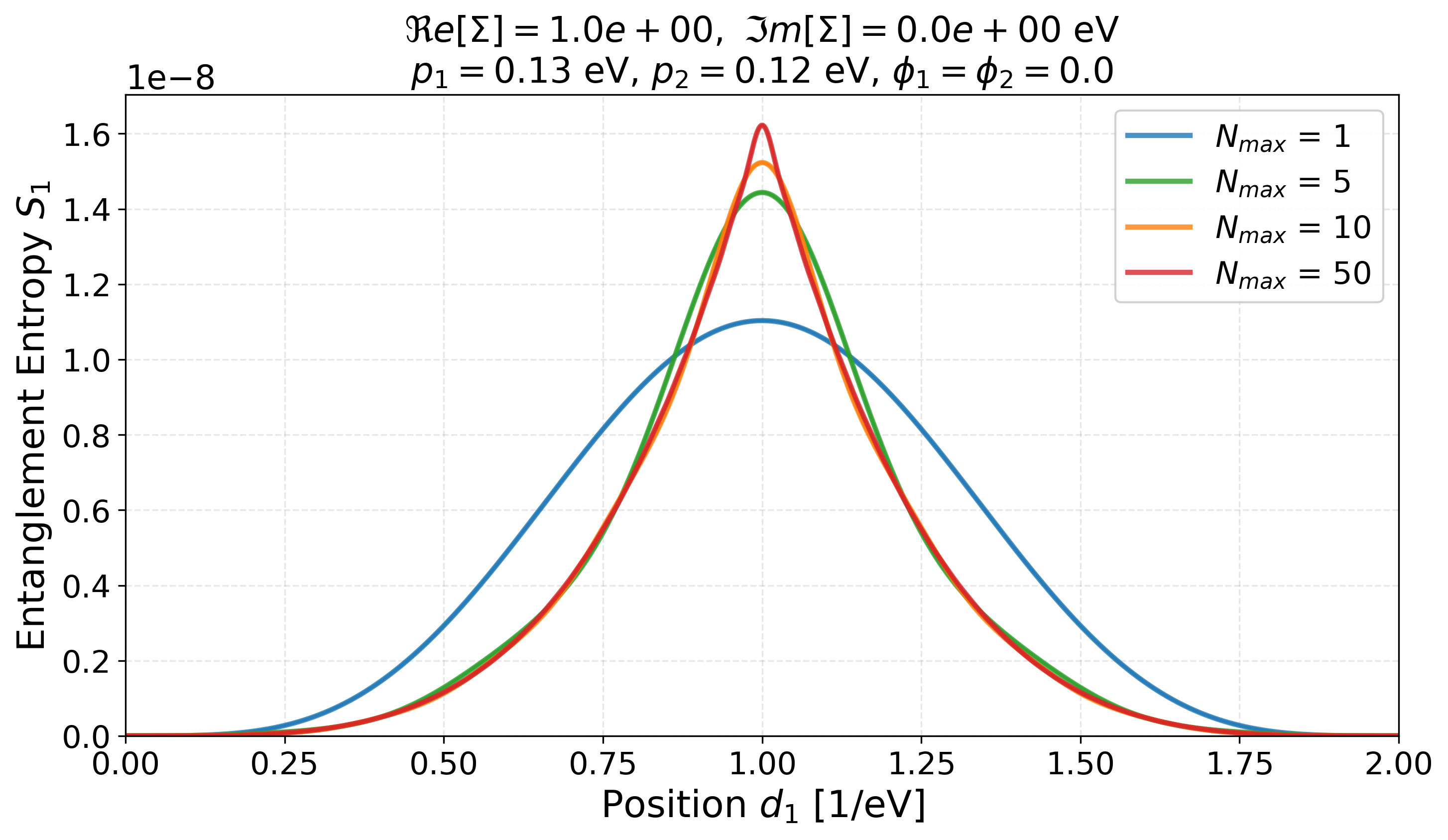
Figure 2: Entanglement entropy S1 as a function of interlayer distances d1 and d2 and photon mode cutoff Nmax. A symmetric geometry d1+d2=L is highlighted.
At large interlayer separation, the entanglement entropy is strongly suppressed---consistent with the declining strength of virtual photon exchange at large distance. The dependence on symmetric versus asymmetric positioning inside the cavity is also found to be significant, reflecting the sinusoidal mode structure of the quantized field.
Self-Energy Enhancement and Crossovers
Introducing quasiparticle self-energy corrections (Σ) fundamentally alters the entanglement landscape. For negligible self-energy, the entropy remains in a perturbative, low-value regime typical of weakly interacting systems. However, as the real part of Σ increases to values ∼10−3 eV, a sharp crossover to strong entanglement is observed, with entropy approaching its maximum possible value for the chosen bipartition (Figure 3).
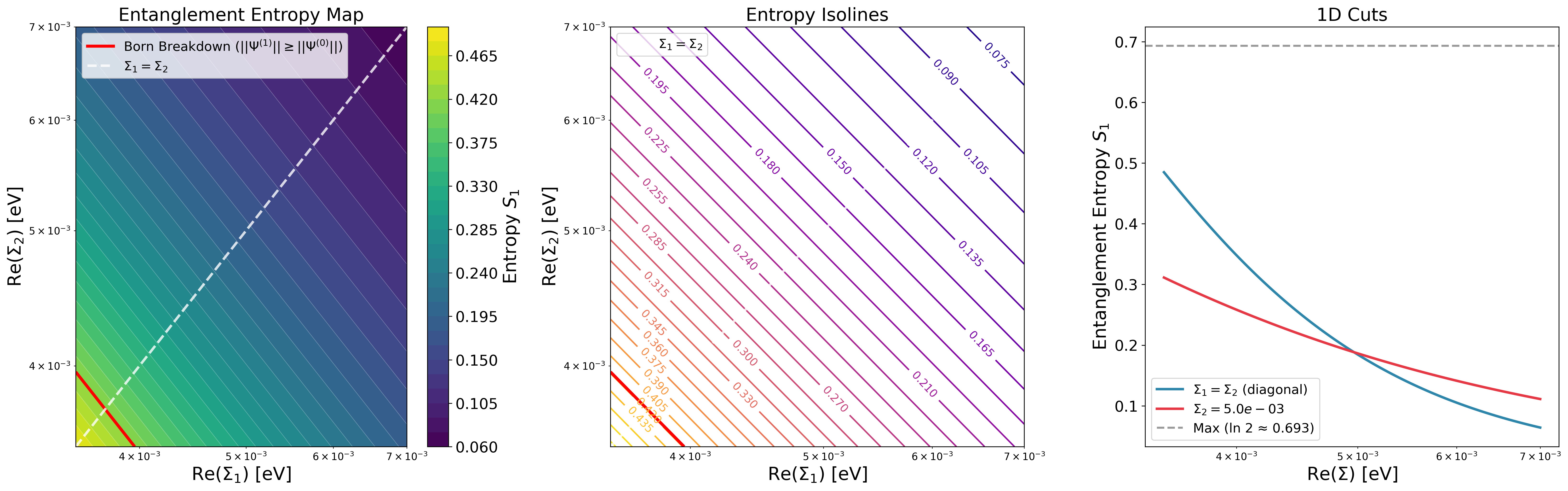
Figure 3: Entanglement entropy ρ10 as a function of the real parts of self-energy parameters ρ11 and ρ12 (logarithmic scale), showing a sharp crossover to high-entropy regime.
This transition marks regions where the normalized conditional state becomes nearly maximally entangled, suggesting the possibility of generating Bell-like states. These enhancements persist over a broad range of physical parameters and are not reliant on fine-tuning. However, for small ρ13, the Born approximation loses validity, and a non-perturbative treatment would be required for quantitative predictions.
Role of Coherence Time and Causality
The stabilization of entanglement depends on the competition between the quasiparticle coherence time (ρ14) and the photon propagation time between layers. Only when the coherence time exceeds the light flight time does the entropy reach a stationary, high value, indicating the establishment of genuine interlayer quantum correlations (Figure 4).
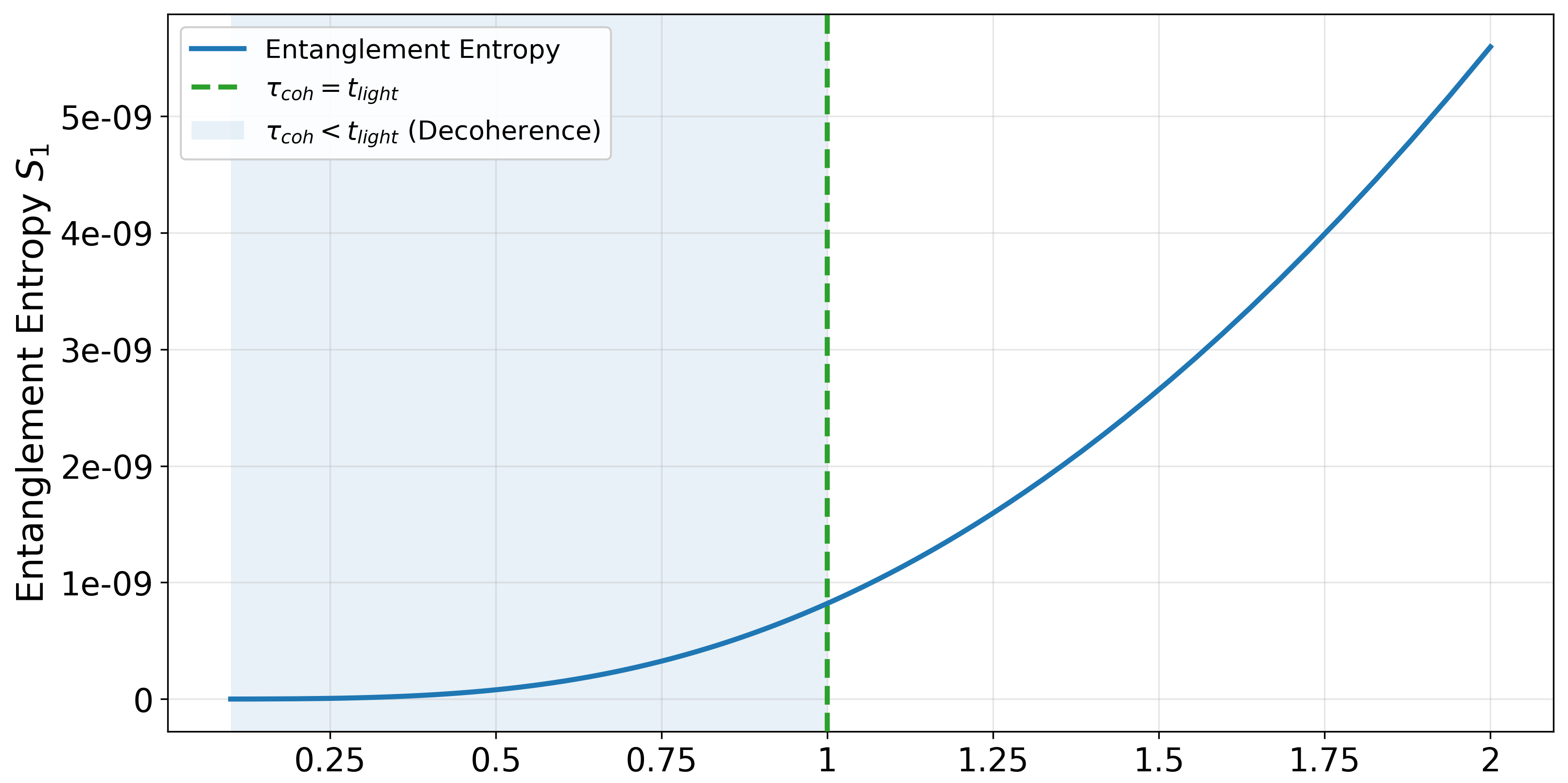
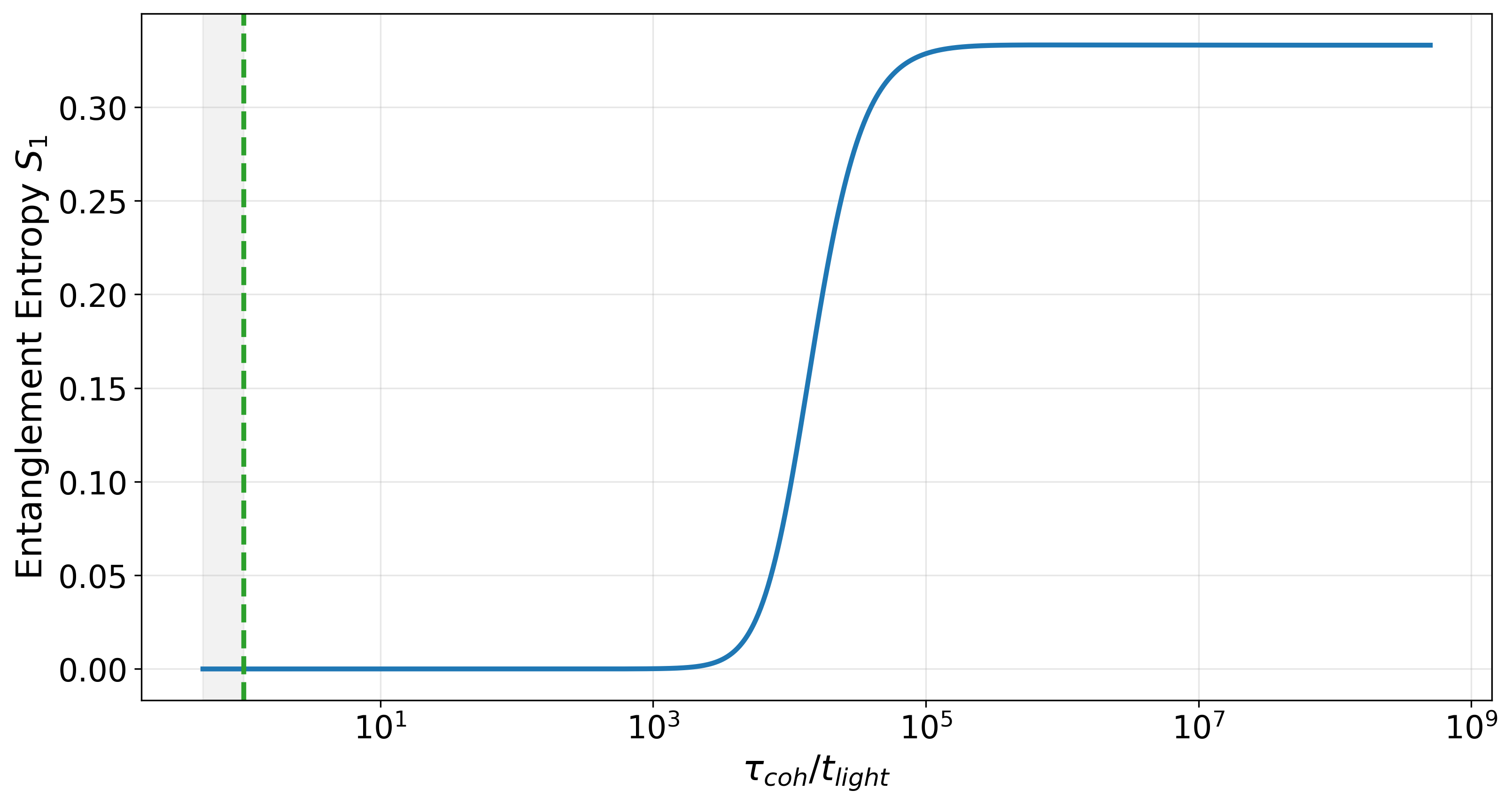
Figure 4: Top: Entanglement entropy as a function of coherence time near the photon travel time between layers. Bottom: Plateau where stationary entanglement is achieved.
Dissipative effects or short quasiparticle lifetimes inhibit the formation of cavity-mediated entanglement, providing a direct link between experimentally measurable timescales and entanglement harvesting protocols.
Momentum Dependence and Kinematic Suppression
The entanglement entropy’s dependence on the momenta of the two quasiparticles reveals further structure: along the diagonal ρ15 (parallel propagation), the entropy drops sharply to zero. This kinematic suppression arises from the impossibility of virtual photon exchange without momentum transfer when the states are precisely matched, leaving the state separable (Figure 5).
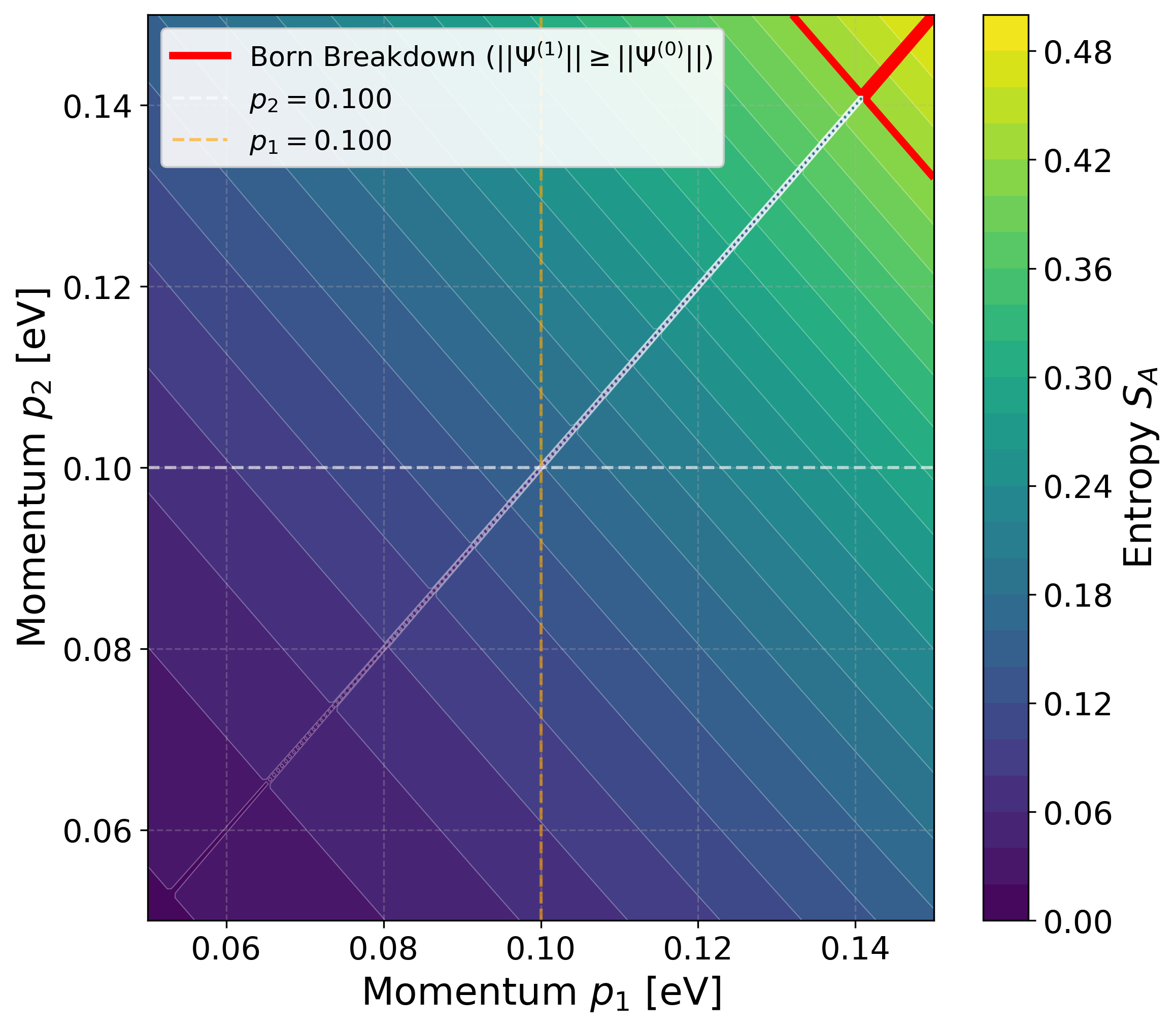
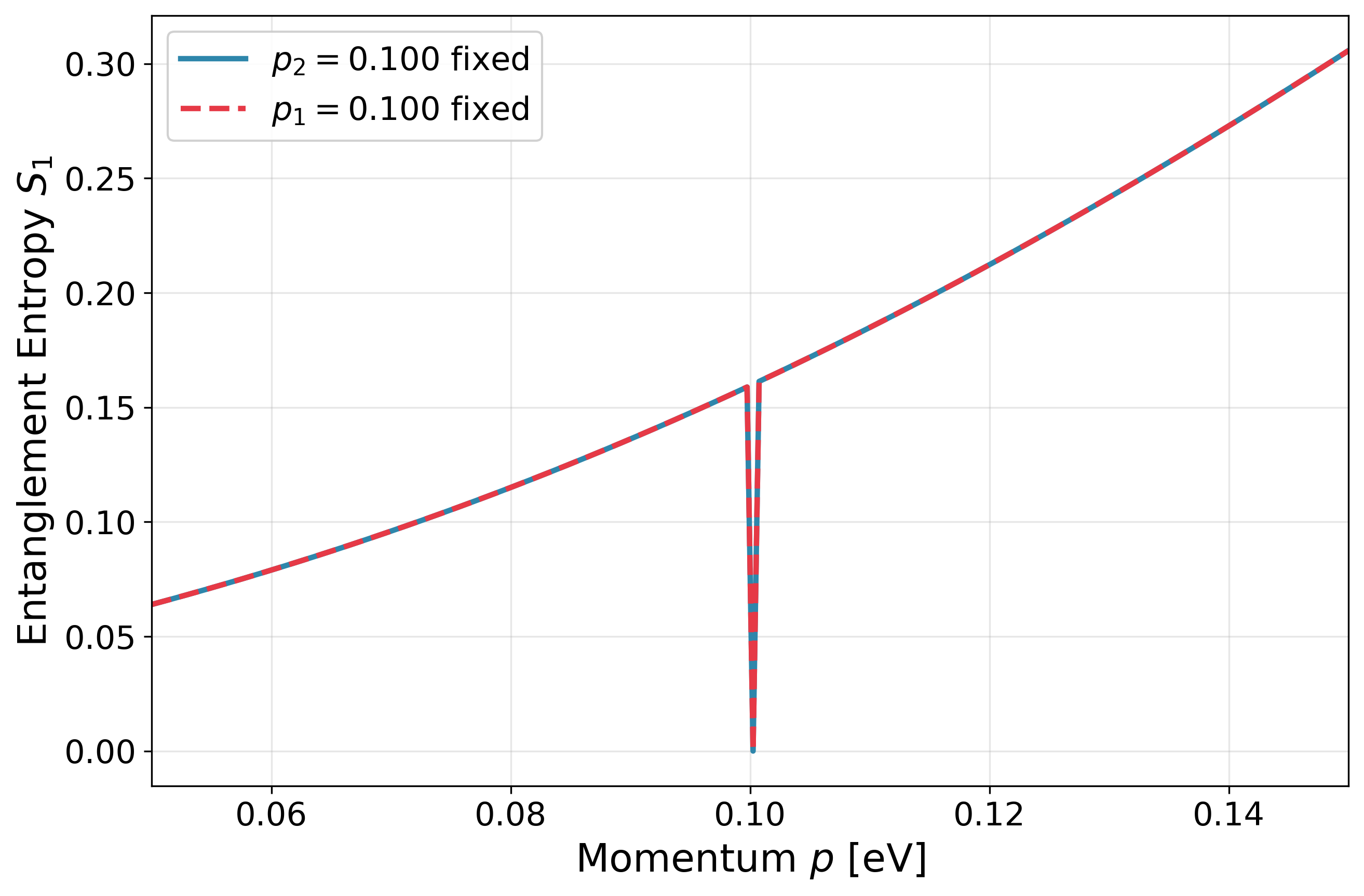
Figure 5: Entanglement entropy ρ16 as a function of the quasiparticle momenta ρ17 and ρ18. Marked suppression appears along the ρ19 diagonal due to kinematic constraints.
Away from this diagonal, finite momentum transfer allows for efficient photon-mediated entanglement, with the crossover identified in the self-energy sector occurring robustly throughout the momentum plane.
Implications and Future Directions
This work extends relativistic QFT machinery (Bethe-Salpeter equation, self-energy, photon propagators) to the context of solid-state quantum information, explicitly bridging spinor geometry, self-energy renormalization, and virtual particle exchange with the practical goal of engineered entanglement.
A central result is the identification of parameter regimes where the conditional pseudospin entanglement entropy achieves values close to the maximal quantum information limit for two-level systems---a precondition for Bell-test and teleportation protocols in solid-state architectures. The clear dependence on self-energy parameters and coherence time provides experimental guidelines for optimizing cavity and material properties in order to realize entangled resources.
However, the treatment remains perturbative (first-order in photon exchange) and does not solve the homogeneous Bethe-Salpeter equation required to establish truly stationary entangled eigenstates; nor does it incorporate full momentum integration or self-consistent quasiparticle dressing. The methodology points directly toward future non-perturbative work, including resummations, more realistic decoherence models, and the study of momentum-integrated entanglement diagnostics.
From a practical perspective, these results support the development of quantum information devices based on cavity-coupled Dirac materials, complementing proposals for graphene-based logic gates and teleportation networks. The identified Bell-like states could be harnessed in quantum communication or metrology, provided sufficient control over dissipation and photon propagation---a challenge, but one within foreseeable experimental reach for engineered 2D materials and cavities.
Conclusion
The paper delivers a technically robust QED description of entanglement generation and manipulation in double-layer Dirac systems coupled via a planar photonic cavity (2604.23673). The occurrence of a sharp entanglement crossover as a function of self-energy, modulated by coherence time and forbidden by kinematic constraints for collinear motion, provides direct links between fundamental relativistic QFT concepts and the design of quantum resources in modern two-dimensional materials. Addressing the open problem of identifying stationary, non-perturbative entangled eigenstates in this context remains an important next step. The framework and results lay the groundwork for systematic engineering of Bell-type correlations in designer quantum materials for solid-state quantum information science.