- The paper introduces a progressive iterative fairing method that enables precise, localized control point adjustments for enhanced smoothing of curves and surfaces.
- It applies an energy-based iterative update rule with dynamic weighting to balance global fairness and local feature preservation, as validated by comprehensive experiments.
- The approach automates control point selection through sensitivity analysis, ensuring convergence and scalability for complex, industrial-grade geometric models.
Progressive-Iterative Fairing of Curves and Surfaces with Localized Control Point Adjustment
Introduction and Motivation
Curve and surface fairing remains a central topic in Computer-Aided Geometric Design (CAGD), driven by the need for high-quality geometric models in industries such as automotive, aerospace, and industrial design. Traditional fairing methods predominantly utilize global adjustments of control points to minimize certain energy functionals representative of fairness, typically requiring the solution of large, dense linear or nonlinear systems. While effective for global smoothing, these approaches suffer from two main drawbacks: lack of precise local control and inefficiency when addressing local anomalies in large models. The absence of localized, parameterized fairness control limits their use in contexts needing local refinement or preservation of distinct features.
This work introduces a progressive-iterative fairing (PIA-based) framework where each control point adjustment is weighted independently, enabling localized control over the fairing process. Iterative adjustment leverages well-defined fairing functionals and balances fairness and approximation through control point-wise weights and normalization factors, achieving both global and local fairing effects without topological changes to initial models.
Methodology
The proposed approach is built upon the Progressive-Iterative Approximation (PIA) scheme, which has been successfully applied to data fitting and geometric modeling due to its convergence guarantees and avoidance of large linear systems. The core of the method is an iterative update rule for the control points of B-spline (or compatible spline-type) curves and surfaces:
Pi[k+1]=Pi[k]+μi[(1−ωi)δi[k]−ωiηi[k]]
where Pi[k] denotes the position of the i-th control point at the k-th iteration, δi[k] is the difference vector to the original control point, ηi[k] is the fairing vector derived from prescribed energy functionals, and ωi, μi are fairing and normalization weights specific to each control point. The framework supports extension to both curves and tensor-product surfaces, with the update structure remaining consistent.
Energy-based fairing functionals used in the computation of ηi[k] typically measure L2 norms of derivatives of the geometric entities, corresponding to stretching, strain, or jerk energies for curves, and incorporating surface partial derivatives for surfaces. By carefully tuning the orders of derivatives, the algorithm can prioritize position, tangent, or curvature smoothness. Importantly, the independence of Pi[k]0 allows targeting of specific control points or regions for fairness improvement, favoring applications where feature preservation or localized enhancement is critical.
Automatic control point selection is integrated by ranking control points according to potential energy reduction Pi[k]1, calculated via sensitivity analysis on fairing energy functional. This mechanism enables data-driven, automated identification of key points for targeted adjustment.
Theoretical Analysis
The paper provides a rigorous convergence analysis of the iterative method, expressing it in matrix form and leveraging properties of strict diagonal dominance and contraction mappings. Under mild, verifiable conditions on the parameters Pi[k]2 and Pi[k]3, convergence to a stationary point is proven. Furthermore, the traditional global energy minimization model is shown to arise as a special case when all fairing weights Pi[k]4 are equal, thus demonstrating strict generality.
Experimental Evaluation and Numerical Results
Comprehensive numerical experiments on B-spline curves and surfaces—including challenging models such as the Dolphin, Shape G, Airfoil, Car, and Mannequin—demonstrate the effectiveness and flexibility of the method. Key findings include:
- Localized Control: By non-uniformly setting Pi[k]5 on problematic regions, localized surface defects are corrected without degrading overall shape or smoothing out intentional features.
- Precision: The approach enables fine-tuning of fairness in selected regions with higher weights, while minimally perturbing regions requiring feature retention through low weights.
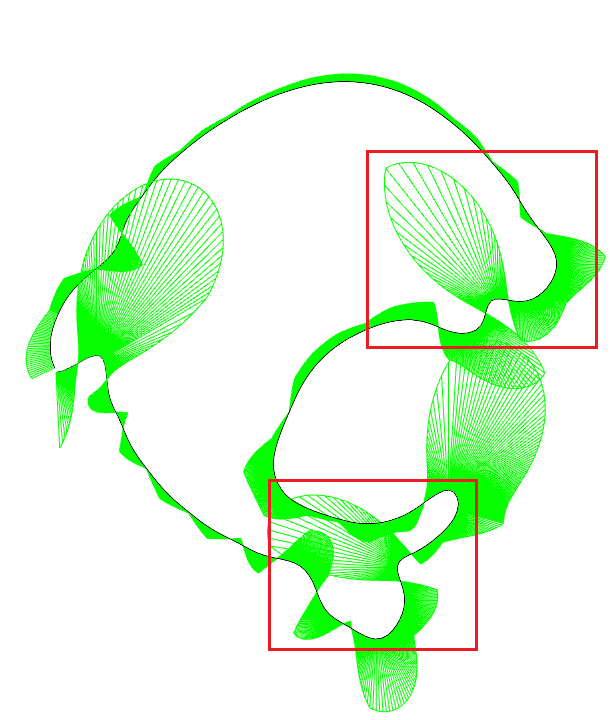
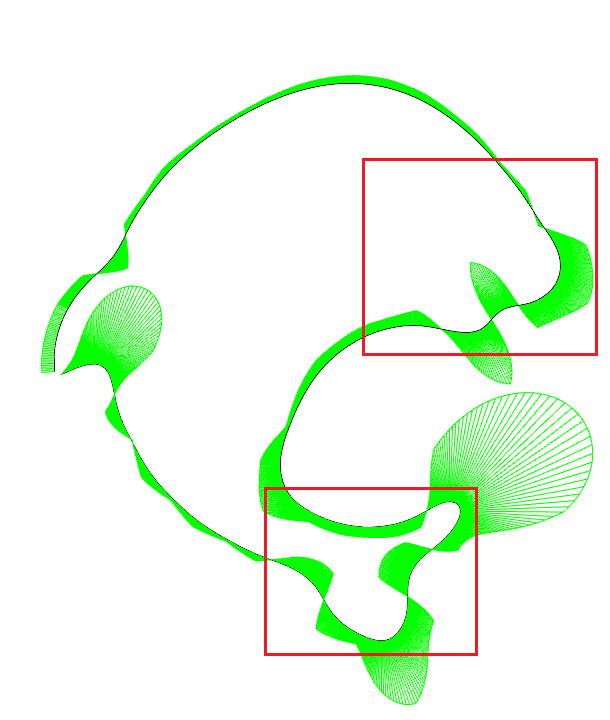
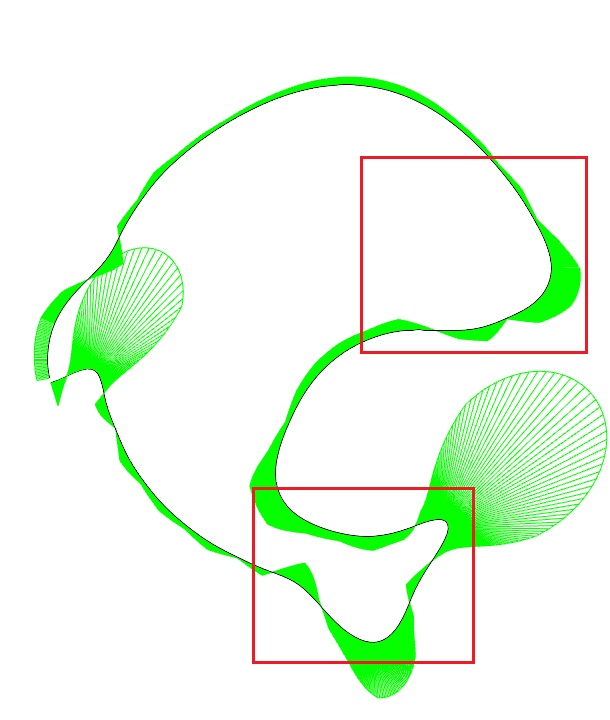
Figure 1: Comparison of the Dolphin curve—original, energy-based fairing, and localized fairing using the proposed method.
- Convergence and Efficiency: The algorithm converges rapidly when using lower-order energies (Pi[k]6 for stretching), with higher values of Pi[k]7 (such as Pi[k]8 for jerk minimization) showing slower but still effective convergence (see RMSE and iteration counts in experimental tables).
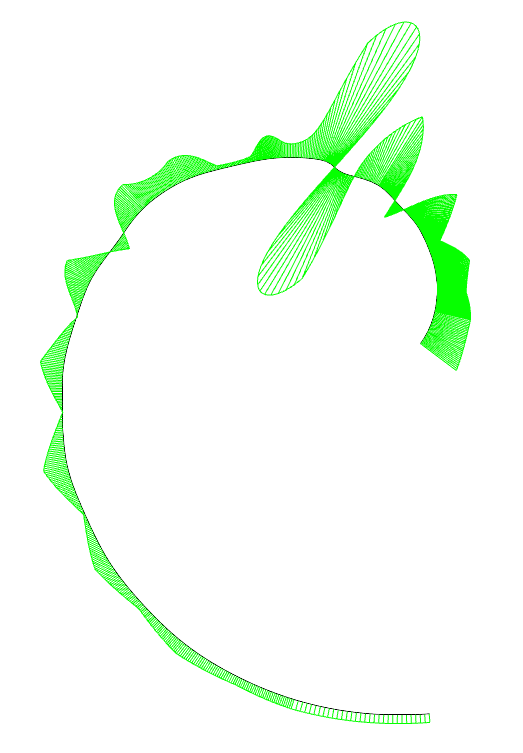
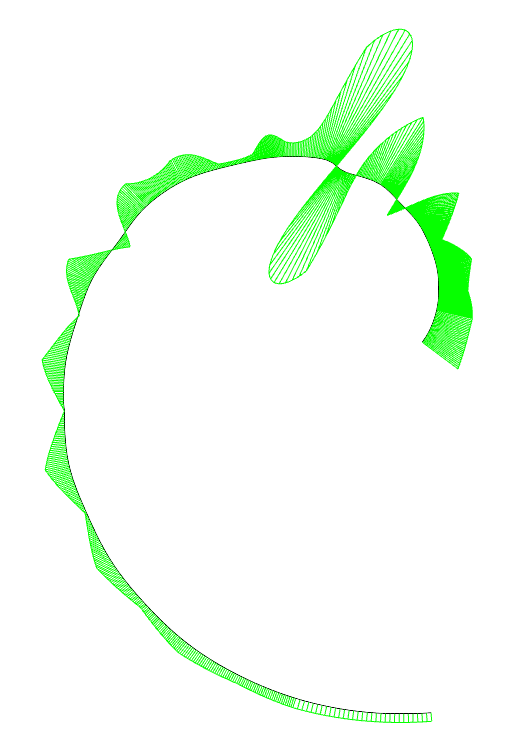
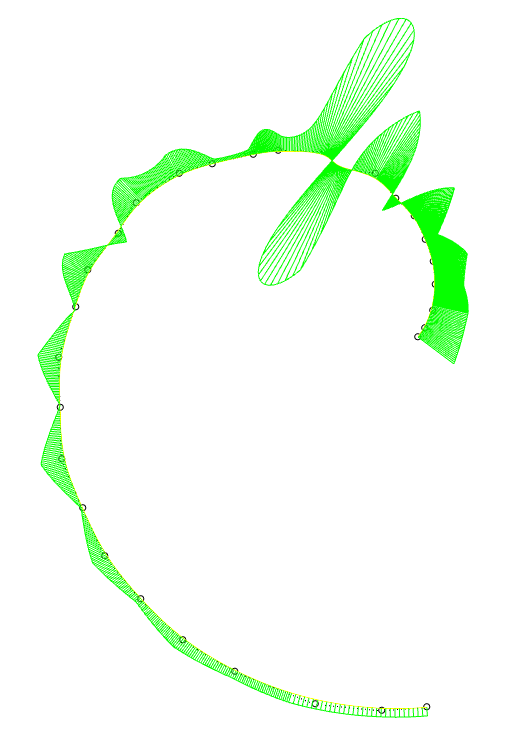
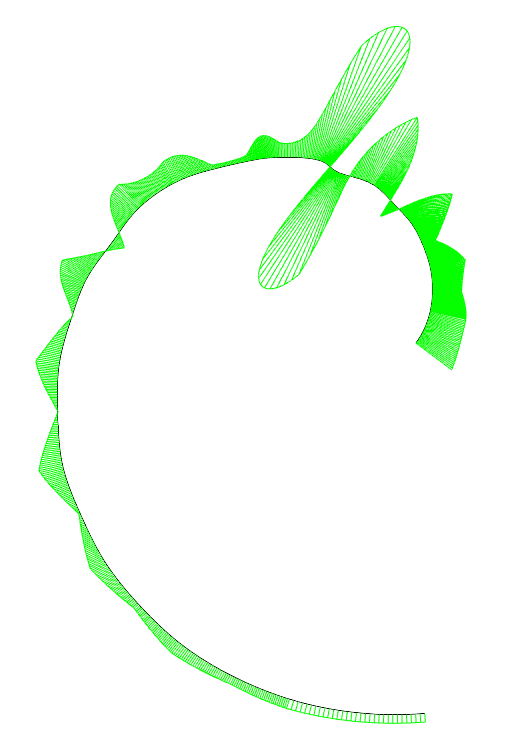
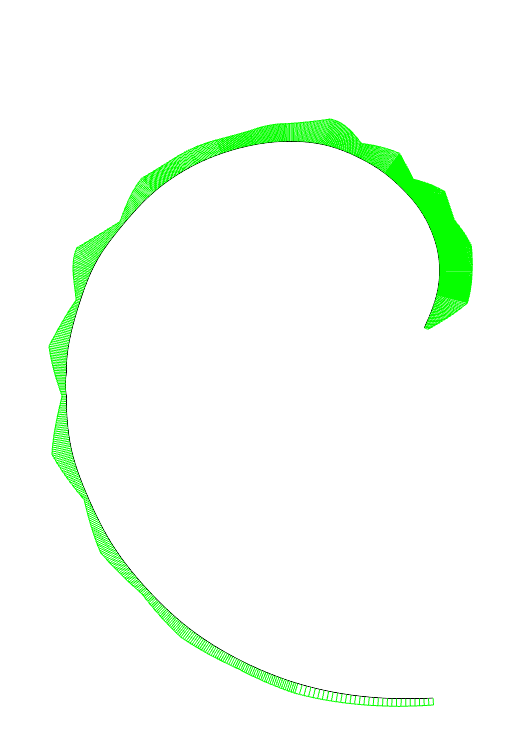
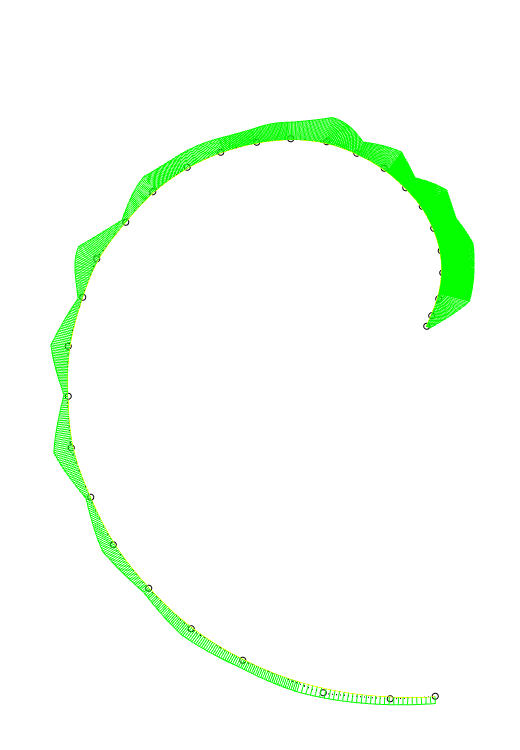
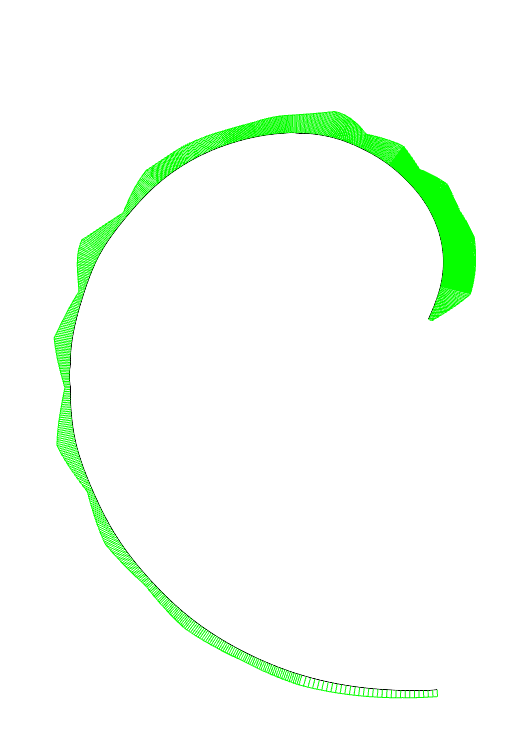
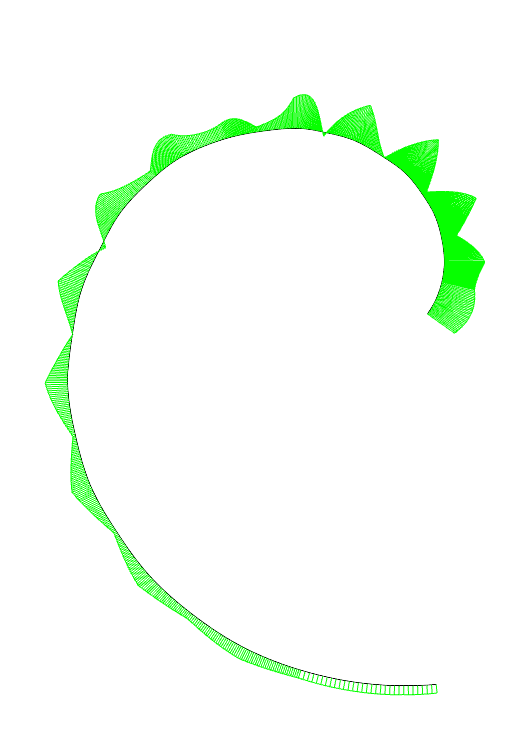
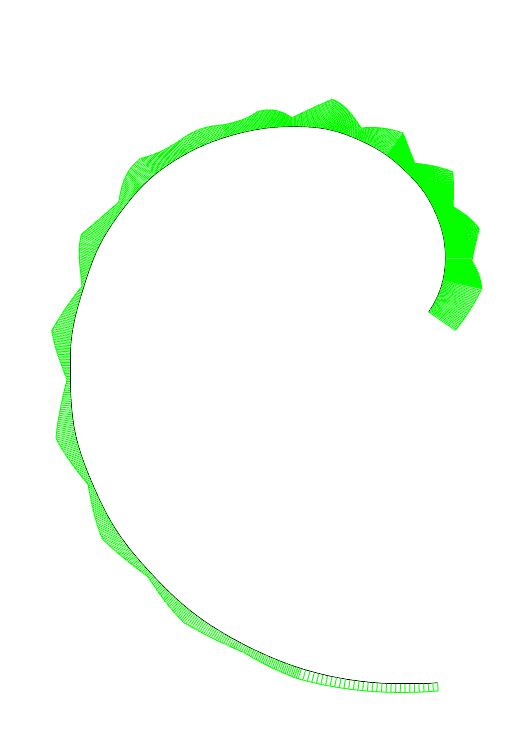
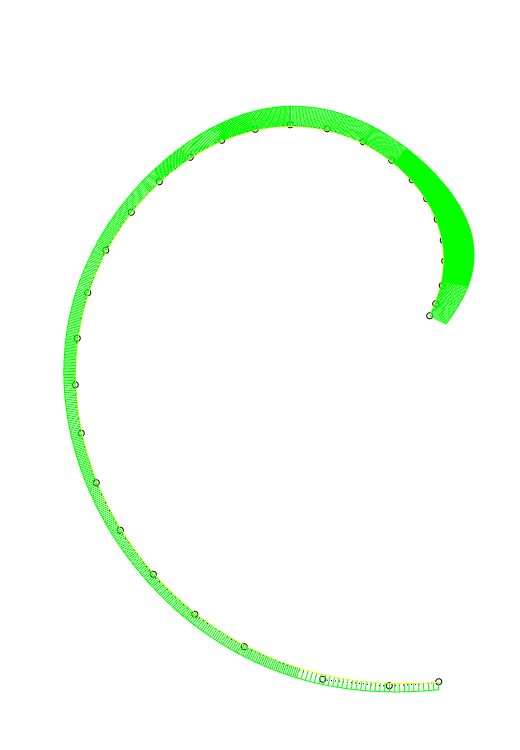
Figure 2: Iterative fairing on a noisy spiral for Pi[k]9; higher-order energy terms yield increased smoothness but slower convergence.
- Superior Fairness Metrics: In several cases, the absolute energy of the output (as a measure of fairness) is strictly lower for the proposed localized scheme compared to the global energy minimization baseline, sometimes accompanied by larger permissible deviations only in targeted regions (see Table 3 in the paper).
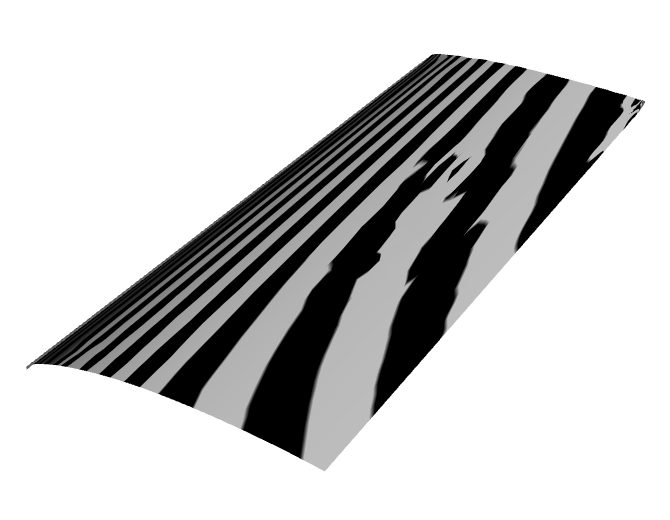
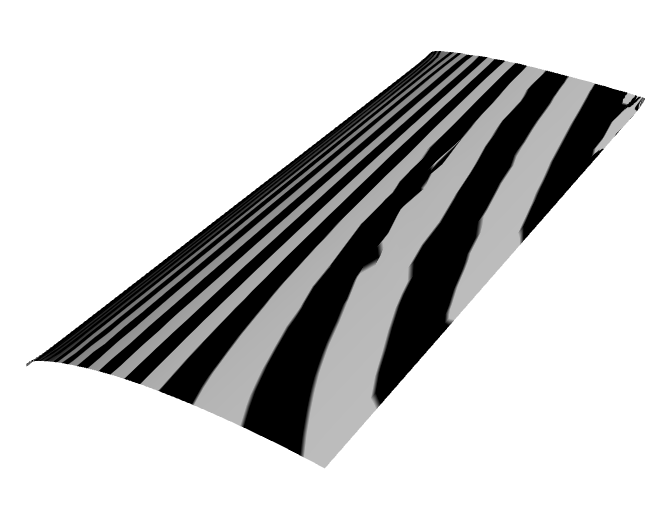
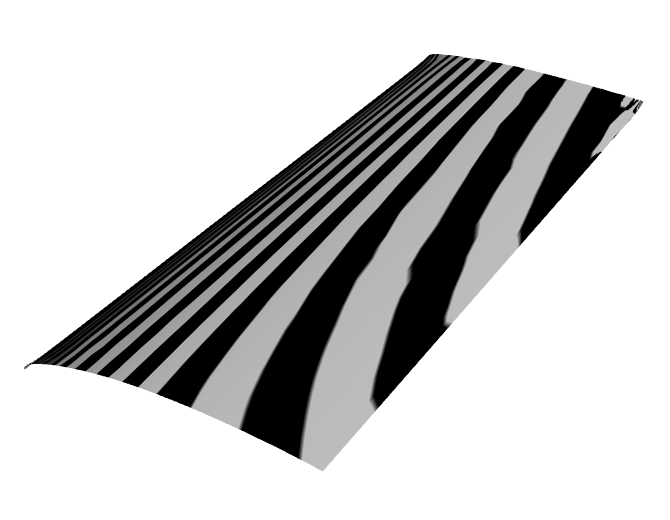
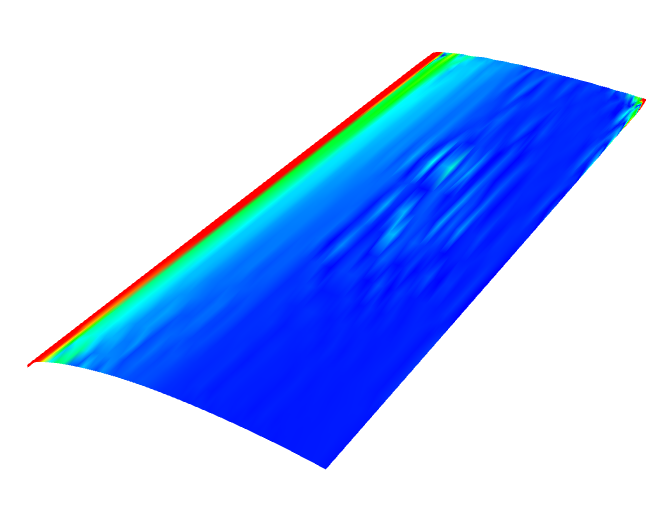
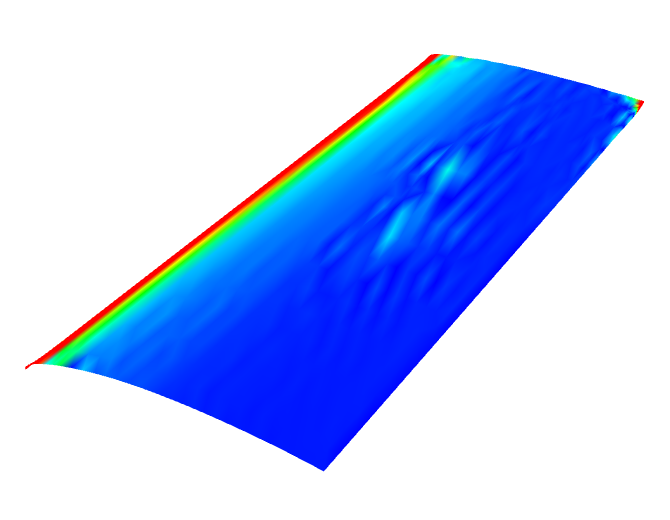
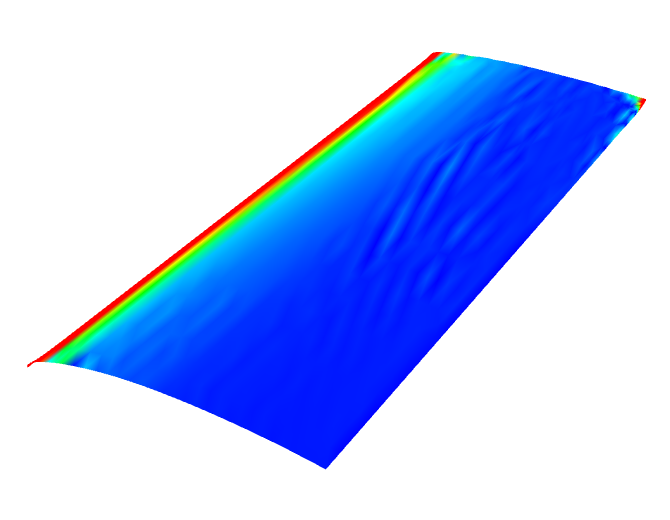
Figure 3: Airfoil surface zebras and curvature maps: original, traditional energy-based, and localized fairing results.
- Automatic Control Point Selection: The automatic feature enables efficient, data-driven identification of impactful control points, reducing manual intervention and facilitating automated or interactive fairing workflows.
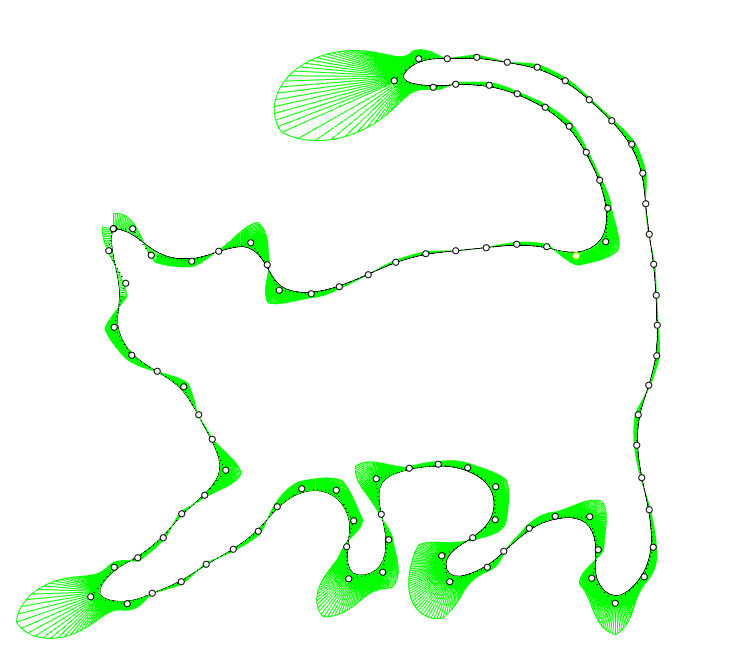
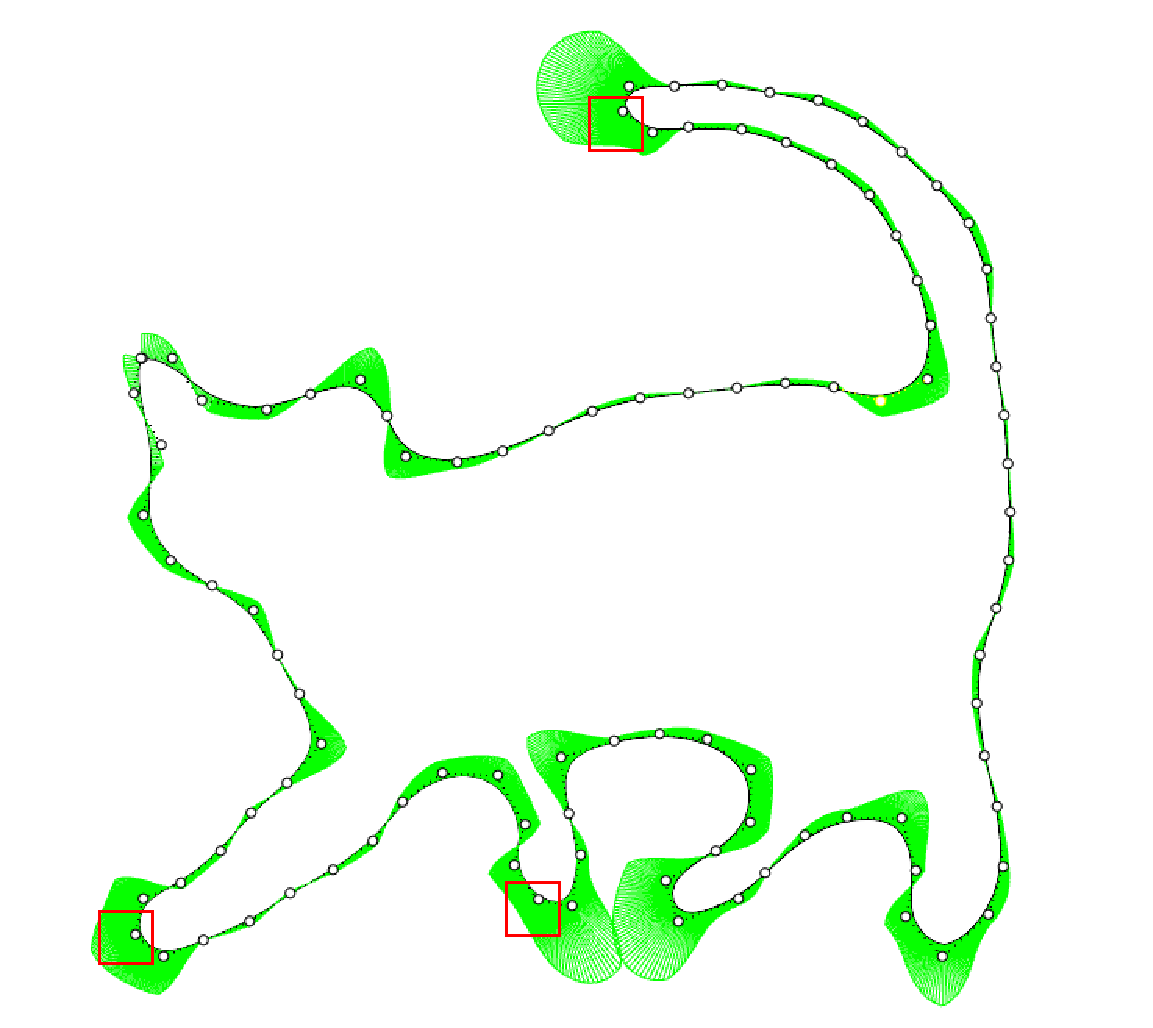
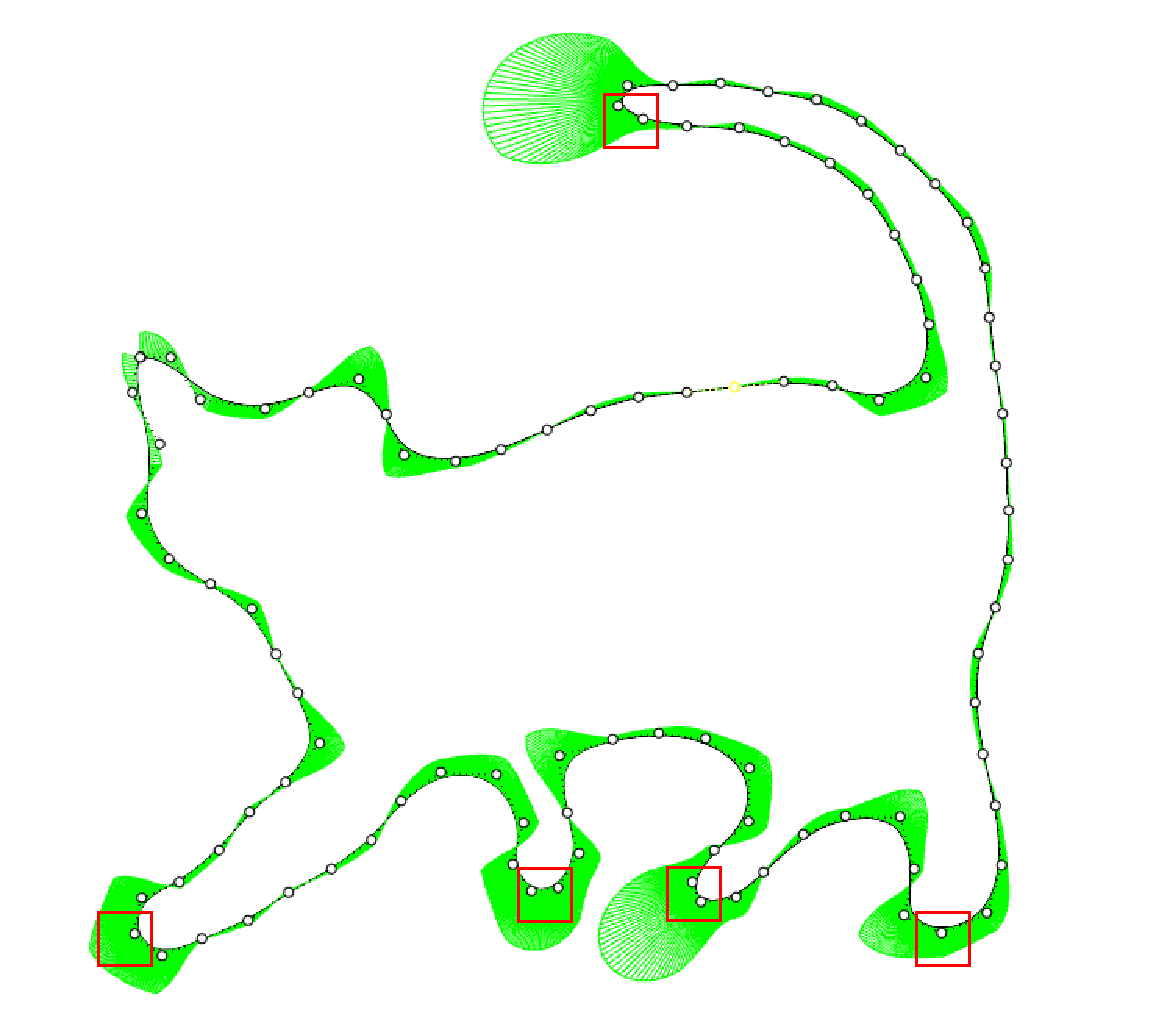
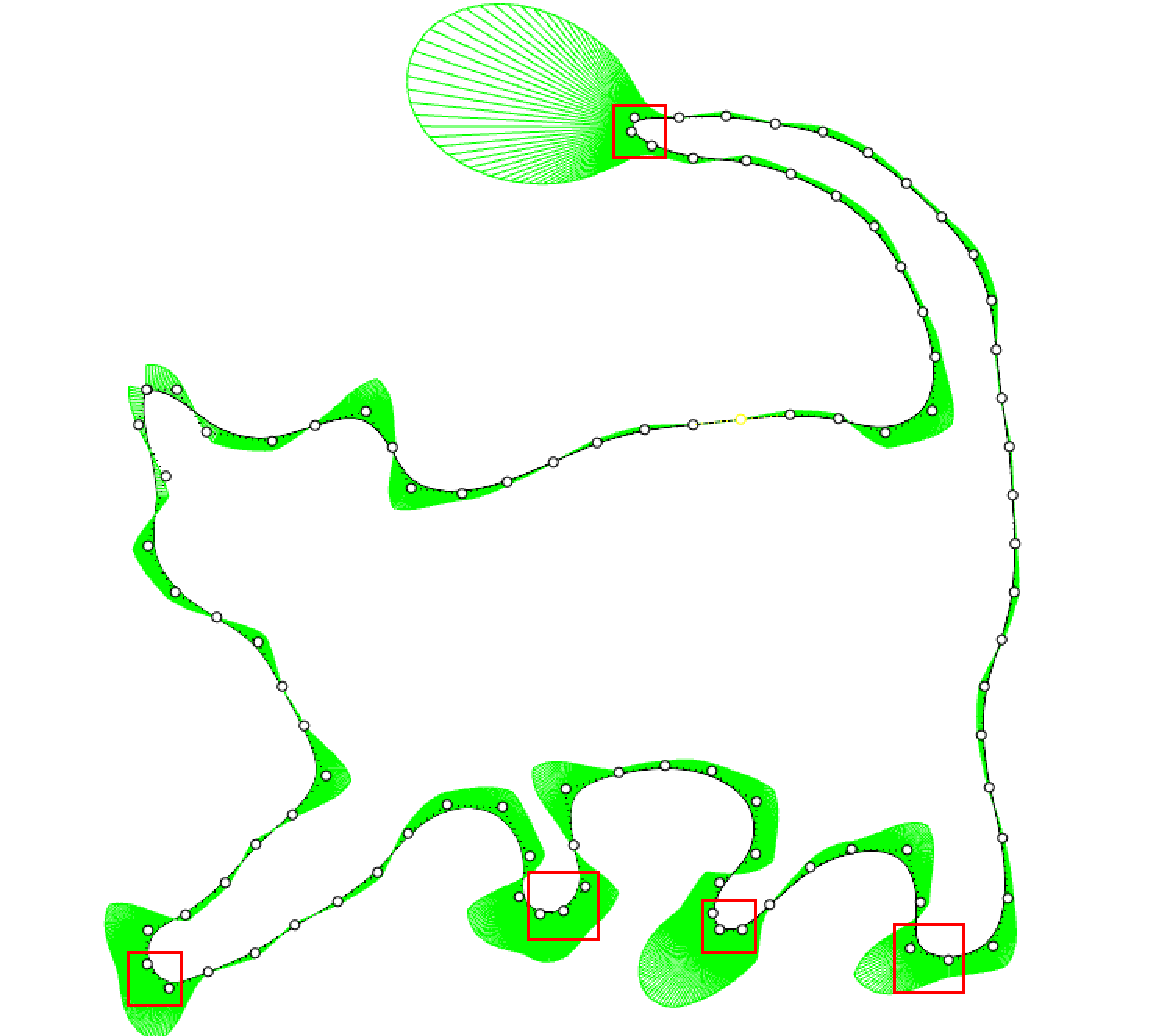
Figure 4: Stepwise fairing of a “Cat” curve via selection and adjustment of increasing numbers of control points.
- Scalability: The progressive, local-update nature of the algorithm means it is applicable to high-complexity curves and surfaces without the need to solve dense linear systems at each step, making it amenable for large-scale industrial models.
Practical and Theoretical Implications
The methodology offers a scalable and flexible solution for surface and curve fairing tasks that require local precision and feature sensitivity. In practice, this supports workflows in CAD, reverse engineering, and digital modeling where iterative refinement of local defects is critical, and manual adjustment of many control points is infeasible. The theoretical result that traditional global energy minimization is a special case supports adoption of the method as a superset of existing standards.
Additionally, demonstration of convergence and explicit parameter guidelines enable robust usage in safety- and performance-critical design environments, while the automation of control point selection opens the door for integration with AI-driven or heuristic surface refinement pipelines. The capability for highly localized adjustment without sacrificing efficiency or global fairness is poised to support next-generation CAGD pipelines, especially when coupled with data-driven or interactive frontends.
Conclusion
This work presents a robust, theoretically grounded progressive-iterative fairing algorithm enabling localized, weighted control point adjustment for both curves and surfaces. Strong numerical and visual evidence substantiate the method’s ability to achieve higher-quality fairing with fine-grained spatial control, outperforming traditional energy-based global approaches in flexibility and feature preservation. The automation of control point selection and convergence guarantees further support practical integration. Future directions include extension to arbitrary topology surfaces, real-time integration in design software, and synergy with deep-learning based geometric understanding.