- The paper demonstrates that combining pupil diameter and fixation duration yields accurate left/right brain classification using machine learning models.
- It employs a robust experimental design with controlled tasks and systematic signal preprocessing to mitigate noise and artifacts.
- The study highlights fixation-derived features as key predictors, with optimal window sizes enhancing F1 scores up to 0.894.
EyeBrain: Machine Learning Classification of Brain Lateralization via Pupil Diameter and Fixation Dynamics
Introduction
The "EyeBrain" study (2604.23562) rigorously investigates the viability of using eye-tracking metrics—specifically pupil diameter (PD) and fixation duration (Fx)—to classify cognitive activity as being dominated by the left or right cerebral hemisphere. By focusing on these two ocular metrics, the research seeks to extract features that are robust against user interface and task-context dependence, and thus directly indicative of underlying brain lateralization. The methodological core leverages a controlled experimental data collection with eye-tracking, systematic signal preprocessing, feature engineering in the time and frequency domains, and exhaustive evaluation of several machine learning models for binary (left vs. right) and multiclass (specific activity) inference.
Experimental Design and Data Collection
The study recruited 34 adult participants diverse in age, gender, and ethnicity, controlling environmental variables to minimize pupil bias due to circadian rhythm and luminance. Each individual underwent four activity sessions: two left-lateralized (arithmetic, essay writing) and two right-lateralized (drawing, music listening). Task order was randomized to mitigate sequence effects, and robust baseline measurements were collected pre-task.
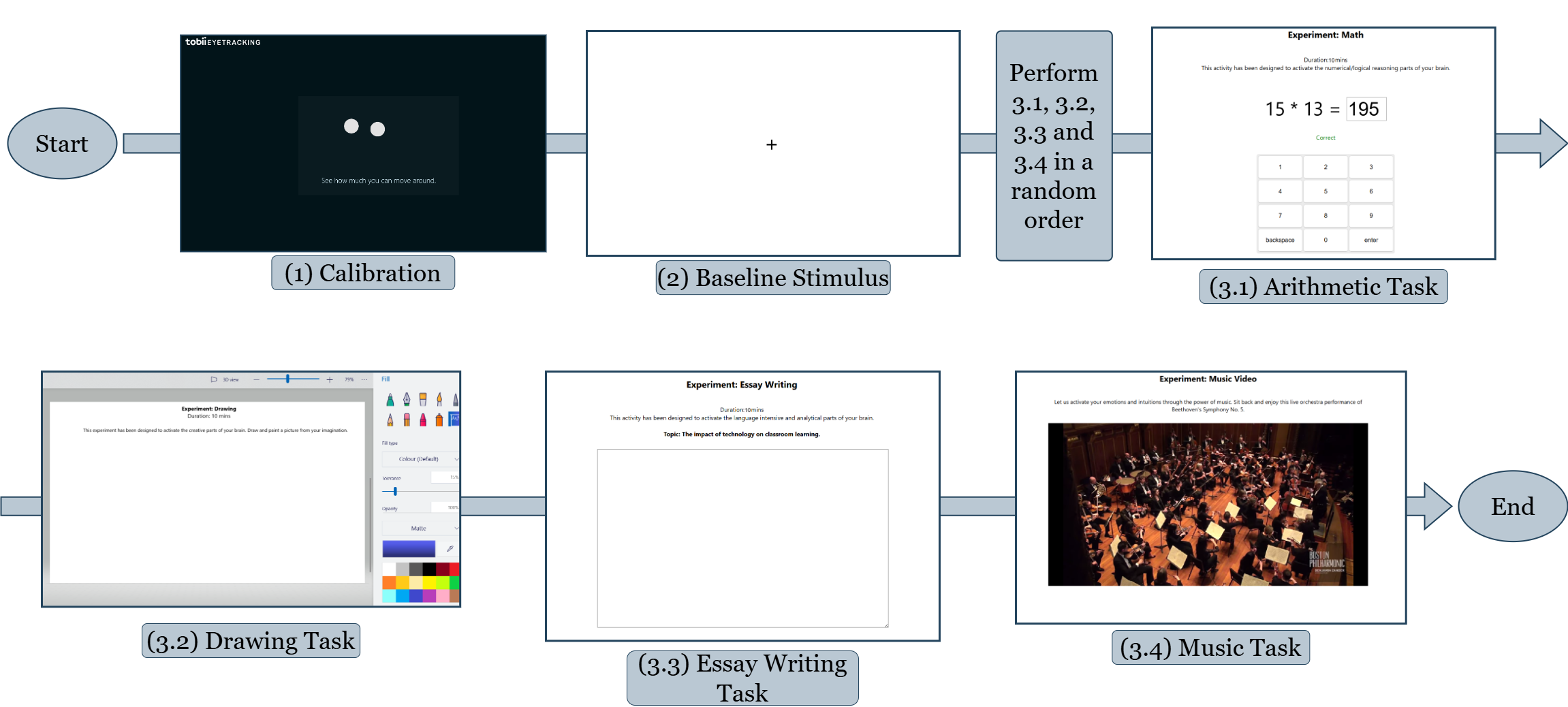
Figure 1: Experiment flow, with stepwise session screenshots, demonstrating the tightly controlled digital workflow for data capture and task presentation.
Pupil and fixation data were recorded at 90 Hz via Tobii Pro. In-depth preprocessing addressed noise, blinks, and artifacts via median absolute deviation, trend corrections, gap interpolation, and baseline normalization. This pipeline yielded high-fidelity temporal sequences suitable for advanced signal analysis.
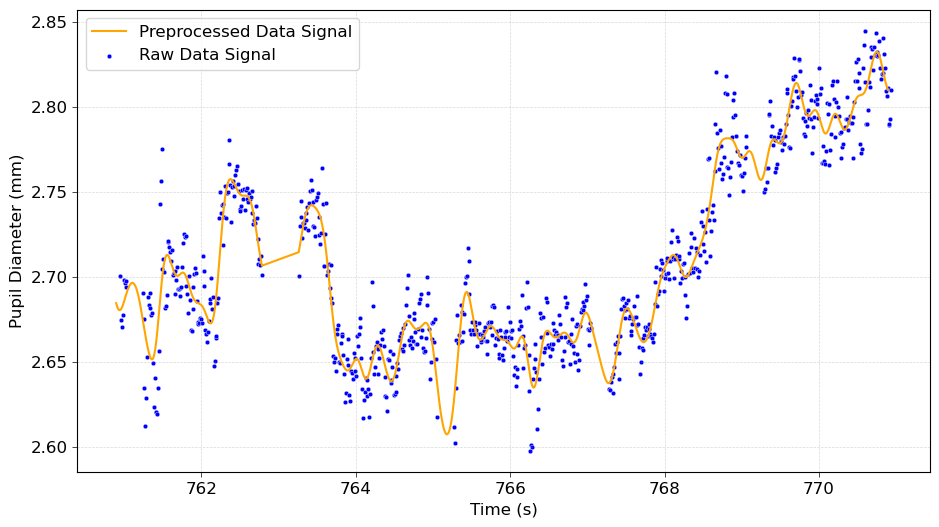
Figure 2: Visualization of raw versus preprocessed pupil diameter trace, illustrating noise reduction and baseline correction.
Feature Extraction and Machine Learning Framework
The analytic pipeline extracted features from PD and Fx signals using a sliding window approach across varying durations (5–105 seconds) and activity segment lengths (2–8 minutes). Time-domain metrics included mean, std, min/max, kurtosis, skewness; frequency-domain features encompassed spectral energy, dominant frequency, and power spectral density. Pearson correlation between left/right PD signals was also used. A deliberate focus was placed on fixation durations, excluding saccadic and dispersion features to minimize UI/task confounding.
Model selection featured SVM (RBF kernel), Random Forest, and XGBoost, selected for their competitive performance on high-dimensional physiological time series and interpretability of feature importances. Performance was evaluated via nested leave-one-participant-out (LOPOCV) and leave-one-activity-out CV (LOAOCV), with the F1 score as the primary metric.
Results
XGBoost and Random Forest models achieved robust F1 scores—maximum 0.894—substantially outperforming SVM. The combination of PD and Fx features produced consistent, non-trivial gains over PD alone, demonstrating that fixation duration imparts significant discriminative signal for lateralization inference as compared to pupil metrics in isolation.
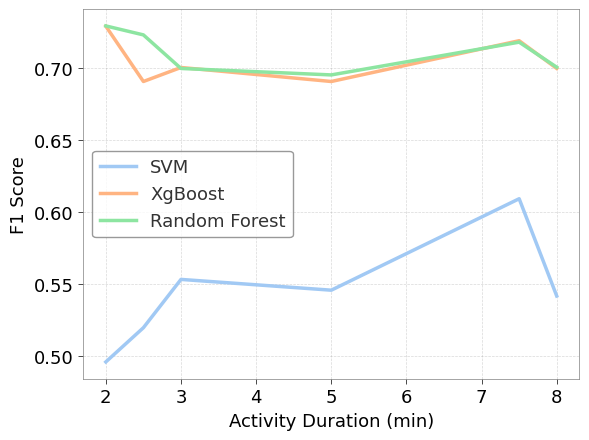
Figure 3: Weighted average F1 score as a function of activity duration across ML models; longer intervals reliably increase classification accuracy, peaking at 7.5 minutes.
Optimal window sizes were empirically determined. Classification performance increased with window size, reaching best results at 90 seconds, reflecting the timescales required for cognitive state transitions to be robustly reflected in ocular metrics.
Fixation Duration Effects
Varying the fixation duration threshold substantiated that intervals between 250–1000 ms were most informative, yielding the highest F1 scores. Longer fixations contributed little additional predictive value and, past 2 seconds, actually degraded accuracy due to loss of discriminative temporal patterns.
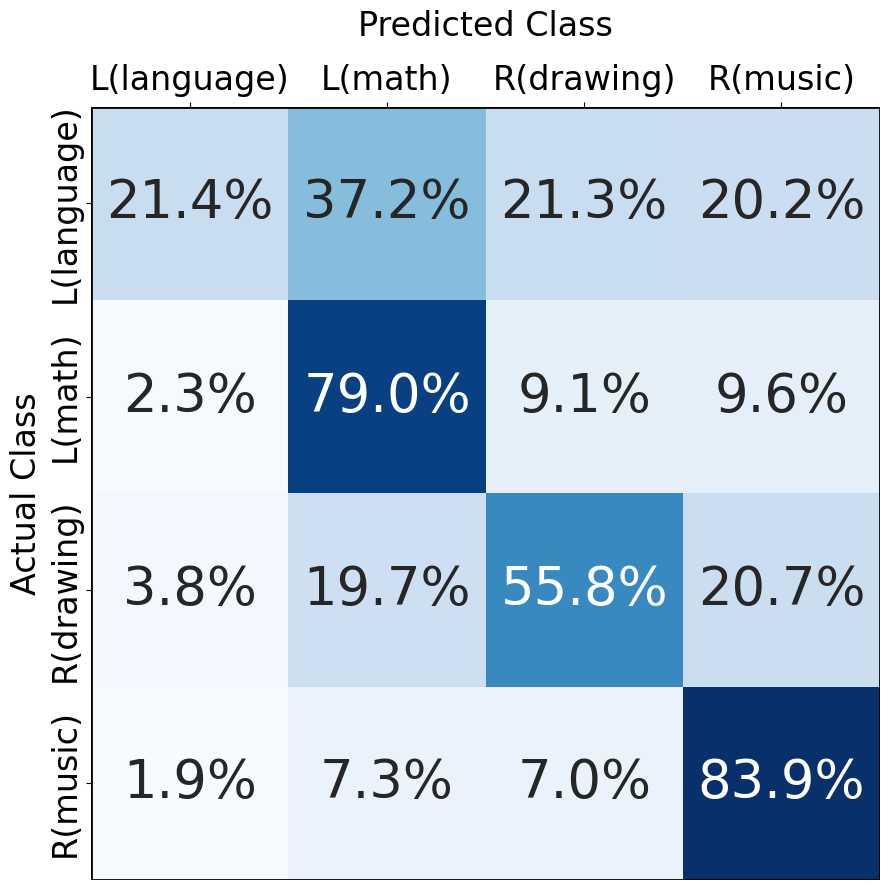
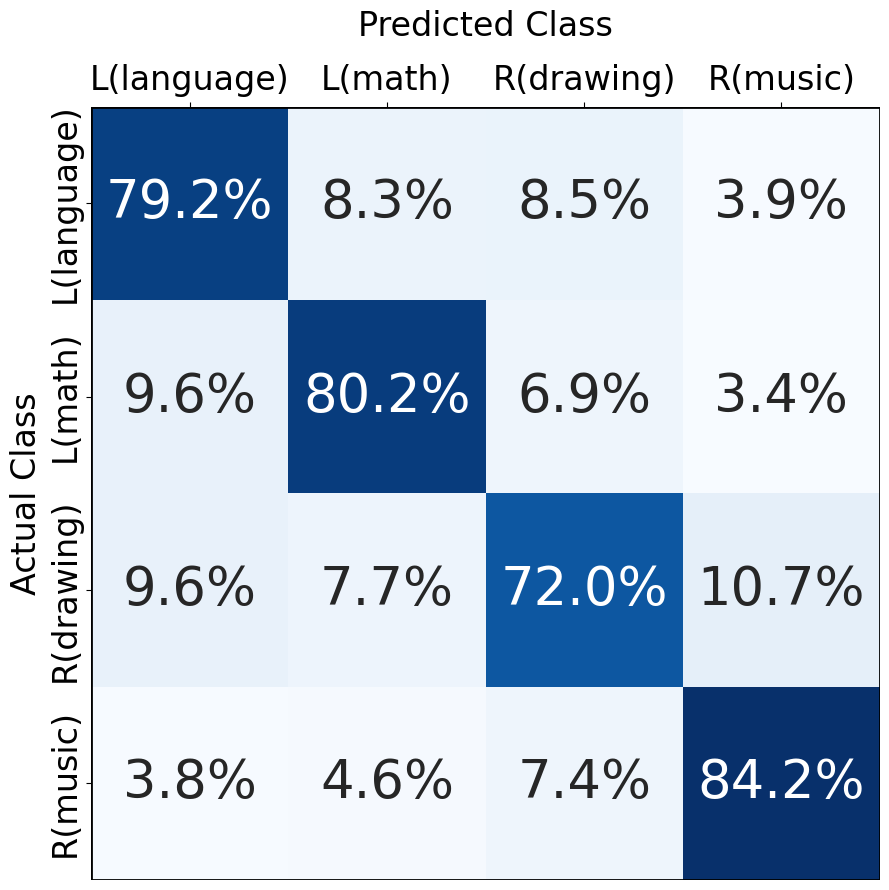
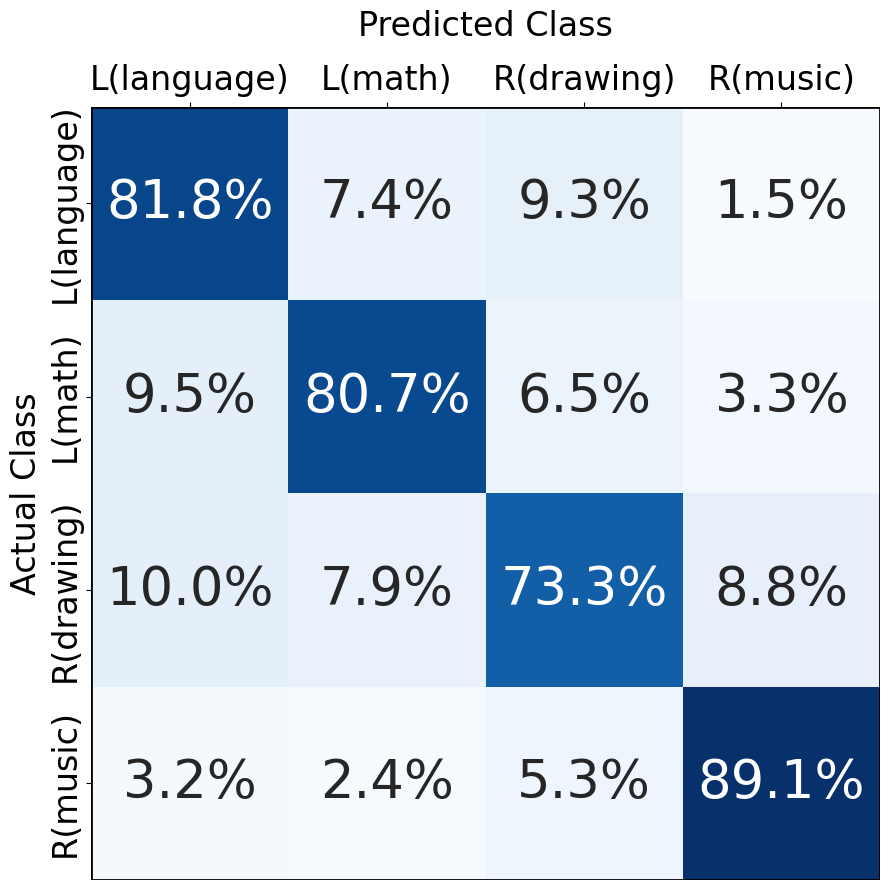
Figure 4: Classification performance confusion matrix for a 5 second sliding window, demonstrating incremental improvements and error distribution across task types.
Task-Level Discrimination
Multiclass analysis showed that arithmetic and music listening activities (L-math/R-music) were most reliably classified, with music eclipsing 89% accuracy at optimal window settings. Language and drawing tasks exhibited higher misclassification rates, likely due to confounds such as occlusion, head movement, and neurocognitive overlap in artistic processing (right-to-left transfer in visuo-spatial activities).
Feature Importance Analysis
Feature importance computed via XGBoost indicated that fixation-derived features (minimum and mean fixation duration, fixation count, fixation signal magnitude area) dominated the discriminative signal, each contributing over 5% to the total model importance. Among pupil metrics, mean, autoregression coefficients, and median absolute deviation in the time domain led, with frequency-based energy in the left-pupil band also salient.
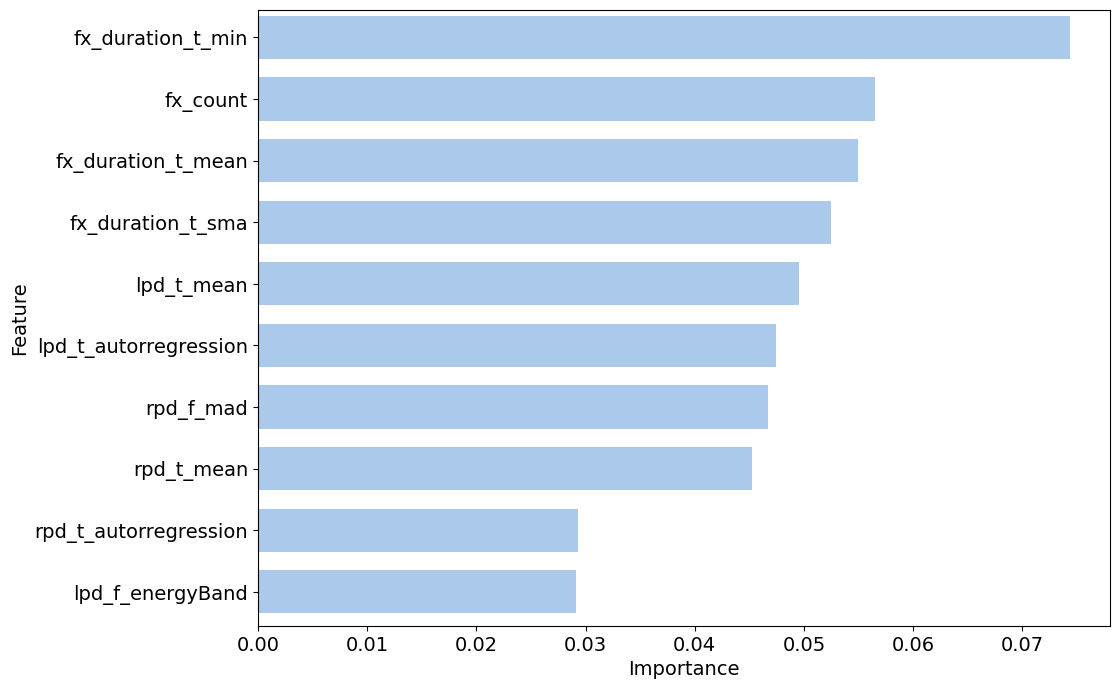
Figure 5: Top ten feature importances for XGBoost, robustly highlighting fixation duration and count as highly predictive for lateralization class.
Implications and Future Directions
The findings establish bold claims regarding the classification of lateralized cognitive activity from purely ocular metrics: it is feasible, explainable, and achieves high accuracy without recourse to saccade/dispersion features or invasive neuroimaging. The demonstrated methodology is robust to participant variability via LOPOCV/LOAOCV and may generalize to real-world, in-the-wild applications with advances in wearable, high-fidelity eye-trackers (e.g. Pupil Labs Invisible/Core).
From a practical perspective, this lays a foundation for unobtrusive, real-time cognitive monitoring, neurorehabilitation, and activity self-regulation, directly relevant for HCI, clinical neuroscience, and augmentative feedback systems. The application envisaged as "EyeBrain" further motivates portable, continuous brain state monitoring, longitudinal life-logging, and career counseling. In theoretical terms, the study refines models of embodied cognition by explicitly linking observable ocular metrics to lateralized neural function without language or spatial task mediation.
Key limitations include reliance on desktop-based, long-duration tasks, and conventional feature extraction/classical ML paradigms. Future research should address real-time segment classification, multi-modal integration (EEG+eye, engagement-aware video), and transfer to unconstrained, ecological contexts. Scaling to deep sequential models (LSTM/Transformer) may further increase predictive power and generalizability.
Conclusion
The study rigorously demonstrates that statistical features derived from pupil diameter and fixation duration enable accurate (F1 up to 0.894) detection of left/right hemisphere-dominant brain activity in controlled settings, with fixation-derived metrics showing predominant predictive value. These results have direct implications for non-invasive neurocognitive monitoring and pave the way for ubiquitous, real-time lateralization assessment in applied human-AI systems.

