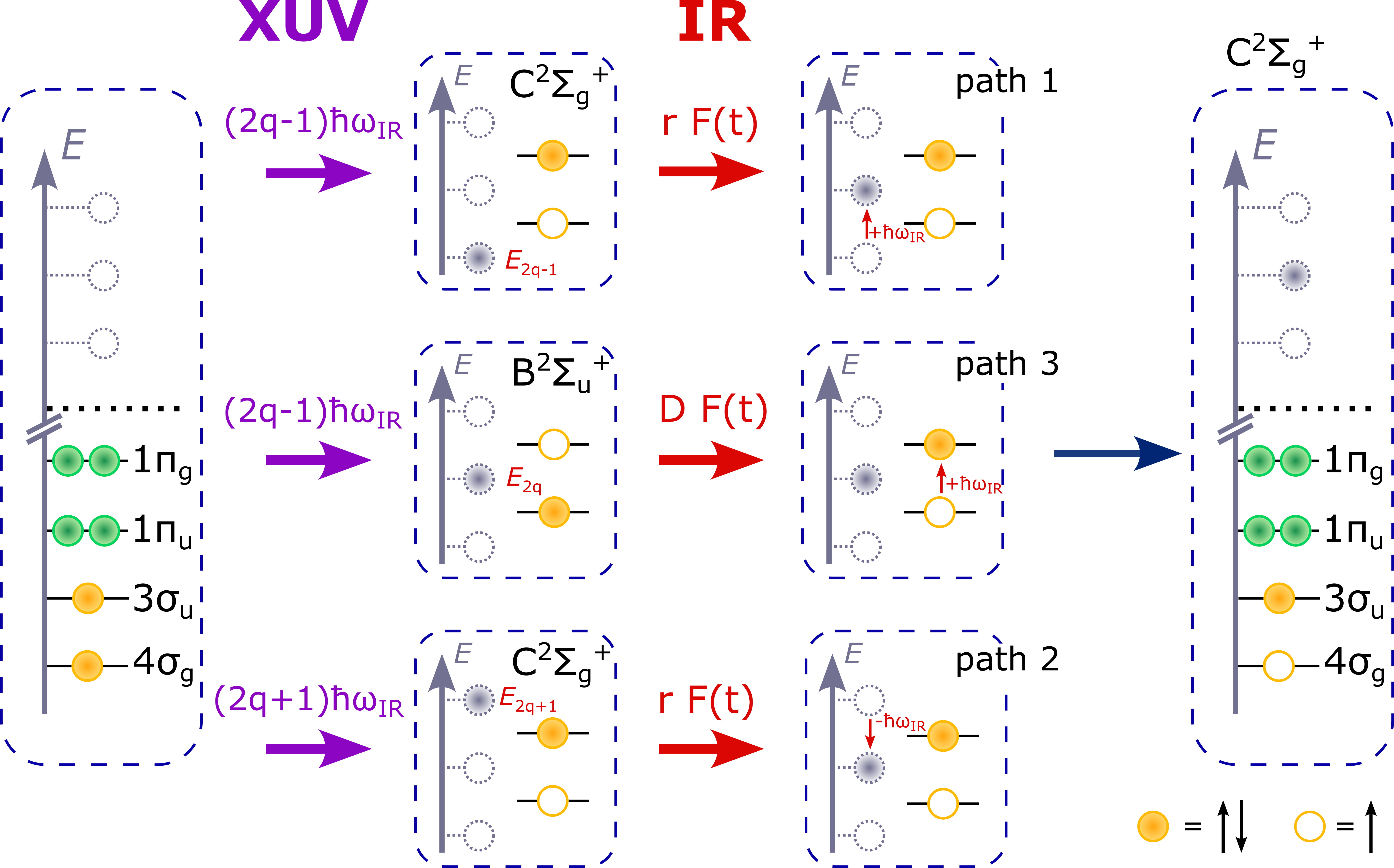
- The paper identifies a third quantum pathway from IR-induced ionic coupling that alters sideband signals and time delays in RABBIT schemes.
- The paper employs multi-particle coincidence spectroscopy and partial-wave analysis to directly correlate experimental measurements with theoretical R-matrix simulations.
- The paper demonstrates that incorporating ionic coupling effects is essential for advancing attosecond metrology and accurately probing ultrafast molecular dynamics.
Disentangling Ionic Coupling and Multiple Interfering Terms in Attosecond Molecular Interferometry
Overview
This paper presents an integrated theoretical and experimental investigation of attosecond time delays in photoionization dynamics within CO2 molecules, employing attosecond interferometry with an extreme ultraviolet (XUV) pulse train and synchronized infrared (IR) field. The central insight is the identification and characterization of a third quantum pathway, rooted in IR-induced ionic coupling between cationic states (specifically B2Σu+ and C2Σg+), which fundamentally modifies sideband signals and measured time delays in RABBIT schemes. By combining energy-, angle-, and ion-resolved measurements, the authors elucidate the origins and behavior of interfering terms in two-color molecular photoionization, highlighting new theoretical and practical implications for attosecond metrology and molecular spectroscopy.
Dissociation Spectroscopy and Fragmentation Analysis
Detailed spectroscopy is performed on dissociative channels of CO2, with emphasis on the population and predissociation of various cationic states. The ground vibrational state in C2Σg+ is shown to dominate O+ fragment formation via Franck-Condon overlap, while excited vibrational levels contribute to CO+ channel formation. By measuring photoelectron spectra in coincidence with ionic fragments and kinetic energy release (KER), the authors unambiguously assign fragment pathways and vibrational states.
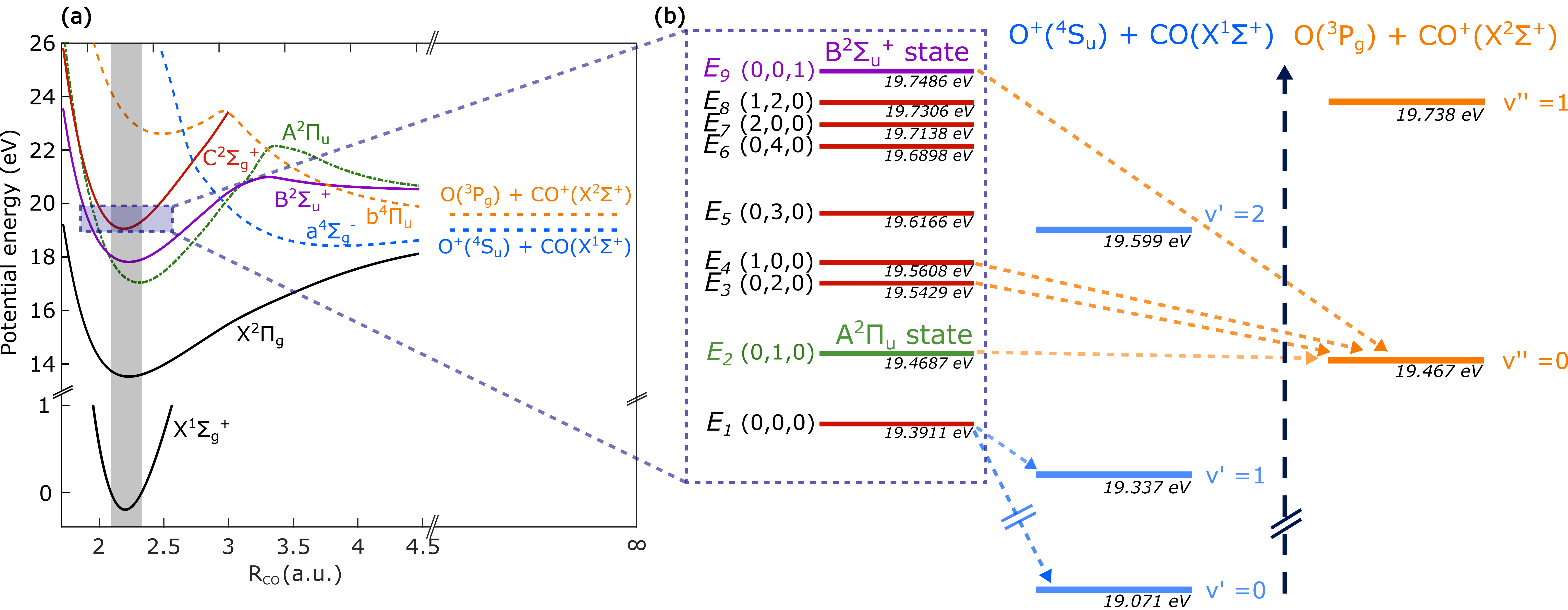
Figure 1: Energy cuts of PESs for CO2 and CO2+, and vibrational levels of C2Σg+, showing fragmentation thresholds and vibronic mixing effects.
Experimental Coincidence Measurements and Angular-Resolved Spectroscopy
Employing a multi-particle coincidence spectrometer, angle- and KER-resolved photoelectron spectra are measured for XUV-only and XUV-IR cases. These data reveal state-selective ionization potentials, spectral widths, and angular asymmetry parameters (B2Σu+0), coinciding with literature and confirming the dominant fragmentation pathways inferred from Franck-Condon factors and branching ratios. Notably, angular distributions differ for OB2Σu+1 and COB2Σu+2 channels, with perpendicular emission in the COB2Σu+3 channel correlating to vibronic mixing into the B2Σu+4 state.
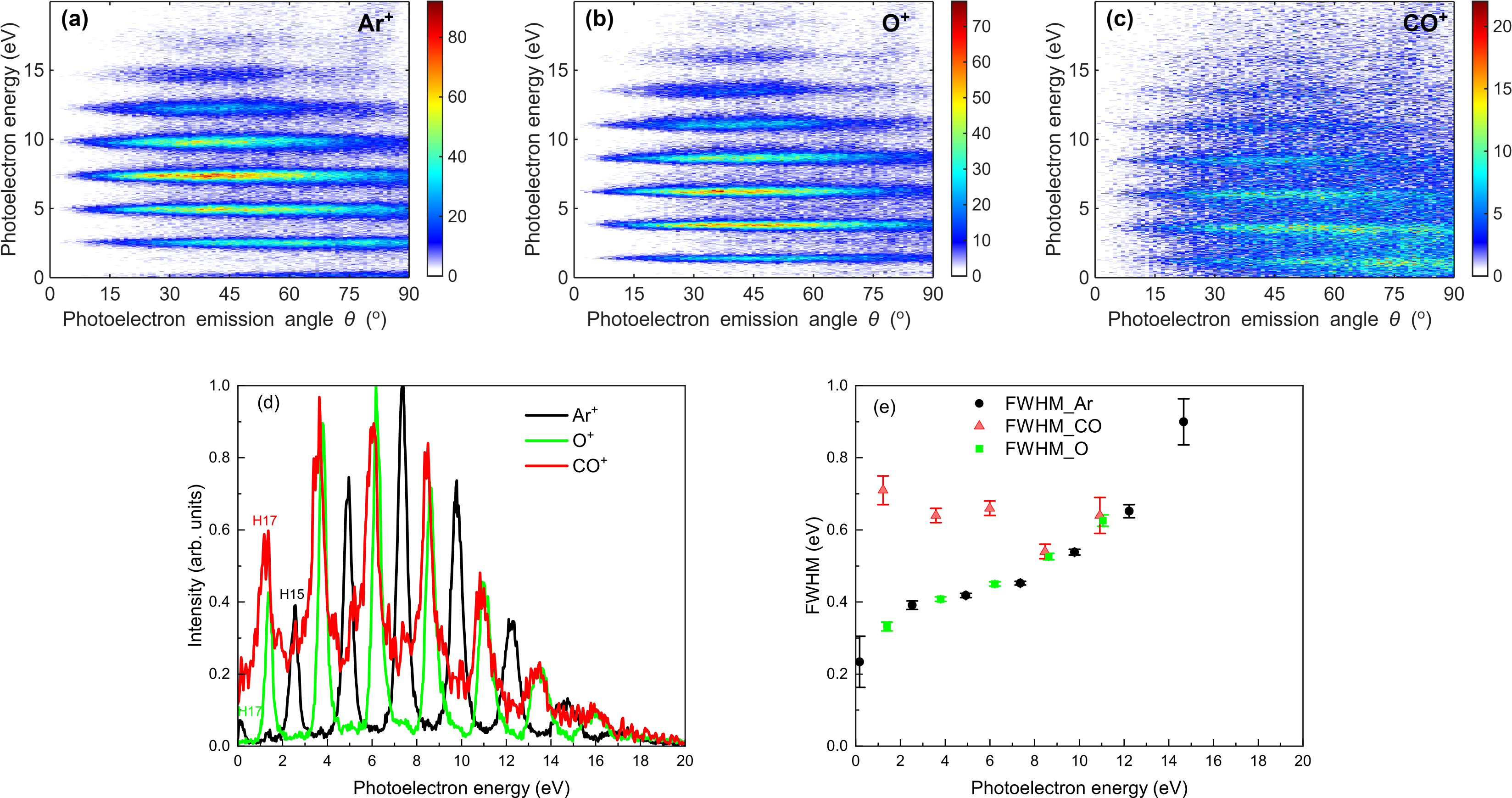
Figure 2: Angle-resolved XUV-only spectra for ArB2Σu+5, OB2Σu+6, and COB2Σu+7, and integrated photoelectron peak energies and widths.
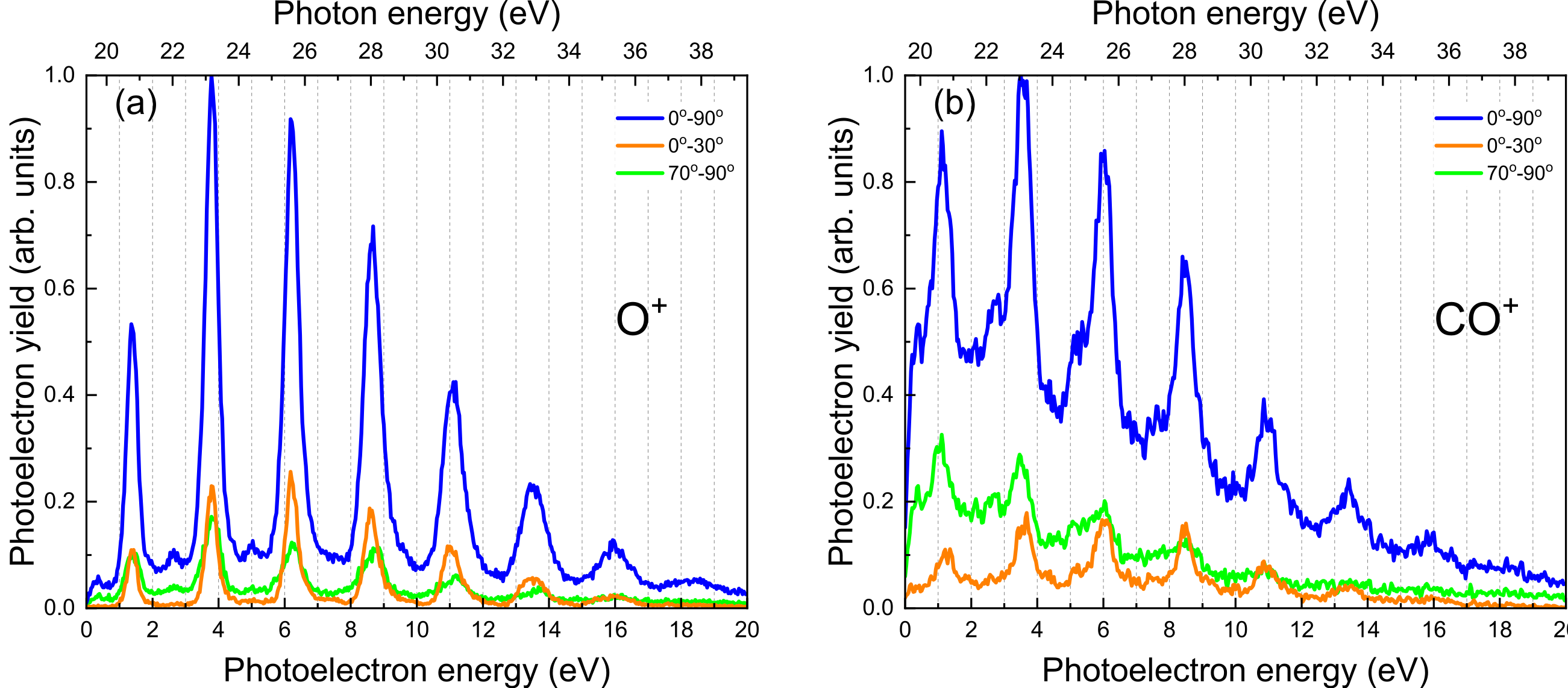
Figure 3: XUV-only spectra for OB2Σu+8 and COB2Σu+9, showing angular dependence and signature of vibronic interaction.
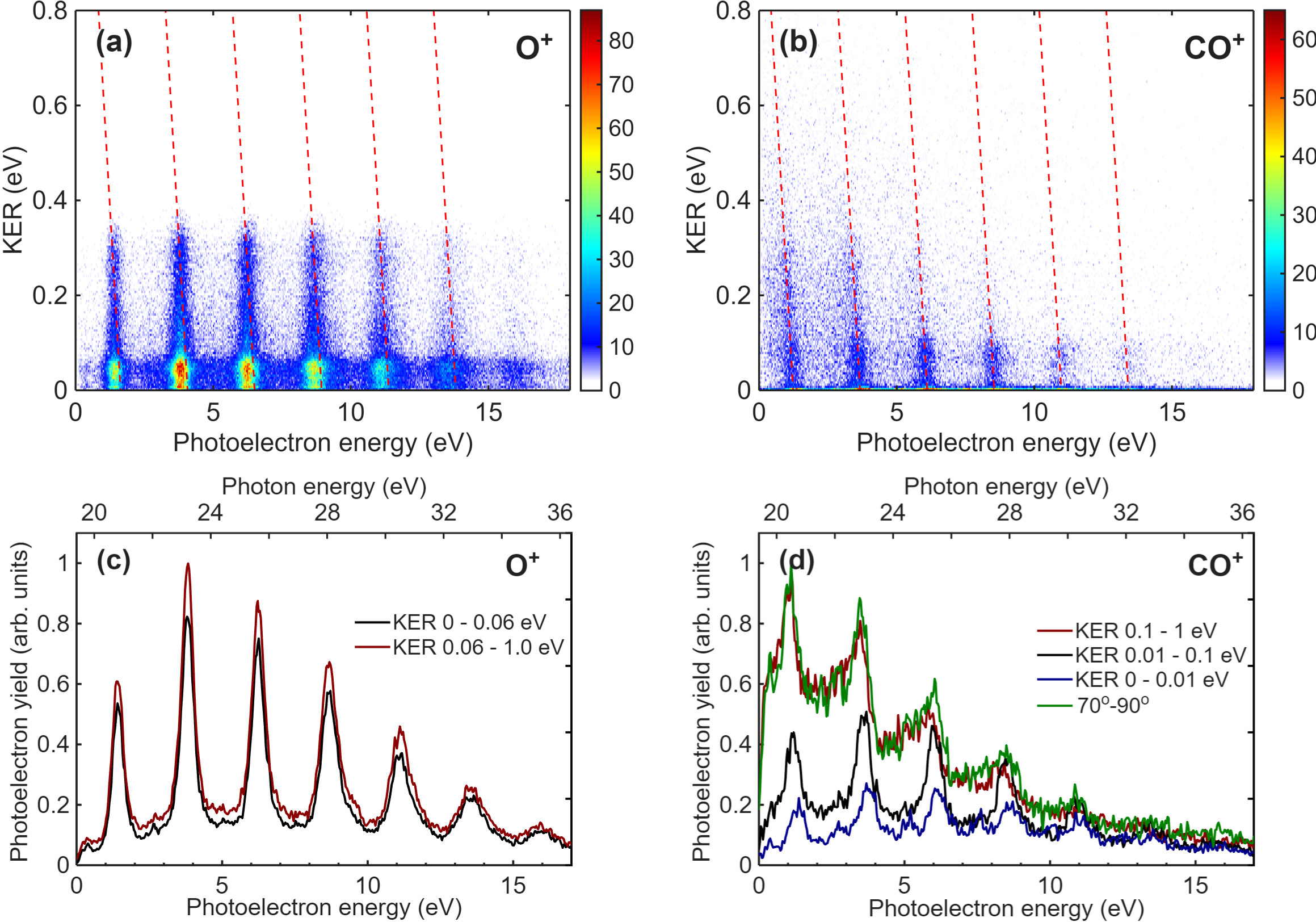
Figure 4: KER-resolved photoelectron spectra for OC2Σg+0 and COC2Σg+1, illustrating conservation of energy and vibrational population assignments.
RABBIT Measurements and Angular Integration Effects
RABBIT (Reconstruction of Attosecond Beating By Interference of Two-photon Transitions) traces are recorded as a function of relative XUV-IR delay with angular resolution. The sideband oscillation amplitude (C2Σg+2) and phase (C2Σg+3) exhibit a pronounced decrease and abrupt phase jump in specific energy and angular windows (notably 4–7 eV), which is not predicted by the conventional two-pathway model. The location and magnitude of these features vary with angular integration, directly correlating with the theoretical expectation for three-path interference.
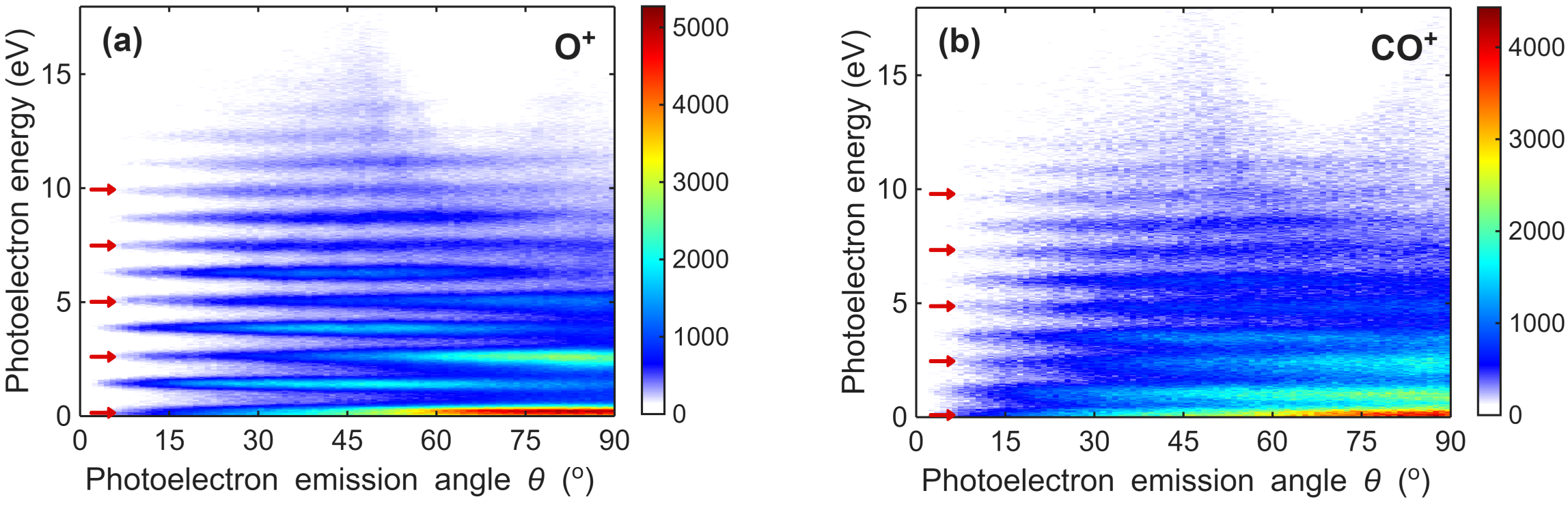
Figure 5: Delay-averaged angular distributions for OC2Σg+4 and COC2Σg+5 in XUV-IR cases, highlighting sideband energy ranges.
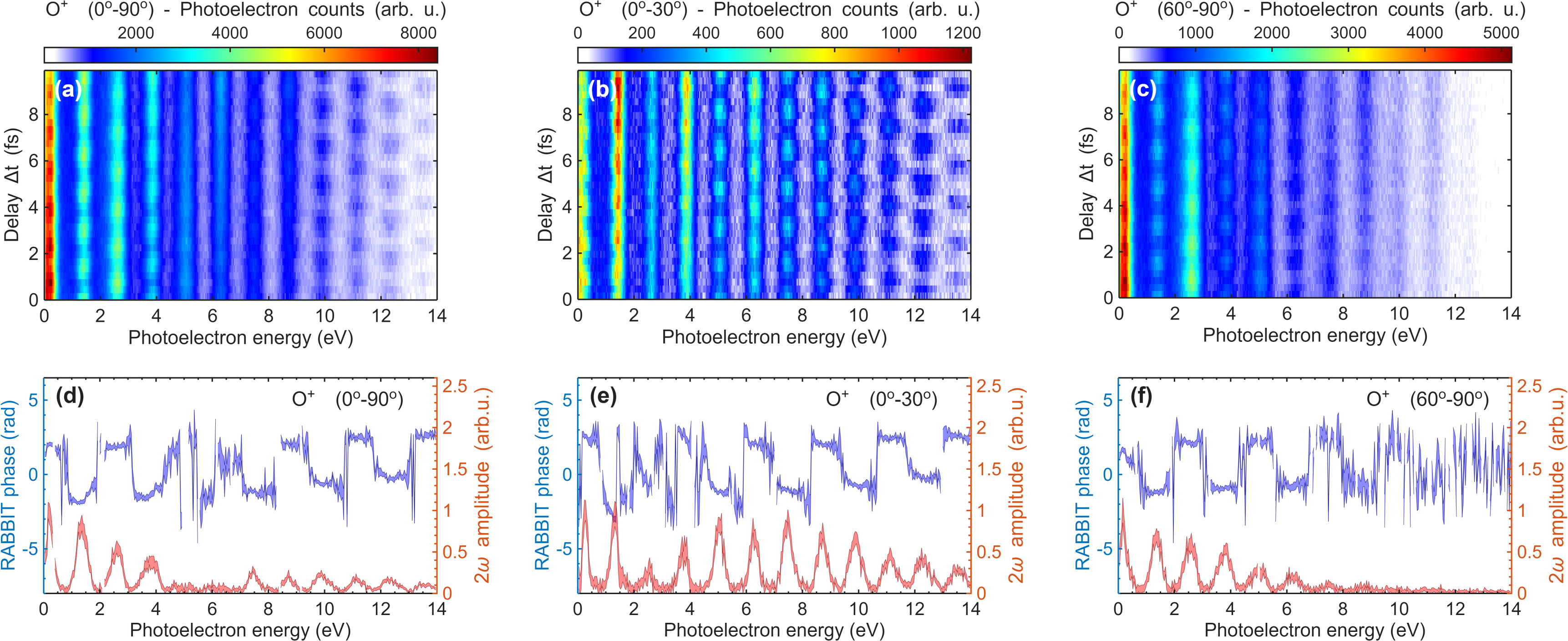
Figure 6: RABBIT traces for OC2Σg+6 ions at distinct angular intervals, visualizing oscillation amplitude minima and phase jumps.
Theory: Multi-Pathway Interference and Ionic Coupling
The multiphoton R-matrix formalism is employed, simulating full two-photon amplitudes for three distinct pathways:
Path 3’s amplitude and phase depend critically on the dipole coupling between cationic states and their energy separation relative to the IR photon. The interference of all three pathways is responsible for the angular and energy-dependent modulation and phase jumps.
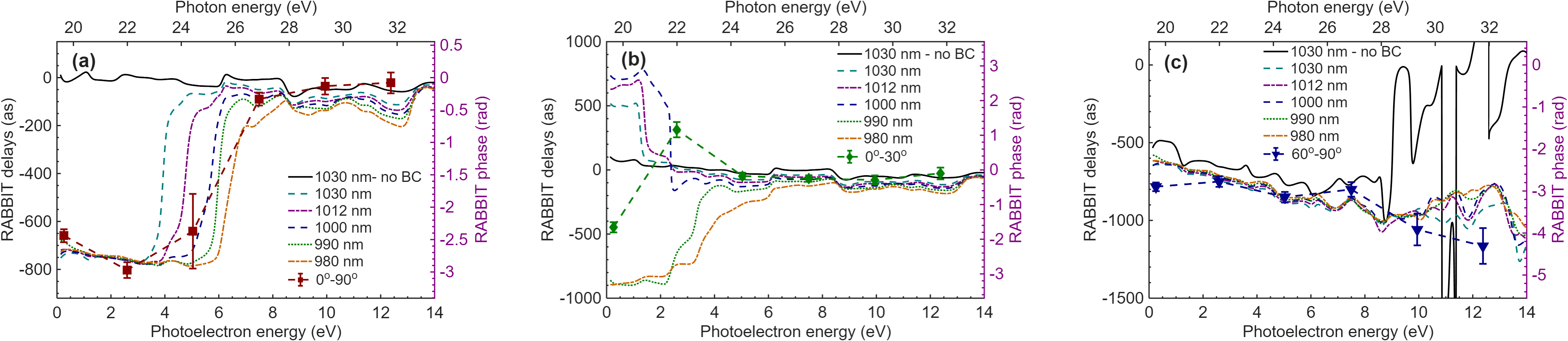
Figure 8: Comparison of simulated and measured photoionization delays for different angular intervals, demonstrating jump at 4–7 eV due to ionic coupling.
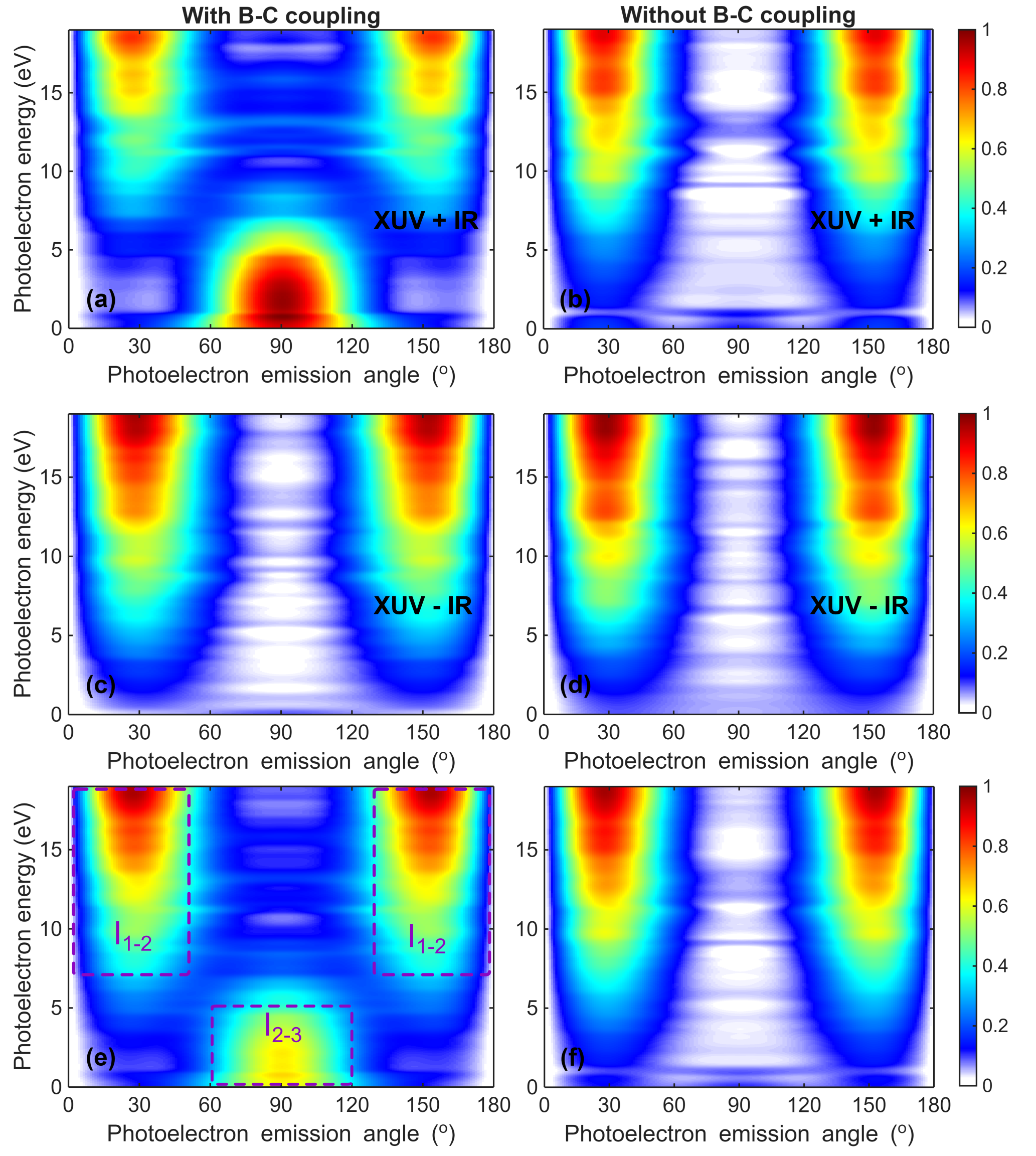
Figure 9: Contributions from different pathways to sideband photoelectron signal, revealing angular-energy regions dominated by ionic coupling interference.
Quantum Interference Structure and Partial-Wave Analysis
Quantitative analysis shows that regions of vanishing modulation and strong phase jumps in C2Σg+9 and 20 correspond to energetic and angular thresholds where the amplitudes of paths 1–2 and 2–3 become comparable and out-of-phase. Detailed partial-wave analysis attributes these effects to the interplay between 21 and 22 partial waves in the 23 and 24 channels, with a characteristic 25 phase difference. The delay jump matches the period 26, confirming the theoretical prediction.
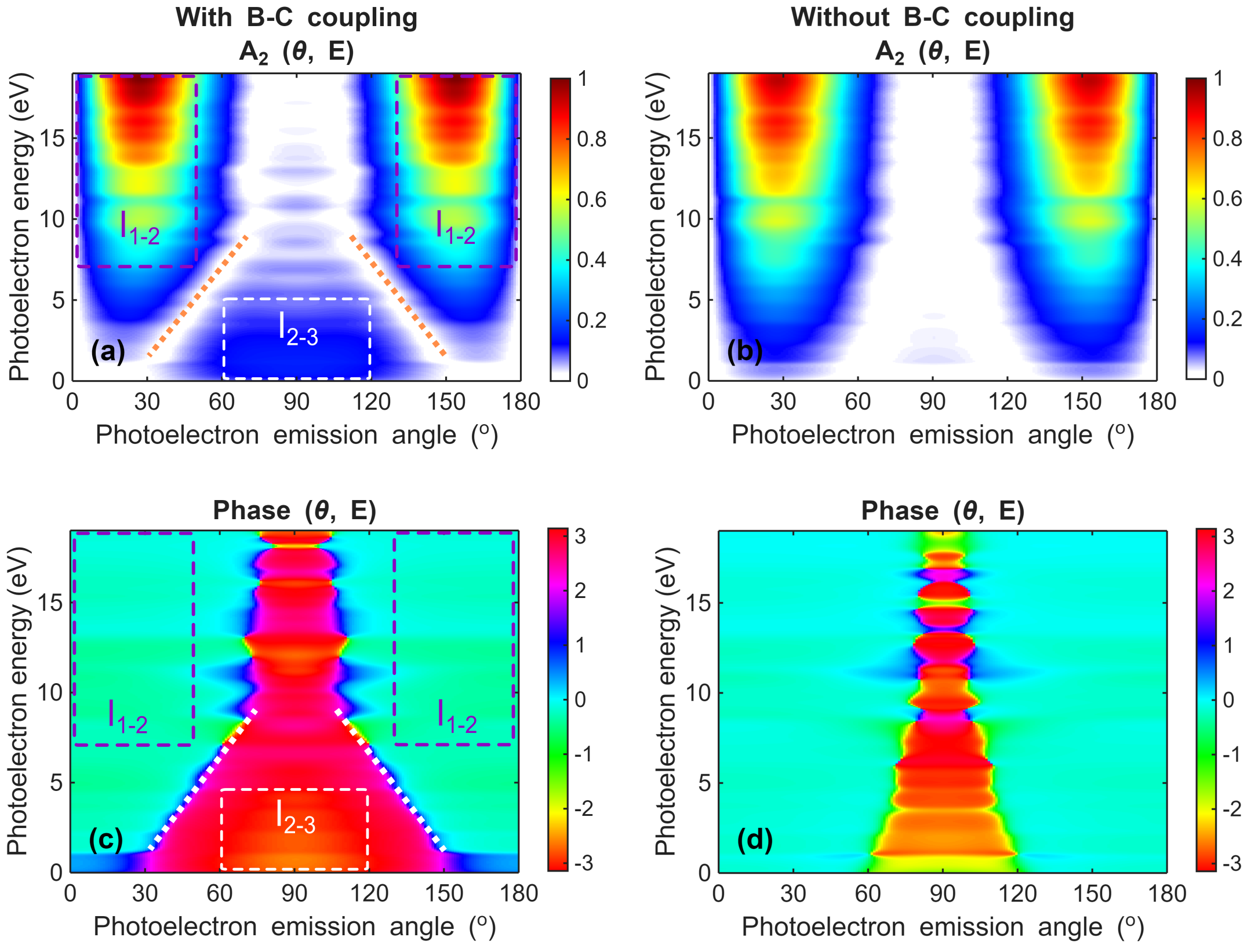
Figure 10: Simulated two-dimensional maps of 27 and 28, highlighting locations of amplitude minima and phase transition due to ionic coupling.
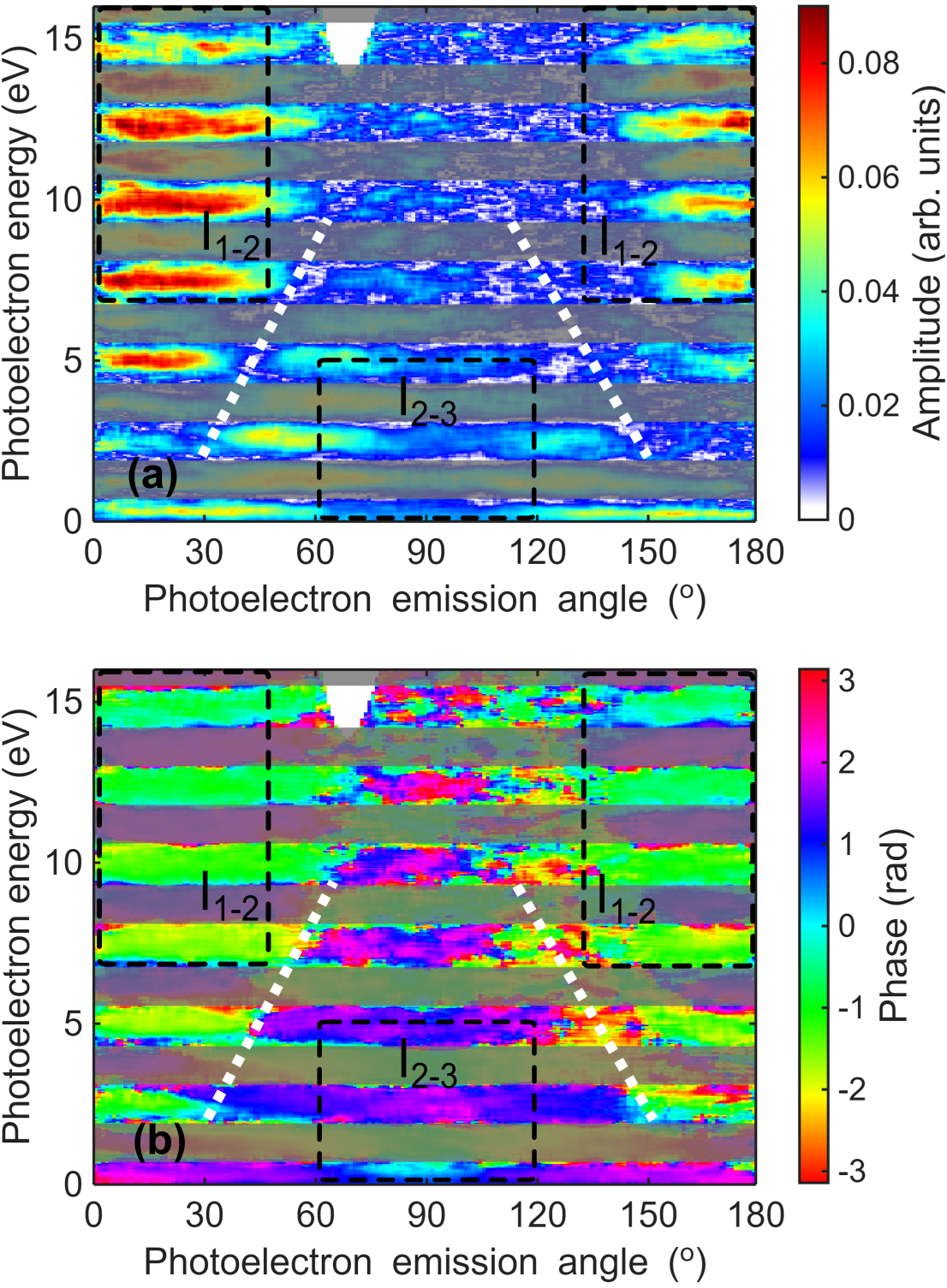
Figure 11: Experimental angle- and energy-resolved analysis of RABBIT traces, confirming theoretical predictions for amplitude and phase structure.
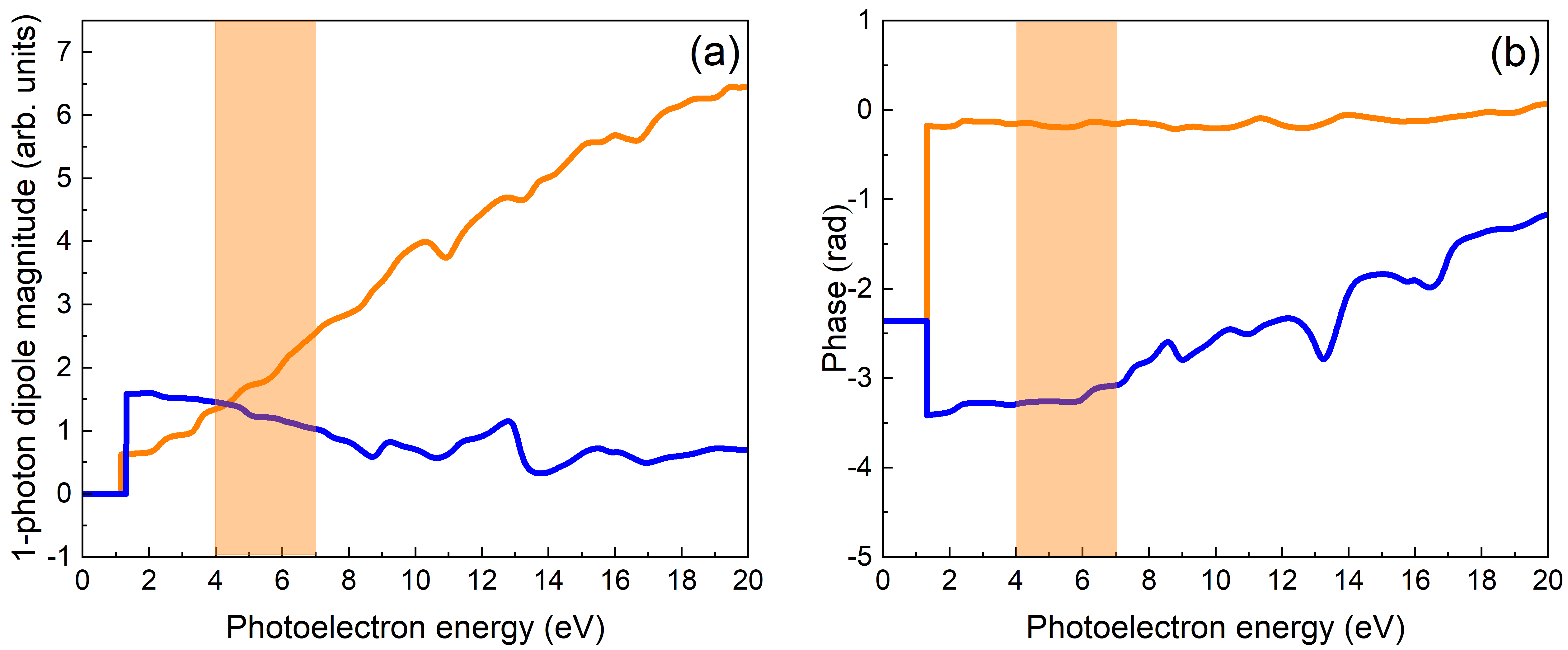
Figure 12: Magnitude and phase of orientation-averaged interference terms (29 and C2Σg+0), correlating with delay jump.
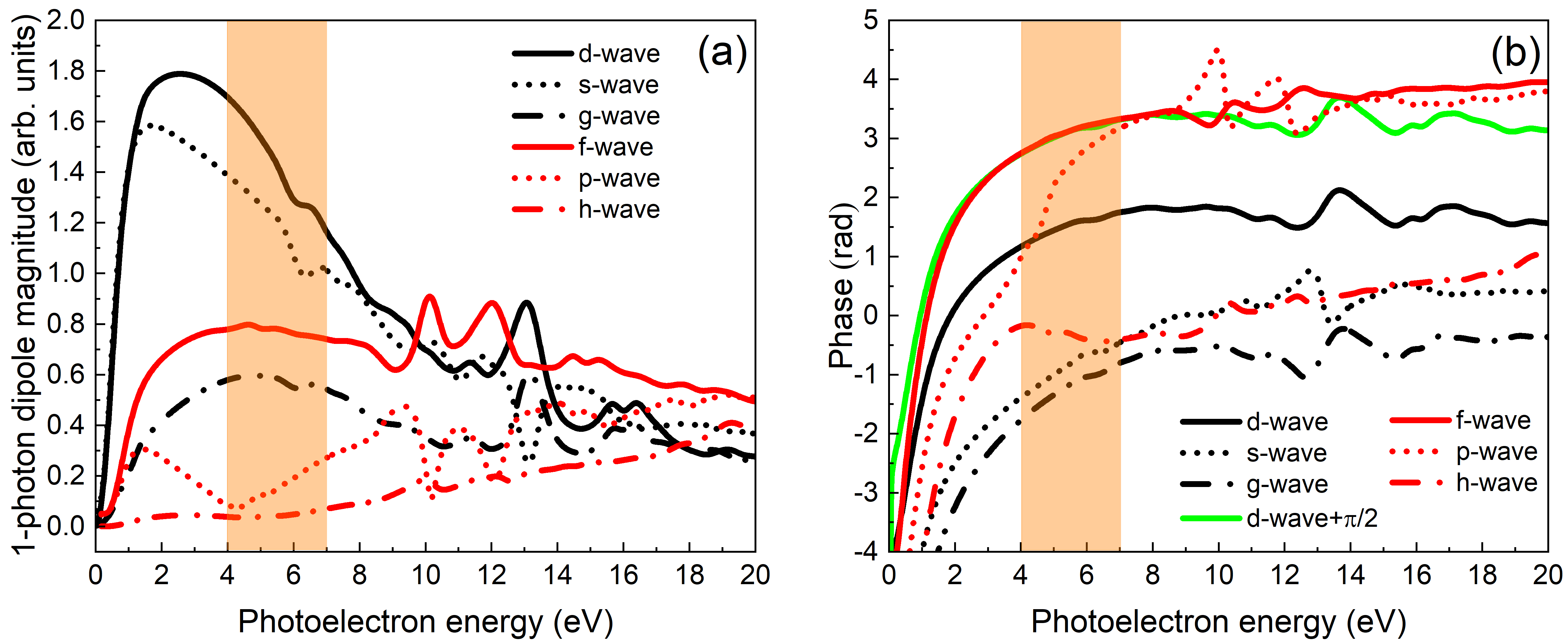
Figure 13: Partial-wave resolved one-photon ionization dipole magnitudes and phases, demonstrating partial-wave origin of phase shift.
Implications and Future Directions
These findings have direct implications for attosecond molecular interferometry. Accurate interpretation of molecular RABBIT signals requires explicit consideration of ionic coupling mechanisms whenever IR photon energies match cationic state energy separations, a condition likely met in more complex polyatomic or cluster systems. Practically, this advances the precision of attosecond metrology for probing ultrafast electron dynamics and entanglement effects in molecules. Theoretically, it establishes a clear connection between multi-pathway quantum interference, partial-wave structure, and delay measurements, suggesting avenues for control and manipulation of ion-electron entanglement.
Future directions include extending these investigations to other molecular systems, possibly exploiting ionic resonances for tailored time-delay control or for sensitive probes of correlation and vibronic dynamics.
Conclusion
This work offers a comprehensive framework for understanding and disentangling the effects of ionic coupling and multiple interfering terms in attosecond molecular interferometry. By combining precise coincidence spectroscopy with advanced theoretical modeling, the authors attribute strong energy- and angle-dependent variations in attosecond time delays to multi-pathway quantum interference involving IR-induced ionic transitions. The necessity of accounting for cationic state coupling is established for the rigorous interpretation of two-color molecular photoionization delays, with broad implications for attosecond science and molecular dynamics.