- The paper proposes a new approach using hierarchical clustering and the Hierarchical Cluster-Class Matching (HCCM) algorithm to improve interpretability of speaker recognition systems.
- By applying SLINK and HDBSCAN algorithms, the authors reveal that neural networks naturally organize speaker representations into semantically meaningful and hierarchical clusters, such as gender and nationality.
- A novel L-score metric is introduced, outperforming traditional F-scores in diagnosing and quantifying the alignment between clusters and semantic classes, enabling deeper insights into model decisions.
Explainable AI in Speaker Recognition: Making Latent Representations Understandable
The paper "Explainable AI in Speaker Recognition -- Making Latent Representations Understandable" (2604.23354) explores the application of Explainable AI (XAI) principles to the domain of speaker recognition. The authors, Yanze Xu, Wenwu Wang, and Mark D. Plumbley, present an analysis of how large neural networks learn and organize task-relevant representations, focusing on the hierarchical structures formed within these learned embeddings.
Introduction
In the field of neural networks used for speaker recognition, the question of interpretability remains paramount. The authors address two key inquiries: first, whether neural networks exhibit the ability to organize learned representations akin to human cognitive processes; and second, how effectively these networks process task-relevant information. The study is set within the context of established machine learning practices but seeks to advance understanding through hierarchically structured analysis rather than the traditional flat clustering methods.
Methodology Overview
The authors employ two primary clustering algorithms—Single-Linkage Clustering (SLINK) and Hierarchical Density-Based Spatial Clustering of Applications with Noise (HDBSCAN)—to investigate the nature of the learned representation clusters. Past work primarily leveraged flat clustering approaches, such as K-means, which often interpret clusters as independent entities. The authors contrast this with their findings, where hierarchical relationships among clusters are evident, indicative of an "inner hierarchical clustering" phenomenon.
This hierarchical clustering is complemented by the introduction of a novel algorithm termed Hierarchical Cluster-Class Matching (HCCM). This algorithm performs a semantic interpretative match between predefined classes and the hierarchical structure of clusters. By quantifying their performance using a new metric referred to as Liebig's score (L-score), the authors provide insights into the limitations of these matching behaviors, thereby identifying what hinders optimal interpretability.
Results and Discussion
The paper reports strong results from implementing the HCCM methodology. Notably, the hierarchical cluster analysis revealed that certain groups of audio samples could be reliably categorized into semantic classes such as gender and nationality. For instance, male speakers from the UK clustered distinctly, while groups such as male and Irish were recognized as overlapping conjunctions of classes.
Through visualizations using dendrograms, the authors illustrate how hierarchical structures emerge from the data, providing semantically meaningful interpretations of the clustering results. Figures present in the paper showcase this process, with the L-score offering a diagnostic perspective on the matching performance of each cluster-class pairing. The authors highlight that using the L-score yields more interpretable outcomes than conventional F-scores, revealing insights into the factors limiting performance in various cases.
Practical Implications
The findings have significant implications for both theoretical and practical aspects of AI in speaker recognition. On a theoretical level, this research contributes valuable insights into the internal workings of neural networks, highlighting their capability to form hierarchical relationships akin to human cognitive structures for organizing knowledge. Practically, improving the interpretability of speaker recognition models can enhance their deployment in real-world applications where understanding decision-making processes is crucial, such as in legal or security contexts.
Future Directions
The authors propose future studies aimed at enabling domain experts—spanning psychology, linguistics, and vocal pedagogy—to gain deeper insights into how speaker recognition systems function, drawing parallels to human vocalization and communication. This could open avenues for improving model designs and enhancing overall system transparency and reliability.
Conclusion
In conclusion, the paper by Xu et al. provides a comprehensive exploration of hierarchical clustering in the context of explainable AI for speaker recognition. By applying SLINK and HDBSCAN, along with the innovative HCCM algorithm, the authors demonstrate that robust interpretability can be achieved in complex neural models. These advancements not only augment the theoretical understanding of machine learning systems but also pave the way for more accountable and interpretable AI technologies in sensitive applications.
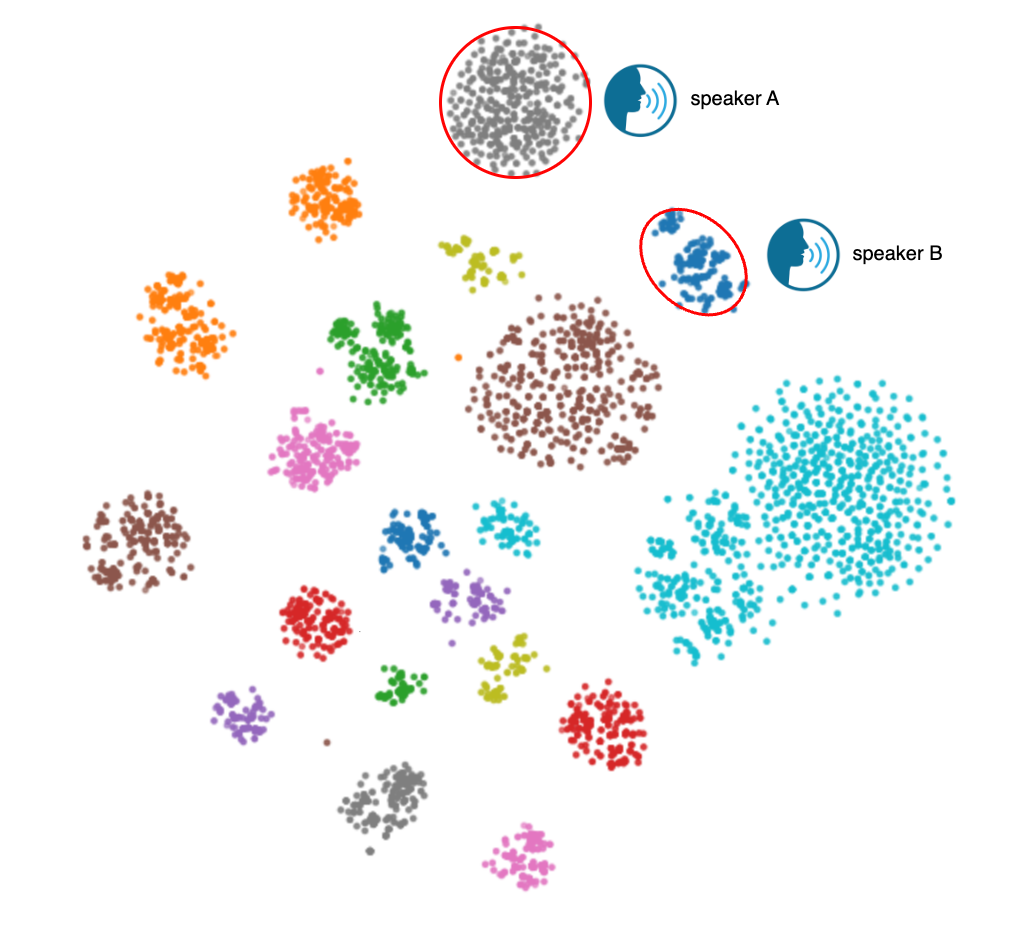
Figure 1: An approximate 2-dimensional visualisation for the representation space of a well-trained speaker recognition network, originated from Li et al.'s paper.
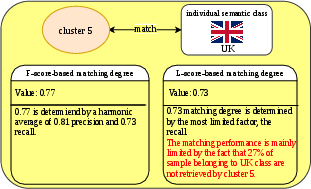
Figure 2: An illustration for interpreting the matching degree quantified by F-score and L-score.
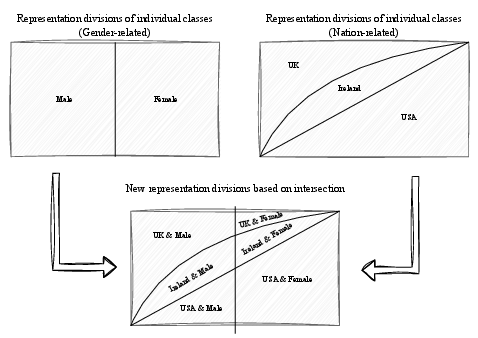
Figure 3: An illustration of intersecting predefined representation divisions of two gender-related individual classes and that of three nationality-related individual classes.

Figure 4: An overview of experimental procedures.
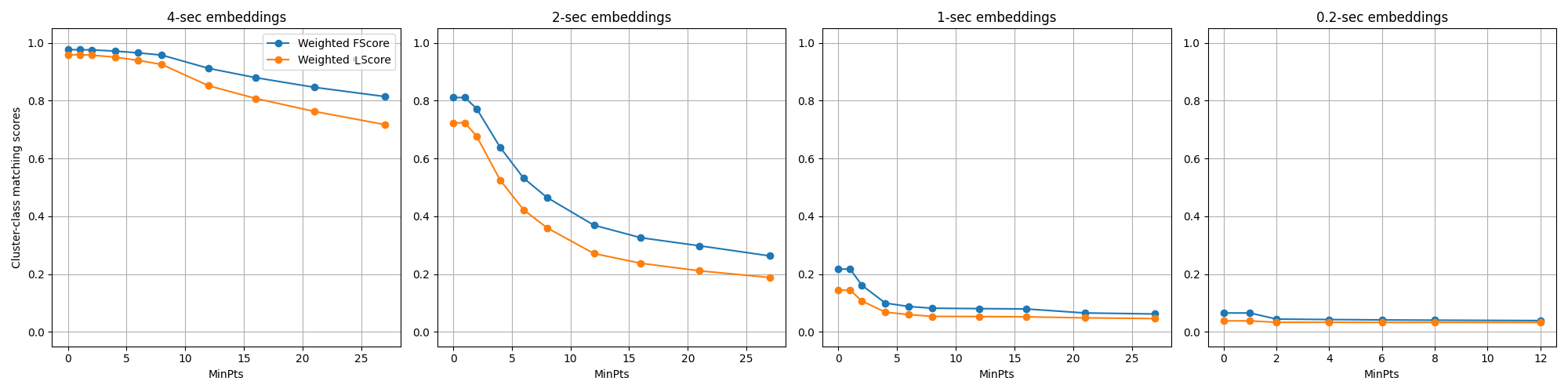
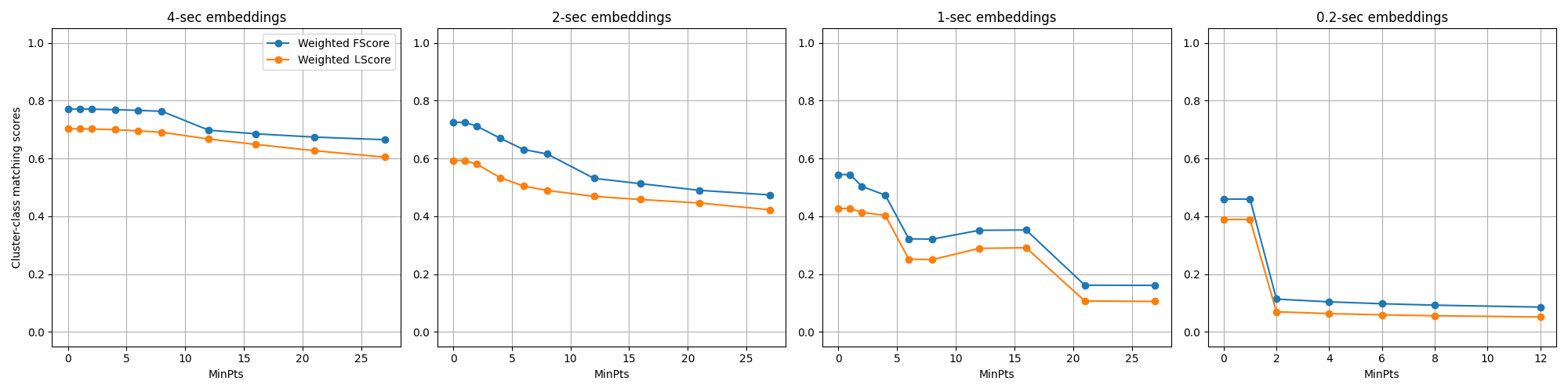
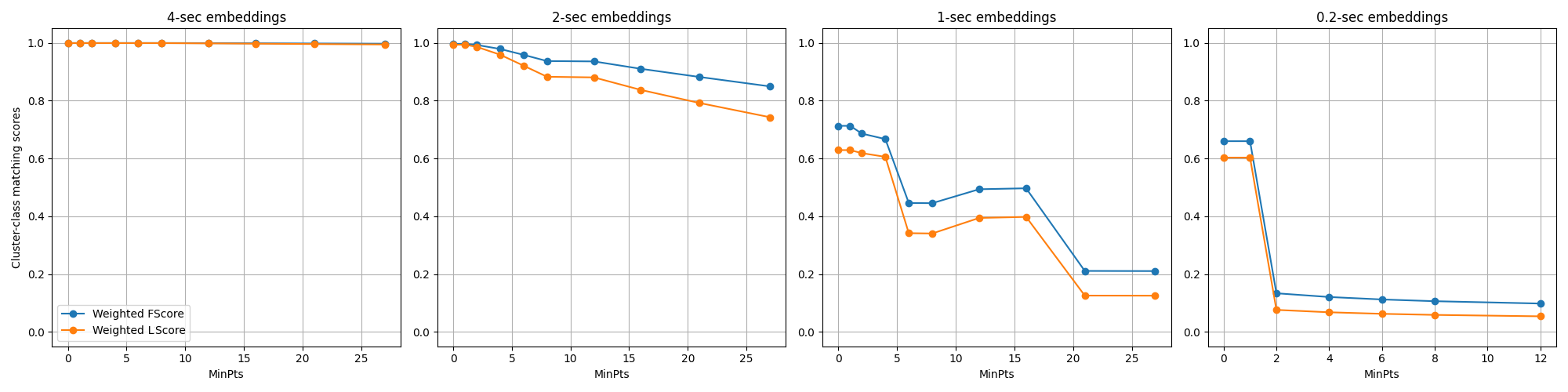
Figure 5: Matching identity-related individual classes.
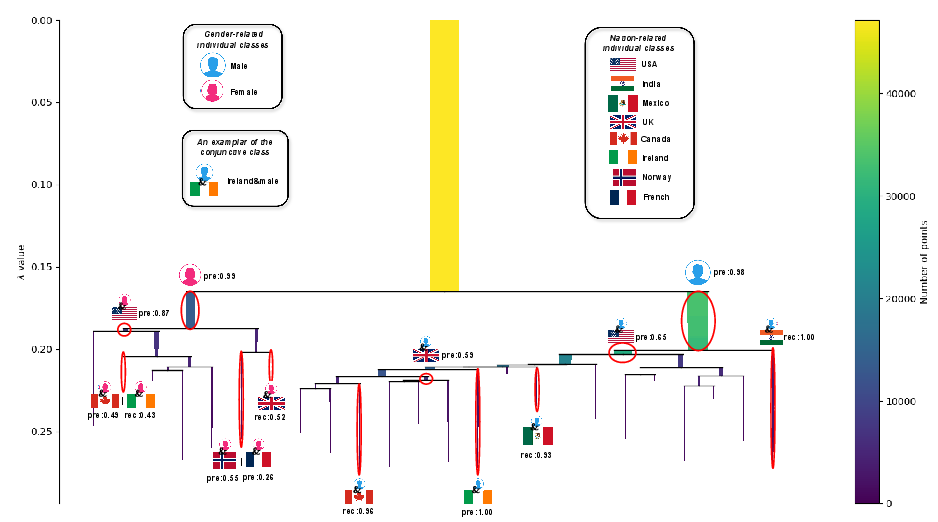
Figure 6: Visualising hierarchical representation clusters produced by applying SLINK to 4-sec speaker embeddings as a dendrogram, with icon annotations showing the semantic interpretations that HCCM offered for the unknown representation clusters, and text labels showing the L-score-based matching degree that HCCM measured for each best-matched cluster-class pair.

