- The paper introduces a genetic algorithm for transaction sequencing, achieving a 15–16% profit increase over greedy heuristics.
- It demonstrates that GA-based scheduling clears deferred transactions 50–60% faster in congestion spikes compared to traditional methods.
- The study quantifies the trade-off between revenue optimization and fair ordering, showing that strict fairness can reduce profits by up to 60%.
Blockchain Execution Layer Optimization: Revenue vs Fair Ordering
The paper "The Blockchain Execution Dilemma: Optimizing Revenue XOR Fair Ordering" (2604.23266) addresses the shift in blockchain bottlenecks from consensus to execution. With the emergence of lazy blockchain architectures and high-throughput DAG-based consensus, execution must be horizontally optimized by parallelizing transaction processing across multiple workers. This parallelization, however, demands conflict-aware transaction sequencing—a problem made acute by the economic incentives (e.g., MEV) and requirements for fair ordering in modern blockchains.
The core dilemma is captured by two opposing goals:
- Maximizing validator revenue: Prioritizing high-fee, low-conflict transactions with unrestricted ordering risks MEV manipulation.
- Fair ordering: Imposing strict arrival-time ordering to ensure transparency nullifies sequencing optimization and reduces validator profit.
The paper formalizes sequencing as a combinatorial optimization task: given estimated execution times, gas prices, and touched objects, determine an order and allocation to maximize profit, subject to concurrency and optional fair ordering constraints.
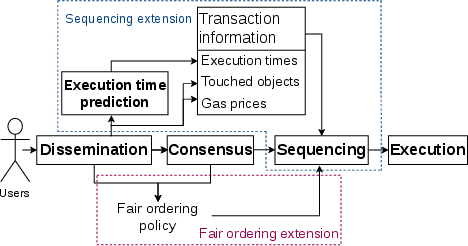
Figure 1: Modular lazy blockchain architecture with the sequencing step bridging consensus and execution, utilizing gas prices, object sets, and execution time predictions.
Heuristic vs Genetic Transaction Sequencing
Traditional blockchains rely on greedy heuristics, typically sorting transactions by gas price with little regard for execution dependencies or potential conflicts. This approach is sub-optimal, deferring many transactions, and often exacerbates executor downtime.
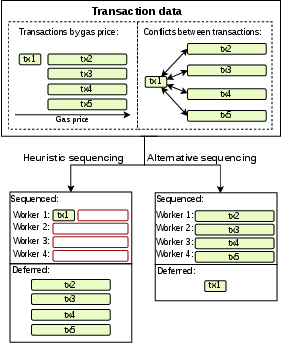
Figure 2: Greedy gas-price ordering (left) defers many transactions, whereas conflict-aware alternatives (right) more efficiently utilize workers.
The paper introduces a genetic algorithm (GA) as an effective alternative. By encoding candidate schedules as permutations, the GA starts from heuristic baselines and iteratively refines transaction orderings through crossover and mutation, guided by a profit-maximizing fitness function. Elitism and high mutation rates ensure rapid local search improvements, while gap-filling scheduling increases concurrency.
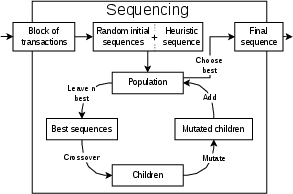
Figure 3: Genetic sequencing workflow, starting from heuristic seeds and optimizing through repeated crossover, mutation, and elitism.
Execution Continuity and Scheduling Model
Unlike the consensus layer's discrete block intervals, execution can proceed continuously—workers move to new blocks upon completion without global synchronization. The model extends to overlapping block executions, where deferred transactions are rescheduled, deadlines are dynamically adjusted, and scheduling honors both worker and object constraints.
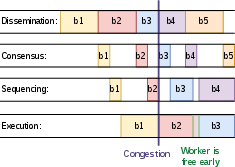
Figure 4: Layered processing of blocks, with dynamic sequencing duration and overlap driven by detected congestion.
The scheduling function, using Earliest Start Time plus gap-filling, greedily assigns transactions to available workers, deferring them when conflicts arise or deadlines are exceeded.
Dataset Construction and Empirical Evaluation
Experiments use real-world Sui and Ethereum datasets (with Ethereum's conflict data synthesized from Sui), extracting execution times, gas prices, and object sets. Detailed correlation analysis confirms the prevalence of temporal locality and the lack of strong gas price–conflict correlation.
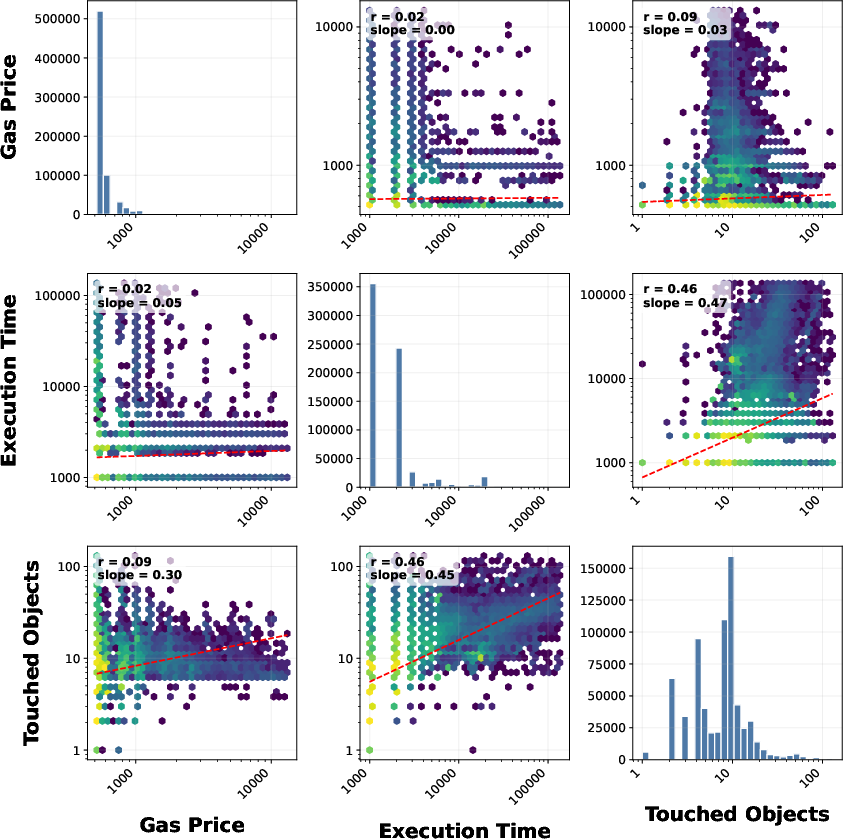
Figure 5: Sui data—correlations between execution time, gas price, and number of touched objects.
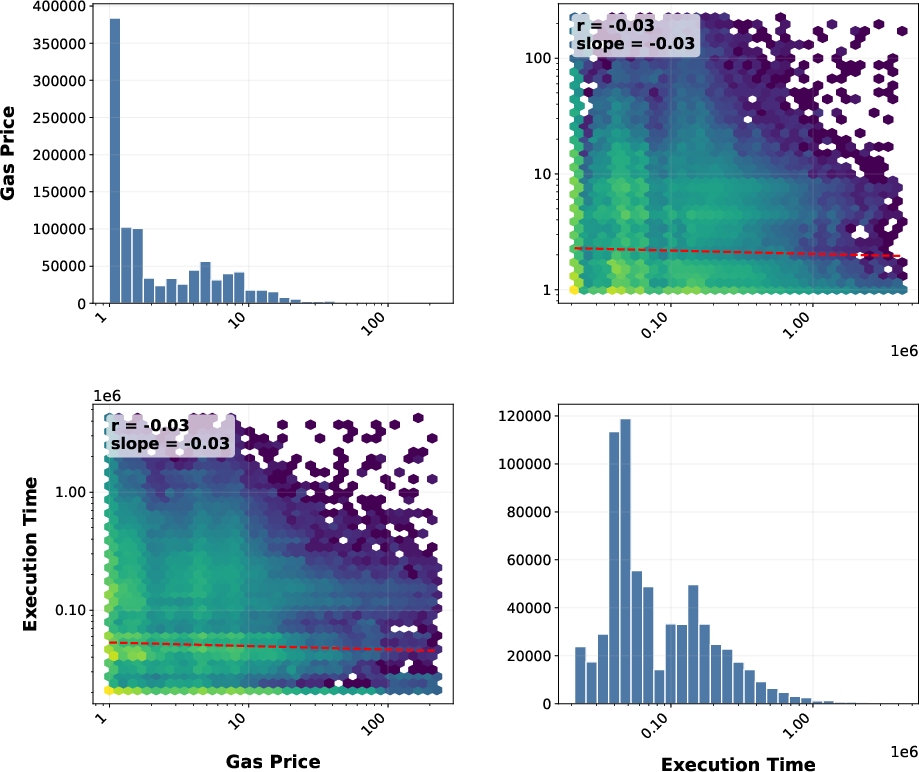
Figure 6: Ethereum data—distribution and correlation of gas price and execution time.
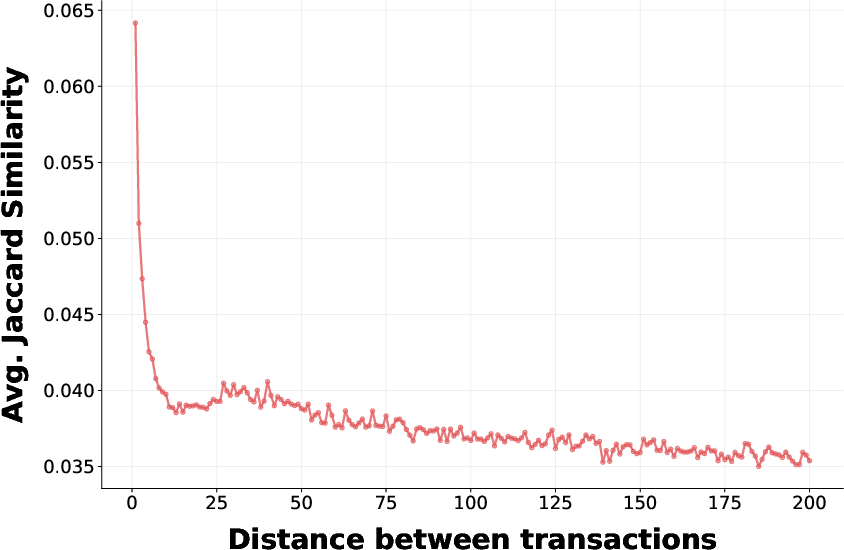
Figure 7: Jaccard similarity between object sets diminishes with transaction distance; frequent global objects drive congestion.
Sequencing algorithms evaluated include:
- Greedy gas price (GP); gap-filling version and Sui's original
- Given order (historical blockchain sequence)
- Random order
- Lowest execution time (LET)
- GA variants: Genetic 100/10 (GE10), Genetic 100/50 (GE50) epochs
Results: Profit Maximization and Congestion Clearance
Under sustained congestion, the GA outperforms greedy baselines in both Sui (≈16% profit gain) and Ethereum datasets (≈4% gain with high gas price variance). Increased epochs (GE50 vs GE10) yield minor further improvements.
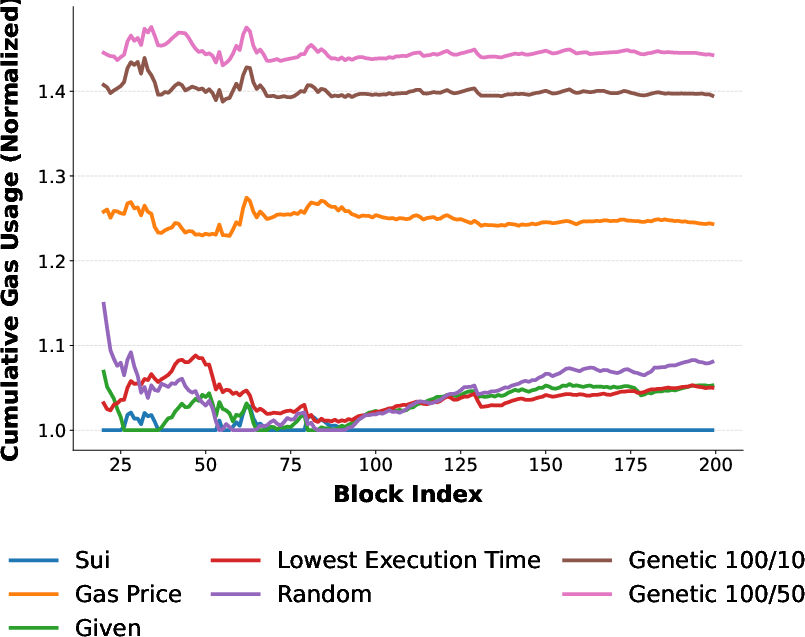
Figure 8: Normalized validator profit under sustained congestion (Sui), highlighting GA superiority.
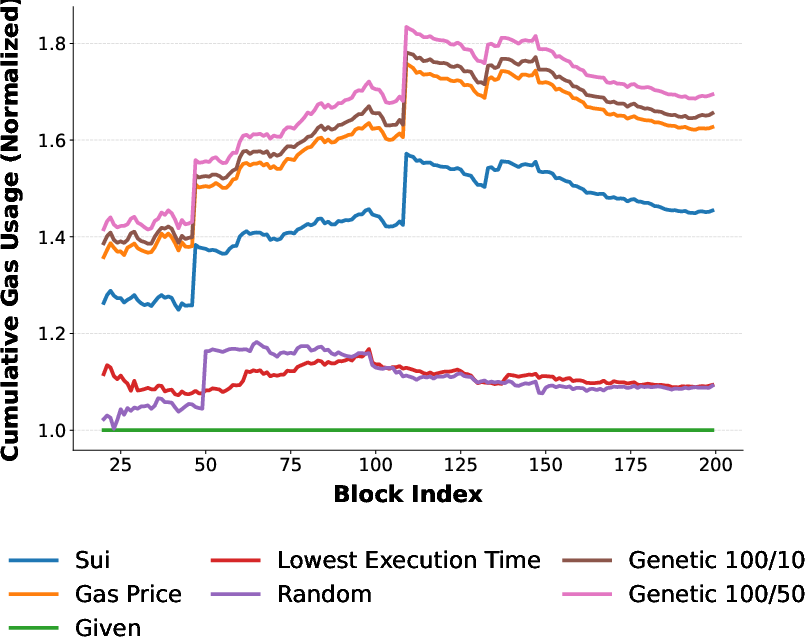
Figure 9: Normalized validator profit under sustained congestion (Ethereum), showing smaller but consistent GA gains.
In spike scenarios, GA sequencers clear deferred transaction backlogs up to 58% faster than greedy heuristics (Sui: GE50 clears in 25 blocks vs GP’s 60).
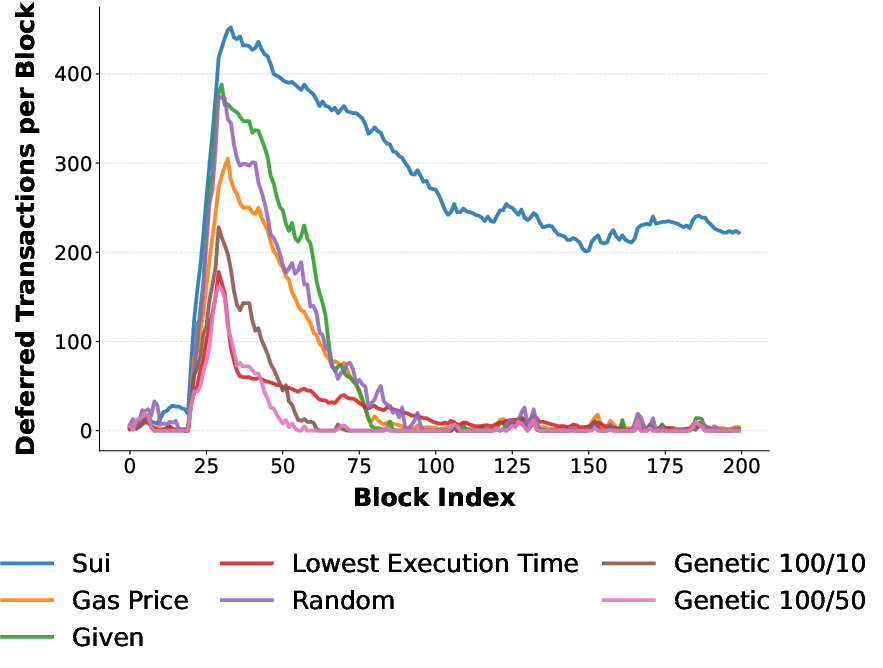
Figure 10: Number of deferred transactions after a spike in Sui; GA approaches clear congestion faster.
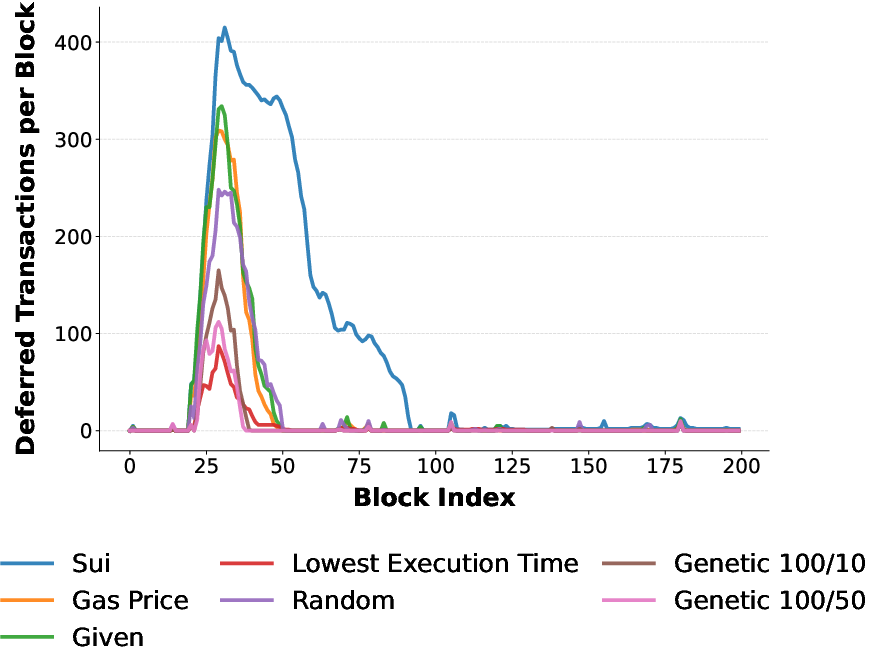
Figure 11: Deferred transactions post-spike on Ethereum; GA sequencers recover most rapidly.
Fair ordering constraints eliminate sequencing flexibility and diminish economic incentives: profit drops by 50–60%, and congestion is not cleared under heavy interdependence.
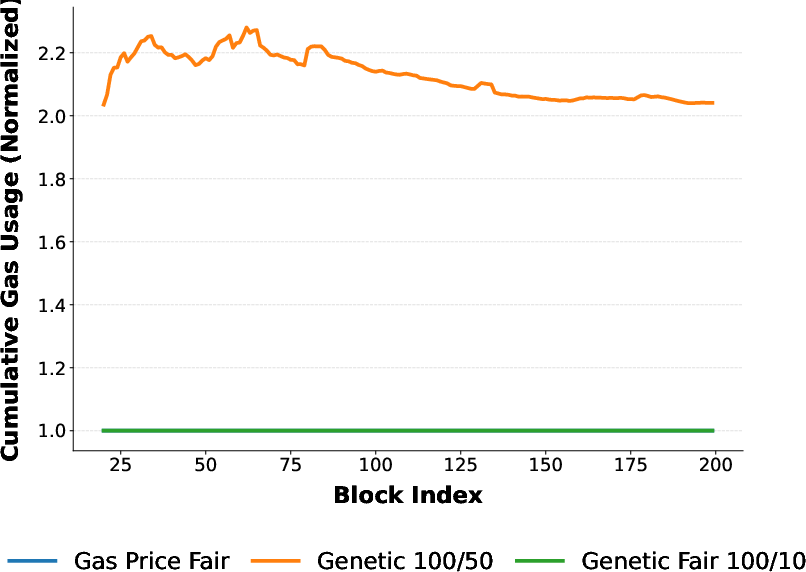
Figure 12: Validator profit under fair-ordering constraints (Sui); GA and GP-fair converge, with substantial revenue loss.
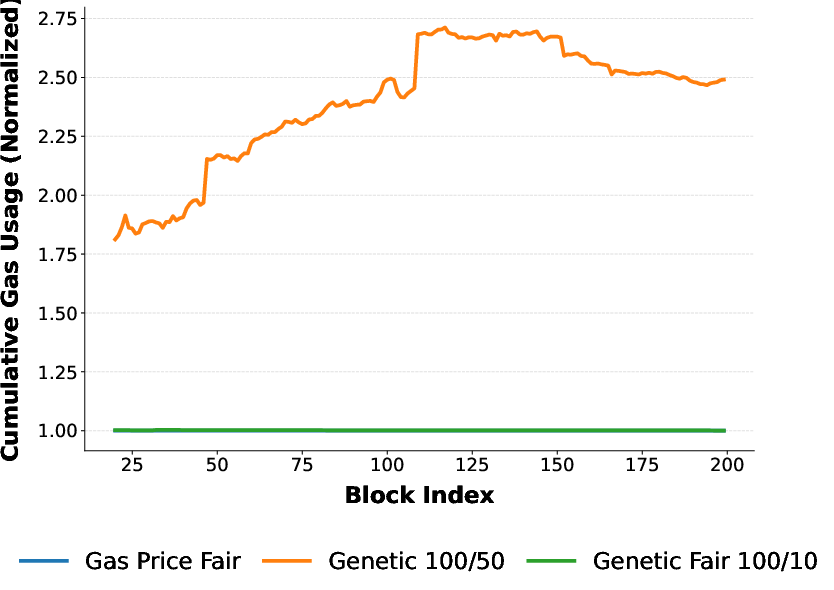
Figure 13: Validator profit under fair-ordering constraints (Ethereum); fair variants nullify GA advantage.
Robustness tests with perturbed execution time predictions (log-normal errors—28% mean absolute error) confirm that GA sequencing maintains its congestion clearance efficiency, with only minor degradation in profit maximization.
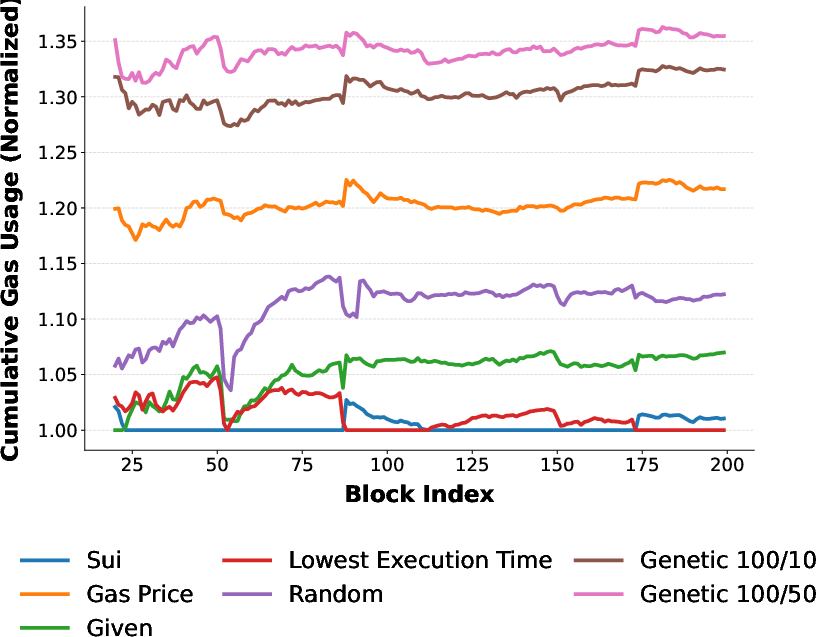
Figure 14: Sustained congestion with perturbed execution times (Sui)—GA remains robust.
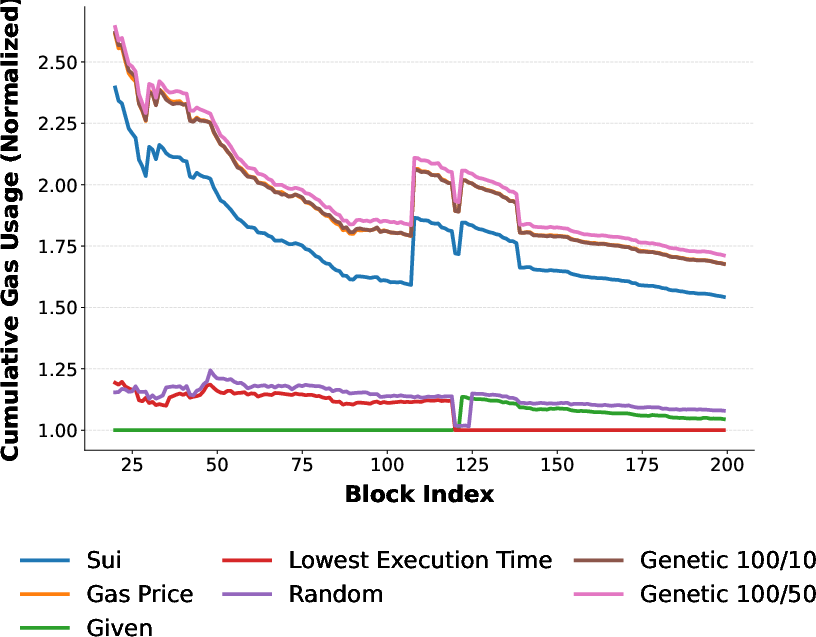
Figure 15: Sustained congestion with perturbed times (Ethereum)—GA efficiency marginally reduced.
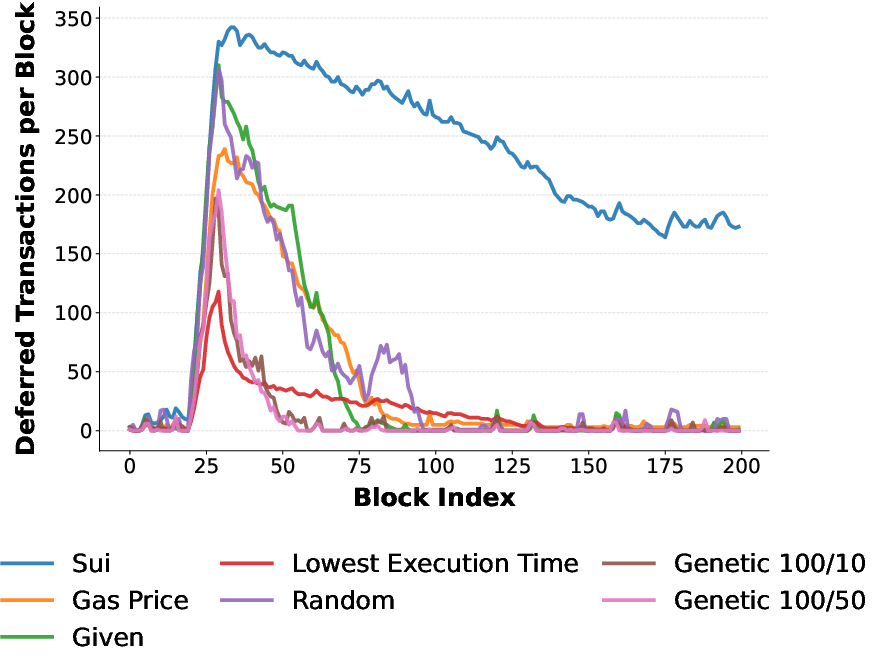
Figure 16: Deferred transactions post-spike (Sui) with perturbed times—GA sequencing sustains performance.
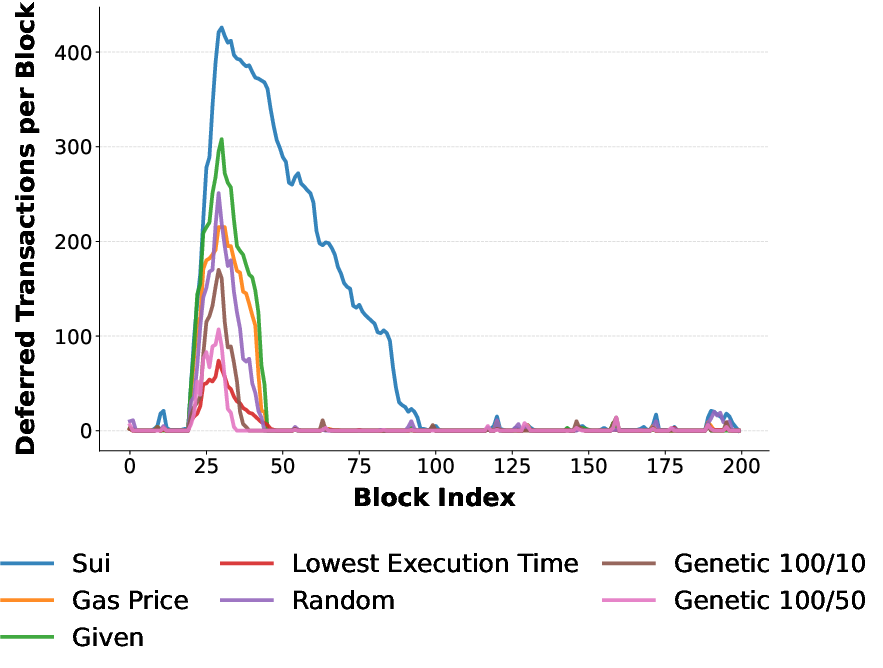
Figure 17: Deferred transactions post-spike (Ethereum) with perturbed times—GA sequencing remains resilient.
Implications and Future Directions
The findings establish the centrality of transaction sequencing—beyond consensus—for optimizing blockchain throughput, minimizing latency, and maximizing validator incentives in parallel execution environments. The revenue–fairness trade-off is quantitatively characterized: strict fair ordering nullifies scheduling improvements and imposes substantial validator profit penalties.
Practical implications include:
- Sequencing algorithms must operate as anytime processes, adjusting optimization intensity to match congestion dynamics and avoiding new system bottlenecks.
- Object conflict and execution time estimates (even imperfect) are critical; incentives may need redesign to weight conflicts in fee structures.
- Builders and validators operating in high-throughput chains should deploy conflict-aware sequencing with GA or similar metaheuristics, shifting from naive gas price heuristics.
Theoretically, the combinatorial structure links execution layer optimization with classical NP-hard scheduling; further research could explore dynamic and multi-dimensional fee systems, more advanced heuristics, and interactions with batch ordering fairness.
Conclusion
The paper rigorously models blockchain transaction sequencing under parallel execution, formalizing the profit-maximizing versus fairness dilemma. It demonstrates that conflict-aware genetic sequencing delivers a 15–16% validator profit increase and clears congestion 50–60% faster, resilient to realistic execution time estimate errors. Imposing fair ordering constraints eliminates these benefits, slashing validator profits by up to 60%. The results illuminate the execution layer’s pivotal role and establish a clear trade-off framework between transparency and incentive alignment for future blockchain protocol design.

