- The paper introduces a novel MgNet-based neural operator that uses adaptive angular compression to filter spectral bias and accelerate convergence in diffusion regimes.
- It replaces fixed sub-operators with learnable neural components, achieving a 10x reduction in GMRES iterations compared to classical methods.
- It provides physics-informed error bounds and demonstrates robust generalization in heterogeneous media, though performance drops in transport regimes.
Filtered MgNet Operator Learning for Radiative Transfer Equations
Overview
The paper "A Filtered MgNet Solver For Radiative Transfer Equations" (2604.23265) develops a physics-constrained operator learning approach using neural architectures inspired by multigrid recursive skeleton factorization (RSF) for the steady-state radiative transfer equation (RTE) in heterogeneous media. Classical numerical solvers for RTE suffer from severe sensitivity to medium parameters and inefficiency in the diffusive regime. This work introduces MgNet, which replaces fixed sub-operators with learnable neural network components, and applies adaptive angular domain compression to mitigate spectral bias in training. The resulting learned preconditioner delivers substantial acceleration in iterative solvers and robust generalization across parameter configurations.
Discretization Schemes and Angular Compression
The RTE, describing particle transport and scattering, is discretized via the discrete ordinates method (DOM) for angular variables and the tailored finite point scheme (TFPS) for spatial domains. The transition between transport (ϵ∼1) and diffusive (ϵ≪1) regimes, governed by parameter ϵ, imposes multiscale challenges and layer formation near boundaries and interfaces.
DOM quadrature points project 3D spherical directions onto a 2D geometry, resulting in a high-dimensional coupled system. The TFPS constructs piecewise constant approximations, generating cell-local basis functions characterized by their decay properties.

Figure 1: DOM quadrature construction in x-y geometry for angular discretization in the RTE.
To address learning difficulty posed by high-frequency basis modes associated with boundary and interface layers, the adaptive tailored finite point scheme (ATFPS) compresses the solution operator by retaining only slowly-decaying basis functions. This reduces system rank and filters spectral components that induce instability, allowing accurate solution reconstruction via layer information recovery. Theoretical a posteriori error bounds quantify the approach’s accuracy as a function of the compression parameter δ.
MgNet Architecture: Physics-Constrained Multigrid Neural Operator
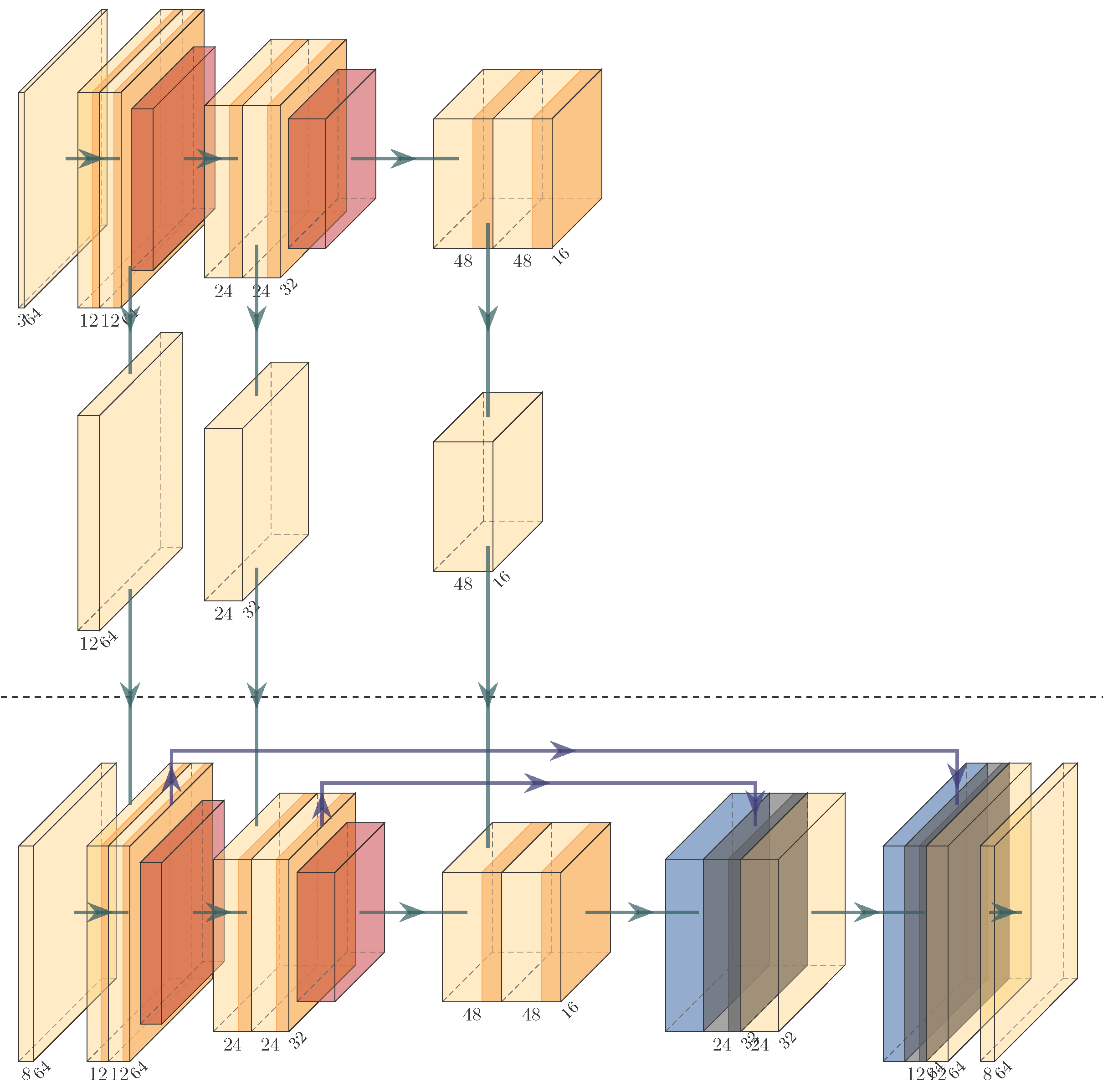
The central operator-learning architecture follows the hierarchical structure of RSF-based solution operators but replaces fixed coefficient-dependent sub-operators (smoother, restriction, prolongation) with learnable neural components. MgNet is organized as two modules:
By jointly training CoeffNet and MgNet, the architecture learns a robust parameterized solution operator exhibiting strong invariance to medium variations. Unlike classical multigrid, whose convergence deteriorates in hyperbolic problems, MgNet achieves rapid convergence by optimizing data-driven operator dependencies.
Training is driven by a physics-informed, unsupervised loss function: the ℓ2 norm of the residual for the discretized linear system. Instead of requiring labeled solutions, the learning is physically consistent and computationally efficient.
To accelerate convergence and suppress spectral bias, the loss incorporates adaptive angular compression by employing the ATFPS discretization, dynamically filtering high-frequency modes. This filtering directly translates to improved learning stability, faster convergence, and better generalization performance in diffusion-dominated settings.
Numerical Results
Numerical experiments span diffusion, transport, and sharp interface regimes, evaluating convergence, validation behavior, and GMRES iteration performance using MgNet as a preconditioner.
- Diffusive Regime: Incorporating ATFPS leads to smooth and rapid convergence for both training and validation losses, even with moderate sample sizes. The learned preconditioner achieves 10x reduction in GMRES iterations versus classical Block Jacobi, demonstrating parameter-robust generalization.
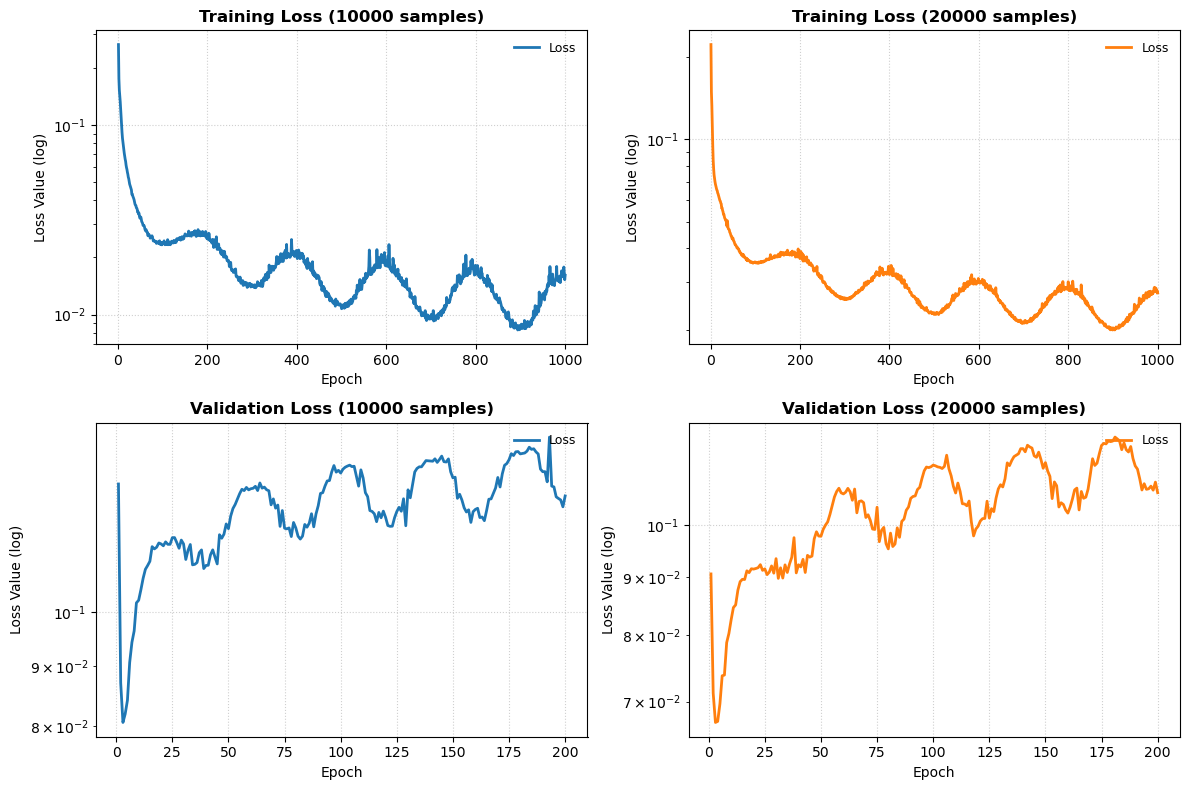
Figure 3: Training/validation loss curves for diffusion region with full-order discretization.
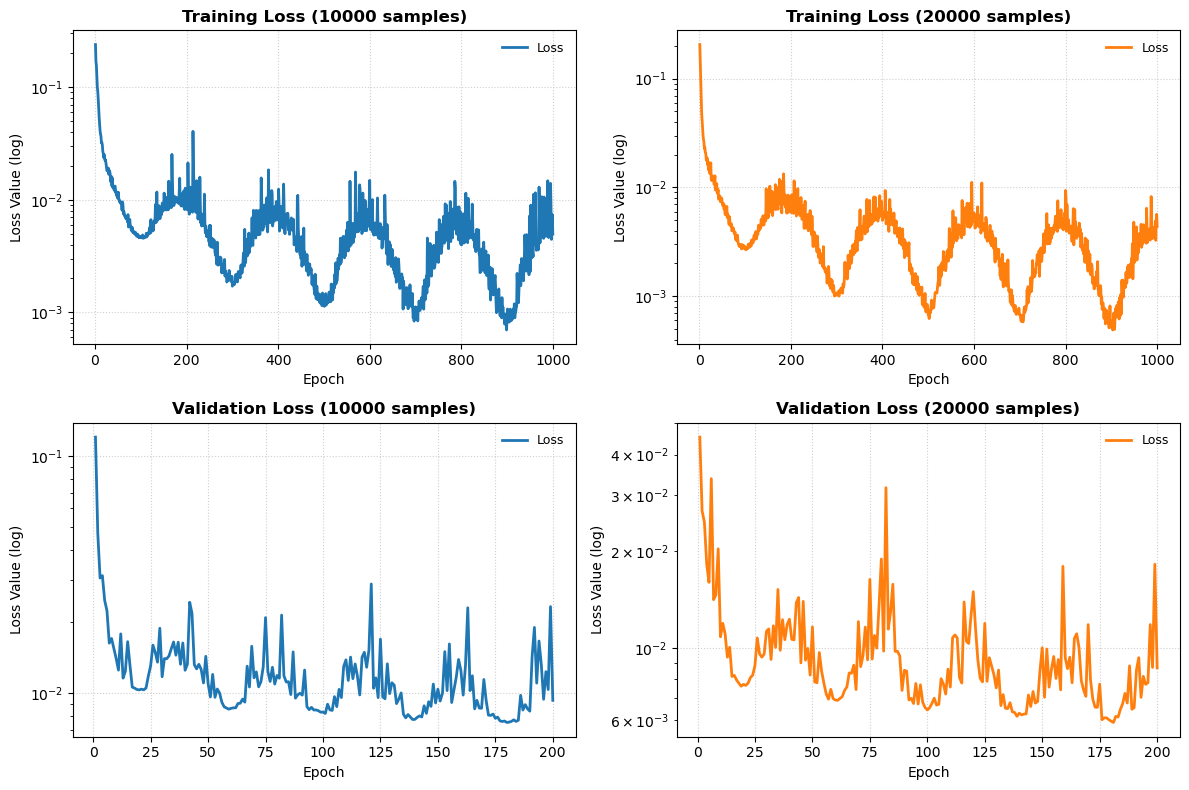
Figure 4: Training/validation loss curves for diffusion region with compressed discretization (ATFPS).
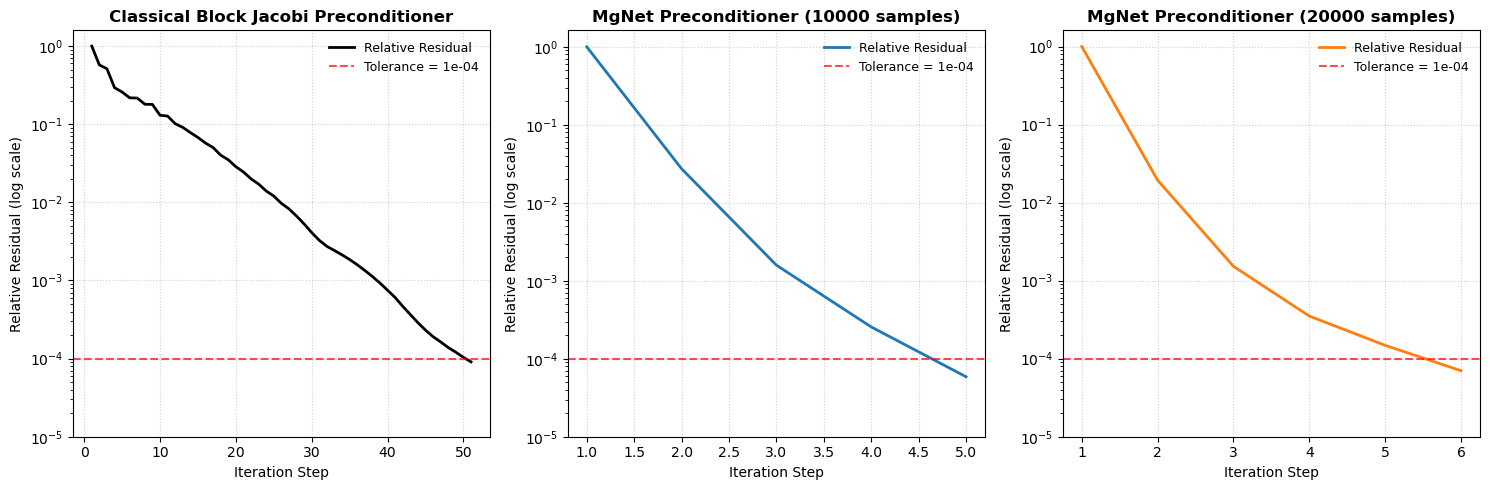
Figure 5: GMRES iteration counts for diffusion regime under different preconditioners.
- Transport Regime: The low-rank structure is absent; filtering provides no benefit and validation loss diverges, indicating limited generalization. Both ATFPS and TFPS are equivalent; the operator-learning approach is ineffective in this setting.
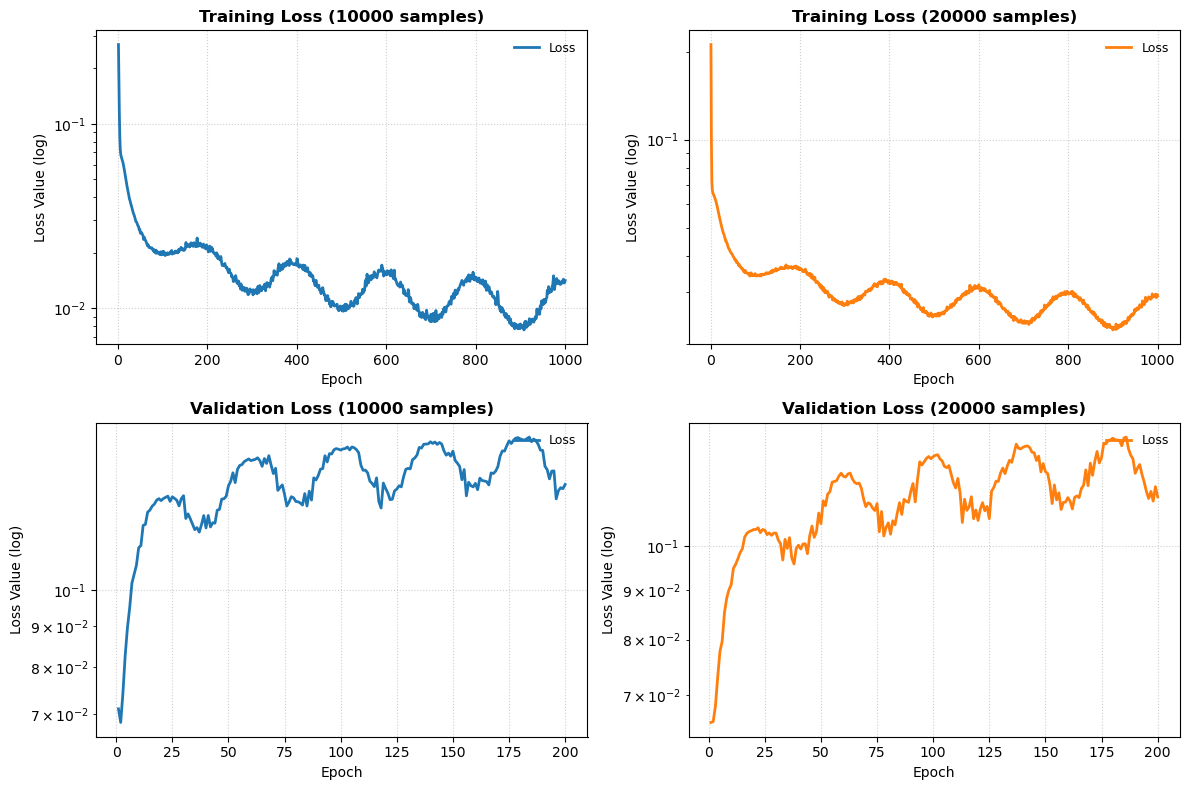
Figure 6: Training/validation loss curves for transport region with varied sample sizes.
- Sharp Interface: In mixed diffusion/transport cases, the network struggles with learning a unified model; validation loss does not decrease, revealing architecture and loss limitations for coupled or regime-transition scenarios.
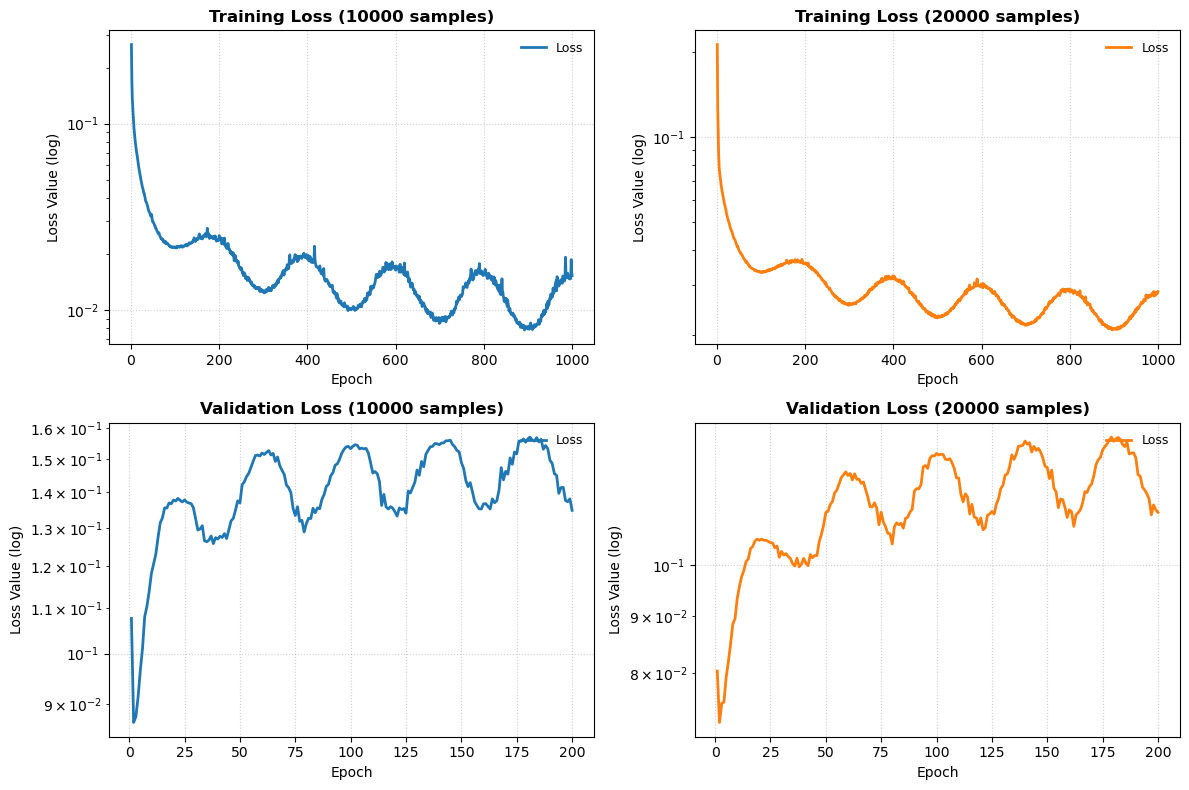
Figure 7: Training/validation loss curves for sharp interface problem, full-order discretization.
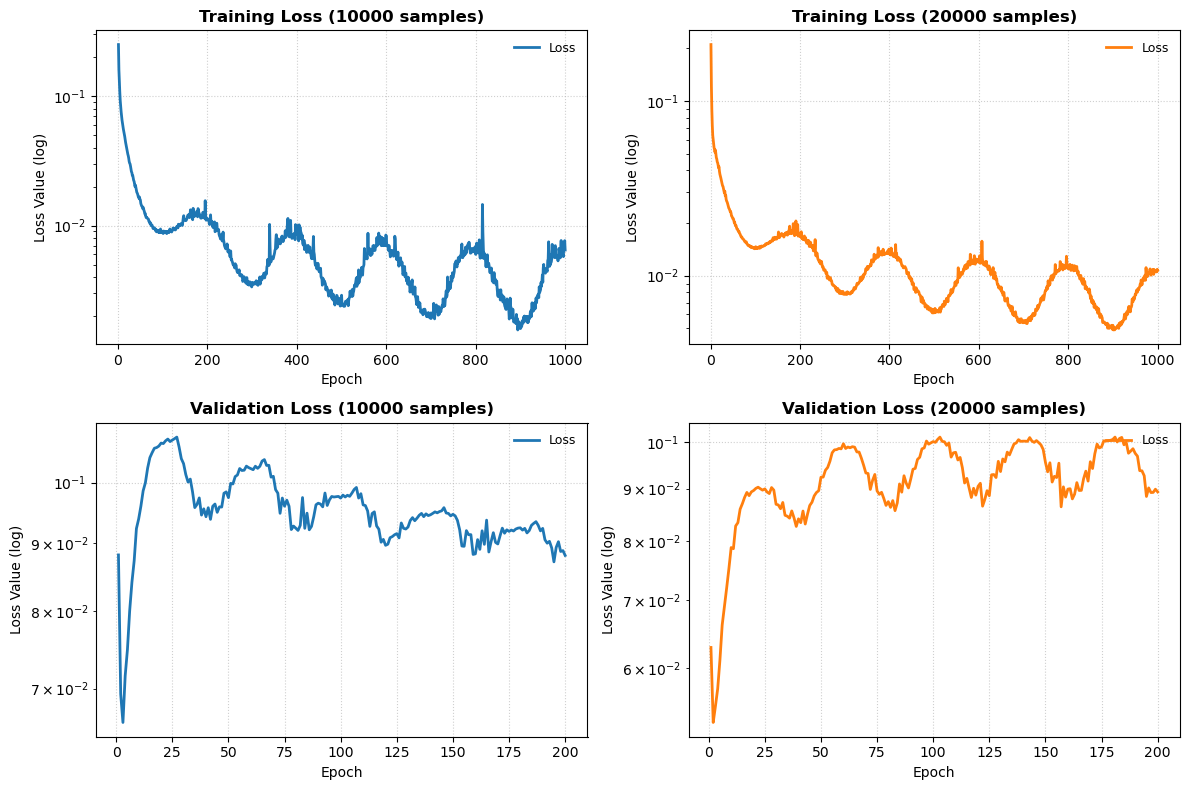
Figure 8: Training/validation loss curves for sharp interface problem, compressed discretization (ATFPS).
Implications and Future Directions
The integration of operator learning with multilevel discretization and adaptive angular filtering offers a significant advancement in solving the RTE for diffusion-dominated and parameter-varying settings. Practically, such architectures can serve as robust, scalable preconditioners in iterative solvers, dramatically accelerating simulations in nuclear engineering, atmospheric physics, optical tomography, and similar domains.
Theoretically, the combination of physics-informed loss functions and spectral compression provides a template for mitigating spectral bias in operator learning, with quantifiable accuracy bounds. The success in diffusion and sharp interface regimes supports potential extensions to operator learning for broader classes of PDEs where multiscale and parameter sensitivity are critical.
For transport-dominated or highly heterogeneous problems, the current architecture is insufficient; future work should focus on network designs capable of capturing non-low-rank operator structure, possibly through specialized regularization or hybrid sequence-to-sequence models.
Conclusion
This paper presents a novel filtered MgNet approach for learning solution operators of the radiative transfer equation, leveraging adaptive angular compression within physics-informed neural architectures. The method achieves strong empirical and theoretical results in diffusion-dominated regimes, including substantial acceleration in preconditioned iterative solvers and robust parameter invariance. The findings expose both the promise and current limitations of operator learning in hyperbolic PDEs, motivating further research on architectures and spectral regularization for transport regimes.