- The paper introduces the fractional ℓ1/ℓ_p^q framework to bridge nonconvex and subtractive regularizations for improved sparse recovery.
- It establishes generic equivalence with relaxed RIP conditions, enhancing performance under high coherence and large dynamic range.
- A convergent MM algorithm leveraging the Kurdyka–Łojasiewicz property ensures robust performance in imaging and time-domain recovery.
A Unified Fractional Regularization Framework for Sparse Recovery: An Expert Analysis
Introduction and Context
Sparse signal recovery remains a central problem in signal processing, statistics, and computational imaging, where the recovery of a high-dimensional but intrinsically low-dimensional (sparse) signal from underdetermined linear measurements is crucial. The classical approach leverages the convex ℓ1 norm as a surrogate for NP-hard ℓ0 minimization, but nonconvex regularizations—particularly those inspired by fractional or difference-based penalties—have been shown to yield solutions closer to the true sparse representation. The paper "A Unified Fractional Regularization Framework for Sparse Recovery" (2604.23184) formalizes this domain by introducing a comprehensive framework built upon the fractional ℓ1/ℓpq model, generalizing and unifying much of the nonconvex regularization literature. The paper rigorously establishes structural equivalence between these fractional models and subtractive models, derives new RIP-based guarantees, and introduces a convergent MM algorithm grounded in contemporary nonsmooth analysis.
Theoretical Contributions: Model Equivalence and Recovery Guarantees
The core advance is formulating the ℓ1/ℓpq sparse regularization problem, parameterized by the norm degree p>1 and exponent 0<q≤1, with the ability to interpolate between classical, ratio-based, and subtractive regularizations. The authors precisely prove that any critical point of the fractional formulation corresponds to a stationary point of a subtractive ℓ1−αℓp model for a specific α determined a posteriori by the solution. This result unifies previously disparate threads and clarifies the nuanced relationship between scale-invariant ratio-based objectives and difference-based methods, providing a theoretically robust bridge across the landscape of sparsity-inducing regularizations.
Consequently, the fractional model offers a flexible means to modulate the regularization effect and tailors recovery properties to application-dependent requirements (e.g., dynamic range, noise, or matrix coherence). Importantly, in contrast to previous equivalence results which require tuning α to an unknown optimum, the presented correspondence is generic, applying to arbitrary parameters.
A flagship theoretical result is the derivation of a new, weaker RIP-based sufficient recovery condition for the ℓ1/ℓpq model. The sufficient restricted isometry constant ℓ00 is characterized in closed-form, showing explicit dependence on the model's ℓ01 parameters, signal sparsity ℓ02, and signal structure. Notably, introduction of the parameter ℓ03 enlarges ℓ04 and relaxes RIP requirements compared to classical (ℓ05) models. This provides robustness under higher-coherence or less ideal measurement matrices, which are common in realistic imaging systems.
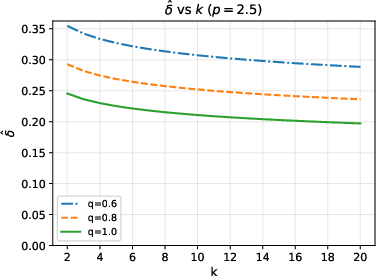
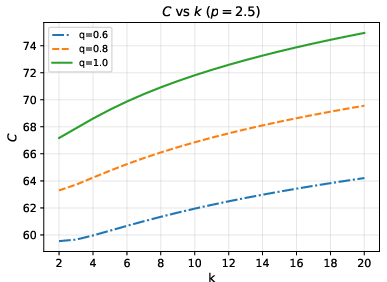
Figure 1: Behavior of ℓ06 and the error bound constant ℓ07 as functions of ℓ08 and ℓ09, illustrating relaxed RIP conditions and improved stability with fractional regularization.
Majorization-Minimization Algorithm and Convergence Analysis
The paper presents a practical MM algorithm for solving the nonconvex, nonsmooth log-transformed variant of the fractional regularization objective. Each iteration solves a convex subproblem obtained by upper-bounding the objective using tangent majorizers and a quadratic proximal term. This framework is general and compatible with further model extensions.
Crucially, the convergence theory leverages the Kurdyka–Łojasiewicz (KL) property, a powerful tool in recent nonsmooth optimization theory. The authors demonstrate that the KL exponent remains invariant under monotone transformations of the objective, showing that the intrinsic difficulty (in terms of subgradient-based criticality and rate of convergence) of the fractional model matches that of its subtractive analogue. This enables the transfer of known local convergence rates and global convergence guarantees from the difference model to the new fractional framework. The sufficient decrease and boundedness of iterates ensure that every sequence generated by the algorithm converges to a stationary point, with linear or sublinear rates depending on the KL exponent.
Numerical Results: Sparse Recovery, Time-Domain, and MRI Imaging
Numerical evaluation is conducted across classical tasks: synthetic sparse recovery under various matrices, time-domain signal reconstruction, and highly undersampled MRI. The methodology directly compares ℓ1/ℓpq0, ℓ1/ℓpq1, ℓ1/ℓpq2, and several configurations of the ℓ1/ℓpq3 objective.
For the sparse recovery task, the ℓ1/ℓpq4 models consistently outperform the alternatives, with particular strength in regimes involving measurement matrices with high coherence or signals of large dynamic range. This is demonstrated by higher empirical recovery success rates across multiple settings.
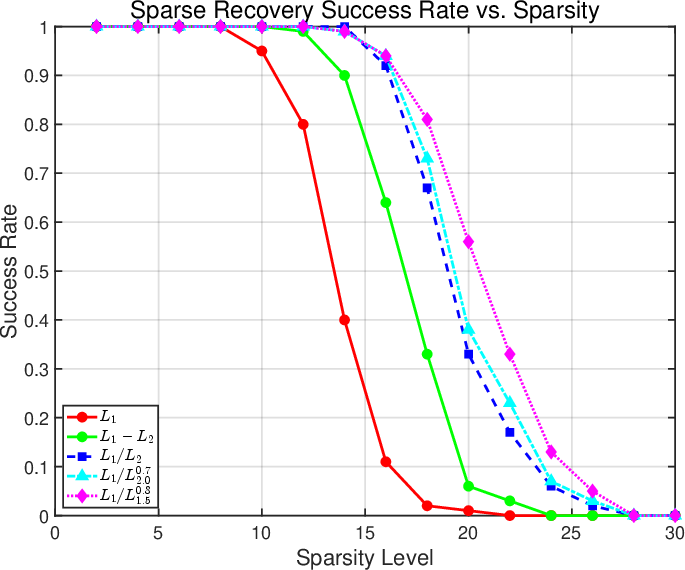
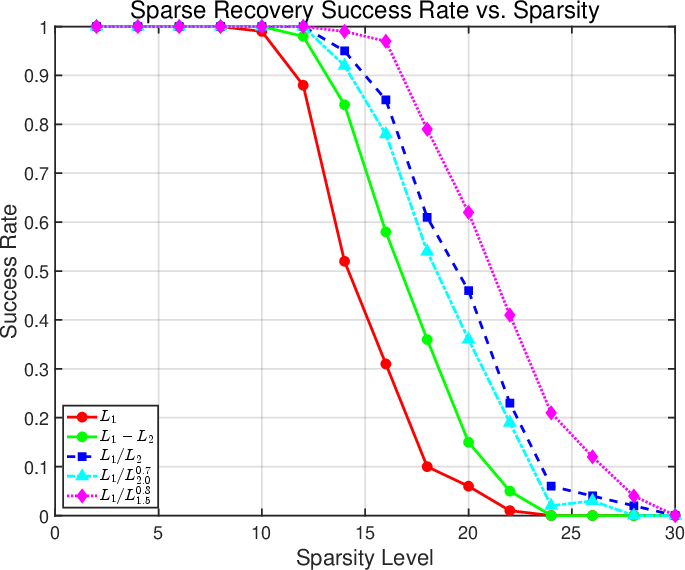
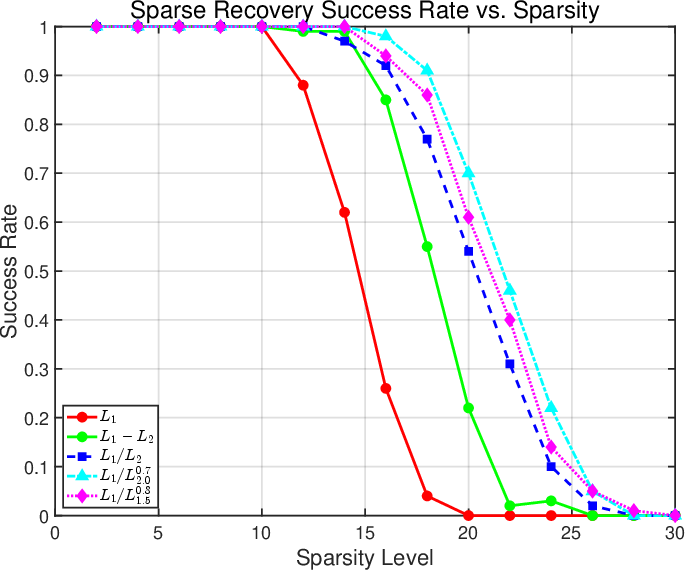
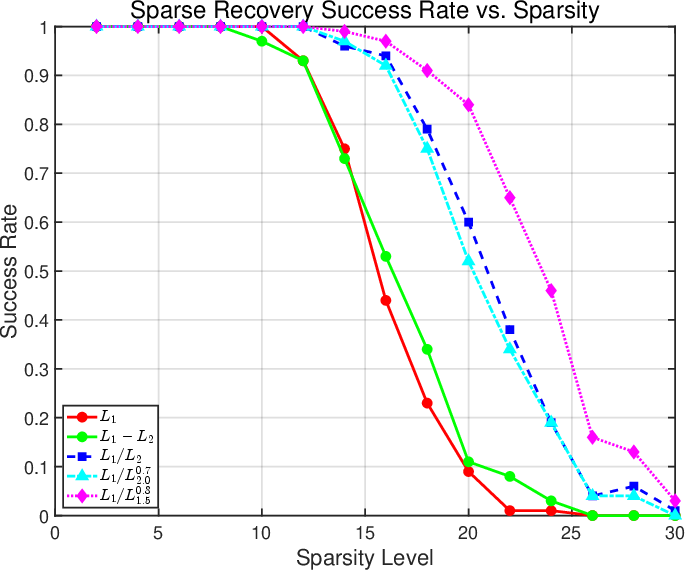
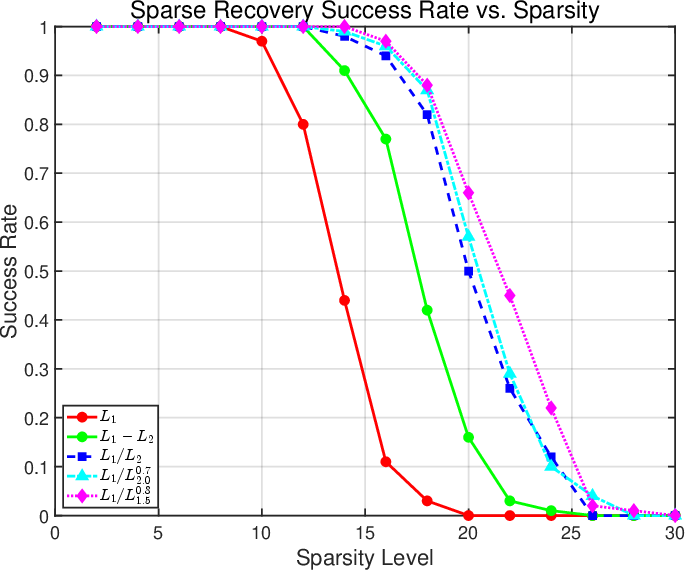
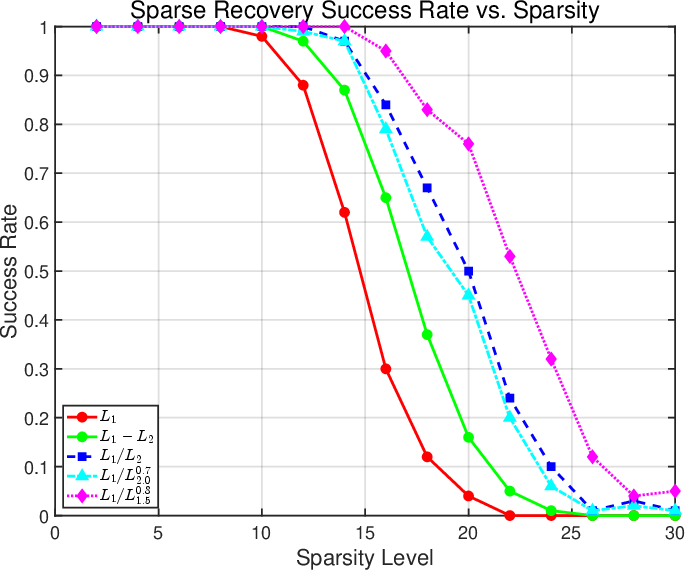
Figure 2: Success rates for sparse recovery versus sparsity level ℓ1/ℓpq5 across different sensing matrices and coefficient patterns, showing superior performance of ℓ1/ℓpq6 regularization.
In time-domain signal reconstruction, the ℓ1/ℓpq7 configuration achieves the highest SNR, demonstrating that fractional regularization better preserves oscillatory structure and reduces reconstruction artifacts versus standard convex and nonconvex schemes.
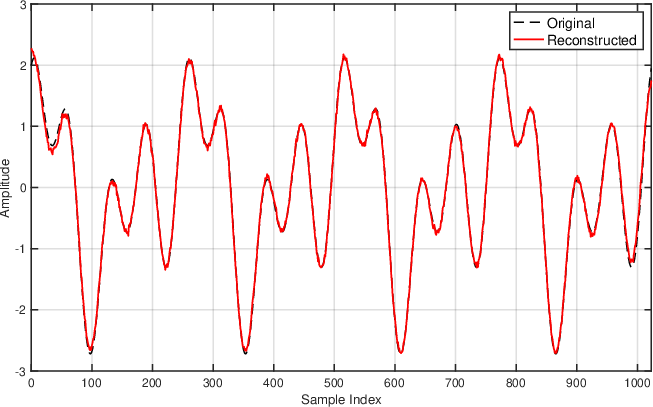
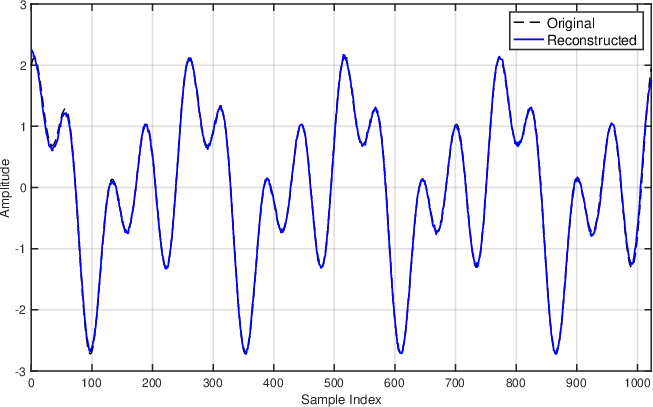
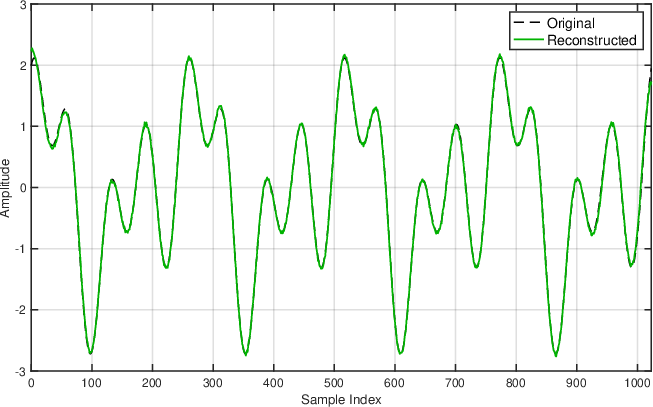
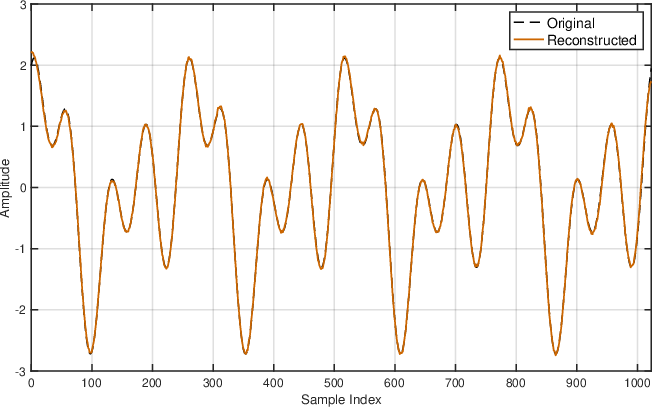
Figure 3: Time-domain signal reconstructions, with the ℓ1/ℓpq8 reconstruction showing markedly improved SNR and fidelity over other models.
For MRI, the model leads to significant improvements in relative reconstruction error (down to 0.15% in the best configuration), essentially eliminating artifacts even under extreme subsampling.

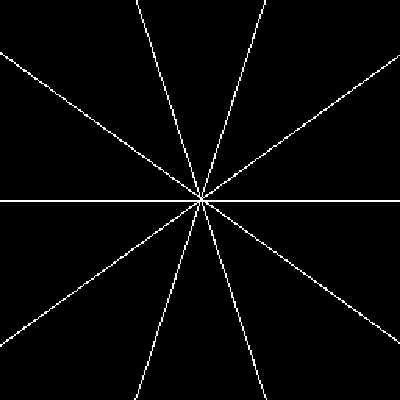
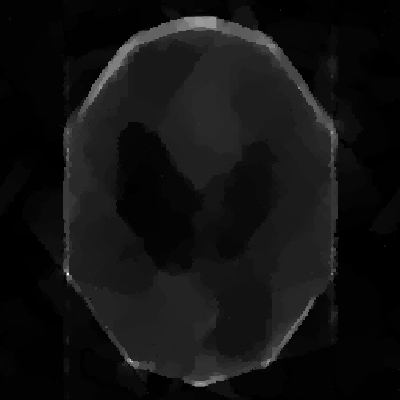
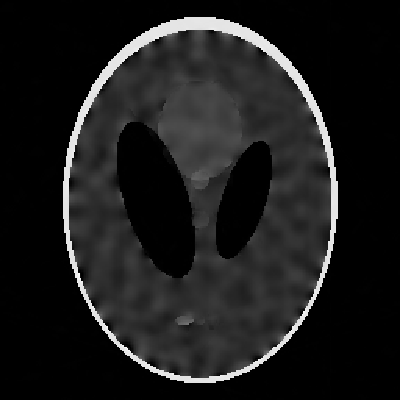


Figure 4: MRI reconstructions from extremely limited sampling—ℓ1/ℓpq9 models nearly eliminate artifacts and yield minimal error.
Implications and Future Directions
The theoretical equivalence established between fractional and subtractive sparsity-inducing regularizations clarifies the relation between scale-invariant and classical regularization paradigms. The generalization to a tunable exponent ℓ1/ℓpq0 allows for algorithmic flexibility in selecting regularizers best suited to the application's matrix structure and expected signal morphology, without the brittle tuning or prior knowledge required by previous approaches. The weakened RIP conditions place the ℓ1/ℓpq1 model as a particularly attractive option for practical sparse recovery in highly unfavorable or structured inverse problems.
From a theoretical standpoint, this unified perspective may catalyze new developments in analysis of global minima, saddle point avoidance, and regularization path characterizations across the spectrum of sparse optimization. Practically, computation via a provably convergent MM scheme ensures scalability to large and structured scenarios (e.g., imaging, genomics, communications). Future research could further explore adaptive or learned parameterizations of ℓ1/ℓpq2, application to other structured inverse problems, and integration with deep unrolling schemes.
Conclusion
The unified fractional regularization framework introduced in (2604.23184) establishes a comprehensive and rigorous foundation for nonconvex sparse recovery methods. Theoretical unification, improved RIP-derived recovery guarantees, and strong numerical performance across diverse domains collectively demonstrate the broad applicability and efficacy of the ℓ1/ℓpq3 approach. The clear connection to classical models facilitates both new theoretical analysis and algorithmic generality, while expanded tunability addresses practical challenges in real-world signal and image recovery tasks.