- The paper demonstrates that nanoporous Ta microparticles display elastic moduli and hardness consistent with modified Gibson-Ashby scaling laws.
- Experimental nanoindentation and MD simulations reveal deformation via surface dislocation nucleation, shear localization, and limited densification.
- Enhanced ligament connectivity from LMD in a Cu-Bi bath critically influences mechanical properties and necessitates connectivity-aware scaling formulations.
Mechanical Behavior and Scaling Laws in Nanoporous Tantalum Microparticles
Overview
This paper investigates the mechanical response and deformation mechanisms of single-crystalline nanoporous tantalum (np-Ta) microparticles synthesized via liquid metal dealloying (LMD) of Ti65Ta35 foils in molten Cu40Bi60. The research addresses the applicability of classical Gibson-Ashby scaling models for open-cell foams to LMD-derived nanoporous metals, a question previously explored mainly for electrochemical dealloyed nanoporous gold (np-Au). Experiments, nanoindentation, and molecular dynamics (MD) simulations reveal that np-Ta exhibits elastic moduli and hardness values in agreement with Gibson-Ashby predictions, attributed to enhanced ligament connectivity rooted in solvent chemistry of the LMD process.
Materials Synthesis and Characterization
Nanoporous Ta microparticles were fabricated using a dealloying process in a controlled Cu-Bi melt. SEM and XRD analyses show that the particles consist of open-cell networks of Ta ligaments with an average diameter of 200±100 nm and a solid fraction ϕ≈0.35. The microparticles are single-grain derived, eliminating grain-boundary effects and ensuring architectural uniformity.
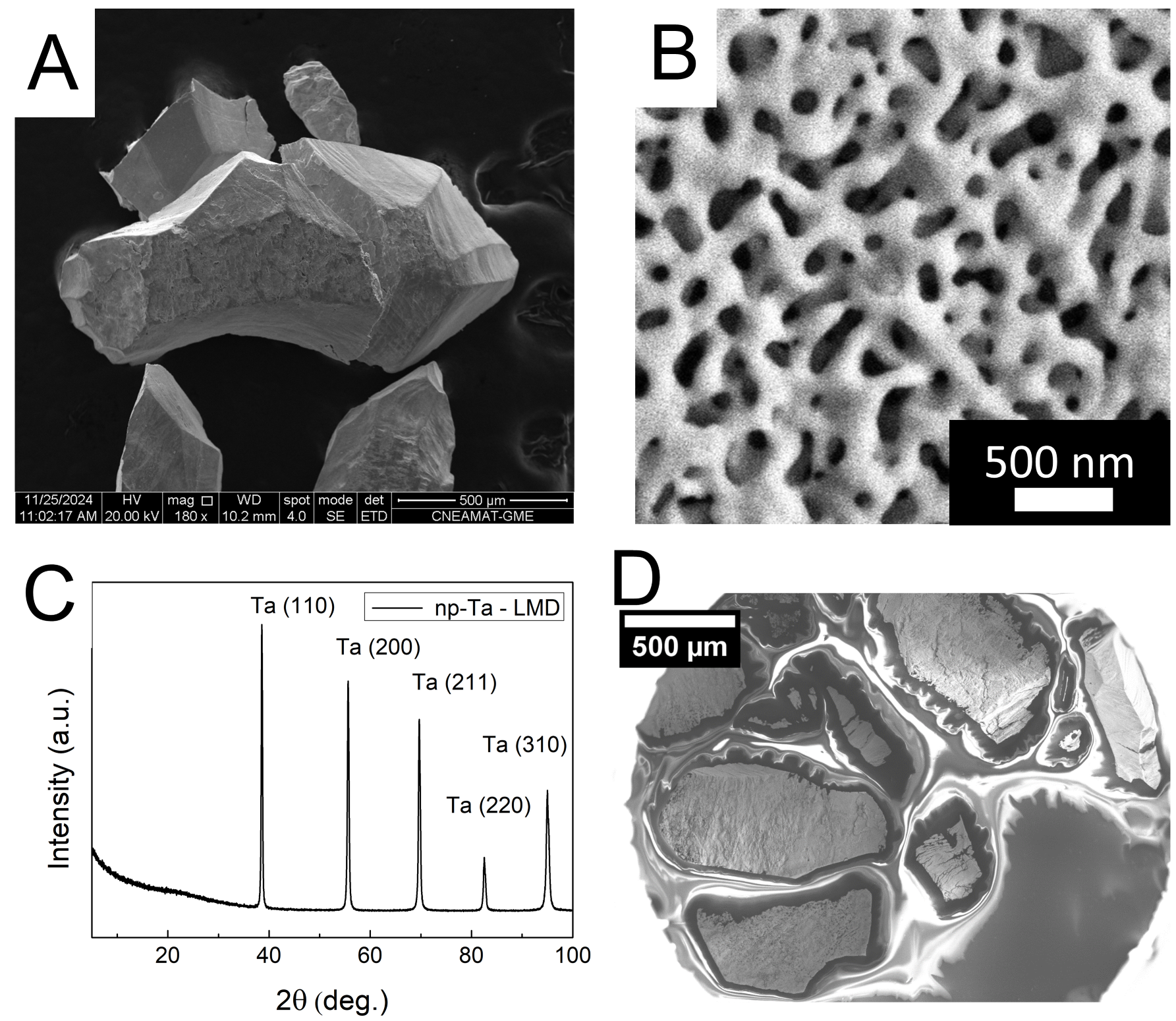
Figure 1: SEM micrographs and XRD confirmation of bicontinuous nanoporous Ta structure and phase purity.
Particles were immobilized for nanoindentation using CrystalBond® resin, enabling repeatable mechanical testing while maintaining morphological integrity.
Mechanical Properties and Scaling
Nanoindentation yielded elastic moduli in the range of 10–30 GPa and hardness values between 0.3–1.1 GPa. The continuous stiffness measurement (CSM) data exhibited plateau behavior beyond 500 nm indentation depth, validating bulk property extraction within the foam architecture.
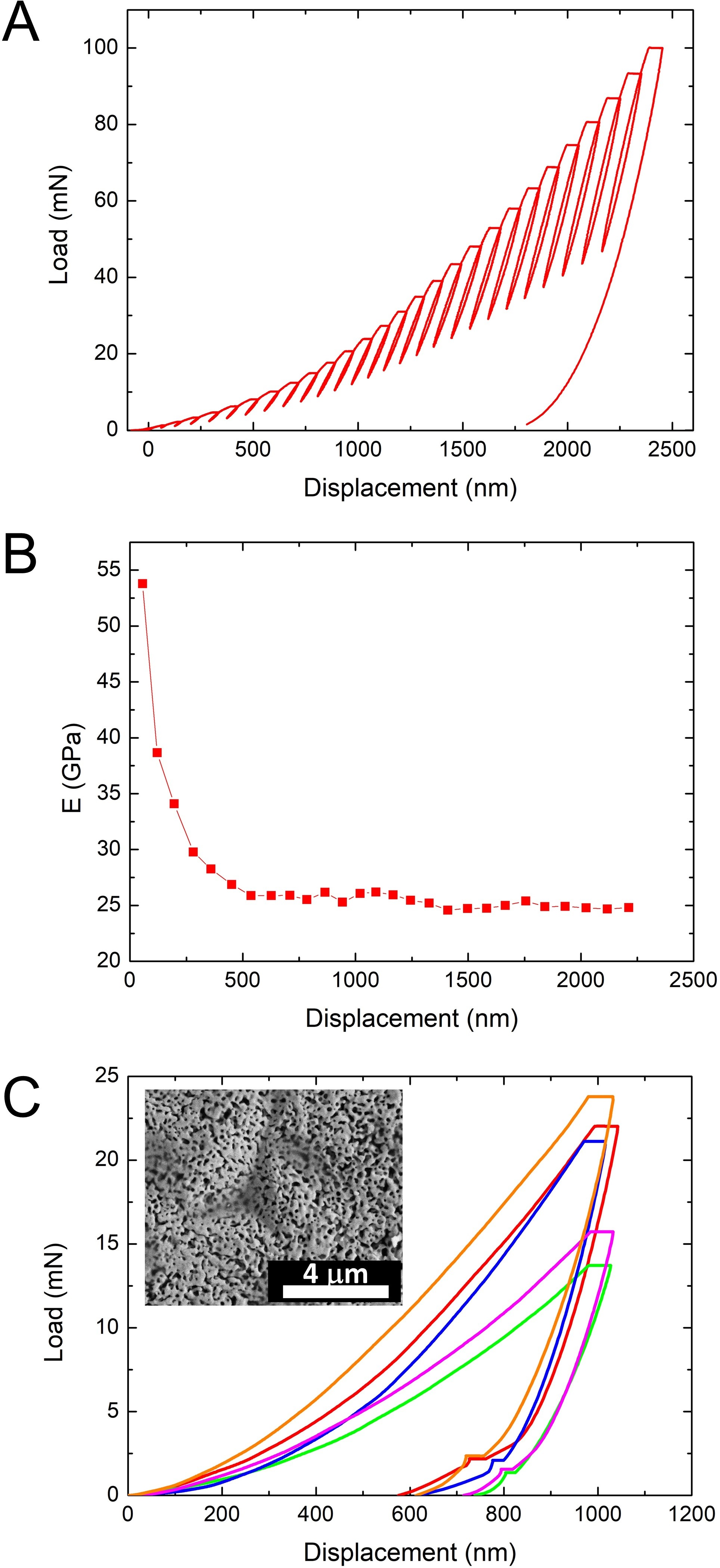
Figure 2: Nanoindentation load–displacement curves and depth-resolved modulus measurements for np-Ta.
Measured properties were systematically compared against Gibson-Ashby scaling laws:
E=CEEligϕ2
H=fCσσligϕn
Experimental data most closely matched scaling exponents of n=2, rather than the canonical n=3/2. This divergence is indicative of architectural differences (ligament connectivity and bicontinuity) between the np-Ta structure and classical foam models.
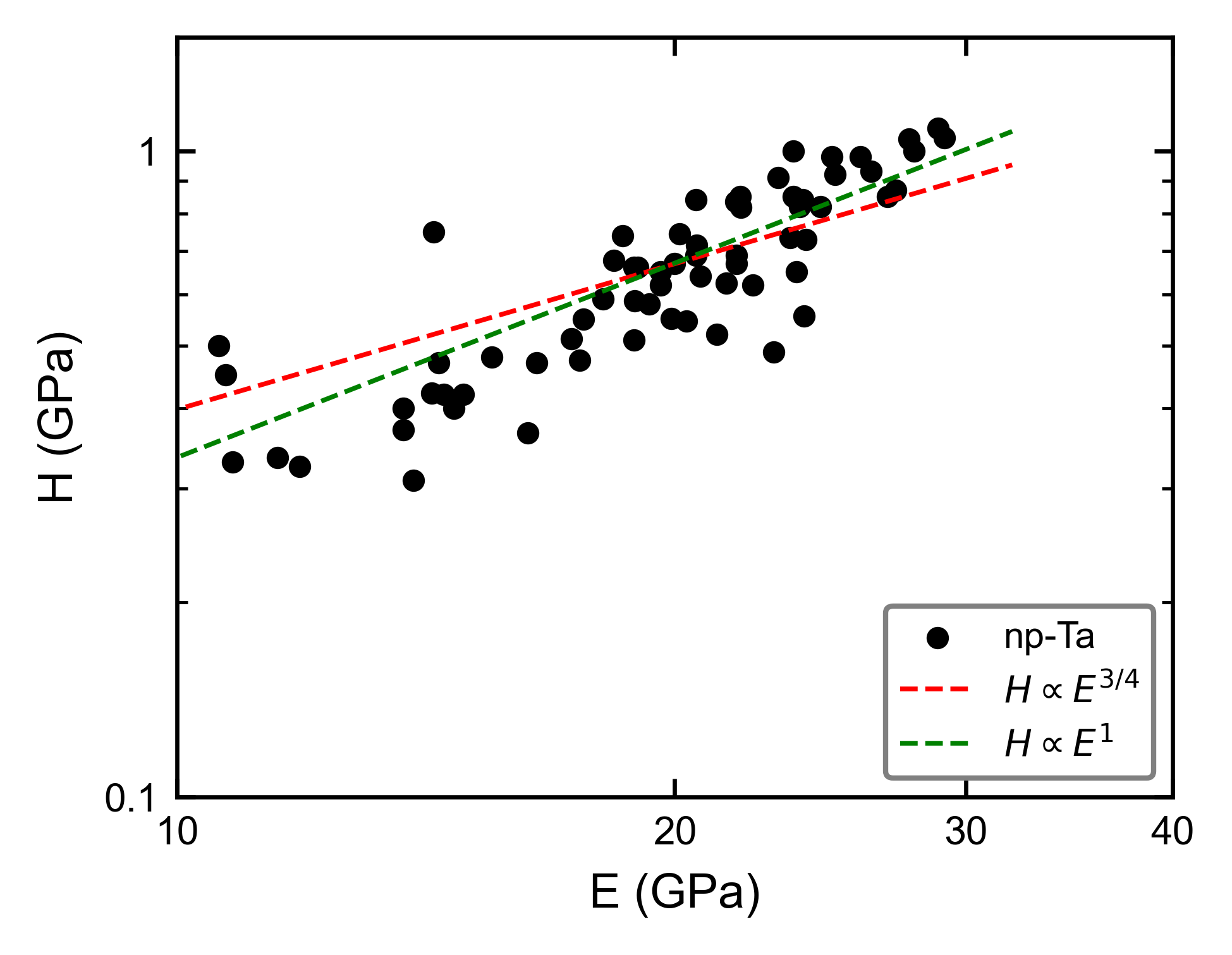
Figure 3: Hardness versus elastic modulus revealing power-law scaling; experimental results align with n=2 over traditional 350 Gibson-Ashby exponent.
Histogram analysis suggests that specimen-to-specimen scatter is primarily governed by variations in solid fraction, as mechanically inferred 351 ranges overlap with image analysis estimates.
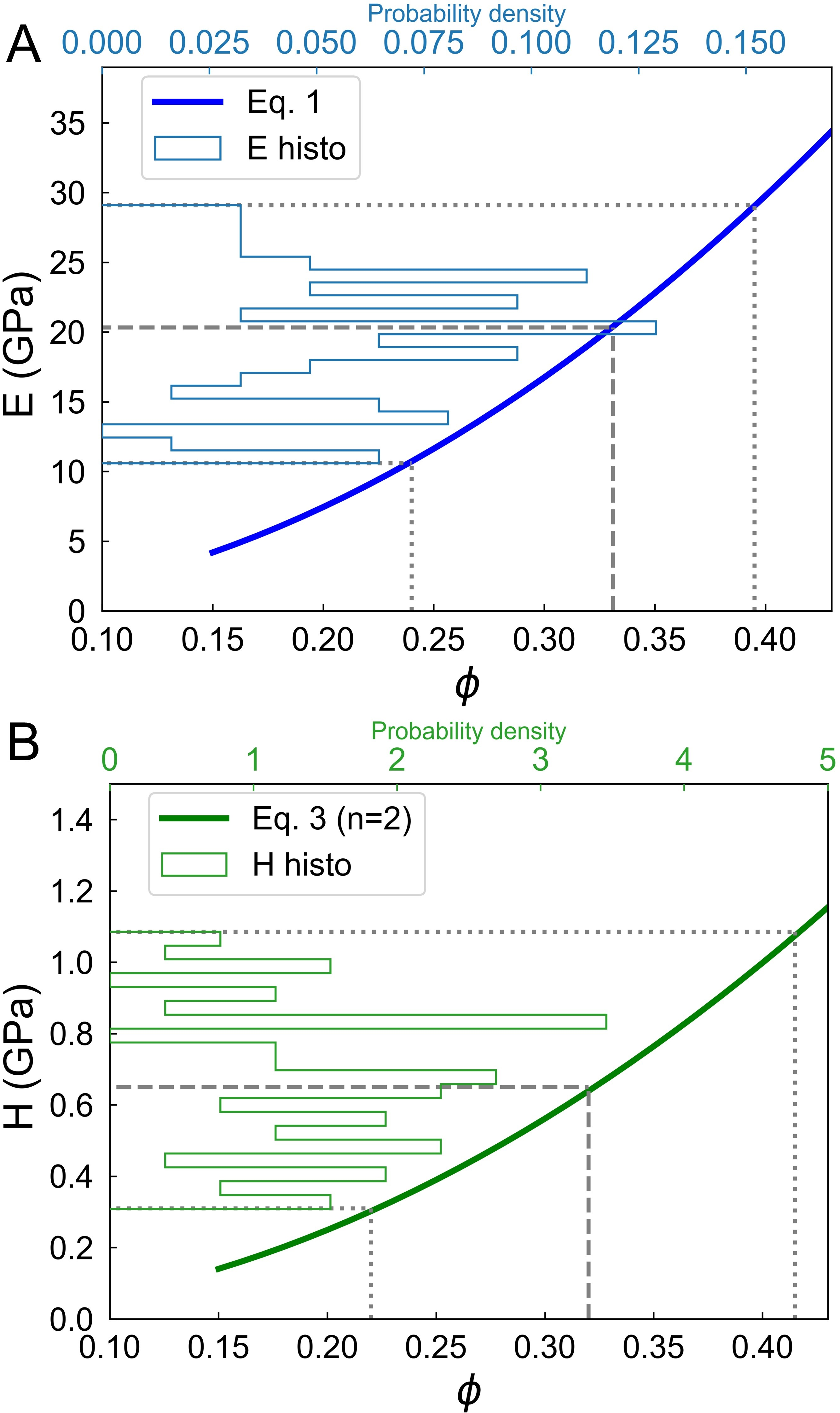
Figure 4: Histogram of mechanical property distributions paired with theoretical scaling laws, confirming solid fraction as the principal source of variation.
MD nanoindentation simulations corroborate the experimental observations, detailing atomic-scale plasticity dominated by surface nucleation, glide, and annihilation of 352 dislocations. Planar shear localization and limited densification are observed. Twinning is present but localized near the indenter tip.
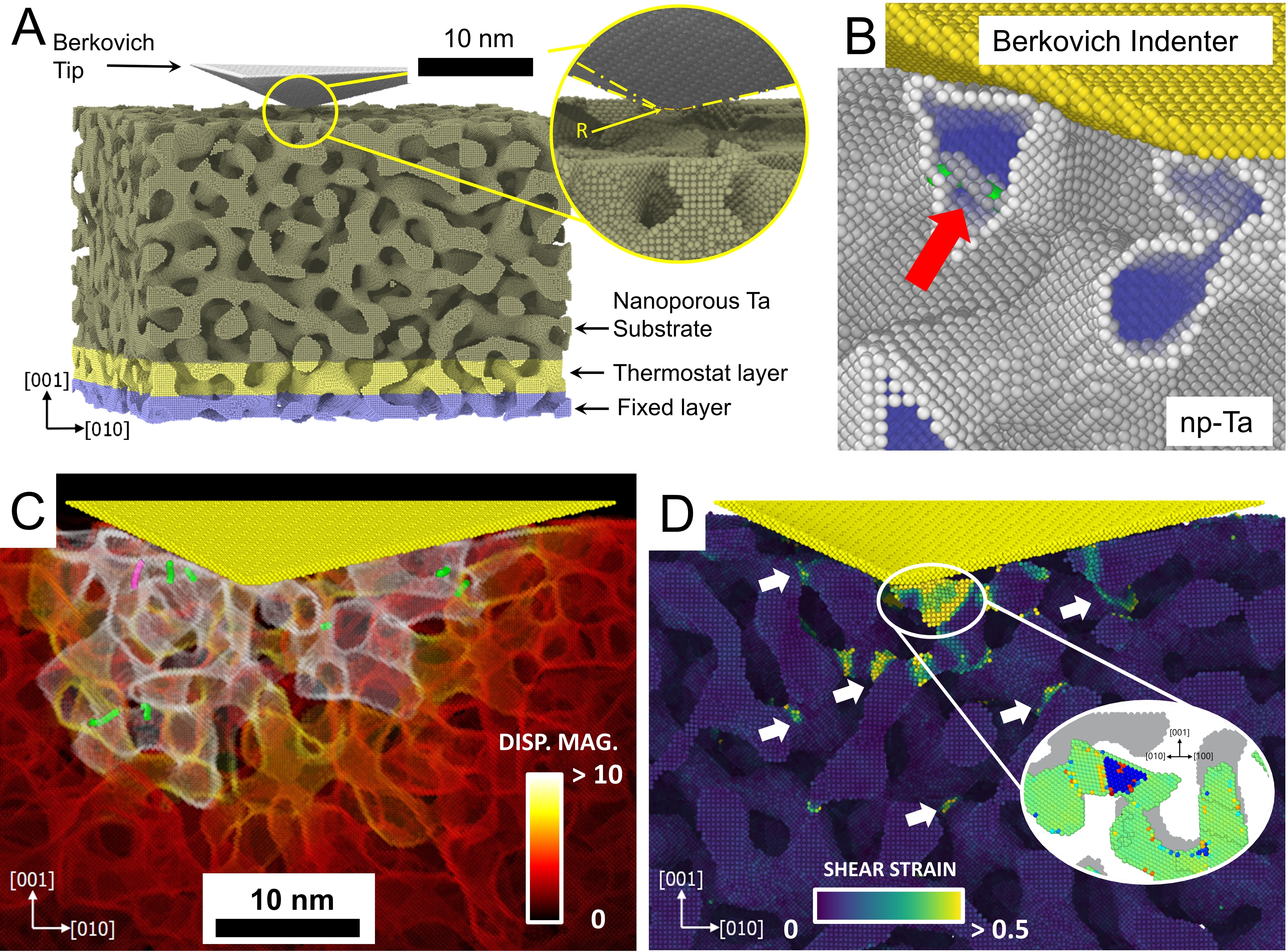
Figure 5: MD simulation reveals dislocation activity, planar shear localization, and minimal volumetric densification during indentation.
Comparison to np-Au indicates analogous deformation mechanisms, underscoring that the difference in scaling behavior is not attributed to unusual ligament dynamics but rather to network connectivity.
Connectivity, Morphology, and Scaling Law Implications
The np-Ta results, normalized by bulk Ta modulus, lie distinctly above np-Nb and FeCr LMD-derived foams at similar densities. Morphological analysis identifies a highly interconnected ligament network, derived from solvent-chemistry-driven control in the Cu-Bi bath. Literature comparison demonstrates that architectural connectivity and processing route critically perturb mechanical scaling, necessitating benchmarked scaling formulations for LMD systems.
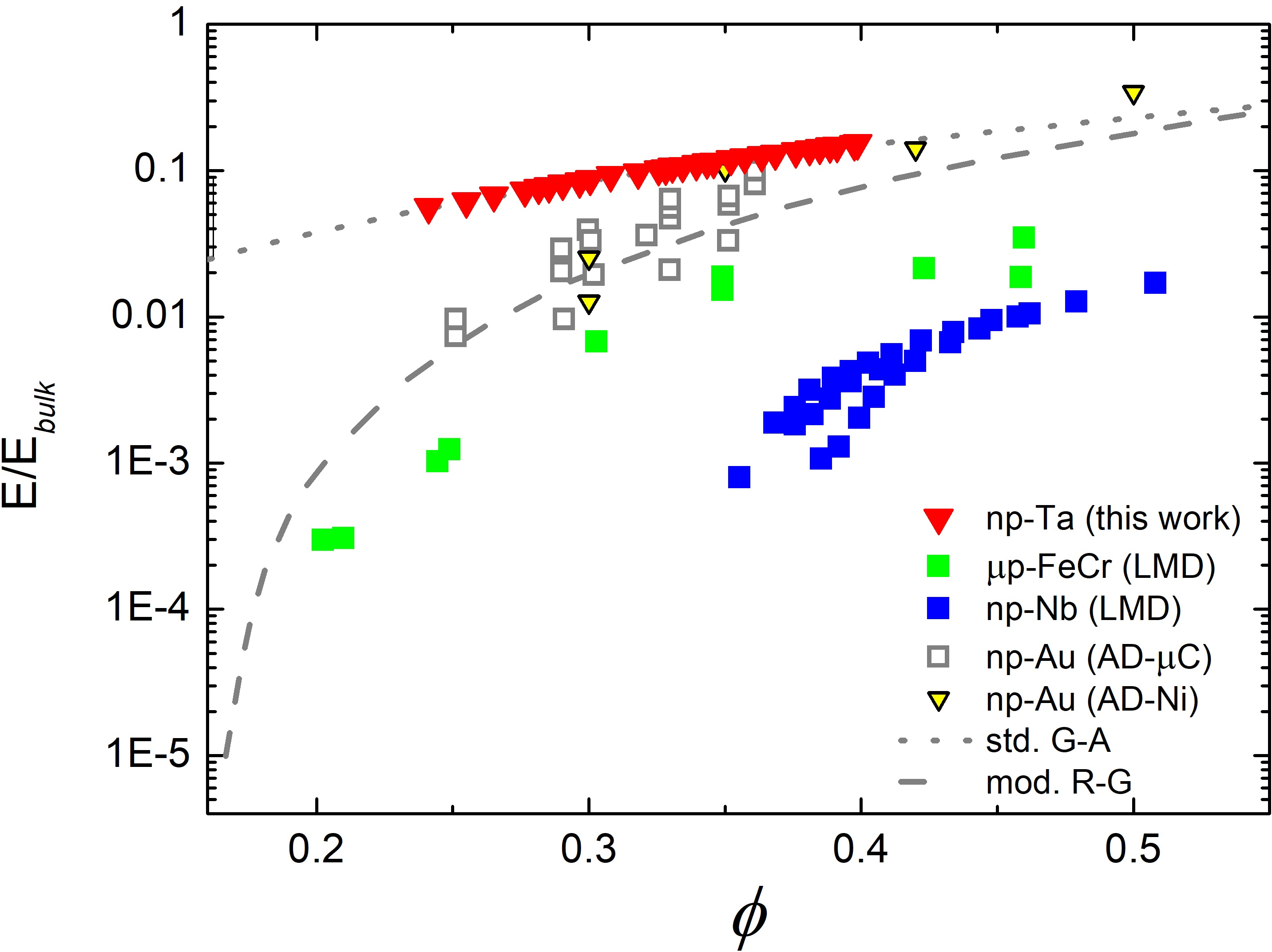
Figure 6: Elastic modulus scaling across nanoporous metals, highlighting high connectivity and superior scaling behavior for np-Ta versus LMD np-Nb, FeCr, and electrochemically dealloyed np-Au.
Solvent chemistry in the LMD process emerges as a key factor for maximizing ligament connectivity—Bi additions in Cu melts enhance Ta network continuity compared to other solvent choices such as Mg.
Theoretical and Practical Implications
The findings demonstrate that classical scaling laws, initially established for np-Au, cannot be directly applied to LMD-derived metals without accounting for network connectivity variations. The research highlights the necessity of connectivity-aware scaling formulations and 3D structural quantification (e.g., tomography, genus metrics) for predictive mechanical property mapping. These insights provide critical guidance for designing nanoporous refractory metals for extreme applications, including heat-pipe components and plasma-facing materials.
Conclusion
Comprehensive nanoindentation and MD analyses establish that single-crystalline np-Ta microparticles produced via LMD in Cu-Bi baths follow Gibson-Ashby-type mechanical scaling, with enhanced stiffness arising from superior ligament connectivity. The deformation mechanisms mirror those observed in np-Au, confirming the universality of dislocation-driven plasticity in nanoporous metals. The solvent chemistry's role in dictating connectivity underscores a tunable lever for mechanical response optimization in LMD systems.
Future work should focus on quantitative connectivity metrics and systematic melt chemistry studies to further refine scaling laws and enable precise design of mechanically robust nanoporous metals.
(2604.22726)