- The paper demonstrates that JWST and ALMA IFU data enable kpc-scale diagnostics of metallicity and ionization, distinguishing a metal-enriched central clump from a metal-poor tidal tail.
- The paper quantifies ionization parameters and star formation rates—reporting an integrated SFR of 13.4 M⊙/yr and a burstiness parameter nearly 5 in the tail—highlighting distinct evolutionary stages.
- The paper reveals that extreme emission line ratios challenge standard star formation and AGN models, underscoring the role of merger-driven processes in early galaxy assembly.
Observational Strategy and Data Overview
The paper presents a comprehensive spatially resolved multi-wavelength study of the merging system Gz9p3 at z=9.3, utilizing JWST NIRSpec and MIRI integral field spectroscopy, along with deep imaging and ALMA data. The observations cover rest-frame UV and optical emission lines and broadband continuum, capturing the spatial variation of ISM properties across a ∼5 kpc region, from the central clump to the tidal tail.
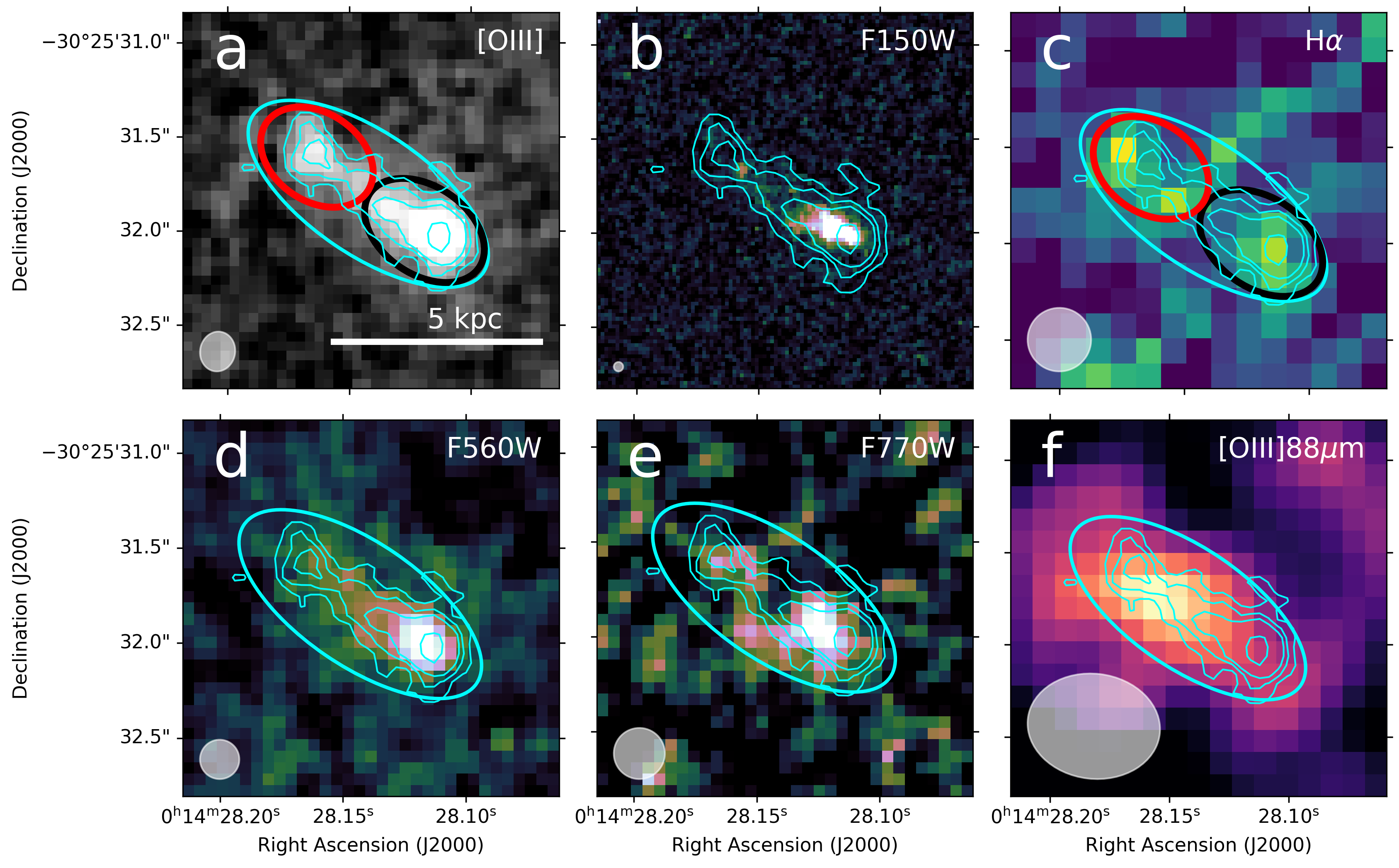
Figure 1: Overview of the JWST and ALMA data for Gz9p3, showing spatial maps of [OIII] emission, UV continuum (F150W), Hα line, broad-band MIRI images, and ALMA [OIII] 88μm emission across the galaxy.
The dataset enables not just integrated measurements, but extraction of distinct spectra for central clump(s) and tail regions, allowing for kpc-scale diagnostics of metallicity, ionization, extinction, stellar population age, and star formation intensity.
Spectroscopic Characterization and Spatially Resolved Variations
The integrated NIRSpec spectrum of Gz9p3 reveals significant detections of [OIII] λ5008 (24σ), Hβ, [OII], [NeIII], Hγ, and tentative UV lines. MIRI/MRS provides robust detection of Hα emission (integrated z=9.30), while continuum mapping in MIRI bands displays complex spatial morphology—coincident with [OIII] and offset with Hz=9.31 and UV continuum.
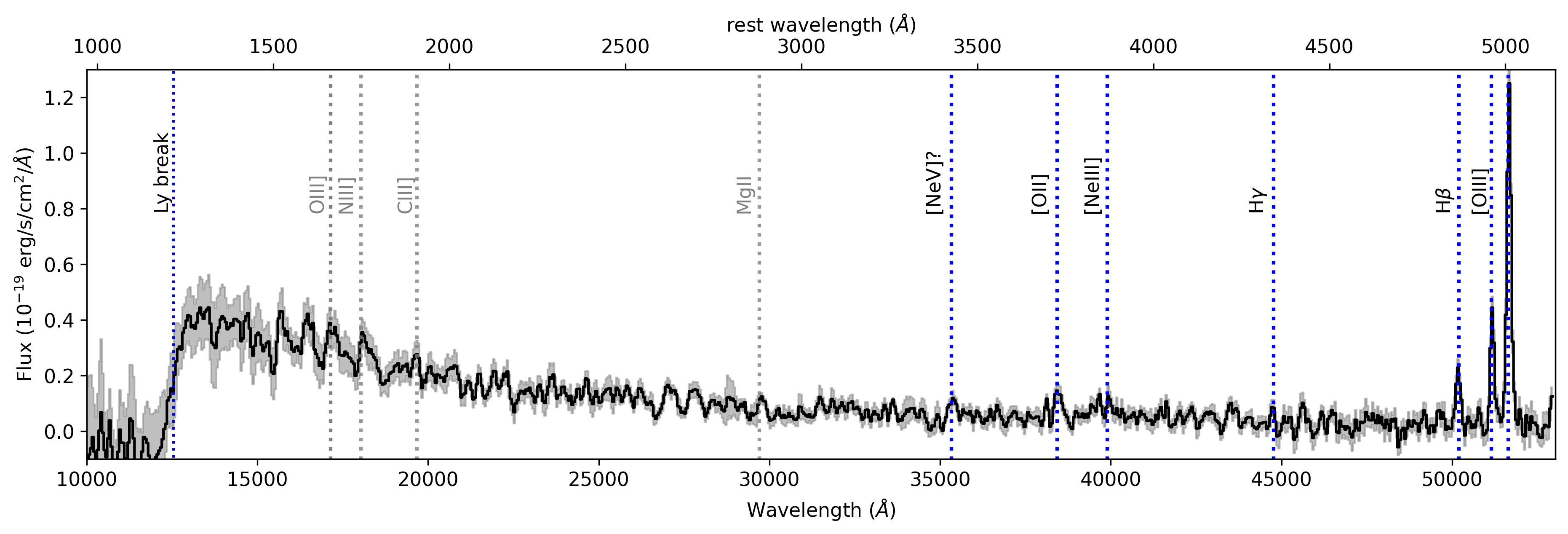
Figure 2: Integrated NIRSpec spectrum of Gz9p3 extracted over the elliptical aperture, highlighting emission lines used for metallicity and ionization diagnostics.
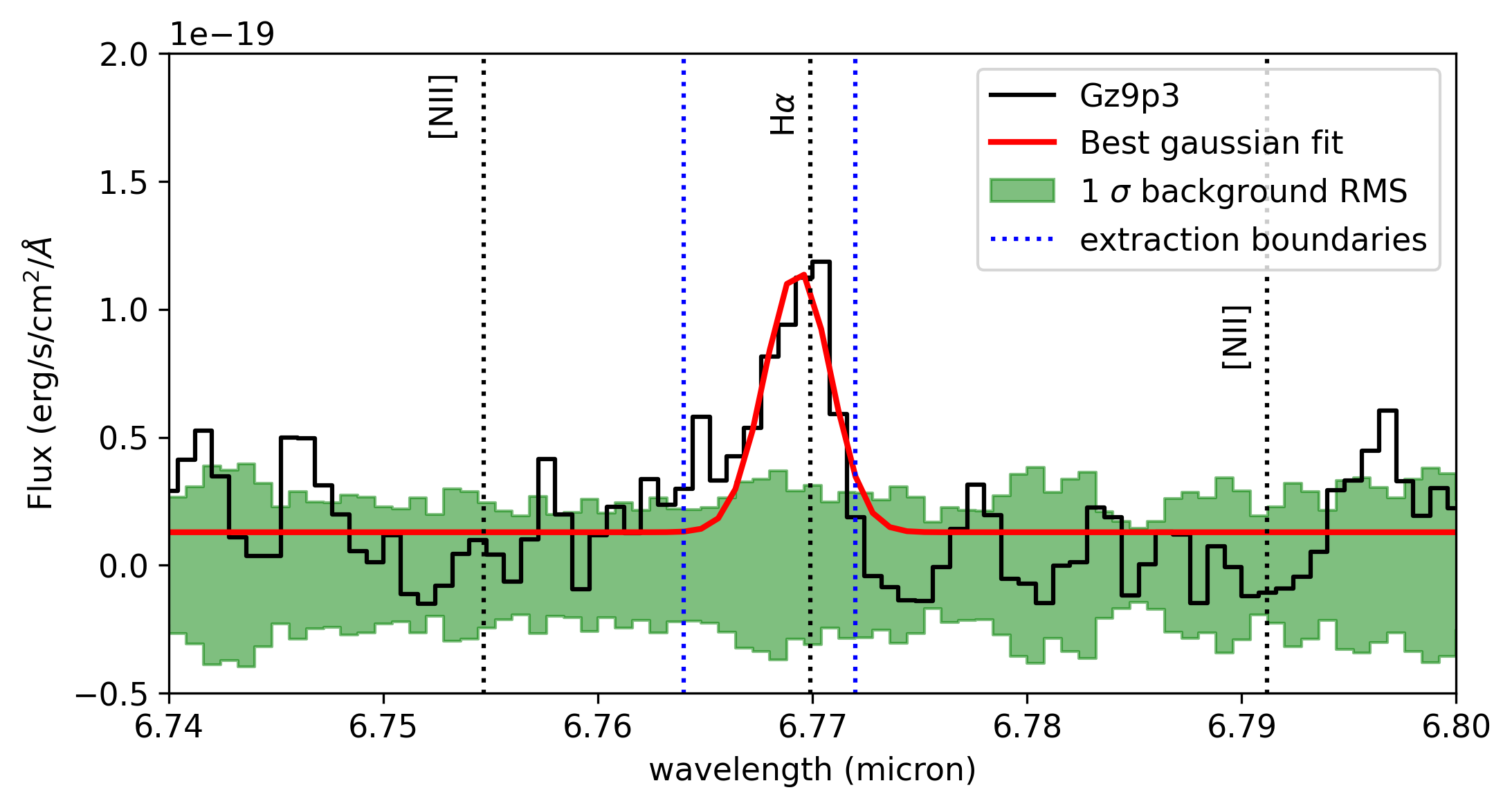
Figure 3: MIRI/MRS Hz=9.32 spectrum, pinpointing star formation sites irrespective of continuum brightness.
Extraction of spectra from spatially defined apertures—central clump and tail—shows pronounced differences. The central clump exhibits a strong continuum, clear Lyman break, and high [OIII], Hz=9.33, and Hz=9.34. The tail region, in contrast, has negligible continuum but enhanced nebular line emission, indicating an extremely young and metal-poor starburst.
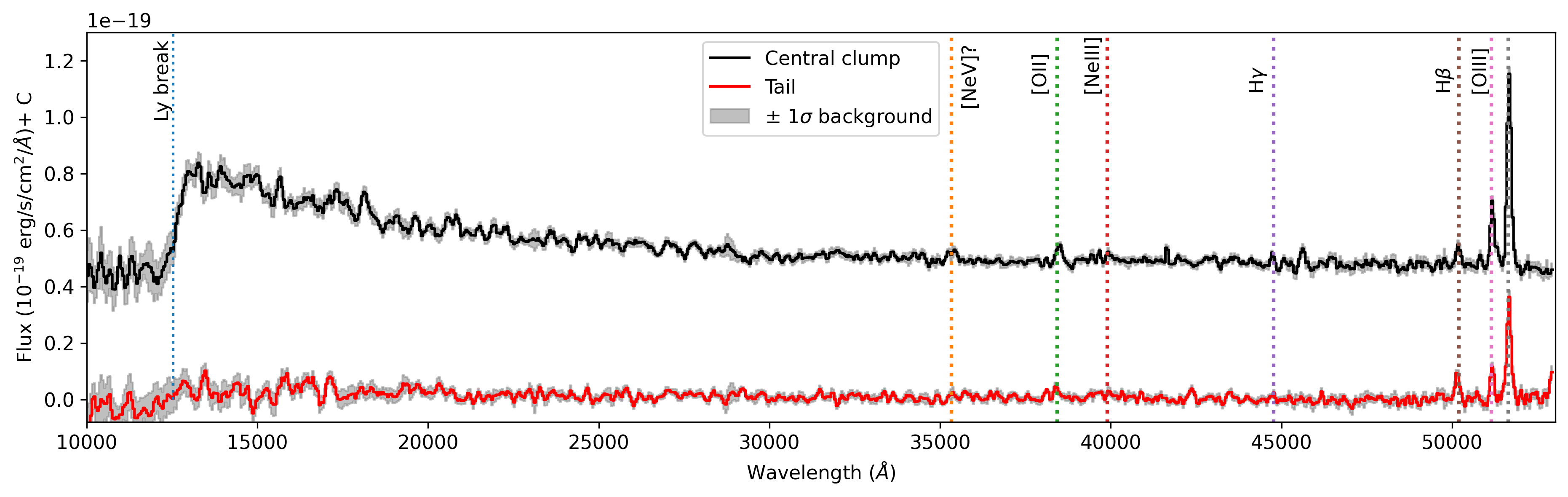
Figure 4: NIRSpec spectra of the central clump (black) and the tail region (red) of Gz9p3, demonstrating divergent continuum and emission line strengths.
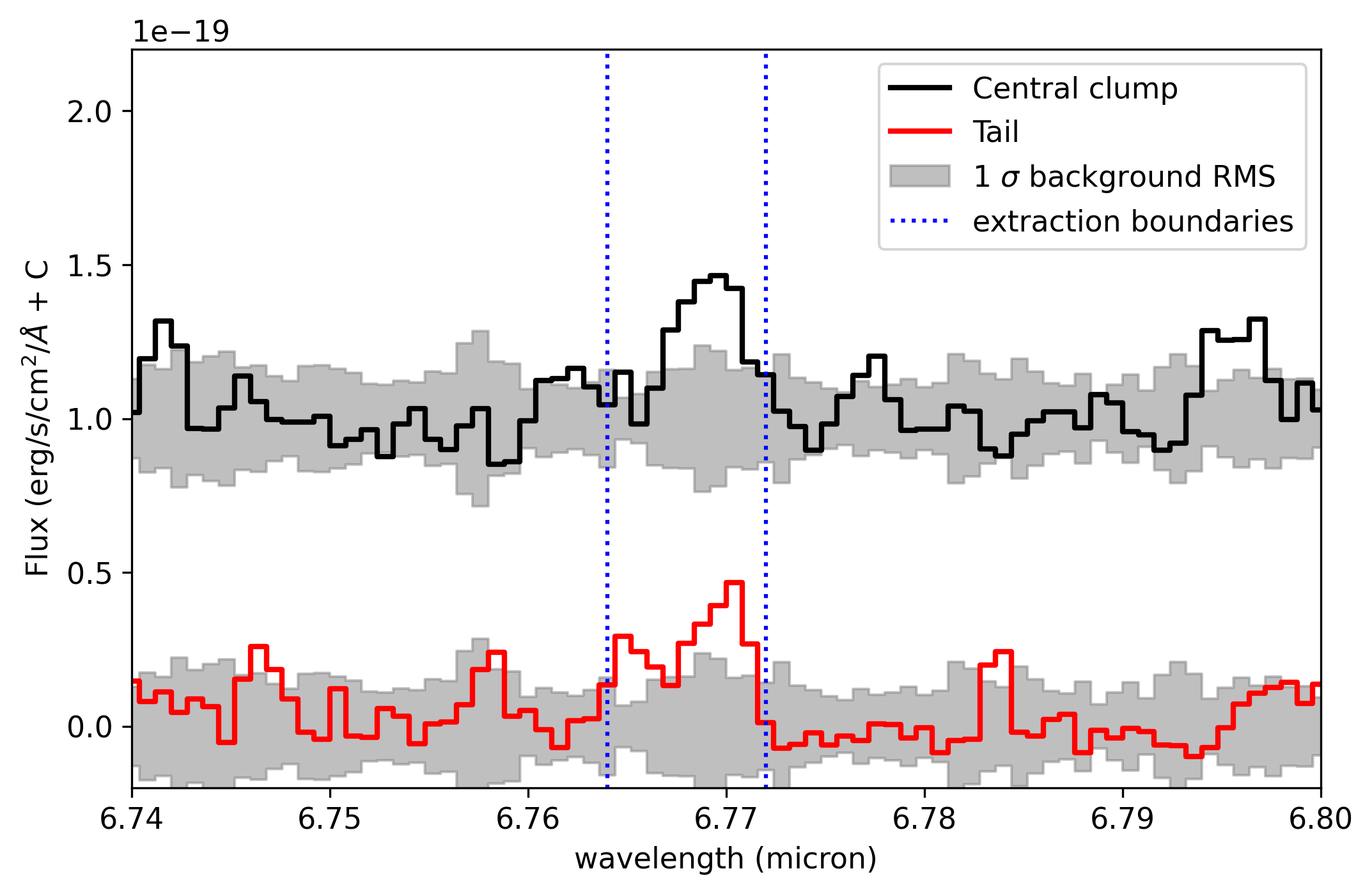
Figure 5: MIRI/MRS Hz=9.35 spectra for the central clump and tail region, confirming spatially distinct star formation intensity.
The gas-phase metallicity is assessed via a nonparametric strong-line calibration, yielding z=9.36 for the full galaxy, z=9.37 for the central clump, and z=9.38 for the tail, corresponding to z=9.3915% (central clump) and 5% (tail) solar metallicity. These values are robust under a suite of contemporary calibrations ([OIII]/[OII], Ne3O2, ∼0 indices).
The ionization state is traced by O32 and R3 indices, both high across the system and especially extreme in the central clump, with log(U) ∼1. The tail retains a lower metallicity, implying ongoing star formation in near-pristine gas. The electron temperature and density maps, computed from optical-to-ALMA [OIII] ratios, indicate spatially varying physical conditions, with the tail likely exhibiting higher electron temperature and lower density.
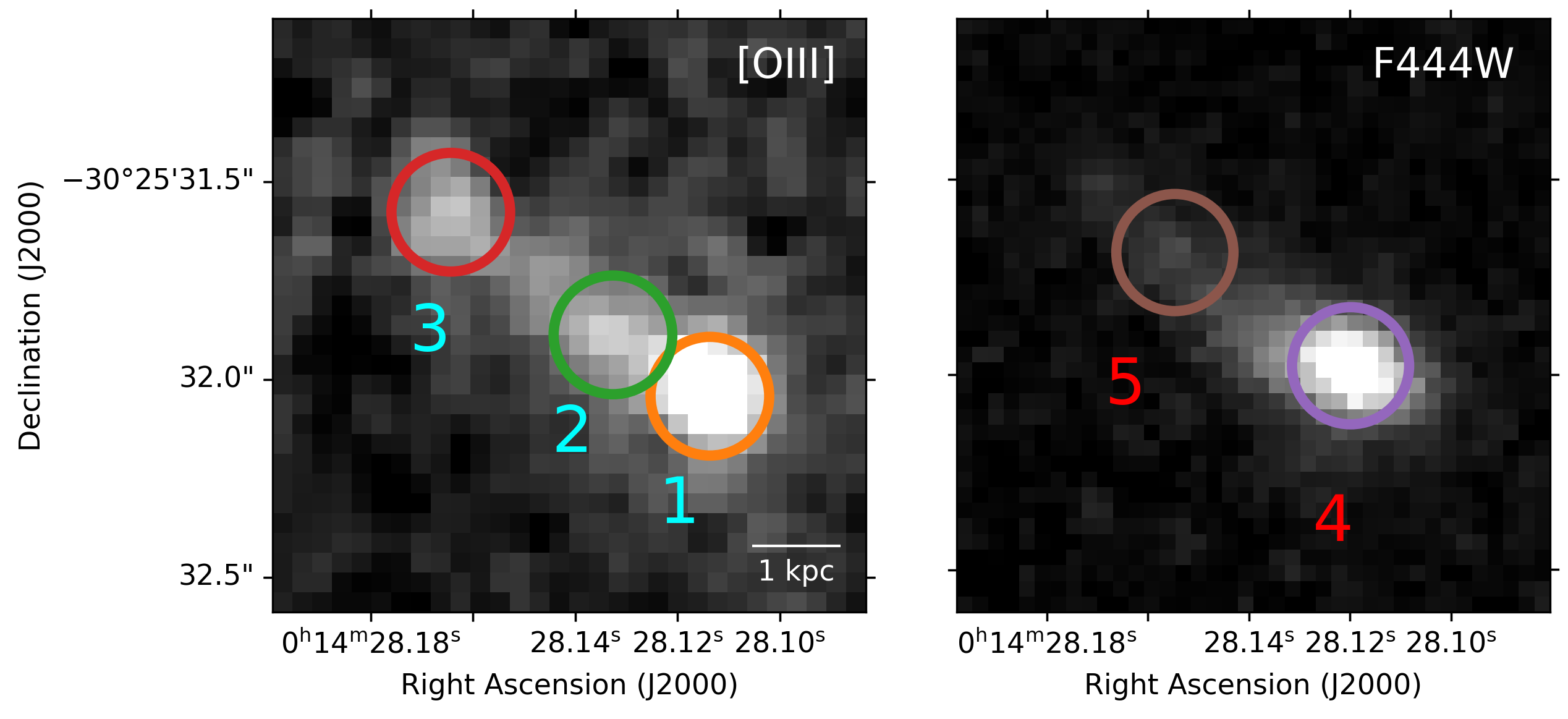
Figure 6: [OIII] line map and F444W continuum, with spatial extraction apertures overlayed for resolved analysis.
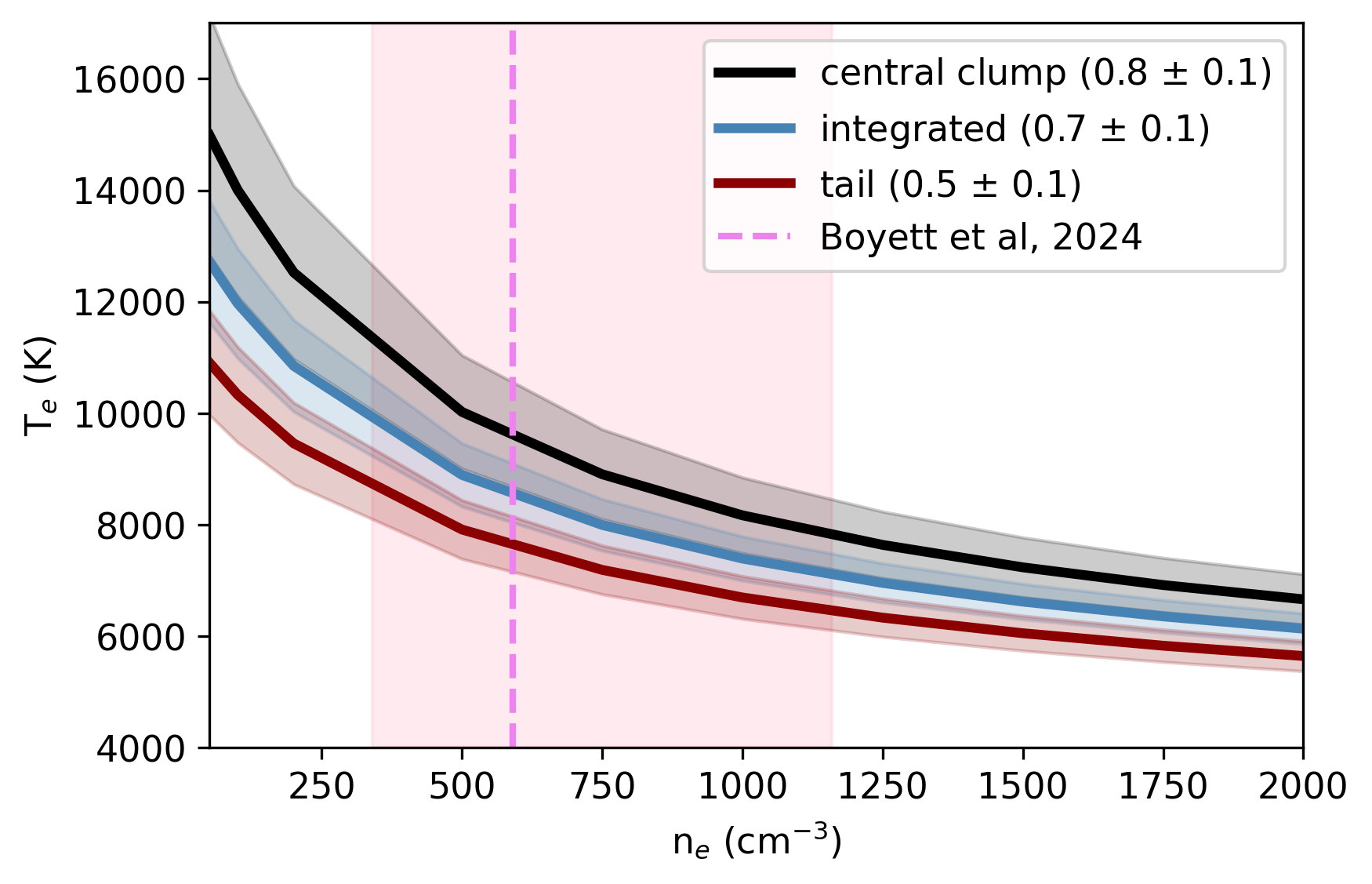
Figure 7: Electron temperature and density phase space for observed [OIII] optical-to-IR line ratios in Gz9p3, indicating tail region's elevated ∼2.
Gz9p3 shows an integrated SFR (via H∼3) of ∼4 (central clump: ∼5; tail: ∼6), with ionizing photon production efficiency ∼7 (tail: ∼8; central: ∼9). Notably, the tail region exhibits an exceptionally high burstiness parameter (α05), signifying recent intense star formation absent in the more evolved central clump (α10.5).
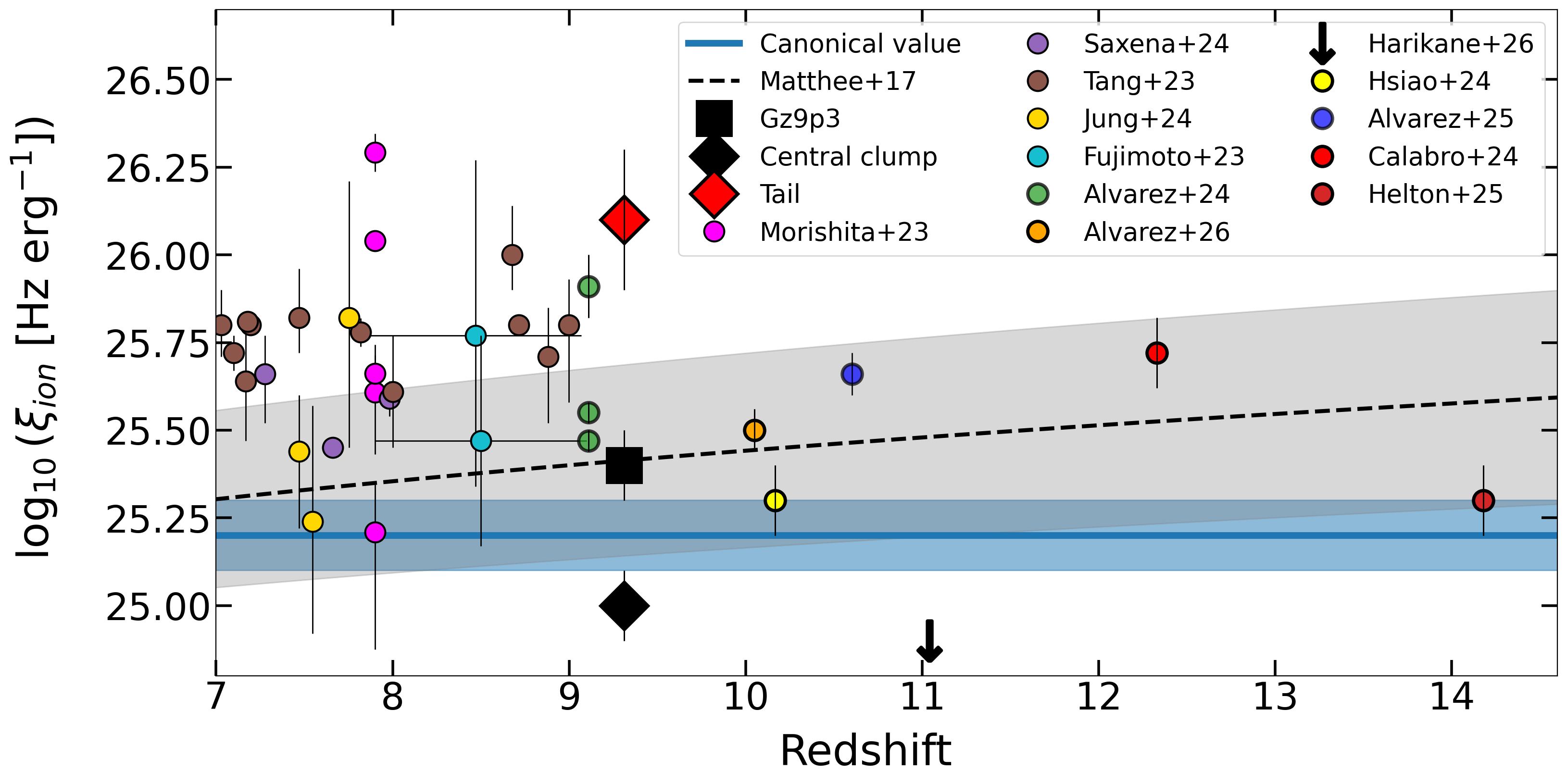
Figure 8: Ionizing photon production efficiency (α2) as a function of redshift, placing Gz9p3 in context with high-redshift galaxy samples.
This spatial diversity implies both an ongoing low-metallicity starburst in the tail and a more chemically enriched, older stellar population in the central clump.
Excitation Mechanisms and AGN Assessment
Emission line ratio diagrams (R3 vs R2; O32 vs R23) place Gz9p3 at the extreme end for excitation. The central clump in particular populates regions consistent with both high-ionization star-forming galaxies and AGNs, but no broad Balmer lines ([NeV] upper limits, no significant linewidth differences) are detected. The paper stresses the inability of standard SF or AGN models to fully explain the observed ratios at low metallicity and high ionization.
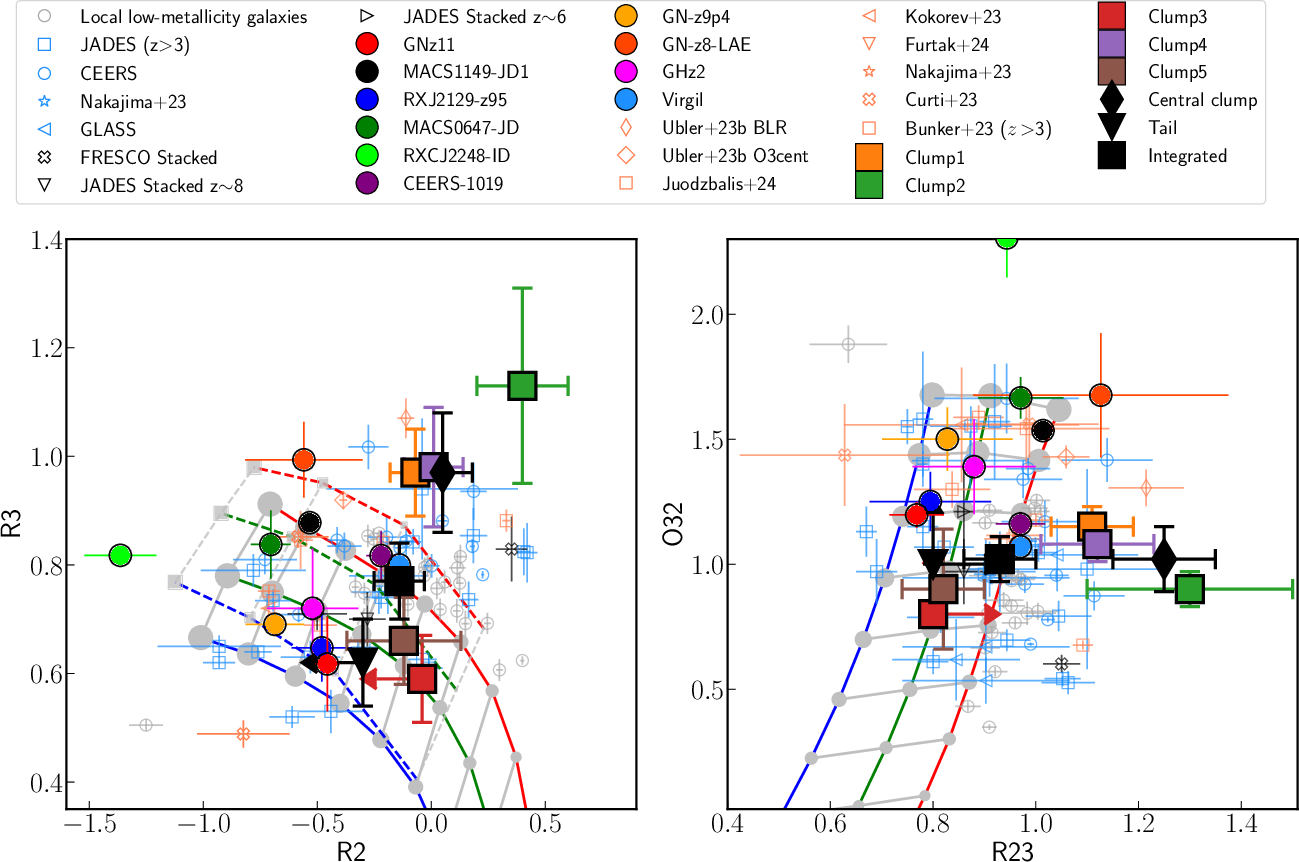
Figure 9: R3 vs R2 and O32 vs R23 diagrams, showing Gz9p3's central clump located at extreme excitation, overlapping both AGN and star-forming galaxy loci.
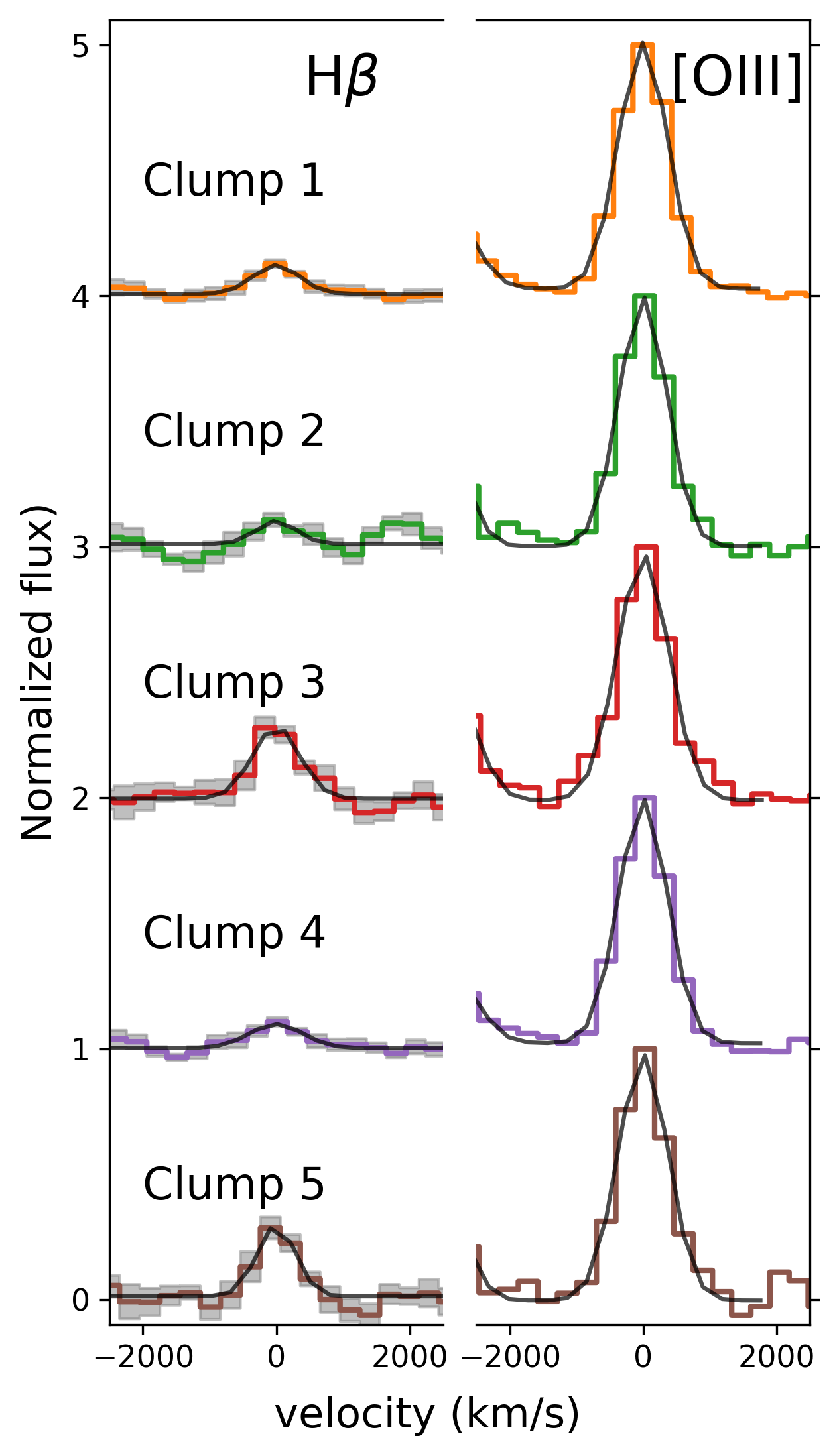
Figure 10: Fitted Hα3 and [OIII]5008\AA\ emission lines in the clumps; no evidence for broad components.
The complex spatial structure—distinct star formation bursts, metallicity gradients, and ionization diversity—suggests that Gz9p3 represents not only a major merger in its assembly phase but also a laboratory for understanding star cluster formation and chemical evolution during the Epoch of Reionization. The tail region's low metallicity and strong emission are indicative of ongoing metal-poor cluster formation, while the central clump's enrichment and older age imply prior star formation, possibly triggered by the merger event.
Merger Context and Comparison
The results situate Gz9p3 among early systems with spatially complex ISM properties, similar to mergers studied at α4. The paper notes that mergers with tidal tails and spatial star formation bursts are predicted by hierarchical α5CDM models and observed in both simulations and low-α6 analogs, but Gz9p3 is remarkable for presenting these features 500 Myrs post-Big Bang.
Conclusion
The spatially resolved analysis of Gz9p3 demonstrates:
- Extreme spatial variation in metallicity, ionization, and star formation properties,
- The presence of a recent metal-poor starburst in the tidal tail, alongside a more evolved central clump,
- Strong nebular line excitation not fully explained by canonical SF or AGN models,
- The utility of JWST IFU spectroscopy for dissecting early galaxy assembly and ISM enrichment.
Continued IFU studies of comparable high-α7 systems will elucidate merger-driven star formation, massive cluster formation, and early chemical evolution, pushing theoretical and empirical boundaries of galaxy formation in the EoR.