- The paper presents a comprehensive OMC framework that shifts agent management from isolated skills to an organisation-level, talent-centric orchestration.
- The methodology integrates a Talent-Container architecture with a hierarchical Explore-Execute-Review tree search to enable dynamic team assembly and robust task execution.
- Empirical results show an 84.67% success rate on diverse tasks, highlighting enhanced agent reliability, coordinated execution, and continuous organisational self-evolution.
Organising Heterogeneous AI Agents as a Real-World Company: The OMC Framework
Introduction
The rapid progress in domain-agnostic LLMs and skill-centric agent architectures has exposed a critical bottleneck in real-world multi-agent orchestration: the absence of a rigorous, persistent organisational layer. While state-of-the-art multi-agent systems successfully aggregate modular skills within individual agents, these paradigms do not address workforce-level design, dynamic team assembly, coordinated execution, and cumulative organisational learning. The "OneManCompany" (OMC) framework (2604.22446) proposes a comprehensive solution, elevating agentic computation from skill composition to talent-centric, organisation-level orchestration. OMC achieves this through portable, market-verified agent identities ("Talents"), heterogeneous runtime abstraction, hierarchical task-tree search, and a persistent self-evolution pipeline.
Organisation-Level Abstractions: From Skills to Talents
OMC formalises the concept of an "AI organisation" as a system of governed, heterogeneous agents with explicit lifecycle, structured coordination, and continuous evolution. Unlike conventional skill libraries or multi-agent orchestrators, which address agent capabilities or interaction protocols in isolation, OMC employs a workforce abstraction directly analogous to enterprise management in human companies.
The core primitive is the Talent-Container architecture. A Talent encapsulates an agent’s role, prompt, skill set, tool bindings, working principles, and supporting resources, but remains decoupled from execution specifics. A Container mediates between the Talent and backend runtimes (LangGraph, Claude Code CLI, script engines) via six typed organisational interfaces: execution, task management, event communication, storage, context assembly, and lifecycle management.
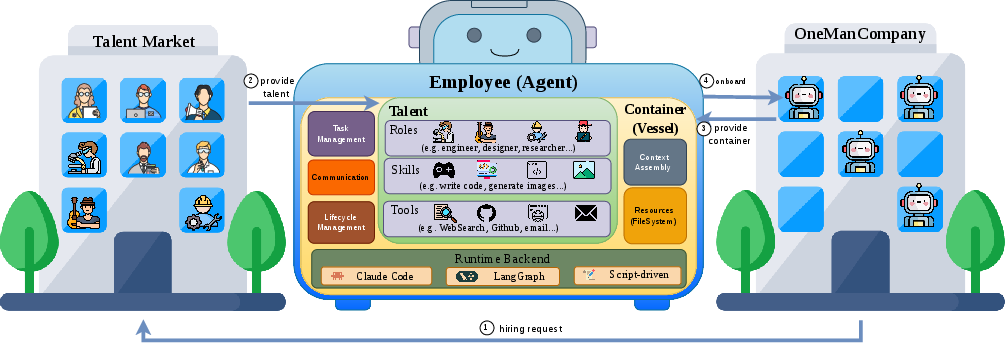
Figure 2: Each employee in OMC is composed of a portable Talent (agent package) and an execution Container, enabling backend-agnostic deployment and strict mediation of platform interactions.
This separation enables (i) Talent reuse across heterogeneous runtimes, (ii) controlled onboarding/offboarding, and (iii) backend-agnostic policy enforcement. Employees can be dynamically assembled from a growing Talent Market – a repository of community-validated agent packages covering diverse roles and tasks.
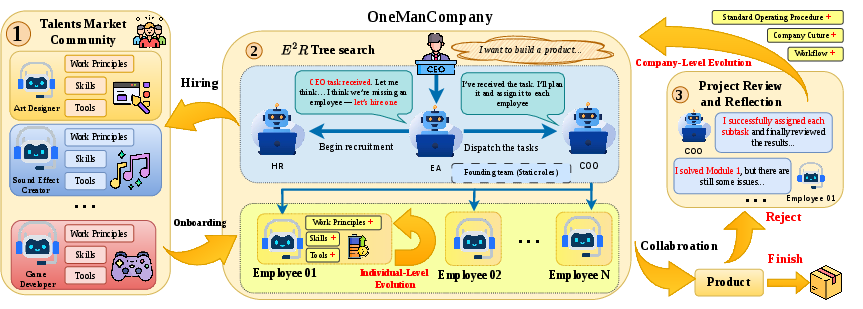
Figure 3: OMC’s organisational architecture mirrors a real company, with workforce assembly from the Talent Market, flexible task decomposition, and self-evolution mechanisms.
Dynamic Project Execution: Explore-Execute-Review Tree Search
Traditional multi-agent platforms suffer from brittle fixed pipelines or unconstrained agent negotiation, neither of which provide guarantees for complex, open-ended workflows. OMC replaces static workflow templates with an Explore-Execute-Review (E²R) hierarchical tree search mechanism. At every project root, a dynamic strategy search space encompasses:
- Task decomposition (tree expansion).
- Assignment (dynamic team assembly).
- Recruitment (on-demand hiring from the Talent Market).
- Iterative review and refinement.
The E²R tree—modeled after MCTS analogues—grows incrementally: executive agents explore decompositions, dispatch assigned employees (real execution, not simulation), and propagate bottom-up review signals. This loop mirrors AND/OR problem-solving trees in classical organisational science and provides robust coverage of open combinatorial search spaces. The policy is heuristic and context-aware, with supervisor agents (COO, etc.) selecting strategies based on project state and organisational memory.
Crucially, all tasks are modeled as nodes in a finite-state machine (FSM):
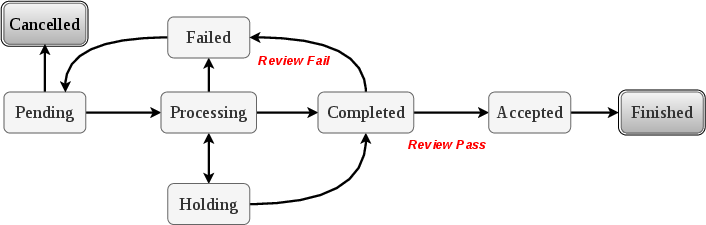
Figure 1: The task lifecycle FSM enforces review-gated propagation and bounded retries, preventing unverified results and deadlocks.
This design supplies formal guarantees on deadlock freedom, termination, and recovery: each task cannot unblock dependents unless supervisor-approved; failed subtasks cannot loop indefinitely due to circuit breakers; and project-wide state is persistent and crash-recoverable.
Organisational Self-Evolution
Beyond execution, OMC operationalises continuous organisational improvement. Agents accumulate experience and refine working principles through structured feedback:
- Individual agents self-reflect after every project or CEO one-on-one, modifying their prompt and best-practices portfolio.
- Post-project retrospectives automatically update SOPs organisation-wide, with learnings injected into future agent contexts.
- Formal HR-inspired mechanisms such as periodic performance review, PIP, and automated offboarding manage accountability and sustained workforce quality.
These mechanisms ensure knowledge persistence at both agent and organisational levels—addressing catastrophic forgetting and enabling collective learning.
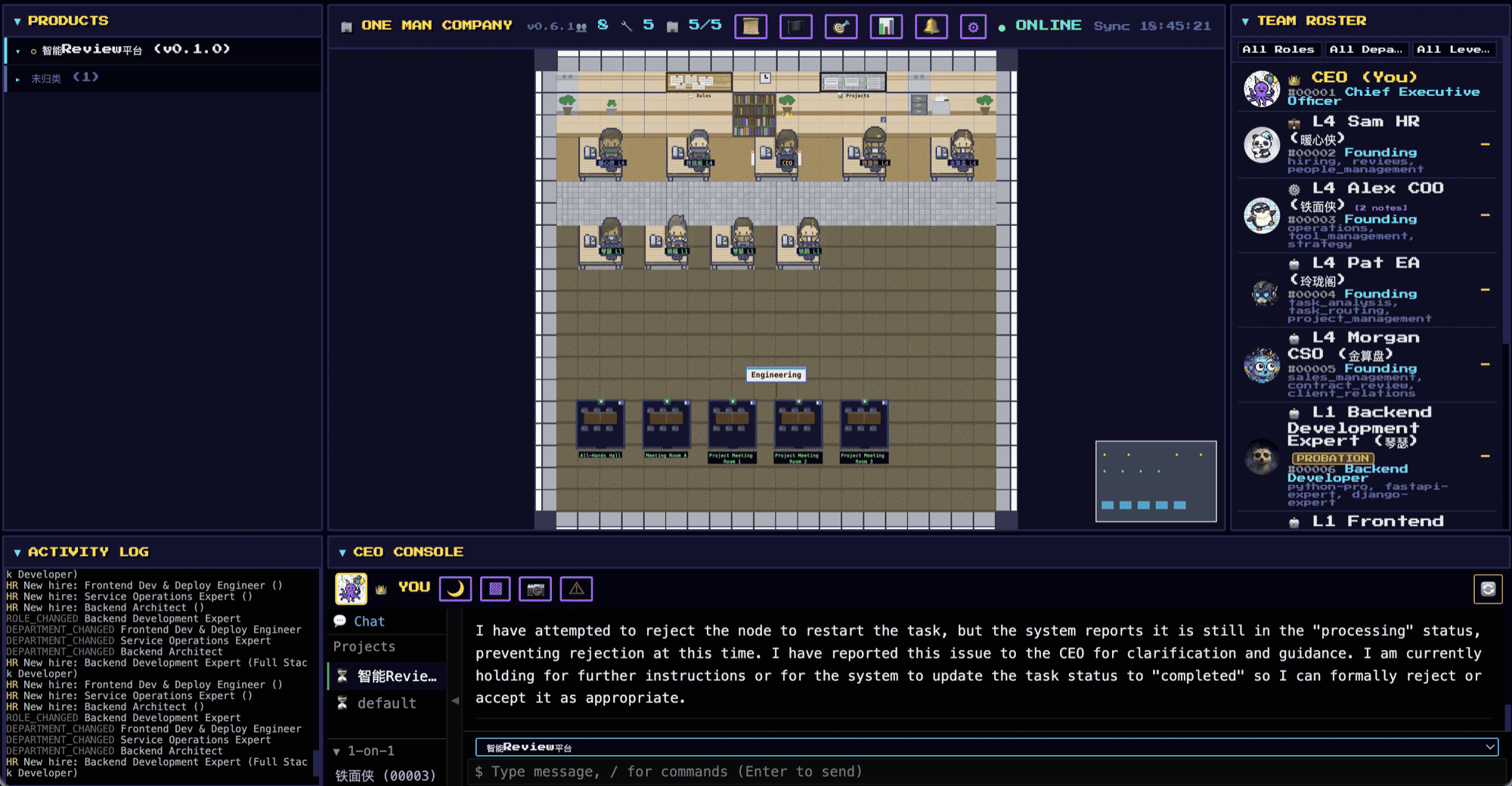
Figure 4: The OMC management interface integrates Talent lifecycle, task decomposition, agent coordination, and persistent organisational knowledge.
Empirical Results
OMC achieves a success rate of 84.67% on the PRDBench project-level software agent benchmark—outperforming state-of-the-art baselines by at least 15.48 percentage points. Notably, this evaluation is conducted in a single-attempt, zero-shot setting, and covers 50 diverse software development tasks, each requiring real decomposition, recruitment, execution, and review cycles.
In targeted cross-domain case studies (content generation, game development, audio-visual narrative production, autonomous research surveys), OMC autonomously assembles heterogeneous, specialist teams, manages inter-agent meetings, triggers dynamic re-skilling, and produces high-value deliverables with accurate output verification and transparent cost accounting.

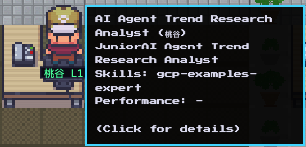
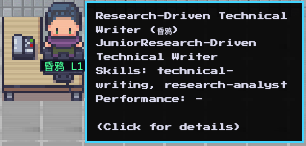
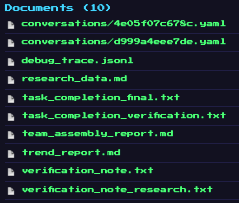

Figure 6: Content generation case study—autonomous team assembly, output artifact creation, and cost breakdown.
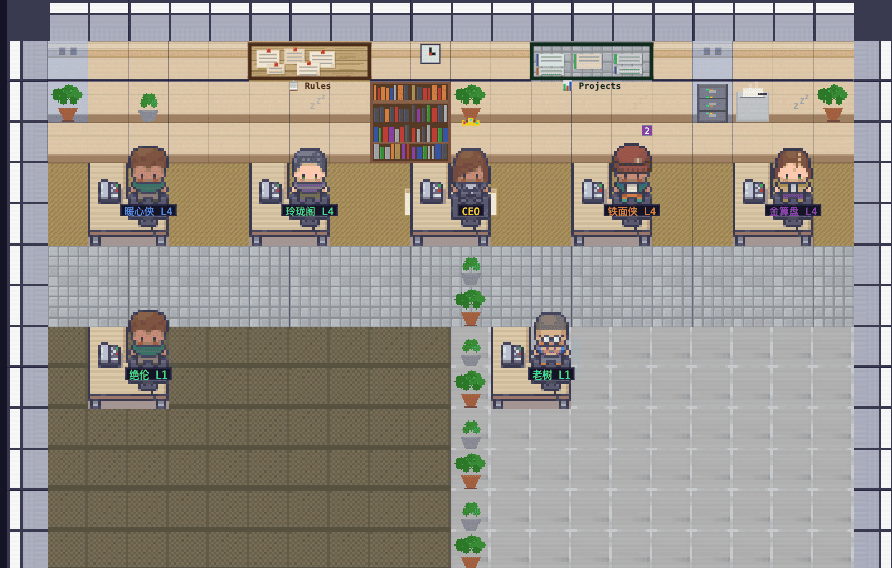
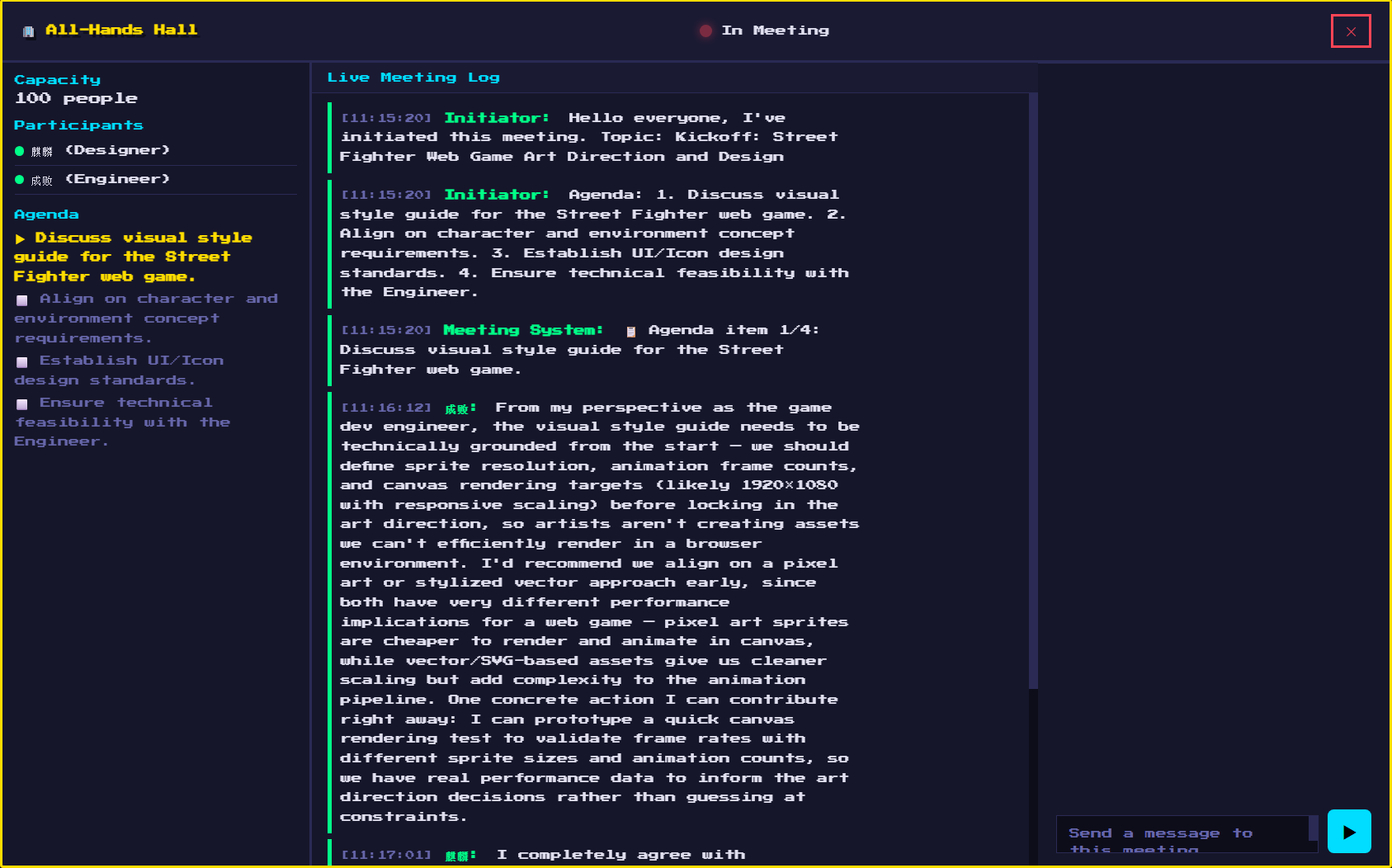
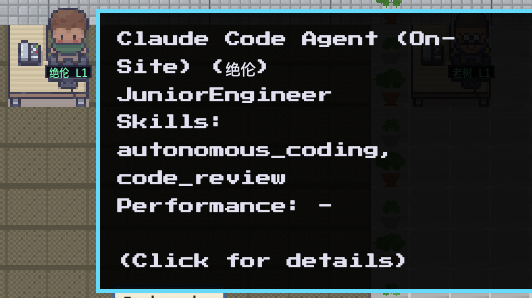
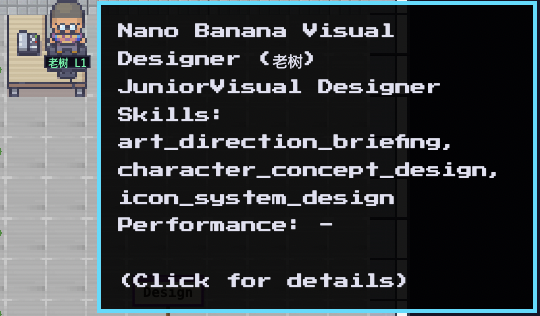
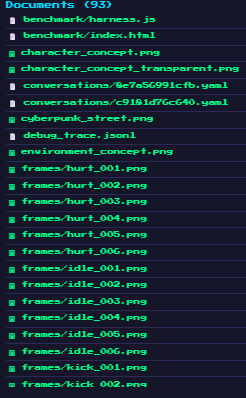

Figure 8: Game development—OMC assembles a developer and designer agent team, manages iterative feedback, and dynamically enhances agent skills in response to human-in-the-loop critique.
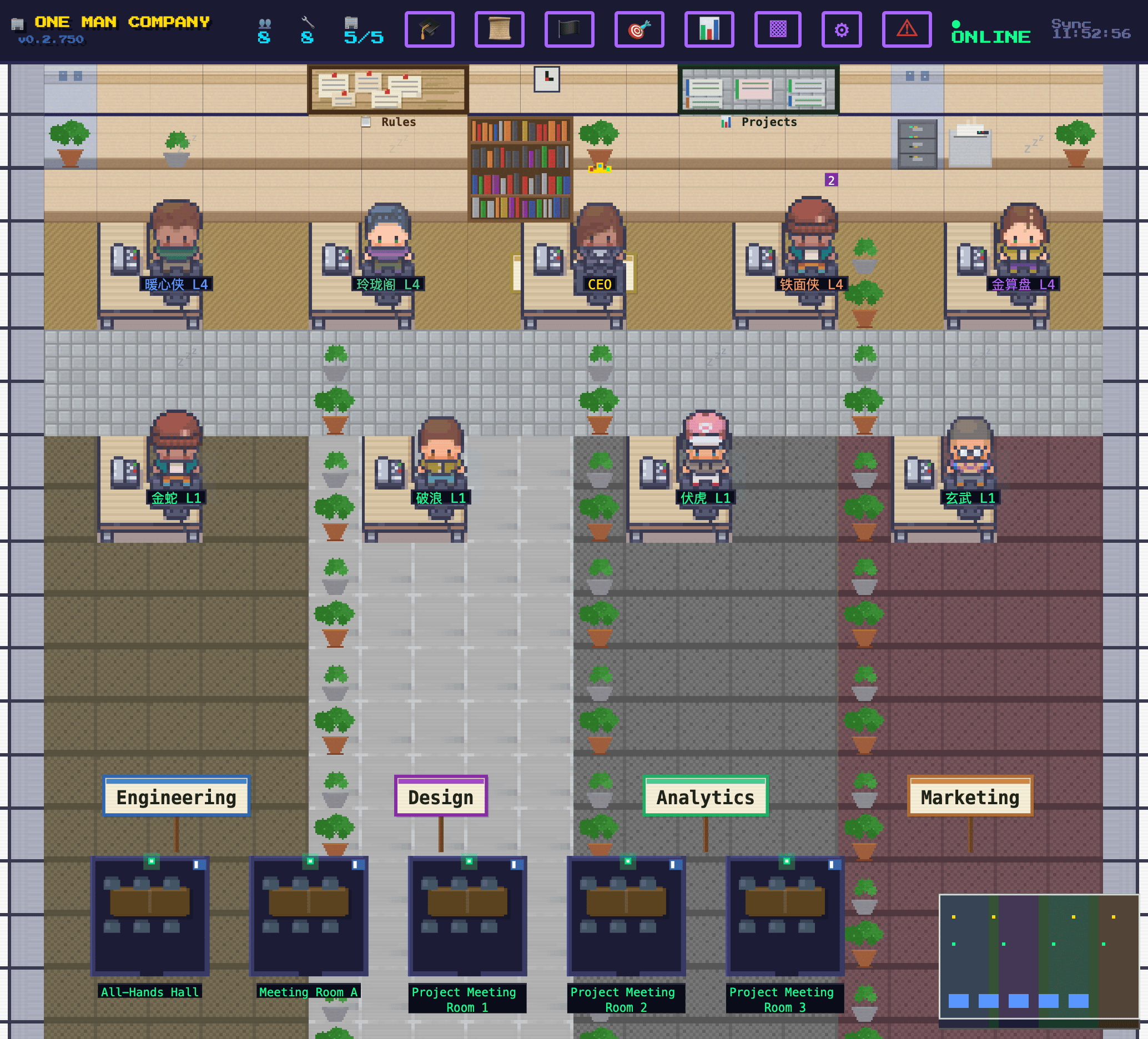
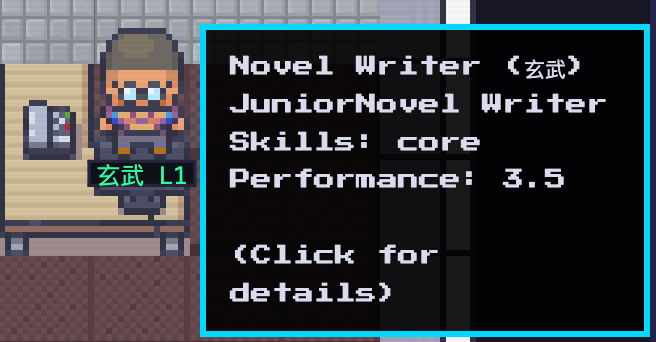
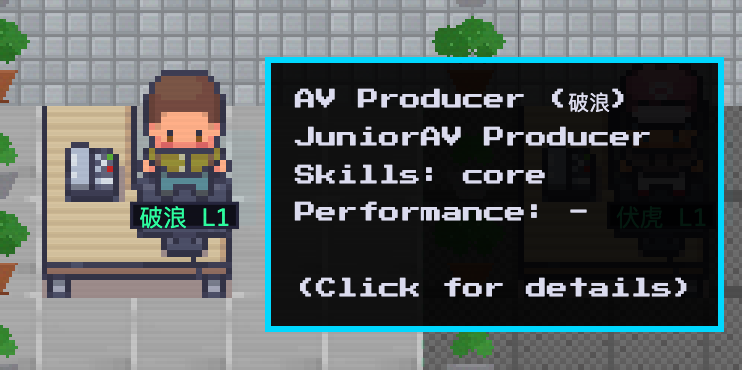


Figure 10: Audio-visual narrative production—heterogeneous team generation, scene-level pipeline orchestration, and fine-grained cost tracking.
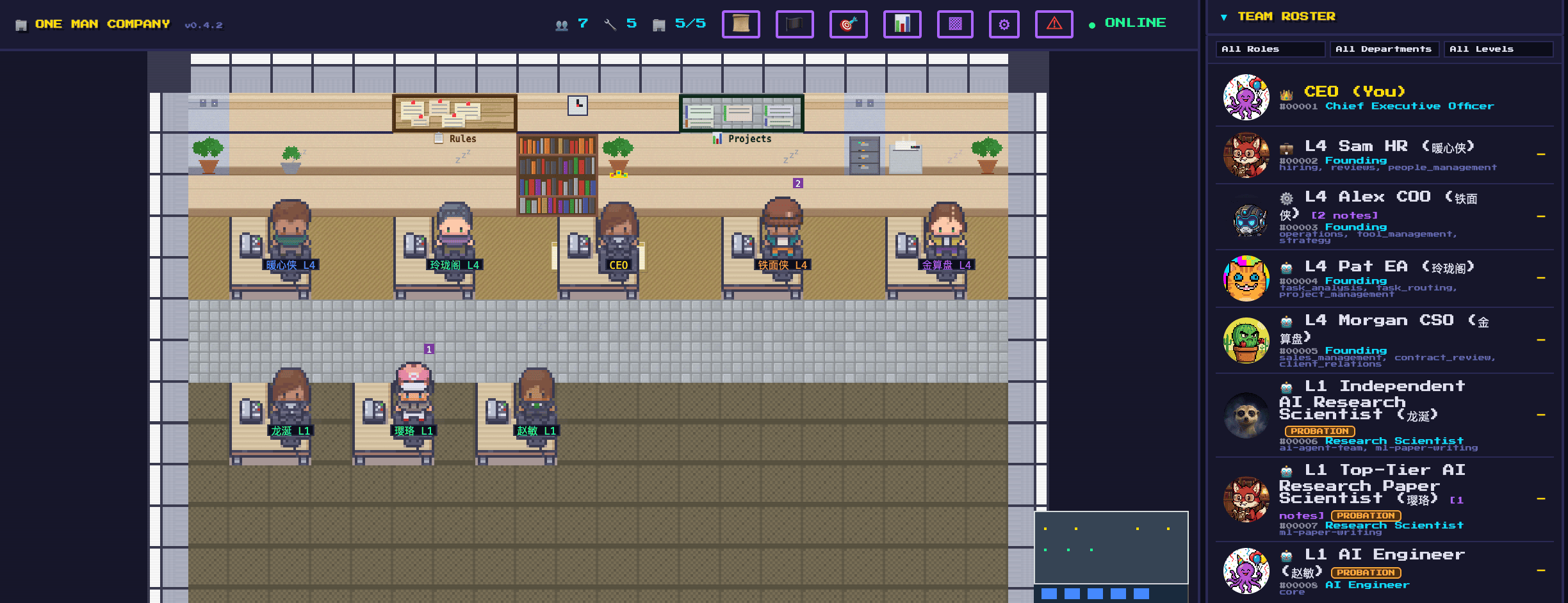
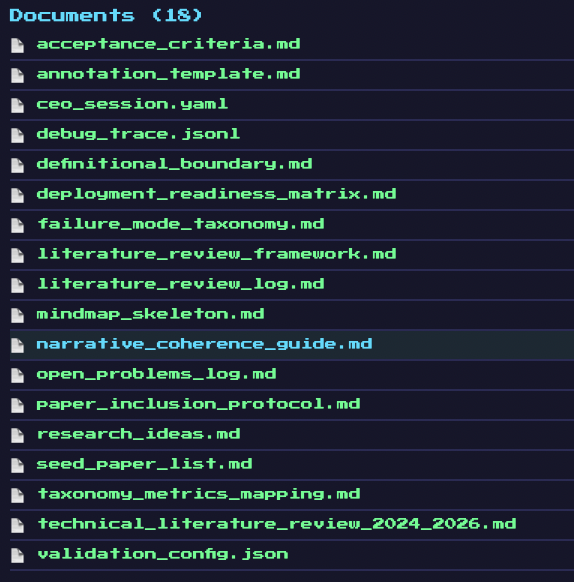
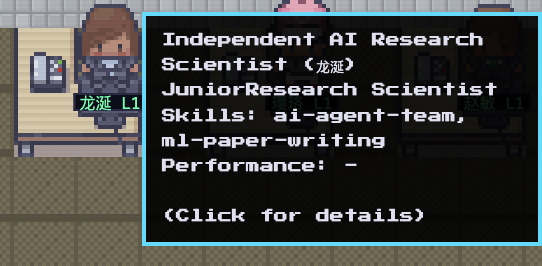
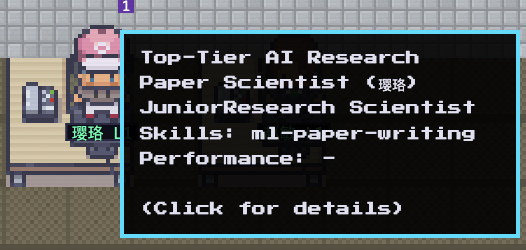
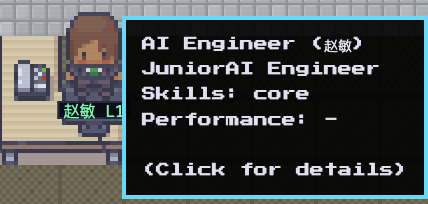
Figure 5: Autonomous research survey—multiple specialist agents deliver high-quality literature reviews, taxonomies, and research proposals with complete cost transparency.
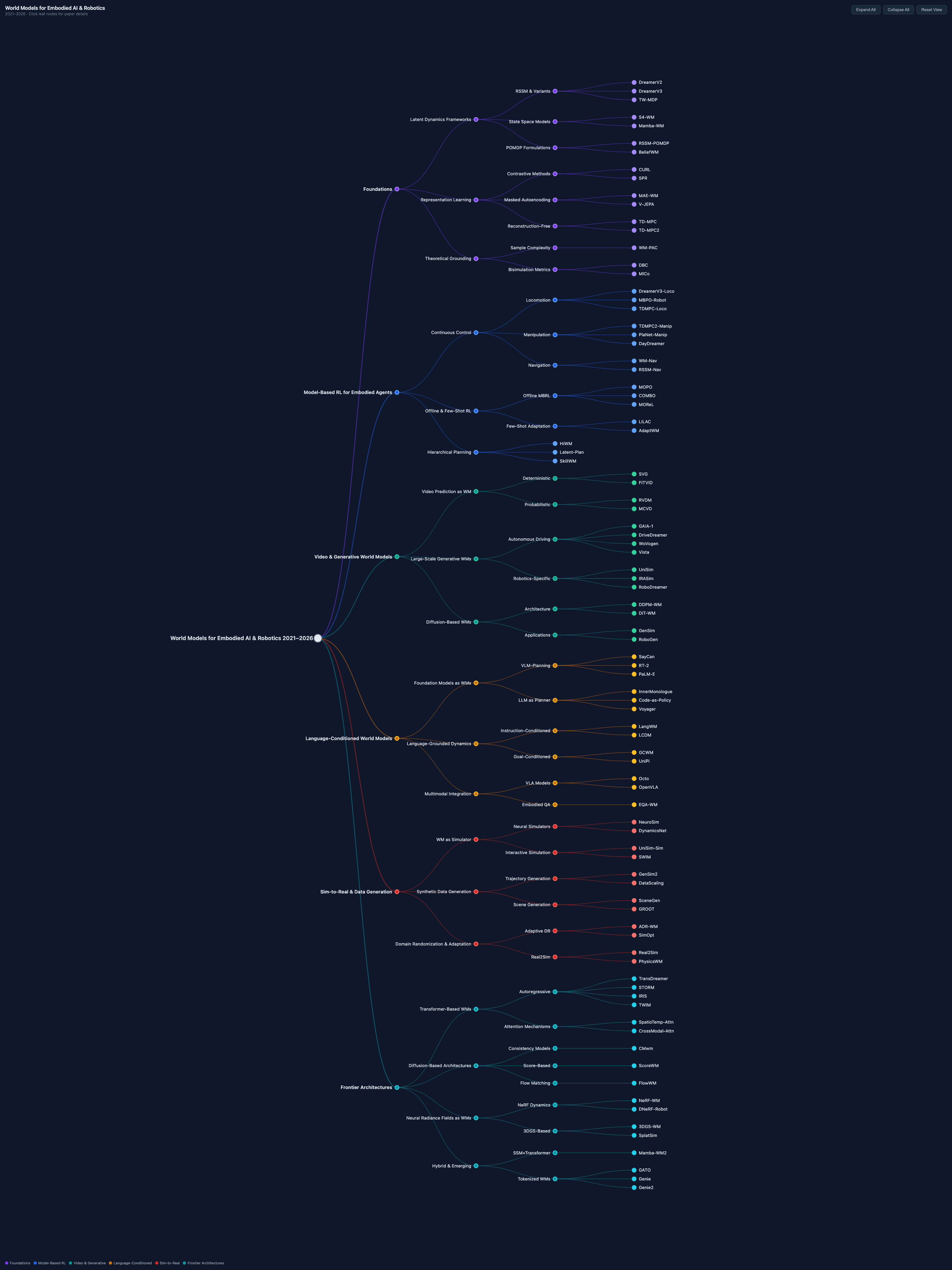
Figure 7: Automatically generated mind map reflects cross-domain research coverage and dynamic output structuring by the OMC organisation.
Implications and Future Directions
OMC establishes that organisation-level abstractions are operationally critical for dynamic, reliable, and scalable agent workforces in open-ended domains. The Talent-Container architecture and Talent Market decouple cognitive identity from runtime, addressing agent heterogeneity, team expandability, and persistent skill evolution—limitations of prior frameworks.
Strong numerical results argue that formal review-gated execution and continuous self-evolution mitigate hallucination, error propagation, and agent stagnation. Persistent organisational learning enables systematic retention of best practices and error correction without necessitating underlying model retraining.
Practically, OMC opens possibilities for robust agentic automation in complex, multi-modal, and rapidly evolving environments (from software engineering to media production and autonomous research). Theoretically, it provides a reference for formalising organisational design in AI, with directions for extending policy learning (meta-RL for organisation design), automated SOP induction, and scaling the Talent Market ecosystem across verticals.
Conclusion
OMC demonstrates that applying design patterns and lifecycle logic from human enterprise management to AI agent orchestration produces measurable improvements in project-level success, agent reliability, and organisational adaptability. The Talent-Container interface, coupled with a flexible, review-gated workflow and lifelong organisational memory, addresses foundational limitations in current multi-agent systems. OMC's results support a shift from skill-centric agent design to talent- and organisation-centric paradigms as necessary for AI systems to execute complex, real-world work.
(2604.22446)

