- The paper shows that bi-directional feedback enhances soliton stability via dynamic laser frequency self-correction.
- It employs numerical bifurcation and spectral analysis to map soliton existence ranges and evaluate system sensitivity to coupling parameters.
- The study reveals that feedback-stabilized soliton operation enables simplified design of chip-scale frequency-comb sources for photonics applications.
Enhanced Soliton Stability in Bi-directionally Coupled Laser-Microresonator Systems
System Architecture and Physical Model
The investigated system consists of a semiconductor laser directly pumped into a high-Q Kerr microresonator without optical isolation, establishing a bi-directional feedback loop via resonantly enhanced Rayleigh backscattering. The schematic in the paper illustrates the crucial physical mechanism: the counter-clockwise (CCW) laser-excited field propagates in the resonator, with a portion backscattered in the clockwise (CW) direction and re-injected into the laser cavity. This bidirectional configuration introduces a dynamic interplay between the laser and the resonator, substantially modifying the nonlinear dynamics compared to traditional uni-directional pumping schemes.
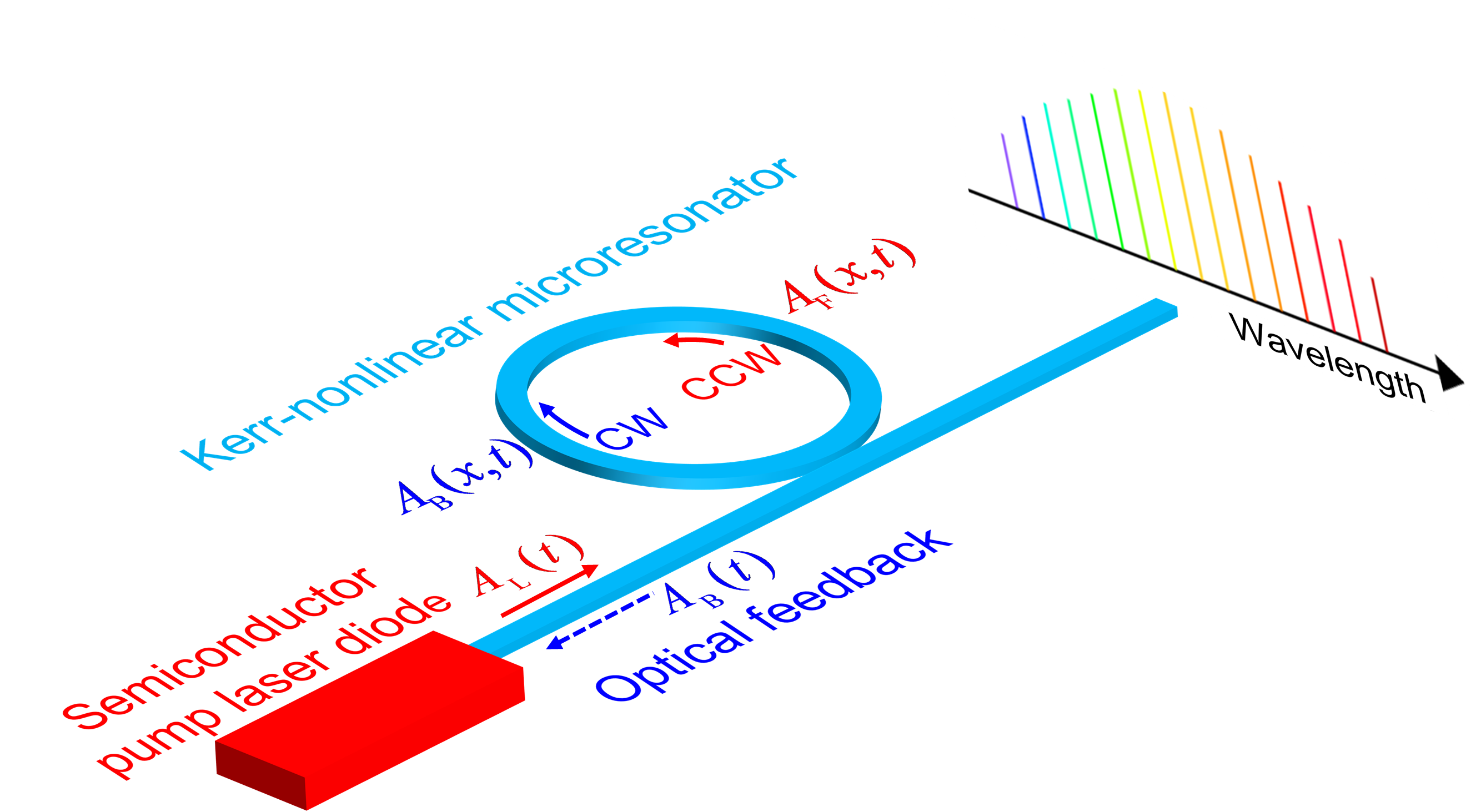
Figure 1: Schematic diagram depicting bi-directional coupling between semiconductor laser and Kerr microresonator enabling backscattered CW field feedback.
The mathematical model involves coupled ODE/PDEs for carrier number, laser field, forward (CCW) field, and backward (CW) field, normalized for physical parameters. The conventional Lugiato-Lefever equation (LLE) governs the uni-directional scenario but omits the dynamic feedback. In contrast, the bi-directional model introduces a feedback-modified gain and phase response for the laser, permitting real-time self-correction of the laser frequency.
Numerical Bifurcation Analysis and Soliton Existence
The paper applies numerical bifurcation analysis to systematically explore stationary 1-soliton solutions across a broad sweep of physically relevant parameters (detuning, accumulated phase, coupling strength). This framework supersedes standard time-integration methods, enabling identification of existence ranges and stability regimes for soliton states not accessible in previous theoretical models.
The bifurcation diagram demonstrates the emergence, continuation, and localization of soliton states, confirming that 1-solitons (spatially localized states) originate from the last bifurcation point on the constant solution curve as the frequency detuning parameter ζ is varied.
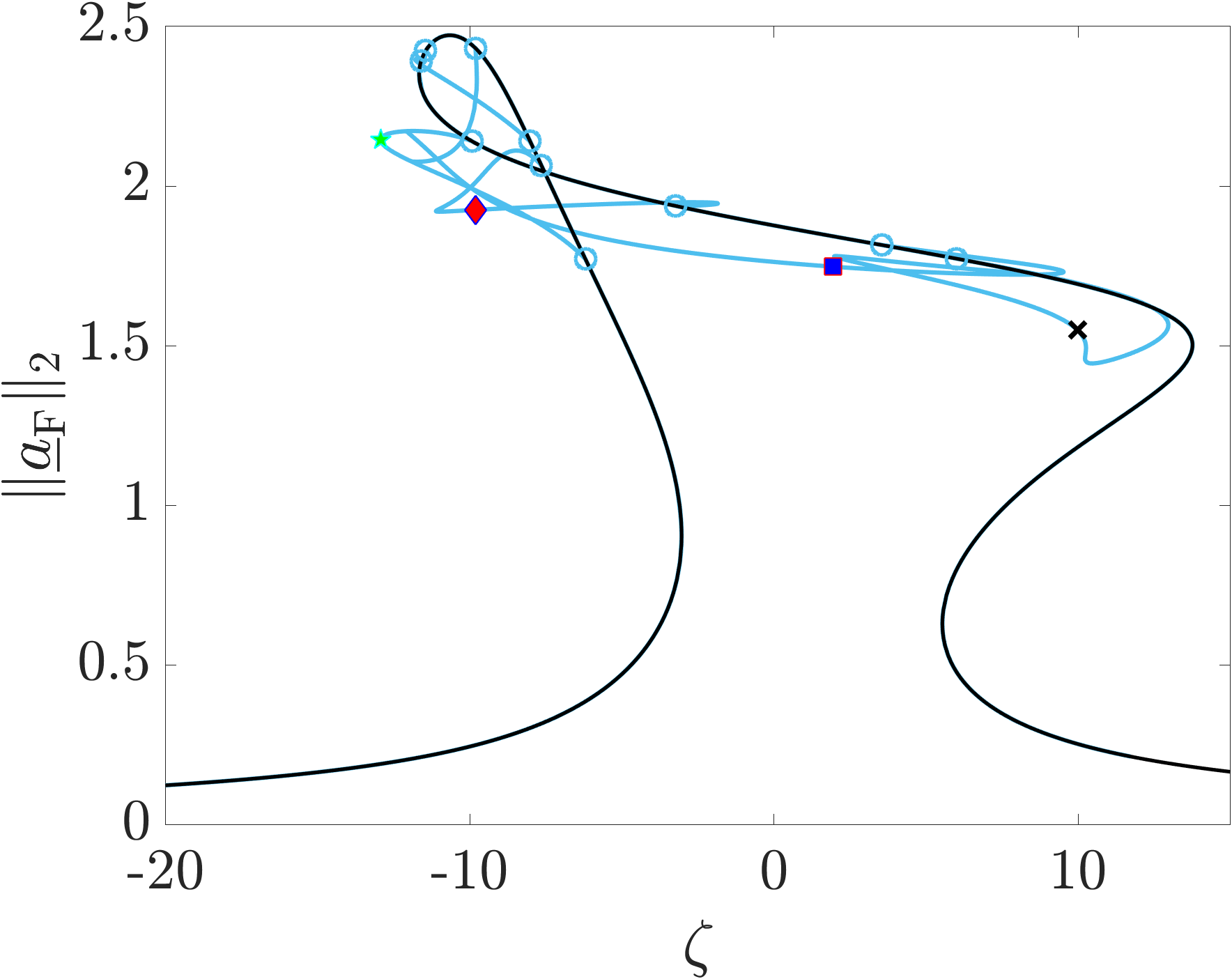
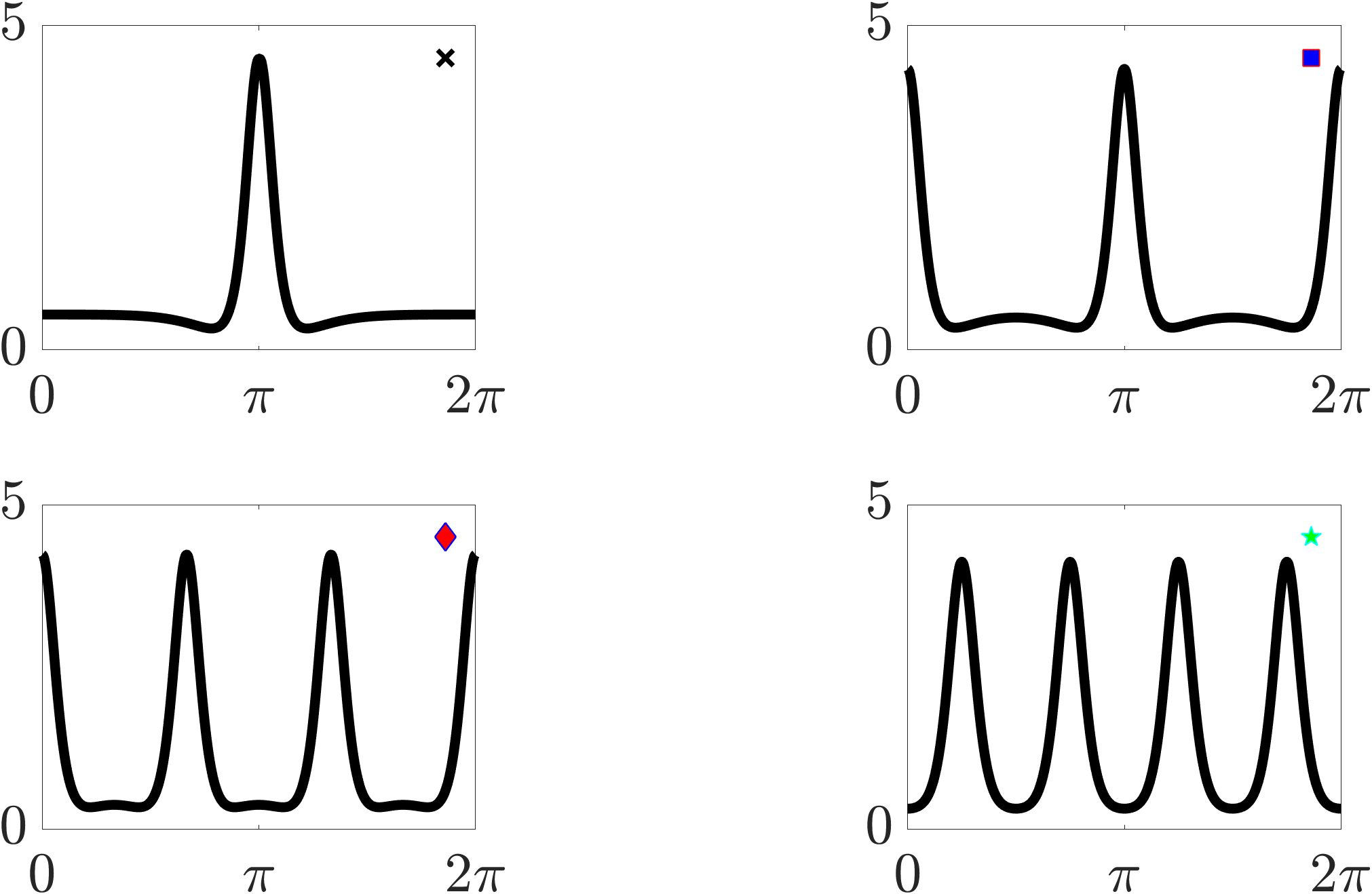
Figure 2: Bifurcation diagram of stationary solutions showing emergence of 1-soliton states and their localization.
Analysis reveals that the bi-directional system retains time-harmonic soliton states akin to the uni-directional LLE solutions, but with an essential difference: the laser frequency is not fixed, but dynamically adjusted to a constant detuned value sustaining the soliton due to feedback.
Stability Features and Dynamic Self-Correction
A primary result is the enhanced stability of soliton states in the bi-directionally coupled system. Bifurcation and spectral analysis confirm that perturbations in any of the dynamic variables (carrier number, laser field, forward/backward fields) induce exponential relaxation to the soliton steady state, accompanied by automatic (self-correcting) adjustment of the laser frequency to lock into resonance.
Time-integration experiments starting from perturbed soliton states explicitly demonstrate this dynamical robustness. All fields, including the instantaneous laser frequency, converge exponentially to the soliton-supporting values, with the soliton spatial profile relaxing to a translate of the steady state.
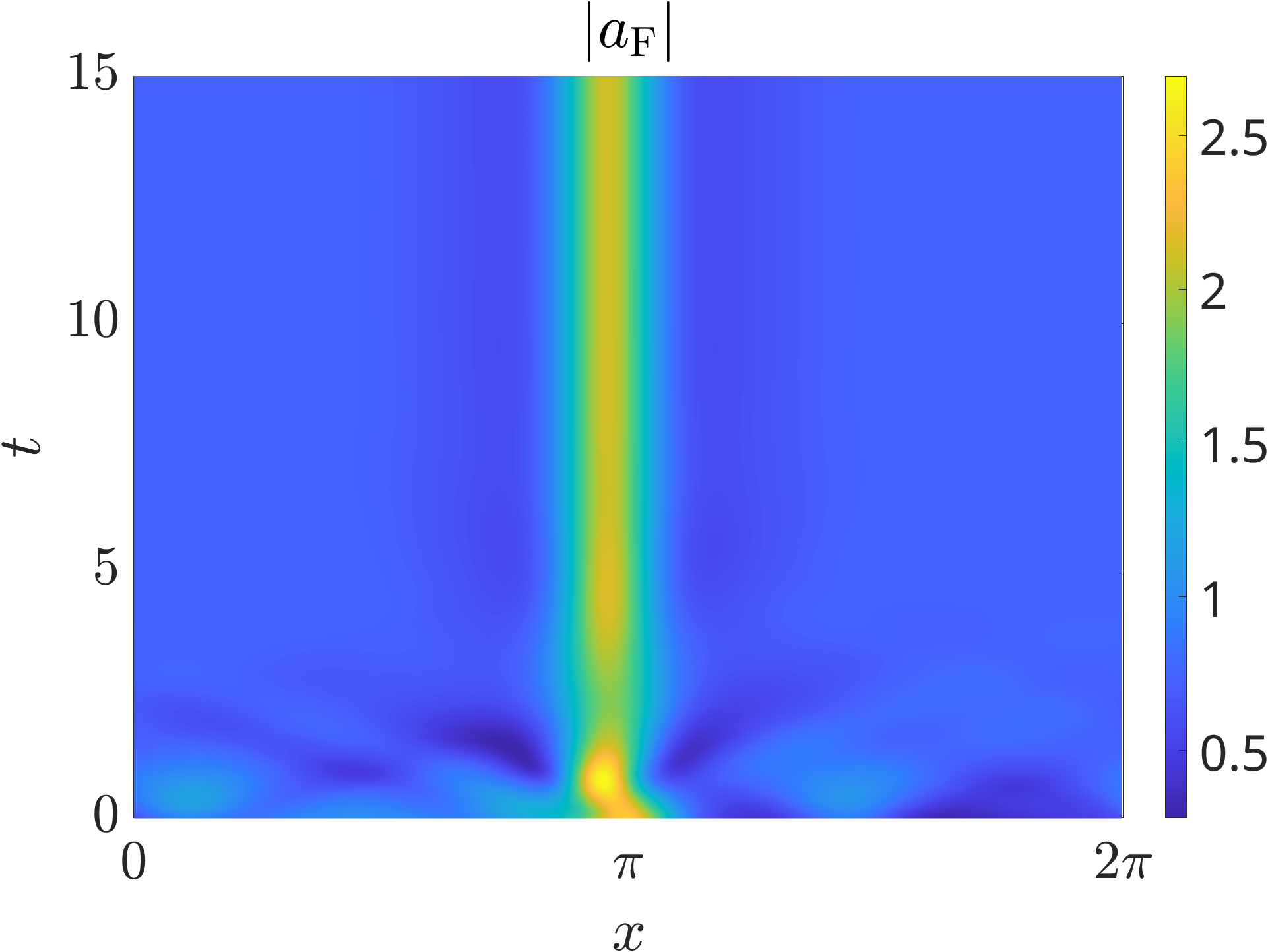
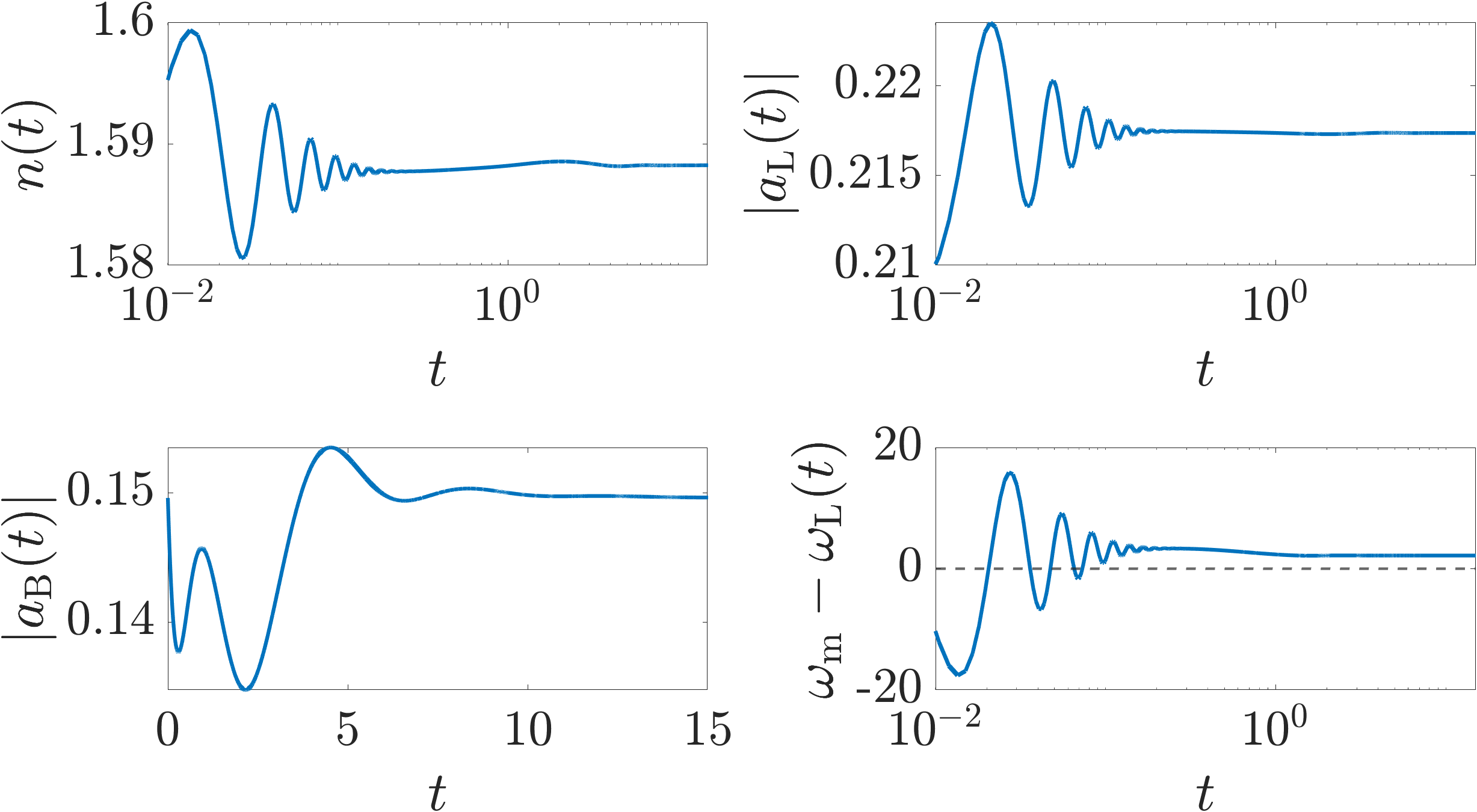
Figure 3: Time integration confirms exponential relaxation of all unknowns (fields, carrier number, laser frequency) to soliton steady state after perturbations.
Spectral analysis of the linearized Jacobian at the soliton solution further validates dynamical stability, showing a spectral gap except for a single zero eigenvalue due to translation invariance.
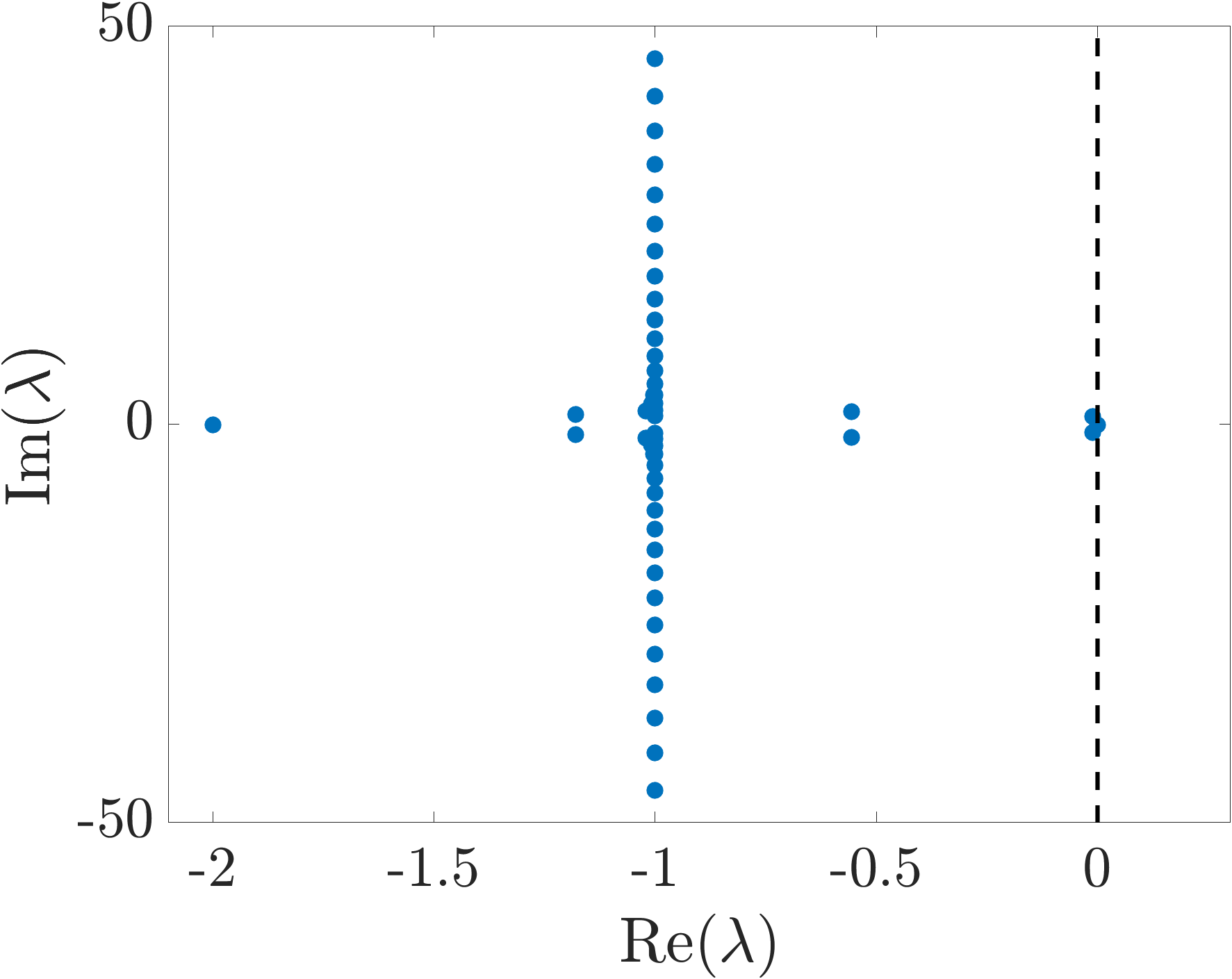
Figure 4: Spectrum of the linearized operator at the 1-soliton state confirming strict negative real parts for all eigenvalues except for translational invariance.
Parameter Sensitivity and Soliton Existence Range
A comprehensive sensitivity analysis elucidates the dependence of soliton existence and localization on key experimental parameters: accumulated phase ϕ and external coupling strength κext. Existence charts reveal finite ranges for ϕ and minimum thresholds for κext required to support localized soliton states. The analysis shows robustness and tunability of soliton formation, directly informing practical applications and device engineering.
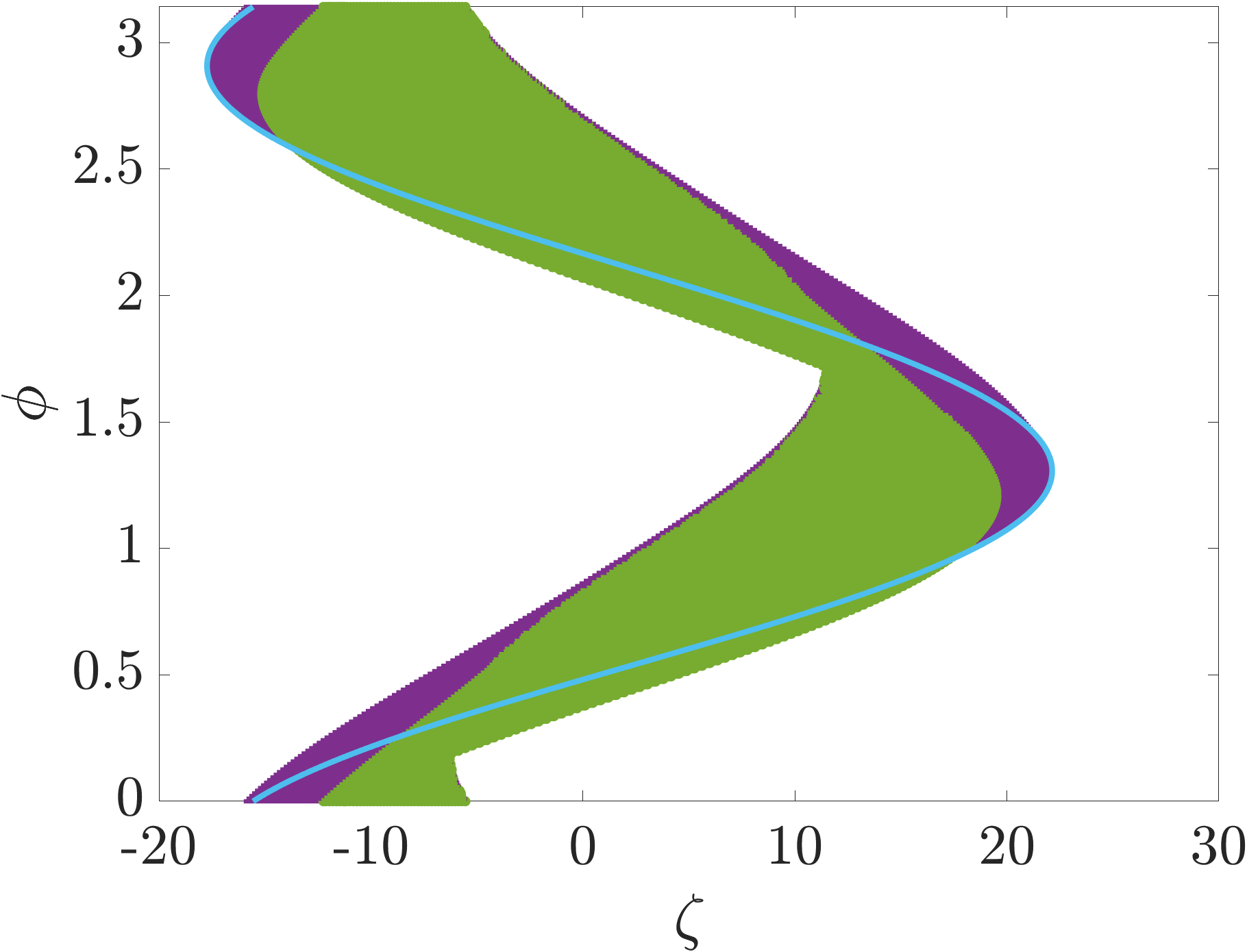
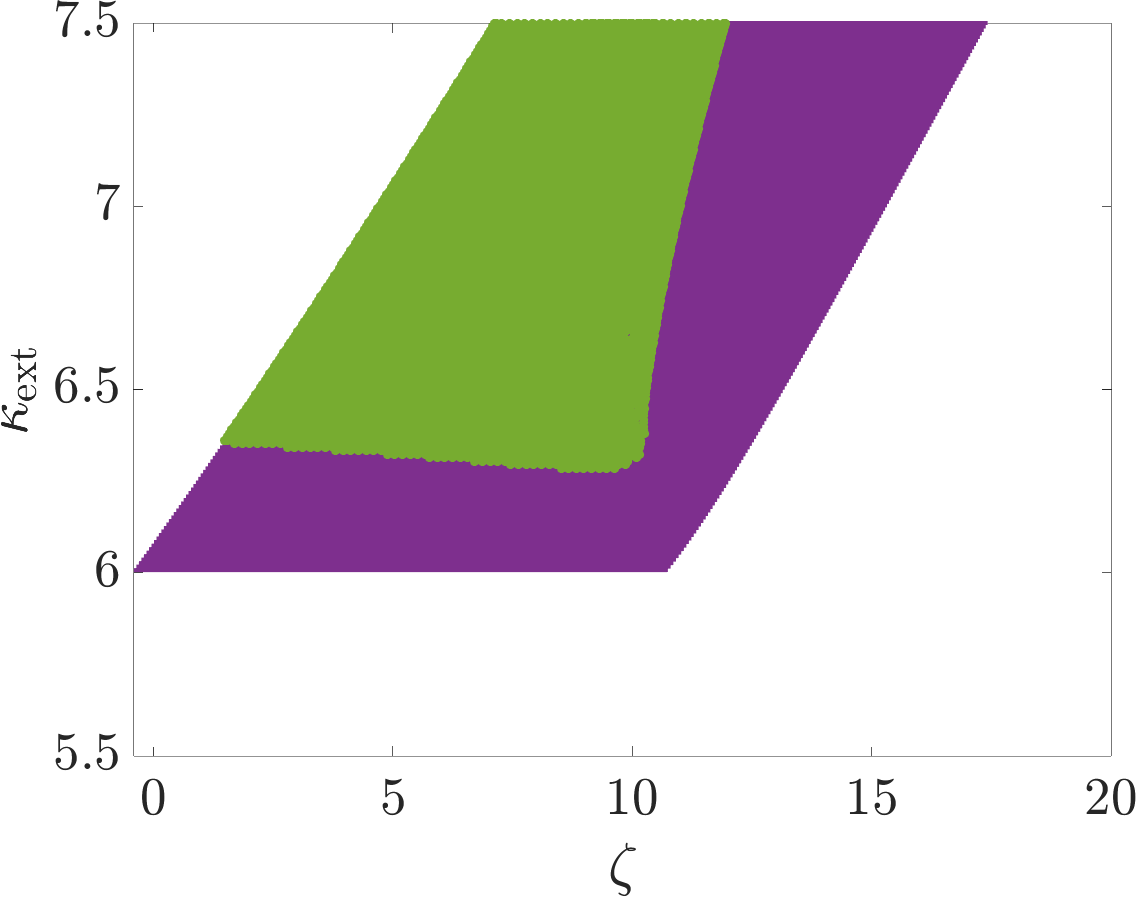
Figure 5: Soliton existence chart in ζ-ϕ and ζ-κext planes, identifying regions supporting highly localized solitons.
The existence range is ζ0-periodic in ζ1 owing to system symmetry, and only strong enough external coupling enables bifurcating soliton branches, corroborating experimental findings on the necessity of substantial feedback power for soliton formation.
Implications and Future Directions
The results fundamentally advance understanding of chip-scale, feedback-stabilized frequency comb sources. Enhanced soliton stability in bi-directionally coupled laser-microresonator systems unlocks deterministic, robust, and self-starting frequency-comb generation regimes, removing the need for complex electronic control protocols and facilitating integration into industrial packages.
Theoretically, the dynamic self-correction mechanism provides a generic pathway for nonlinear systems with feedback to achieve autonomous stabilization, suggesting new directions for control in hybrid photonic-electronic platforms. Practically, the findings drive progress in optical communications, metrology, photonic-electronic signal processing, and compact timekeeping systems, including on-chip low-noise microwave generation.
Future work may explore generalizations to multimode and broadband soliton states, heterogeneous integration with novel ultralow-loss photonics platforms [Chen2026], and real-time nonlinear control strategies exploiting feedback-induced stabilization. There is strong potential for cross-fertilization with AI-based control systems and adaptive photonics.
Conclusion
The paper rigorously demonstrates that bi-directional feedback in semiconductor laser–Kerr microresonator systems fundamentally enhances soliton stability via dynamic self-correction of laser frequency. Numerical bifurcation and stability analyses yield existence and robust stability regimes for soliton states, elucidate critical parameter thresholds, and provide actionable insight for integrated photonics applications. The bi-directionally coupled architecture paves the way for compact, self-stabilized frequency comb sources and robust soliton operation in next-generation optical and photonic-electronic systems.