- The paper demonstrates caustic skeleton theory’s ability to map initial Gaussian fields to observable cosmic structures like walls, filaments, and nodes.
- It employs Bayesian Manticore reconstructions of the 2M++ galaxy catalogue to classify filament types (A3, A4, D4) and assign environmental signatures.
- The study identifies distinct formation chronologies and merging histories for filament types, providing new insights into galaxy–cosmic web interactions.
Caustic Skeleton Theory and the Local Universe’s Cosmic Web: A Technical Analysis
Introduction
"Caustic Skeleton and the Local Cosmic Web: the Coma Cluster node and the Pisces-Perseus ridge" (2604.22213) demonstrates the application of caustic skeleton theory—a phase-space formalism for predicting galaxy-scale structure formation—to observationally constrained reconstructions of the local Universe. Specifically, the work leverages the Manticore-Local Bayesian reconstructions matched to the 2M++ galaxy catalogue to extract and analyze the multi-scale caustic skeleton organizing two canonical structures: the Coma Cluster (and its Stickman configuration) and the Pisces-Perseus Supercluster. The study delivers new insights into cosmic web topology, filament classification, structure formation chronology, and the environmental characterization of observed galaxies.
Caustic skeleton theory analyzes the gravitational collapse of the cosmic matter field through the evolution of the dark matter sheet in phase-space. Catastrophe theory, particularly in the context of Lagrangian fluid dynamics, identifies stable singularities—caustics—corresponding to distinct large-scale structures: walls (A3 cusps), filaments (A4 swallowtails, D4 umbilics), and cluster nodes (A5, D5). Shell-crossing and higher-order derivatives of the deformation tensor's eigenvalue fields yield analytic criteria for these caustics.
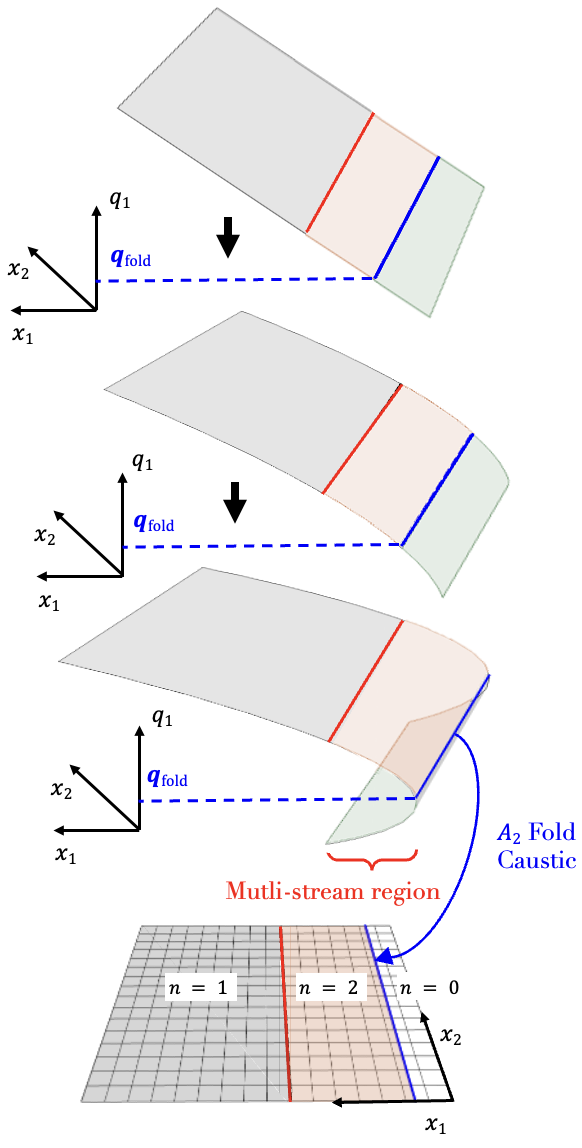
Figure 1: Cartoon illustration of sheet folding in phase-space and the resulting formation of A2 fold caustics, showing the origin of multi-stream regions.
While conventional N-body or heuristic cosmic web classifiers provide only diagnostic decomposition in Eulerian space, the caustic skeleton formalism anchors predictions directly to primordial conditions within the Zel'dovich approximation. This enables an explicit analytical mapping of the initial Gaussian field to the spatial organization of cosmic walls, filaments (of both A and D types), and nodes, supplying topological and chronological information missing in standard approaches.
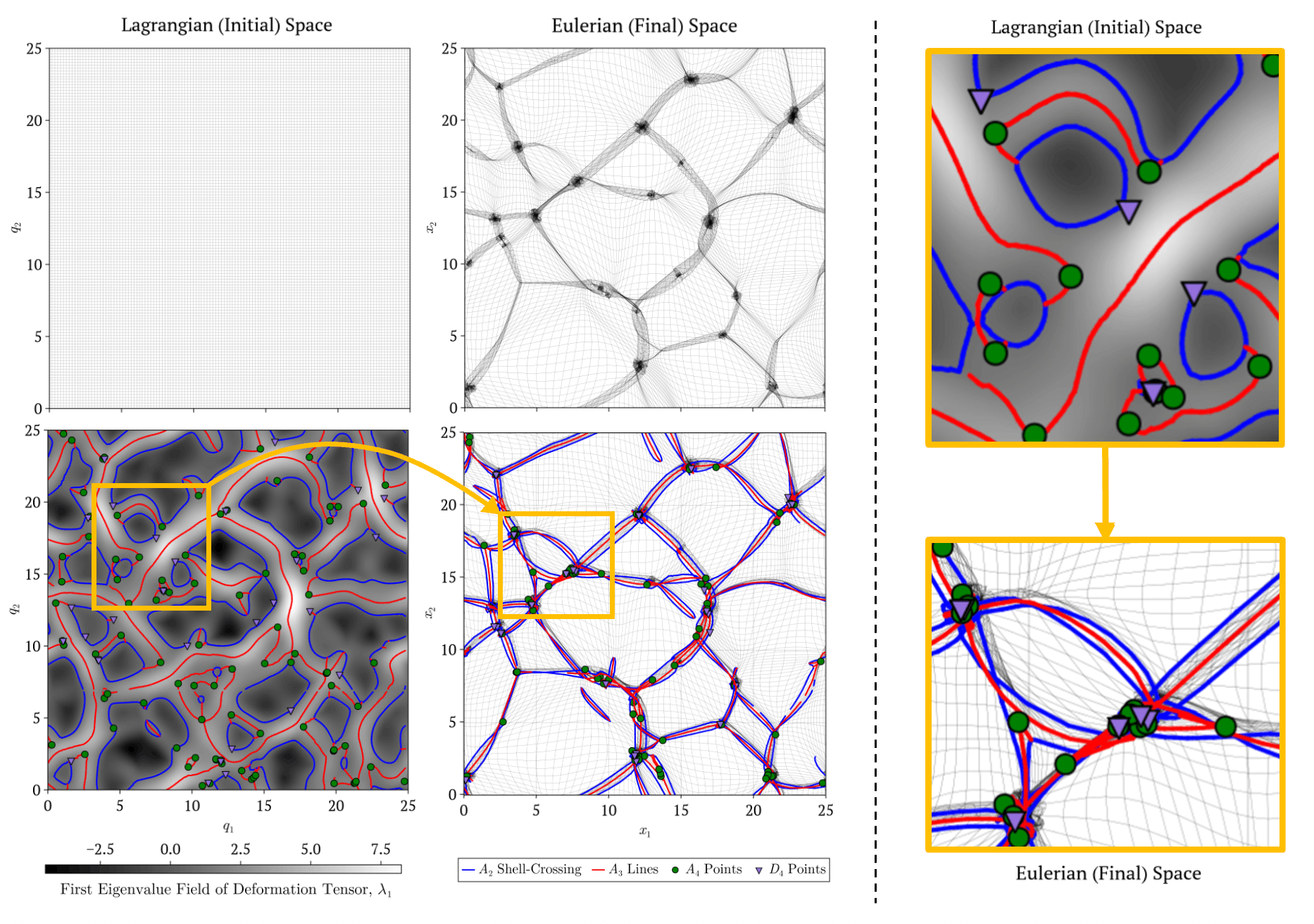
Figure 2: Caustic skeleton theory correctly predicts multi-stream structure in a 2D N-body simulation, with caustic loci extracted solely from the initial conditions and mapped to Eulerian space.
Data and Simulation Framework
Bayesian field-level analyses of the 2M++ galaxy catalogue via the Manticore project reconstruct the initial density field in the Local Universe and propagate it forward using the SWIFT A40-body code. MonofonIC is employed to provide small-scale consistency via power-spectrum conformant Gaussian fluctuations. This enables direct computation of the initial Lagrangian deformation tensor, smoothing it at varying scales (typically A41–A42 Mpc). The work explicitly examines realizations A43, A44, and A45.
Caustic Skeleton in Key Local Volume Structures
Coma Cluster and the Stickman Configuration
A detailed caustic extraction reveals the Stickman structure—the archetypal cosmic web configuration centered on the Coma Cluster. The identification is robust across all Manticore realizations analyzed.
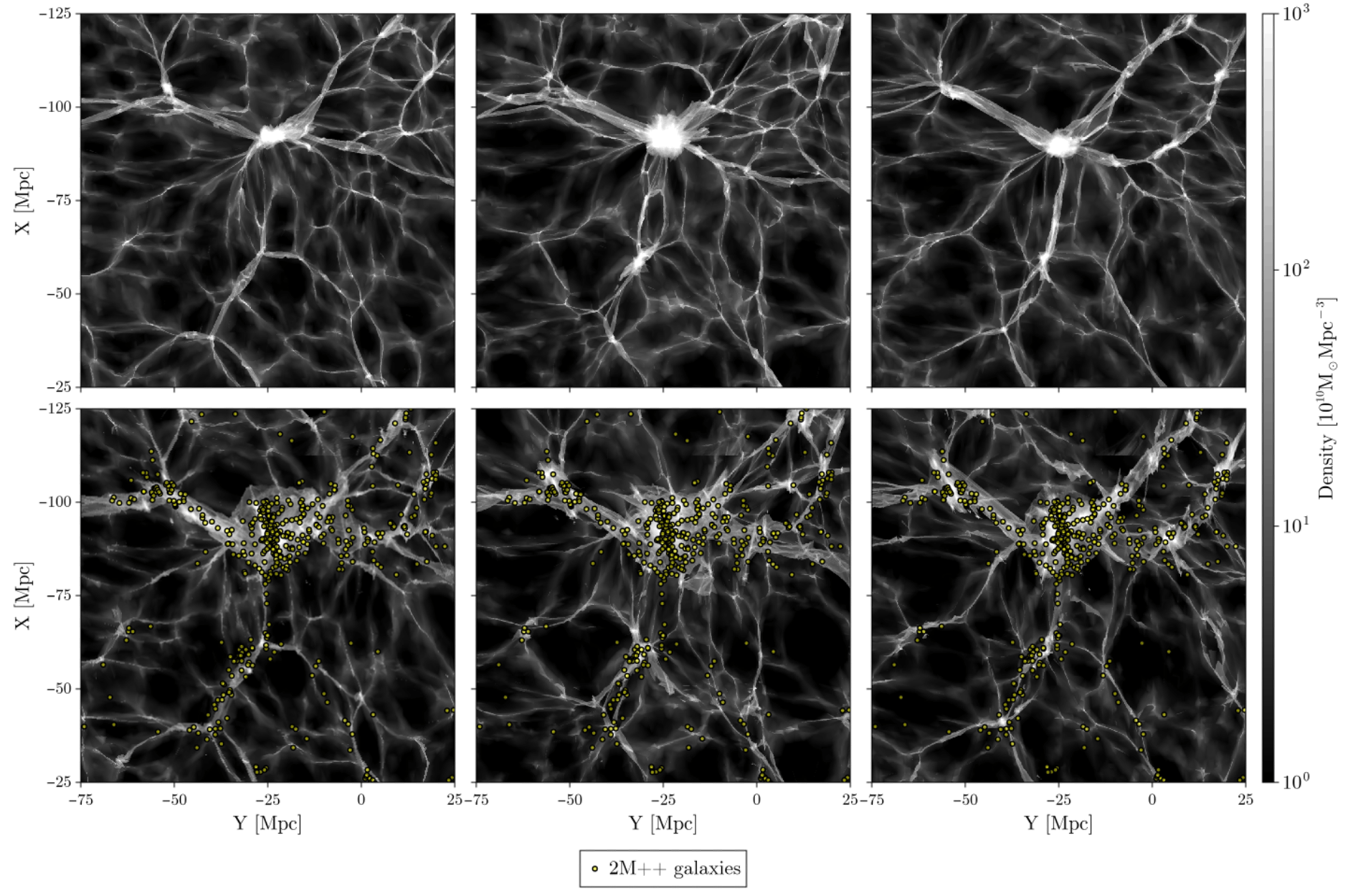
Figure 3: Simulated density field slices reveal the morphology of the Stickman and Coma Cluster in real and redshift space, with 2M++ galaxies overlaid for validation.
Caustic skeleton mapping demonstrates excellent correspondence between predicted caustic spines and observed galaxy positions, surviving even quasi-linear redshift distortions. A46 walls map the prominent Stickman limbs, while A47 filaments populate the high-density ridges. A48 filaments, although abundant only at smaller smoothing scales or high densities, provide environments with distinct folding histories.
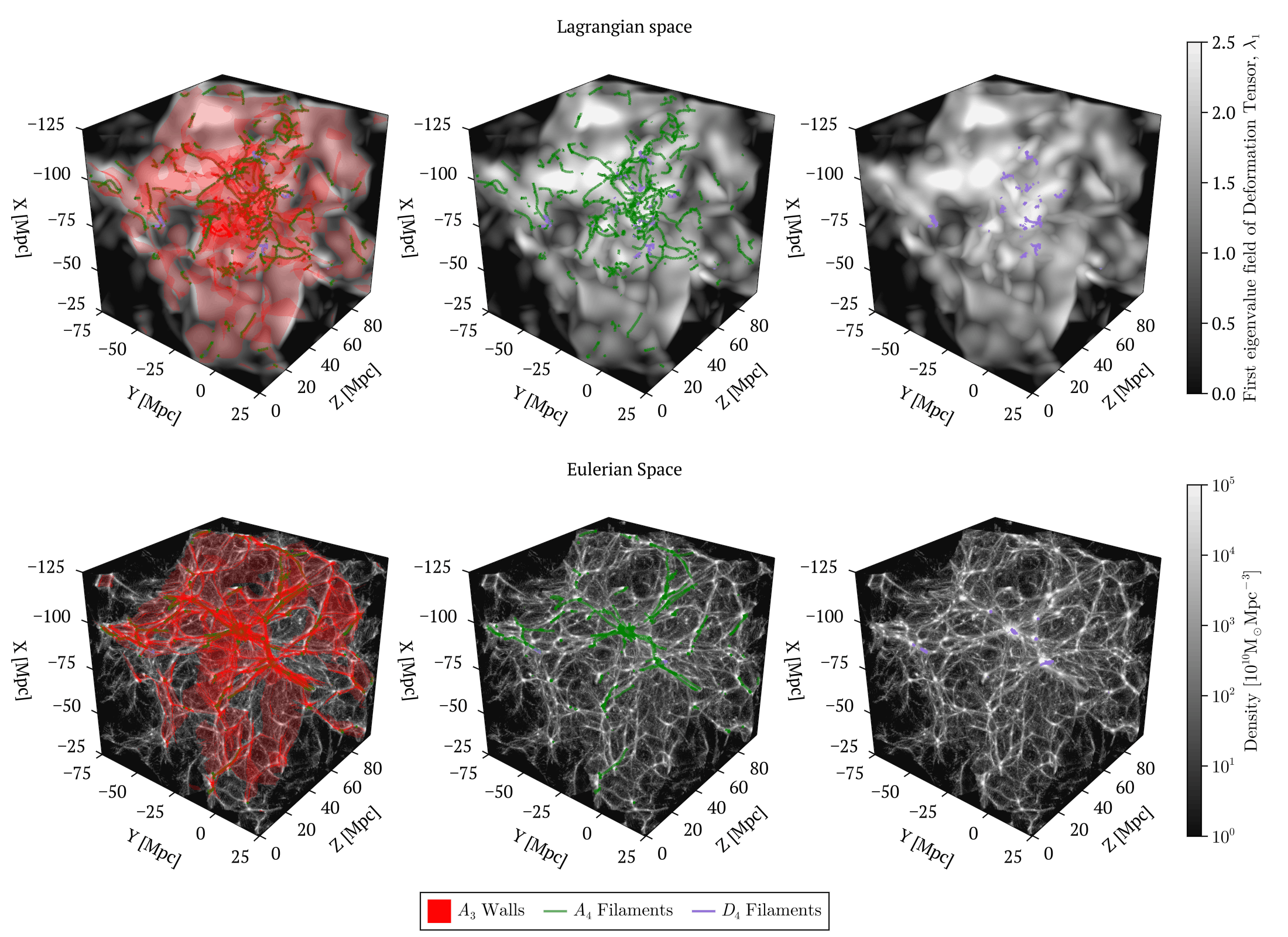
Figure 4: Three-dimensional caustic skeleton around the Coma Cluster, separating A49 walls, D40 filaments, and D41 filaments; density and eigenvalue structure are visualized in Lagrangian and Eulerian space.
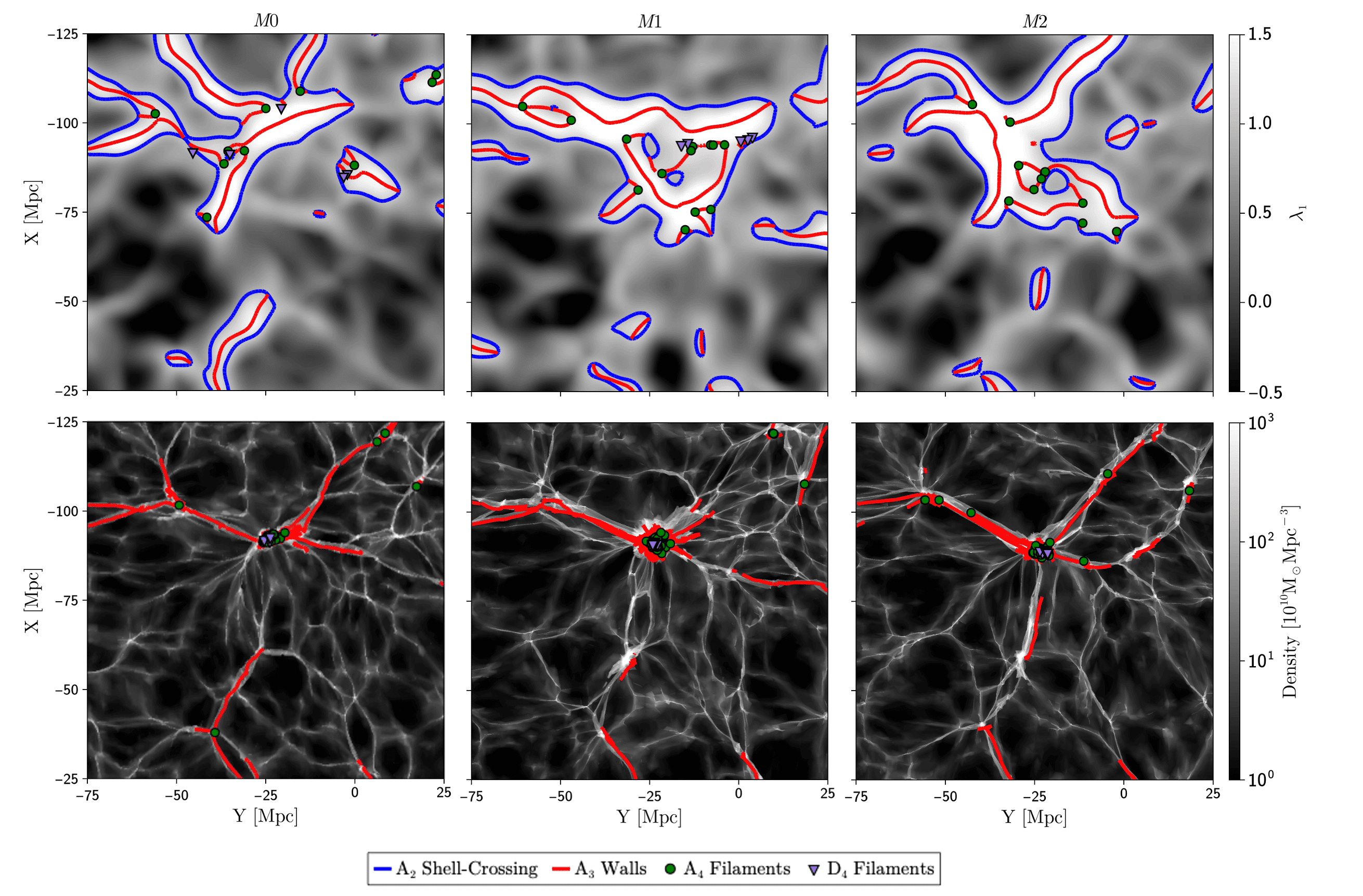
Figure 5: 2D slice of caustic skeleton and density for all three Manticore realizations demonstrates overall robustness and convergence in Eulerian space.
Pisces-Perseus Supercluster Analysis
A complementary analysis of the Pisces-Perseus Supercluster leverages coordinate rotation to align with the structure’s observed orientation. The caustic skeleton, resolved at multiple scales, captures both the principal filamentary backbone and the more intricate D42 structure embedded within high-density knots.
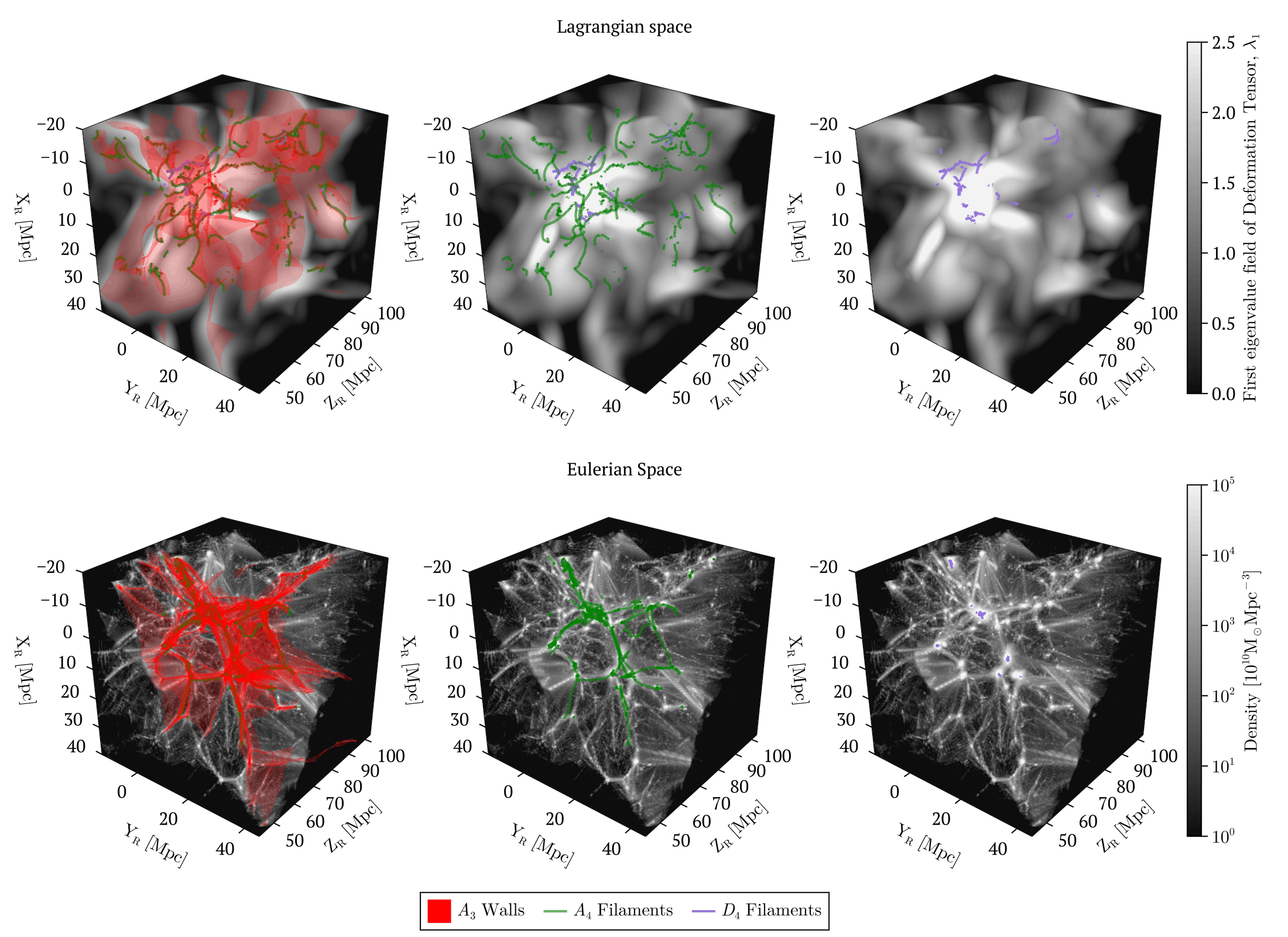
Figure 6: Three-dimensional caustic skeleton and density field in the Pisces-Perseus region, clearly distinguishing D43- and D44-type filaments.
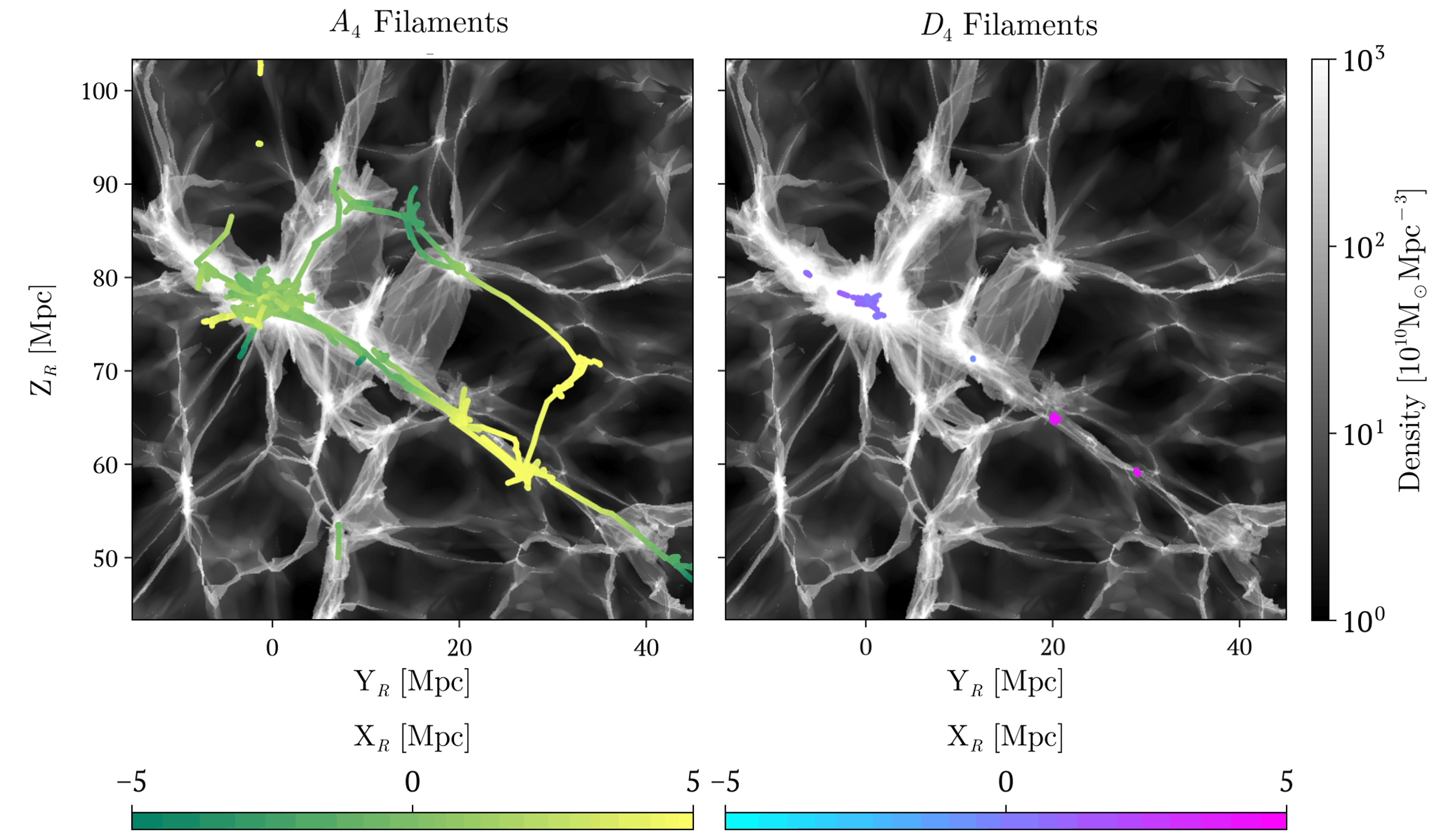
Figure 7: Infinitesimal 2D slice of caustic filaments—separating D45 and D46—showing relative spatial segregation near dense supercluster cores.
A bold result is that the Pisces-Perseus Supercluster, while morphologically similar to standard cosmic web filaments, is topologically characterized by dominant D47 umbilic filaments at smaller scales—an environmental distinction undetectable through purely morphological algorithms such as DisPerSE.
Galaxy Environmental Classification via Caustic Topology
The authors introduce a hierarchical classification scheme, asserting that D48 filaments prevail locally over D49, which in turn supersede A50 walls, down to unclassified void environments. For each 2M++ galaxy, proximity to a caustic of each type at multiple smoothing scales determines a nested environmental signature.
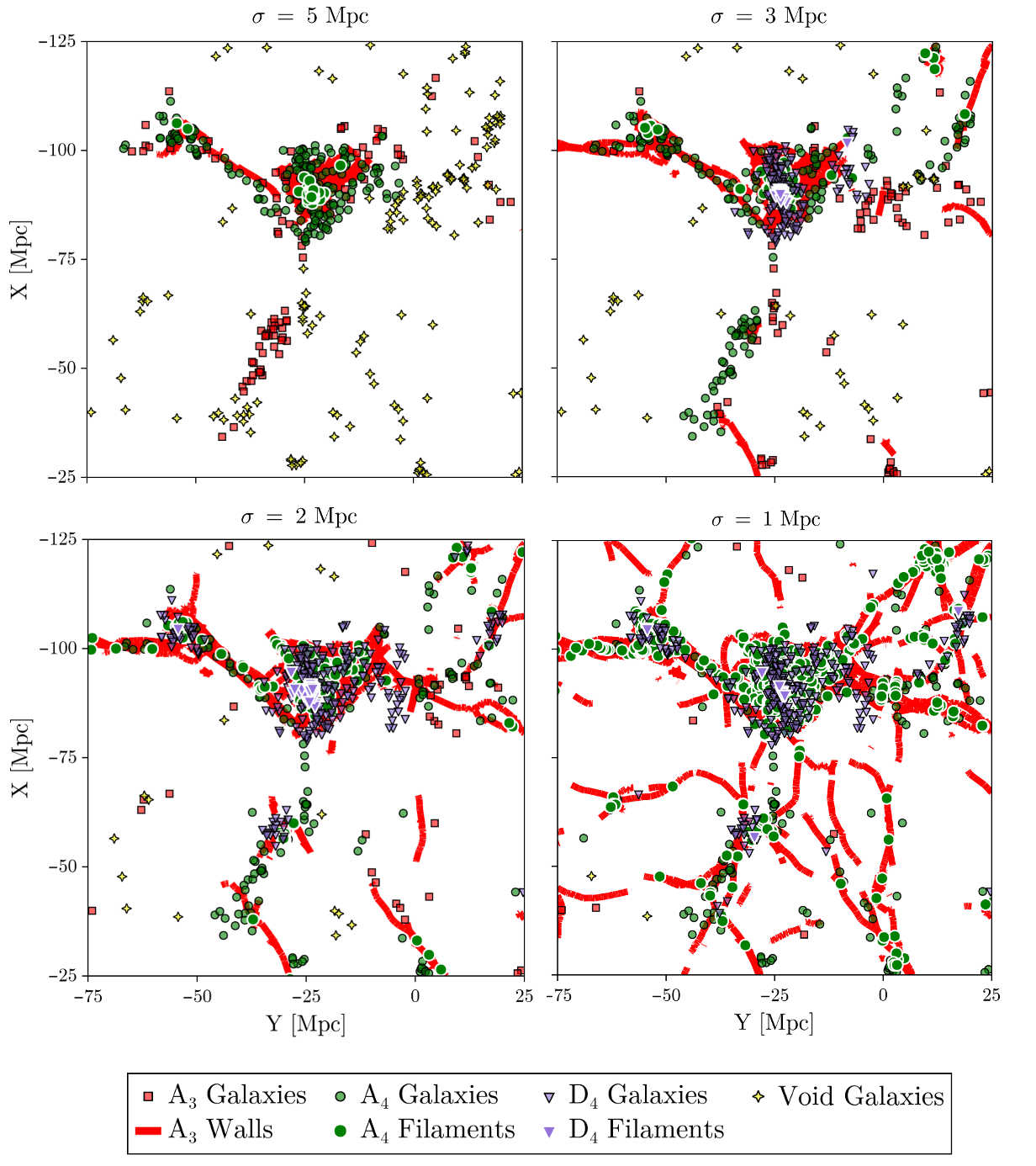
Figure 8: Scale-resolved environmental classification (by dominant caustic type) of 2M++ galaxies in the Coma Cluster region, directly linking galaxy position to multi-scale cosmic web topology.
Scale-dependent classification histograms reveal that, as the skeleton is probed at finer (A51) resolution, void assignments drop and filamentary (A52, A53) designations rise. In the Stickman region, A54 predominates at large scale, becoming comparable to A55 at A56 Mpc. For Pisces-Perseus, A57 classification dominates at all but the coarsest scales.
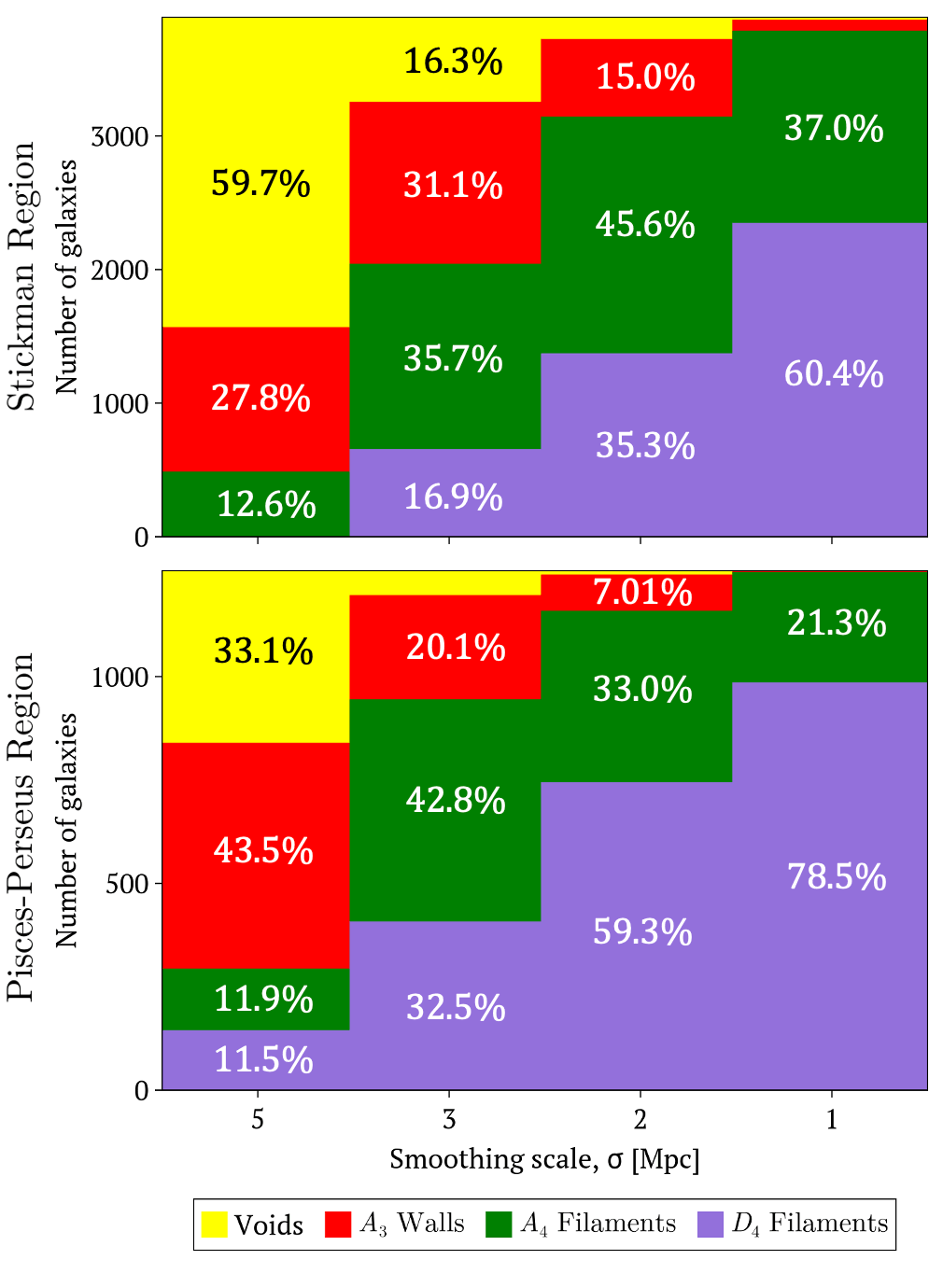
Figure 9: Stacked histograms reveal the evolution of galaxy environmental association with different caustic types as a function of smoothing scale, highlighting the A58 dominance in Pisces-Perseus.
Chronology and Merging of Caustic Filaments
The formation times of caustic features are accessible via the Zel'dovich growth factor: A59. This approach exposes the highly inhomogeneous and merging nature of filament formation: D50 filaments typically emerge in disjoint segments (D51) which subsequently merge (D52) at separate spacetime loci.
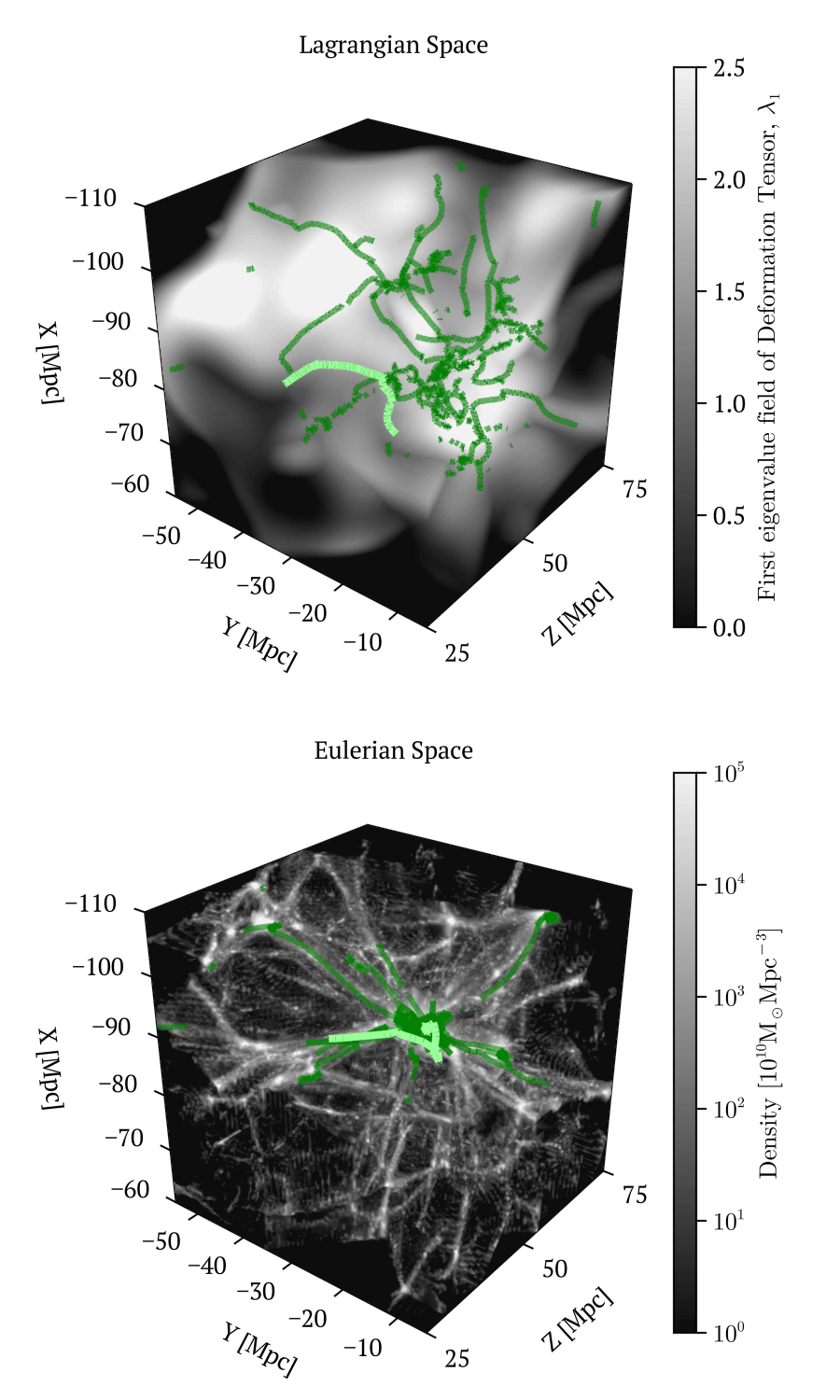
Figure 10: Spatial structure of a long D53 filament in the Coma Cluster, with color-coding by formation time showing complex merging and stretching as one moves from Lagrangian to Eulerian space.
A direct mapping of filamentary skeletons colored by formation epoch reveals significant temporal and topological heterogeneity, with late-forming D54 filaments constituting a non-negligible fraction in dense supercluster cores. Cumulative formation time distributions further quantify systematically earlier formation for walls and for coarser-scale features, consistent with hierarchical D55CDM growth.
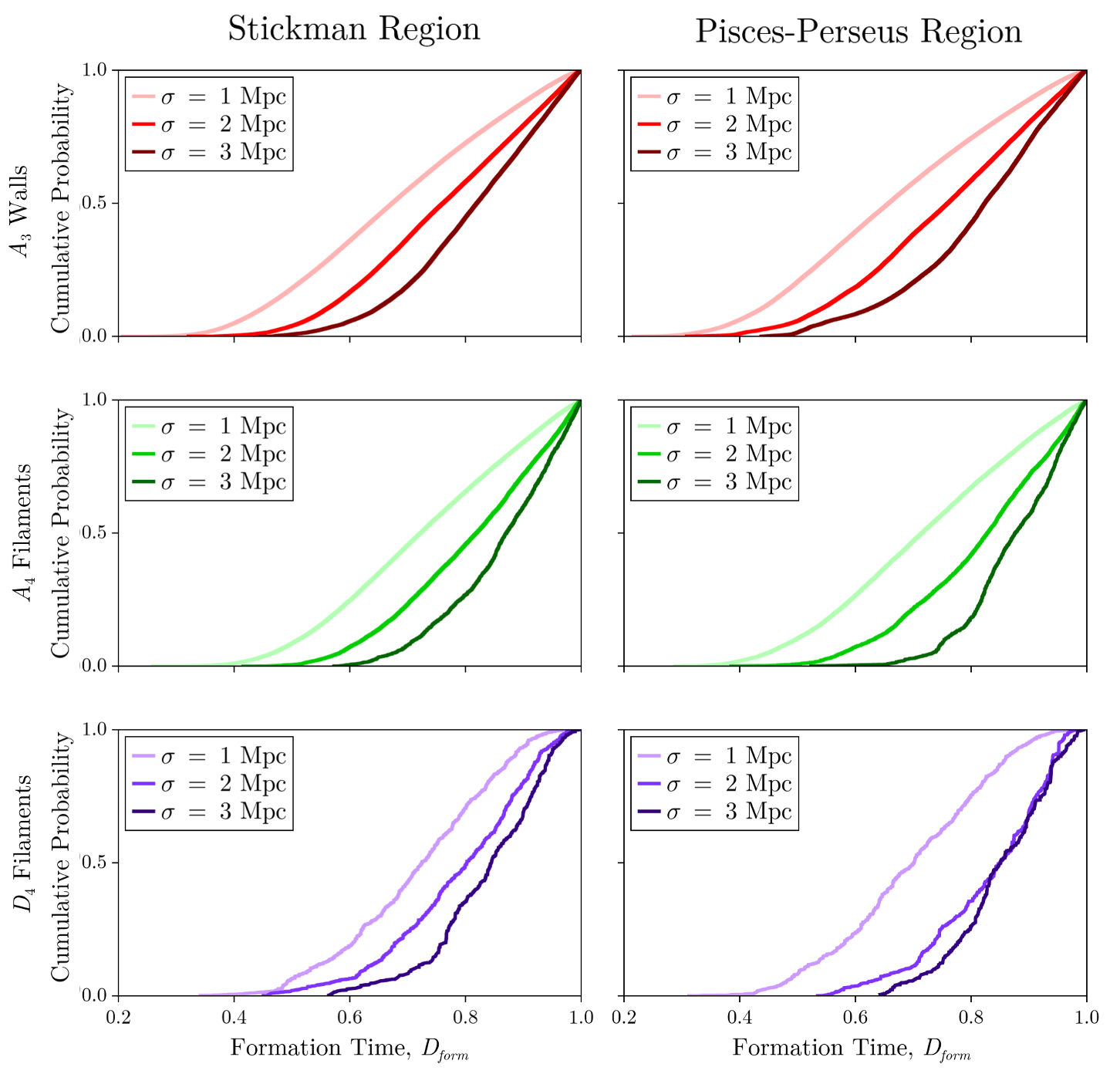
Figure 11: Cumulative formation time distributions for walls, D56, and D57 filaments in the Coma and Pisces-Perseus regions at varying smoothing scales.
Implications and Future Prospects
The work's most significant implication is the ability to identify and characterize two topologically distinct classes of filaments (D58 and D59), with differing formation histories and environmental dominance. This not only augments the theoretical understanding of cosmic web connectivity but also opens observational avenues for linking galaxy properties—such as morphology, spin alignment, and star formation—to detailed caustic environment signatures.
The explicit environmental chronology (via shell-crossing) and multi-scale nesting invite further studies integrating galaxy evolution models with caustic skeleton theory. As large redshift surveys (Euclid, DESI, SKA) deliver ever deeper and broader galaxy catalogues, the techniques presented are well-placed for leveraging these datasets.
On the theoretical side, a systematic extension to nodes (A20, A21), more robust statistical samples over the multiple Manticore-Local realizations, and incorporation of baryonic effects in structure formation will be critical frontiers. Additionally, there is ample scope to extend these analyses to machine learning-based classification of cosmic environments using caustic-derived topological features.
Conclusion
This study presents a robust implementation of caustic skeleton theory on observationally constrained simulations, demonstrating the technique's predictive power for the multi-scale, multistream connectivity of the local cosmic web. The separation and environmental tracing of A22 versus A23 filaments in key cosmic structures yield new information not accessible to heuristic methods, and the chronological mapping of the formation and merger of these features provides a new axis for the study of galaxy–cosmic web interactions. This work lays out a solid theoretical and algorithmic framework, with significant implications for future analyses in both observational cosmology and theoretical galaxy formation.