- The paper introduces a data-driven POD model reduction method that reconstructs unknown initial velocities from terminal measurements, drastically cutting computational complexity.
- It employs a POD-based low-rank approximation with rigorous error bounds, achieving up to two to three orders of magnitude speedup compared to full FEM.
- Numerical experiments confirm the method's robustness under high noise and discontinuous data scenarios in both one- and two-dimensional domains.
Data-Driven Model Reduction for Backward Fractional Diffusion-Wave Equations
Introduction and Theoretical Contributions
This paper proposes a novel data-driven model reduction methodology for efficiently solving backward fractional diffusion-wave equations, emphasizing the reconstruction of unknown initial data from terminal state observations. The governing equation is the Caputo time-fractional wave equation with α∈(1,2) on a smooth bounded domain, where the unknown initial velocity a1(x) is reconstructed from noisy measurements of u(x,T). The nonlocal temporal nature (∂tα) of the fractional operator significantly increases computational burden compared to classical wave propagation, especially in high-dimensional regimes.
The central contribution is an observation system that, based on available data, defines a one-to-one mapping with the forward problem's solution in a finite-dimensional space. This reveals that low-rank model reduction for the observation system is equally valid for the forward problem, allowing significant reductions in computational complexity for inverse reconstruction without relying on solution priors (thereby avoiding inverse crime). Moreover, the paper generalizes prior adjoint/POD equivalence conditions, allowing the number of POD basis terms to exceed the number of available observation snapshots—a notable relaxation over existing literature [ZhangZhang2024pod].
Numerical Framework and Observation System
The authors recast the original fractional diffusion-wave equation to reduce computational heterogeneity and present its time-discretized version using graded meshes to accommodate initial singularities. They demonstrate that both the original "forward" and the derived "observation" systems share a common linear structure in finite dimensions, formalized via block-matrix formulations and spectral decompositions in terms of Laplacian eigenfunctions.
The observation system is defined by evolving the system with the terminal measurement q(x) as the source, leading to a replacement of the original unknown a1(x) with the known q(x) in the driving term. Through explicit analysis of these linear systems, the paper proves that finite-dimensional truncations of both systems yield solutions in the same subspace.
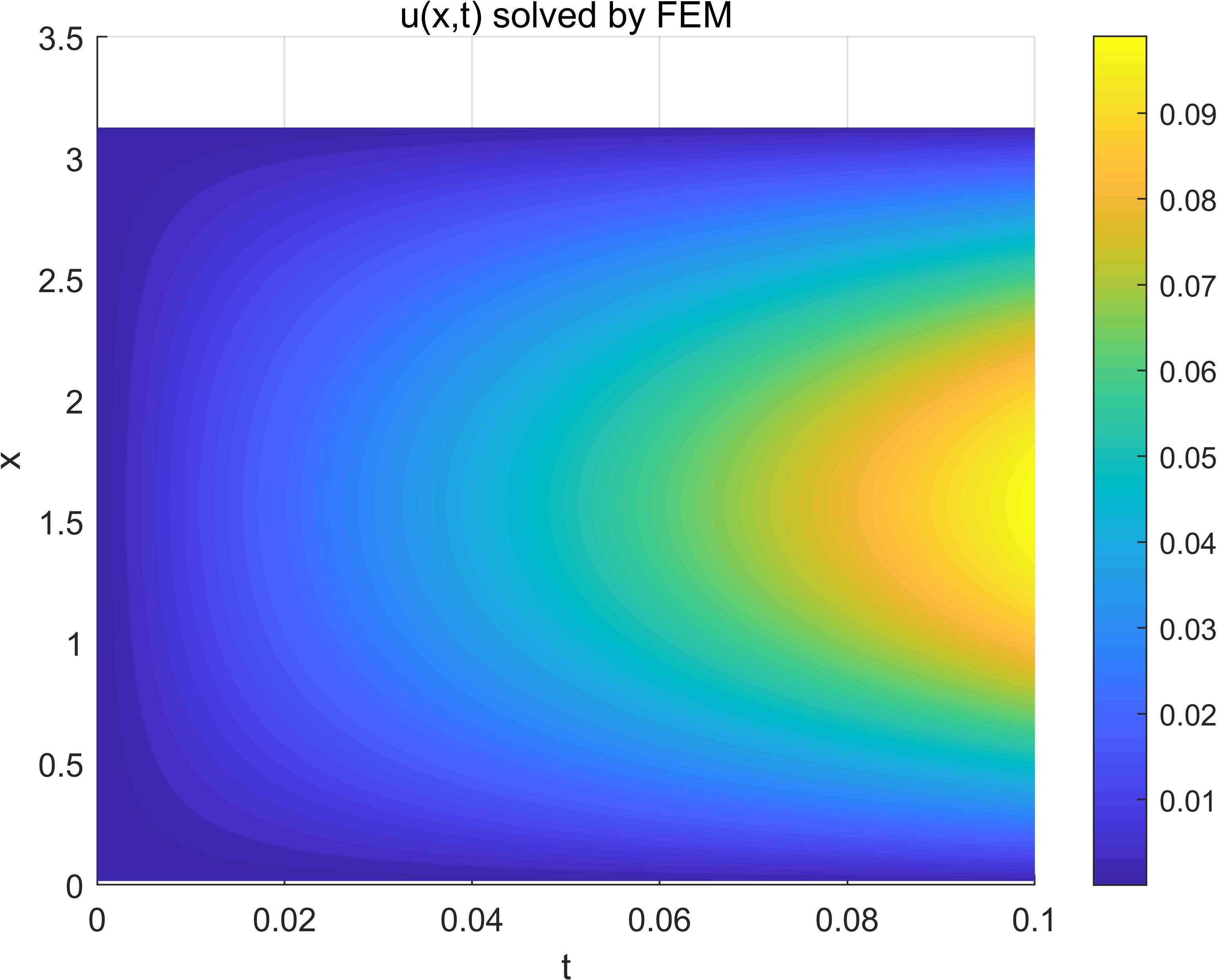
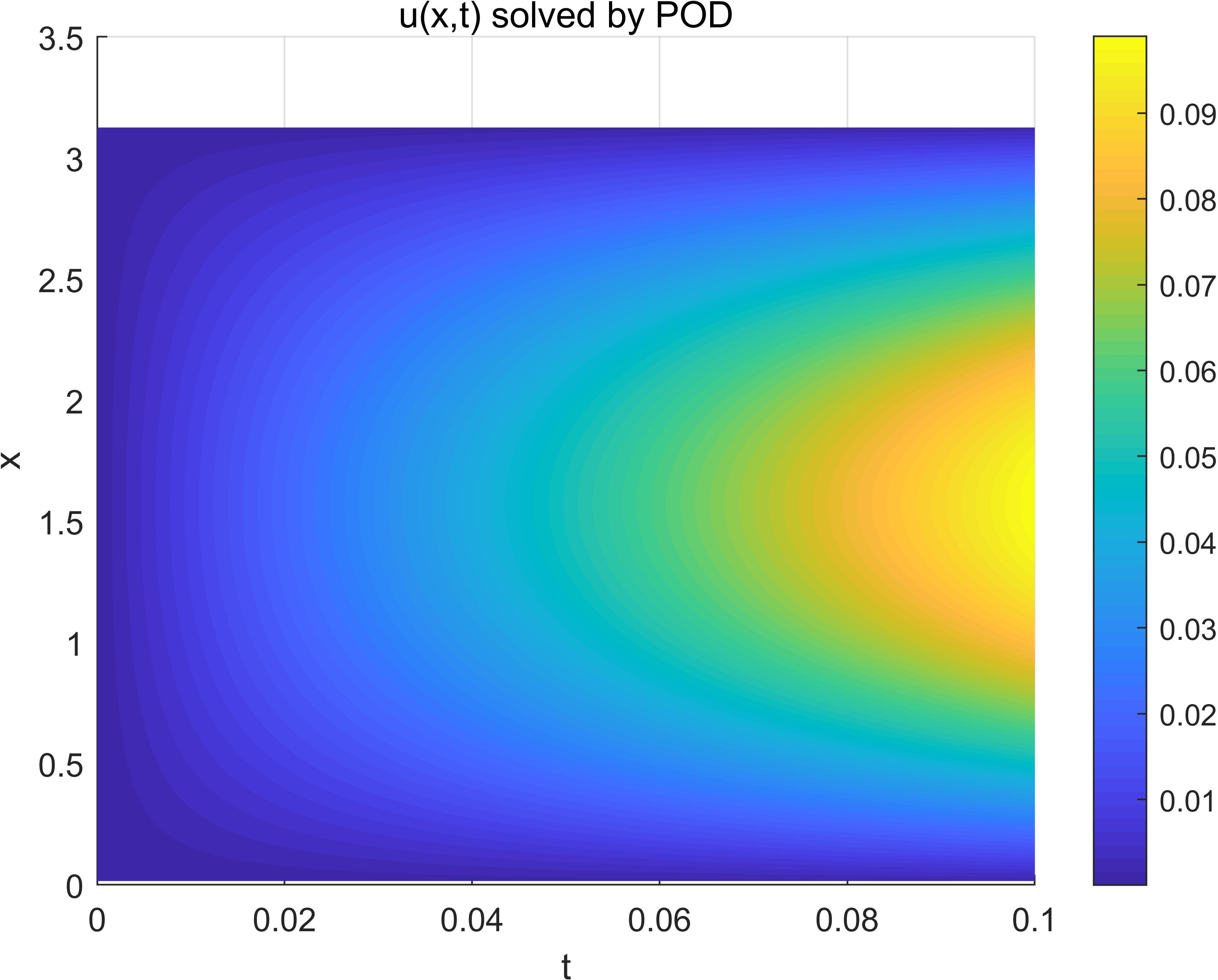
Figure 1: Finite element solution u(x,t) for the forward fractional diffusion-wave equation.
Data mollification via Tikhonov regularization is used to preprocess noisy terminal data. The optimal regularization parameter is derived with explicit scaling in terms of observation count and noise magnitude. The theoretical framework rigorously ensures that, as the number of observation points increases, expected L2 error can be made arbitrarily small.
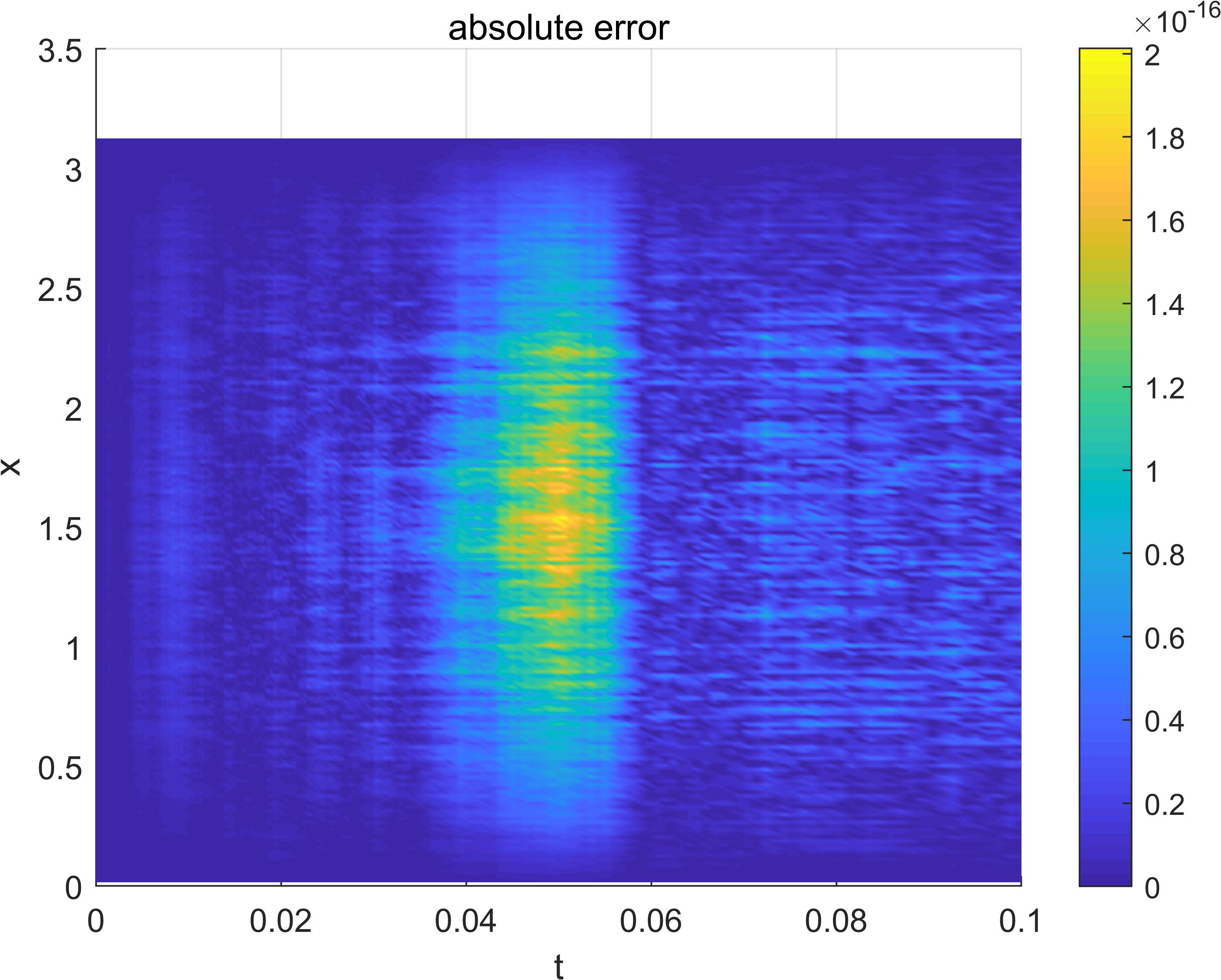
Figure 2: Absolute error map between fine-grid FEM and reduced-order POD solution, illustrating negligible loss of accuracy.
POD-Based Model Reduction
Proper Orthogonal Decomposition (POD) is employed to construct a reduced-order basis using snapshots from the observation system. By formulating and solving the corresponding eigenvalue problem for the correlation matrix of these snapshots, the dominant eigenspaces serve as the low-rank approximation space for the forward/inverse problem.
The key theoretical results include a detailed derivation of error bounds for the POD-based solution. For both forward and observation systems, the L2 error between the finite element and POD solutions decays as a function of the truncated eigen-spectrum, a1(x)0, and the order a1(x)1 of the fractional derivative:
a1(x)2
where a1(x)3 is the number of truncated spectral modes and a1(x)4 are the discarded eigenvalues.
Algorithmic Implementation and Numerical Experiments
The iterative algorithm for initial value reconstruction proceeds as follows: (1) sample the terminal data quasi-uniformly; (2) mollify to obtain denoised, regularized observations; (3) generate the POD space by running the observation system with regularized data; (4) perform the inverse reconstruction by optimizing in the reduced space.
The numerical experiments substantiate the methodology's effectiveness:
- For canonical a1(x)5, the POD-based solver achieves maximum absolute errors a1(x)6, with computational time one-tenth of the full FEM. This is reflected in the direct comparison between methods:
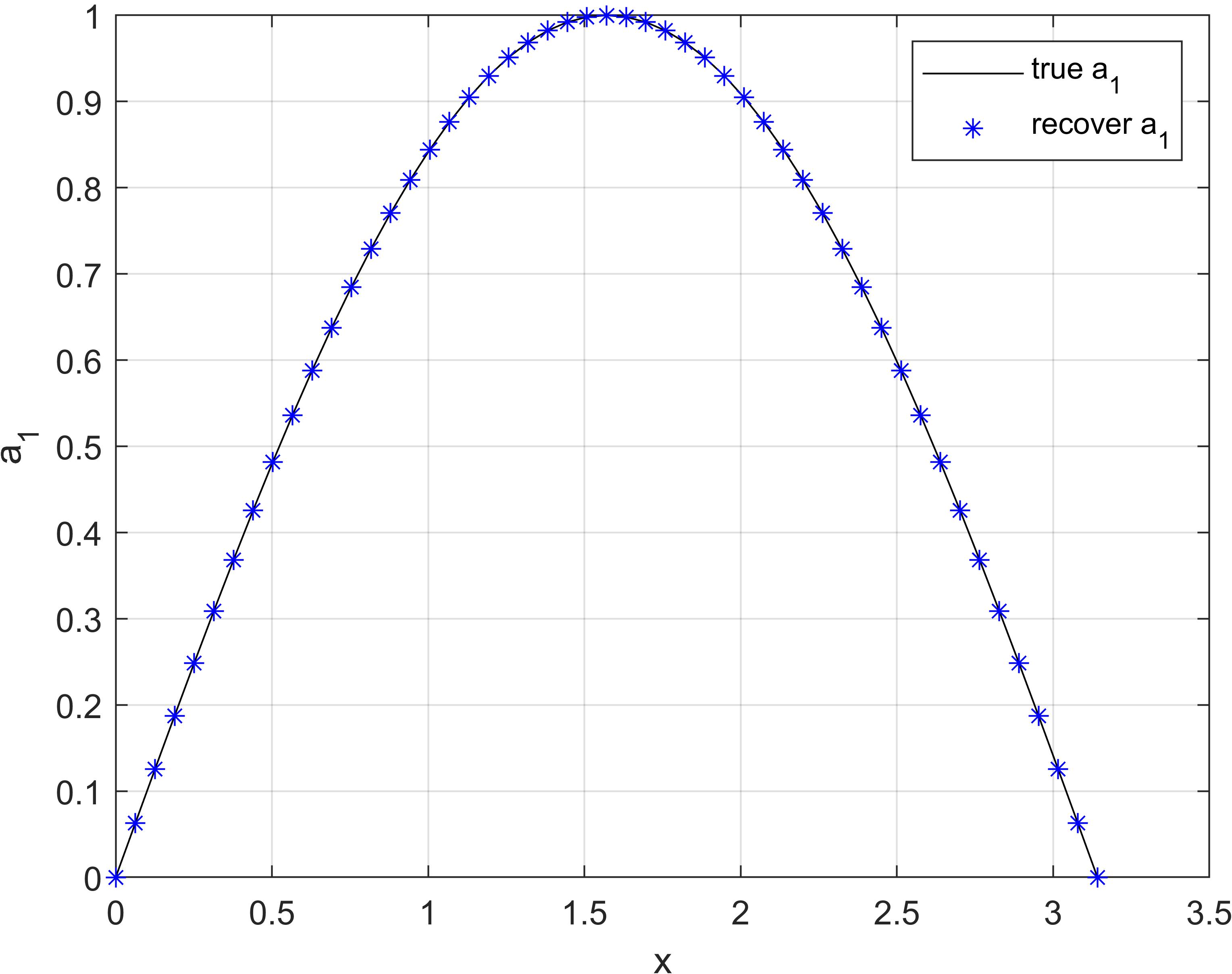
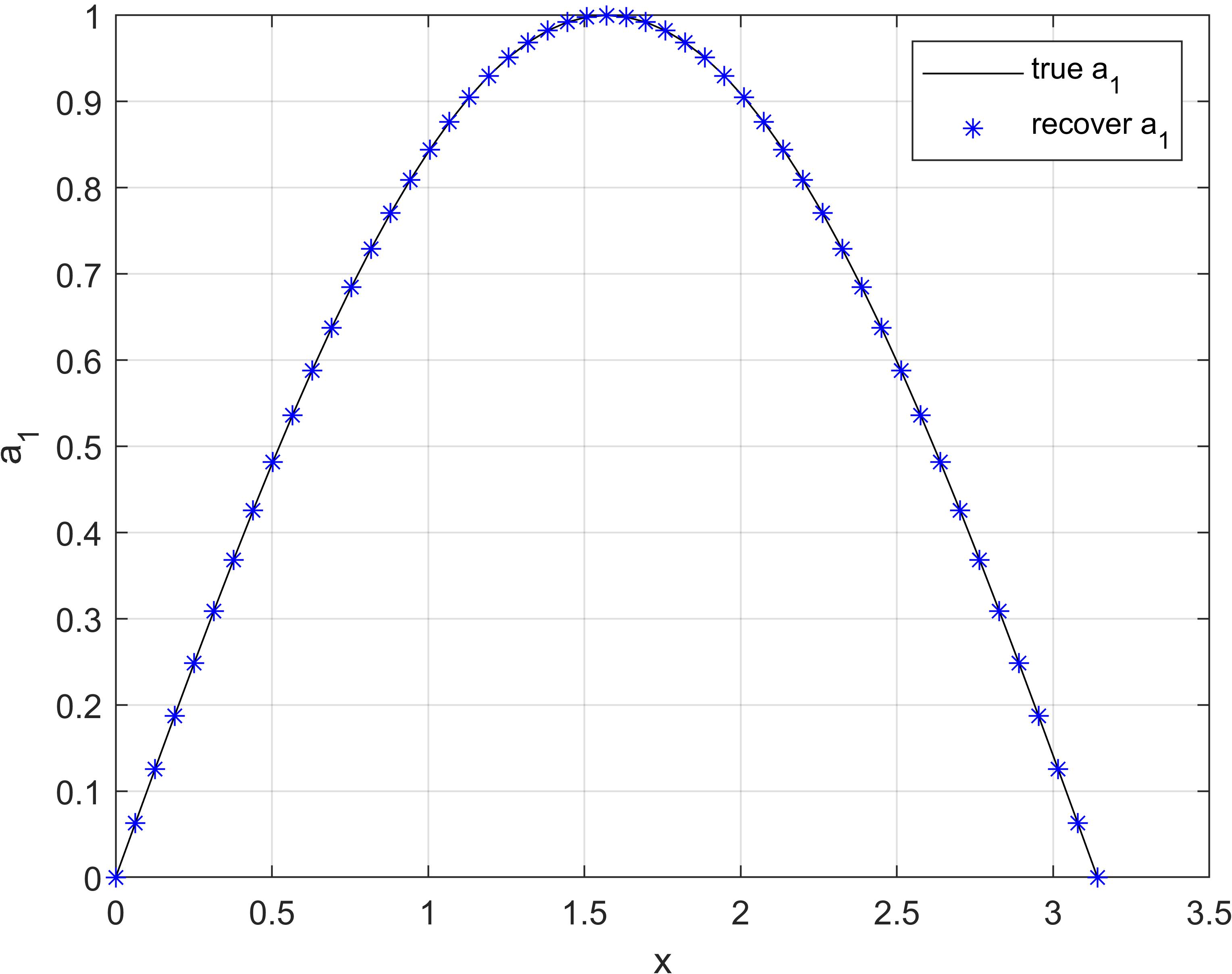
Figure 3: Recovery of a1(x)7 using the standard FEM as in [LiZhang2025], noise-free case.
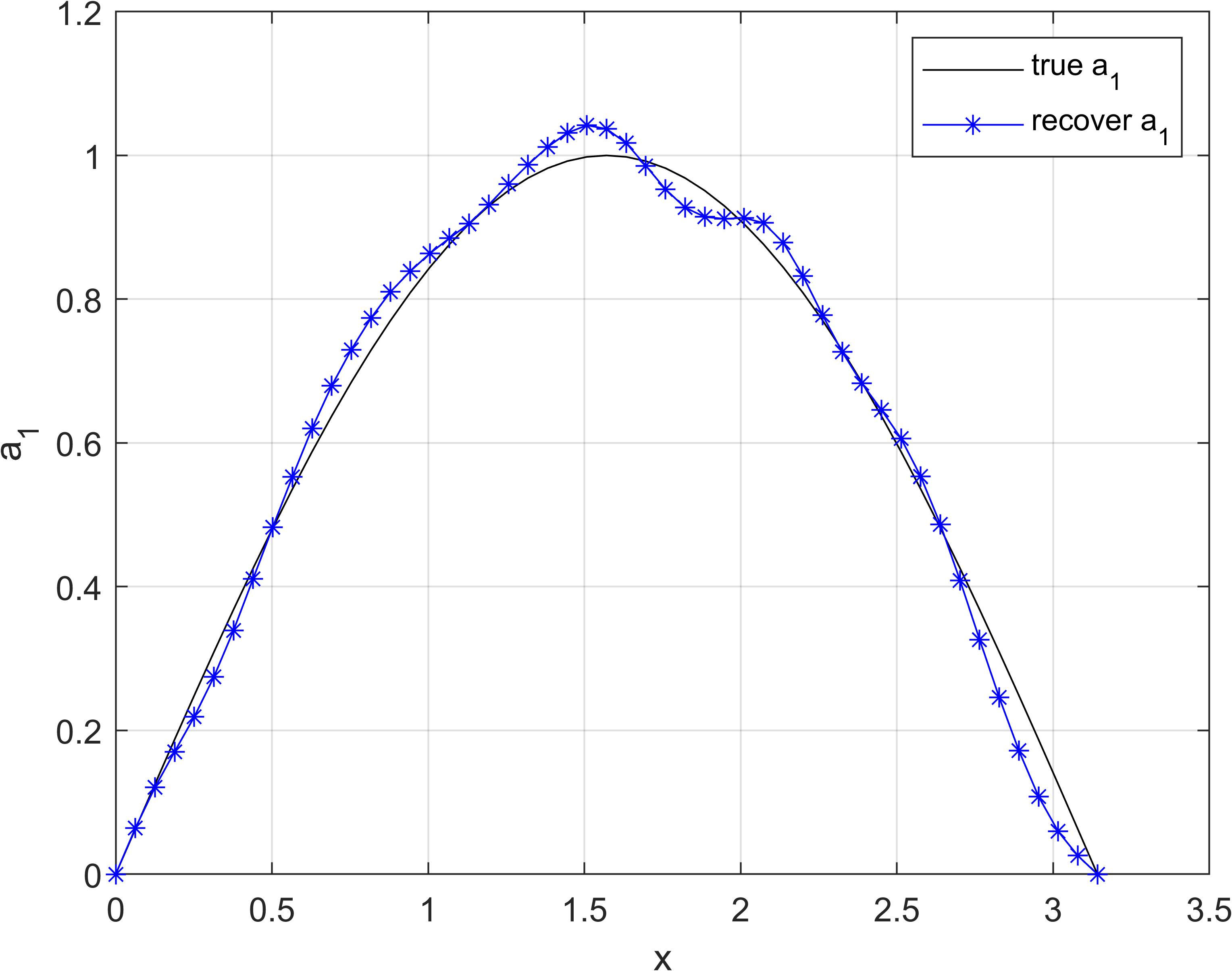
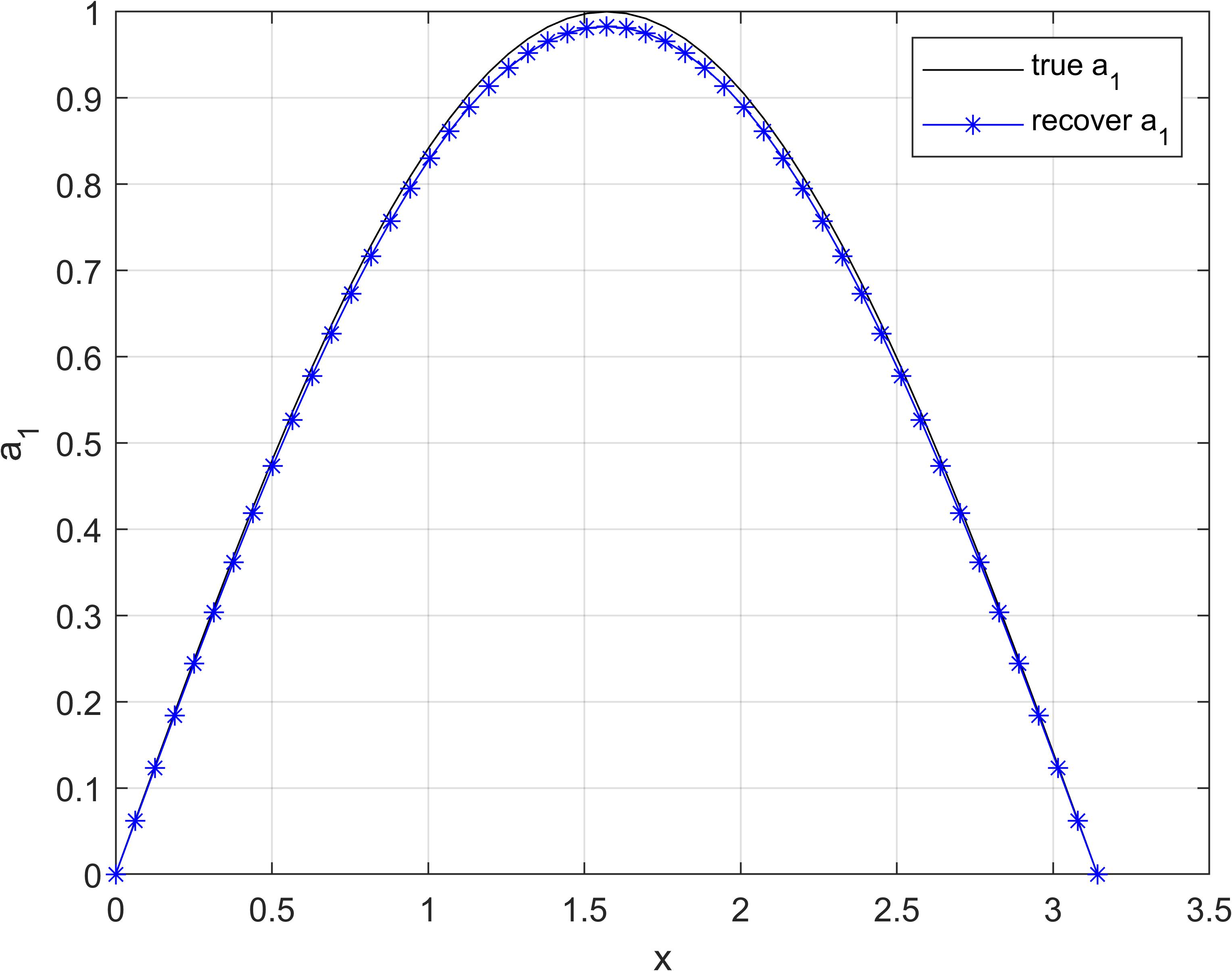
Figure 4: POD-based recovery of a1(x)8, noise-free case.
Under noise contamination (up to a1(x)9 relative noise), the regularized POD method remains robust, vastly outperforming the standard approach in terms of speed (e.g., u(x,T)0 seconds vs u(x,T)1 seconds for noisy data).
In the discontinuous initial data scenario (piecewise constant u(x,T)2), the inverse problem remains challenging due to error sensitivity, but the POD approach still enables pronounced speedups:
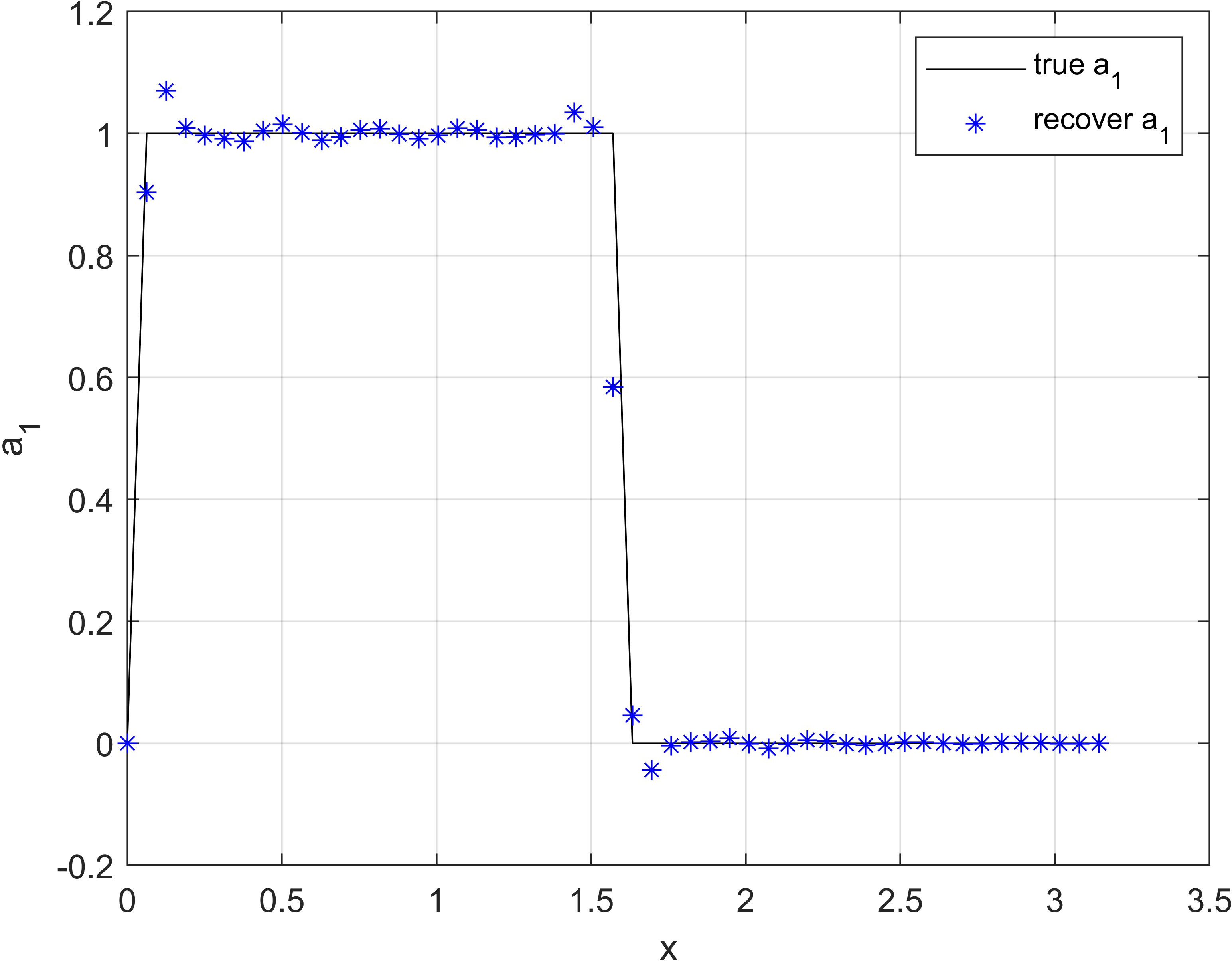
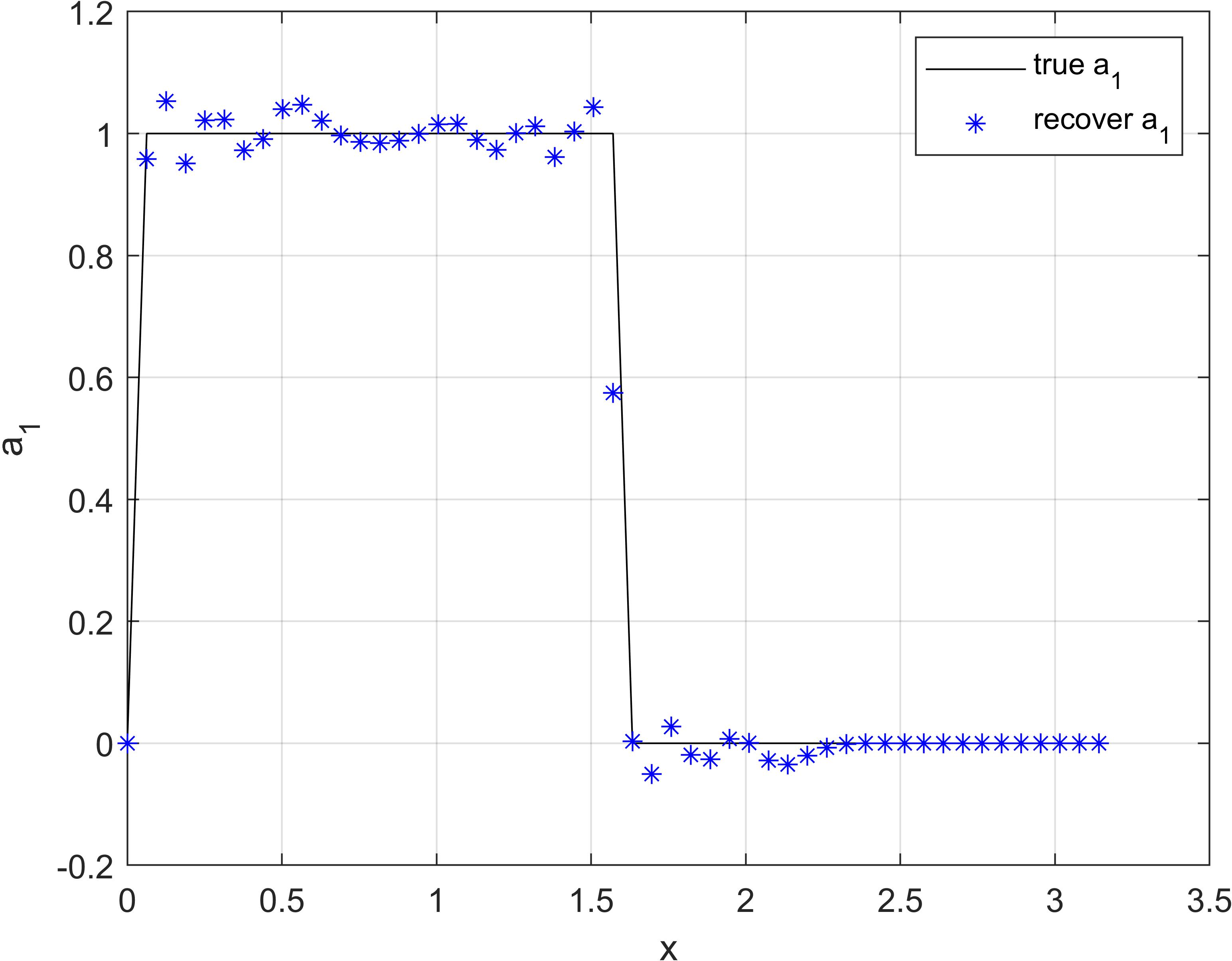
Figure 5: FEM-based recovery of discontinuous u(x,T)3, noise-free data.
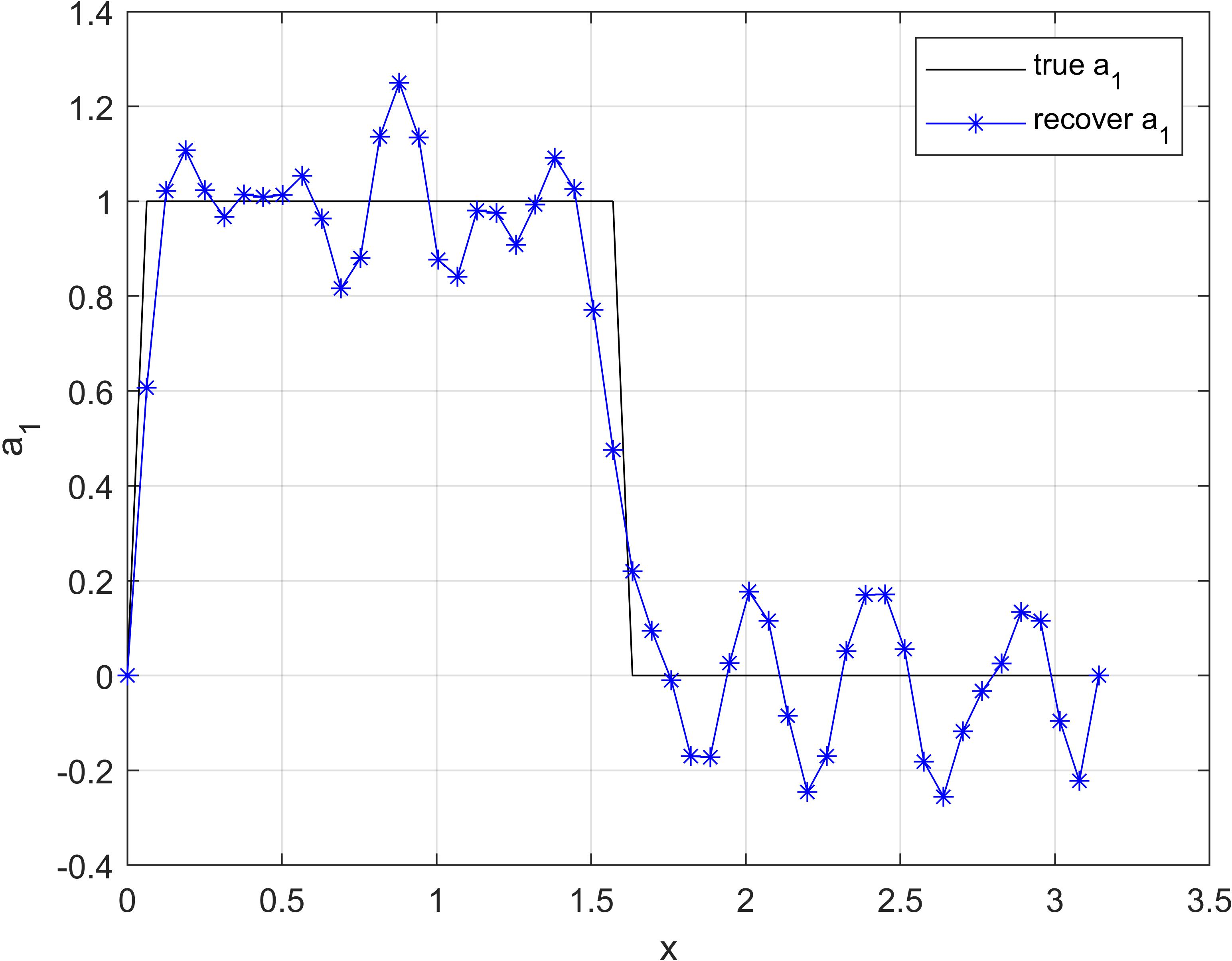
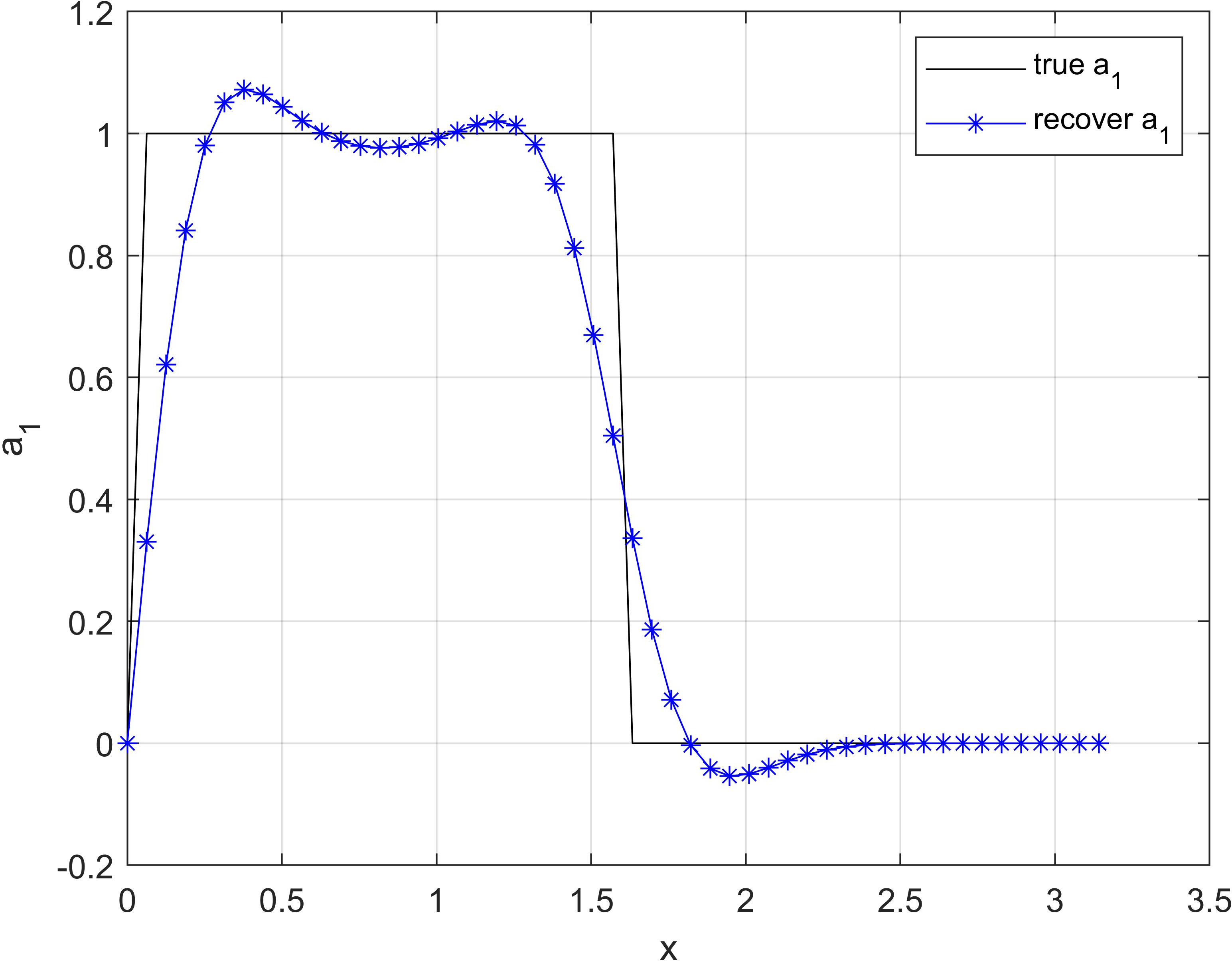
Figure 6: POD-based recovery of discontinuous u(x,T)4, noise-free data.
The experiments are extended to two-dimensional domains with strong noise (u(x,T)5), again showing minimal loss in reconstruction fidelity and two to three orders of magnitude speedup.
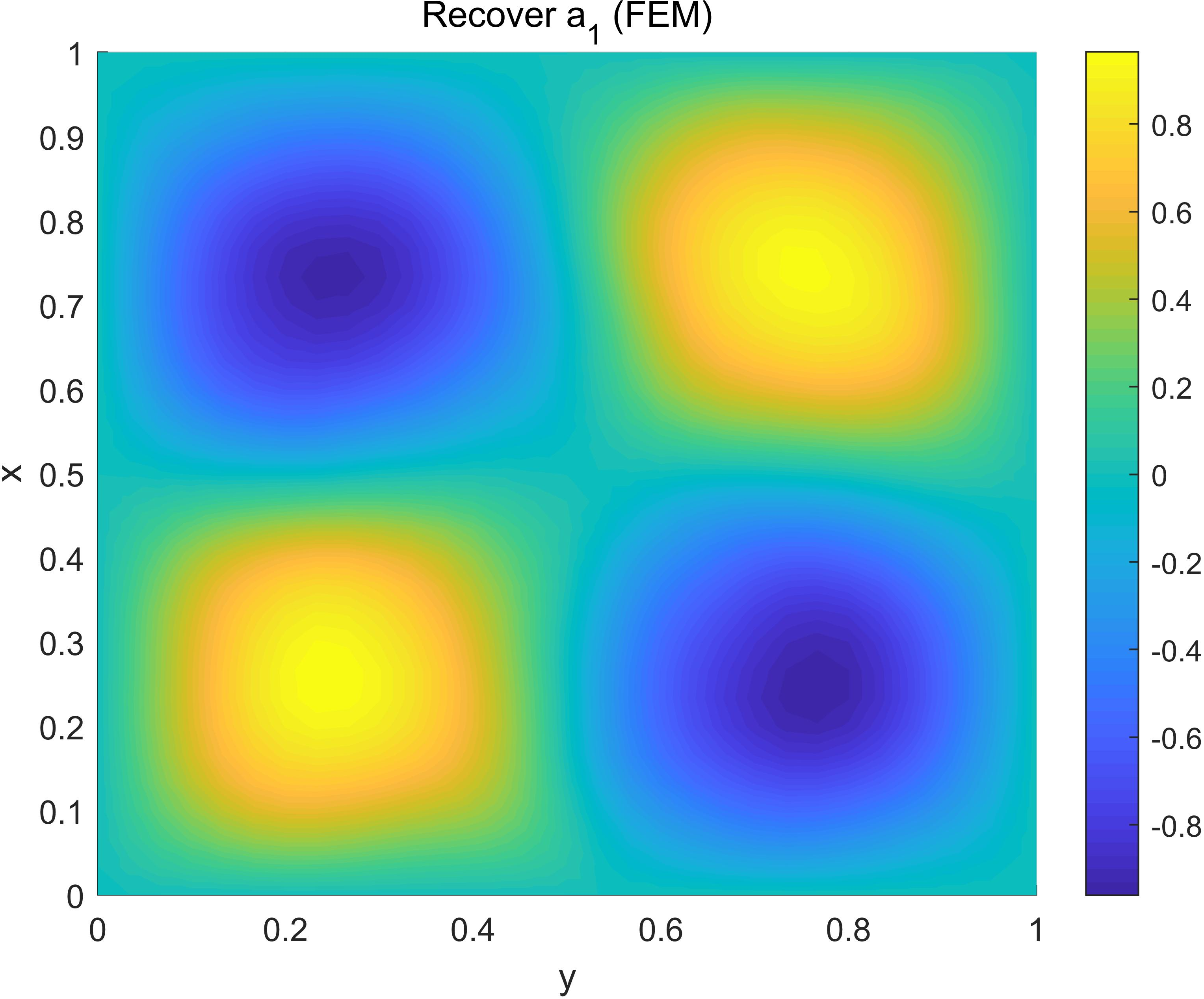
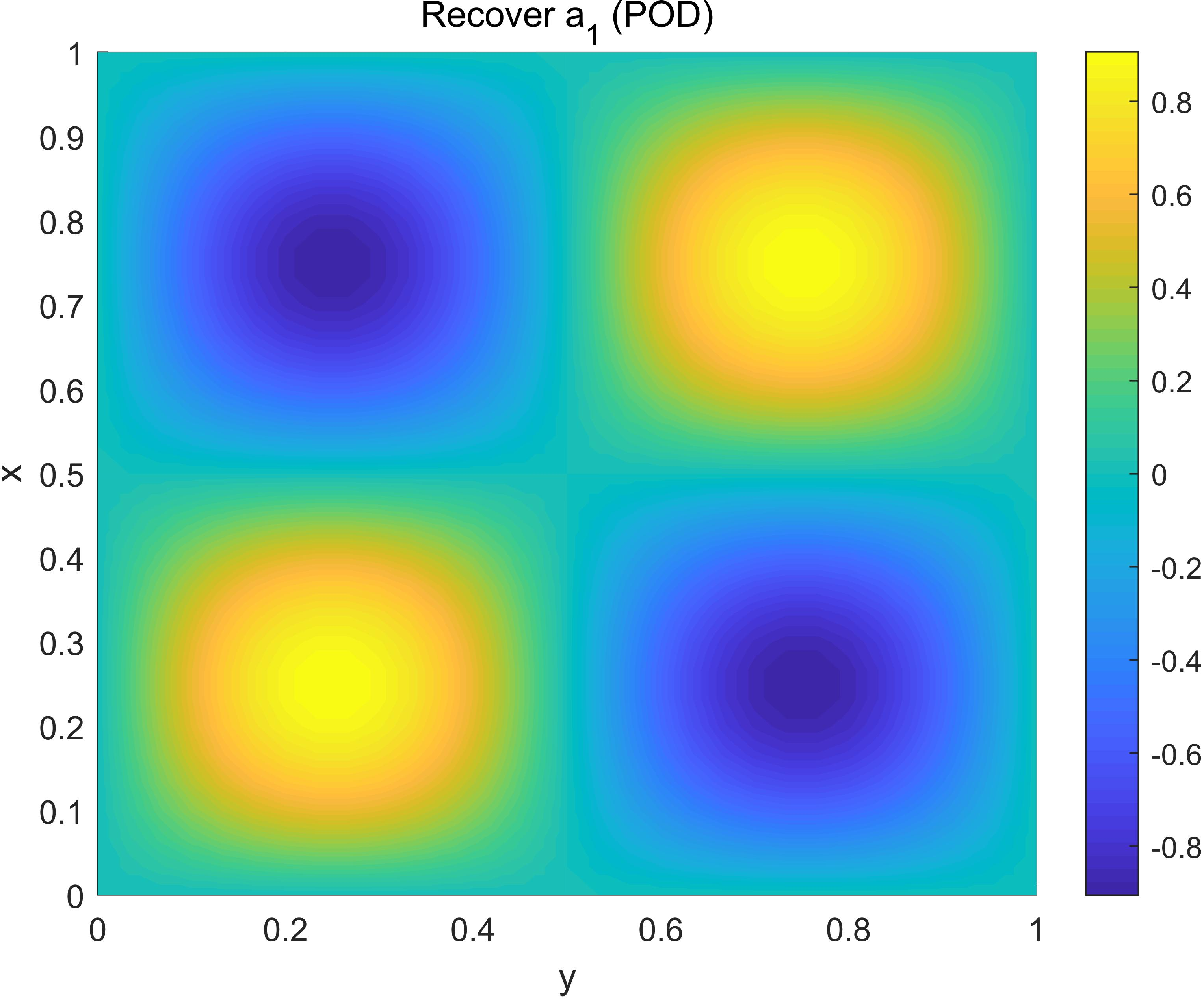
Figure 7: FEM-based recovery in 2D for u(x,T)6, high noise.
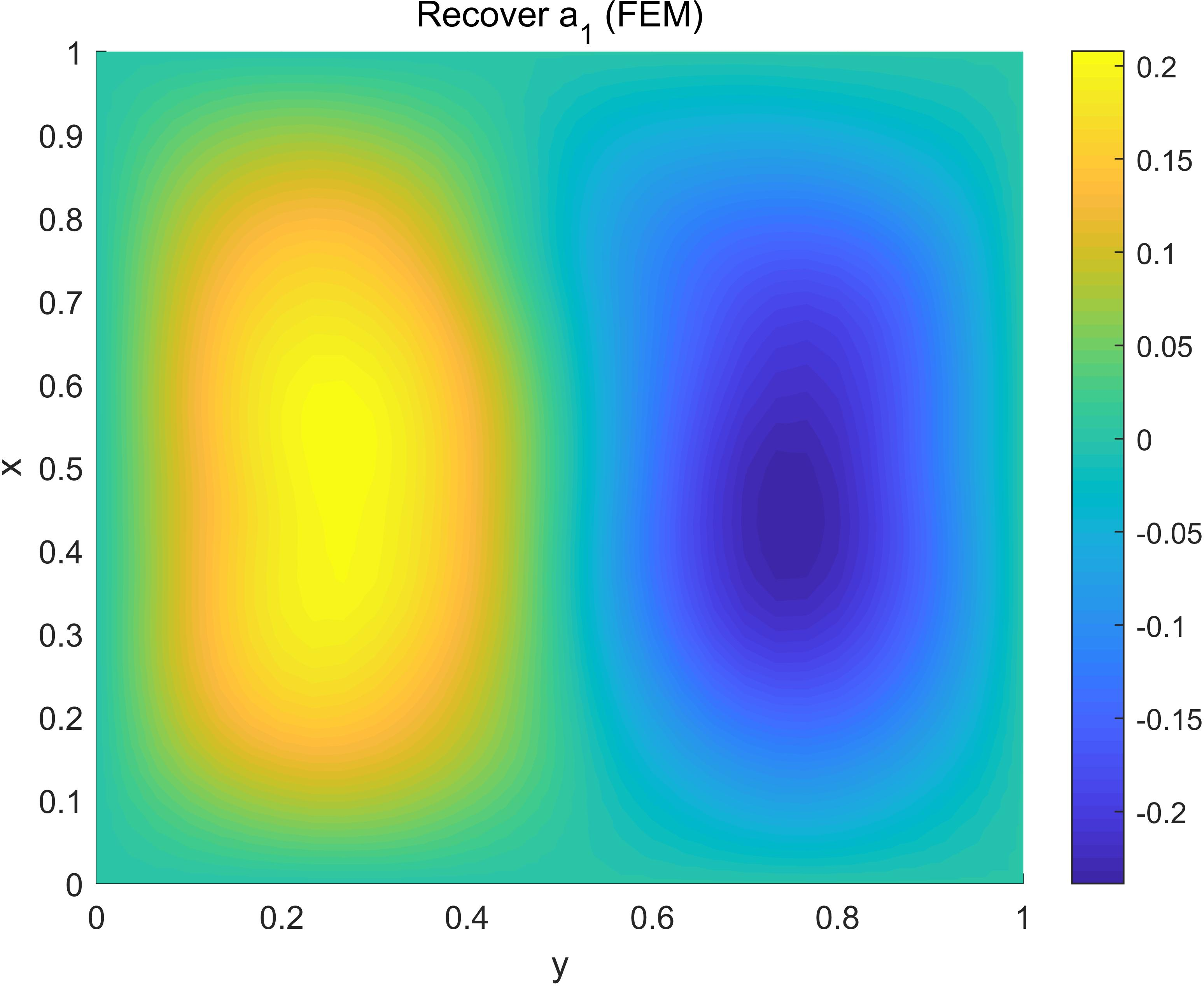
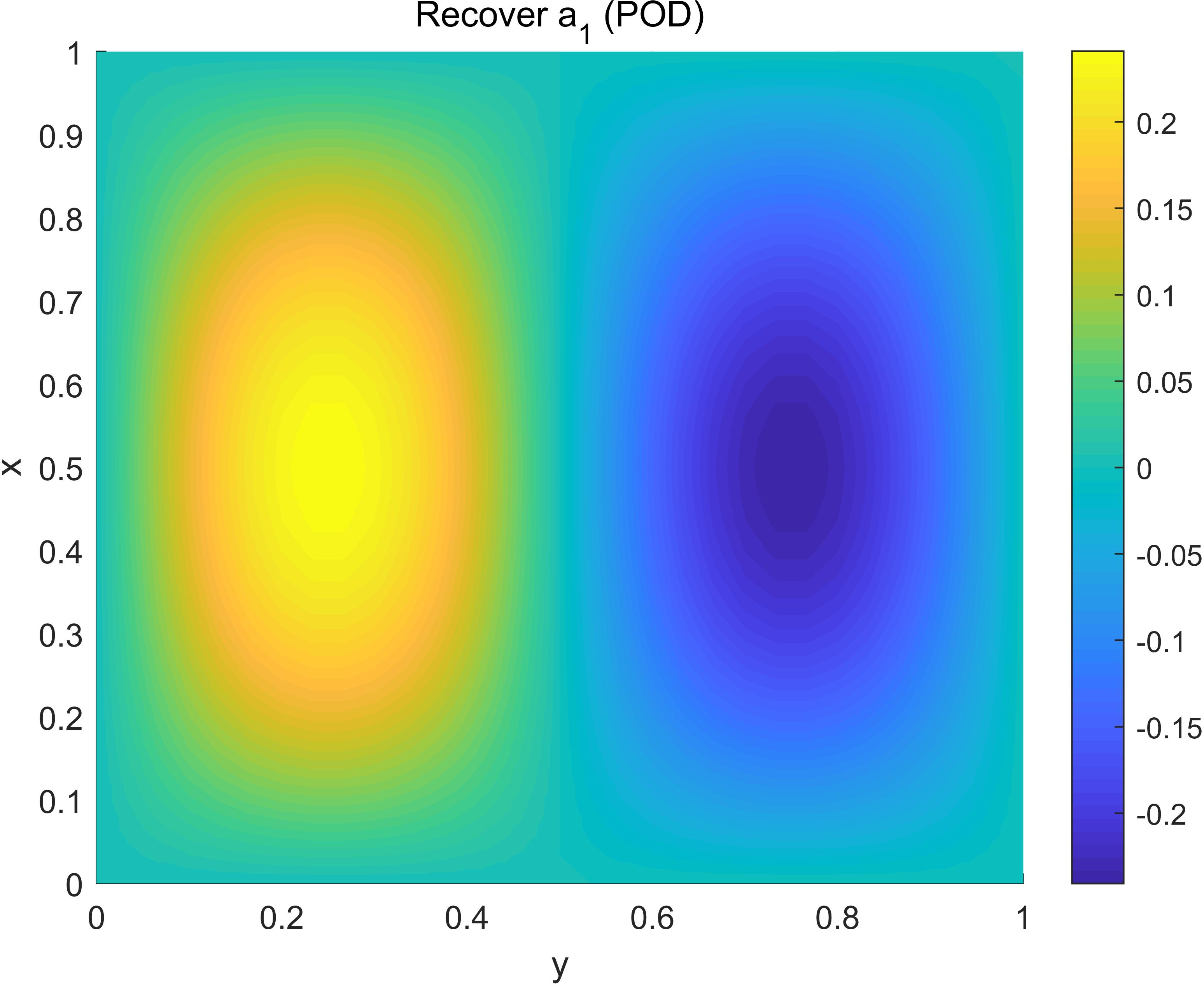
Figure 8: POD-based recovery in 2D for u(x,T)7, high noise.
POD Basis Visualization and Solution Structure
The POD basis functions computed from the observation-system snapshots concretely illustrate the model's intrinsic dimensionality structure. Even with five POD modes, accurate representation of both smooth and discontinuous u(x,T)8 is achieved.
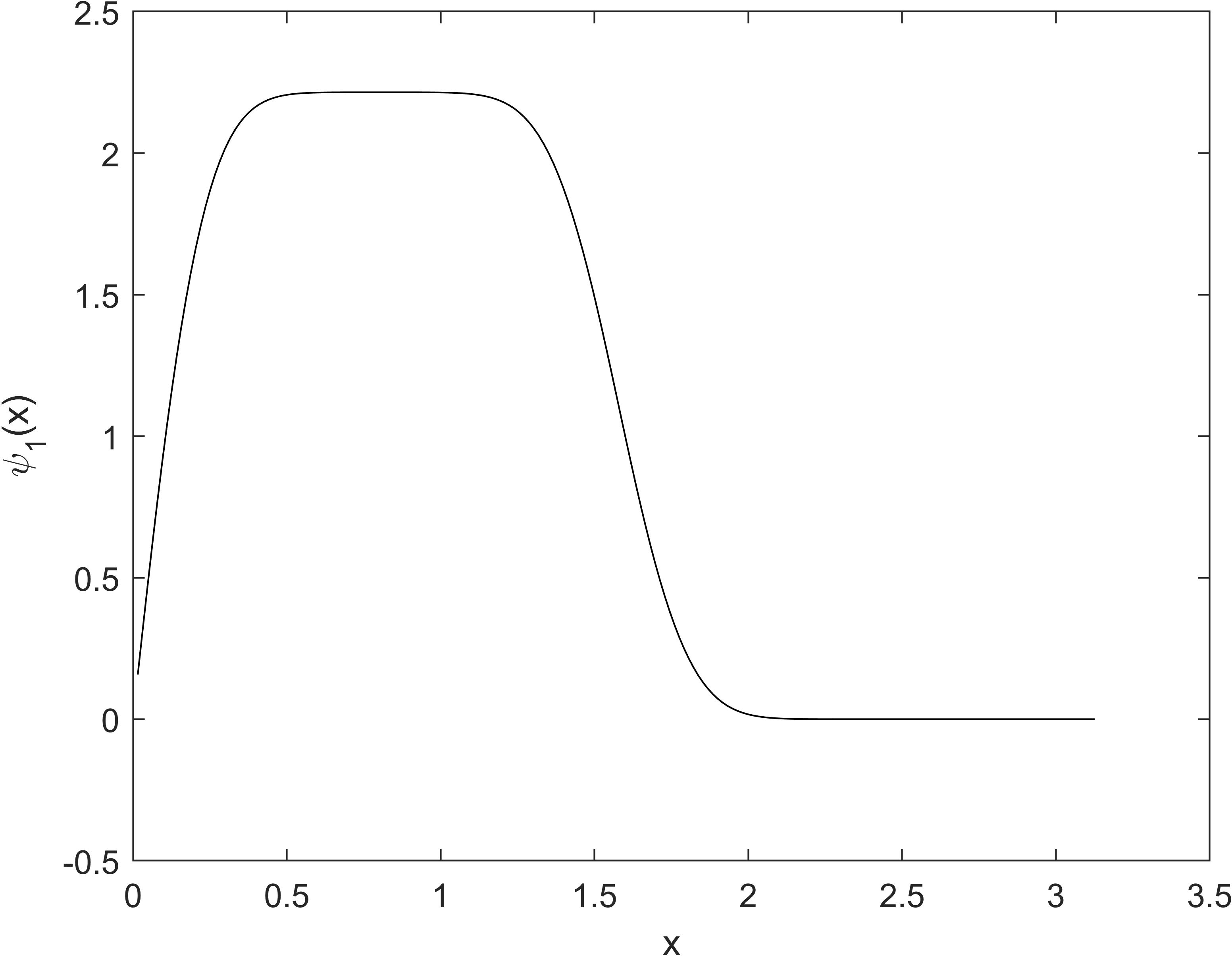
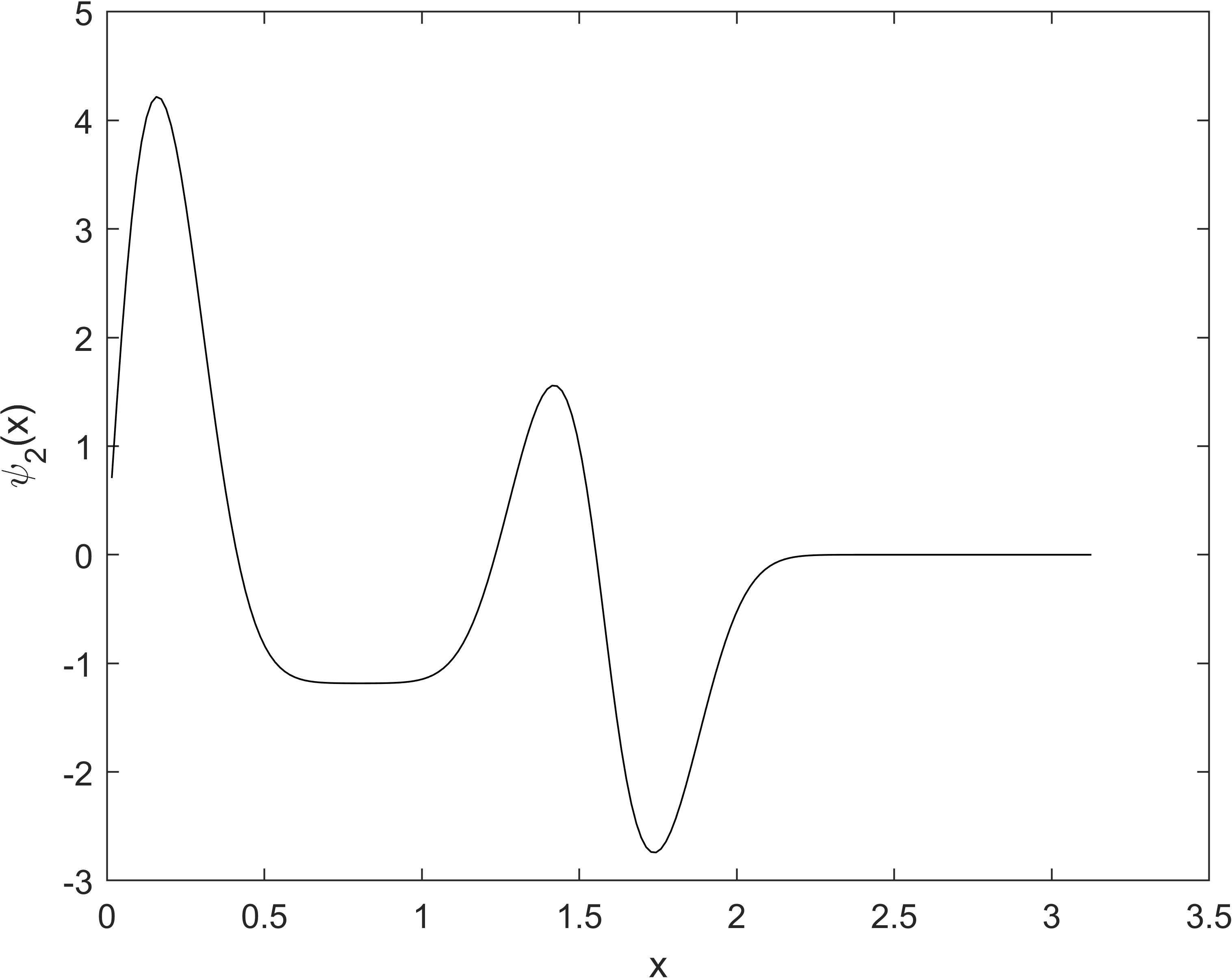
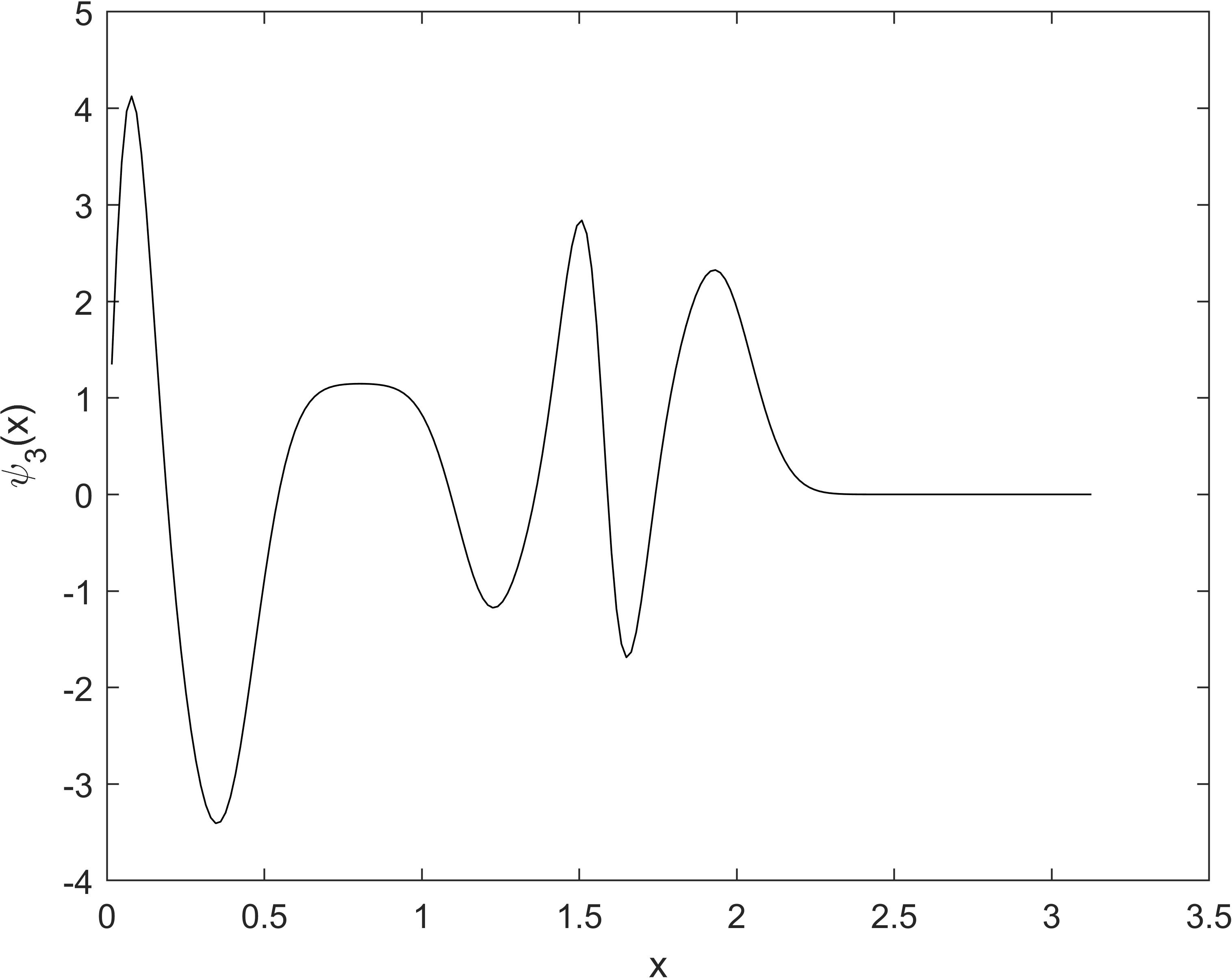
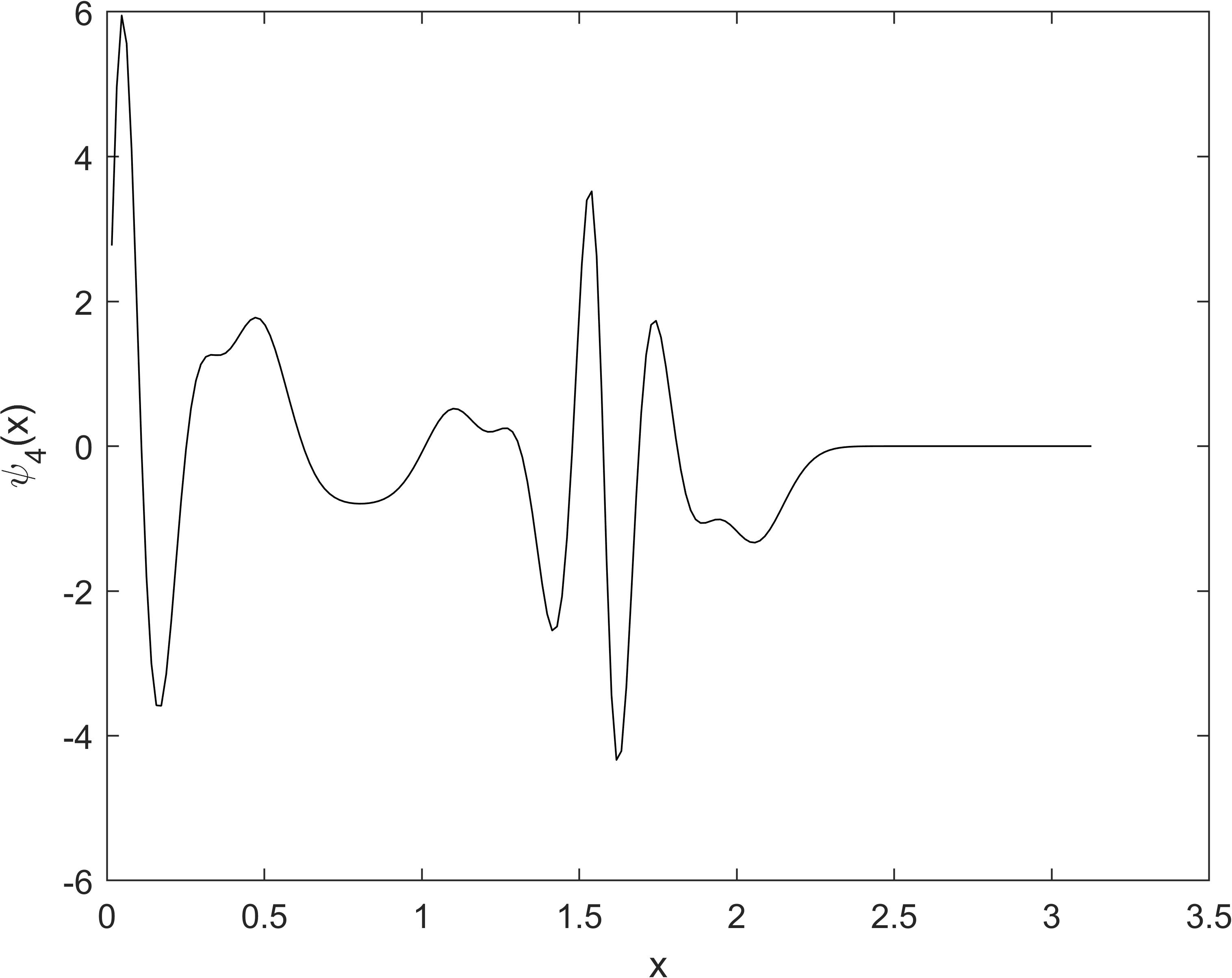
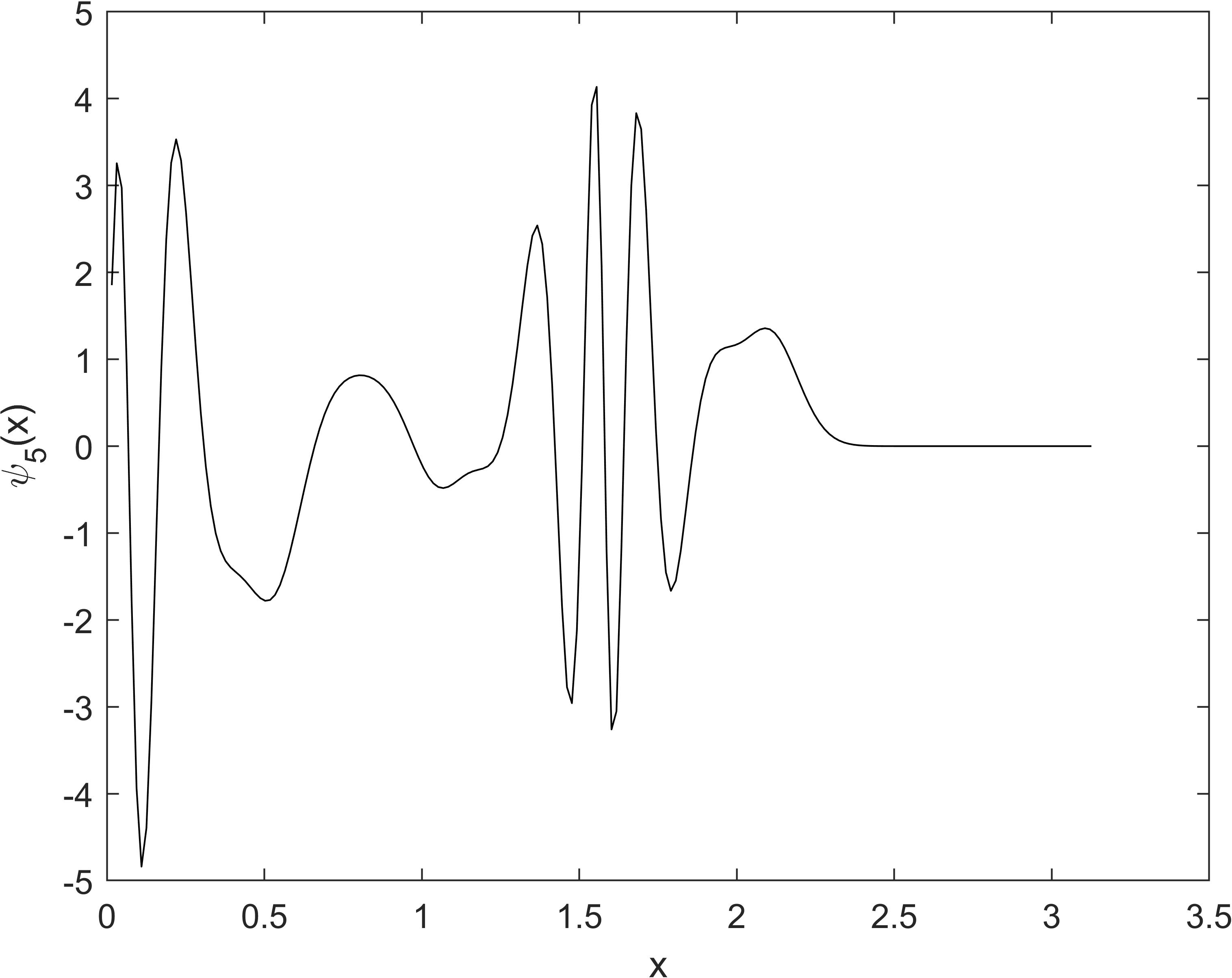
Figure 9: Example of a POD basis function u(x,T)9 extracted from noisy 1D observation data.
This result demonstrates the potential of the proposed model reduction to generalize across a wide spectrum of problem geometries and noise regimes.
Implications and Future Perspectives
The proposed data-driven model reduction framework addresses efficiency and stability bottlenecks associated with the solution of backward time-fractional problems, particularly those arising from the nonlocal temporal structure of the Caputo derivative and the ill-posedness of inversion. The relaxation of POD equivalence constraints extends the theoretical foundation for the use of observation-derived snapshots, highlighting their sufficiency in constructing reduced spaces for a variety of linear inverse problems. The strong numerical results confirm that POD model reduction can maintain high accuracy while reducing time-to-solution by up to two or three orders of magnitude, even in highly noisy and high-dimensional settings.
The methodology provides a template for future research on model reduction for other classes of time-fractional and parabolic inverse problems. Immediate directions include:
- Extension to nonlinear inverse source problems or parameter estimation.
- Adaptation for online adaptation as new data arrives (online POD/greedy algorithms).
- Integration with machine learning surrogates for further efficiency gains in large-scale inverse problems.
- Analysis of limit cases (∂tα0 approaching 1 or 2), and the transferability to non-Caputo derivative settings.
Conclusion
This paper introduces a robust and efficient data-driven POD model reduction approach for backward fractional diffusion-wave equations. By leveraging theoretical equivalence between forward and observation systems, the method constructs intrinsic low-rank approximation spaces from measurement data, avoiding inverse crime and drastically improving computational efficiency. Significant theoretical relaxations, rigorous error bounds, and extensive numerical results—including under strong noise and discontinuous initial data—establish this approach as a versatile tool for large-scale inverse problems governed by time-fractional PDEs (2604.22211).

