- The paper demonstrates nanophotonic engineering to manipulate many-body states in Kerr soliton microresonators, enabling deterministic tuning between Mott-insulator and superfluid regimes.
- It employs a driven-dissipative Bose–Hubbard framework and spectral CV metrics to quantitatively capture phase transitions influenced by bandgap strength and pump detuning.
- Experimental results reveal robust control over spectral coherence and power output, paving the way for programmable photonics and quantum-inspired information processing.
Nanophotonic Control of Many-Body States in Kerr Solitons
Introduction
The paper "Nanophotonic control of collective many-body states in Kerr solitons" (2604.22039) addresses the interplay between nanophotonic engineering and many-body physics in driven-dissipative Kerr soliton microresonators. Leveraging the paradigm of the Bose–Hubbard model, the authors demonstrate deterministic access and control over Mott-insulator and superfluid-like regimes within a synthetic lattice of coupled bosonic modes—all facilitated by nanoscale photonic-crystal resonator (PhCR) structures. This approach establishes new capabilities for precision-controlled nonlinear dynamics in microresonator frequency combs, with significant implications for programmable photonics and quantum-inspired information processing.
Theoretical Framework: Driven-Dissipative Bose–Hubbard Physics in Photonic Lattices
The central theoretical tool is a quantum Hamiltonian formalism applied to coupled resonator modes under coherent drive and loss. The PhCR introduces a lattice bandgap (BG) by nanoscale modulation of the resonator, enabling tunable coherent backscattering and hybridization of clockwise (forward, aμ) and counterclockwise (backward, bμ) modes. The total system Hamiltonian is
H^tot=H^free+H^pump+H^Kerr+H^BG,
where H^Kerr encodes both self-phase modulation (SPM) and cross-phase/four-wave-mixing (FWM) nonlinear interactions. Critical control variables are the BG coupling strength γμ and the pump-cavity detuning α.
The spectral occupation of mode amplitudes ψμ=(aμ,bμ) traces a phase diagram, parameterized by the competition between on-site Kerr nonlinearity and inter-site tunneling, directly analogous to the canonical Mott-insulator to superfluid transition.
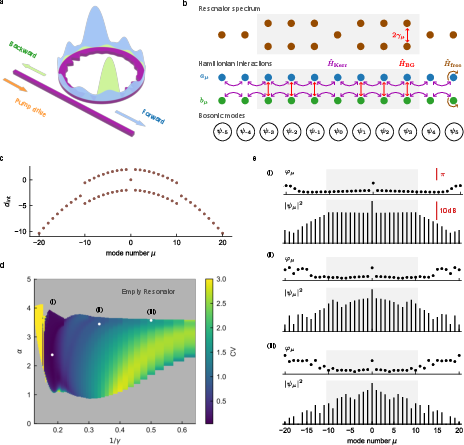
Figure 1: Schematic of the two-component soliton, lattice bandgap implementation, and simulated phase diagram revealing the transition from Mott insulator (spectrally flat, phase-fragmented) to superfluid (coherent, spectrally modulated) regimes with increasing 1/γ.
Experimental Realization and Signatures of Many-Body Phases
The experimental platform uses tantala-based PhCRs engineered for both extended lattice and pump-localized BGs, facilitating precise spectral control via nanofabrication-determined γμ. Direct measurement of forward and backward spectra, enabled by a dual-port design, provides access to mode-resolved comb intensity distributions.
Experimental results exhibit:
- Superfluid regime: Low BG (small γ) leads to pronounced spectral modulation in the comb (large coefficient of variation, CV), indicative of enhanced cross-mode coherence via FWM and CPM.
- Mott-insulator regime: High BG (large bμ0) yields near-uniform, flattened spectral envelopes (low CV), and the spatial phase profile of the mode amplitudes indicates fragmented, locally rigid phase relationships—both characteristic of Mott insulators.
This transition is observed in both 20-mode and 8-mode lattice BG devices. Simulations based on the mean-field Lugiato-Lefever equation (LLE) with the full Hamiltonian structure show quantitative agreement with measured spectra and pulse reconstructions.
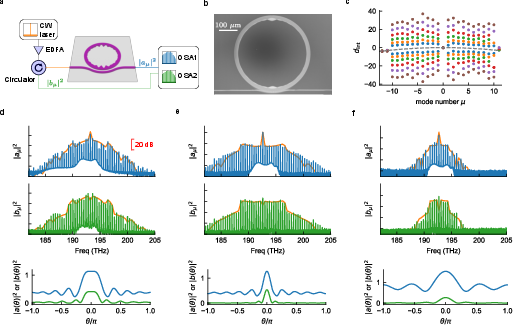
Figure 2: Experimental setup, SEM of PhCR, mode-resolved dispersion, and optical spectra/pulse reconstructions for superfluid and Mott-insulator regimes, confirming nanophotonic control over collective many-body light states.
Pump-Bandgap Regime and High-Power Soliton Microcombs
A distinct regime is realized by introducing a BG exclusively at the pump mode (bμ1). This geometry isolates the effects of enhanced self-interaction scale at the pump, allowing for further manipulation of the Mott–superfluid balance and access to high-power flattop microcomb states. The resultant CV landscape demonstrates robust transitions as a function of detuning and BG strength, with higher pump amplitudes (bμ2) accessing broader low-CV (Mott-like) regions.
The high-power operation in the Mott-insulator regime produces microcombs with more than bμ3 average power and extremely flat mode occupancy, sustained even at tight (100 GHz) mode spacing. In superfluid regimes, intense spectral coherence is manifest as dense interference fringes and sharp comb features.
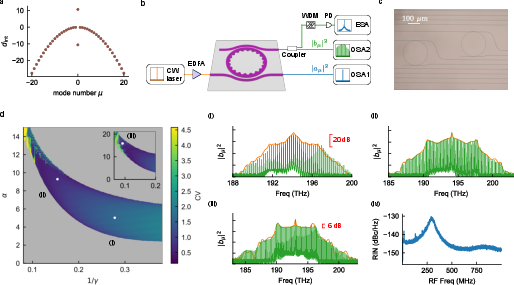
Figure 3: Dispersion curves, experimental instrumentation, microscope image of PhCRs, and CV map with representative spectra highlighting the controlled transition between superfluid and Mott-insulator behavior in the pump-BG regime.
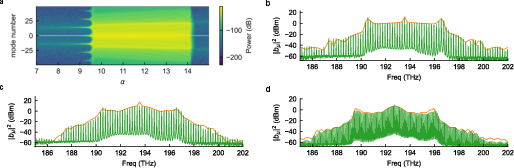
Figure 4: Microcomb spectra illustrating high-power soliton generation, flat-topped (Mott) and coherently modulated (superfluid) states for varying repetition rates and detunings.
Numerical Metrics and Claims
- In the lattice BG regime, measured CV transitions from bμ4 (superfluid) to bμ5 (Mott insulator) as bμ6 is tuned from bμ7 to bμ8.
- For the pump-BG regime at 200 GHz repetition, Mott-insulator operation achieves on-chip comb powers exceeding bμ9 with per-mode variance as low as H^tot=H^free+H^pump+H^Kerr+H^BG,0 (excluding outer dispersive modes).
- Superfluid regimes support up to H^tot=H^free+H^pump+H^Kerr+H^BG,1 total on-chip power, and maintain coherent multi-mode interference at 100 GHz spacing.
- The deterministic, geometry-driven transition between collective states is observed in both experimental data and theory, with systematic understanding afforded by the Hamiltonian decomposition (self vs. cross interactions).
Implications and Outlook
This work provides a definitive demonstration of Hamiltonian engineering for synthetic many-body photonic systems. The ability to deterministically program collective phases of light enables several key opportunities:
- Programmable photonics: Tunable spectrotemporal control for high-capacity optical links, coherent communication, and multiplexed signal processing.
- Quantum-inspired information processing: The platform provides a compelling architecture for photonic Ising machines, optical neural networks, and other bosonic analog computation paradigms [see also (Jin et al., 1 Aug 2025)].
- Basic many-body physics: The accessibility of both equilibrium-inspired (Mott/superfluid) and driven-dissipative regimes in photonic lattices offers avenues for quantum simulation beyond ultracold gases, with potential extensions to topological and nonequilibrium phases.
- Scalability and integration: The demonstrated approach, using foundry-compatible materials and fabrication [Liu:25], is adaptable to CMOS processes and could support large-scale, hybrid photonic-electronic systems.
Future developments are likely to focus on leveraging active tuning, higher-dimensional mode lattices, and integration with electronic feedback or quantum light sources, further bridging gaps between nonlinear photonics, quantum optics, and collective dynamical systems.
Conclusion
The paper unifies concepts from condensed matter, nonlinear photonics, and nanofabrication, showing that photonic-crystal microresonators can be deterministically tuned to traverse the phase diagram of many-body bosonic systems. By tailoring device geometry and bandgap engineering, it is possible to program the balance of local and nonlocal Kerr interactions, controlling the emergence of collective light states from flattop (Mott-insulator-like) microcombs to phase-coherent (superfluid) frequency combs. These results establish a robust and accessible platform for both fundamental studies and advanced applications in programmable photonic systems and quantum-inspired information processing.

