- The paper introduces branched bending as a generalization of classical bending deformations, allowing deformations in manifolds without embedded totally geodesic hypersurfaces.
- It establishes sharp lower bounds for infinitesimal deformation spaces using explicit geometric equations that ensure consistency around branching loci.
- Applications to the Borromean rings complement demonstrate that branched bending yields fully integrable deformations and supports strictly convex projective structures.
This essay provides a comprehensive technical summary and analysis of "Branched Bending in Finite-Volume Hyperbolic Manifolds" (2604.22004). The paper introduces a substantial generalization of classical bending deformations—namely, branched bending—which supports deformations even in hyperbolic manifolds lacking embedded totally geodesic hypersurfaces. The systematic development of lower bounds on deformation space dimension, explicit geometric equations, and applications to the deformation theory of knot and link complements—especially the Borromean rings—represent its principal contributions.
Generalization of Bending: From Hypersurfaces to Piecewise Geodesic Complexes
Classical bending deformations of a hyperbolic manifold M=Γ\Hn rely on an embedded totally geodesic hypersurface Σ⊂M. The associated deformation yields a 1-parameter family, where the deformation space dimension is closely connected to the number of disjoint, two-sided, totally geodesic hypersurfaces (see [Johnson and Millson, 1987]).
This work extends bending to the phenomenon of branched bending, defined as deformations supported on a complex of (n−1)-dimensional totally geodesic faces meeting around (n−2)-dimensional branching loci. Notably, the complex is piecewise totally geodesic, and the faces may meet with branching along codimension-2 subsets ("bindings"), relaxing the strict requirements of the classical theory.
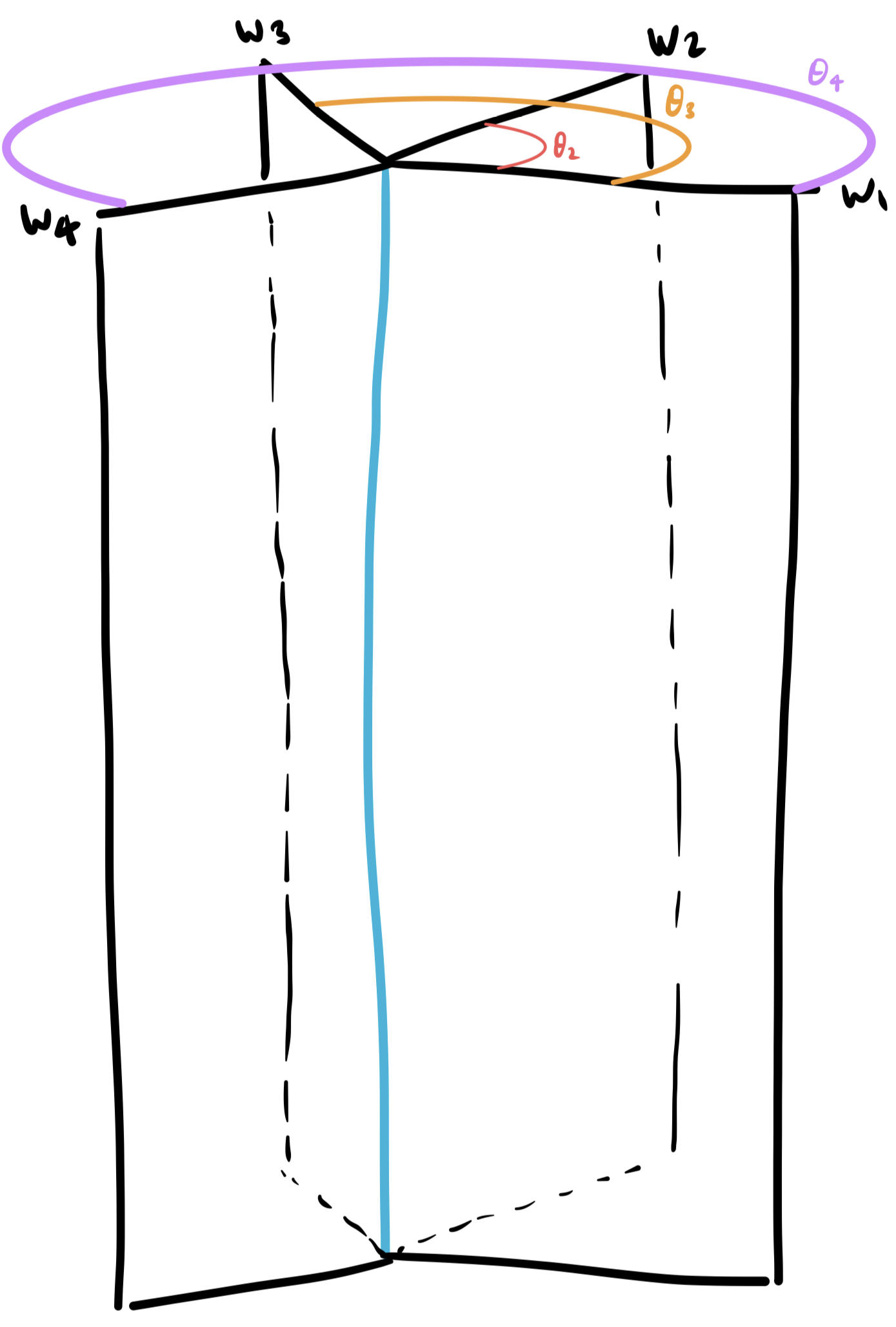
Figure 2: An arrangement of walls wi meeting around a binding.
Branched bending thus accommodates deformations in manifolds with no embedded totally geodesic hypersurfaces by exploiting intricate configurations of geodesic pieces.
The principal technical achievement is the sharp generalization of lower bounds on the dimension of the space of infinitesimal deformations:
dimRH1(Γ,V)≥cn−1−Acn−2
where:
- cn−1 is the number of (n−1)-dimensional complementary regions in the branched bending complex (i.e., the number of "walls"),
- cn−2 is the number of components of the branching locus ("bindings"),
- A is an explicit constant depending on the target Lie algebra (Σ⊂M0 for Σ⊂M1, Σ⊂M2 for Σ⊂M3).
The constructions are made concrete via explicit equations encoding consistency of infinitesimal deformations around each binding. For Σ⊂M4 (higher hyperbolic geometry deformations), these yield two real equations per binding. For trace-free projective deformations (target Σ⊂M5), there are three corresponding equations per binding.
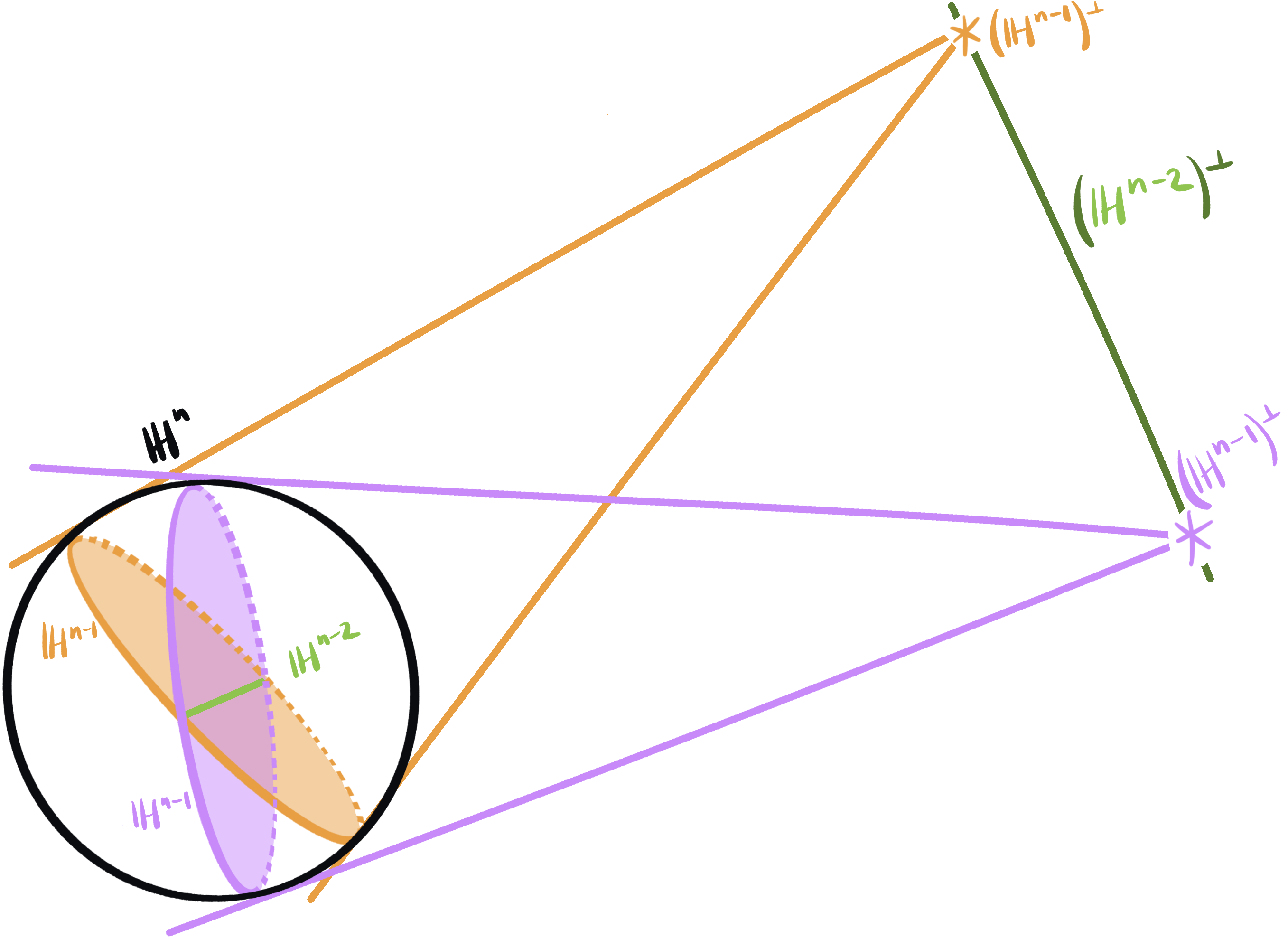
Figure 1: Two codimension-1 hyperbolic spaces meeting along a codimension-2 hyperbolic space, and their respective orthogonal complements in Σ⊂M6.
The local value of Σ⊂M7 is determined by the structure of the stabilizer of the common codimension-2 intersection in the corresponding Lie group, demonstrating tight control over the algebraic structure of the bending deformation.
The technical formalism adapts and generalizes the relative "tile motion" construction introduced by Danciger–Guéritaud–Kassel [2016]. In this approach, Σ⊂M8 assignments (relative infinitesimal transformations along oriented walls in the universal cover) are required to satisfy:
- Σ⊂M9-equivariance,
- Antisymmetry with respect to orientation,
- "Closure" around each binding (zero sum of assigned deformations).
The corresponding cocycle (n−1)0 (in the relevant coefficient module) is constructed by integrating (n−1)1 across paths in the wall complex, and ultimately yields a well-defined cohomology class independent (up to coboundary) of path choices due to the binding sum condition.
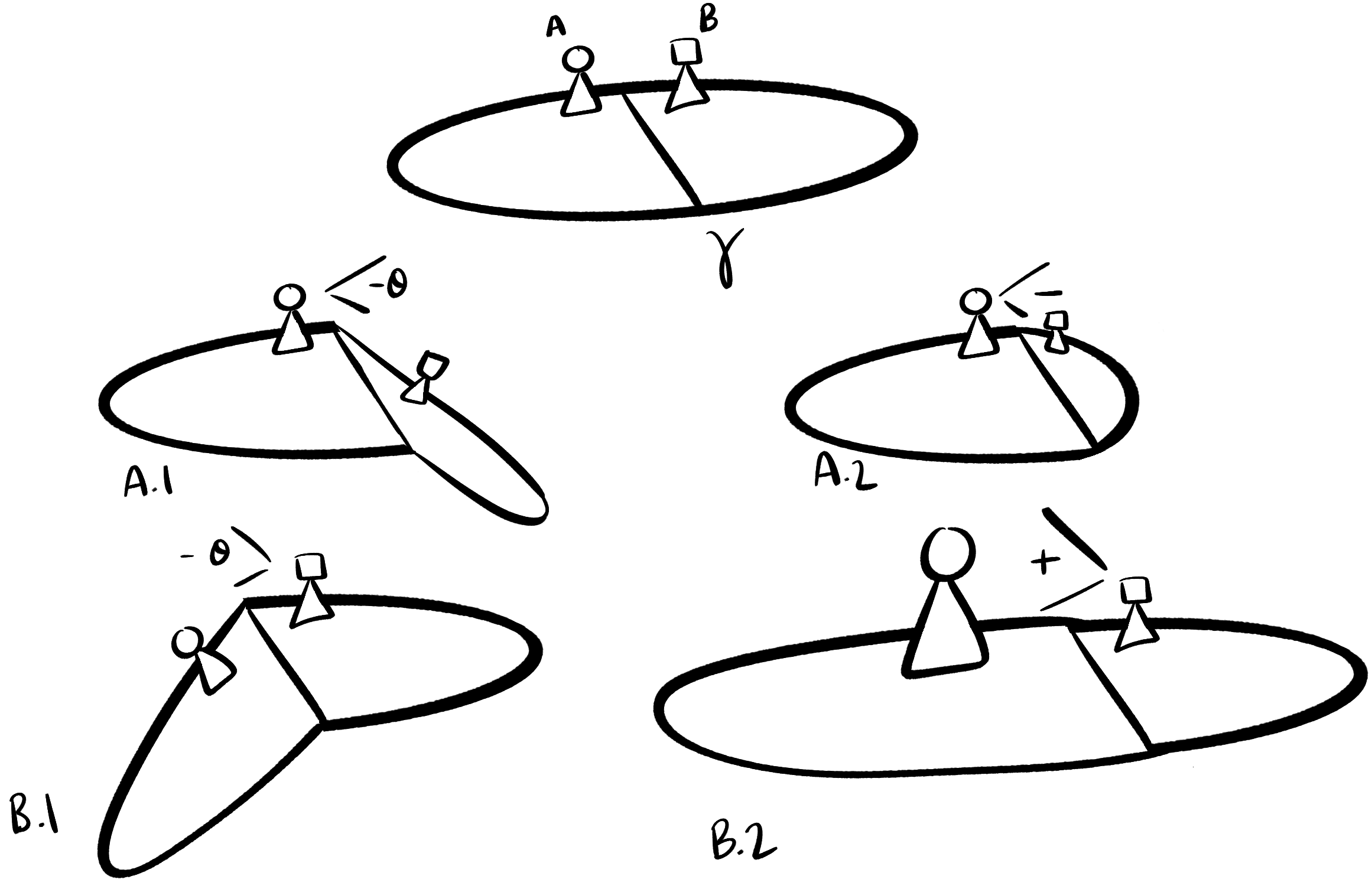
Figure 3: Schematic of bending and bulging as experienced by two observers: classical bending yields a symmetric effect, while projective bulging is asymmetric and transversely oriented.
The injectivity of the constructed map from (n−1)2-equivariant (n−1)3 assignments to cohomology classes is rigorously established under Zariski density assumptions, matching the technical hypotheses required for lower bound sharpness.
Applications to Hyperbolic Link Complements: The Borromean Rings
A significant application is given to deformation spaces of finite-volume hyperbolic 3-manifolds, specifically the Borromean rings complement (n−1)4, providing both explicit calculations and geometric interpretations.
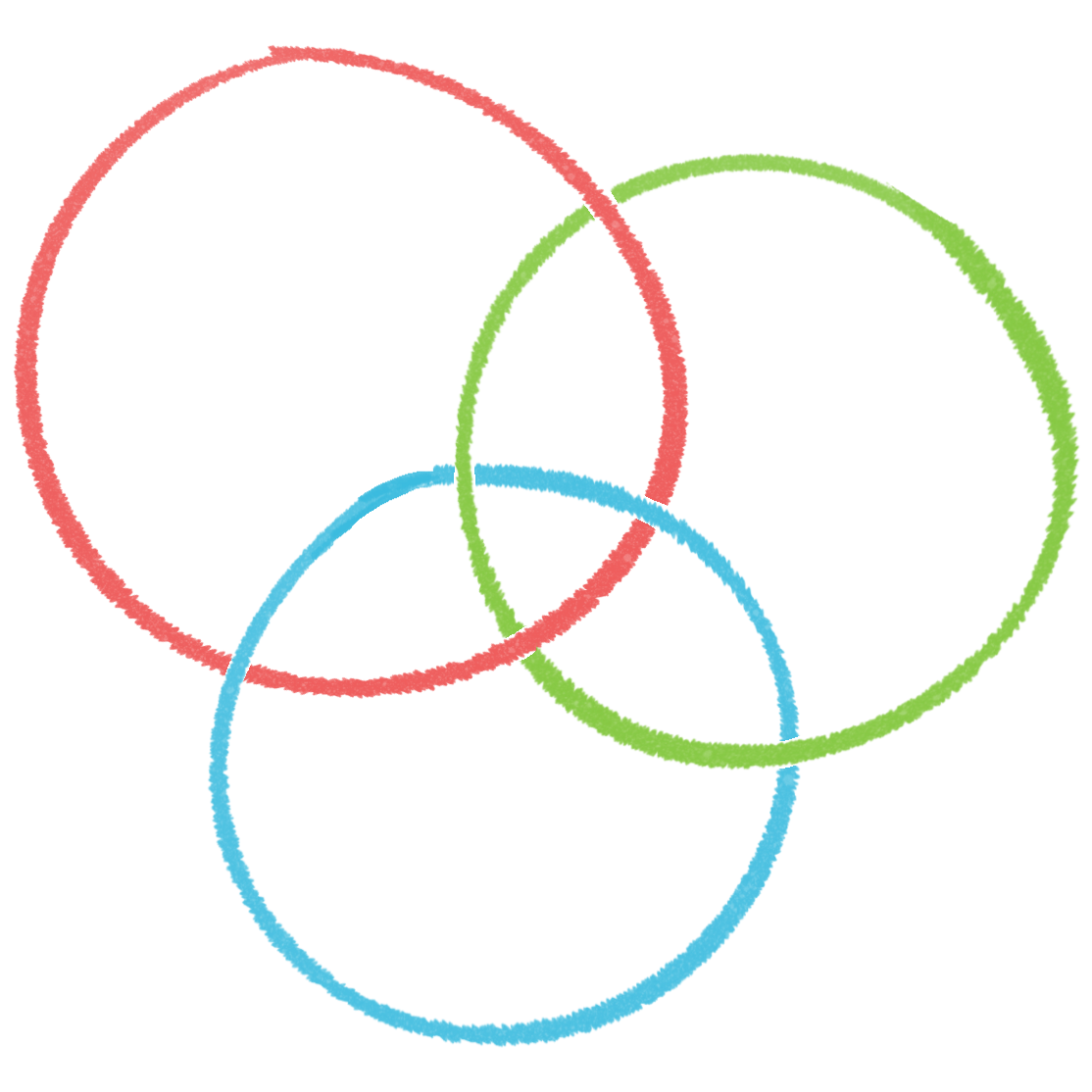
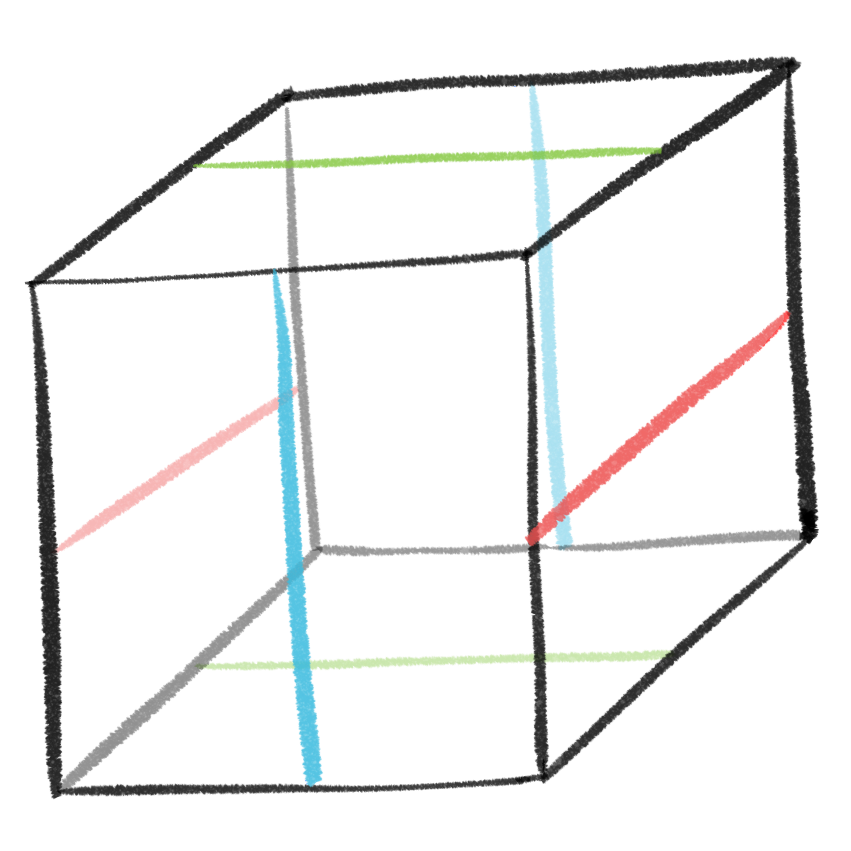
Figure 4: Schematic link diagram of the Borromean rings complement.
Despite the absence of closed embedded totally geodesic surfaces, (n−1)5 admits six embedded, totally geodesic thrice-punctured spheres arranged in a highly symmetric fashion. These spheres, intersecting orthogonally and forming a noncompact branched bending complex, support nontrivial infinitesimal deformations—entirely spanning the relevant cohomology for the manifold and providing a geometric source for all nontrivial deformations into (n−1)6 and (n−1)7.
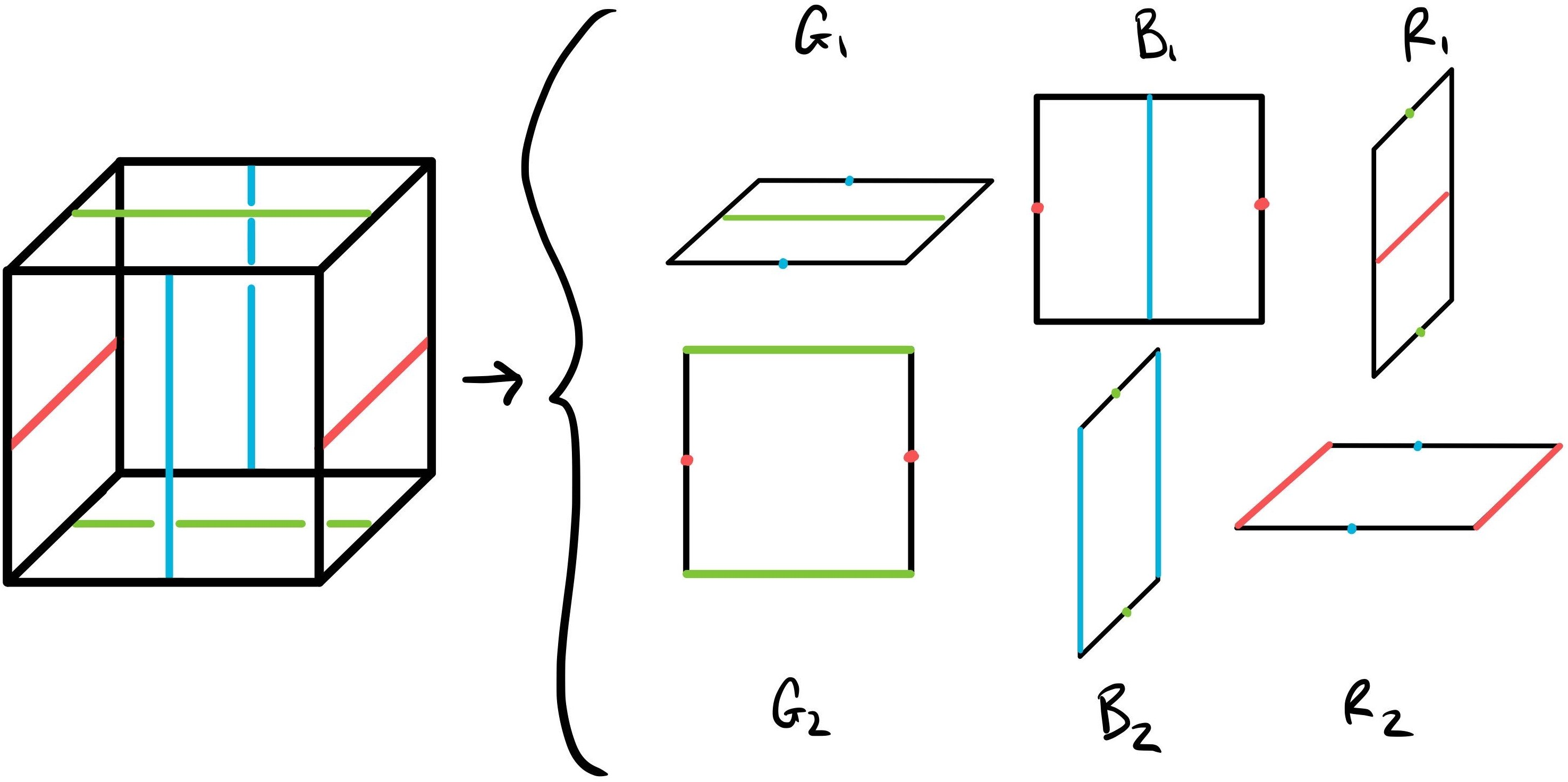
Figure 5: The six totally geodesic pairs of pants in the Borromean rings complement; top row from "faces," bottom row from "midcubes" in the cube model.
Highlights of the numerical results include:
- For (n−1)8 deformations: (n−1)9, all realized via explicit bending along the thrice-punctured spheres; the relative (cuspidal) cohomology vanishes ((n−2)0), confirming that no deformations preserve the cusps—matching the geometric rigidity observed.
- For (n−2)1 deformations: (n−2)2, with (n−2)3; the parabolic/cuspidal infinitesimal deformations are parametrized by "cancelling pairs" of bending deformations with explicit geometric description.
Crucially, these projective deformations are shown (via careful analysis using the Ballas–Marquis theory) to be fully integrable and to yield strictly convex projective structures: the holonomy character is a smooth point of the (n−2)4 character variety.
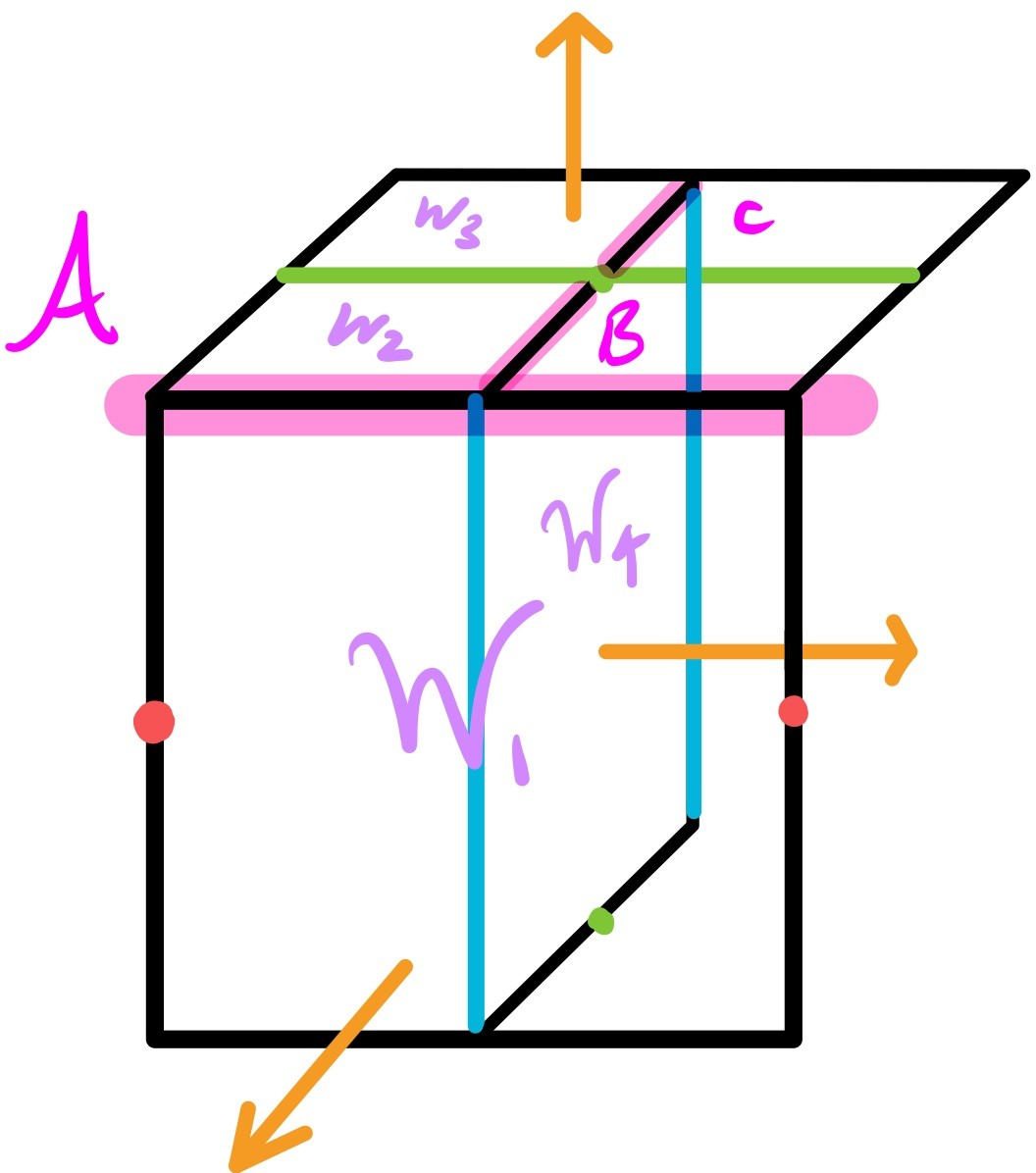
Figure 8: Four walls and three bindings comprising a subcomplex of the branched bending locus (n−2)5 within the Borromean rings complement.
Implications and Theoretical Context
The results refine and generalize previously understood limitations on the sources of hyperbolic manifold flexibility. Notably:
- The existence of branched bending complexes underpins deformations in the absence of classical embedded (or even immersed) totally geodesic hypersurfaces, affirmatively settling conjectural possibilities highlighted by Cooper–Long–Thistlethwaite and Bart–Scannell.
- The explicit lower bounds and geometric realization link the combinatorics of piecewise geodesic complexes within a manifold's topology to the existence and dimension of nontrivial deformation spaces.
From the perspective of link complements and the Menasco–Reid Conjecture, the paper confirms that absence of embedded totally geodesic surfaces does not always rigidify the higher rank deformation theory—the Borromean rings complement provides a definitive counterexample via noncompact branched bending complexes.
Future Directions and Speculation
The formalism and techniques developed prompt several directions for further research:
- Extension to (n−2)6: Can an analogous theory for branched bending along piecewise geodesic graphs in surfaces provide sharp control over deformation theory for hyperbolic surfaces?
- Higher dimensional knot and link complements: Are there new examples in four or more dimensions where branched bending reveals geometric structures previously inaccessible by classical means?
- Classification: Which flexible manifolds (in the sense of higher rank deformations) admit a branched bending complex accounting for the entirety of their infinitesimal deformation space?
- Applications to strictly convex projective structures: Sufficient and necessary geometric-topological conditions for integrability and strict convexity under branched bending deserve comprehensive study.
Conclusion
This work systematically broadens the structural theory of geometric deformations in finite volume hyperbolic manifolds through the introduction and detailed study of branched bending. By linking topological-combinatorial data to explicit lower bounds for deformation spaces and by constructing geometric deformations in significant model cases, it advances both the algebraic and geometric understanding of flexibility in hyperbolic and projective geometries. The implications for both the practical enumeration of deformation phenomena in (n−2)7-manifolds and the theoretical landscape of geometric topology are significant, establishing branched bending as a unifying framework for higher rank deformation theory in arithmetic and link-theoretic settings.